We like to think we have history figured out. Textbooks, museums, documentaries – they all paint a neat, confident picture of how early humans lived, built, and spread across the planet. But here’s the thing: the deeper you dig into prehistoric evidence, the more that picture starts to crack. Honestly, some of the theories circling the academic world right now are jaw-dropping, and a few of them could quite literally shatter the timeline we’ve been taught.
From ancient stone temples built before farming even existed, to human ancestors showing up in places they absolutely shouldn’t have been, the mysteries just keep piling up. Some questions have lingered for generations, while others have only emerged in recent years with the help of new technology. So if you’ve ever suspected that history is hiding something enormous, you might be right. Let’s dive in.
1. Göbekli Tepe: Religion Before Civilization
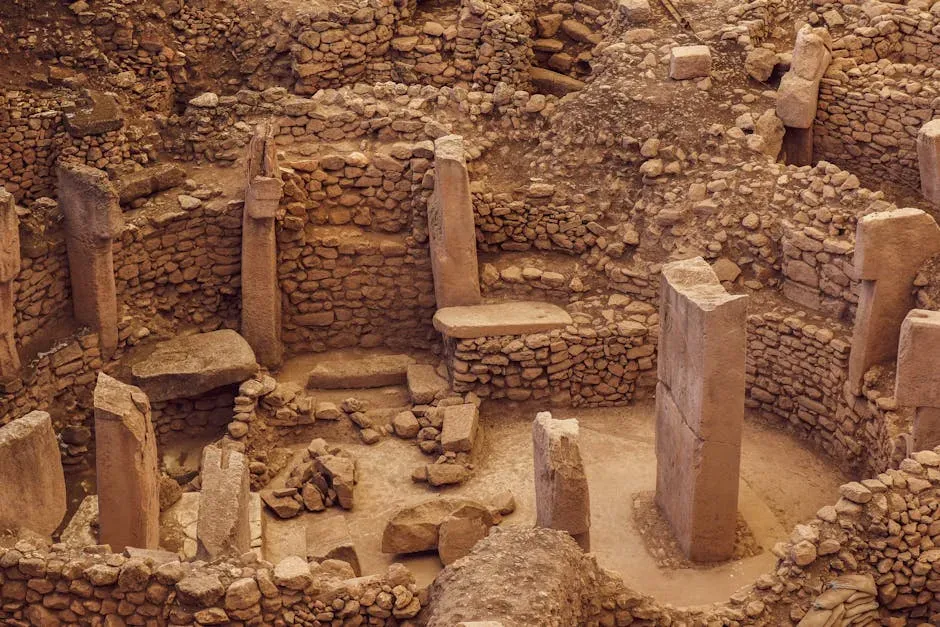
For most of human history, scholars accepted a neat chain of events: first came farming, then villages, then the spare time to think about religion and build impressive things. The widely accepted narrative held that we didn’t have civilization until we had cities, and we didn’t have cities until we had agriculture – a story somewhat troubled by the discovery of ruins at Göbekli Tepe in southeastern Turkey. The whole textbook sequence has been rattled to its core by this one site.
More than 11,000 years ago, hunter-gatherers built a monumental stone complex thought to be the world’s first temple, known as Göbekli Tepe, a megalithic settlement perched on a mountain ridge in Upper Mesopotamia. The Neolithic site, which translates to “belly hill” in Turkish, is two times older than Stonehenge and contains a series of elaborate circular enclosures constructed of massive T-shaped limestone columns. Think about that for a second. These people had no metal tools, no pottery, and yet they built something this ambitious. This discovery not only challenged what we thought we knew about ancient human civilizations but also revealed that hunter-gatherers were more than simply nomadic people – they were innovative enough to use advanced architectural techniques, including geometric patterns to plan and execute the construction.
Evidence of houses, a cistern, and grain-processing tools has turned up at the site, indicating a fully fledged settlement with permanent occupation well before the advent of farming – suggesting that social and technological innovations associated with civilization may have emerged long before agriculture, cities, or domesticated animals. You have to wonder: what else have we assumed about the sequence of human development that is simply wrong? As of 2021, around only ten percent of the site has been excavated, which means there’s almost certainly far more waiting beneath the surface.
2. The Nazca Lines: Earth Art No One Can Fully Explain
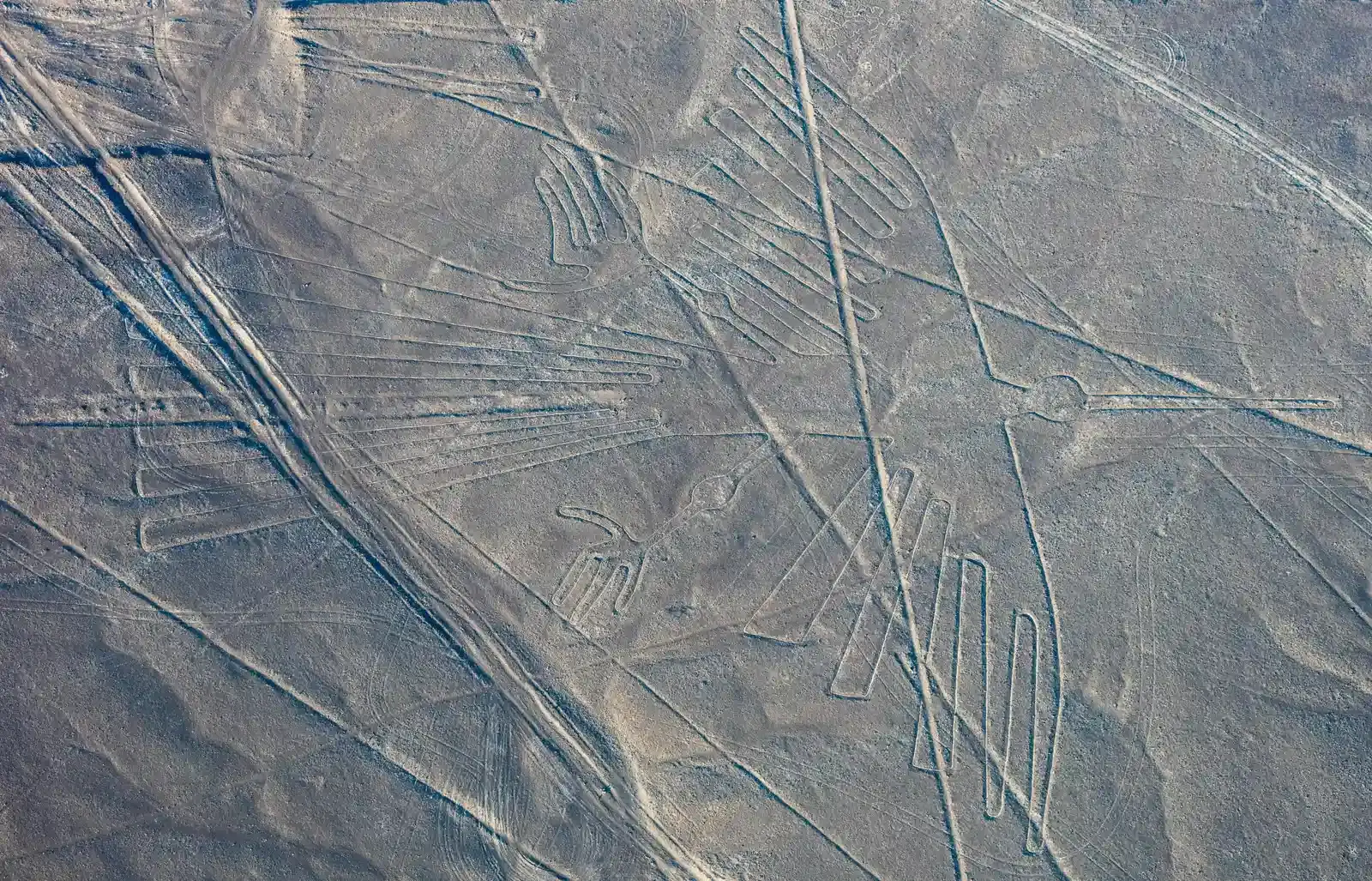
Imagine carving enormous pictures into the ground, so large that they can only be fully appreciated from an airplane, thousands of years before airplanes existed. That’s exactly what the Nazca people of Peru did, and it remains one of prehistory’s most baffling acts. Between AD 1 and 700, the Nazca people carved 12 to 15 inches out of rust-colored rock, revealing the lighter-colored stone in deeper layers – the result was massive in-ground pictures of animals, plants, humans and geometric shapes best seen from above.
The Nazca lines are a series of large drawings etched into the ground in Peru created by the Nazca civilization, and they remained widely unknown until a plane flying over the desert of southern Peru spotted them. There are over 300 geoglyphs depicting various things, such as animals, plants, geometric shapes, and humanoid figures – and when calling them large, that’s a slight understatement, as some images measure up to 1,200 feet long. That’s longer than four football fields. Why on earth would you create art of that scale unless someone or something was meant to observe it from above? Some outlandish theories suggest the carvings point to aliens or ancient astronauts, but researchers can’t agree on more realistic theories either – initial scholars suggested the Nazca Lines were connected to astronomy, while recent theories argue they were used for begging rain from the gods.
3. The Yonaguni Monument: Japan’s Underwater Pyramid
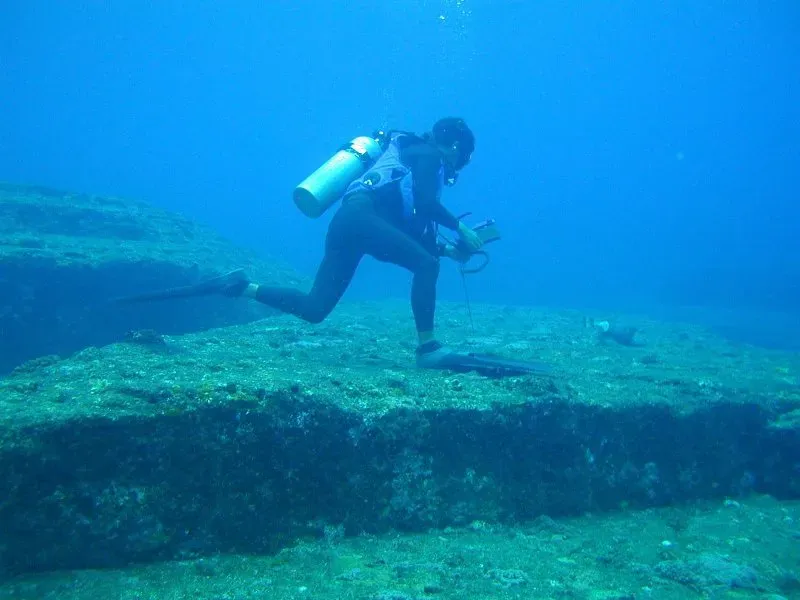
It’s hard to say for sure what lies beneath the waters off the coast of Japan’s Yonaguni Island, but what’s down there is genuinely unsettling. Off the coast of Yonaguni Island lies an underwater rock structure, at least 165 feet long and 65 feet wide, that resembles a manmade step pyramid. Discovered in the 1980s and now known as the Yonaguni Monument, it is believed by some researchers to be the ruins of an ancient civilization, though many other researchers contend that it is nothing more than a curious natural phenomenon shaped by tectonic uplift and ocean currents.
The Yonaguni Monument, located on the sea floor off the coast of Japan, is perhaps one of the most perplexing historical mysteries. Sometimes referred to as the Atlantis of the Pacific, it is a large rock formation resembling a man-made step pyramid. Discovered in the 1980s, the large rock formation consists of straight lines and right angles, prompting many to believe that the structure is in fact manmade. Nature doesn’t usually produce right angles. The architecture includes what appear to be paved streets and crossroads, large altar-like formations, staircases leading to broad plazas, and processional ways surmounted by pairs of towering features resembling pylons. If even a fraction of that is accurate, you’re looking at a civilization that flourished before the last great sea level rise – one that history has completely erased.
4. Homo Erectus in China: Humans Left Africa Much Earlier Than We Thought
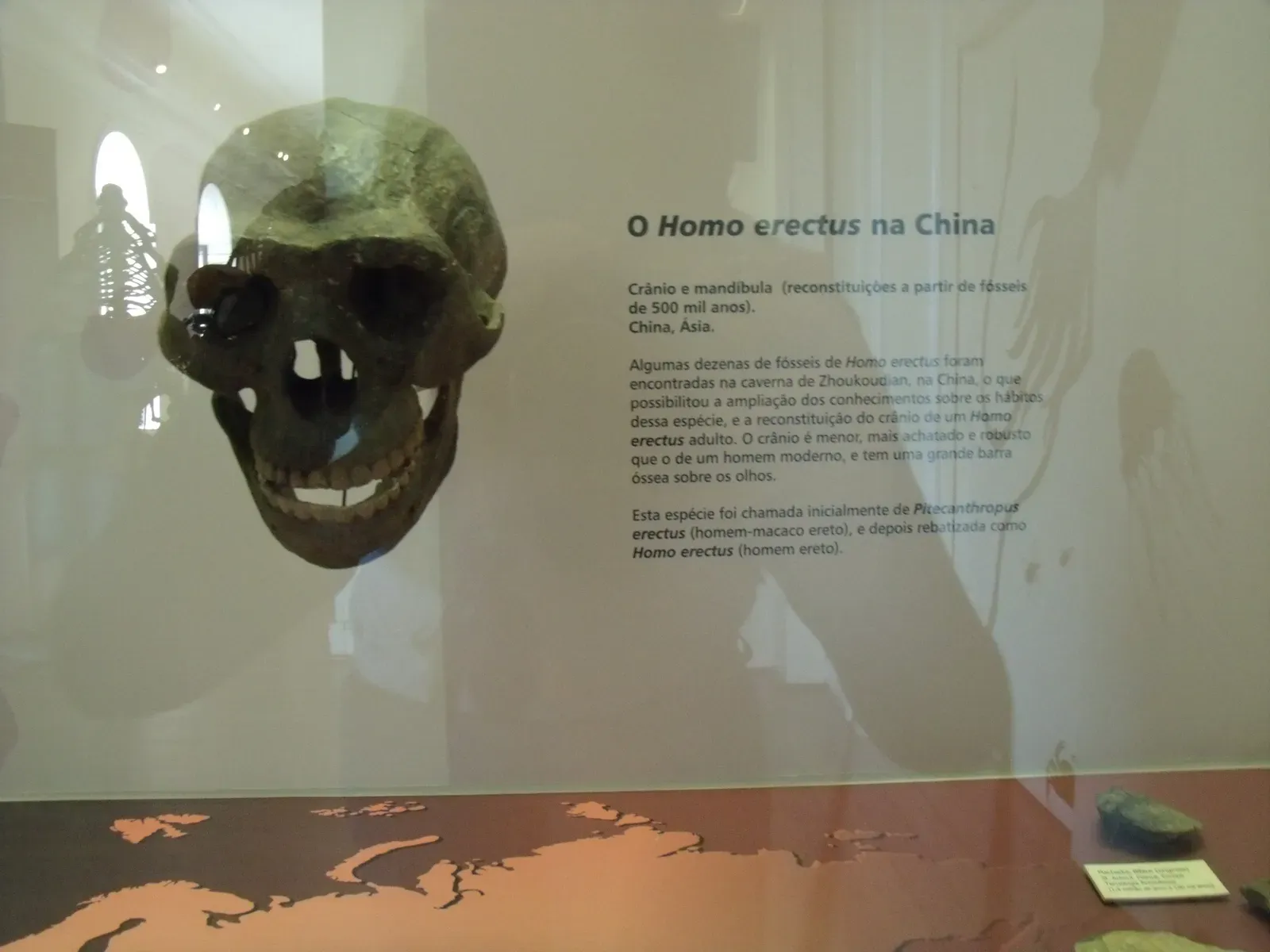
The story of how humans spread out of Africa and across the globe has been revised more than once, but a recent breakthrough in early 2026 shook the field to its foundations. A study by a team of geoscientists and anthropologists confirmed that Homo erectus appeared in Yunxian, China, 1.7 million years ago, about 600,000 years earlier than previous studies indicated – prior to this study, the oldest Yunxian H. erectus fossils were reported to be about 1.1 million years old. That’s not a small correction. That’s an entirely different chapter.
The revised timeline reshapes one of the earliest chapters of human history, suggesting our ancestors spread across continents earlier – and possibly more successfully – than scientists once believed. Let’s be real: when you push back the arrival of a human ancestor by more than half a million years, you have to ask what else might be off in the accepted timeline. Stone tools that may date as far back as 2.48 and 2.1 million years ago – from Zarqa Valley, Jordan, and Shangchen, China – could indicate that an earlier hominin species left Africa before Homo erectus even evolved. The idea that human migration was this ancient and this widespread is almost too staggering to fully absorb.
5. The Minoan Linear A Script: A Language That Has Never Been Decoded
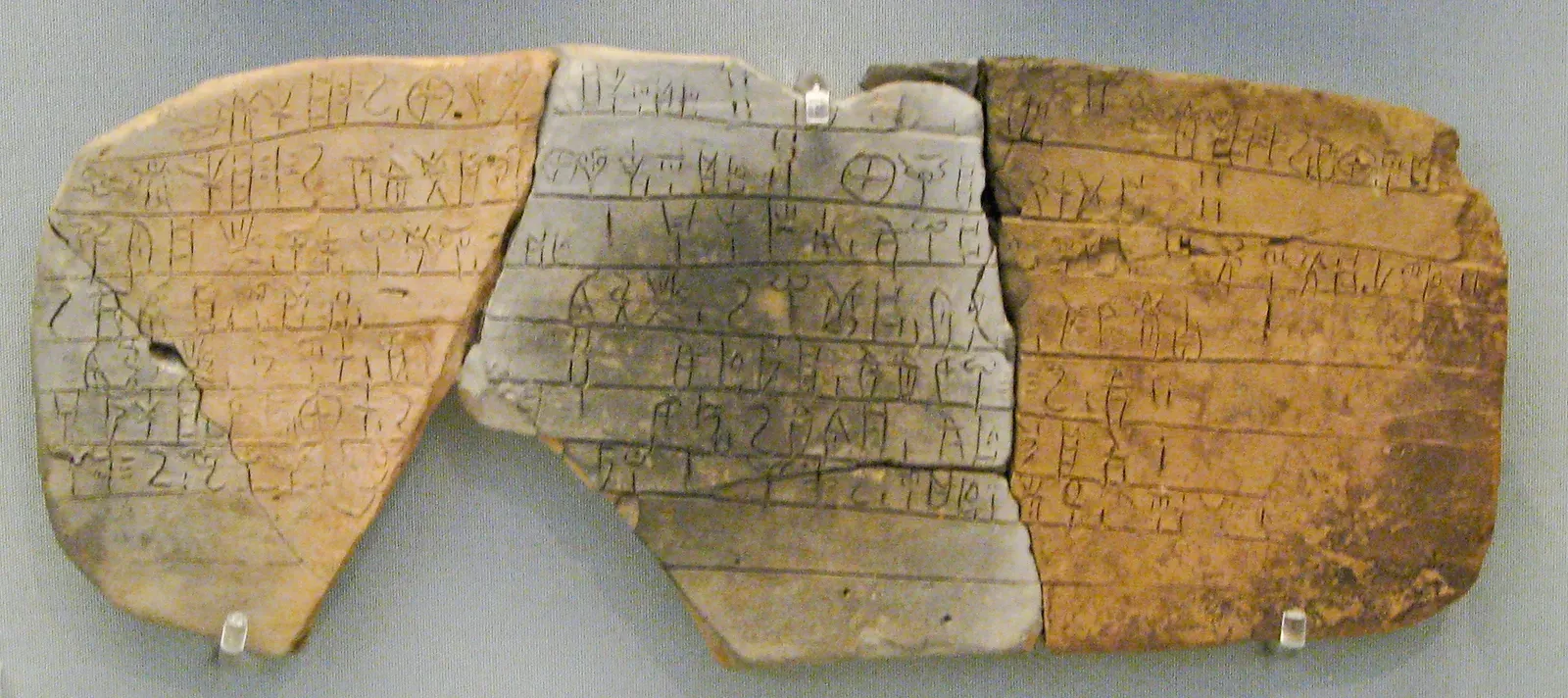
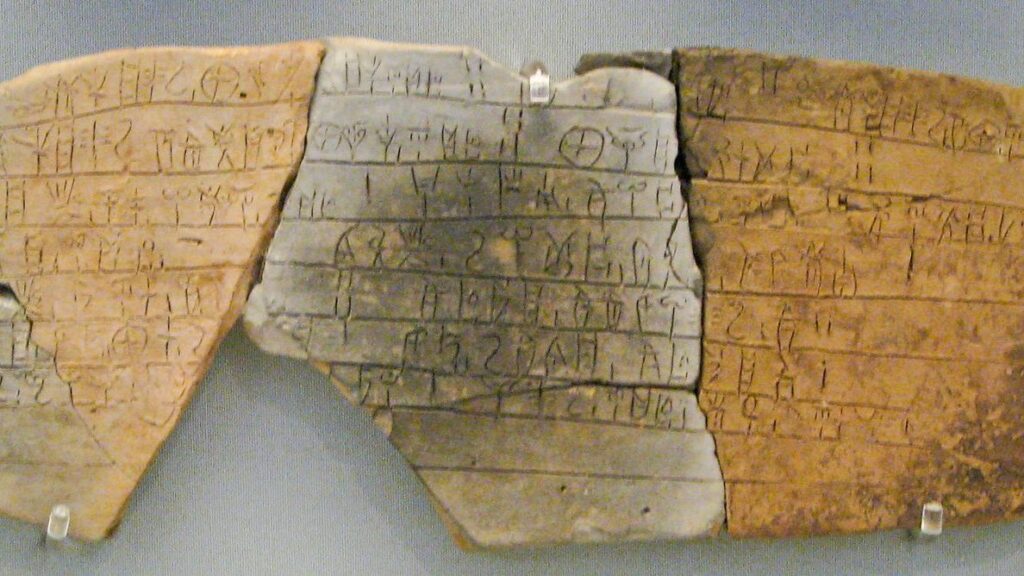
Imagine an entire civilization’s worth of written records sitting in museums around the world, completely unreadable. That’s the reality with the Minoan civilization’s writing system, and I think it’s one of the most haunting mysteries in all of prehistory. Two distinct but similar writing styles – Linear A and Linear B – have been found on ancient Minoan relics, but researchers are still scratching their heads over the former. Greek-based Linear B was cracked in 1952 and represents syllables rather than letters, yet that knowledge hasn’t opened the door to deciphering Linear A, which was used between 1800 and 1450 BC and remains an unsolved ancient mystery.
The Minoan civilization disappeared almost as quickly as it appeared, with many of their cities destroyed in a series of floods, earthquakes, and tsunamis. The only kind of written language they left behind was something researchers call Linear A – and if Linear A can be cracked, it could open the door to a better understanding of the Minoan people and their untimely fate. Think of it like a hard drive full of files from a brilliant but extinct company, and no one anywhere has the password. Powerful computers could help researchers decipher the Minoans’ mysterious writing system, and it has been more than a century since this powerful Mediterranean civilization was uncovered, yet scholars remain unable to read their language. Whatever secrets Linear A contains, they’re still locked away.
6. The Prehistoric “Polish Pyramids”: A Stone Age Society Far More Complex Than Expected
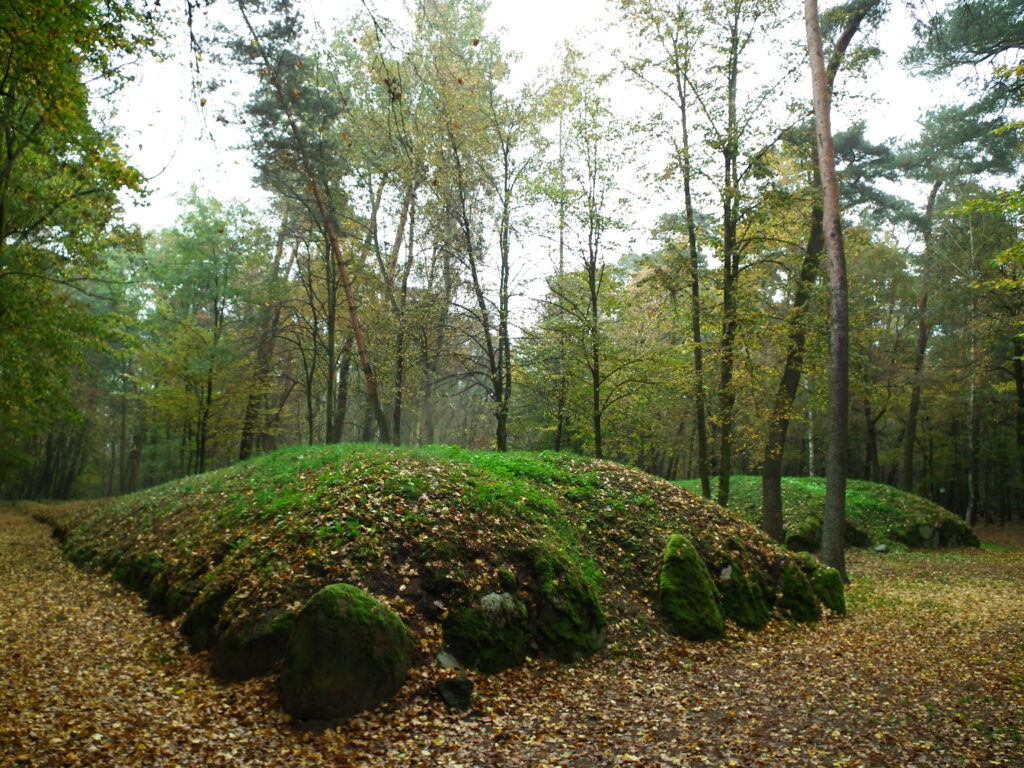
When most people think of pyramid builders, Egypt comes to mind immediately. Yet tucked away in the landscapes of Greater Poland are ancient structures that are every bit as remarkable – and far less discussed. In a landscape park in Greater Poland, Polish archaeologists discovered Kujavian-type tombs dating back approximately 5,500 years and featuring a characteristic triangular shape, often called the “Polish pyramids.” Their dimensions are staggering, reaching up to 200 meters in length and four meters in height – built by the Funnelbeaker culture at the end of the Stone Age.
These structures served as resting places for individuals of high social status, including shamans and leaders. The burial method is also extraordinary: the deceased were laid in a straight position, with their feet pointing toward the front of the tomb. That kind of deliberate, structured ceremony points to a society with complex rituals, social hierarchies, and beliefs about the afterlife – from people we often imagine as primitive. These weren’t scattered nomads scratching in the dirt. The presence of these kinds of Neolithic structures suggests that early societies could organize large labor forces for ambitious construction projects, and also highlights how shifting climates and rising seas have dramatically reshaped human geography over millennia. The deeper we dig, the more sophisticated our ancestors become.
7. Karahantepe’s Stone Faces: Prehistoric Storytelling Carved in Rock
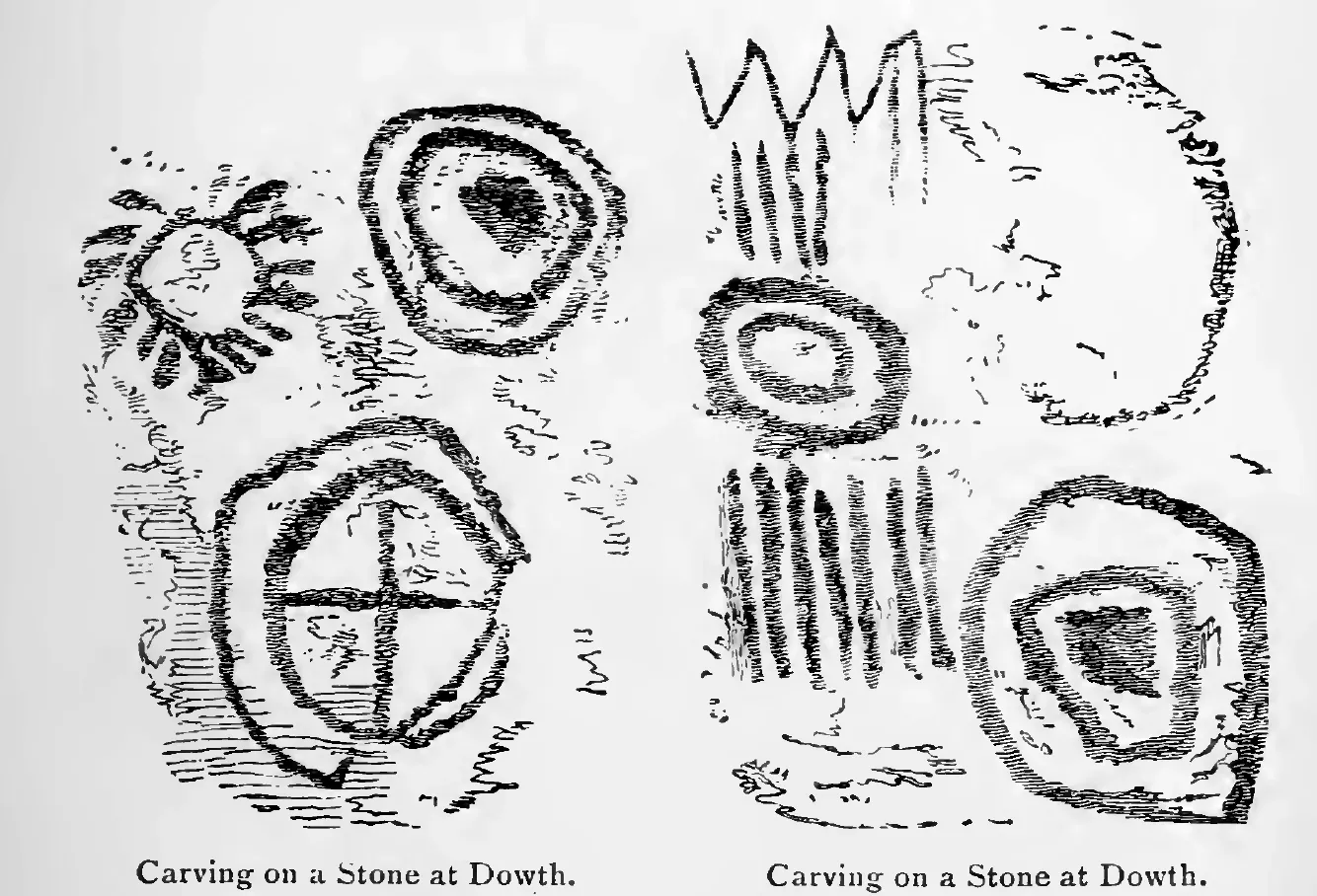
Near the already astonishing site of Göbekli Tepe in Turkey, a neighboring site called Karahantepe has been producing discoveries that feel almost science-fictional in their implications. At Karahantepe in southeastern Anatolia, archaeologists reported the discovery of a T-shaped pillar with a carved human face and a set of stone figurines arranged in a way some researchers interpret as a three-dimensional narrative scene. Pre-Pottery Neolithic communities left extraordinary architecture, but unmistakably human portrait-like details are rare – a three-dimensional face on a pillar strengthens the argument that these monuments represented people, ideas embodied in stone, literally looking back at us across millennia.
Symbolism is the heartbeat of cultural complexity. When we find evidence of storytelling – especially in deliberate arrangements of figurines – we get closer to understanding how early communities explained the world, taught lessons, and shaped identity without writing. That’s a profound thought, isn’t it? A group of prehistoric people carved a face into stone and arranged figurines to tell a story, thousands of years before the first alphabet was scratched out. At the Neolithic site of Karahantepe in southeastern Turkey, archaeologists also uncovered a massive circular structure resembling a modern amphitheater – suggesting this wasn’t just a ritual site, but possibly a space designed for communal gathering, performance, and shared experience on a scale we barely imagined for that era.
Conclusion: The Past Is Still Being Written
Here’s what strikes me most about all of these theories: none of them feel like fringe speculation anymore. They’re backed by real fieldwork, real fossils, real dates, and real stone carved by real human hands thousands of years before we thought such things were possible. It’s clear from many fragments of evidence, traditions, and discoveries that we have an incomplete picture of the earliest days of human civilization. It’s possible that whole civilizations, some with advanced capabilities, have come and gone. At the very least, human culture reaches much further back in time than conventional history admits.
Every decade, researchers push back the timeline a little further, uncover a structure a little more complex, or decode an artifact that rewrites a chapter we thought was closed. There has never been a point in modern history where humans know more about ancient civilization than now, and thanks to the tireless work of scientists, historians, and archaeologists, new discoveries and breakthroughs are being made each day. The more tools we develop, the more the ancient world reveals itself – and it turns out our ancestors were far more capable, far more widespread, and far more mysterious than we ever gave them credit for.
The real question isn’t just what happened thousands of years ago. It’s why we keep being surprised when we find out. What prehistoric discovery shocked you the most – and what do you think history is still hiding from us? Drop your thoughts in the comments.