
Have you ever noticed how life in your forties and beyond feels like it should be simpler, yet somehow it’s even more complicated? You’ve got decades of experience under your belt, but the world around you seems to spin faster than ever. Between career responsibilities, family demands, aging parents, and the relentless buzz of digital distractions, finding a moment of genuine calm can feel like trying to catch smoke with your bare hands.
Here’s the thing though. Inner peace can help you maintain resilience, calmness, acceptance, contentment, harmony, and meaning in life, and research even shows that those who cultivate inner peace are also less likely to suffer from poor mental health outcomes such as anxiety or depression. It’s not some mystical state reserved for monks on mountaintops. It’s actually something you can develop right where you are, in the middle of your beautifully messy life. Let’s dive into seven practical ways to find that elusive serenity.
Start With Your Breath, Not Your To-Do List
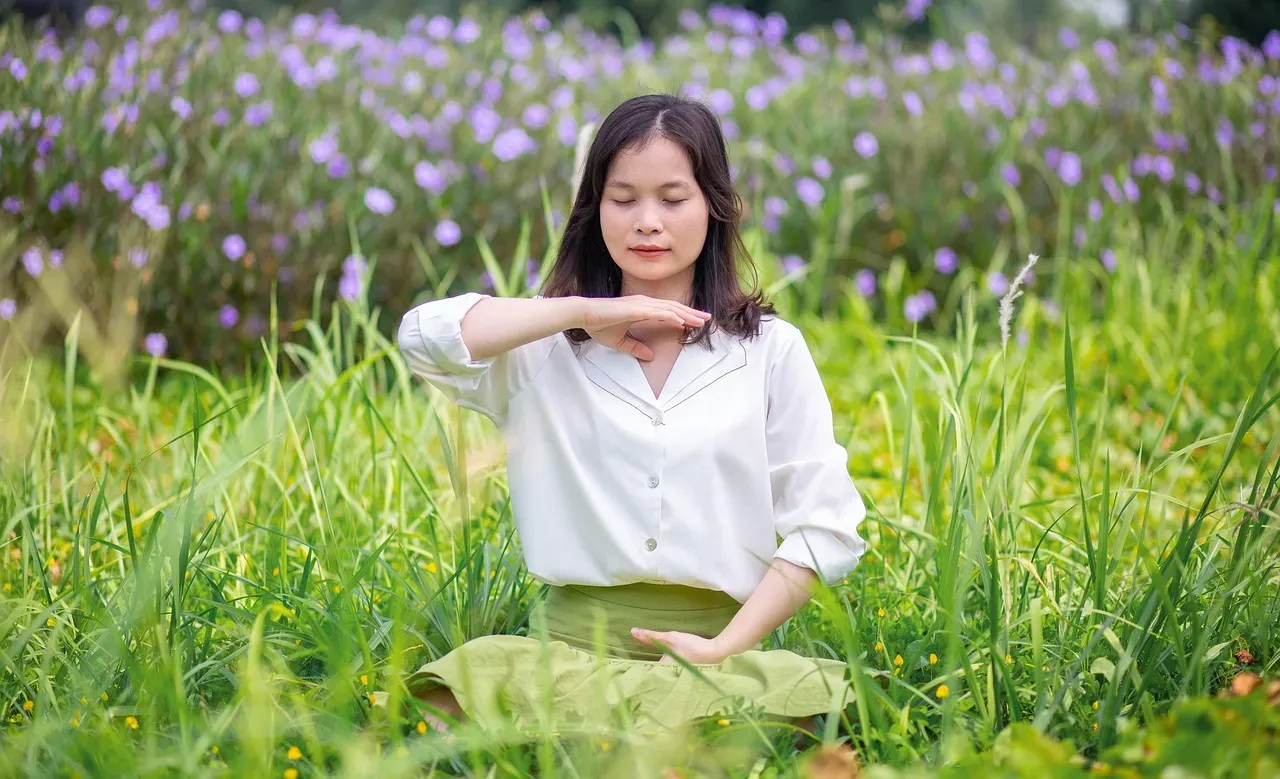
You wake up and what’s the first thing you do? Check your phone, right? Before you’ve even stretched your legs, you’re already swimming in emails, news alerts, and the weight of everything demanding your attention. What if you paused for just five minutes instead?
Your breath is your most accessible stress relief tool, and this simple technique works anywhere, even during your busiest moments. Sit comfortably with your spine upright but relaxed and take a few deep breaths to prepare your body for the practice. Count to four as you breathe in, hold for seven counts, then release for eight. This little ritual signals to your nervous system that everything is okay. It’s like hitting a reset button before the day’s chaos takes over.
The beauty of breathwork is that nobody needs to know you’re doing it. Stuck in traffic? Breathe. Waiting for a delayed meeting to start? Breathe. About to have a difficult conversation with your teenager? You guessed it. Your breath is always there, quietly waiting to anchor you back to the present moment.
Embrace the Art of Mindful Movement
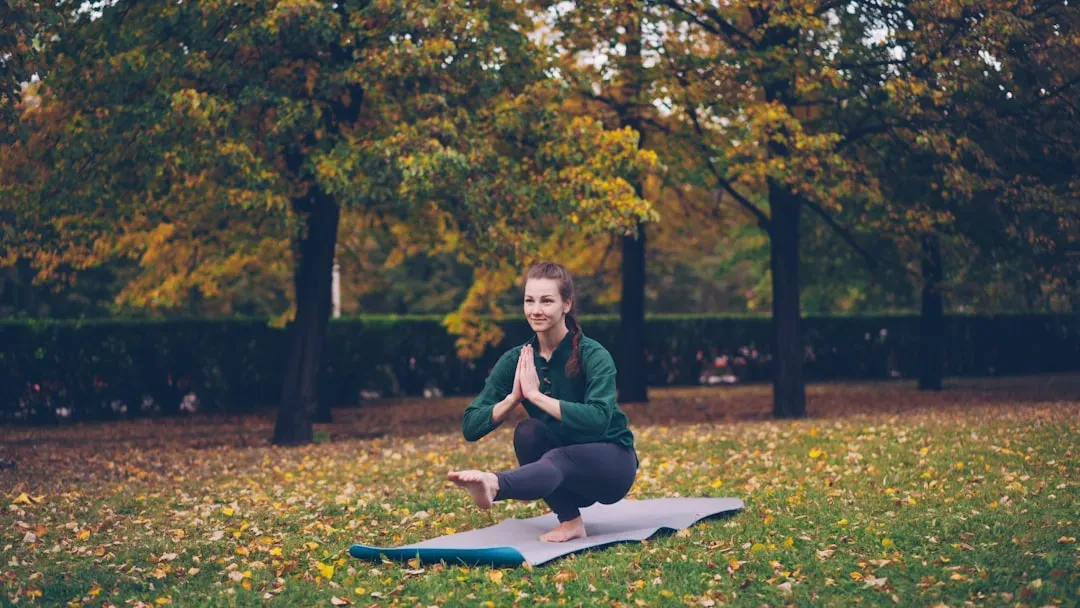
Exercise and physical activity are potent forms of medicine for the body, reducing stress, boosting mood, and promoting overall vitality, but mindful movement practices like yoga, tai chi, and conscious stretching offer an added dimension. You’re not just going through the motions anymore. You’re actually paying attention to how your body feels as it moves.
Remember when you were younger and exercise was all about burning calories or building muscle? Now it can be about something deeper. There’s also a correlation between physical activity outside and inner peace, and nature naturally embodies that peace you’re craving. It’s tranquil and restorative and creates a sense of calm when you immerse yourself in it. Move your body outside and tune into the peace you feel as you walk through the grass or breathe in the fresh air.
Even a twenty-minute walk counts. You don’t need a fancy gym membership or expensive equipment. Just move with intention, noticing each sensation. Feel your feet connecting with the ground. Notice the rhythm of your steps. This simple practice can shift your entire day.
Create Boundaries With Your Digital Life

Let’s be honest about something. Say no to watching too much news, and to cultivate peace, limit your news intake to less than 15 minutes per day. Your phone isn’t just a tool anymore. It’s become an extension of your hand, and that constant connectivity is exhausting your nervous system.
To cultivate inner peace, we need to create a certain degree of space and quiet in the mind, which is difficult to do if the mind is always busy or distracted. Indeed, having a mind that is constantly busy not only reduces our capacity for self-awareness but also can make us prone to feeling restless and dissatisfied. Therefore, try not to fall into the trap of always using periods of rest or downtime to pick up your mobile phone, scroll through social media, play computer games, or watch TV. If you are somebody who finds it difficult to regulate your use of such media and technology, try establishing a period, say between 30 and 90 minutes at a time, during which you will not allow yourself to use your devices and will instead dedicate the time to slow the mind down and be with yourself.
Set specific times to check social media and email. Turn off notifications that aren’t absolutely essential. Create tech-free zones in your home, especially in your bedroom. Your sleep will thank you, and so will your mental health. The world won’t fall apart if you’re not constantly available. It just feels that way sometimes.
Build Your Gratitude Practice

Developing and practising an attitude of gratitude shifts the thoughts from lack to abundance. Each day, one must recall three moments of learning, grace or blessings from the past year it can even be as minute as receiving a simple compliment that made us smile. Gratitude calms stress, strengthens emotional resilience and improves mental well-being. It sounds almost too simple to work, yet it’s remarkably powerful.
You don’t need anything fancy for this. Just grab a notebook or use your phone’s notes app. Every morning or before bed, jot down three things you’re grateful for. Some days it might be big stuff like your health or your family. Other days it might be as simple as a good cup of coffee or finding a parking spot right away.
The trick is consistency. When you train your brain to look for the good, you start noticing it more often throughout your day. It’s like switching from a lens that only captures problems to one that also sees possibilities and blessings. Your circumstances might not change, but your perspective will.
Cultivate Genuine Connections Over Surface Interactions

Relating to others in a selfless, kind, and compassionate way helps to take the focus away from ourselves and our own problems. In general, people are very good at becoming absorbed in their own problems, but, more often than not, this induces a cycle of negative thoughts that eventually results in exhaustion. Using kindness and giving to become more other-focused in this context can help us break this cycle, develop greater patience in terms of how we view our problems, and help peace enter our hearts and minds.
Here’s something interesting that happens in your forties. You start realizing that having a thousand friends on social media means nothing compared to having just a handful of people who genuinely know you. Quality suddenly matters way more than quantity.
Make time for real conversations. Put away your devices when you’re with someone. Listen without planning what you’ll say next. Ask questions that go beyond the surface. These deeper connections don’t just enrich your relationships. They actually contribute to your own sense of peace and belonging. We’re wired for connection, and meaningful relationships feed something essential in our souls.
Protect Your Sleep Like It’s Sacred

An important part of cultivating a peaceful mind is making sure we are getting enough quality sleep, which is difficult to achieve if the mind is busy prior to going to bed. Therefore, each day around 90 minutes before going to sleep, make a conscious effort to slow things down and create relaxation in your body, mind, and external environment. This could be by, for example, listening to calming music, lighting candles, practicing meditation, and reading a book that relaxes you.
You probably already know this, but you’re not prioritizing it. Sleep isn’t lazy or indulgent. It’s absolutely essential for your mental and emotional wellbeing. When you’re chronically tired, everything feels harder. Your patience runs thin, your stress tolerance drops, and inner peace becomes nearly impossible to access.
Create an evening routine that signals to your body that it’s time to wind down. Dim the lights. Take a warm bath. Read something that doesn’t stimulate anxiety. Keep your bedroom cool and dark. Aim for seven to nine hours, and notice how differently you feel when you’re actually rested. Your forties aren’t the time to prove you can function on five hours of sleep. That’s a young person’s game you don’t need to play anymore.
Design Your Own Sanctuary Space

In a world full of chaos, having a peaceful space to retreat to is crucial. Your sacred space doesn’t have to be an entire room; it can be a cozy corner of your home where you feel safe and relaxed. Think of it as your personal refuge where the outside world’s demands can’t reach you, even if just for a few minutes.
Maybe it’s a comfortable chair by a window with good light. Perhaps it’s a corner of your bedroom with some cushions and plants. It doesn’t need to be fancy or Instagram-worthy. It just needs to feel like yours. Fill it with things that bring you comfort. A soft blanket, your favorite books, candles with scents you love, photos that make you smile.
The act of simply having this space sends a message to your brain that peace is possible and accessible. When you sit there regularly, even for just five or ten minutes, you’re telling yourself that your wellbeing matters. You’re creating a physical anchor point for calm in your home and in your life.
Conclusion
Finding inner peace after forty isn’t about escaping your life or pretending everything is perfect. It’s about developing tools and practices that help you navigate the chaos with more grace and less exhaustion. Finding peace of mind in a chaotic world is an ongoing journey that requires intentional practice and self-awareness. By incorporating mindfulness, creating routines, limiting information overload, engaging in physical activity, practicing gratitude, nurturing relationships, simplifying your life, engaging in creative activities, practicing self-compassion, and seeking professional help, you can cultivate a sense of tranquility and balance. Remember, peace of mind is not about eliminating chaos but learning to navigate it with grace and resilience.
You’ve got enough life experience now to know that you can’t control everything around you. What you can control is how you respond, what you prioritize, and what practices you commit to. Start with just one or two of these approaches. Give yourself permission to experiment and find what resonates with your life right now.
Peace isn’t something you find once and keep forever. It’s something you cultivate daily, sometimes moment by moment. Some days will be easier than others, and that’s perfectly okay. The fact that you’re even thinking about this shows you’re already on the right path. What small step toward peace will you take today?