There’s something almost surreal about holding a piece of bone that’s millions of years old. One small fragment, barely recognizable, can rewrite everything you thought you knew about where you came from. That’s the strange, captivating power of paleoanthropology. It doesn’t just study the past. It fundamentally reshapes our understanding of what it means to be human.
Every so often, a discovery comes along that doesn’t just add a new chapter to the book of human history. It tears out entire pages and writes them again. Some of these finds come from vast organized expeditions. Others, astonishingly, happen by pure accident. Be surprised by just how much a single fossil can change.
Lucy: The Tiny Skeleton That Towered Over Everything We Knew
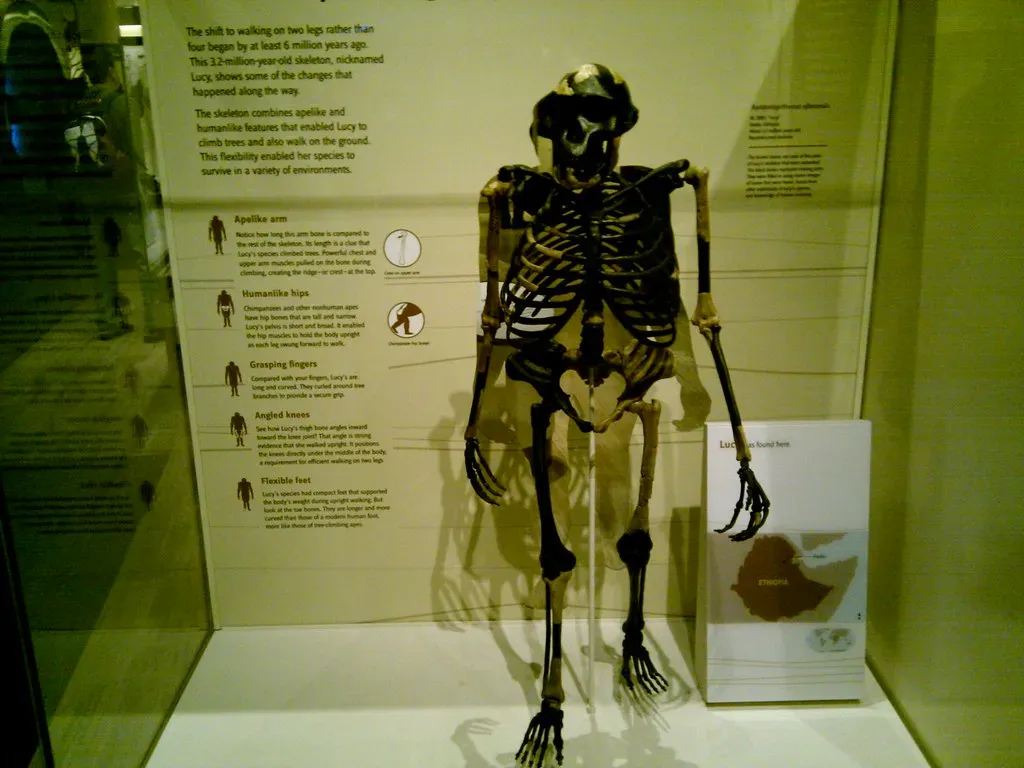
Picture a dry, sun-scorched ravine in northeastern Ethiopia, 1974. On November 24, 1974, paleoanthropologist Donald Johanson was out prospecting for fossils of human ancestors with his graduate student Tom Gray, eyes trained on the ground, when he spotted a piece of elbow with humanlike anatomy. What followed would be one of the most celebrated moments in the history of science.
In the Afar region of Ethiopia, scientists uncovered a skeleton that belonged to an early human ancestor and named her Lucy, after the Beatles song playing at camp that night. Lucy belonged to the species Australopithecus afarensis and lived about three and a half million years ago. Researchers agreed she was from a new species of human-like ape that they named Australopithecus afarensis, meaning “southern ape from Afar.” One of the most important findings regarding Lucy’s skeleton is that she was clearly adapted to walk on two feet, and yet she still had a relatively small brain. This anatomy showed that the evolutionary leap to bipedalism occurred before, not after, hominin brains became larger.
The discovery of Lucy was significant because it was one of the most complete and well-preserved fossils of an early human ancestor ever found. The fossil included almost the entire skeleton of an adult female, including her skull, jaw, teeth, and limb bones. Honestly, the shock wasn’t just about what her bones looked like. It was about what they turned upside down. The old assumption had been that bigger brains came first, then walking upright. Lucy proved the reverse.
In 1975, a year after discovering Lucy’s skeleton at the Hadar site, Johanson’s team made an even more astonishing find: the ancient remains of a group of 17 individuals, probably related, which also dated back 3.2 million years. Among scientists, the group is known as the “First Family.” Although she’s no longer the oldest, Johanson believes that Lucy still occupies a special place in the hominin family tree – as the last common ancestor of two major branches of humans, both modern and extinct.
Ardi: The Fossil That Shattered the Savanna Theory
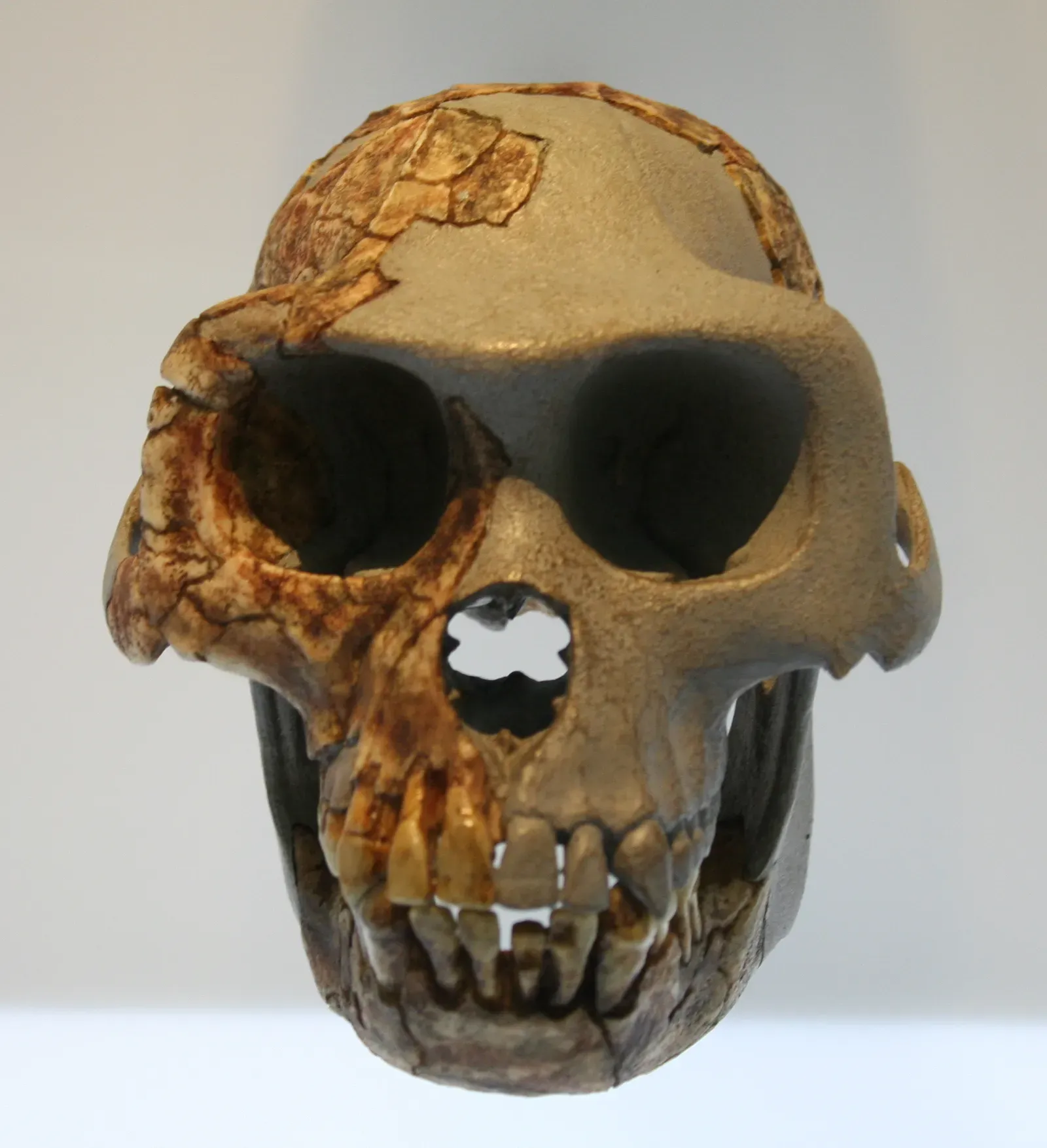
If Lucy was the superstar of paleoanthropology, Ardi is the underdog who arguably delivered the bigger scientific punch. In 1992 in another part of the Afar Depression known as the Middle Awash, an American-Ethiopian team based at the University of California at Berkeley picked up the first pieces of a primitive species more than 1 million years older than Lucy. The early finds included diamond-shaped canine teeth, distinct from the dagger-like fangs of apes. In 1994, the Middle Awash team hit an unexpected jackpot – a 4.4 million year-old skeleton of a species named Ardipithecus ramidus.
The partial skeleton was located in Ethiopia and declared a new species, Ardipithecus ramidus, nicknamed “Ardi.” The foot bones from Ardi and a reconstructed pelvis hinted that this ancient, ape-like hominin was adapted to both tree climbing and walking on two feet. Dated to around 4.4 million years old, the fossil was found alongside plant remains that suggested Ardi lived in a forest, a finding that discounted the “open savanna” theory of human evolution. The theory had argued that bipedalism developed because the climate became drier, and hominins began to live on plains. Let’s be real: that was a massive assumption, and Ardi simply demolished it.
Ethiopian scholar Yohannes Haile-Selassie found a broken hand bone, triggering an intensive search and the discovery of more than 125 pieces of an ancient female who stood about 1.2 meters tall with a grapefruit-sized brain of about 300 cubic centimetres. In the quarter of a century since Ardi was discovered, the ranks of our human family have roughly doubled and there are now more than two dozen species of hominins. Think about that. One skeleton’s discovery helped spark an explosion of new understanding.
The Taung Child: Africa’s First Great Announcement to the World
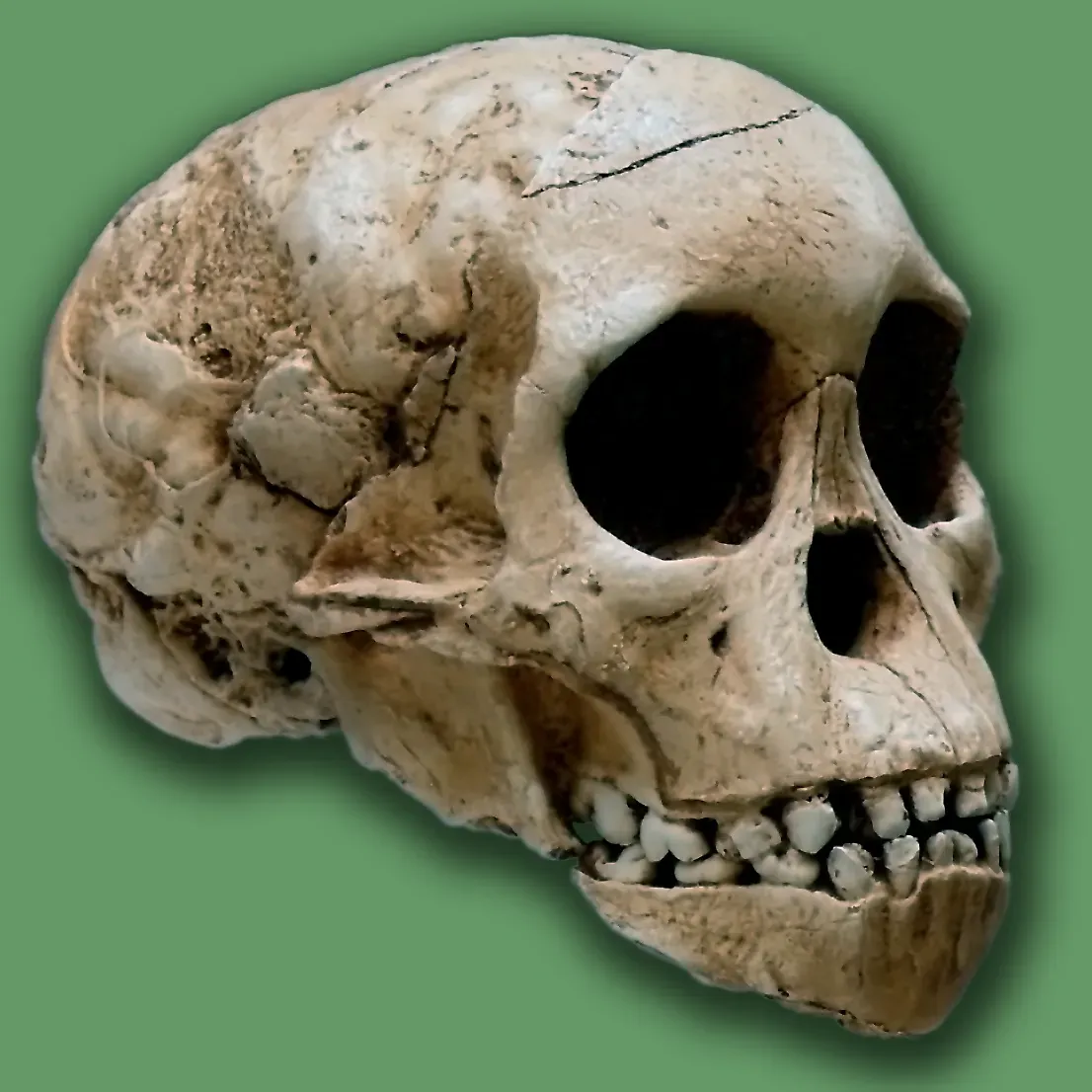
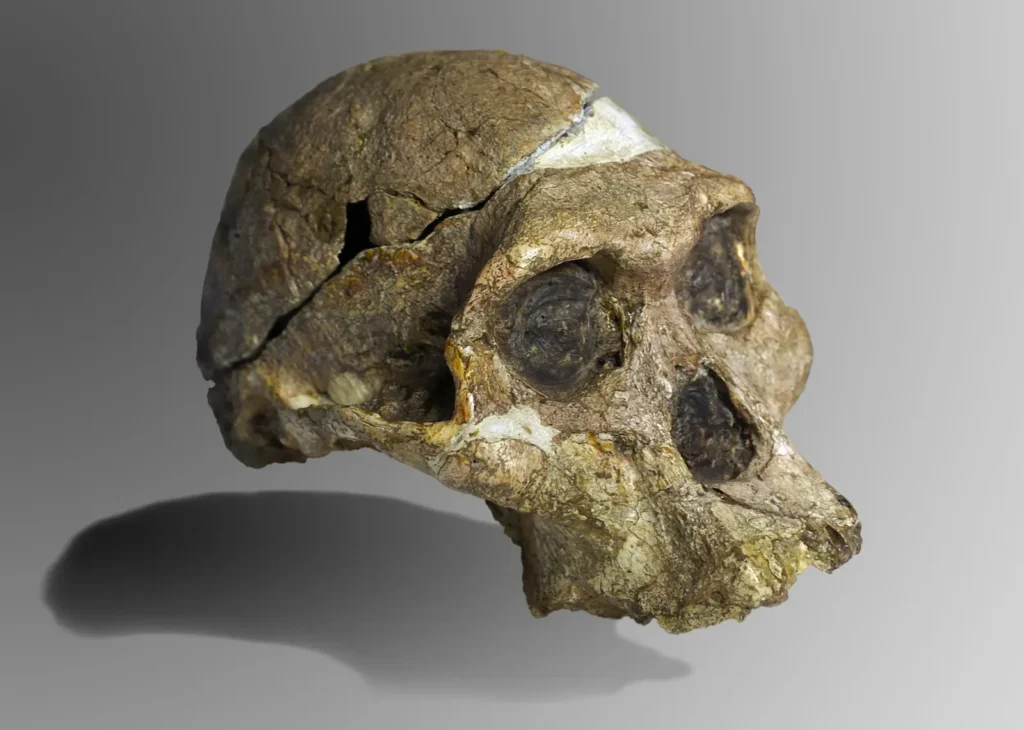
Workers at a quarry in Taung, South Africa, uncovered a remarkable skull in 1924, during an era when the location for the origin of modern humans was contested. Most researchers considered Southeast Asia to be the most likely contender thanks to the discovery of Java Man in the 1890s. The workers brought the skull to paleoanthropologist Raymond Dart. What he saw next would be controversial for decades.
When he began his analysis, Dart soon realized it was a very ancient hominin, and proposed that it supported Charles Darwin’s theory that humans originated in Africa. Dart named the new species Australopithecus africanus, meaning “southern ape from Africa.” The teeth in the skull confirmed it had belonged to a child of about 3 years old, and the position of the hole at the base of the skull where the spinal cord would have attached to the brain indicated that the Taung Child had walked upright. The Taung Child was the second hominin fossil discovered in Africa, and much more primitive than the first. Dart argued that the find vindicated Charles Darwin’s belief that humans arose on that continent.
It would take more than two decades of further fossil finds and advances in geologic dating for Dart to be vindicated – and for Africa to become the epicenter of paleoanthropology. More recent research has pegged the fossil at 2.8 million years old. In 1995, paleoanthropologists Lee Berger and Ron Clarke proposed that claw marks under Taung Child’s eye sockets suggested the toddler had been killed by a large eagle and brought to its nest, a hypothesis strengthened by the presence of eggshells and small animal bones found beside the skull. It’s a gut-punch realization: one of our most important ancestors may have ended up as something else’s lunch.
Turkana Boy: The Most Complete Early Human Ever Found
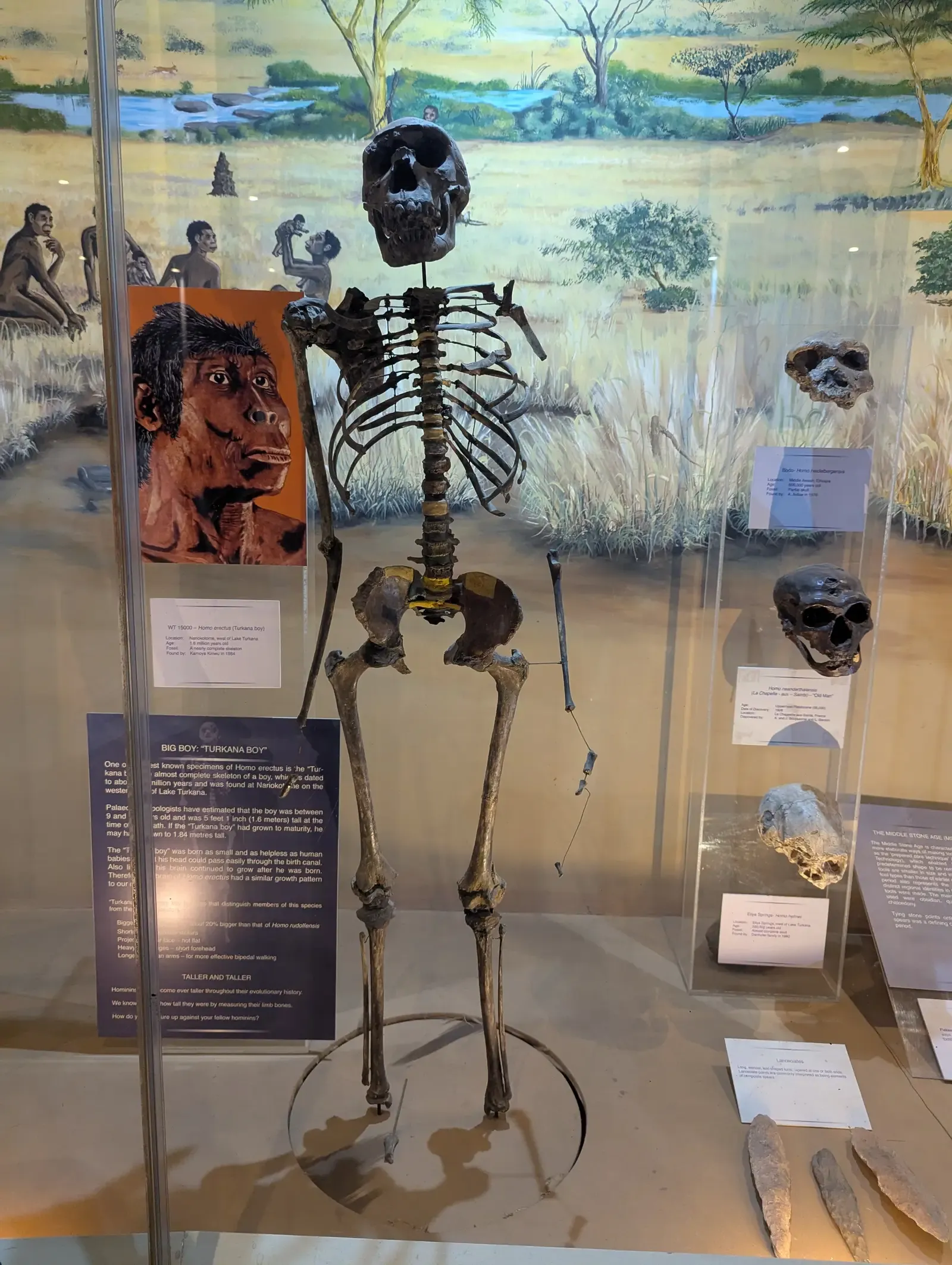
Imagine finding a nearly complete skeleton of one of our ancestors from 1.5 million years ago. That is exactly what happened on the banks of the Nariokotome River in northern Kenya in 1984. It was discovered by Kamoya Kimeu on the bank of the Nariokotome River near Lake Turkana in Kenya. Unearthed in 1984, the skeleton is around 1.5 million years old and represents the most complete ancient human specimen ever discovered.
The Turkana Boy, as he is sometimes called, lived about 1.5 million years ago. He was about 8 to 10 years of age when he died but was already 1.6 metres tall and may have reached 1.85 metres as an adult. Unlike earlier hominins such as Australopithecus, the hips were narrow and the thighs were long like those of modern people. The brain was larger than the earlier Homo habilis and smaller than the later Homo species. Here was a creature standing on the edge between our ape-like past and something startlingly recognizable.
By far the longest-surviving human species, Homo erectus was the first hominin to evolve a truly human-like body shape. It was the first of our relatives known to have travelled beyond Africa, and it achieved significant milestones in the story of human evolution, probably including the control of fire. It appears that the fully modern human body shape evolved more recently than previously thought, rather than as early as two million years ago when Homo erectus first emerged. Every new analysis of Turkana Boy seems to add another surprising twist.
The Laetoli Footprints: Our Ancestors Walked Before Their Brains Grew
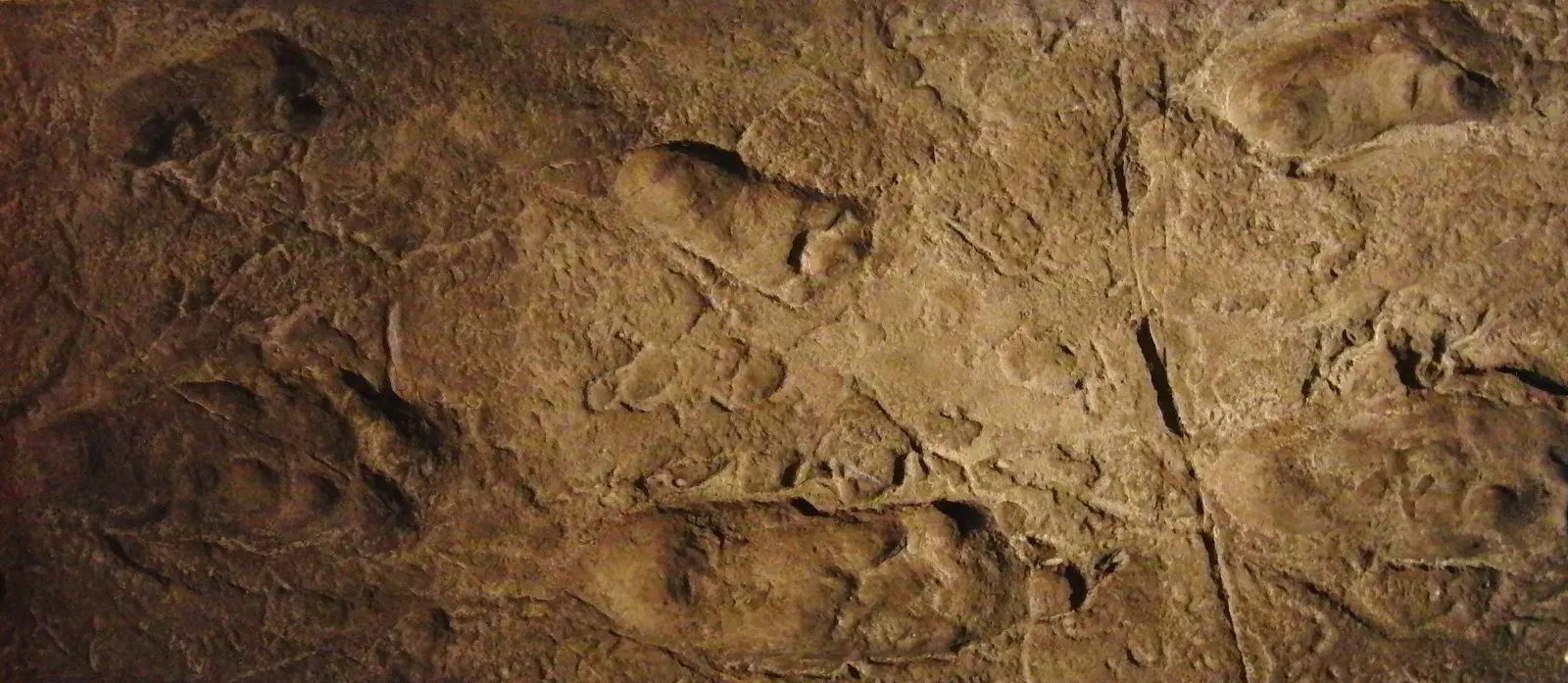
Here’s the thing about footprints: they’re not bones, they’re not skulls. Yet they may be the most emotionally powerful fossil evidence of early human life ever discovered. Walking upright is so natural to you that you never think about it. But roughly 3.6 million years ago, two individuals strolled across freshly deposited volcanic ash in what is now Tanzania, and the ground kept that memory forever.
These prints were made by human ancestors nearly four million years ago. They show two individuals walking upright, side by side. The Laetoli footprints were groundbreaking because they proved that bipedal walking evolved long before larger brains or tool use. Our ancestors were walking upright millions of years earlier than previously thought. This species is the likely suspect to have left the humanlike footprints in fossilised volcanic ash at Laetoli, Tanzania, 3.6 million years ago.
After much debate, little doubt remains that Lucy’s species were bipeds. Australopithecus afarensis had a straight big toe – not a grasping one – and the beginnings of a humanlike arched foot, despite having more primitive foot proportions than we do. The footprints don’t just confirm bipedalism. They carry a strange emotional weight. Two beings, walking together across a prehistoric landscape, leaving behind a trail that you are now reading about millions of years later.
Homo naledi: The Mysterious Cave Dweller Who Rewrote Complexity
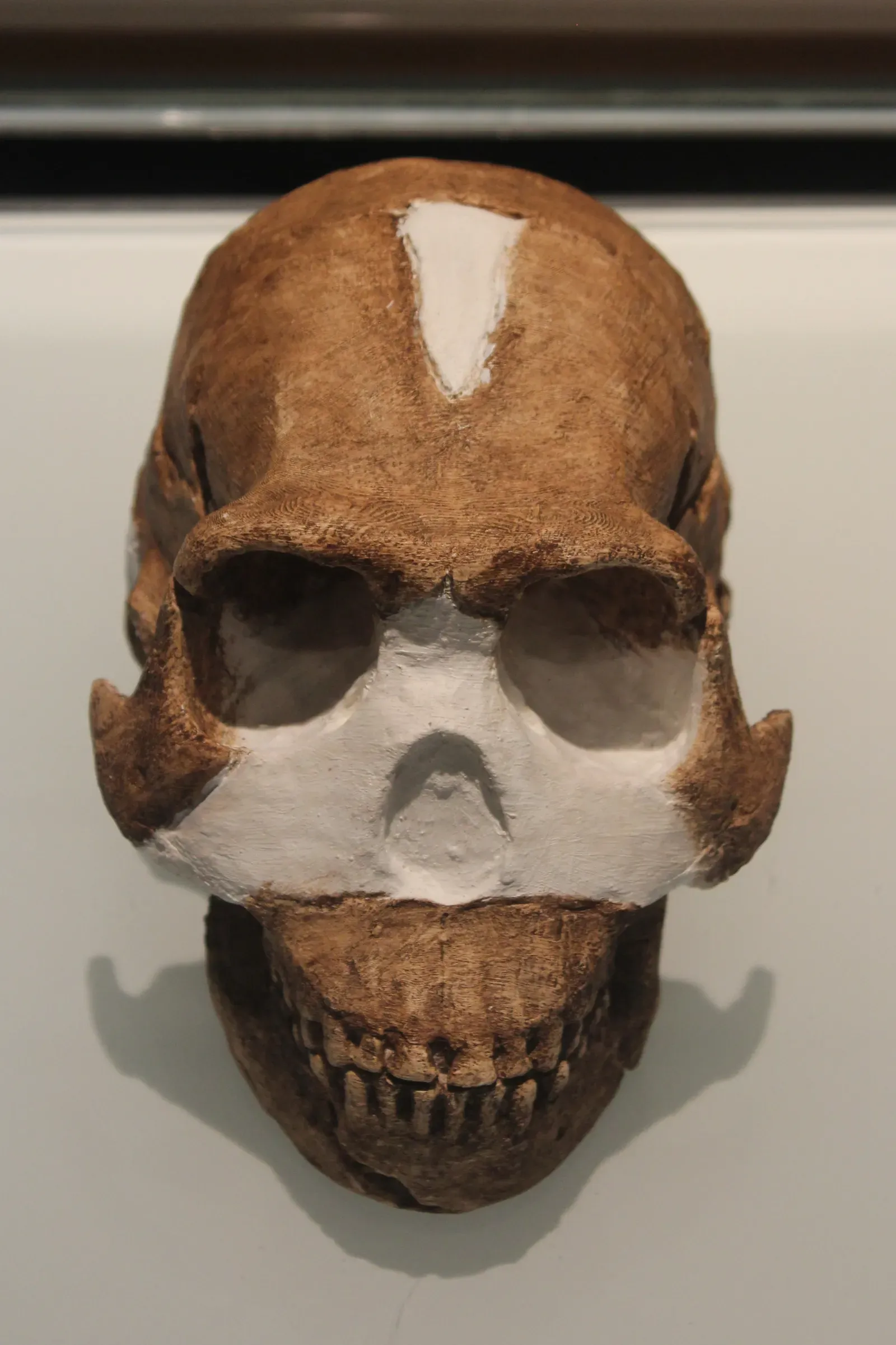
Few fossil stories in recent years have generated as much electric, ongoing debate as the discovery of Homo naledi. On 13 September 2013 while exploring the Rising Star Cave system in the Cradle of Humankind, South Africa, cavers Rick Hunter and Steven Tucker found hominin fossils at the bottom of the Dinaledi Chamber. What came next was a scientific operation unlike almost any other.
The first Homo naledi finds were discovered by cavers in a remote, almost inaccessible chamber deep within the Rising Star cave system. Palaeoanthropologist Lee Berger assembled a team of excavators who proceeded to recover more than 1,500 fossil bones belonging to at least 15 individuals, ranging from infants to elderly adults. On 10 September 2015, the fossils were publicly unveiled and given the name Homo naledi. The fossils of the Dinaledi chamber have been dated to between 335,000 and 236,000 years ago, long after much larger-brained and more modern-looking hominins had appeared.
Along with similarities to contemporary Homo, they share several characteristics with the ancestral Australopithecus as well as early Homo, most notably a small cranial capacity of 465–610 cubic centimetres, compared with 1,270–1,330 cubic centimetres in modern humans. The estimated dates mean that Homo naledi was alive at the same time as the earliest members of our own species, which most likely evolved between 300,000 and 200,000 years ago. A primitive-brained species walking alongside early Homo sapiens. That is not what anyone expected.
Since the first publication of results from the Dinaledi Chamber, there has been scholarly debate on whether the fossils excavated from the cave provide evidence of Homo naledi engaging in intentional burial activity. If proven true, Dinaledi Chamber would be the oldest known hominin burial, beating out the approximately 78,000 year-old Homo sapiens burial from Panga ya Saidi cave in Kenya by some 160,000 years. I think this is the part that makes Homo naledi truly astounding. It forces you to ask: how much does a big brain actually matter?
Sahelanthropus tchadensis: The Oldest Possible Human Ancestor
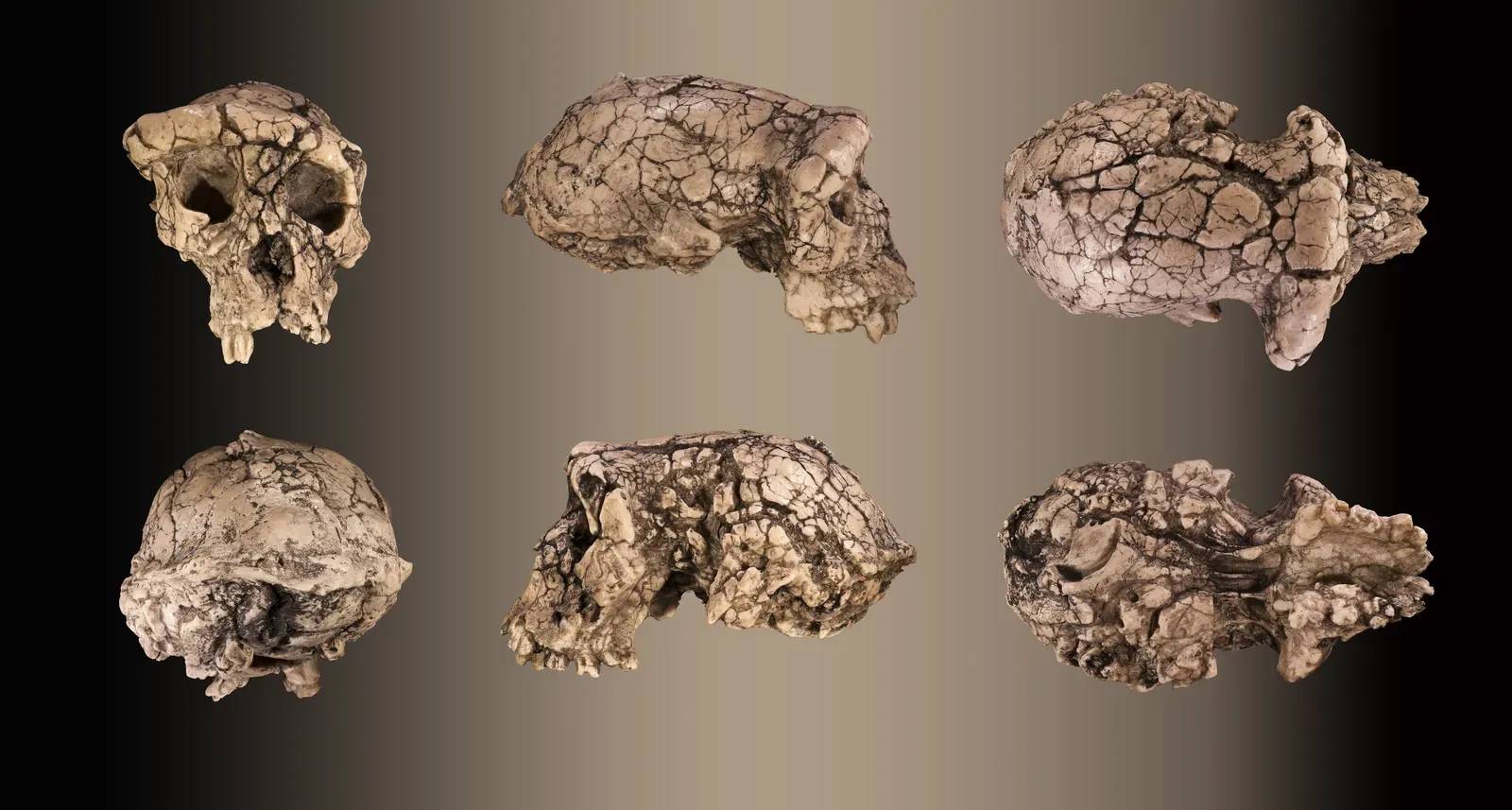
Go back far enough in the family tree, and the line between human ancestor and ape ancestor gets genuinely blurry. Sahelanthropus tchadensis was announced as a new species. It was discovered in Chad in 2001 and dates to about 6 to 7 million years old. Scientists consider the find to be of major significance but debate its relationship to humans. It is very possible that it comes before the split between the human and chimp line, making it an ancestor of both branches.
One of the first possible hominins, Sahelanthropus tchadensis, dates to around six to seven million years ago and was found in Chad in Central Africa. This species was previously known only by cranial remains and a partial femur, but in August a team reinterpreted the femur and described two ulnae. These ulnae share many affinities with our ape relatives and suggest that while Sahelanthropus may have been bipedal on the ground, its arms were still well adapted to climbing and clambering in trees. It’s hard to say for sure, but what you’re looking at here might be something astonishingly close to the moment our lineage began its first shaky steps away from the apes.
This includes three species older than Ardi, the most ancient being the skull of Sahelanthropus tchadensis, at least 6 million years old from Chad. Today, the oldest purported hominins date back some 6 million or 7 million years – to around the time when the ancestors of humans and chimpanzees probably parted ways. That is a staggering span of time to try to wrap your mind around. To hold a skull from that moment in history is to hold the very beginning of something that eventually became you.
The Denisovans: The Ancestors You Didn’t Know You Had
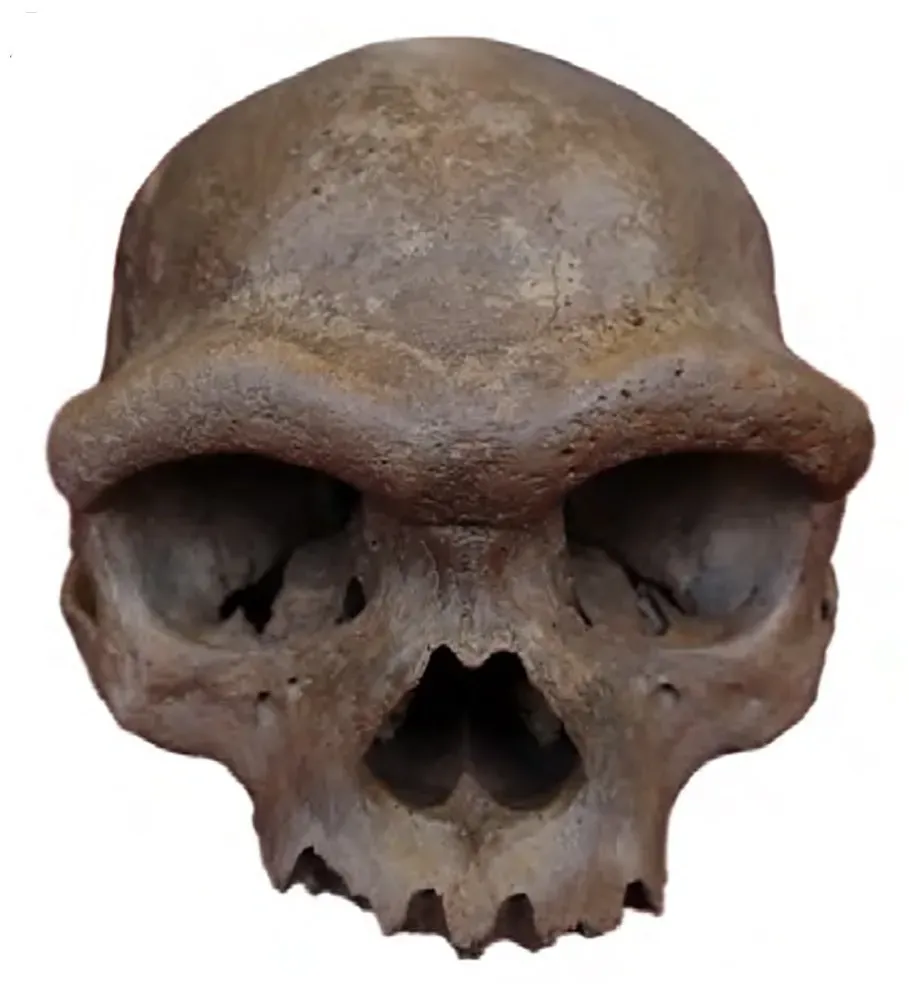
Most entries on this list involve bones you can see and study directly. The Denisovans are almost unique in that they were discovered primarily through ancient DNA extracted from a finger bone. When the decade first started, scientists recovered ancient genetic material from a fossilized finger bone found in the Denisova Cave in Siberia. The scientific world was stunned. Here was an entirely unknown group of ancient humans, revealed not by a skull but by genetics.
A molar found in a cave in Laos may belong to a Denisovan girl. Dating to between 130,000 to 160,000 years old, this is the first Denisovan fossil found in a geographic area where scientists now know their DNA wound up. Many populations of modern Southeast Asian, Papuan and Filipino people have some Denisovan DNA in them – up to five percent in one Indigenous Filipino group. Think about that. A vanished human species that no one even knew existed is living, in tiny but measurable traces, inside people alive today.
By some counts, more than 20 hominin species have been identified in the fossil record. Experts disagree on how to classify all of these forms, but clearly the hominin family was diverse, with some species overlapping in both time and place. One of the most exciting developments in the field of human origins research has been the revelation that for most of our prehistory multiple human species, or hominins, roamed the planet. The Denisovans are the ultimate proof that the human story was never a solo journey. You are the product of a crowded, messy, and breathtaking extended family.
Conclusion: Bones That Make You Ask Bigger Questions
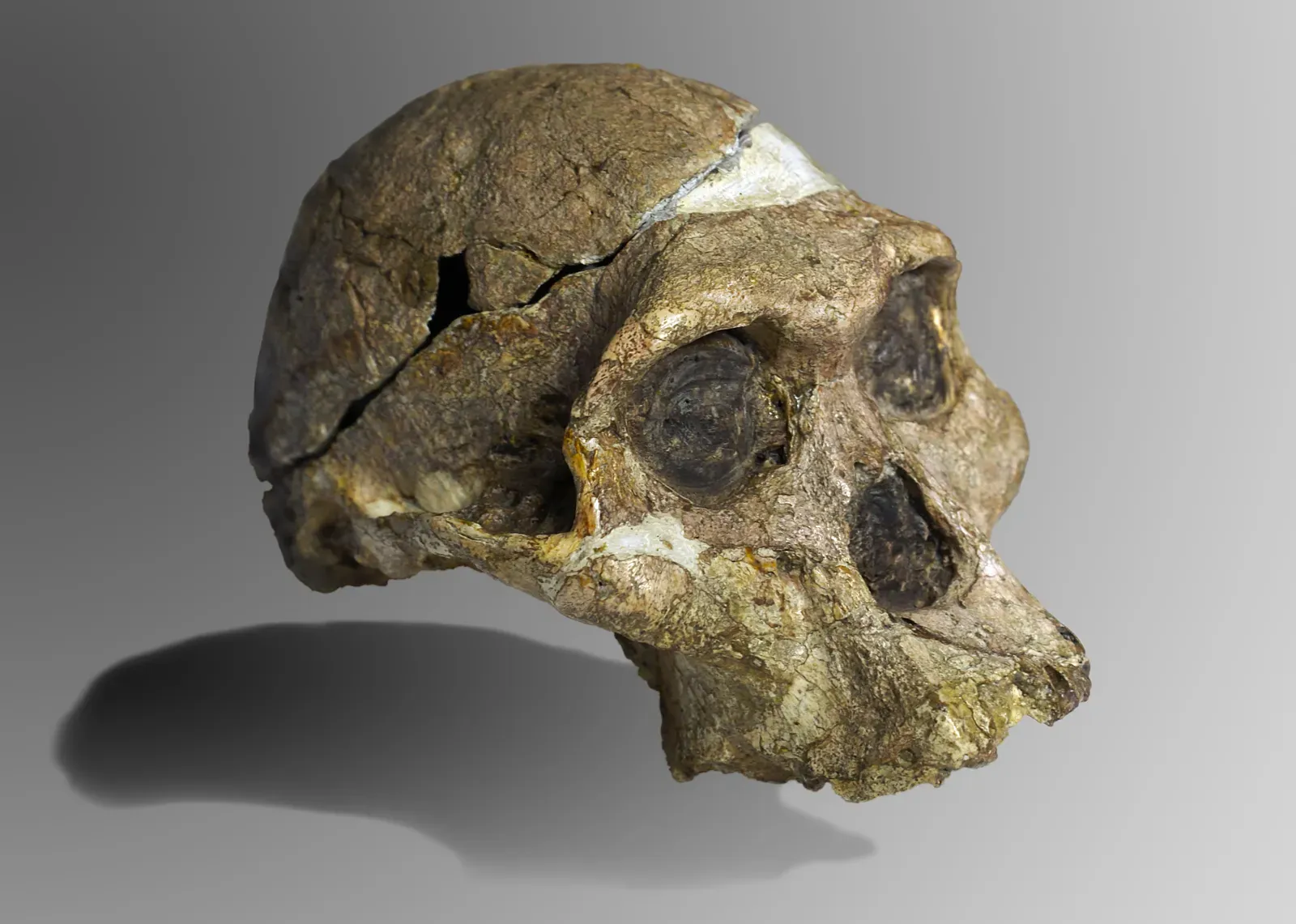
Each of these eight discoveries didn’t simply confirm what scientists already believed. They complicated things. They introduced new questions faster than they answered old ones. Human evolution was not a gradual, linear process. It did not consist of a nearly unbroken chain, one hominin evolving into the next through time. Fossil discoveries in the 1960s and 1970s revealed a bushier family tree, with many dead-end branches.
Both skeletons testify to the importance of fossils. Theories and analytical models are essential components of science, but hard evidence sometimes defies predictions. Despite the hype that often comes with big discoveries, no single fossil represents the beginnings of humankind, the mother of humanity, or the missing link. Rather, they are just random relics of ancient populations that we are lucky enough to find – and probably a fraction of the past forms that have been erased by time.
The most honest thing you can say about early human history is this: we know far less than we think we do. Our origin story, while much advanced from Darwin’s Descent of Man, is still a work in progress. The ground beneath us still holds countless secrets. Every field season, every cave crawl, every eroding hillside in East Africa has the potential to change everything again. Which discovery do you think will shake the next generation of scientists to their core?