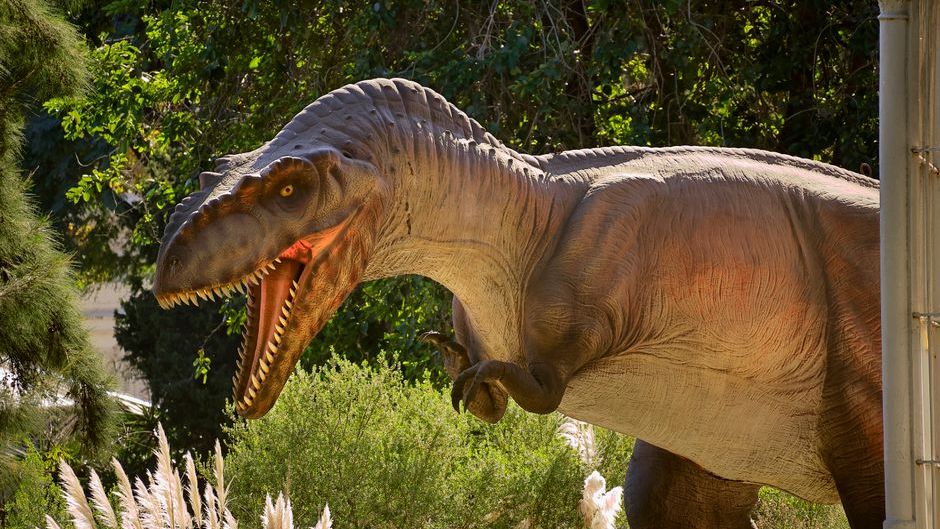
For a lot of us, dinosaurs live in our heads as giant, scaly movie monsters: leathery skin, crocodile vibes, maybe a bit of slime for drama. But over the past few decades, fossil discoveries have quietly ripped that picture to shreds. Many dinosaurs – including some of the most famous ones – were fluffy, fuzzy, or downright bird‑like, and once you see them that way, the old Hollywood versions start to look almost comical.
When scientists began finding fossils with actual feather impressions still preserved, it was like someone had turned the contrast up on history. These were not just crocodiles with longer legs; they were strange, vibrant, feathered animals that would look more at home in an oversized aviary than in a monster movie. Let’s walk through eight dinosaurs that almost certainly would have shocked you if they walked past you on a Cretaceous sidewalk – and absolutely do not match the versions you’ve seen on screen.
1. Velociraptor: The Iconic Movie Monster That Was Basically a Murder Bird
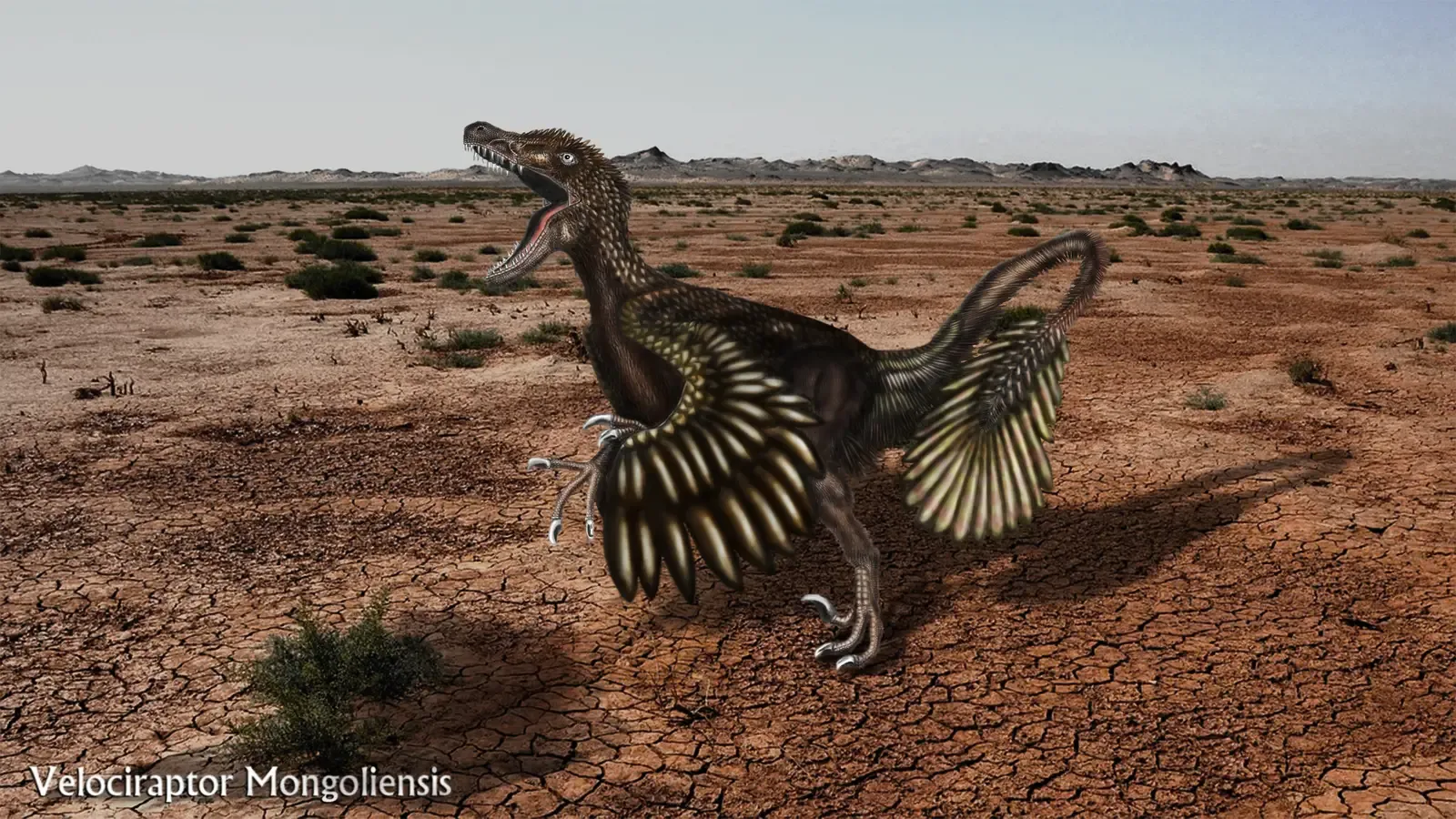
Velociraptor is probably the most famous victim of cinematic redesign. In the movies, it’s a human‑sized, naked, scaly sprinter with lizard skin and a lashing tail. In reality, Velociraptor was closer to the size of a large turkey, and there is direct fossil evidence of quill knobs on its arm bones – the same kinds of structures that anchor feathers on modern birds. That means we are not guessing here: this dinosaur actually had feathers attached to its limbs.
Imagine a lean, long‑tailed ground bird with a narrow snout full of teeth, arms fringed with feathers, and a big sickle claw on each foot – more like an insanely overbuilt roadrunner than a reptilian horror. It probably could not fly, but it might have used its feathered arms for balance while running, for display, or to help cover eggs in a nest. If a real Velociraptor trotted past your car today, you might first think “giant predatory bird,” not “lizard,” and that mental flip alone shows how far our image has drifted from reality.
2. Microraptor: The Four-Winged Glider That Looks Like a Mythological Creature
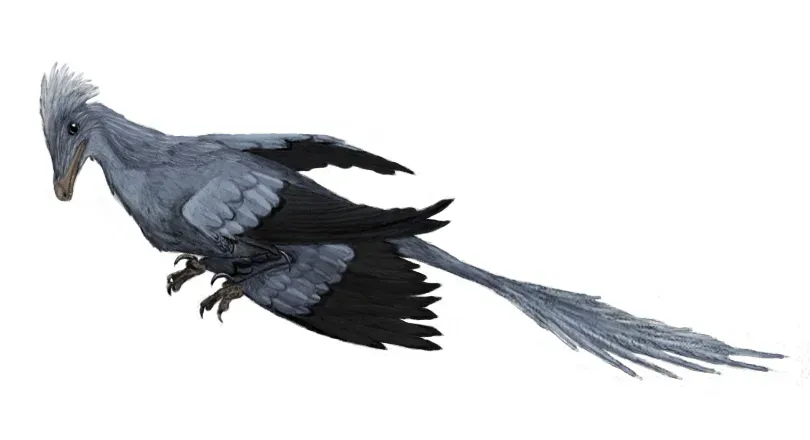
Microraptor is one of those dinosaurs that makes you wonder why special‑effects teams do not use more real science. This small predator had long flight feathers not only on its arms but also on its legs, forming a sort of four‑winged body plan. Fossils show beautifully preserved feather impressions, revealing a long, fan‑shaped tail plume and distinct flight feathers along the limbs. This animal almost certainly glided or made short, controlled flights between trees.
Picture a glossy, crow‑sized animal, limbs stretched out like a flying squirrel but covered in structured feathers instead of skin flaps. Some specimens even suggest dark, possibly iridescent plumage, which would have given it a shimmering, starling‑like sheen in the forest light. Compared to a generic “mini‑raptor” in a movie, the real Microraptor is far stranger and more elegant – less monster, more living myth, like something halfway between a bird of paradise and a dragonfly.
3. Sinosauropteryx: The Fluffy, Ring-Tailed Predator That Looked Weirdly Cute
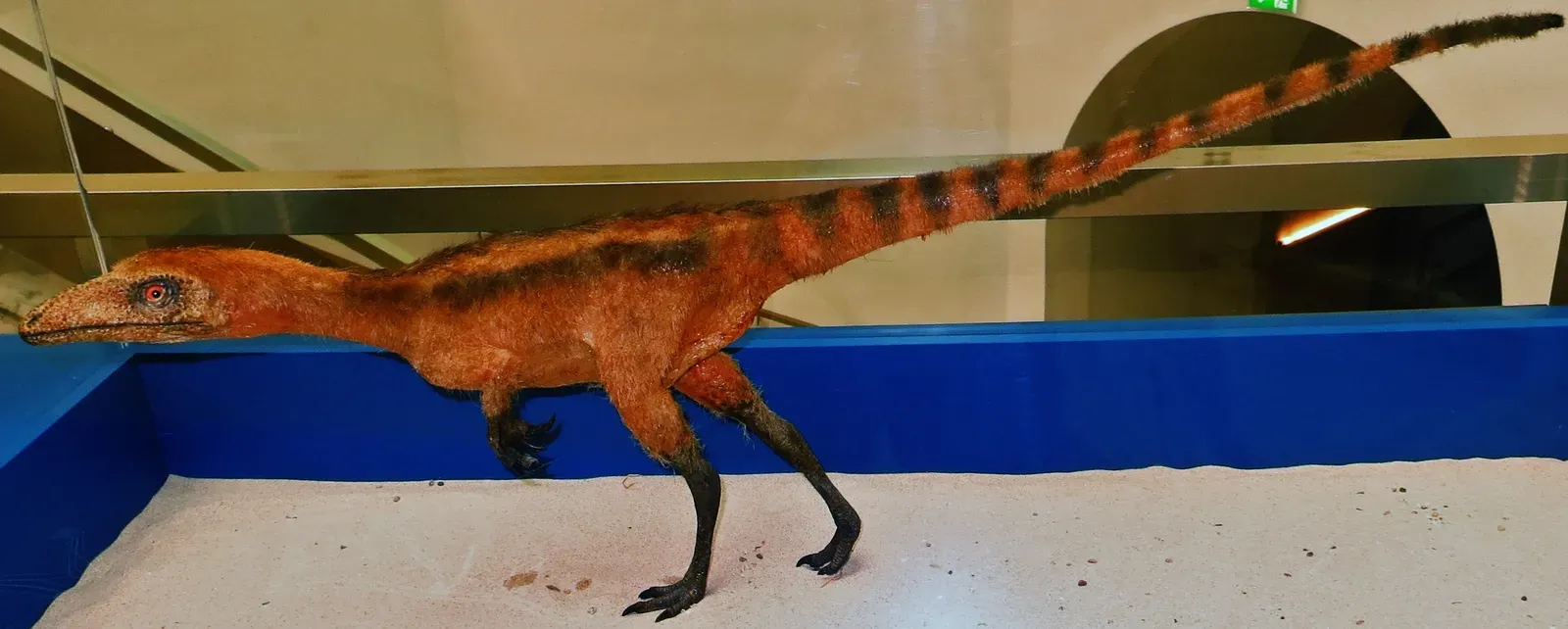
Sinosauropteryx was one of the first dinosaurs ever found with clear evidence of filamentous feathers – simple, hair‑like structures covering its body. This small theropod was about the length of a large house cat, with a long tail and a lightweight frame. Fossils preserve a halo of fuzz around the skeleton, making it clear that this animal was not bare‑skinned. It looked more like a scruffy, toothy ferret with a tail plume than anything resembling the sleek, scaly killers Hollywood offers us.
Even more surprising, some fossils preserve pigment structures that suggest it had a banded, ringed tail pattern, likely with alternating light and dark stripes. That means we are not only talking about feathers but also about color and pattern, possibly used for camouflage or display. Compared to the grim gray‑brown palette of most movie dinosaurs, a striped, fuzzy Sinosauropteryx trotting through the undergrowth feels almost whimsical – until you remember it was a predator that could easily turn a small mammal into lunch.
4. Yutyrannus: The Giant Feathered Tyrant That Rewrites the T. rex Image
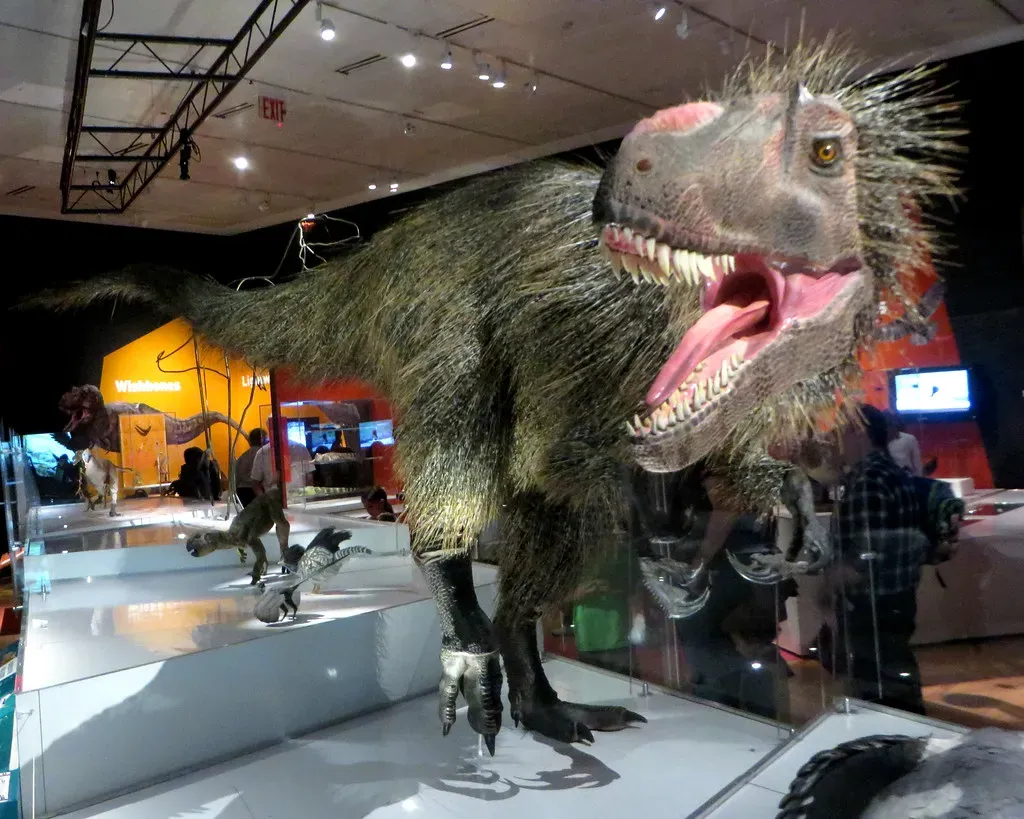
Yutyrannus is the dinosaur that makes people do a double take, because it combines two things we rarely imagine together: tyrannosaur bulk and a coat of feathers. This large predator from what is now northeastern China reached roughly the size of a small bus, yet fossils clearly show long, filamentous feathers along the neck, torso, and tail. It was not just lightly fuzzy; its body was genuinely covered in a shaggy coat in several areas. That pushes hard against the old view that feathers were only for tiny, delicate species.
If you imagine a somewhat slimmer cousin of Tyrannosaurus rex but draped in coarse, shaggy proto‑feathers, you are closer to the truth than any scaly movie monster. This feather covering may have helped with insulation in a cooler climate, or played a role in display, making the animal look bigger and more intimidating. Once you accept that a huge tyrannosaur could be feathered, it forces you to reconsider the classic, crocodile‑skin T. rex from films and posters. Suddenly, a partially feathered king of the dinosaurs stops feeling like a joke and starts feeling inevitable.
5. Archaeopteryx: Not Just the “First Bird,” But a Legit Feathered Dinosaur
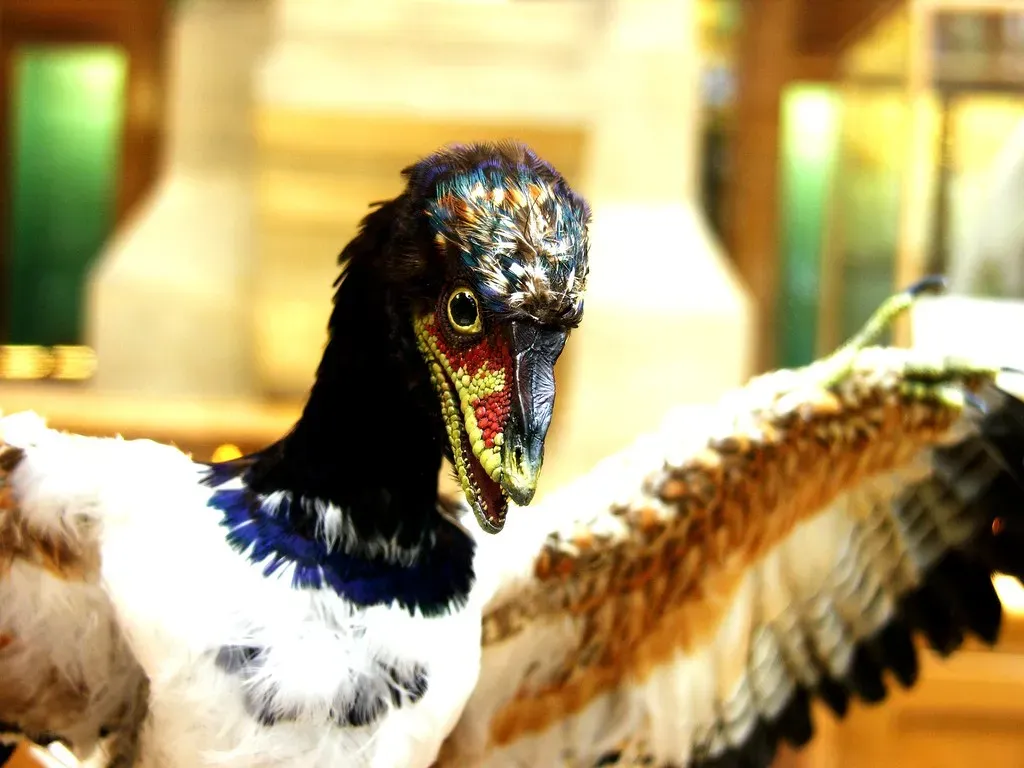
Archaeopteryx is often marketed as the first bird, but it is just as fair to call it a small, feathered dinosaur with wings. The fossils are legendary because they preserve intricate feather impressions, complete with asymmetrical flight feathers similar to those of modern flying birds. But step back and look at the skeleton, and you see teeth in the jaws, a long bony tail, and clawed fingers on the wings – all very dinosaur‑like traits. It really is a bridge animal, sitting right between the raptors and the birds we know today.
Compared to movie dinosaurs, Archaeopteryx tends to be either ignored or shown as a dull, gray pigeon with teeth. In reality, studies of preserved pigments suggest it may have had dark feathers, giving it a sleek, glossy appearance, almost like a crow with a reptilian twist. Its life probably involved clambering around trees, making short gliding flights or flapping bursts, and hunting insects or small vertebrates. If you put one in a modern forest, people would call it a very strange bird, not a lizard, and that shift in gut feeling captures the real story of feathered dinosaurs perfectly.
6. Anchiornis: The Tiny, Patterned Dino That Could Pass as a Strange Bird
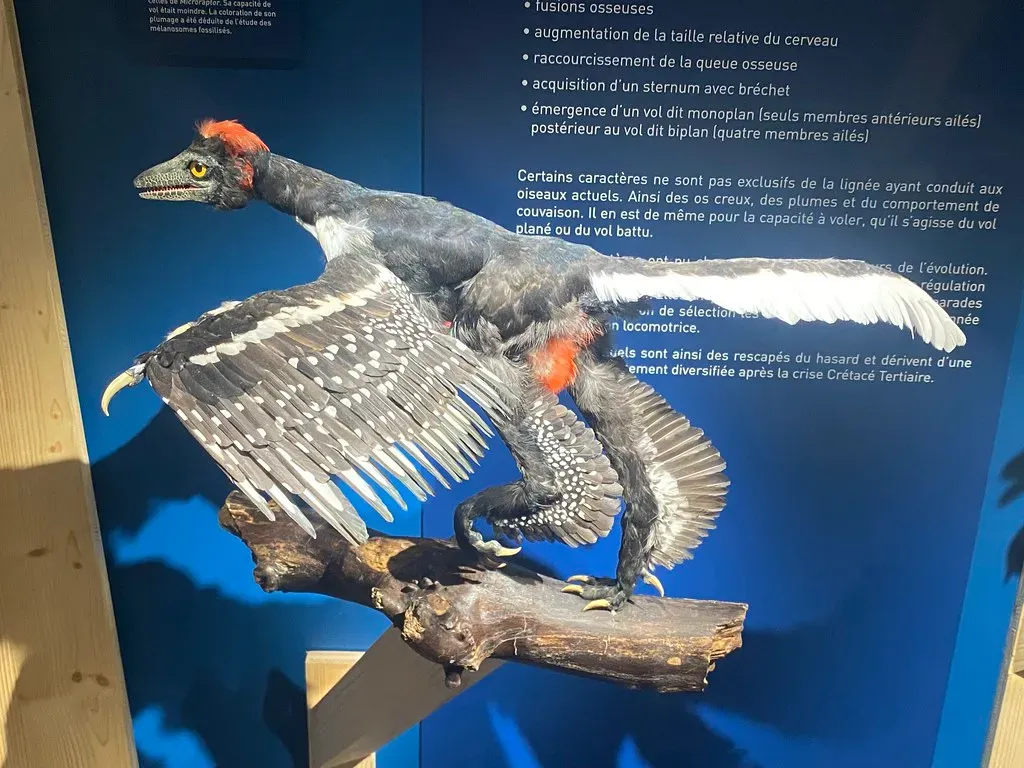
Anchiornis is a small dinosaur that completely destroys the old line between “bird” and “non‑bird.” Its fossils preserve an incredible amount of feather detail, including long feathers on its arms and legs and a fan of tail feathers. Even more impressively, microscopic structures in those feathers have been studied to reconstruct its color patterning. The picture that emerges is a creature with a mix of dark and light feathers, possibly with reddish tones on the crest and speckled or banded wings.
Think of a small, crow‑sized animal with a feathered crest on its head, spotted wings, and a long, feathered tail. It probably hopped, ran, and clambered through trees in a way that would look familiar if you have ever watched magpies or jays. In a movie, this kind of dinosaur would likely just be turned into a generic bird extra, if it appeared at all. Yet scientifically, it is one of the strongest pieces of evidence that many so‑called “raptors” were more similar to early birds than to any scaly reptilian nightmare.
7. Deinonychus: The Real Inspiration for Movie Raptors Was Almost Certainly Feathered
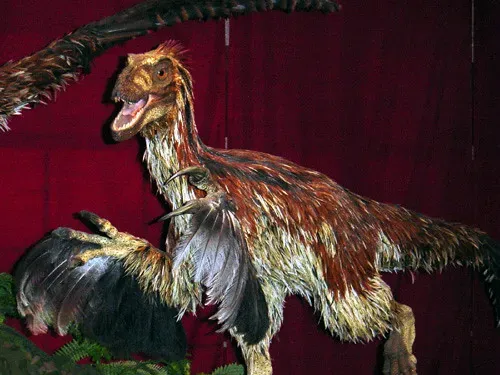
Deinonychus is the dinosaur that originally inspired the idea of fast, intelligent, pack‑hunting predators – the blueprint for the famous movie “raptors.” The films quietly scaled it up and slapped the name Velociraptor on it, but the general body style came from Deinonychus. When it was first described, scientists imagined it as a sleek, scaly predator, because the feathered dinosaur revolution had not hit yet. Today, given its position within the dromaeosaur family, the idea of a naked Deinonychus looks outdated.
There is no direct feather impression for Deinonychus yet, but related dromaeosaurs of similar size and body plan preserve clear feathers, so scientists infer that Deinonychus almost certainly had them as well. It would have had a feathery coat, likely with wing‑like structures on its arms and a plume on its tail, giving it a much more bird‑like silhouette. Instead of a brown, reptilian villain, the real animal was probably closer, in feel, to a terrifying ground eagle: alert, agile, and covered in plumage that helped it balance, signal, and regulate its temperature.
8. Ornithomimus: The Ostrich Mimic That Was Even More Bird-Like Than You Think
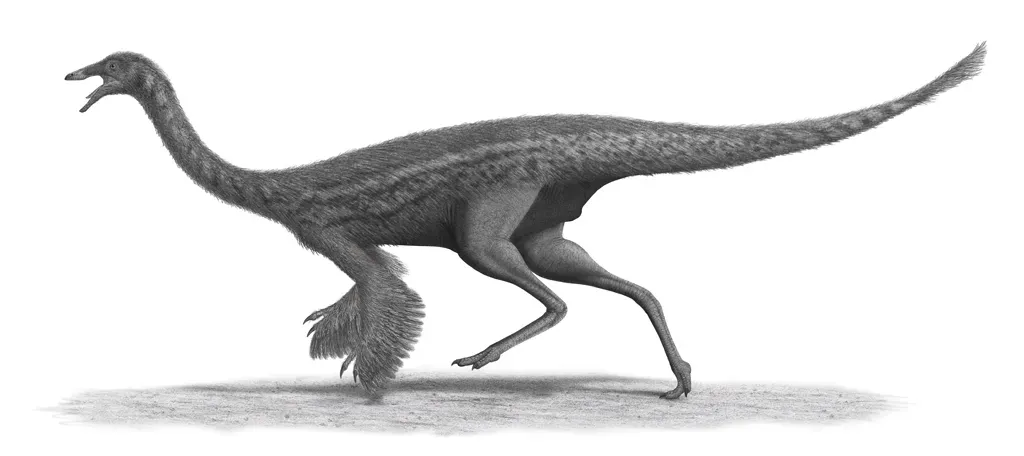
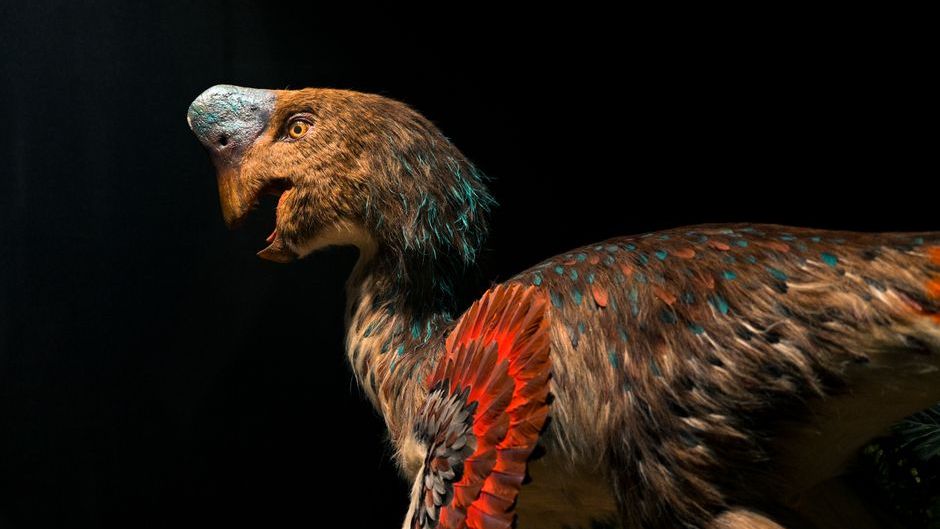
Ornithomimus literally means “bird mimic,” and even early depictions showed it as a long‑legged, ostrich‑like dinosaur. But the details were off: most artwork portrayed it with smooth, lizard‑like skin. Then fossils were discovered with preserved feather impressions, including evidence for a feathery body covering and longer feathers forming a kind of primitive wing on the arms. Suddenly, the “ostrich mimic” looked less like an imitation and more like a genuine precursor to the birds we see today.
Imagine an ostrich, but with a long, stiff tail and a face that merges a bird’s beak‑like snout with a dinosaur’s bone structure. Its body was covered in feathers, and the arm feathers probably did not support flight, but could have been used for display, maneuvering, or brooding eggs. In movies, these kinds of dinosaurs are often relegated to background runners, naked and beige. The truth is far richer: a whole group of feathered, fleet‑footed animals racing across Cretaceous floodplains, looking more like weird, prehistoric emus than scaly reptiles.
Conclusion: Dinosaurs Were Not Reptile Monsters – They Were Living, Breathing, Feathered Animals
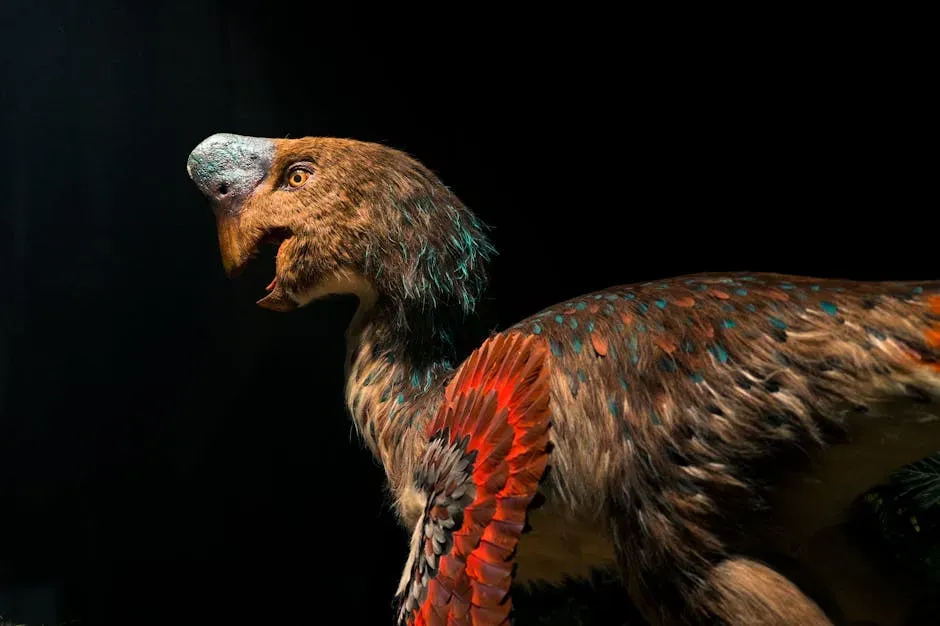
Once you really sit with the evidence, it becomes hard to see the scaly, movie‑style dinosaurs as anything but nostalgic fantasy. Feathers show up across a surprising range of species, from tiny tree‑climbers to bus‑sized tyrants, and they radically change the mood of these animals. Instead of cold, uniform reptile skin, you get texture, color, and pattern – things that suggest display, social behavior, and complex lives. Personally, I find the feathered versions far more awe‑inspiring; they feel like real, dynamic creatures instead of rubber monsters.
There is a stubborn resistance to letting go of the old look, probably because it is baked into our childhoods and pop culture. But science does not really care about our nostalgia, and the fossil record keeps pushing us closer to a world where dinosaurs blur into birds so thoroughly that the categories start to feel artificial. In the end, that is the wildest twist of all: if you want to see dinosaurs today, you just look up at the nearest pigeon or hawk. Given everything we now know, which is stranger – that dinosaurs had feathers, or that we ever thought they did not?