
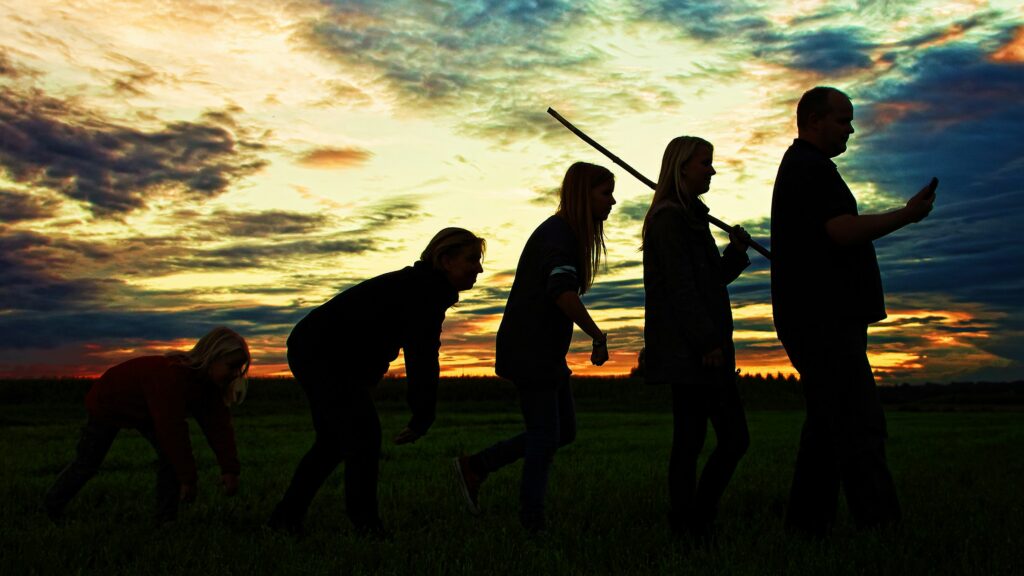
Most of us carry a mental picture of human evolution that looks like a neat cartoon: a hunched ape slowly straightening into a modern person in a T‑shirt. It is simple, satisfying, and almost completely wrong. The real story of how we became human is far messier, far stranger, and honestly much more thrilling than the myths we keep repeating.
When you start looking at what fossils, DNA, and archaeology actually show, the familiar stories begin to crumble. Humans did not come from chimpanzees, evolution did not “stop” once cities appeared, and no, there was never a single “first” human who suddenly popped into existence. Let’s walk through eight of the biggest myths scientists are desperate to retire – and what the evidence really says instead.
Myth 1: Humans Evolved From Chimps
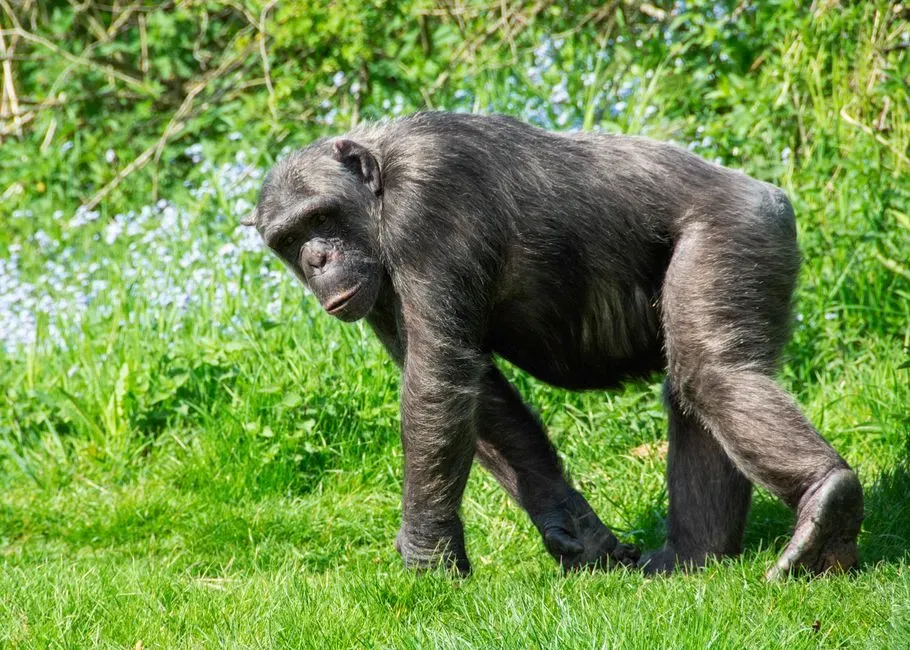
One of the most stubborn myths is the idea that humans literally descended from chimpanzees, as if a chimp one day gave birth to a slightly less hairy accountant. That’s not how evolution works at all. Humans and chimpanzees share a common ancestor that lived several million years ago; from that shared population, different branches split off and evolved along their own paths. We are cousins, not parents and children.
If you imagine a huge family tree, humans are on one twig and chimps are on another, both growing out from a thicker branch that belonged to that ancient ancestor. Modern chimps have been evolving and adapting just as long as we have, shaped by their own environments and survival pressures. So when you look at a chimp, you are not seeing your species’ past; you are seeing another species that is just as modern as you are, with its own remarkable evolutionary story.
Myth 2: Evolution Has a Goal (And We’re the Finish Line)
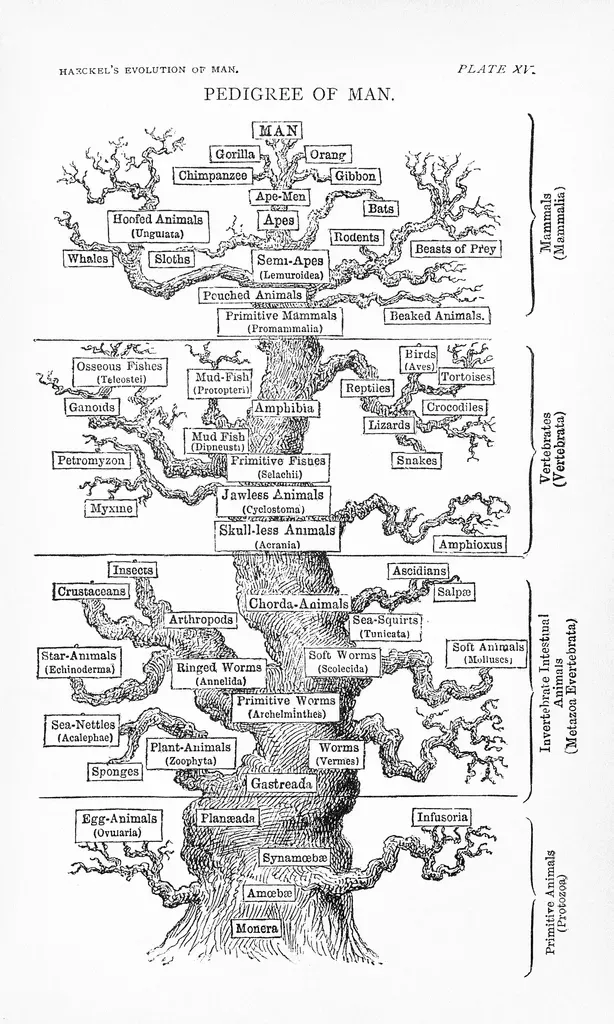
It is tempting to think of evolution as a ladder with humans perched proudly at the top, looking down at everything “less evolved” below. But evolution is not aiming for complexity, intelligence, or any particular outcome at all. It is a blind, ongoing process where random genetic changes are filtered by whether they help organisms survive and reproduce in a given environment. There is no built‑in direction, no secret plan, and definitely no guarantee that what works today will be favored tomorrow.
In that sense, a beetle, a bacterium, or a blade of grass is just as “evolved” as a human, because every living thing today is the result of the same length of evolutionary time. We happen to be very good at certain things, like symbolic language and long‑distance running, but very bad at others, like digesting raw cellulose or regrowing lost limbs. Instead of imagining a ladder with us at the top, picture a tangled bush: many branches, all growing outward, none objectively “higher” than the others.
Myth 3: There Was a Single “First Human”
People love the idea of a clear starting point: one special child born to non‑human parents who suddenly crossed the line into humanity. Reality is more like a gradient than a step. Traits that we think of as uniquely human – bigger brains, smaller teeth, complex tools, language‑ready vocal tracts – evolved gradually in populations over long stretches of time. There is no fossil or moment scientists can point to and say, that is the first real human and everyone before was something else.
Imagine standing on a beach watching the tide come in; you cannot pick the exact wave where “high tide” officially starts. Human evolution is similar. At some point, enough changes in anatomy, behavior, and genetics accumulated that we recognize a distinct species, Homo sapiens, but that recognition is our label, not nature’s switch. Early populations would have included individuals who were more or less “modern” by our standards, all interbreeding and mixing their traits. The search for a single first human is really the wrong question.
Myth 4: We Evolved Linearly From One Species to the Next
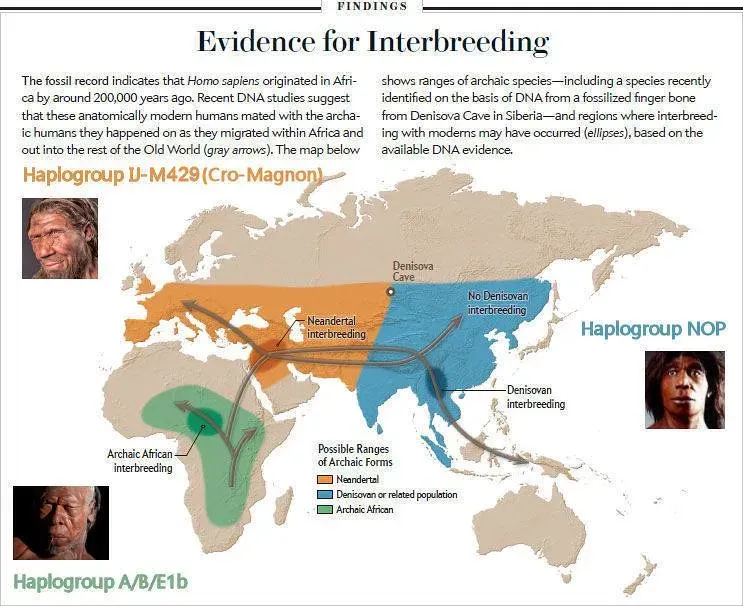
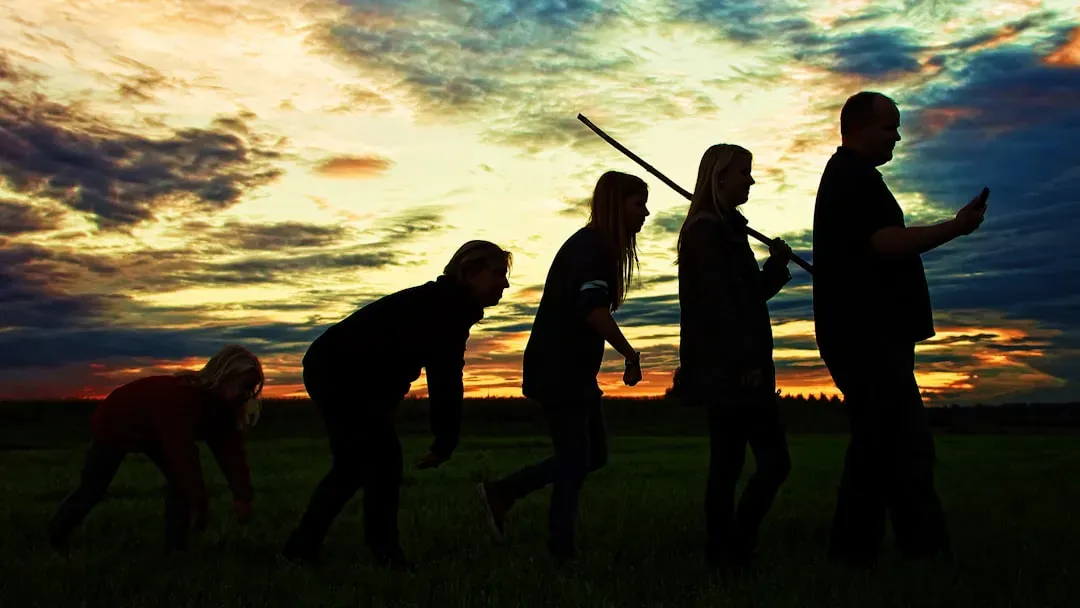
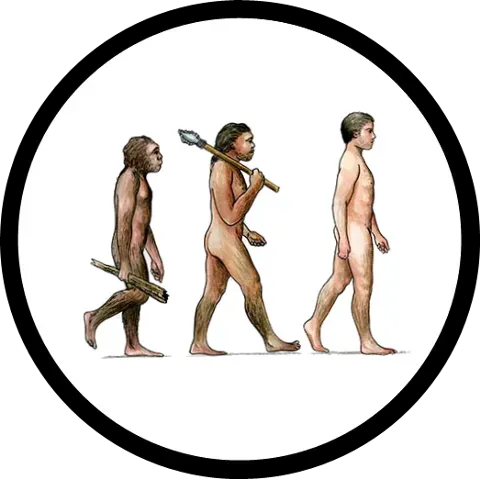
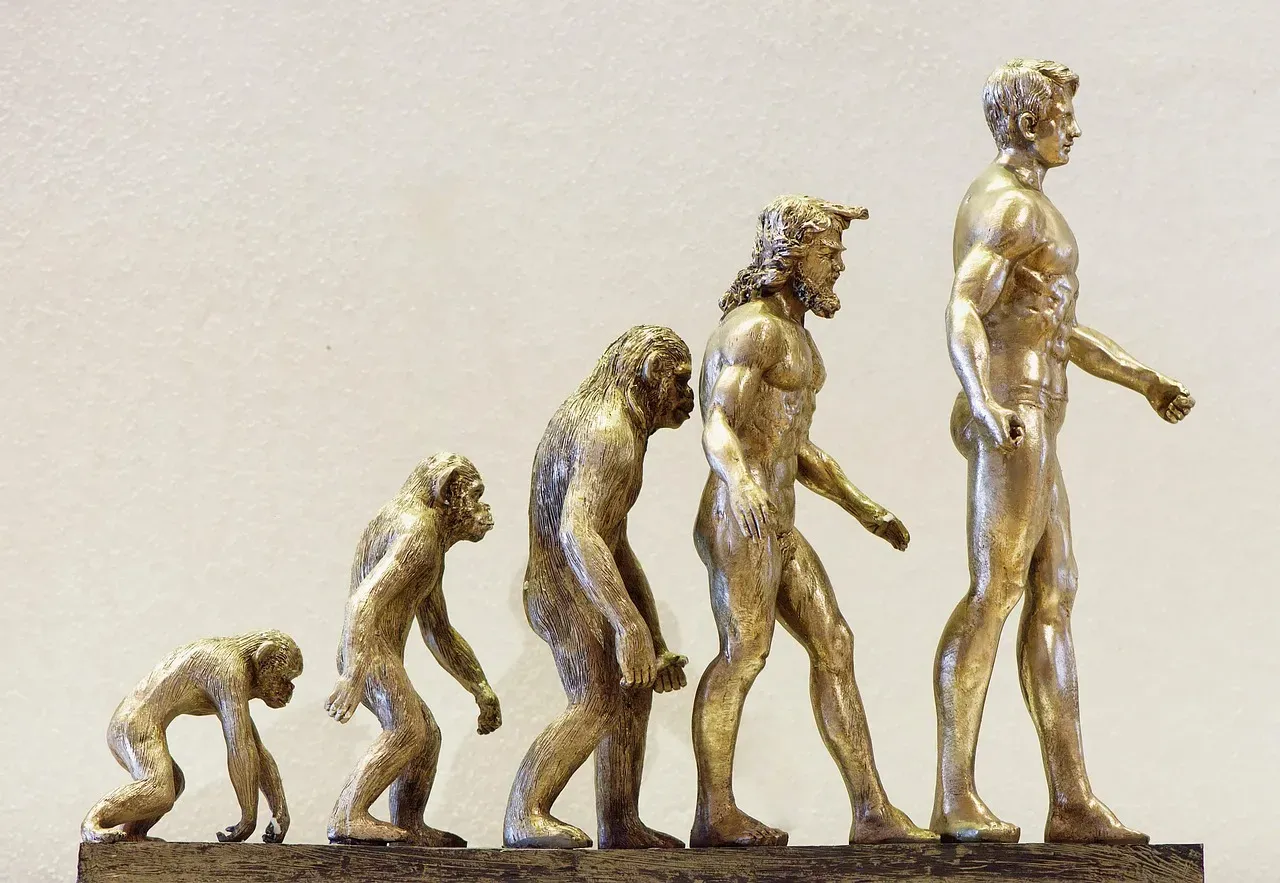
Those classic classroom posters that show a smooth line from knuckle‑walking ape to spear‑holding caveman to office worker do a lot of damage. They suggest that one species replaced another in a neat sequence, as if nature promoted us through a series of upgrades. Fossil evidence actually shows that multiple human species overlapped in time and space, like a crowded family reunion rather than a solo graduation march. Homo sapiens shared the planet with Neanderthals, Denisovans, and other now‑extinct cousins.
That overlap was not just a matter of bumping into each other at the waterhole either. Genetic studies show that our ancestors interbred with these other human groups, leaving small but real traces of Neanderthal and Denisovan DNA in many people alive today. So our lineage is not a single straight line; it is a web of branching, reconnecting, and sometimes vanishing threads. When you picture human evolution, think of overlapping circles and messy Venn diagrams, not a clean row of figures marching toward modernity.
Myth 5: “Primitive” Hunter‑Gatherers Show Our Past
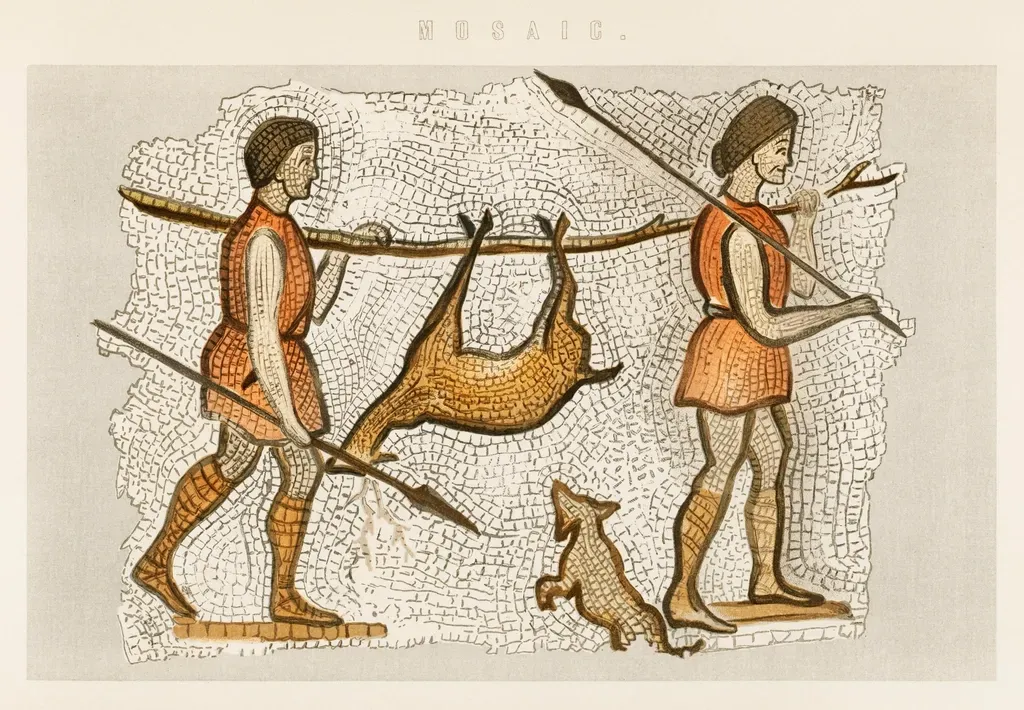
Another myth that stubbornly hangs on is the idea that present‑day hunter‑gatherer societies are frozen snapshots of our ancestors. This view quietly labels them as “primitive,” as if they simply missed the train of progress, while the rest of us moved on. In reality, every human group alive today has been evolving and adapting over the same stretch of time. Hunter‑gatherer communities have their own histories, innovations, and cultural changes; they are not living fossils.
Looking at a modern foraging group to understand ancient behavior is like assuming a small rural town today perfectly captures life in medieval Europe. You might catch a few echoes, but you will miss the enormous changes, contacts, and adaptations that have happened in between. Anthropologists can learn a lot from traditional societies about how humans respond to certain environments, but those groups are modern humans dealing with modern challenges, not stand‑ins for our Stone Age ancestors.
Myth 6: Humans Stopped Evolving Once Civilization Appeared
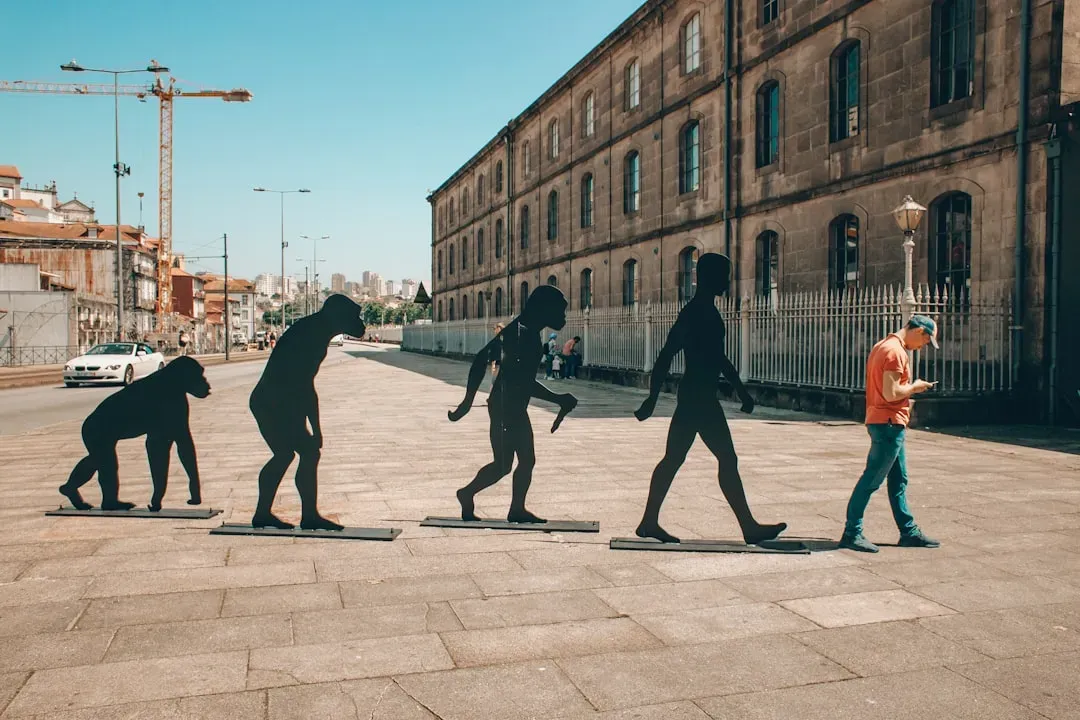
There is a popular belief that once we invented agriculture, medicine, and smartphones, we somehow stepped outside of evolution, as if vaccines and Wi‑Fi put us beyond natural selection. The evidence says otherwise. Human genes have continued to change in response to new diets, diseases, and social structures. Traits related to things like lactose digestion, altitude tolerance, and resistance to specific pathogens show clear signs of recent evolution in the last few thousand years.
Even our modern lifestyles may be shaping us in ways we do not fully understand yet, from how our immune systems respond to cleaner environments to how reproductive patterns shift in different societies. Technology can change which traits are advantageous or disadvantageous, but it does not press pause on the underlying evolutionary mechanisms. As long as some people have more surviving children than others – for any reason at all – evolution is still happening.
Myth 7: Race Has a Deep Genetic Basis
Many people assume that traditional racial categories reflect big, clear‑cut genetic differences between groups. When scientists actually look at human DNA around the world, they find something different: an incredibly small amount of overall genetic variation, with most of it shared widely across populations. The visible traits we often obsess over, like skin color or hair texture, are controlled by a relatively small set of genes and are strongly shaped by local environments, especially sunlight and climate.
Of course, human groups do show some genetic patterns linked to geography and migration history, but these patterns are fuzzy gradients – more like colors blending on a watercolor painting than hard borders on a map. Traditional race labels chop those gradients into a few crude boxes that do not match the biological reality. The danger is that people mistake socially created categories for deep natural divisions, when our species is actually one of the most genetically intertwined on the planet.
Speaking personally, the more I have read the genetics work, the harder it is to take old racial ideas seriously; they feel like outdated maps we keep using even though we now have satellite images.
Myth 8: Evolution Makes Us “More Natural” or “Less Animal”
There is a subtle myth that as humans evolved, we somehow became less animal and more something else – more rational, more moral, more above nature. But evolution did not erase our animal heritage; it layered new features on top of it. Our emotions, social instincts, and even moral intuitions did not appear from nowhere. They grew out of older systems that helped our ancestors navigate group living, care for offspring, and avoid harm. Under stress, you can still feel those deep, ancient circuits fire.
At the same time, our capacity for reflection and culture means we are not prisoners of our evolutionary past. We can choose to resist harmful impulses, build institutions that protect the vulnerable, and create art or ethics that no other animal does. To me, that mix is the most human thing of all: we are animals that know we are animals, trying every day to decide what to do with that knowledge. Pretending we are somehow outside nature just blinds us to where we actually came from – and where we might be going.
Conclusion: Letting Go of the Comfortable Cartoon
The myths about human evolution stick around because they are comforting stories. A simple ladder with us at the top feels better than a wild, branching bush where we are just one experiment among many. A single first human feels more satisfying than a slow blur of change. Clear‑cut racial boxes feel easier than messy gradients and shared roots. But clinging to those stories means ignoring what the evidence keeps telling us: our past is more tangled, more shared, and more surprising than we were taught.
I think that is a good thing. A less mythologized view of our origins does not make us smaller; it makes us more honest. It reminds us that we are deeply connected to each other and to every other living thing, that we are still changing, and that there is no guarantee our species is the forever end point of anything. When you zoom out and see humans as one branch on a vast, living tree, the question quietly shifts from “How special are we?” to “What kind of ancestors do we want to be for whatever comes next?”