
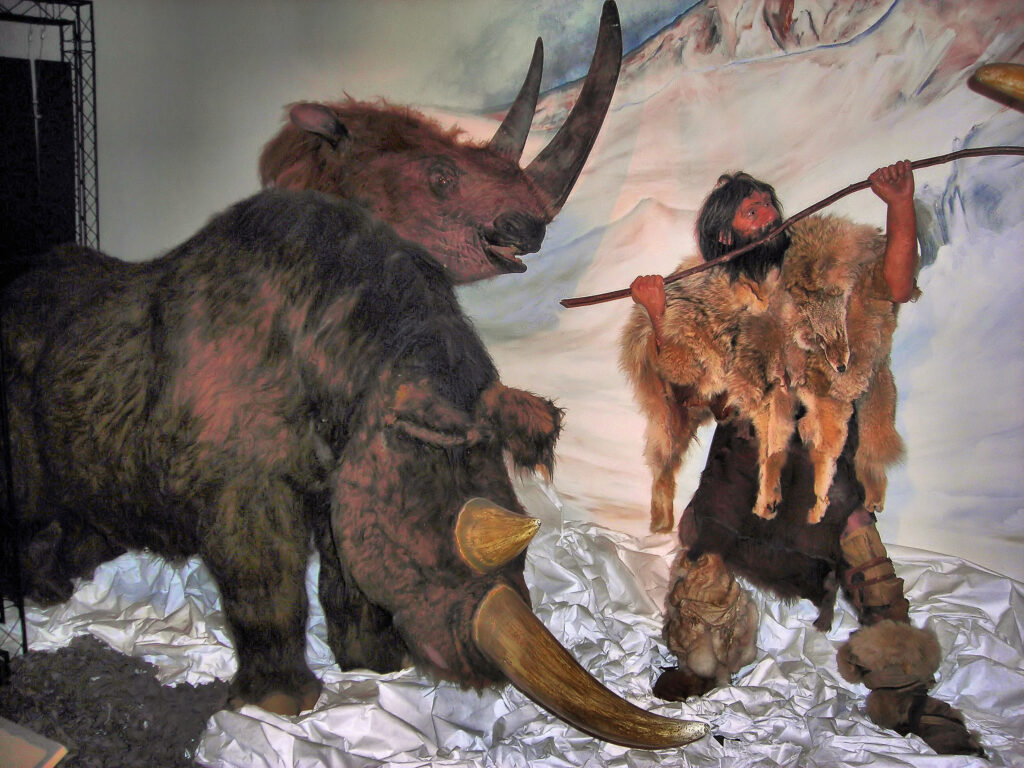
Imagine stepping outside your shelter forty thousand years ago and seeing a shaggy elephant the size of a house, a lion bigger than any big cat alive today, and an armored armadillo as long as a small car. These were not fantasy creatures; they were your neighbors. For most of human existence, our ancestors shared the planet with an astonishing cast of Ice Age megabeasts that shaped our fears, our diets, and probably even our myths.
Then, in what is basically the blink of an eye in geological terms, they were gone. Long before anyone wrote down a single sentence, these giants disappeared, leaving behind bones, frozen carcasses, and a lot of questions. Let’s walk through eight of the most fascinating – and what their stories quietly reveal about our own.
Woolly Mammoth: The Shaggy Icon of the Ice Age
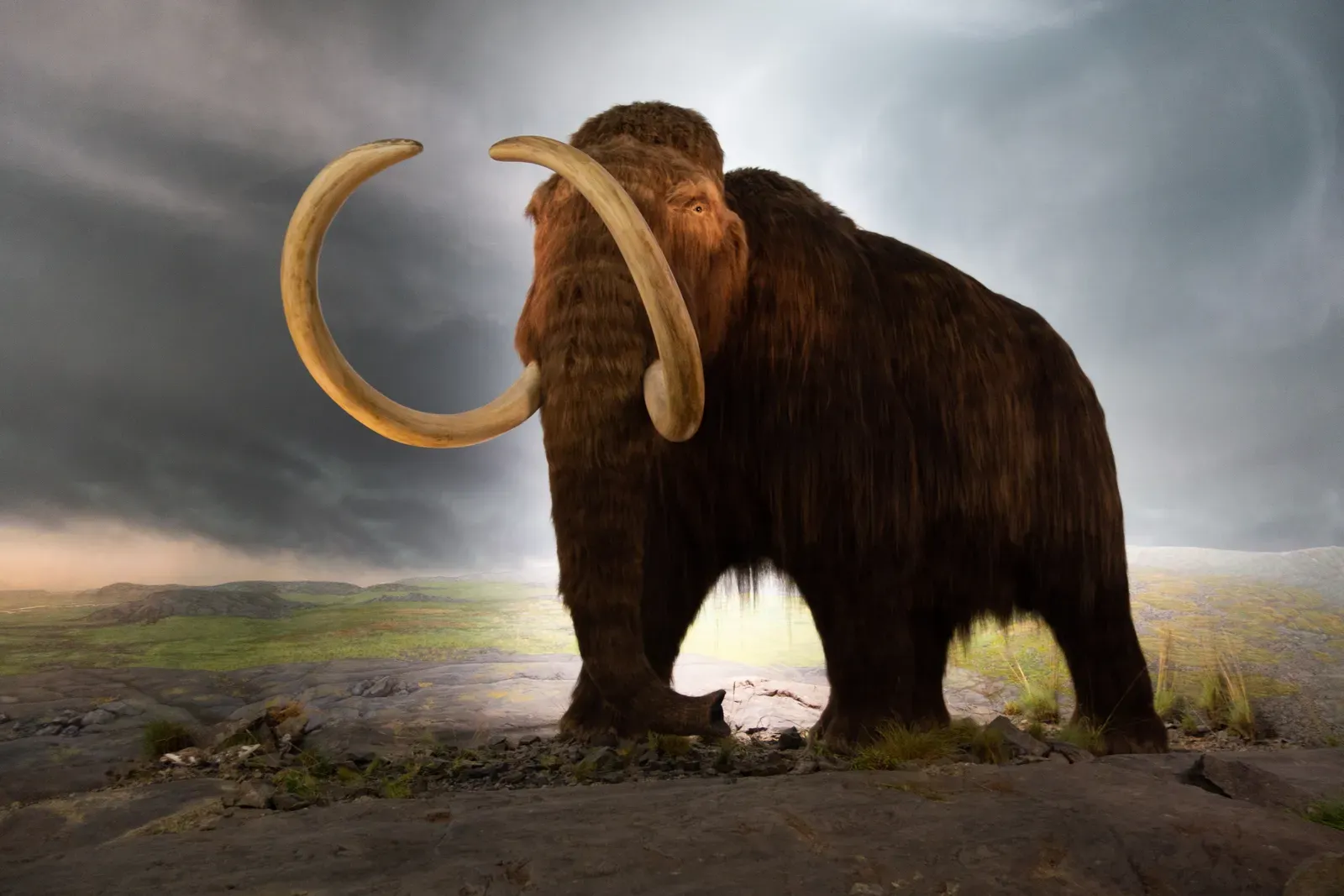
The woolly mammoth is the poster child of the Ice Age, and for good reason. Picture an elephant wrapped in thick, reddish-brown fur, with sweeping tusks that could grow longer than a person is tall, trudging across frozen steppe in herds. These animals lived across huge swaths of Eurasia and North America, meaning that wherever early humans went into colder regions, mammoths were a looming presence on the landscape.
Humans hunted woolly mammoths for meat, bones, and tusks, likely building shelters out of their remains and using their fat as fuel. At the same time, climate warming at the end of the last Ice Age shrank their grassy habitats, squeezing them into smaller refuges. By the time written history shows up, mammoths are gone from the wild, surviving only in scattered legends of hairy giants and elephant-like spirits. Their extinction is one of the clearest early examples of how changing climate and human pressure can combine to push even the mightiest animal over the edge.
Woolly Rhinoceros: The Ice Age Tank with a Fur Coat
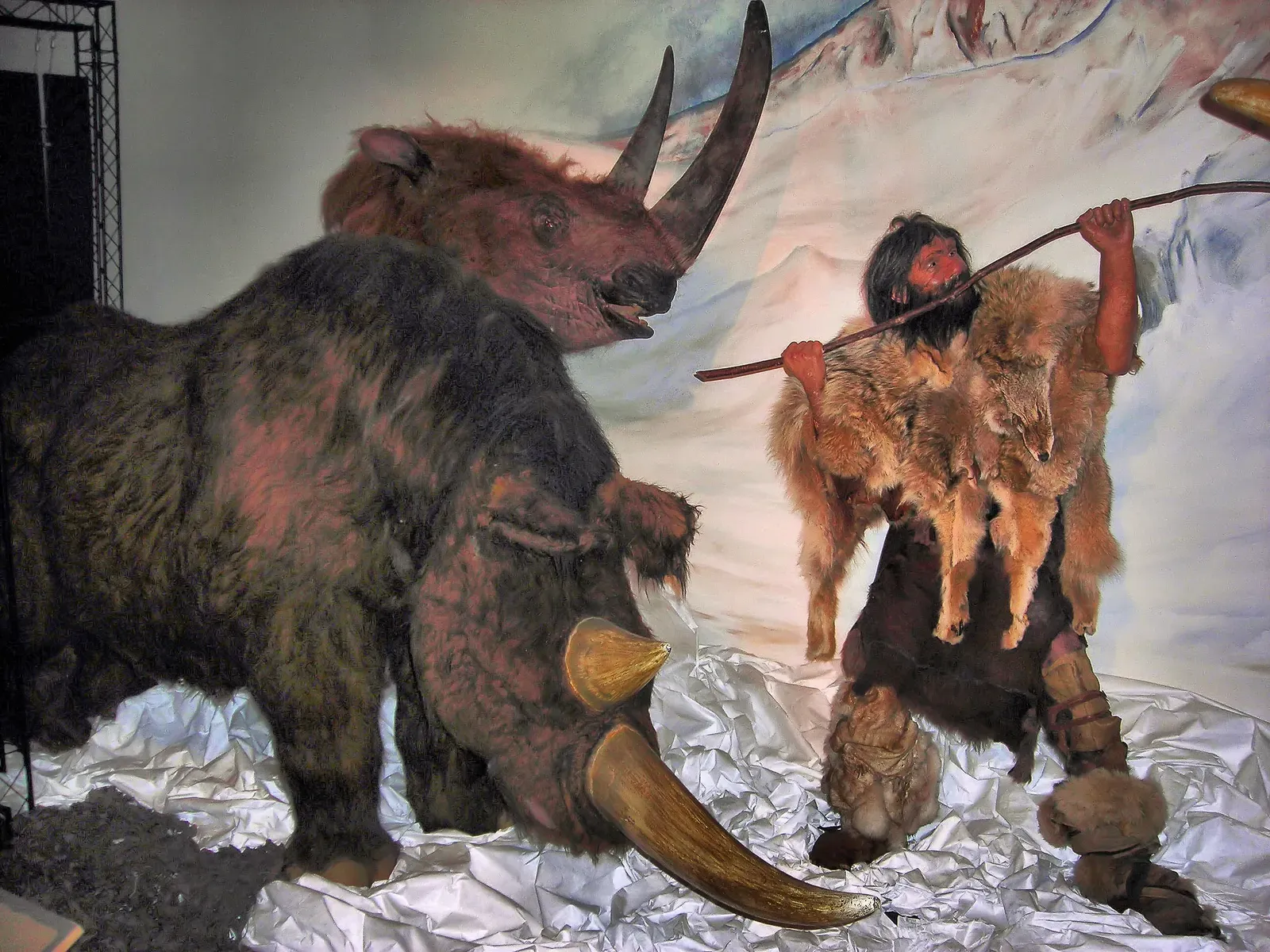
If the mammoth was the giant of the frozen grasslands, the woolly rhinoceros was its grumpy, armored cousin. This massive rhino, wrapped in thick fur with a huge, forward-curving horn, roamed from Europe to Siberia. Fossil evidence suggests it occupied the cold, open steppe-tundra and browsed on tough grasses and shrubs, using that oversized horn to sweep aside snow to reach food.
Humans would have encountered woolly rhinos fairly often wherever their ranges overlapped, and there are even Ice Age cave depictions that look suspiciously like these animals. As the climate warmed and the harsh, dry grasslands gave way to forests and wetter environments, their specialized lifestyle became a liability. Add in the likelihood of hunting pressure from humans, and this Ice Age tank quietly rolled off the stage of history, leaving only bones and hints of its once formidable presence.
Smilodon (Often Called the Saber-Toothed “Tiger”): The Ambush Predator of Prehistory
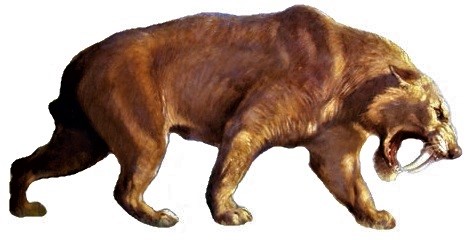
Smilodon is probably the most misunderstood celebrity of the Ice Age. Often called a saber-toothed tiger, it actually wasn’t a tiger at all, but a separate branch of big cats with an insanely powerful build and those oversized, blade-like canine teeth. Living mainly in the Americas, Smilodon overlapped with early humans there, which means our ancestors shared the land with a predator capable of taking down giant herbivores with bulldog-like strength.
Smilodon’s extinction lines up pretty closely with the loss of large prey like giant ground sloths and young mammoths, as well as the spread of humans across the continents. Once those big, slow-moving meals disappeared and people began competing for the same animals, Smilodon’s specialized hunting strategy likely became a fatal disadvantage. It is a harsh reminder that apex predators can be surprisingly fragile when the food web they depend on gets shaken, something that still holds true for large cats today.
Giant Ground Sloths: Gentle Giants of the Americas
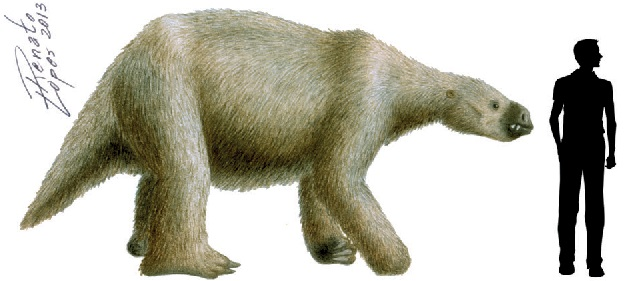
Forget the sleepy, tree-hugging sloths you know today. Giant ground sloths were towering, bear-sized to even larger herbivores that lumbered across the Americas. Some species could rear up to browse high branches, using big, curved claws more like gardening tools than weapons. Many scientists believe they were relatively slow but extremely powerful, the kind of animal you would never want to annoy at close range.
Humans and giant ground sloths definitely overlapped – there are archaeological sites showing cut-marked bones, which means people butchered them for food. When you combine that with shrinking habitats as climates warmed and ecosystems changed, the odds quickly turned against these giants. Their disappearance reshaped entire landscapes: without such huge herbivores trampling vegetation and dispersing seeds, some plant communities likely changed direction forever, illustrating how the loss of one group can ripple throughout an ecosystem.
Irish Elk (Giant Deer): The Monarch with Outrageous Antlers
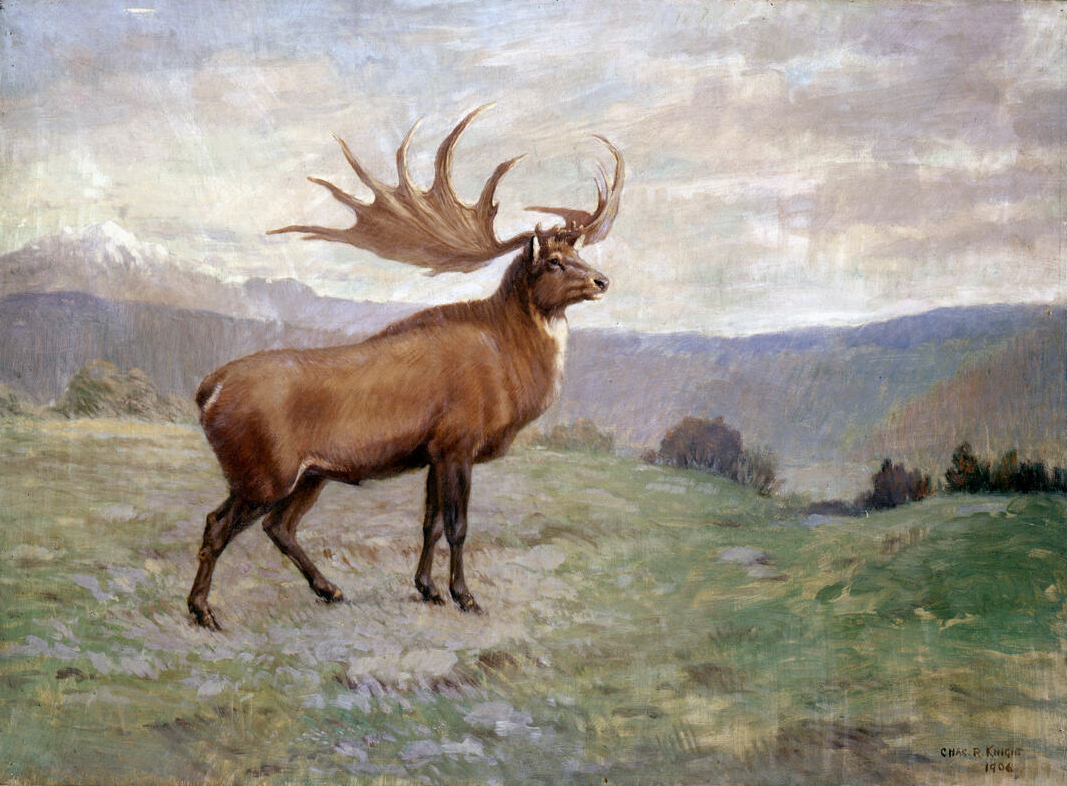
The Irish elk, more accurately called the giant deer, carried possibly the most dramatic headgear of any mammal in history. Males bore enormous antlers spanning wider than some cars, an almost comical display of evolutionary excess. Despite the name, this species ranged well beyond Ireland, across Europe and parts of Asia, and coexisted with humans for thousands of years in cold and temperate environments.
Those massive antlers probably played a role in mating displays and competition, but they also came with a serious cost: they were energetically expensive to grow and carry. As Ice Age climates shifted, forests expanded and open grasslands shrank, making such extravagant antlers less practical in denser habitats. Combined with hunting pressure from humans, this delicate balance between showy success and survival appears to have tipped the wrong way, leaving only impressive skulls and bony crowns to puzzle and impress modern observers.
Glyptodon: The Armored Armadillo the Size of a Small Car
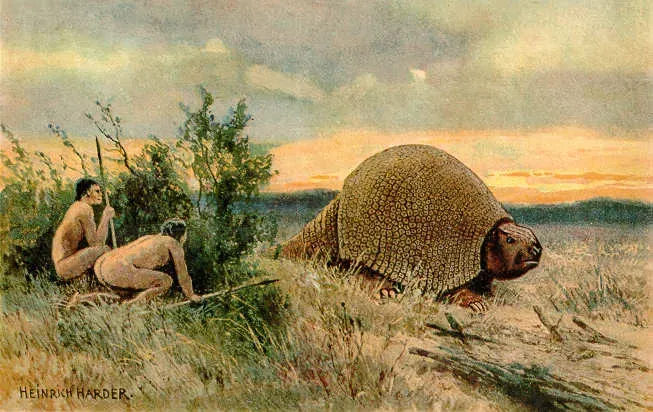
Glyptodon looked like something a child might dream up after seeing an armadillo and a tank on the same day. It was a huge, dome-shelled mammal in South America, roughly the size and weight of a compact car, with a solid armored shell and sometimes a clubbed tail. To early humans on those landscapes, encountering a grazing Glyptodon must have felt like walking past a living boulder that moved on four sturdy legs.
For a long time, that armor kept Glyptodon relatively safe from most predators, but humans brought a new kind of threat: tools and strategy. There is evidence that people used their shells as shelters or raw materials, and hunting a slow, bulky herbivore would have been very tempting. As with many other megafauna, a combination of changing environments and human hunting likely spelled the end of Glyptodon. Its story is a humbling reminder that no amount of natural armor can fully protect against clever, cooperative primates with sharp edges and big ideas.
Megatherium: The Colossal Ground Sloth Titan
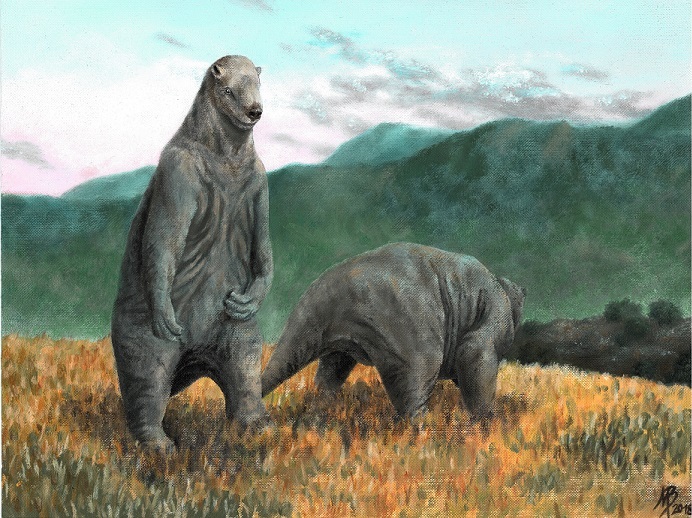
If giant ground sloths were impressive, Megatherium was their king. This South American species could reach lengths rivaling a bus and stood taller than a person even when walking on all fours. When it reared up on its hind legs, using its thick tail as a third support, it became a towering browser capable of stripping whole branches, shaping vegetation on a massive scale.
Humans arrived in South America while Megatherium still roamed, and there are archaeological hints that people hunted these animals. Their slow reproductive rate and large body size meant they were especially vulnerable to even modest levels of hunting. Layer on top of that the broader shifts in climate and plant communities after the last Ice Age, and their population likely collapsed faster than their bulk would suggest. To me, Megatherium’s extinction feels like the perfect symbol of how quietly and quickly we can erase something that looks absolutely unerasable in the moment.
American Lion: A Bigger, Bolder Cousin of Today’s Big Cats
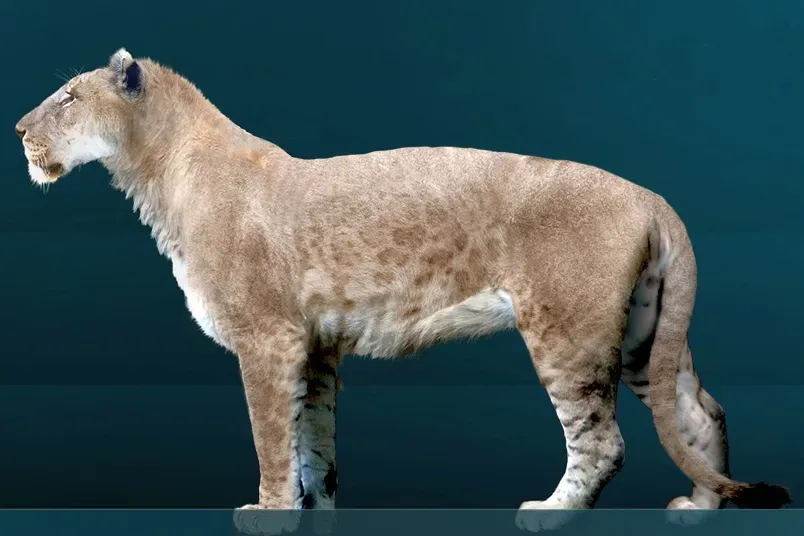
The American lion was not just a repackaged African lion shipped to another continent. It was larger, probably more imposing, and roamed across much of North America. This big cat shared its world with humans, mammoths, bison, and a whole suite of megafauna that turned Ice Age plains and woodlands into an ecosystem straight out of an intense nature documentary.
As large prey species declined and humans spread, the American lion likely found itself increasingly squeezed. It had to compete not only with other predators but also with people armed with weapons and cooperative hunting strategies. Being at the top of the food chain, it had nowhere to retreat when the base of that chain crumbled. Its disappearance, together with other big predators, probably altered the behavior and numbers of surviving herbivores, showing how removing top carnivores can quietly reshape entire landscapes.
Opinionated Conclusion: The Ghosts That Still Shape Our Future
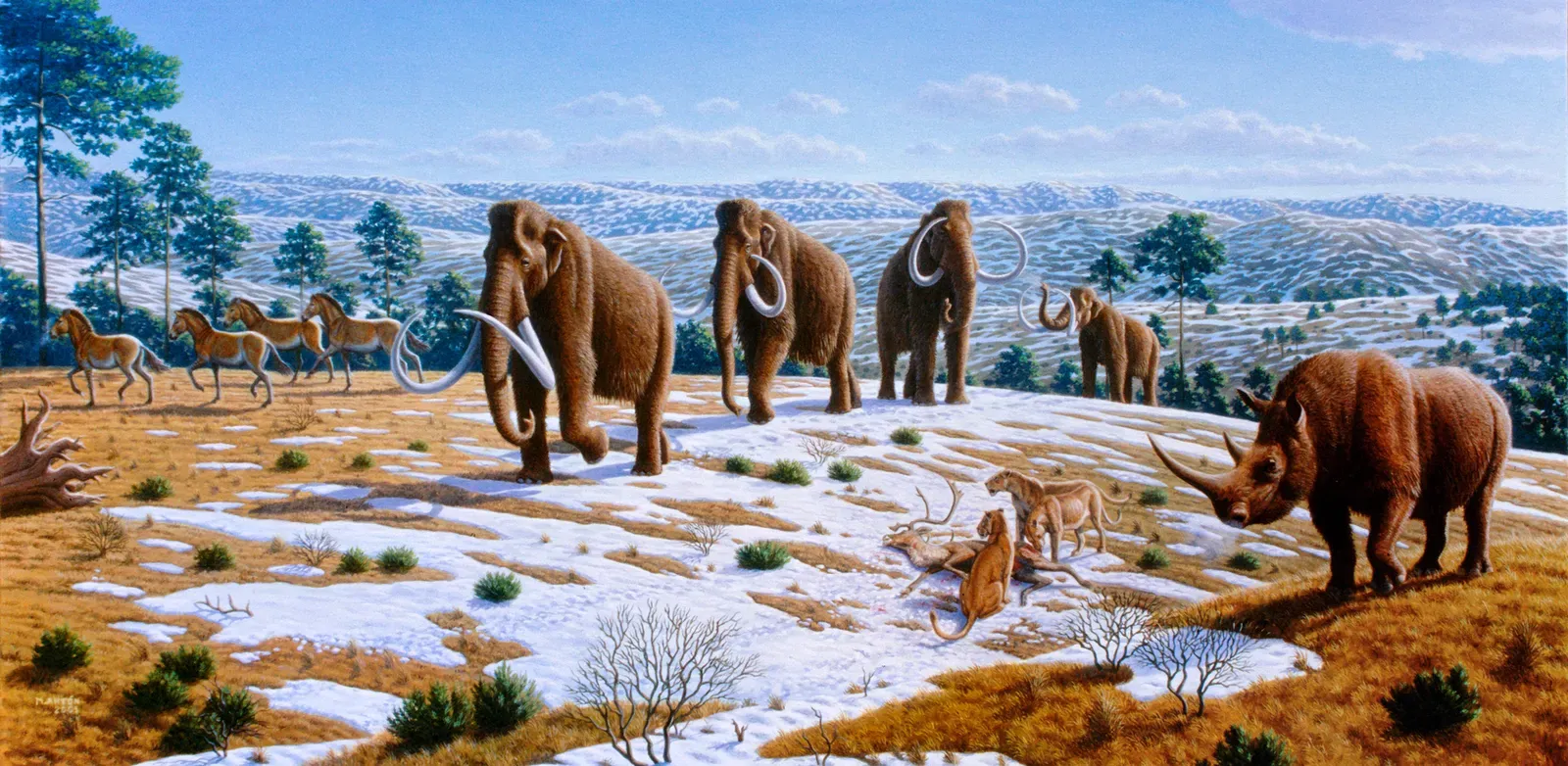
When you look at these eight Ice Age animals side by side, a pattern emerges that is uncomfortably familiar. Again and again, you see large, slow-breeding creatures squeezed by rapid climate shifts and the arrival of a new, highly adaptable predator: us. It is tempting to blame it all on natural cycles, but that ignores the mounting evidence that human hunting and habitat impacts often pushed already stressed species over the brink. In my view, pretending we were just innocent bystanders in these extinctions is a comforting story, not an honest one.
What makes this really hit home is that we are replaying a similar script today, only faster and on a much bigger scale, with modern technology supercharging our reach. The woolly mammoth, Smilodon, or Megatherium may feel like distant curiosities, but their ghosts hover over every debate about biodiversity, rewilding, and climate change. If we do not learn from the quiet vanishing of these giants before recorded history, we risk watching a new wave of disappearances unfold in real time – this time with cameras rolling and no excuse that we did not know better. So the real question is not just which Ice Age animals vanished, but which of today’s animals we are willing to let follow them into the dark.