You don’t need a PhD in paleontology to make history. Sometimes a curious eye, a fortunate walk, or sheer determination can lead to breathtaking finds that reshape what we know about our planet’s ancient past. Throughout history, amateur fossil hunters have stumbled upon some of the most spectacular dinosaur discoveries ever recorded, proving that science isn’t just for the academics locked away in labs.
These everyday explorers have unearthed complete skeletons, revealed new species, and challenged long-held scientific beliefs. Their stories remind us that passion and persistence can rival formal education. Let’s dive into eight remarkable discoveries that changed paleontology forever.
Mary Anning’s Ichthyosaur Discovery
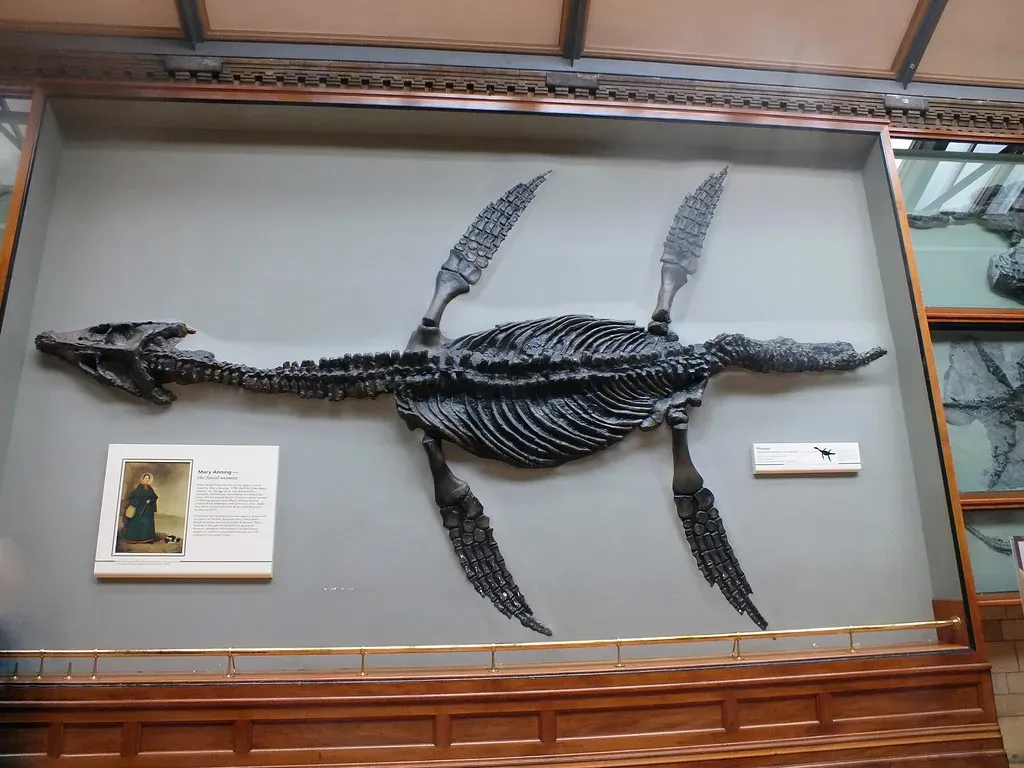
When Mary Anning was just twelve years old, she discovered the first correctly identified ichthyosaur skeleton, beginning what would become one of the most remarkable careers in fossil hunting history. Working along the dangerous cliffs of Lyme Regis, England, in 1811, the young girl painstakingly excavated a nearly complete skeleton after her brother Joseph initially spotted the skull. It took months for Mary to carefully uncover a skeleton, and by the time she was done, several months later, everyone in town thought that she’d discovered what must have been a monster.
Born into poverty, Mary’s father, Richard, was a cabinetmaker and amateur fossil collector who had taught her the trade before his death in 1810. This discovery launched her into international recognition. Her discoveries included the first correctly identified ichthyosaur skeleton when she was twelve years old; the first two nearly complete plesiosaur skeletons; the first pterosaur skeleton located outside Germany; and fish fossils. Despite her groundbreaking work, male scientists often failed to credit her, though she became a consultant to some of the era’s most prominent researchers. Her legacy lives on as one of paleontology’s greatest pioneers, proving that gender and class need not limit scientific achievement.
Sue Hendrickson and the Legendary T. Rex
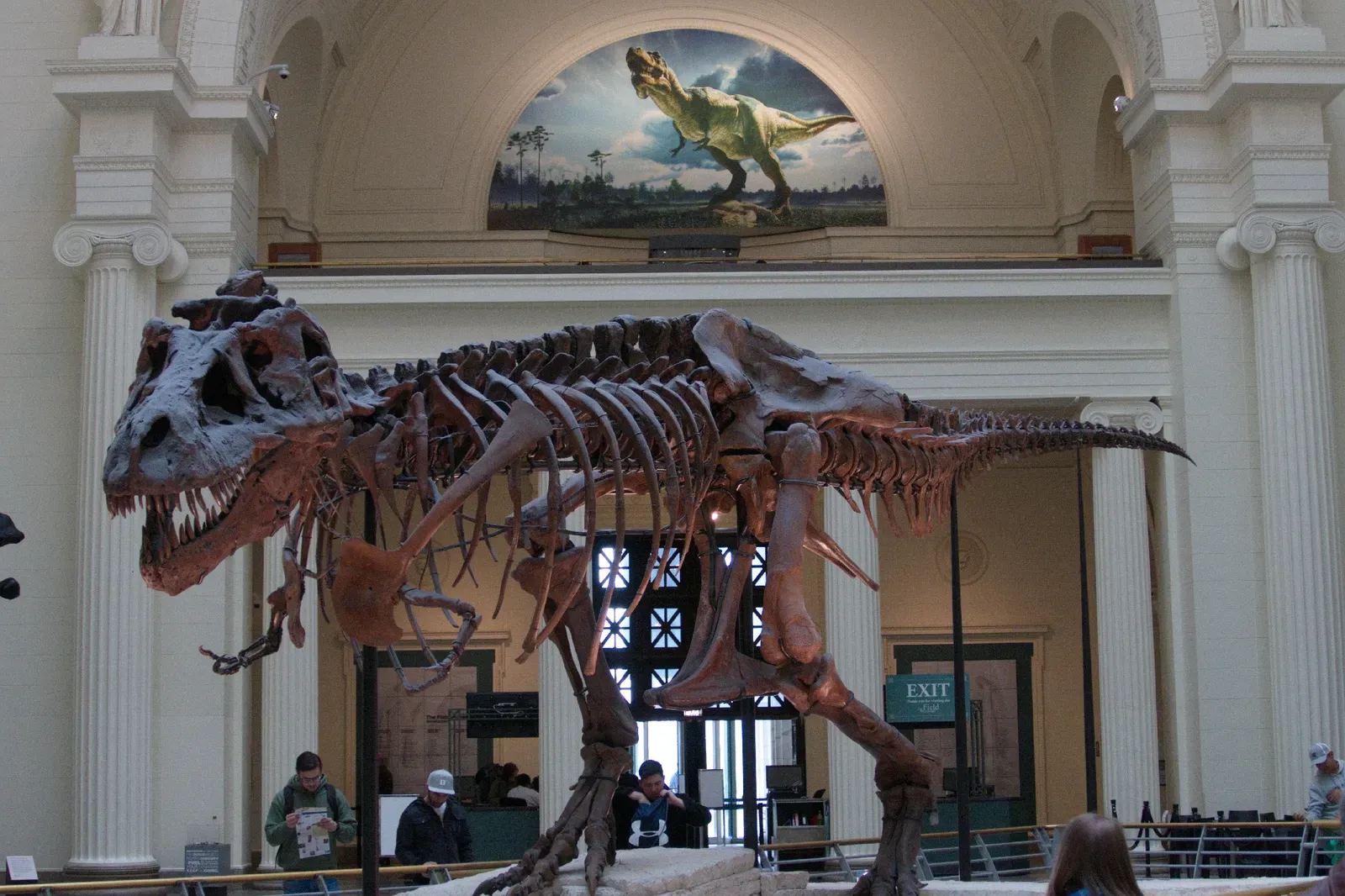
On August 12, 1990, while examining a cliff-side in South Dakota with a team from the Black Hills Institute, Sue Hendrickson discovered a Tyrannosaurus rex specimen – the largest, most complete, and best preserved T. rex ever found. The specimen was later named “Sue” in her honor. The discovery happened almost by accident when the team’s truck got a flat tire, and Hendrickson decided to explore a nearby cliff while others went to town for repairs. She and her golden retriever Gypsy decided to take a hike to a butte they missed. “I got lost, it was foggy and I walked in a circle for two hours. The fog finally lifted. Hours later, we reached the butte. It wasn’t long before I saw three articulated vertebrae exposed in the cliff”.
The fossil turned out to be roughly ninety percent complete, an extraordinary find in paleontology. At more than 40 feet long and 13 feet tall at the hip, SUE is physically the largest Tyrannosaurus rex specimen discovered, out of more than 30 T. rex skeletons that have been found. SUE is also the most complete – around 90 percent. Hendrickson, who never completed high school, had spent years as a diver and fossil enthusiast before this momentous discovery. The specimen now resides at Chicago’s Field Museum, where it continues to provide invaluable data for researchers worldwide. Her story shows how unconventional paths can lead to extraordinary contributions to science.
Marion Brandvold’s Maiasaura Nesting Site
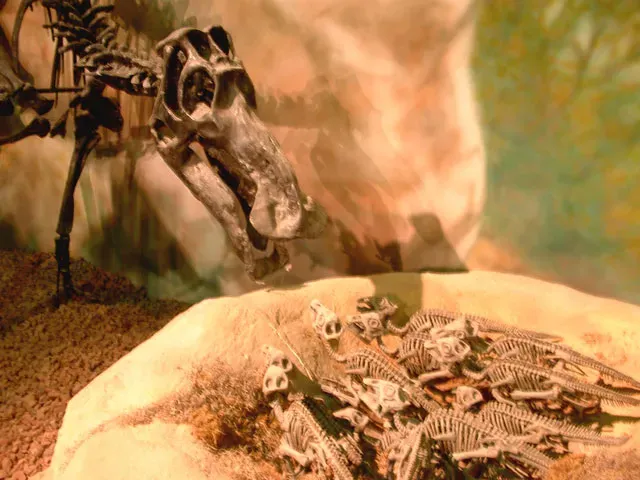
In Montana during the mid-1970s, Jack Horner and his research partner Bob Makela discovered a colonial nesting site of a new dinosaur genus which they named Maiasaura, or “Good Mother Lizard.” The dinosaur bones, originating from a juvenile, were first discovered by Marion Brandvold. Brandvold, who ran a rock shop in Montana, initially found the bones and brought them to Horner’s attention. This discovery revolutionized paleontology’s understanding of dinosaur behavior.
The next major discovery came in the 1980s, when palaeontologists uncovered nests belonging to the duck-billed dinosaur Maiasaura in Montana, USA. Alongside the nests were fossils of eggs, hatchlings and adult dinosaurs. These exceptionally well-preserved fossils were the first strong evidence of how dinosaurs fed and cared for their offspring. The find challenged the long-held belief that dinosaurs were cold-blooded, solitary creatures. Instead, it revealed complex social structures and parental care behaviors. Brandvold’s keen eye as an amateur rock collector opened the door to understanding that some dinosaurs lived in colonies and actively nurtured their young, fundamentally changing how scientists view these ancient animals.
Gideon and Mary Ann Mantell’s Iguanodon
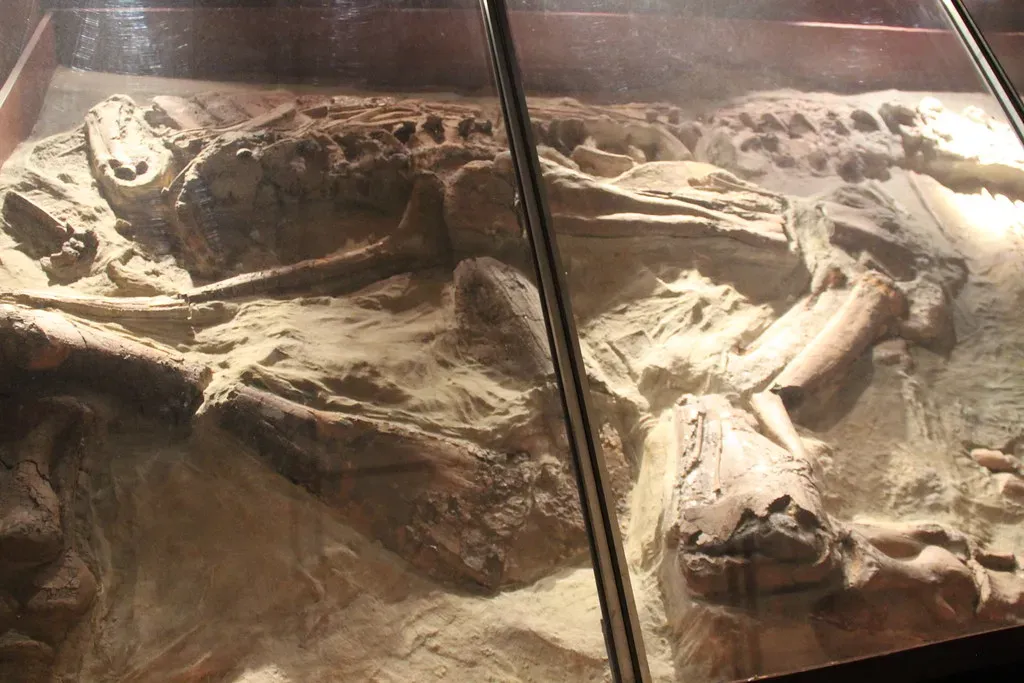
The first-known evidence of Iguanodon was a collection of teeth found at the side of a road by Mary Ann Mantell and her husband, Dr Gideon Algernon Mantell in the early 1820s in Sussex, England. Though Gideon was a physician rather than a professional paleontologist, the couple’s discovery became one of the foundational moments in dinosaur science. The fossilised teeth resembled scaled-up versions of living iguana teeth. This is how Iguanodon, which means iguana tooth, got its name.
A year after Megalosaurus was named, a second giant prehistoric reptile, called Iguanodon, was described. It was a hugely significant discovery in its own right. Iguanodon was the first giant prehistoric reptile found to be herbivorous. At the time, scientists assumed most large reptiles were carnivorous, so finding plant-eating giants was revolutionary. The Mantells’ discovery helped establish that a diverse ecosystem of prehistoric creatures once existed. Though Mary Ann’s role was often diminished by historians, her contribution to one of paleontology’s earliest triumphs remains undeniable. It’s a reminder that scientific breakthroughs often come from unexpected places.
Clayton Phipps and the Dueling Dinosaurs
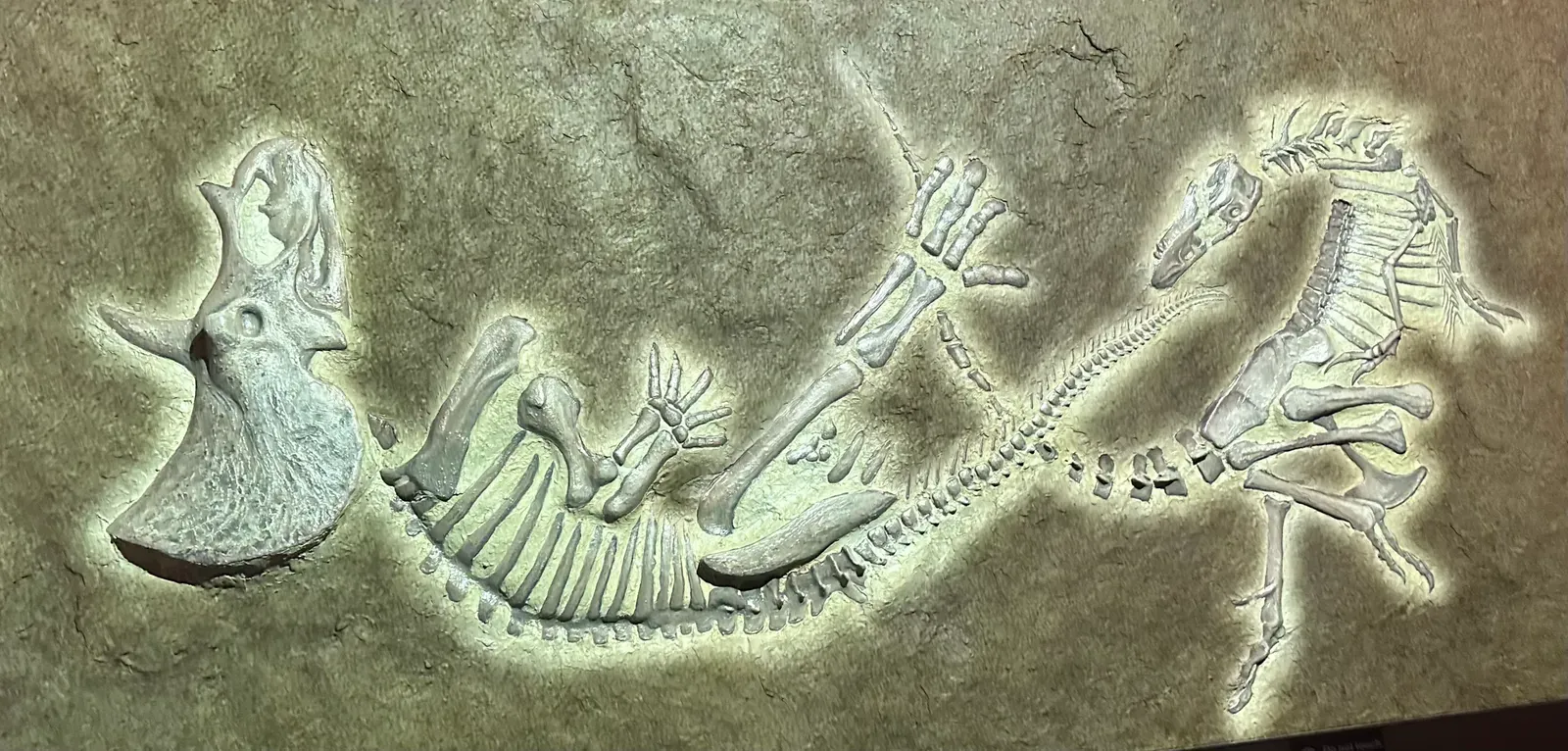
Clayton Phipps, a rancher from Montana, and his team discovered two skeletons preserved in a combat-like form in June 2006. This fossil preserved two of the world’s most famous dinosaurs, Tyrannosaurus rex and Triceratops. Both dinosaurs were well-preserved, with skin envelopes and what appeared to be mummified internal organs. They appear to have died together, and appeared to have been in combat with each other. The discovery occurred on private land in Montana, making Phipps one of the luckiest amateur fossil hunters in history.
The specimen became known as the “Dueling Dinosaurs” because there were teeth present in the spine and pelvis of the Triceratops, and a lateral split in the skull of the Tyrannosaurus rex. One team analyzed the limbs of a small tyrannosaur in the famous fossil called Dueling Dinosaurs, which helped settle debates about whether smaller tyrannosaur fossils represented juveniles or a separate species called Nanotyrannus. Phipps, who had no formal training in paleontology, recognized the significance of what he’d found. His discovery provides a rare snapshot of predator-prey interaction frozen in time, offering insights into dinosaur behavior that textbooks alone could never provide.
William Buckland’s Megalosaurus
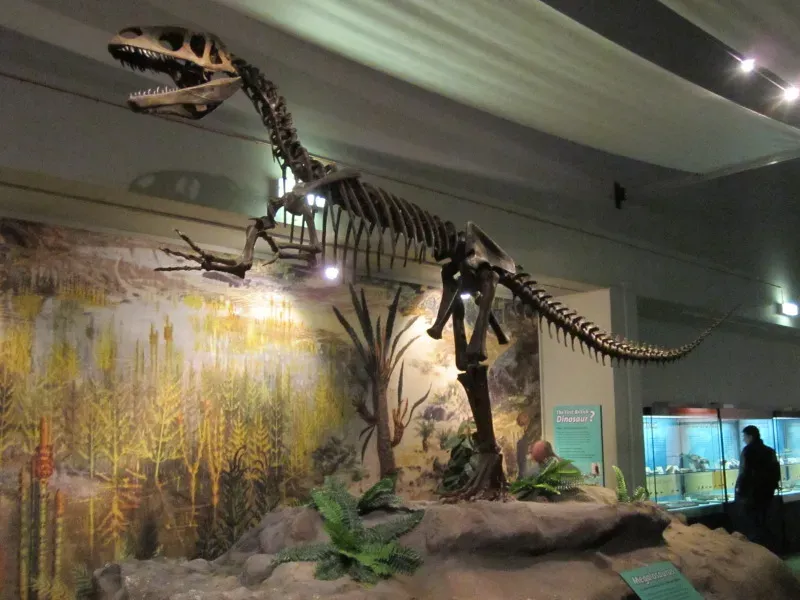
Though William Buckland was a theologian and geologist rather than a professional paleontologist, his 1824 description of Megalosaurus marked a turning point in scientific history. Up first is the first dinosaur ever discovered. Paleontologist William Buckland named Megalosaurus in 1824; its bones were previously thought to be those of an elephant. Buckland examined bones that had been found in a quarry near Oxford, England, and recognized them as belonging to a massive extinct reptile unlike anything alive today.
In 1815, bones belonging to this large prehistoric creature were discovered at the Stonesfield quarry in Oxford. They were soon acquired by palaeontologist William Buckland, who identified them as the skeleton of a gigantic lizard, the likes of which had never been seen before. Research on this creature’s bones continued in the following decades under Buckland, renowned French anatomist Georges Cuvier, and British anatomist Richard Owen. In 1824, Buckland officially named the creature Megalosaurus. His work laid the foundation for the entire field of dinosaur paleontology. Buckland wasn’t afraid to think outside conventional wisdom, and his willingness to challenge prevailing beliefs about Earth’s history opened doors for countless discoveries that followed.
Joan Wiffen’s New Zealand Dinosaurs
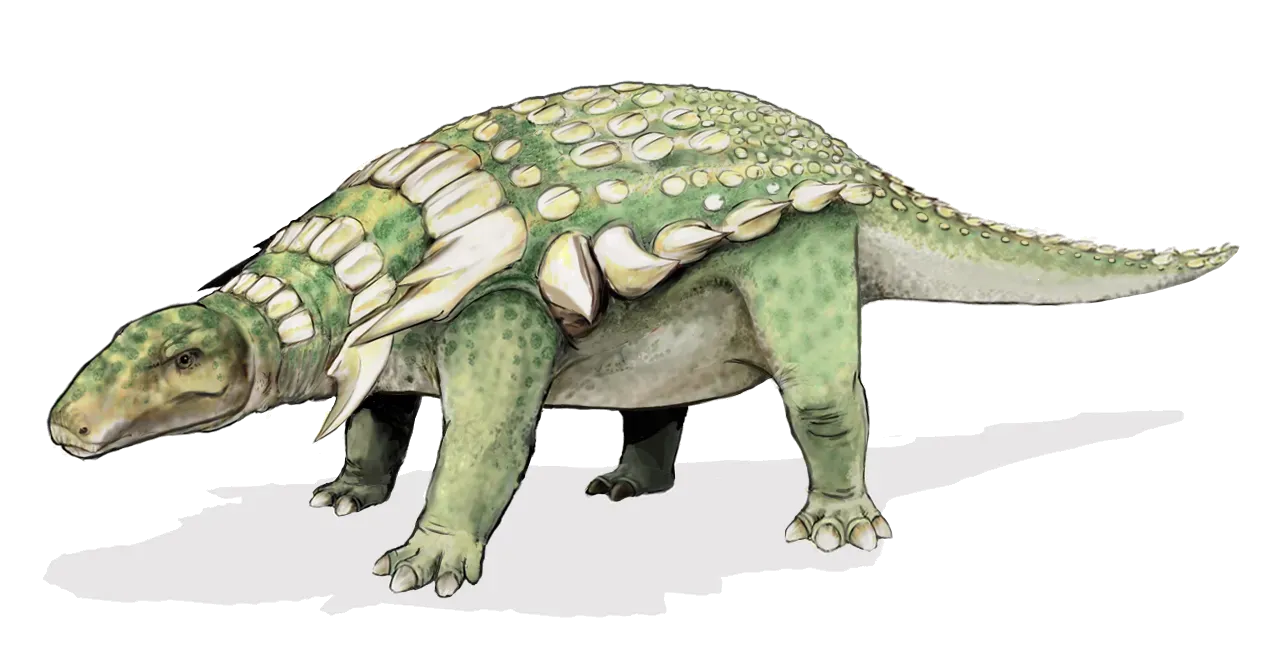
Wiffen discovered fragmentary fossils of late Cretaceous period dinosaurs, including an ankylosaur (probably a nodosaur), a carnosaur, and a sauropod. These are the first dinosaurs found in New Zealand. Joan Wiffen was a homemaker with no formal training who became fascinated by fossils in her fifties. Her discoveries in the 1970s and 1980s shocked the scientific community because it had been widely believed that New Zealand never had land-dwelling dinosaurs.
Working in remote river valleys, Wiffen meticulously searched through rocks that professional geologists had dismissed as unproductive. Her persistence paid off when she identified bone fragments that proved dinosaurs once roamed New Zealand. She taught herself paleontology through books and correspondence with experts, eventually becoming one of the country’s most respected fossil hunters. Her work demonstrated that amateur dedication could overturn long-standing scientific assumptions. Wiffen’s story is particularly inspiring because she started her paleontological career later in life, proving it’s never too late to pursue a passion. Her legacy continues to inspire fossil enthusiasts across New Zealand and beyond.
Kathy Wankel’s Montana T. Rex
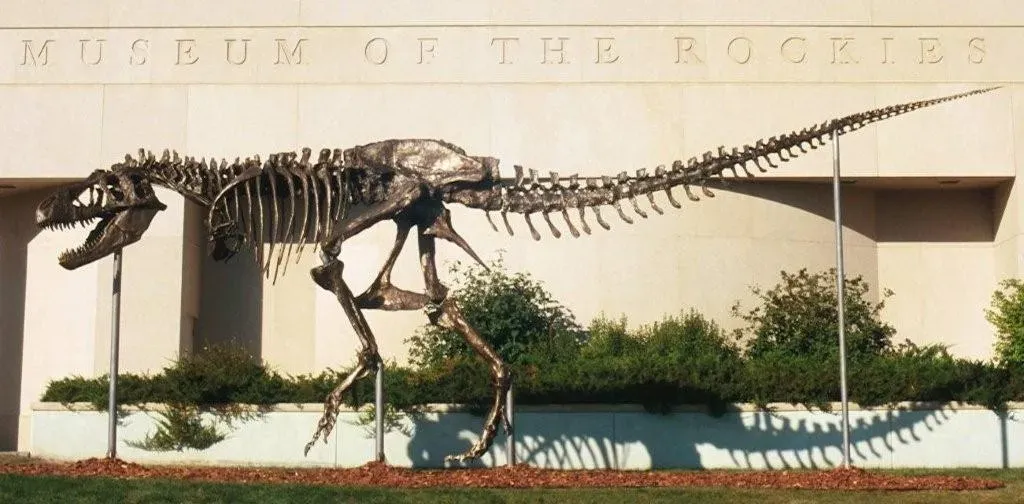
In 2014, the fossil bones of the Wankel T. rex (MOR 555 discovered by Kathy Wankel in 1988) were sent to the Smithsonian’s National Museum of Natural History on a fifty-year loan. In its new pose devouring a Triceratops, the Wankel T. rex, renamed the Nation’s T. rex, is the centerpiece of the Smithsonian’s David H. Koch Hall of Fossils. Kathy Wankel was a Montana rancher who discovered one of the most complete T. rex skeletons while hiking on federal land near Fort Peck Reservoir in 1988.
Her discovery consisted of a remarkably well-preserved skeleton that has provided scientists with invaluable data about Tyrannosaurus rex anatomy and behavior. The specimen was excavated by the Museum of the Rockies and studied extensively before its transfer to the Smithsonian. Wankel’s find demonstrates how observant amateurs exploring their local landscapes can make contributions of national significance. The “Nation’s T. rex” now educates millions of visitors annually in Washington, DC, serving as a testament to what can be achieved when curiosity meets opportunity. Her story reminds us that the next great discovery might be waiting just beyond the next hill, ready to be found by someone willing to look closely.
Conclusion: The Power of Passionate Curiosity
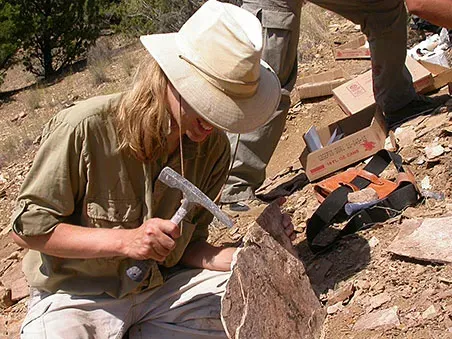
These eight discoveries prove that you don’t need a university degree to change scientific history. From Mary Anning’s childhood ichthyosaur to Sue Hendrickson’s legendary T. rex, amateur paleontologists have consistently demonstrated that keen observation, determination, and genuine passion can rival formal training. Many of these discoveries challenged existing scientific paradigms and opened new avenues of research.
The legacy of these amateur fossil hunters continues to inspire new generations. Their stories reveal that science isn’t confined to laboratories and institutions. Sometimes the most significant breakthroughs happen when curious individuals simply pay attention to the world beneath their feet. What’s remarkable is how many of these finds occurred by chance, during routine walks or work activities, reminding us that opportunity often favors the observant. Have you ever wondered what incredible fossils might be hiding in the rocks around your hometown? The next great discovery could be yours.