Researchers have identified 816 key marine habitats worldwide where targeted protections could halt the decline of sharks and rays.
Populations Plunge Amid Mounting Pressures
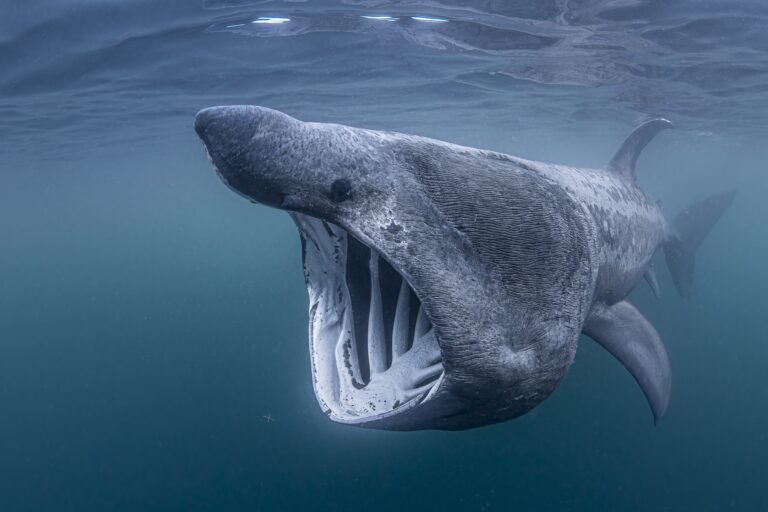
Populations Plunge Amid Mounting Pressures (Image Credits: Imgs.mongabay.com)
Sharks and rays rank as the second most threatened group of vertebrates globally, with over one-third of species facing extinction risk. Overfishing has driven a more than 70% drop in abundance for 31 oceanic species since 1970, according to a 2021 study. Habitat degradation and climate change compound these dangers, altering migration patterns and ocean conditions essential for survival.
Coastal areas bear the brunt, hosting 75% of threatened species. Many populations, like the shortfin mako shark, would require decades to rebound even without further fishing pressure. Five sawfish species now stand critically endangered, with sightings of the green sawfish in Sudan’s Red Sea waters dropping to one individual every five to ten years.
The Ocean Travellers Report Emerges
The IUCN Species Survival Commission Shark Specialist Group released the “Ocean Travellers: Safeguarding Critical Habitats for Migratory Sharks and Rays” report in December 2025, with public announcement on January 14, 2026. Drawing from over 1,330 scientists across more than 100 countries, it delineates 816 Important Shark and Ray Areas (ISRAs) spanning nine ocean regions.
These ISRAs, including 769 focused on migratory species, cover less than 3% of the studied ocean surface yet support 327 shark and ray species. Dr. Rima Jabado, chair of the IUCN SSC Shark Specialist Group, stated, “ISRAs spotlight the places where conservation action will have the greatest impact. This is the first time such a globally coordinated mapping effort has been undertaken for sharks and rays.” The effort received backing from Germany’s Federal Ministry for the Environment and the Convention on Migratory Species.
Diverse Habitats Demand Attention
ISRAs encompass reproductive sites, nurseries, feeding grounds, migratory corridors, and aggregation hotspots, from coastal shelves to remote seamounts and high seas beyond national jurisdictions. They span 70% of the global ocean, highlighting connected pathways vital for species like the vulnerable bigeye thresher shark south of Hawai’i.
- Red Sea off Sudan: Three ISRAs for critically endangered green sawfish.
- Maldives waters: 27 small ISRAs amid high diversity.
- Greece’s Amvrakikos Gulf: Nursery for endangered spiny butterfly ray.
- Saudi Arabian Red Sea: Habitat for critically endangered halavi guitarfish.
- Scotland’s Inner Hebrides: Aggregation site for endangered basking shark.
- South Africa-Mozambique: Migratory corridors.
- Eastern Tropical Pacific: Upwelling systems for feeding.
- Pacific Islands: Culturally significant aggregations.
- French Polynesia: Unique behavioral patterns in remote archipelagos.
Research biases favor charismatic species like whale sharks and manta rays, but the framework prioritizes threatened ones, including 42 protected under the Convention on Migratory Species.
Actionable Science for Real Change
ISRAs overlap heavily with fishing grounds and development zones but align poorly with existing protections – only 1% in the Western Indian Ocean enjoy full no-fishing status. Policymakers can use the ISRA e-Atlas for marine spatial planning, fisheries management, and environmental assessments, supporting global targets like the 30×30 ocean protection goal.
The report informs upcoming decisions, such as at the Convention on Migratory Species meeting in Brazil this March. Integrating ISRAs into agreements like the BBNJ Treaty promises transboundary safeguards. As Jabado noted, this data equips governments with “the biggest bang for your buck in terms of protecting an area for biodiversity.”
Key Takeaways
- 816 ISRAs cover vital life stages for 327 species across 70% of oceans.
- Less than 3% ocean surface targeted, making protection feasible.
- Over 1,330 experts provide robust science amid 70%+ population declines.
This mapping offers a clear roadmap to reverse declines before iconic ocean predators vanish. How can nations prioritize these zones amid competing ocean uses? Tell us in the comments.