There’s something quietly astonishing about holding the idea that, tens of thousands of years before writing, cities, or even agriculture, people were making art about the creatures they lived alongside. They painted them on cave walls deep underground, carved them from bone and ivory, and shaped them from clay. These weren’t idle hobbies. The animals dominating early human art were the same ones that could kill you, feed you, or define your place in the world.
What you find when you look carefully at the archaeological record is a picture far richer than simple survival. Images painted, drawn, or carved onto rocks and cave walls reflect one of humanity’s earliest forms of communication, with possible connections to language development. The earliest known images often appear abstract and may have been symbolic, while later ones depicted animals, people, and hybrid figures that perhaps carried some kind of spiritual significance. These nine artifacts cut straight to that story.
1. The Lion-Man of Hohlenstein-Stadel
The Lion-Man figurine, also called the Löwenmensch, is a prehistoric sculpture discovered in Hohlenstein-Stadel, a German cave, in 1939. It is an anthropomorphic figurine combining a human-like body with the head of a cave lion, and carbon dating places it at between 35,000 and 41,000 years old, making it one of the oldest known examples of an artistic representation ever found. It was carved out of mammoth ivory using a flint stone knife.
The Lion Man was made from a mammoth tusk, the largest animal in that environment at the time, and it depicts the fiercest predator, a cave lion that was about 30 centimetres taller than a modern African lion and had no mane. An experiment using the same type of stone tools available in the Ice Age indicated that the Lion Man took more than 400 hours to make. That kind of investment in a single object suggests this was no casual carving. The Lion Man is the oldest known evidence for religious beliefs, and Stadel Cave suggests that believing and belonging have a deep history crucial to human societies, originating long before writing.
2. The Chauvet Cave Paintings, France
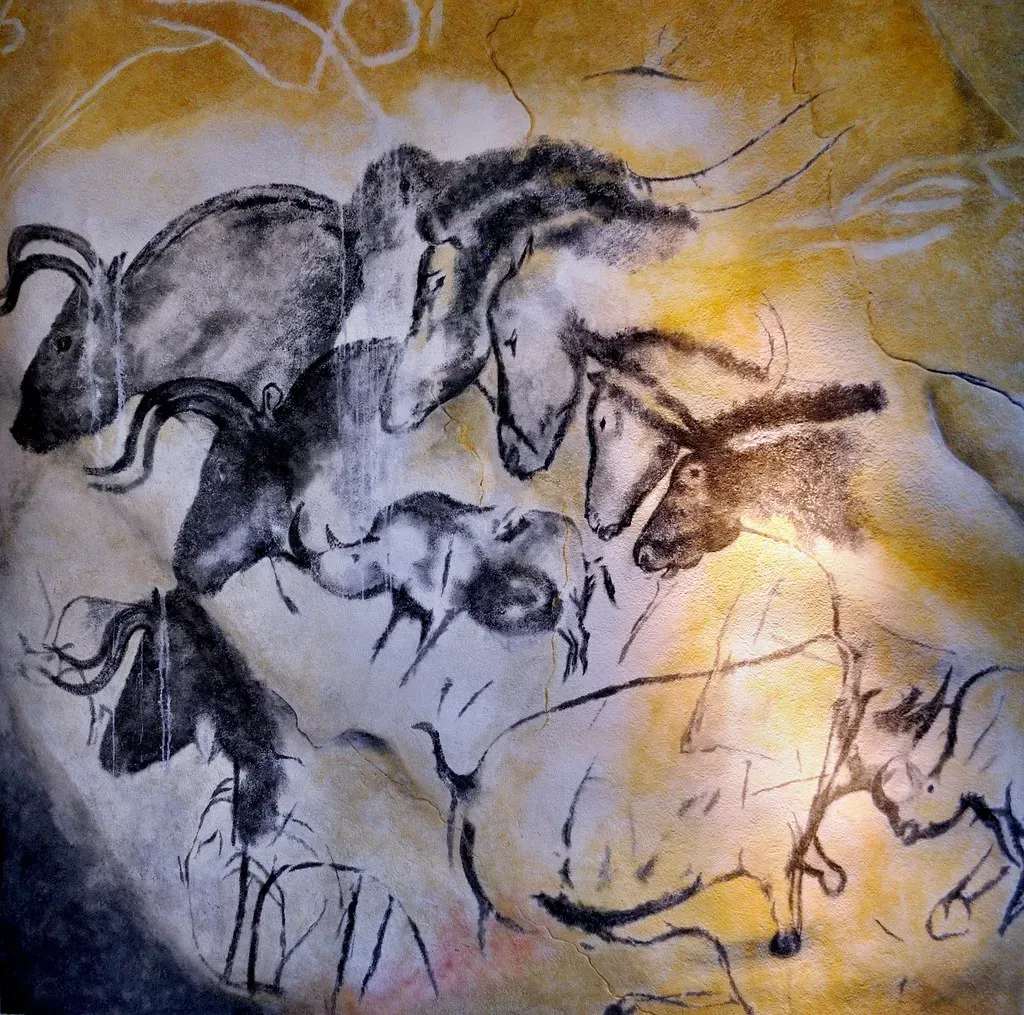
Chauvet Cave, located in southern France, is a significant archaeological site famous for its remarkable prehistoric cave paintings dating back approximately 36,000 years. Discovered in 1994 by a group of speleologists, the cave system is recognized as a UNESCO World Heritage Site since 2014. What makes it stand apart from almost every other prehistoric site is the sheer range of predatory animals on its walls.
The most common animals in the Chauvet Cave paintings are cave lions, mammoths, and woolly rhinoceroses. All coexisted with the Aurignacian people in Europe but are now extinct, and along with depictions of cave bears, these four species make up roughly 65 percent of all species shown in the paintings. The paintings are notable for depicting not just figurative representations of the animals, but actual scenes that reveal the animals’ real behavior, like two woolly rhinoceroses butting horns and a pride of lions stalking a group of bison. You can almost feel the tension still radiating from those walls after 36 millennia.
3. The Sulawesi Warty Pig Cave Painting, Indonesia
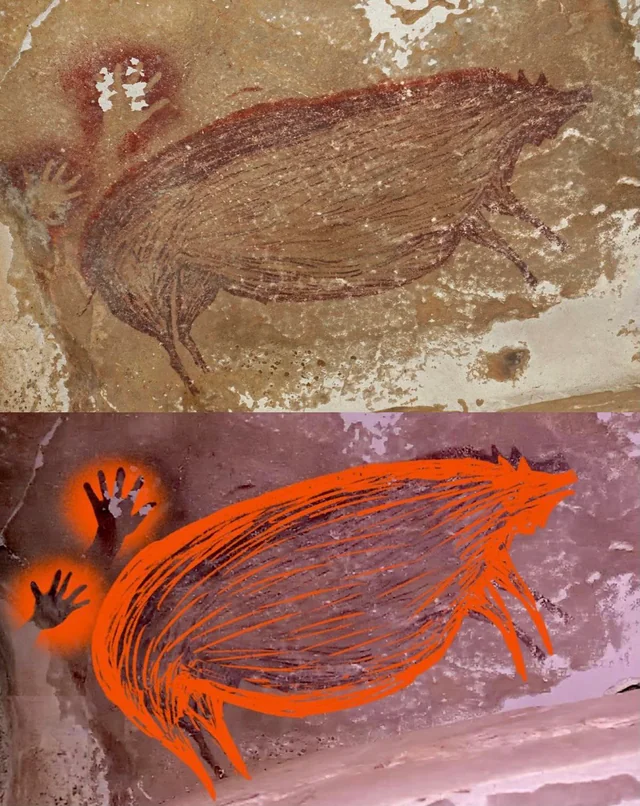
The earliest known cave painting of an animal, believed to be at least 45,500 years old, shows a Sulawesi warty pig. The image appears in the Leang Tedongnge cave on Indonesia’s Sulawesi island. For a long time, the prevailing assumption was that the oldest figurative art originated in Europe. This single painting overturned that idea entirely.
The oldest of the paintings on Sulawesi is a figurative depiction of a Sulawesi warty pig, dated to at least 45,500 years old, making it one of the oldest known examples of representational art in the world. The pig is painted in red ochre and is located in the Leang Bulu’ Sipong 4 cave. With multiple examples of cave art over 30,000 years old, Sulawesi could have been a center of prehistoric creativity, with more cave art still to be discovered. The animals painted here were part of daily life, and their appearance on cave walls was anything but coincidental.
4. The Altamira Cave Paintings, Spain
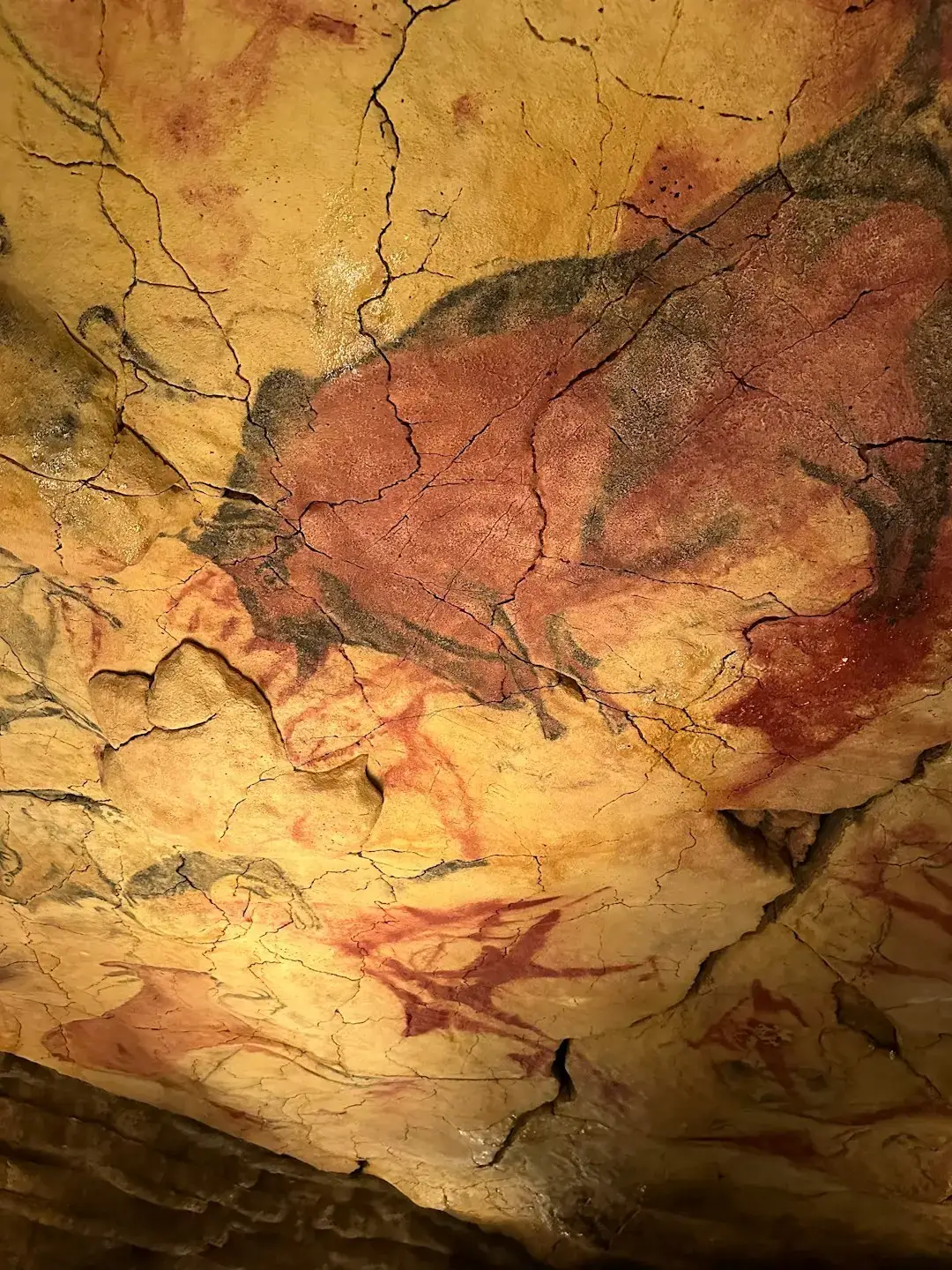
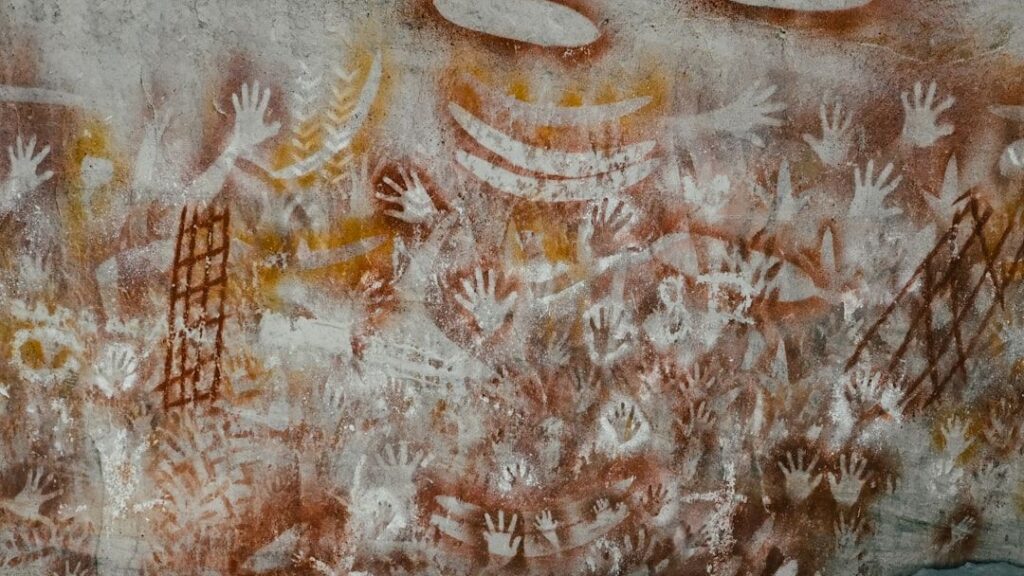
The Cave of Altamira is located near the historic town of Santillana del Mar in Cantabria, Spain. It is renowned for prehistoric parietal cave art featuring charcoal drawings and polychrome paintings of contemporary local fauna and human hands, with the earliest paintings applied during the Upper Paleolithic, around 36,000 years ago. When it was rediscovered in the 19th century, experts refused to believe that ancient humans could have created artwork of such technical quality.
The discovery and dating of the art to the Palaeolithic Age effectively represented the discovery of Palaeolithic cave art, marking the first acknowledgement that people of that period were capable of making carvings and paintings on the walls and ceilings of caves and rock shelters. In most of the caves, original materials related to the execution of the art have been found, such as flint chisels, charcoal pencils, fragments of iron and manganese oxides, and even blow pipes made from bird bones to airbrush paint. You get a real sense of how deliberate, practiced, and resourceful these artists actually were.
5. The Lascaux Cave Paintings, France
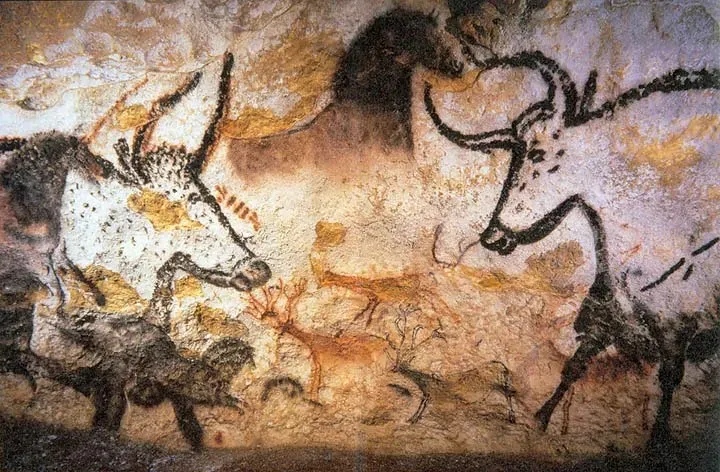
Lascaux is the setting of a complex of caves near the village of Montignac in the Dordogne region of southwestern France. Over 600 parietal wall paintings cover the interior walls and ceilings, representing primarily large animals typical of the local contemporary fauna that correspond with the fossil record of the Upper Paleolithic. The drawings are the combined effort of many generations, and the age of the paintings is estimated at around 17,000 years.
Many of the images in the Lascaux cave depict easily recognizable animals like horses, bulls, and deer, though a few are more unusual, demonstrating the artists’ ability to paint something they likely hadn’t seen in real life. The representation of wild beasts has led many to believe that the paintings served as records of the fauna available for hunting in the nearby area. The appearance of dots alongside some of the animals may imply some sort of tally or count, suggesting the works could have been used to record the success of previous hunting trips. It’s a record of both the creatures and the strategies people used to live alongside them.
6. The Natufian Human-Goose Figurine, Israel
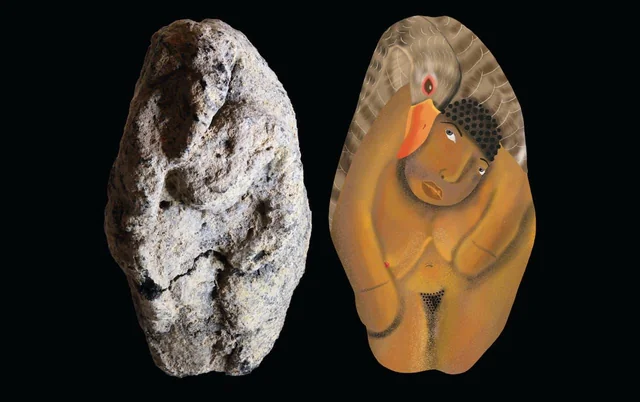
In a remarkable discovery that bridges ancient and modern understanding of human imagination, archaeologists unearthed a 12,000-year-old clay figurine from northern Israel representing the earliest known depiction of human-animal interaction. The tiny sculpture, measuring just 3.7 centimeters tall, portrays a woman crouched forward with a goose perched upon her back, offering an unprecedented window into the spiritual and symbolic world of Late Natufian peoples who lived along the shores of the Sea of Galilee.
Miraculously, a preserved fingerprint still visible on the figurine indicates that it was made by a young adult or adult female. The researchers interpret this composition as depicting a mythological or ritual encounter consistent with animistic beliefs, a worldview that perceives humans and animals as spiritually interconnected beings capable of transformation and interaction beyond the physical realm. Such beliefs have persisted in human cultures worldwide for millennia, manifesting in shamanic visions and storytelling traditions. This tiny object is easy to underestimate until you realize what it actually represents: early symbolic narrative told through clay.
7. The Rouffignac Cave Mammoth Engravings, France
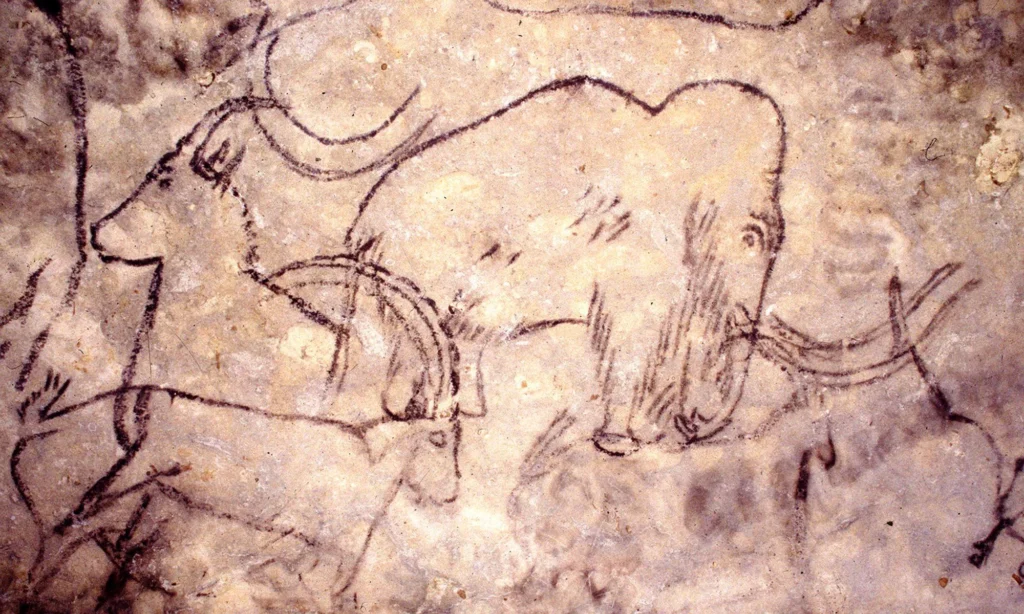
The cave of Rouffignac is located in the Dordogne near Rouffignac-Saint-Cernin-de-Reillac and Les Eyzies-de-Tayac, situated on a forested limestone plateau. What sets it apart from comparable sites is the sheer dominance of one animal in particular. Mammoths represent over 60 percent of the figures in the cave. There are also bison, horses, ibex, and rhinos, providing a specific guide to the fauna of roughly 13,000 years ago.
Impressive panels of black drawings and engravings gradually move from the walls to the ceiling as the cave ceiling lowers, while on the floor there are hollows once used for cave bear hibernation, until the end of the cave is finally reached where a dizzying display of drawings including woolly rhinoceroses, mammoths, horses, bison, and ibex adorns the ceiling. The Henri Breuil gallery is dominated by the Frieze of Three Woolly Rhinos and the Frieze of Ten Mammoths. That these artists lay on their backs to render extinct giants on a cave ceiling, using only firelight, is difficult to fully grasp even now.
8. The Bhimbetka Rock Shelters, India
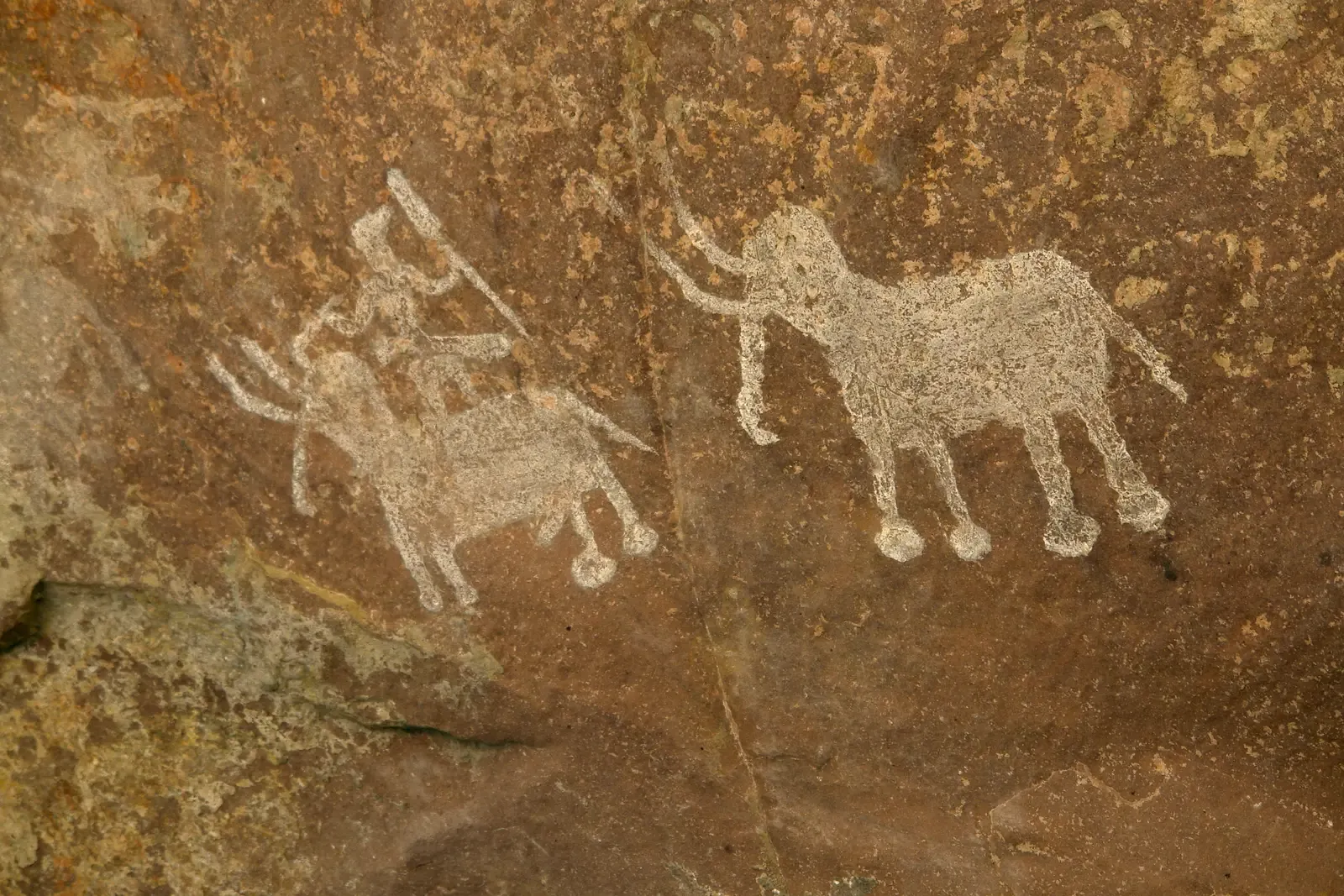
The earliest examples of paintings on the Indian subcontinent are petroglyphs such as those found at the Rock Shelters of Bhimbetka. This site in Madhya Pradesh contains some of the oldest evidence of human habitation and animal interaction art in all of Asia, stretching across an enormous span of time. At the very least, the figures at sites like these provide a good record of the types of animals that existed in certain locations during the Paleolithic age, some of which are extinct today.
The Bhimbetka paintings include depictions of animals such as bison, tigers, rhinoceroses, and elephants alongside hunting scenes, rendered across hundreds of rock shelters in vivid natural pigments. A 2012 study found that prehistoric cave artists depicted the walking gait of four-legged animals with greater accuracy than modern artists, suggesting close observation of prey animals was important for survival. That level of anatomical precision points to something beyond occasional observation. These were people who spent serious time watching, tracking, and understanding the beasts they painted.
9. The Gobustan Rock Engravings, Azerbaijan
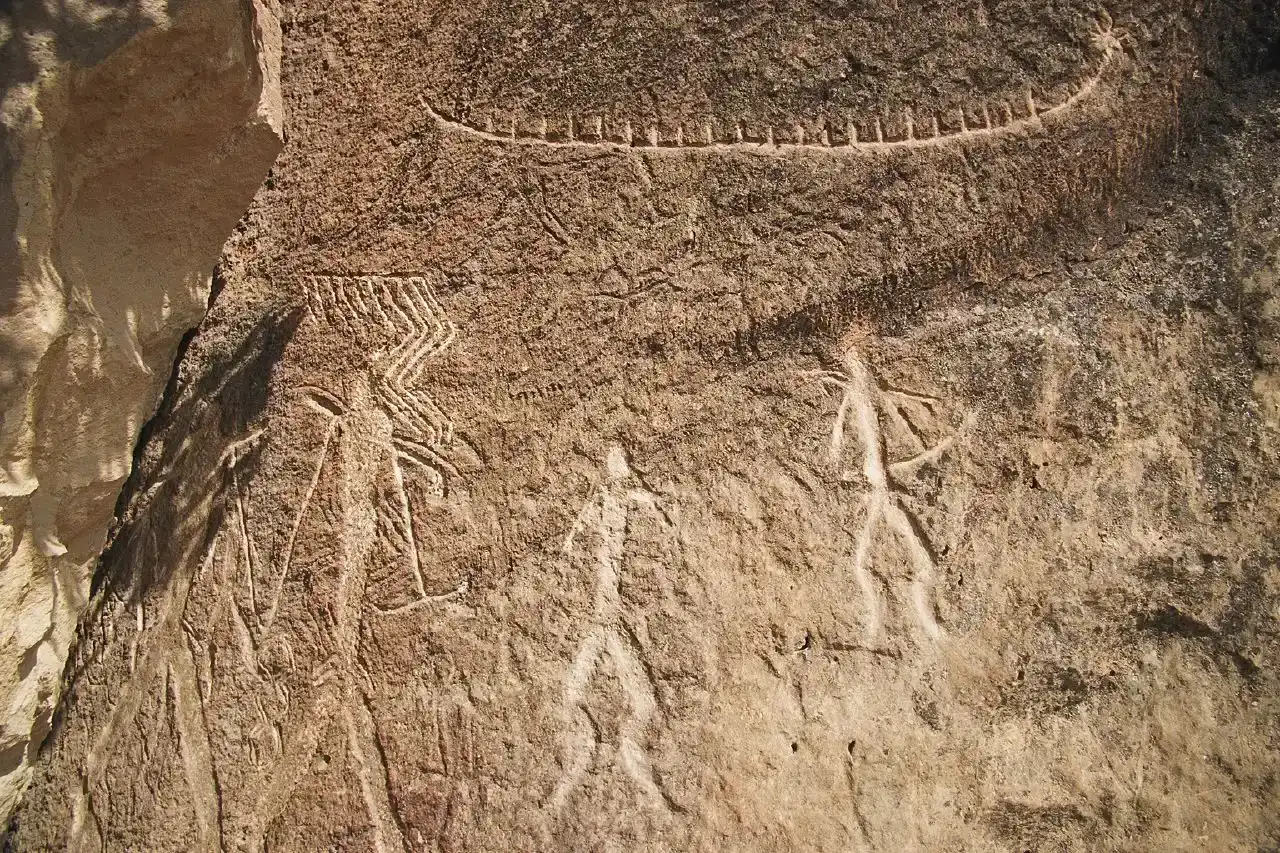
In Azerbaijan, dated to around 12,000 years old, there are approximately 6,000 or more rock engravings representing the figures of humans and animals engaged in various hunting scenarios, located at the National Park in Gobustan. The site sits in the southeastern reaches of the Greater Caucasus Mountains and presents a remarkable window into human-animal relationships at the close of the Paleolithic era.
The Gobustan National Park reserve, located about 60 km away from Baku, dates back more than 12,000 years. The reserve has more than 6,000 rock carvings depicting mostly hunting scenes, human and animal figures. What you find here isn’t just art for its own sake. Prehistoric humans may have painted animals to symbolically connect with them for hunting, or the paintings may represent an animistic vision and homage to surrounding nature, or they may be the result of a basic need for expression that is innate to human beings, or they may be recordings of life experiences and related stories from members of a community. At Gobustan, all of those possibilities seem equally plausible.
A Living Record Carved in Stone
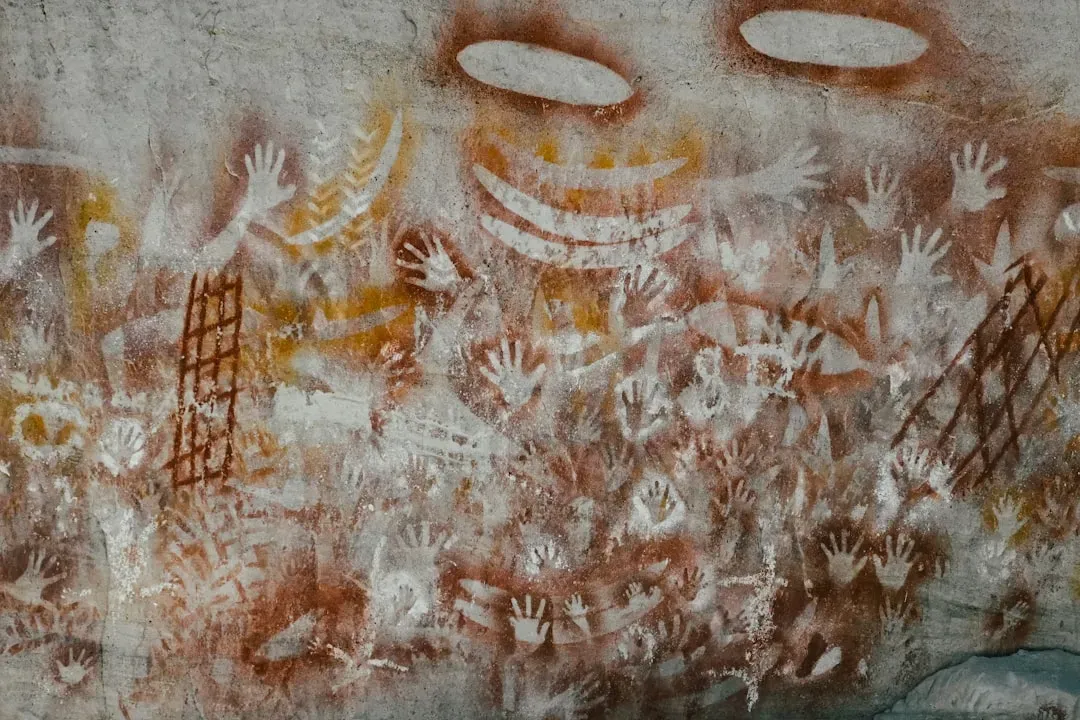
What ties all nine of these artifacts together isn’t just age or artistic skill. It’s intention. These historical artifacts truly reflect the extent of human evolution. They reveal a timeline not just of technological progress, but of human creativity and imagination, showcasing that our ancestors were thinkers, dreamers, and problem solvers.
Cave art is generally considered to have a symbolic or religious function, sometimes both. The exact meanings of the images remain unknown, but some experts think they may have been created within the framework of shamanic beliefs and practices. These artifacts demonstrate that long before the development of agriculture and animal domestication, early sedentary communities were already constructing complex symbolic vocabularies through art, exploring relationships between humanity and nature through imaginative rather than purely representational lenses.
The creatures depicted in these works are mostly gone now. The woolly mammoth, the cave lion, the giant rhinoceros, all vanished thousands of years ago. Yet somehow, through pigment and ivory and clay, the people who shared the world with them left you a record. That record is still speaking, if you know how to listen.