Imagine looking up into a sky with no eagles, no hawks, no songbirds of any kind. Just vast, open air. Hard to picture, right? Yet for hundreds of millions of years, that was exactly the reality on Earth, and somehow, life still found a way to conquer the heavens. Long before feathers became the go-to toolkit for aerial mastery, a dazzling array of creatures evolved wings, membranes, and all manner of bizarre adaptations to take to the skies.
The story of prehistoric flight is one of the most jaw-dropping chapters in natural history. It’s messy, surprising, and full of creatures you’ve probably never heard of. Some were the size of small planes. Others were no bigger than a crow. Each one cracked the code of flight in its own strange, spectacular way. Buckle up, because the ancient sky was a far wilder place than you might imagine. Let’s dive in.
1. Meganeura: The Giant Dragonfly That Ruled Before Dinosaurs Even Existed
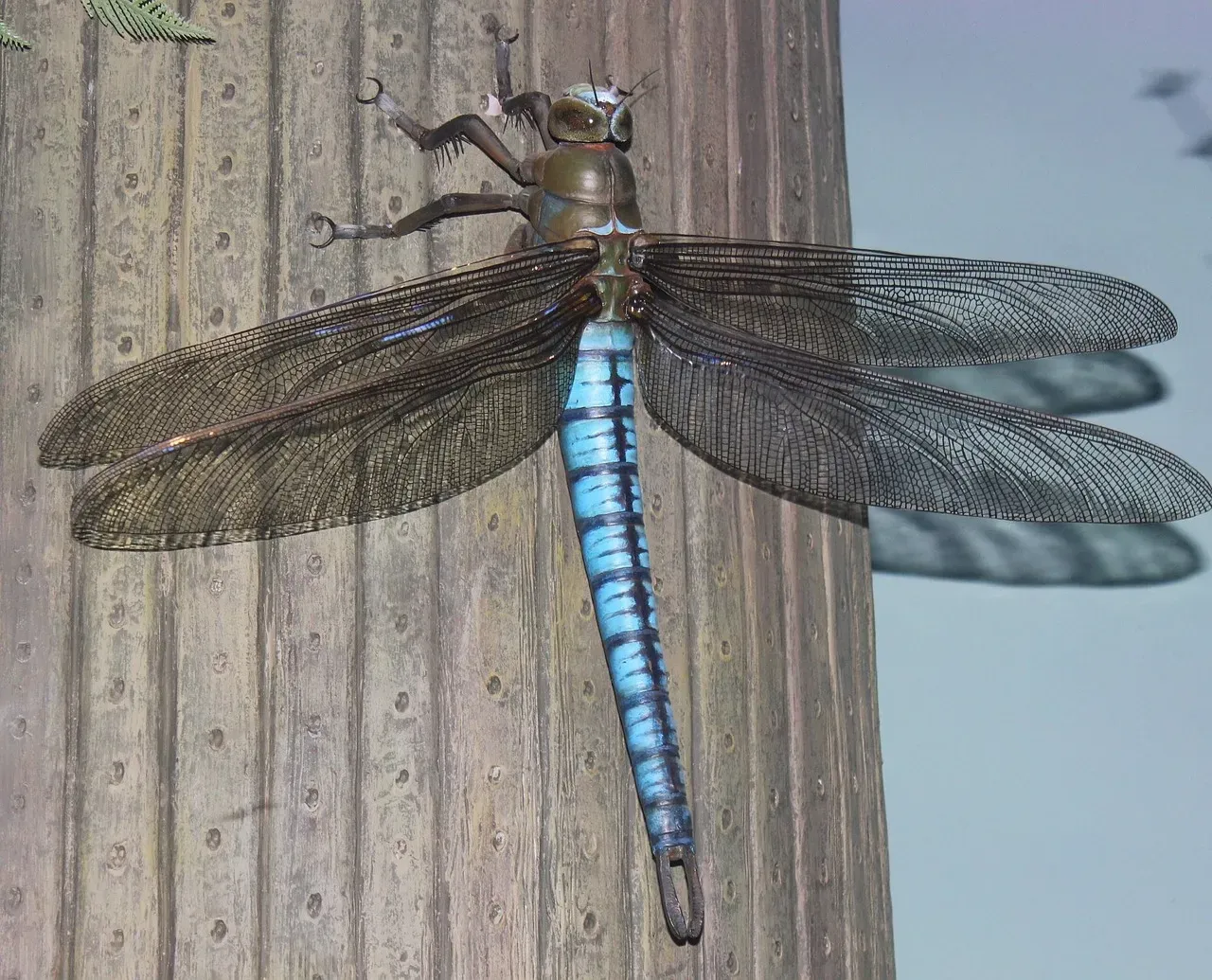
Here’s a fact that might make you shiver: before dinosaurs evolved, when the world was swampy and green roughly 300 million years ago, giant dragonfly-like insects called griffinflies filled the skies. These weren’t your garden variety dragonflies. With wingspans that stretched up to a whopping 71 centimetres, these epic insects would have blocked out the sun as they flew past. That’s a wingspan larger than a golden eagle.
Meganeura monyi was the largest early dragonfly known to exist. This species was a predator that would have eaten other insects, with spines on its legs to trap and capture its prey. They probably also had large, sharp mandibles for slicing and chewing their prey. One leading theory for why they reached such colossal sizes? The Carboniferous period was characterized by high oxygen levels in the atmosphere, which may have allowed insects to grow larger and develop more energy-intensive activities like flight. Honestly, the fact that we share a planet’s history with something this terrifying is both thrilling and deeply unsettling.
2. The First Winged Insects: Flight’s Quiet Revolution
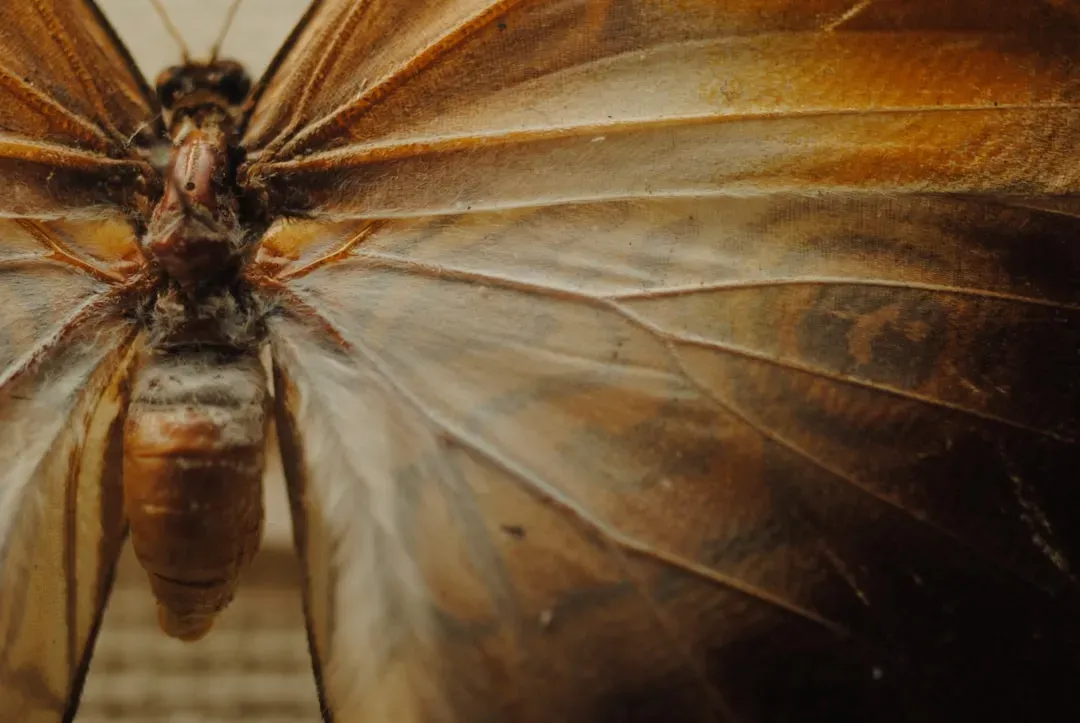
True flight has developed independently on four separate occasions throughout geologic history, beginning with insects and followed by pterosaurs, birds, and bats. That first chapter, written entirely by insects, is arguably the most significant. Insects were mysteriously scarce in the fossil record until 325 million years ago, when they first took flight and, according to research, evolutionarily took off. Think of it like a company going from a tiny startup to a global empire overnight.
The first fossil evidence of insect wings dates to 324 million years ago, just after the Hexapod Gap ended. Before that, insects were crawling creatures with no access to the three-dimensional world above them. The evolution of insect flight opened a new frontier. It enabled insects to disperse widely, escape predators, colonize new habitats, and exploit nectar and pollen. Their success was so explosive that insects today account for the vast majority of all animal species on Earth. You could argue it was the single most consequential biological invention in the history of life. Quite a bold claim, but it holds up.
3. Eudimorphodon: The Earliest Known Flying Vertebrate
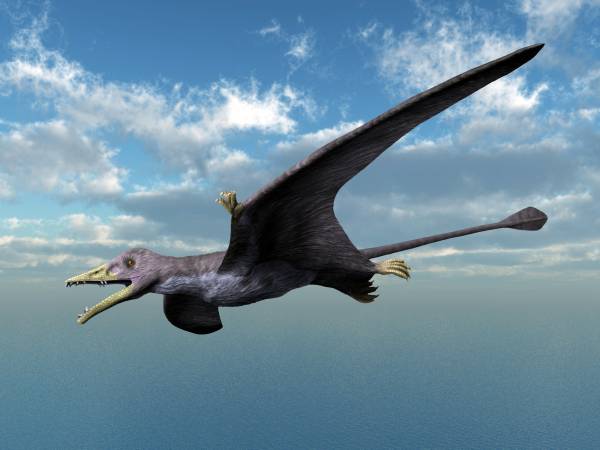
Eudimorphodon is a small primitive flying reptile of the pterosaur genus that inhabited northern Italy territory 210 million years ago. The name means “true dimorphic tooth,” similar to Dimorphodon, another genus member. What makes this creature so remarkable is timing. Rhamphorhynchoids were the first pterosaurs, and they are found in deposits from the Late Triassic Epoch. Genera of this group include Eudimorphodon and Peteinosaurus, both found in Italian Triassic deposits, with wingspans of less than 1 metre.
The small insectivorous Carniadactylus and the larger Eudimorphodon were highly aerial animals and fast, agile flyers with long robust wings. Eudimorphodon has been found with fish remains in its stomach, but its dentition suggests an opportunistic diet. This tiny prehistoric pioneer was already a sophisticated flyer right from its first appearance in the fossil record. Surprisingly, for a jaw only 6 cm in length, the total number of teeth was 110. That’s extraordinary dental engineering packed into a creature you could hold in your hand. Nature, as always, was showing off.
4. Dimorphodon: The Bizarre Early Jurassic Oddball
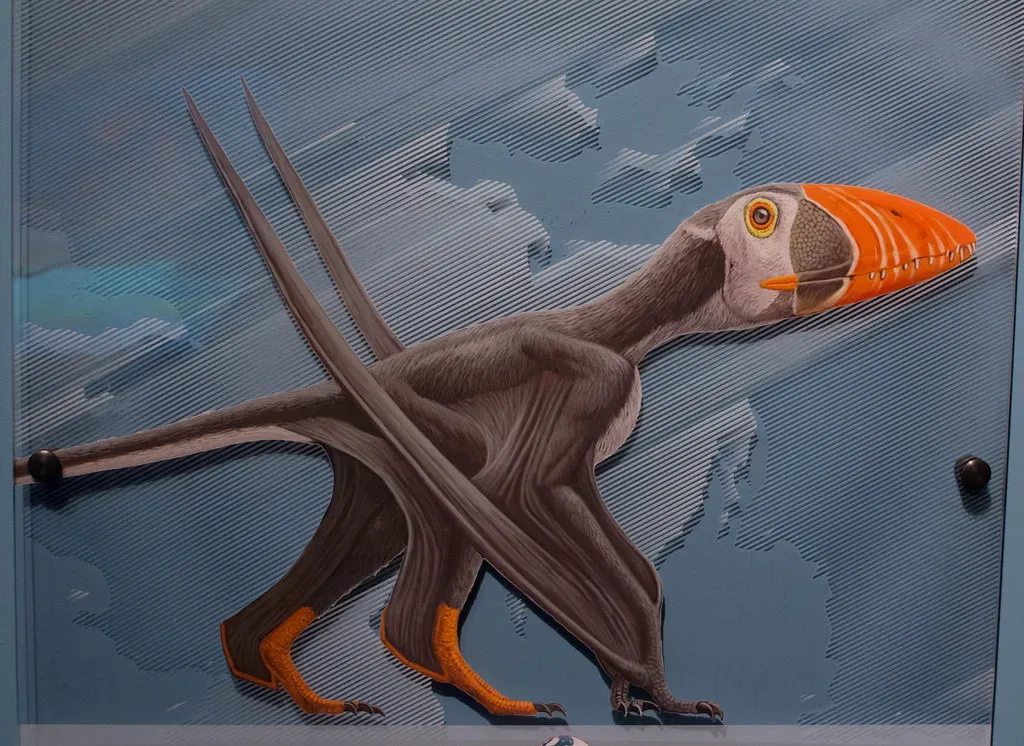
Dimorphodon was a species of pterosaur that lived during the early Jurassic Period about 195-190 million years ago. It’s one of those creatures that seems almost comically overdesigned. It’s one of the most easily recognizable pterosaurs due to the unique appearance of its deep semi-circular head, which measured 9 inches long, one-fourth of its overall body length. Imagine a creature where your head is literally a quarter of your entire body. It looked like something out of a cartoon. Yet it was very, very real.
Dimorphodon’s name means “two-form tooth,” because it had two distinct types of teeth in its jaws, something unusual for reptiles. It wasn’t particularly large, with a wingspan of about 4 feet. This likely supported a wide skin membrane spanning between the feet and the tail’s base, giving Dimorphodon a roughly four-winged appearance. This extra rear membrane also created additional surface area and provided extra lift to compensate for the moderate size of the main wings. Essentially, Dimorphodon solved aerodynamic problems in a way no other creature has since. Weird? Yes. Genius? Absolutely.
5. Rhamphorhynchus: The Long-Tailed Jurassic Fisherman
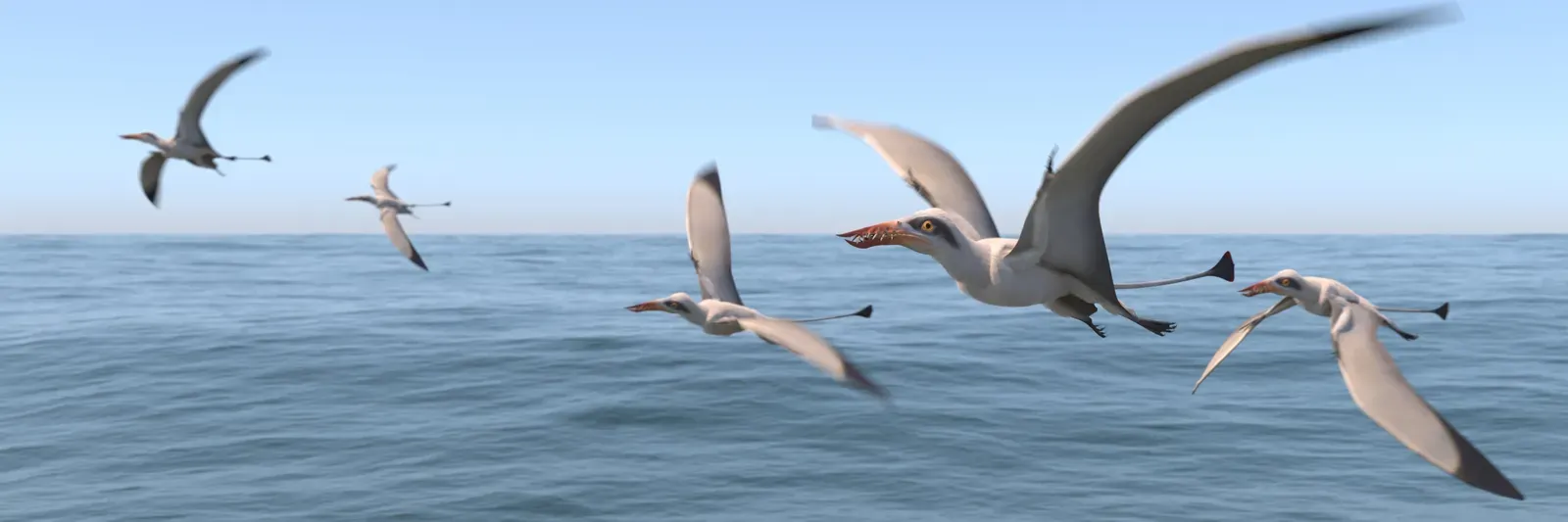
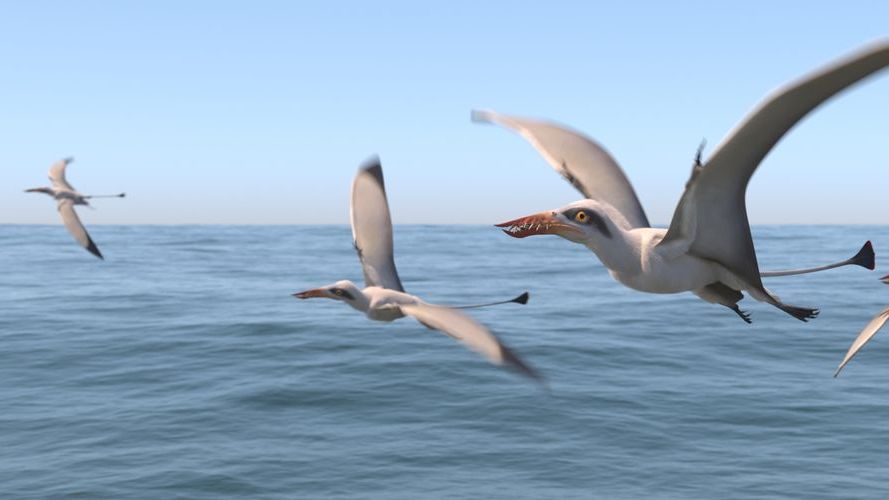
3D Epix Inc., CC BY-SA 4.0)
Rhamphorhynchus is a Jurassic pterosaur notable for the long tail that ended in a diamond-shaped flap of skin. Its name means “beak snout,” and it had a long, narrow snout filled with needle-like teeth, great for snatching fish. Rhamphorhynchus was about the size of a seagull, with a wingspan ranging roughly 3 to 6 feet depending on the species. Now that’s a form built purely for function.
Fossils of Rhamphorhynchus have been found in what was once a tropical lagoon in Germany, indicating it led a coastal lifestyle. It’s a fascinating parallel to modern seabirds. Fossil records of this flying reptile show well-preserved pterosaur fossils, providing valuable insights into its anatomy and lifestyle. This particular species also possessed air sacs, which aided in its buoyancy and flight efficiency. The more you learn about Rhamphorhynchus, the more it feels less like a primitive ancestor and more like a highly polished, precision-built aerial predator. The Jurassic skies over ancient Germany must have been quite the spectacle.
6. Pteranodon: The Toothless Sky Titan
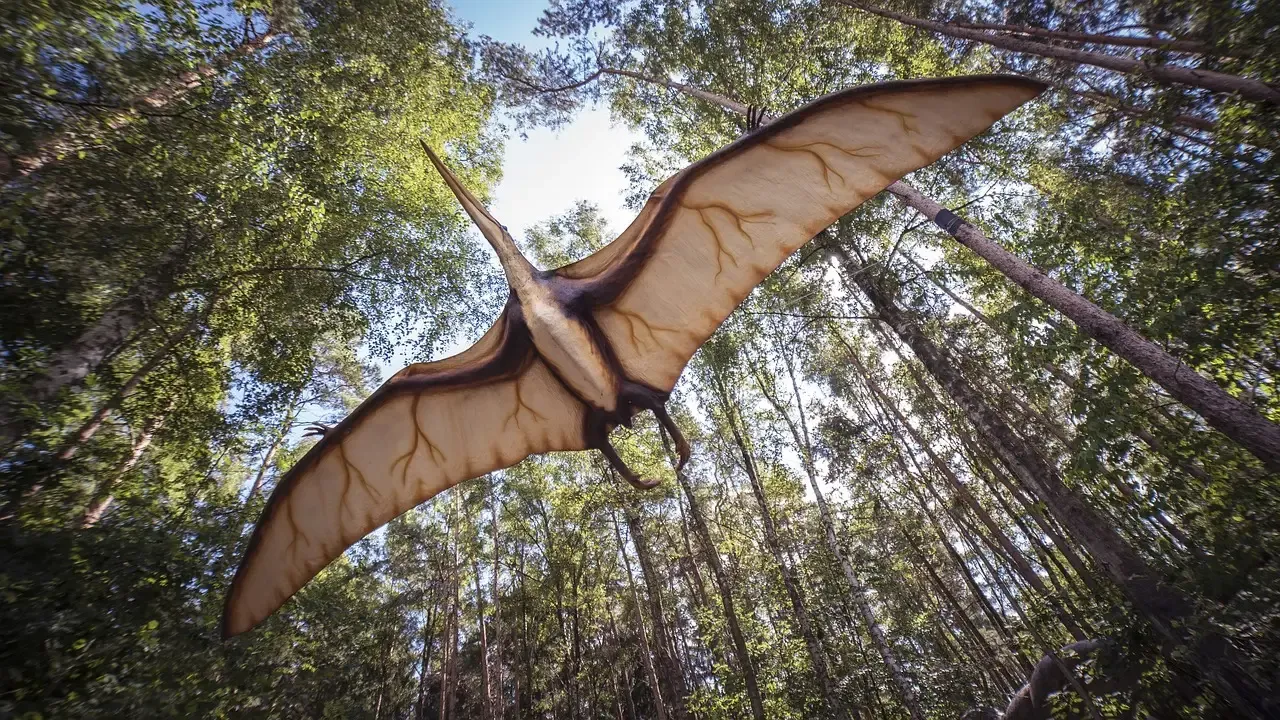
When you hear “flying dinosaur,” your mind probably races to the Pteranodon. With its distinctive crest and long beak, it’s an image many of us grew up with. This fascinating creature had a wingspan of around 18 feet, almost as long as a car. It’s the poster child of prehistoric flight, and honestly, that reputation is well-earned. Also known as the “toothless flying reptile,” the Pteranodon’s name literally means “wing without tooth.”
Pteranodon likely fed on fish, catching prey during flight. The powerful flight muscles and winged fingers of Pteranodon allowed for sustained, long-distance gliding over oceans. Picture a creature surfing thermals over ancient inland seas, its enormous crest cutting through the wind like a rudder. Pteranodon could travel long distances by depending on air currents. The huge yet incredibly light wings of this reptile were covered by a leathery membrane rather than feathers. It’s hard to overstate how perfectly adapted this animal was. Remove the feathers from your mental image of a bird and replace the beak with a bony crest, and you start to get the picture.
7. Microraptor: The Four-Winged Feathered Glider
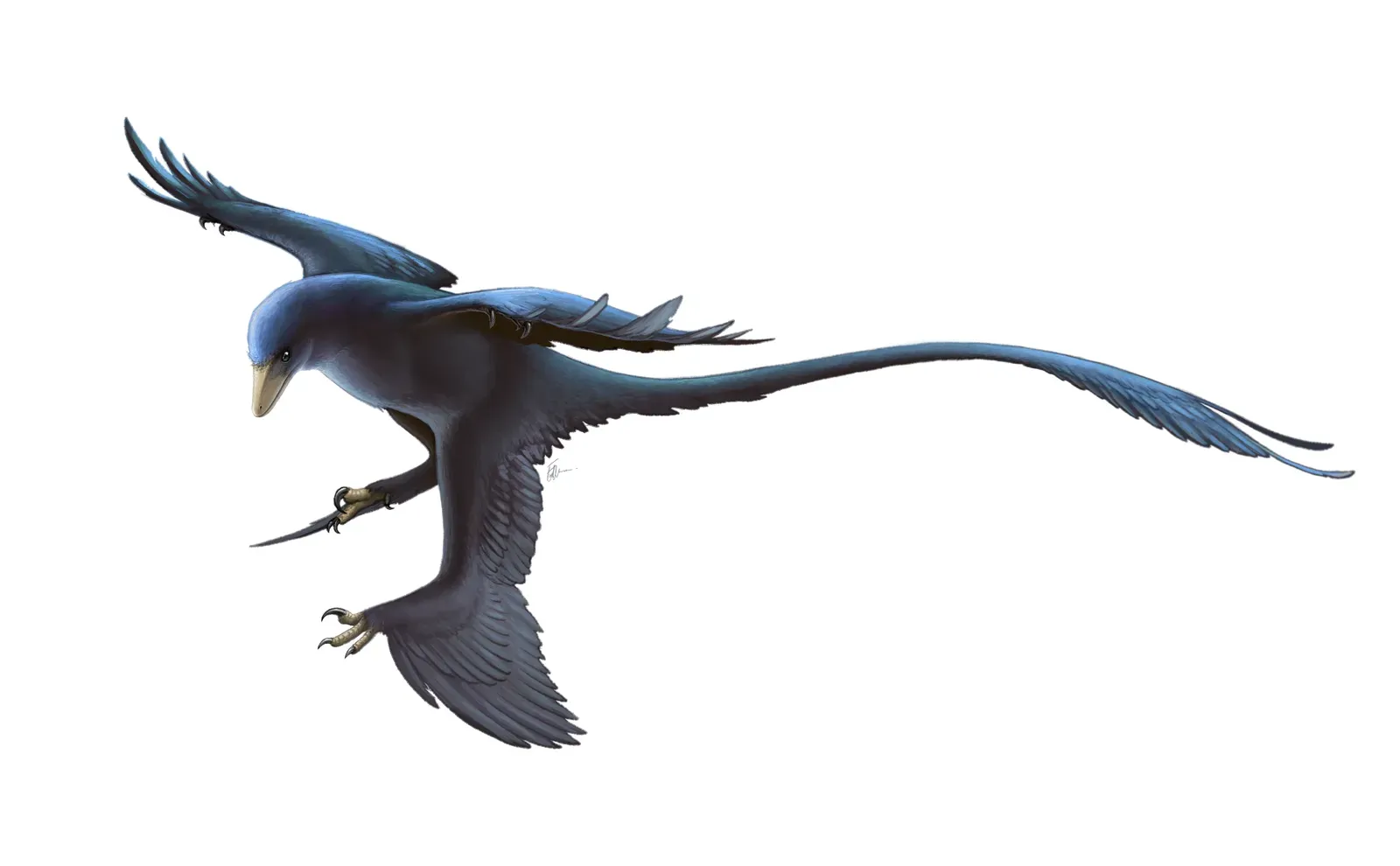
Microraptors, which had wings on all four limbs, were feathered, flying dinosaurs that lived between 113 million and 125 million years ago. They had adaptations for powered flight that were better than Archaeopteryx and some early birds, but some were probably better gliders than fliers. Let that sink in for a moment. Four wings. On a dinosaur. This wasn’t science fiction. Microraptor was a small feathered dinosaur from the Early Cretaceous in China. It had feathers not only on its arms, forming wings, but also on its legs, essentially giving it four wings.
Microraptor’s feathers were very bird-like, and scientists have even discovered pigment cells in its fossilized feathers, indicating it might have had an iridescent black color, like a crow or grackle. I think that detail is extraordinary. We actually know the color of a creature that lived over 120 million years ago. Fossil evidence suggests Microraptor ate a varied diet. One fossil had fish bones in its stomach, another had bird bones. It seems Microraptor wasn’t picky and could hunt in trees or dip into water for a snack. A four-winged, iridescent, multi-habitat predator. What a creature.
8. Yi Qi: The Bat-Winged Dinosaur Nobody Expected
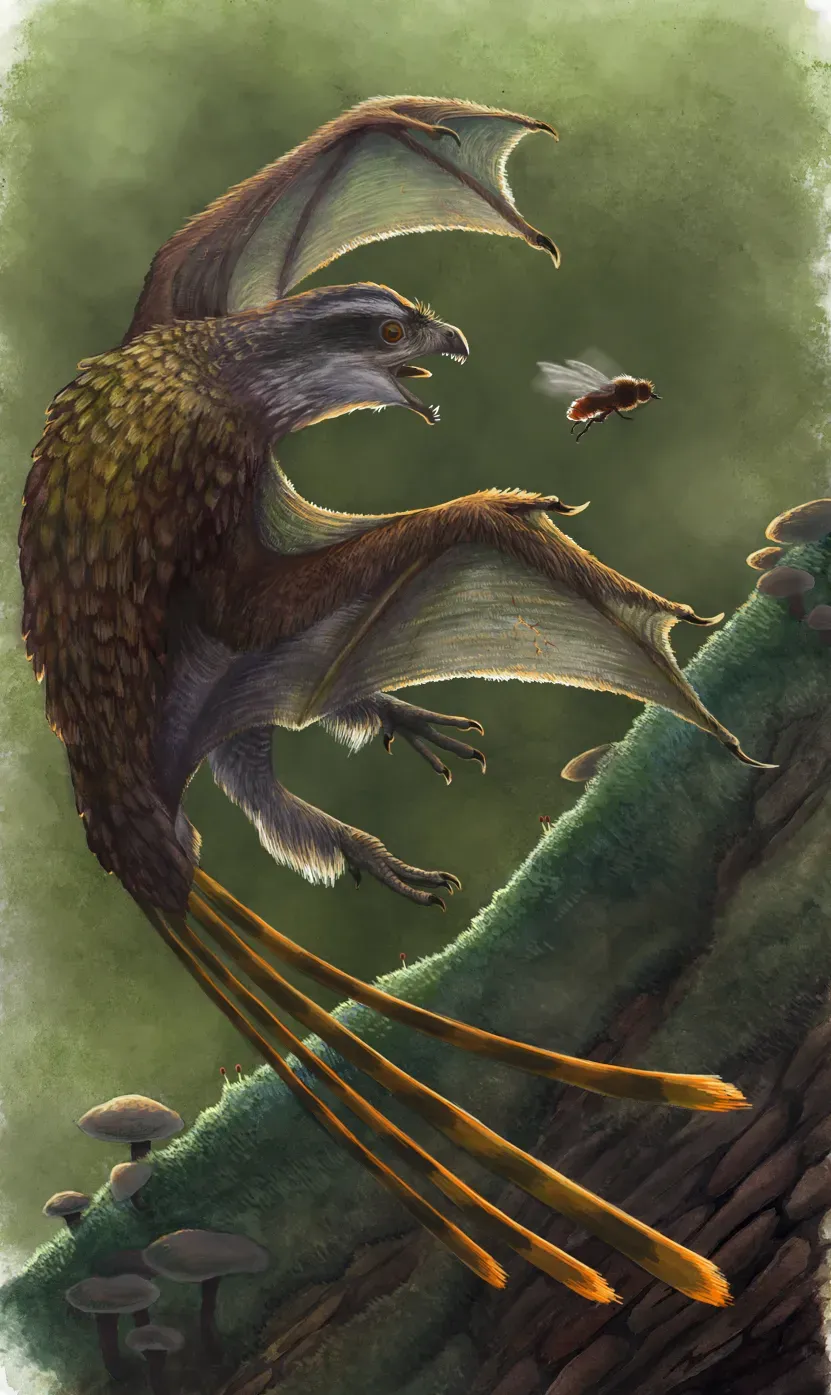
Yi qi, the pigeon-sized dinosaur, was dated to 159 million years ago and had bat-like wings, better suited to gliding than flying. Its name means “strange wing” in Chinese, and trust me, that name doesn’t even begin to cover it. Instead of large feathers, Yi qi had a skin membrane wing supported by a long rod-like bone extending from its wrist, somewhat similar to a bat’s wing. This is unlike any other dinosaur found. Nature was clearly in an experimental mood during the Jurassic.
Yi qi likely could only glide short distances from tree to tree. Its discovery in 2015 showed that dinosaurs were trying all sorts of approaches to conquer the air, though the only lineage that truly succeeded long-term were the feathered birds. The name Yi qi means “strange wing” in Chinese, and it certainly lived up to that name. It’s a little like evolution handed a design brief to a committee and nobody could agree on the final direction. Yi qi possessed an unusual, elongated third finger that appears to have helped to support a membranous gliding plane made of skin. The planes of Yi qi were also supported by a long, bony strut attached to the wrist. Strange, beautiful, and utterly unique in the history of life.
9. Quetzalcoatlus: The Largest Flying Animal That Ever Lived
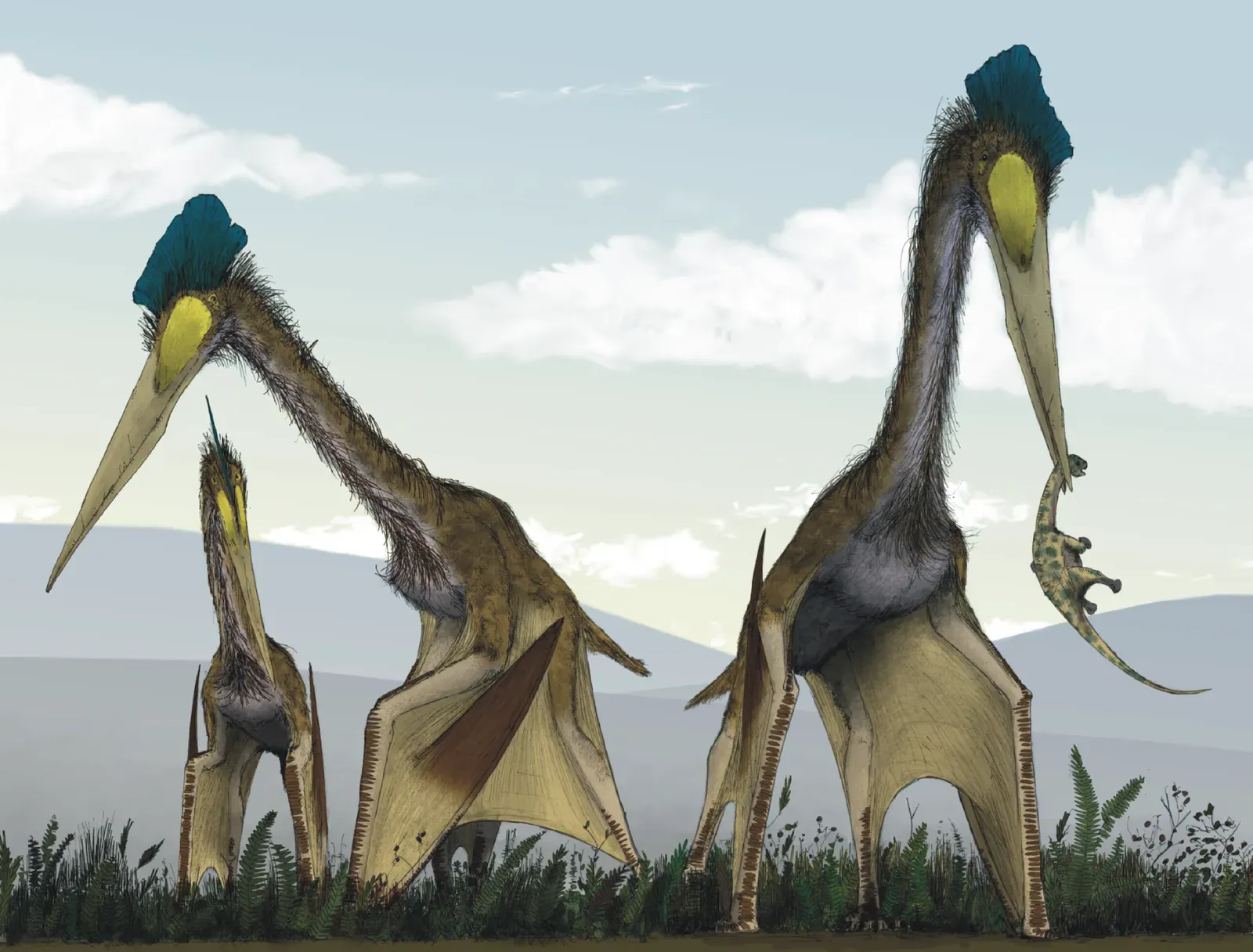
Quetzalcoatlus dominated the skies of North America at the end of the Dinosaur Age and flew high over such famous creatures as Tyrannosaurus and Triceratops. As tall as a giraffe, the biggest Quetzalcoatlus species were also the largest of all flying creatures. Let that image land. You have a T. rex on the ground. Above it, something the size of a giraffe is soaring on wings the span of a school bus. Paleontologists contend that members of the species stood about 5 meters tall and had a wingspan of up to 11 meters.
Based on the work of researchers in 2010, it now seems likely that pterosaurs, especially larger taxa such as Quetzalcoatlus, launched quadrupedally from a four-legged posture, using the powerful muscles of their forelimbs to propel themselves off the ground and into the air. They could likely travel nonstop for enormous distances after launching, only rarely flapping to keep themselves in the air and to steer their path. The generic name refers to the Aztec serpent god of the sky, Quetzalcōātl. Fitting, really. Anything that large and that capable of flight deserves to be named after a god. In the entire 4.5-billion-year history of this planet, nothing has ever flown that was bigger than Quetzalcoatlus. Nothing.
Conclusion: The Sky Always Found a Way
![Conclusion: The Sky Always Found a Way ([3] archive copy at the Wayback Machine, CC BY-SA 3.0)](https://nvmwebsites-budwg5g9avh3epea.z03.azurefd.net/dinoworld/bd35e9d94e89860230073d9696c6946b.webp)
What strikes you, looking back at all nine of these ancient masters of flight, is just how relentlessly creative evolution is. From a giant dragonfly the width of a bicycle wheel to a giraffe-sized reptile soaring over the last dinosaurs, flight wasn’t invented once. It was reinvented, reimagined, and improved upon across hundreds of millions of years.
The evolution of flight in insects, pterosaurs, birds, and bats is a striking example of convergent evolution, where unrelated lineages evolve similar traits to solve the same problem. Each did it differently, with different materials and blueprints, but the outcomes bear uncanny resemblance. All fliers evolved lightweight skeletons, efficient respiratory systems, powerful muscles, and high metabolic rates. Nature, it seems, only allows so many ways to defy gravity.
Next time you watch a bird disappear into a cloudy sky, spare a thought for the 300-million-year story of aerial innovation that made that moment possible. Every wing is a legacy. Every creature on this list is proof that the urge to leave the ground is ancient, unstoppable, and endlessly inventive. Which of these nine ancient flyers surprised you the most? Tell us in the comments below.