Picture yourself standing in front of a massive skeleton in a dimly lit museum hall, bones arranged in a way that tells a story millions of years old. You’ve probably wondered how scientists pieced together these ancient puzzles, transforming fragments of rock into creatures that once ruled Earth. The truth is, certain fossils changed everything we thought we knew about dinosaurs.
For the longest time, people stumbled upon enormous bones and had no idea what they were looking at. Some thought giants walked the Earth. Others assumed these remains belonged to dragons or sea monsters. It took centuries before scientists even had a word for dinosaurs, let alone understood what they really were. Each discovery added another layer to our understanding, challenging assumptions, rewriting textbooks, and sparking debates that continue today.
Megalosaurus: The First Official Dinosaur Ever Named
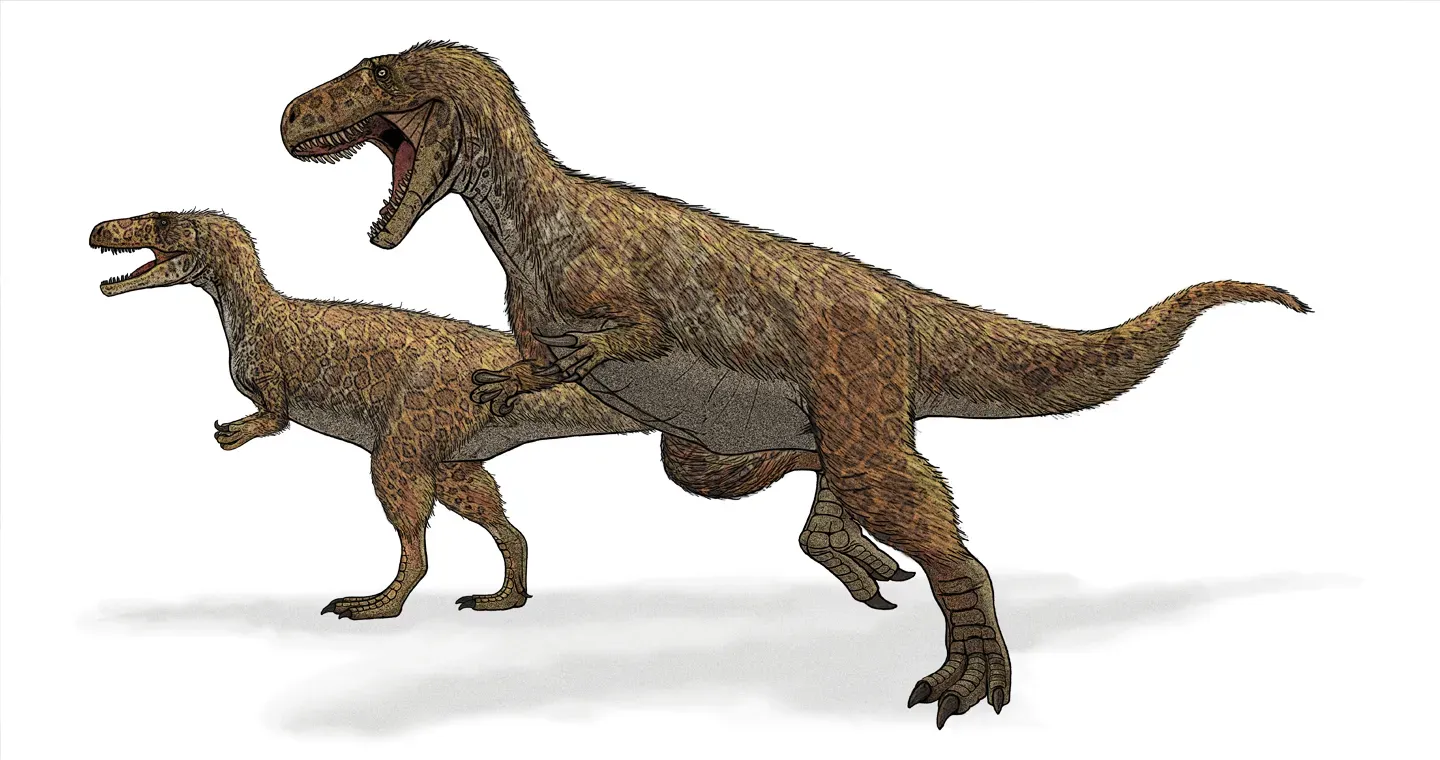
You’re looking at history itself when you see the jaw of Megalosaurus housed at the University of Oxford, which helped William Buckland describe the first dinosaur in 1824. Let’s be real, before this moment, nobody even knew dinosaurs existed as a distinct group of animals. Around 1818, William Buckland, a cleric from the University of Oxford, decided to study in greater detail fossils that had been discovered around Oxfordshire.
William Buckland, with help from renowned anatomist Georges Cuvier, described these fossils in a scientific article published in 1824, deducing that the bones belonged to a gigantic reptile, the like of which had not been seen before. Think about that. This wasn’t just another fossil. In 1842, Richard Owen decided these fossils were so utterly different from any known reptiles that they deserved classification as a completely new group of giant fossil reptiles: Dinosauria, meaning “terrible, or fearfully great, reptiles,” and prior to 1842 nobody had heard of dinosaurs.
Iguanodon: Shattering the Meat Eating Myth
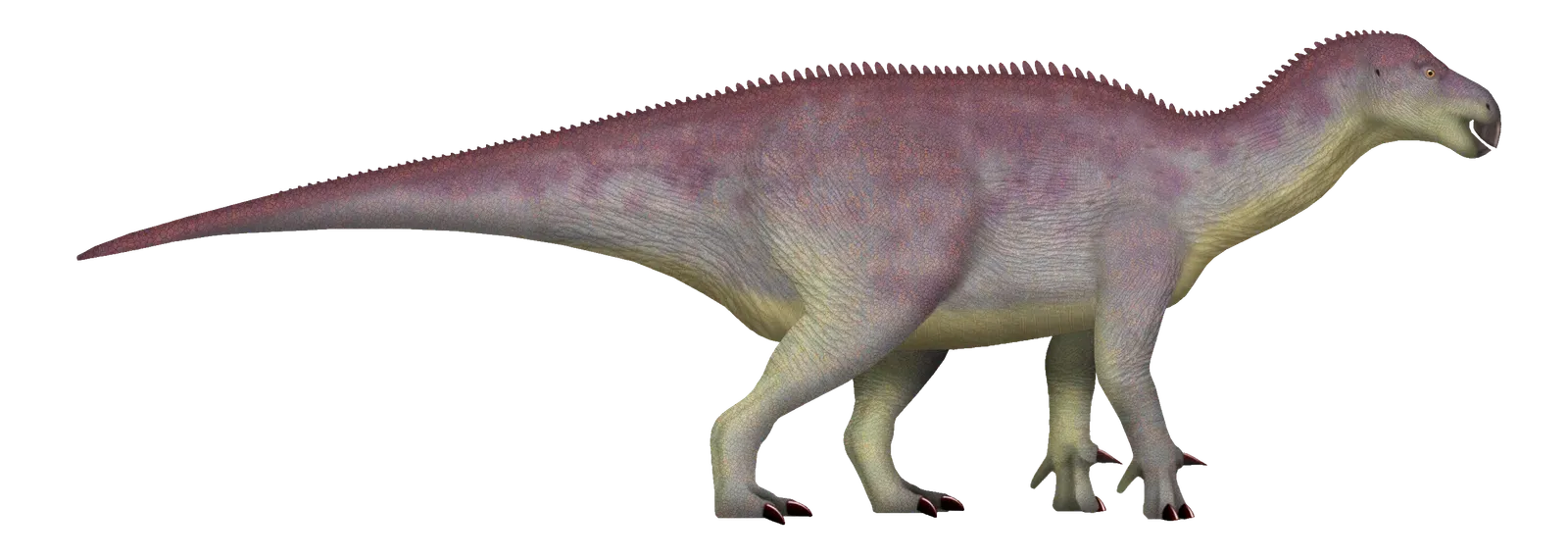
A year after Megalosaurus was named, a second giant prehistoric reptile, called Iguanodon, was described, and it was a hugely significant discovery because Iguanodon was the first giant prehistoric reptile found to be herbivorous. Here’s the thing about this discovery: it completely flipped the script on what people thought dinosaurs were.
At the time, most reptiles were thought to eat mainly meat or insects, so to find a reptile on this scale that only ate plants was viewed as revolutionary. Suddenly, scientists realized that the prehistoric world wasn’t just filled with terrifying predators. You had gentle giants munching on vegetation, creating entire ecosystems far more complex than anyone imagined. This single fossil opened the door to understanding dinosaur diversity in ways that still influence research today.
Archaeopteryx: The Missing Link Between Dinosaurs and Birds
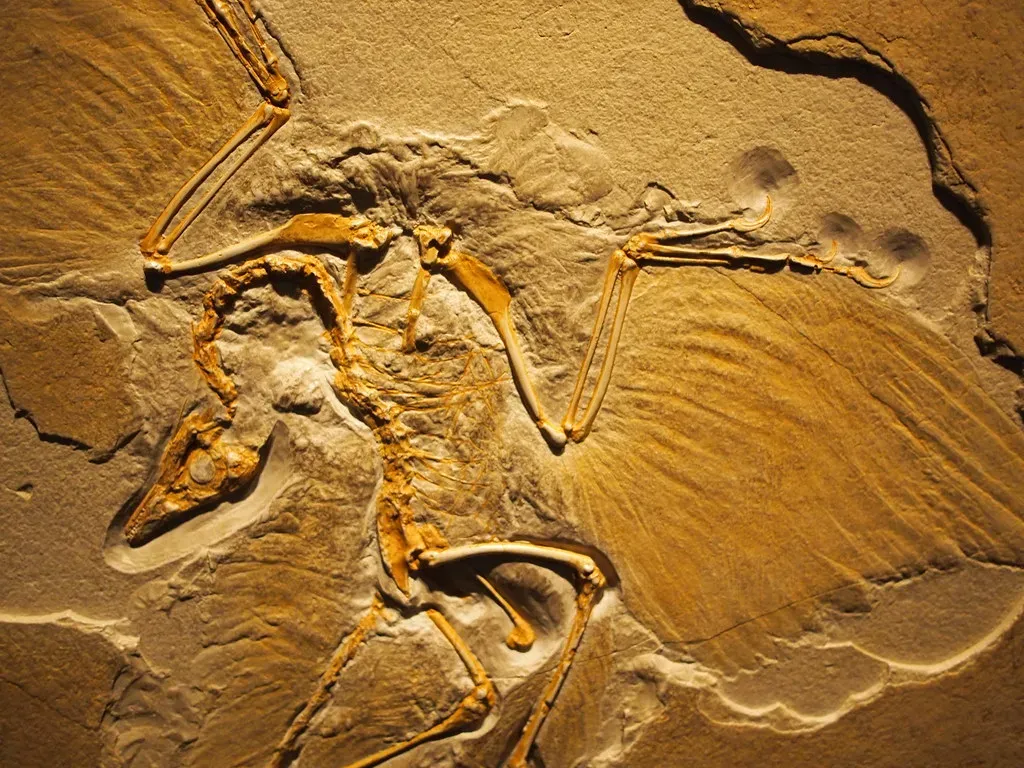
Archaeopteryx is one of the world’s most famous fossils, widely regarded as the missing link between dinosaurs and birds, displaying a perfect blend of avian and reptilian features. The first Archaeopteryx skeleton was uncovered in Germany in 1861, and this extraordinary find had clear impressions of feathers around its skeleton.
The fossil was extraordinary because around the bones were seen the impressions of feathers, yet the skeleton also revealed clear traces of teeth, hands with three well-developed clawed fingers, and a tail comprised of a long string of small bones from which radiated a fan of feathers. I think what makes Archaeopteryx so remarkable is its timing. Just two years earlier, Charles Darwin had published his revolutionary book On the Origin of Species, and Thomas Huxley, who was a great disciple of Darwin, was one of the first people to realise the significance of Archaeopteryx. This wasn’t just a fossil. It was evidence that evolution actually happened.
Hadrosaurus: The First Near Complete Dinosaur Skeleton
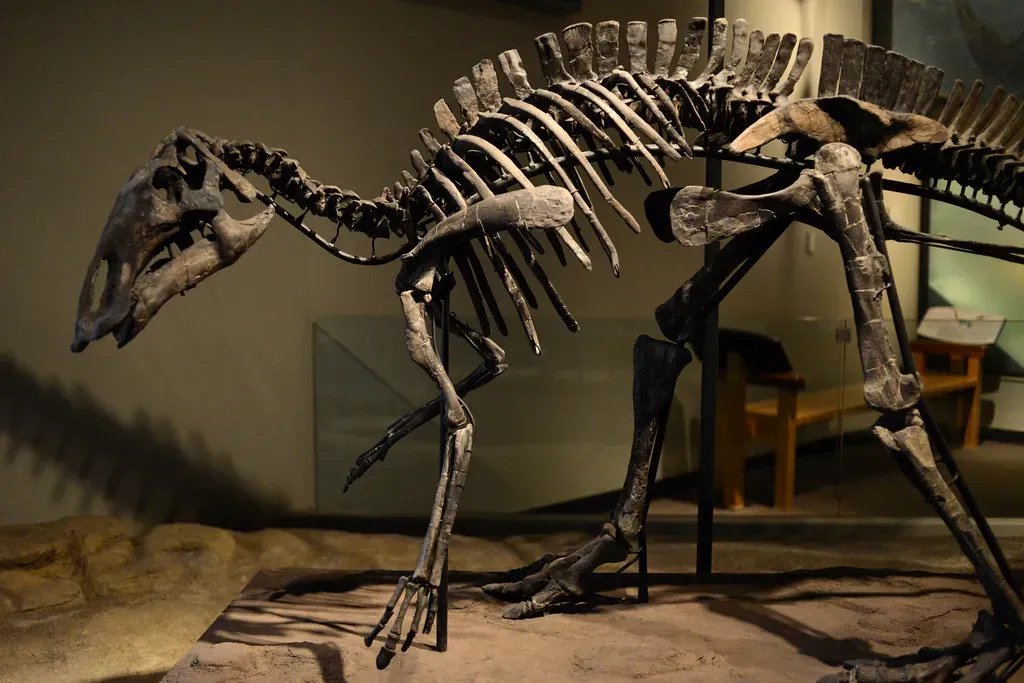
In 1858, Joseph Leidy described a much more complete specimen from New Jersey as Hadrosaurus, which would give its name to the “duck-billed dinosaurs.” You might not realize it, but before this discovery, scientists were working with scraps. Bits and pieces of bone that left huge gaps in understanding. Hadrosaurus changed that.
The first near-complete dinosaur skeleton, this Hadrosaur was a major milestone in the field of paleontology. For the first time, paleontologists could see how these creatures were actually built. The discovery sparked a new wave of interest in fossils, proving that complete skeletons could be found if you knew where to look. The discovery site is now a National Natural Landmark.
Bone Wars Discoveries: Stegosaurus, Triceratops, Allosaurus, and More
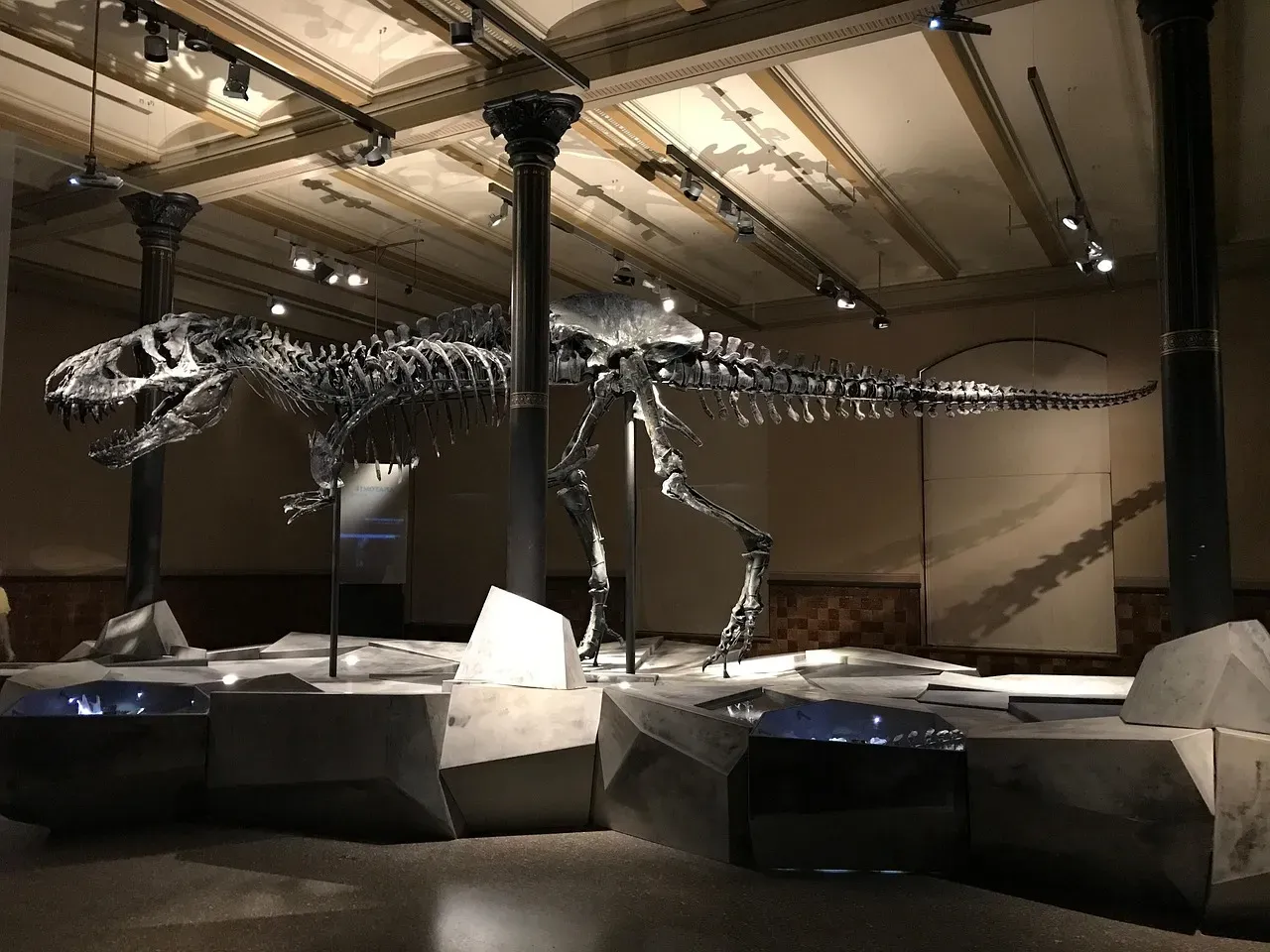
As time went on during the Bone Wars, the feud became even more bitter with tactics such as spying, theft and even the destruction of fossils, but what came out of this period was a significant increase in the knowledge of North American dinosaurs, including the discovery of many near-complete specimens. Honestly, the personal rivalry between two paleontologists produced some of the most famous dinosaurs we know today.
In total, the two men described 136 species of dinosaurs, including some famous names such as Stegosaurus, Triceratops, Allosaurus, Diplodocus and Brontosaurus. The discoveries in the American West gave us, in many cases, the first examples of substantially complete dinosaur skeletons, whereas before we had been finding bits of dinosaur skeletons in Europe for 50 years, but really only a couple of substantial finds and most of those were still fairly incomplete. The sheer volume of fossils unearthed during this period laid the foundation for modern paleontology.
Deinonychus: Sparking the Dinosaur Renaissance
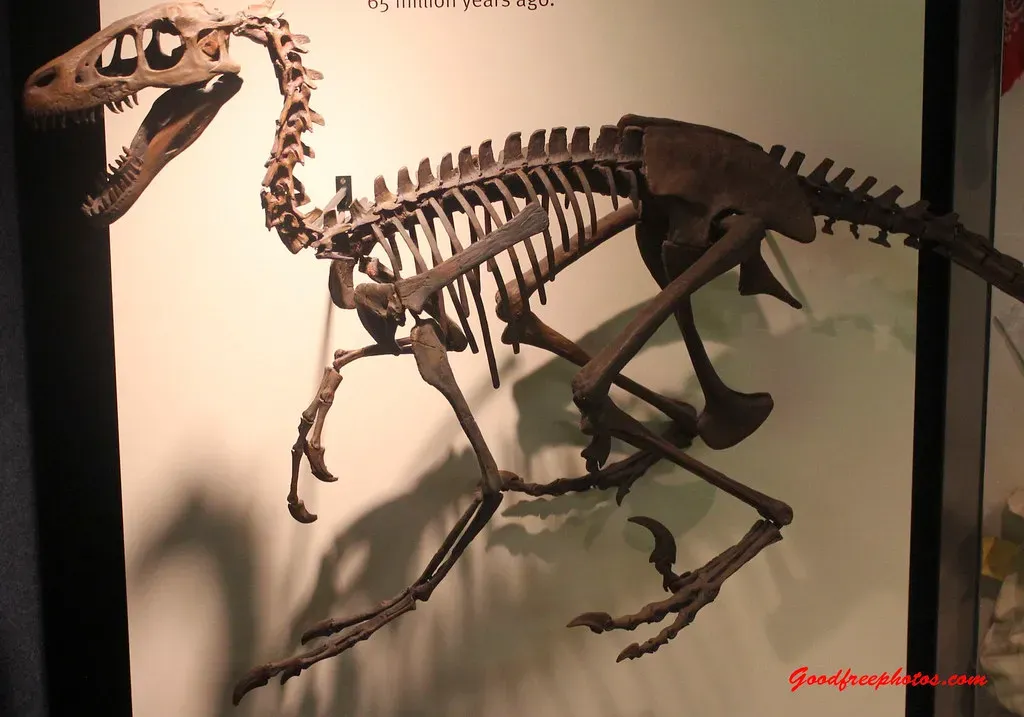
In 1964, paleontologist John Ostrom found in Montana the remains of a small dinosaur that did not fit the established description, and it was this discovery that set the stage for what we know today as the ‘dinosaur renaissance,’ a scientific revolution that completely revolutionized our view about these creatures. Before Deinonychus, most people pictured dinosaurs as slow, lumbering, cold-blooded reptiles dragging their tails on the ground.
Ostrom unearthed the remains of a relatively small carnivore that had hollow bones, a sleek, horizontal posture, and a pair of large, sickle-shaped claws on its feet, naming the new find Deinonychus or ‘terrible claw,’ and he argued that the animal’s many birdlike features suggested it was an active, quick-moving predator that must have also been warm-blooded, like modern birds and mammals. This fossil rewrote the rules. Suddenly, dinosaurs weren’t sluggish monsters. They were agile, intelligent, and possibly even social hunters.
Maiasaura Nesting Sites: Revealing Parental Care
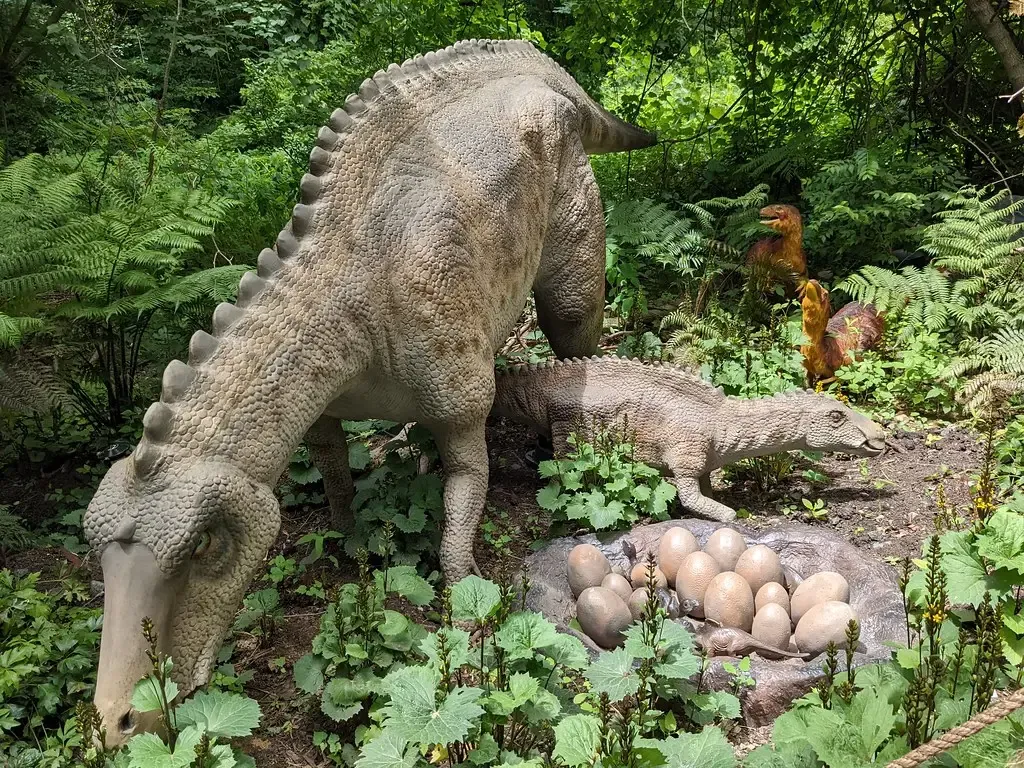
Many paleontologists consider the Maiasaura as one of the most important dinosaur fossils to provide a detailed view of how those amazing creatures lived, as the fossils accurately revealed the growth rate, metabolism, sexual maturity, and physical maturity, and also serve as important evidence that dinosaurs once had an interactive family life. Let me tell you, this discovery was a game changer for understanding dinosaur behavior.
The Maiasaura fossils were found in a large nesting colony in Montana in 1978, with eggs, embryos and young animals all discovered inside nests, providing evidence for the first time that some giant dinosaurs raised and fed their young in the nest. The fossils also show that they don’t usually abandon their young when hatched. You have to appreciate how this challenged the idea that dinosaurs were just mindless beasts. These were caring parents that nurtured their babies, proving dinosaurs had complex social structures.
The Fighting Dinosaurs: Frozen Combat from the Gobi Desert
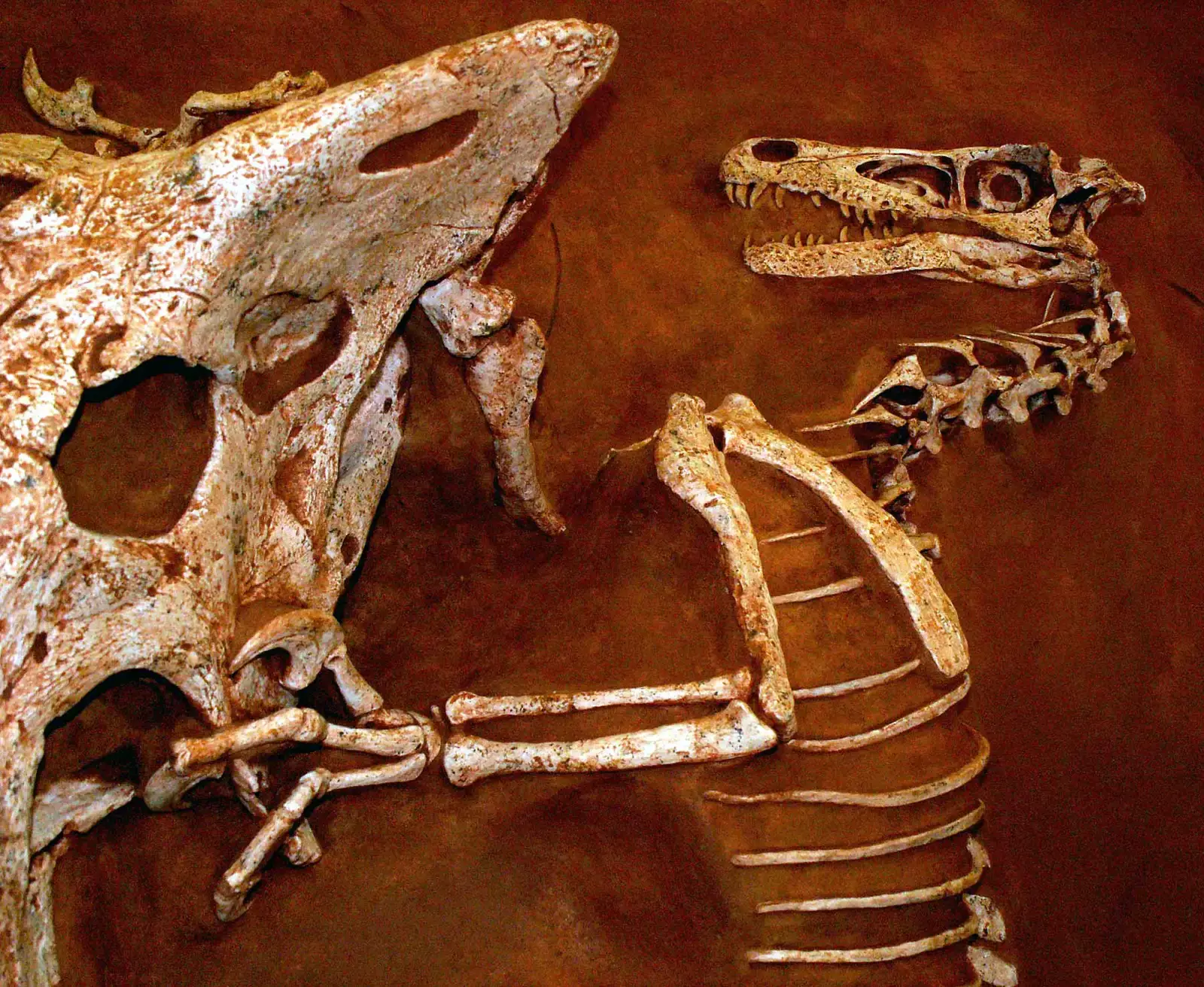
This fossilized combat between the two dinosaurs was unearthed in the Gobi desert, Mongolia, in 1971. Imagine stumbling upon two dinosaurs locked in mortal combat, preserved exactly as they were millions of years ago. That’s precisely what happened with this incredible find. The ‘ongoing fossilized combat’ between a carnivorous Velociraptor and an herbivorous Protoceratops shows direct evidence of how rampant predation among dinosaurs was, with the Protoceratops hit at its carotid artery by the Velociraptor’s claw while the Protoceratops fought back and locked its jaws on the arms of the Velociraptor, and scientists believe that while these dinosaurs were fighting for their lives, a large land mass, presumed to be a sand dune, suddenly collapsed on them.
This fossil is basically a snapshot of life and death in the Cretaceous period. It confirmed that Velociraptors hunted prey their own size, used their famous toe claws as weapons, and faced fierce resistance from their victims. No textbook description could ever match the raw drama captured in this fossil.
Borealopelta: The Dinosaur Mummy That Preserved Skin and Armor
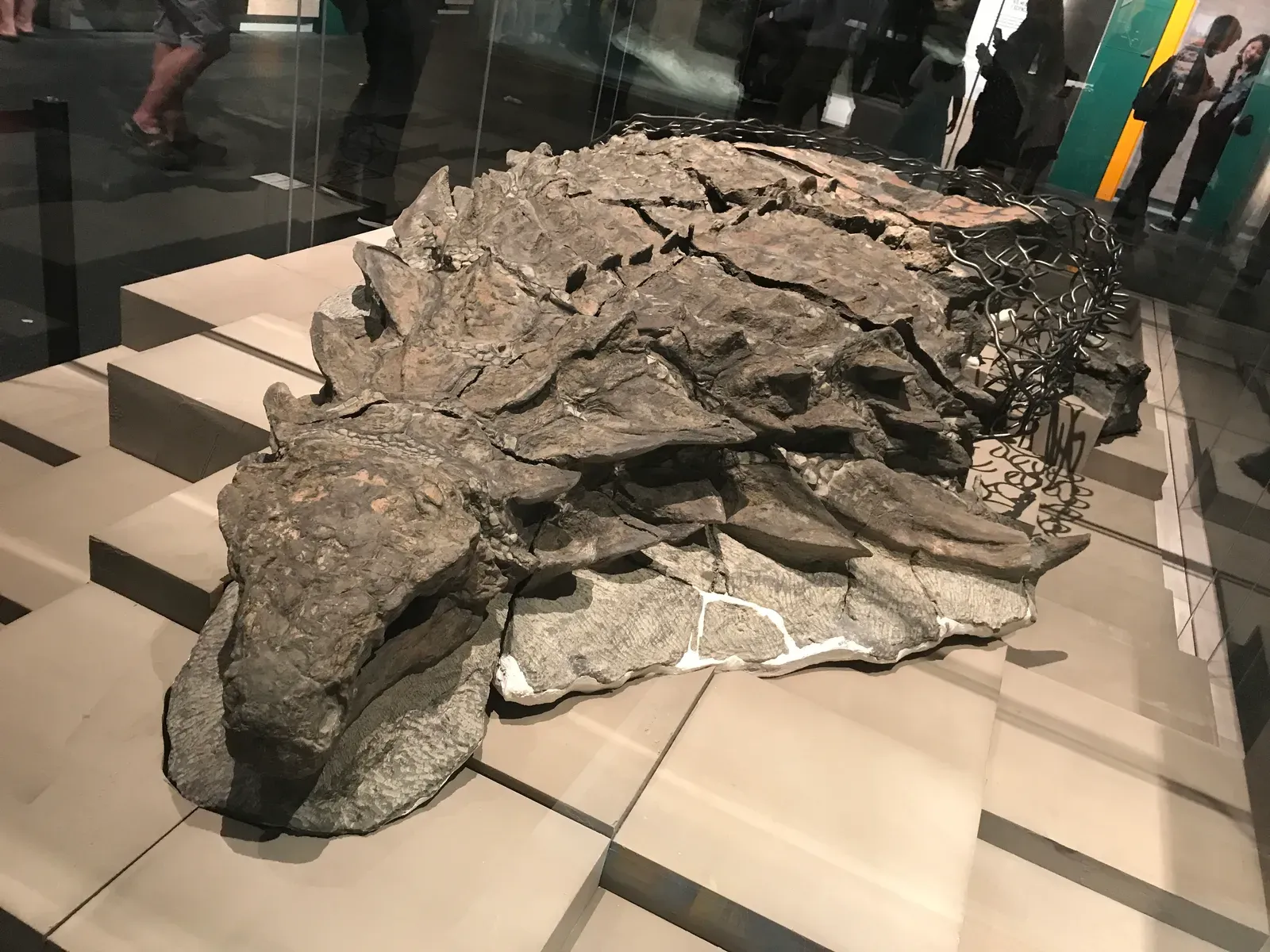
The first known fossil of Borealopelta is one of the most spectacular dinosaurs ever found, representing a large portion of an armored dinosaur, including the head, neck, and front portion of the body, and the fossil is so well-preserved that every armor piece is in place, the keratin covering of the spiky armor preserved as well as the bone, offering about as close a look as we’re likely to get at an armored dinosaur.
In 2011, one of the most incredible dinosaur discoveries was unearthed: the ‘sleeping Nodosaur,’ and though 112 million years old, its impressive preservation gives the appearance that it is merely sleeping, offering one of the most realistic images of a dinosaur ever found. The stomach analysis provided a rare insight into the diet and environment of a Cretaceous herbivore, revealing details about the plants it consumed, and the preservation was so exceptional that researchers could identify countershading patterns, indicating this armored dinosaur relied on camouflage despite its heavily defended appearance. Who would’ve guessed that a tank like Borealopelta needed to hide?
These nine fossils didn’t just sit in museums gathering dust. They sparked debates, overturned established theories, and fundamentally changed how we see dinosaurs. From proving they existed as a unique group to revealing their colors, parenting behaviors, and evolutionary connections to birds, each discovery peeled back another layer of prehistoric mystery. What other secrets are still buried beneath our feet, waiting to rewrite the story all over again?