Picture yourself walking through an ancient forest, and suddenly the sky darkens. You look up, only to see a shadow blotting out the sun with wings wider than a small airplane. These creatures aren’t science fiction. They actually existed, soaring through prehistoric skies and stalking the ground with lethal precision.
When we think of prehistoric predators, our minds often jump to dinosaurs. Honestly, that makes sense. Yet there was another group of hunters that ruled with equal ferocity, some even after the age of dinosaurs ended. These birds were built differently from anything alive today. Their hunting strategies would make modern raptors look almost gentle by comparison.
Terror Birds: The Apex Predators of South America
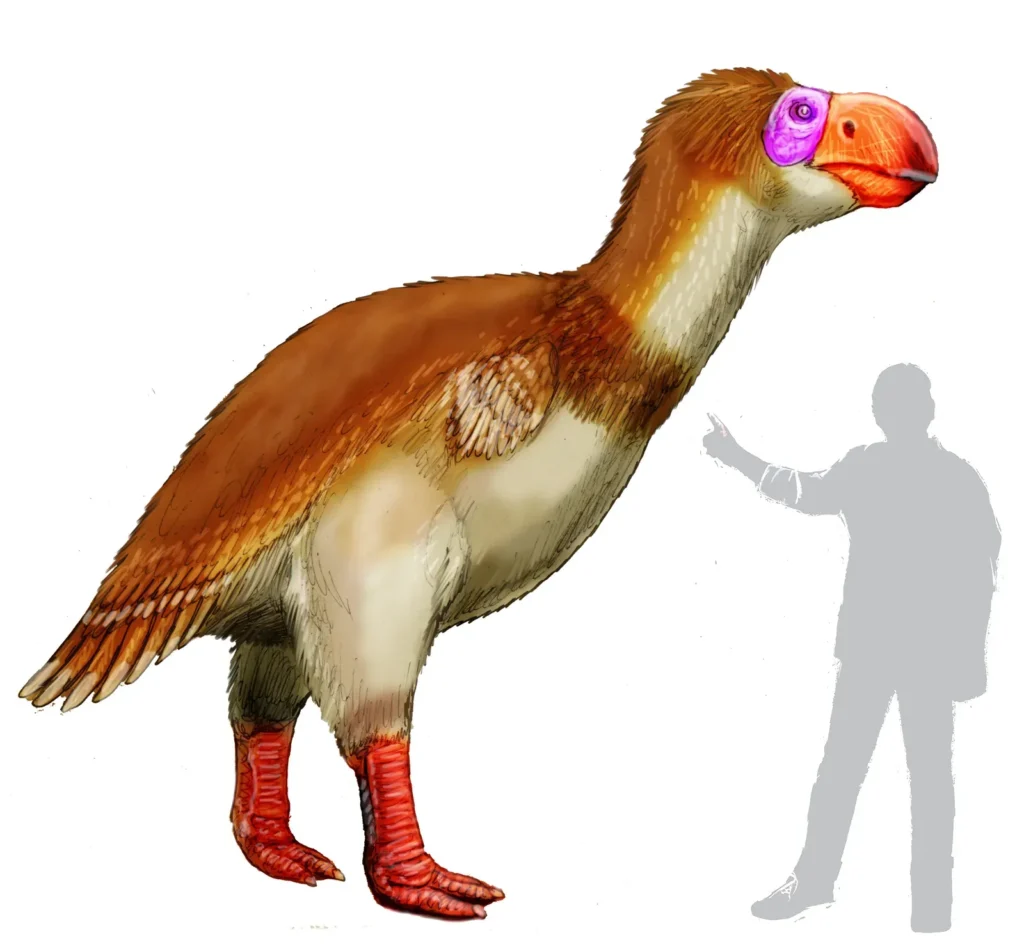
Phorusrhacids, colloquially known as terror birds, are an extinct family of large carnivorous, mostly flightless birds that were among the largest apex predators in South America during the Cenozoic era. These weren’t your average oversized chickens. They ranged in height from 1 to 3 m, stalking the South American grasslands with terrifying efficiency.
What made them truly fearsome was their hunting style. The phorusrhacid had a highly flexible and developed neck allowing it to carry its heavy head and strike with terrifying speed and power. Think of a bird that could extend its neck far beyond what you’d expect, then deliver a crushing blow with its massive hooked beak. Scientists theorize that the large terror birds were extremely nimble and quick runners, able to reach speeds of 48 km/h. They could chase you down and finish the job with brutal force.
Kelenken: The Bird With the Largest Skull Ever
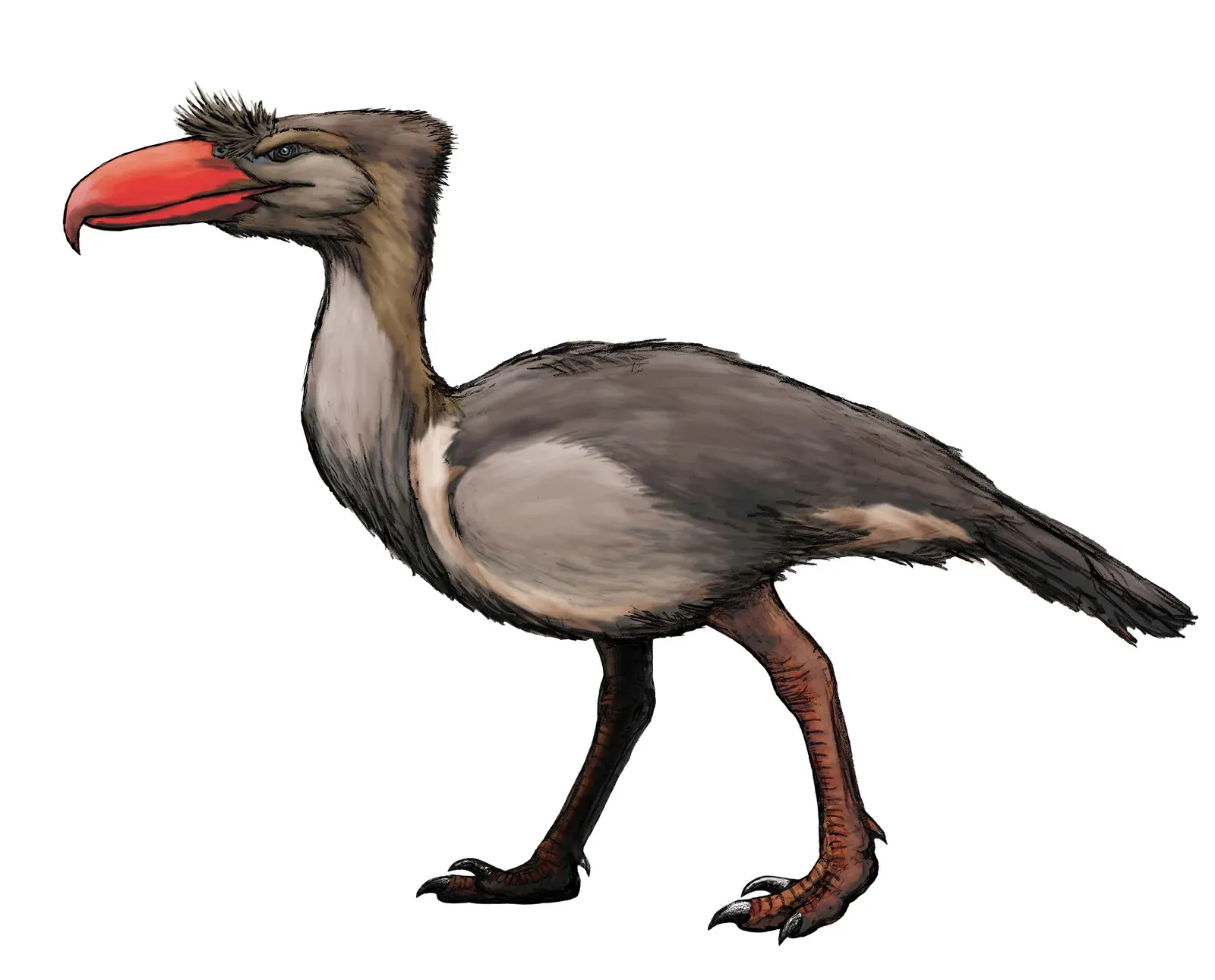
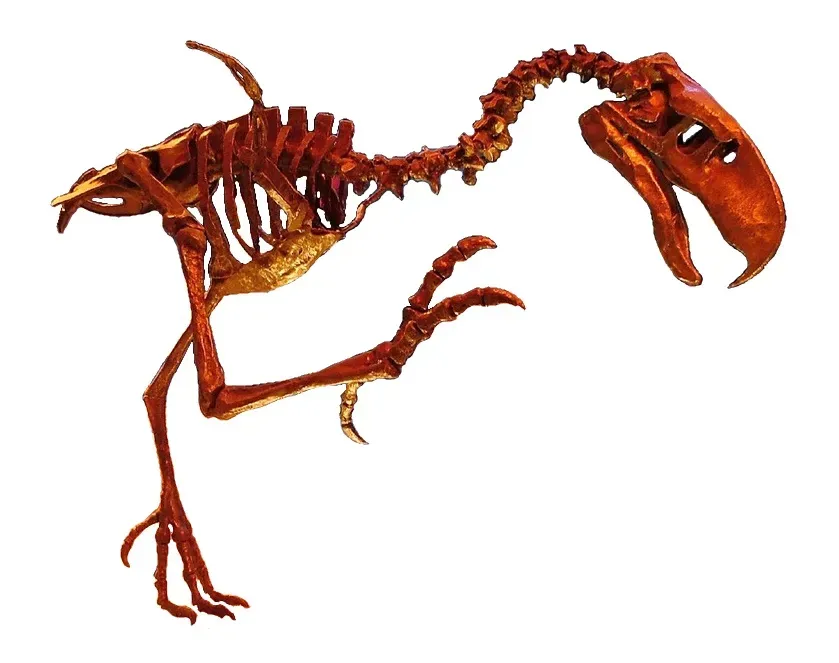
Kelenken guillermoi, from the Langhian stage of the Miocene epoch, some 15 million years ago, discovered in the Collón Curá Formation in Patagonia in 2006, represents the largest bird skull yet found. Let that sink in for a moment. The biggest bird skull we’ve ever discovered belonged to this absolute unit.
The fossil has been described as being a 71-centimetre, nearly intact skull. The beak is roughly 46 cm long and curves in a hook shape that resembles an eagle’s beak. Picture a beak longer than your forearm, designed specifically to rip and tear. The new fossil belongs to a bird that probably stood about 3 m tall. This wasn’t just a terror bird. It was a nightmare made flesh and feathers.
Argentavis Magnificens: The Giant of the Skies
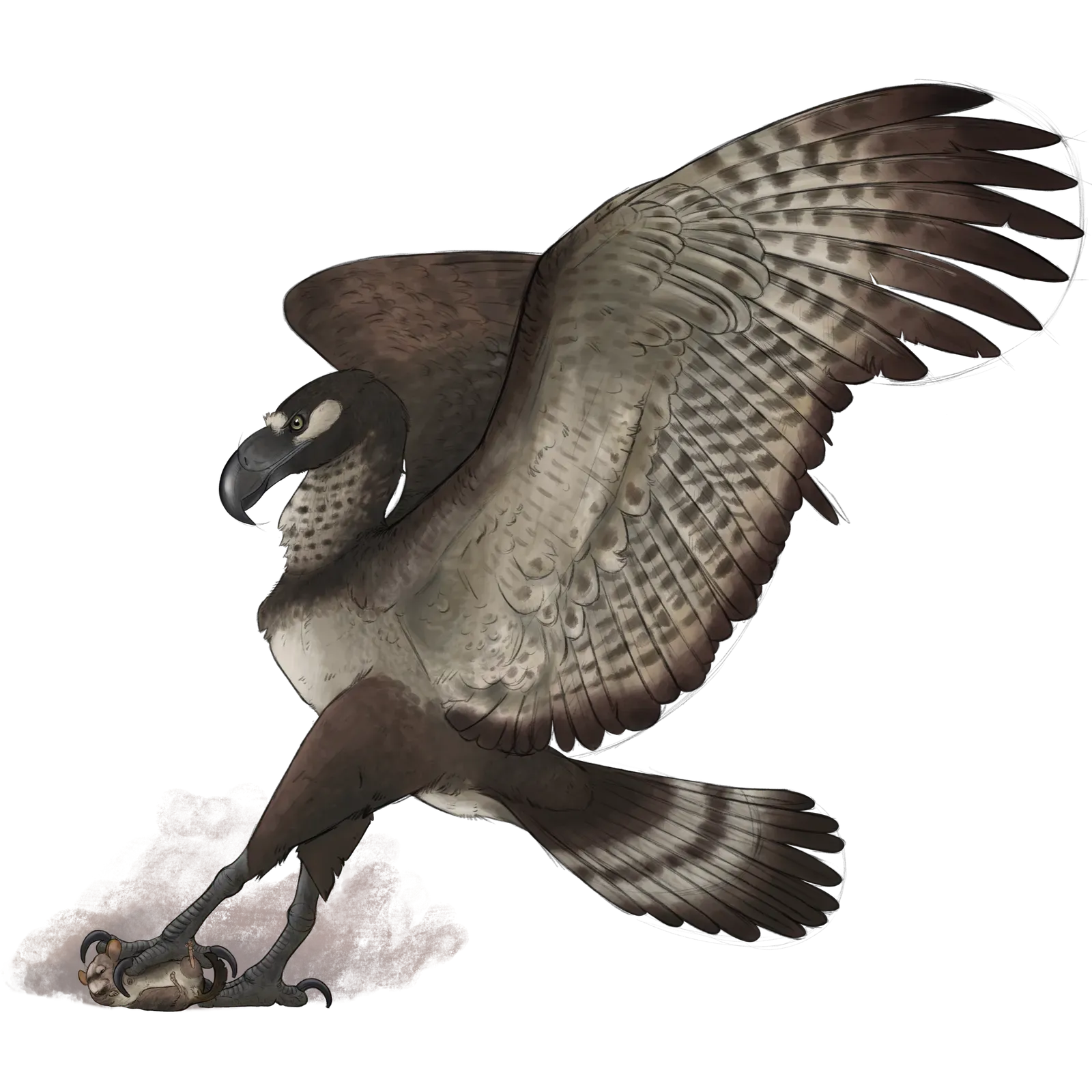
Here’s where things get truly mind bending. Argentavis was among the largest flying birds to ever exist, holding the record for heaviest flying bird. This creature defied what we thought was physically possible for a bird to achieve and still get airborne.
Six million years ago, the skies of Argentina were home to fearsome predator – Argentavis magnificens, the largest bird to ever take to the air. It weighed in at 70kg and had a wingspan of 7m, about the same size as a Cessna 152 light aircraft. Imagine looking up and seeing something the size of a small plane gliding silently overhead. Argentavis was probably too large to be capable of continuous flapping flight or standing takeoff under its own muscle power. Instead, this magnificent predator mastered the art of soaring, using thermal currents to stay aloft for hours without a single wing beat.
The way it hunted was equally impressive. When hunting actively, A. magnificens would probably have swooped from high above onto their prey, which they usually would have been able to grab, kill, and swallow without landing.
Pelagornis Sandersi: The Record Breaking Seabird

If you thought Argentavis was impressive, wait until you hear about this ocean giant. The sole specimen of P. sandersi has a wingspan estimated between approximately 6.06 and 7.38 m, giving it the largest wingspan of any flying bird yet discovered, twice that of the wandering albatross. Twice the size of today’s largest flying bird.
Soaring above the world’s oceans some 25 million years ago, the largest seabird ever to fly boasted a 21-foot wingspan. The ancient bird, dubbed Pelagornis sandersi, belonged to a family of now-extinct “toothed” birds. Those weren’t real teeth, though. Like all members of the Pelagornithidae, P. sandersi had tooth-like or knob-like extensions of the bill’s margin, called “pseudo-teeth,” which would have enabled the living animal to better grip and grasp slippery prey. A flying fish trap spanning the length of a small bus.
Haast’s Eagle: New Zealand’s Apex Predator
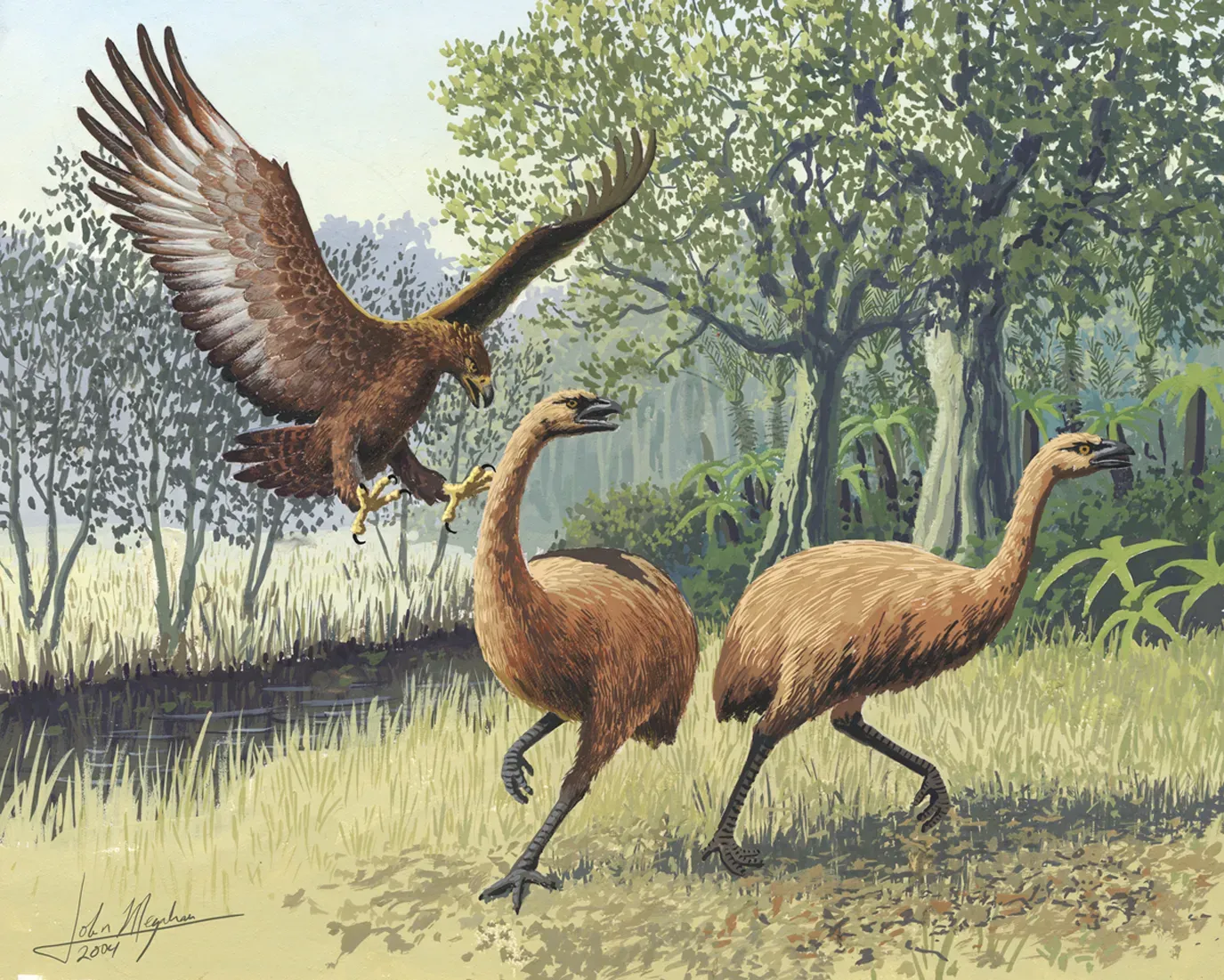
Let’s be real, this bird sounds completely made up. It is the largest eagle known to have existed, with an estimated weight of 10–18 kilograms, compared to the next-largest and extant harpy eagle, at up to 9 kg. But what truly sets Haast’s eagle apart wasn’t just its size.
Its massive size is explained as an evolutionary response to the size of its prey – the flightless moa – the largest of which could weigh 200 kg. This eagle hunted animals that could be fifteen times its own weight. Bone remains show it would have been able to kill moa by flying into their hind quarters and grappling the moa with its large feet and talons before crushing the moa’s skull with an extremely powerful grip. Think about that hunting strategy. Divebomb something the size of an ostrich, knock it over, then crush its skull with your feet. Absolutely brutal.
Sadly, Haast’s eagle became extinct around 1445, following the arrival of the Māori, who hunted moa to extinction.
Titanis: The Terror Bird That Crossed Into North America
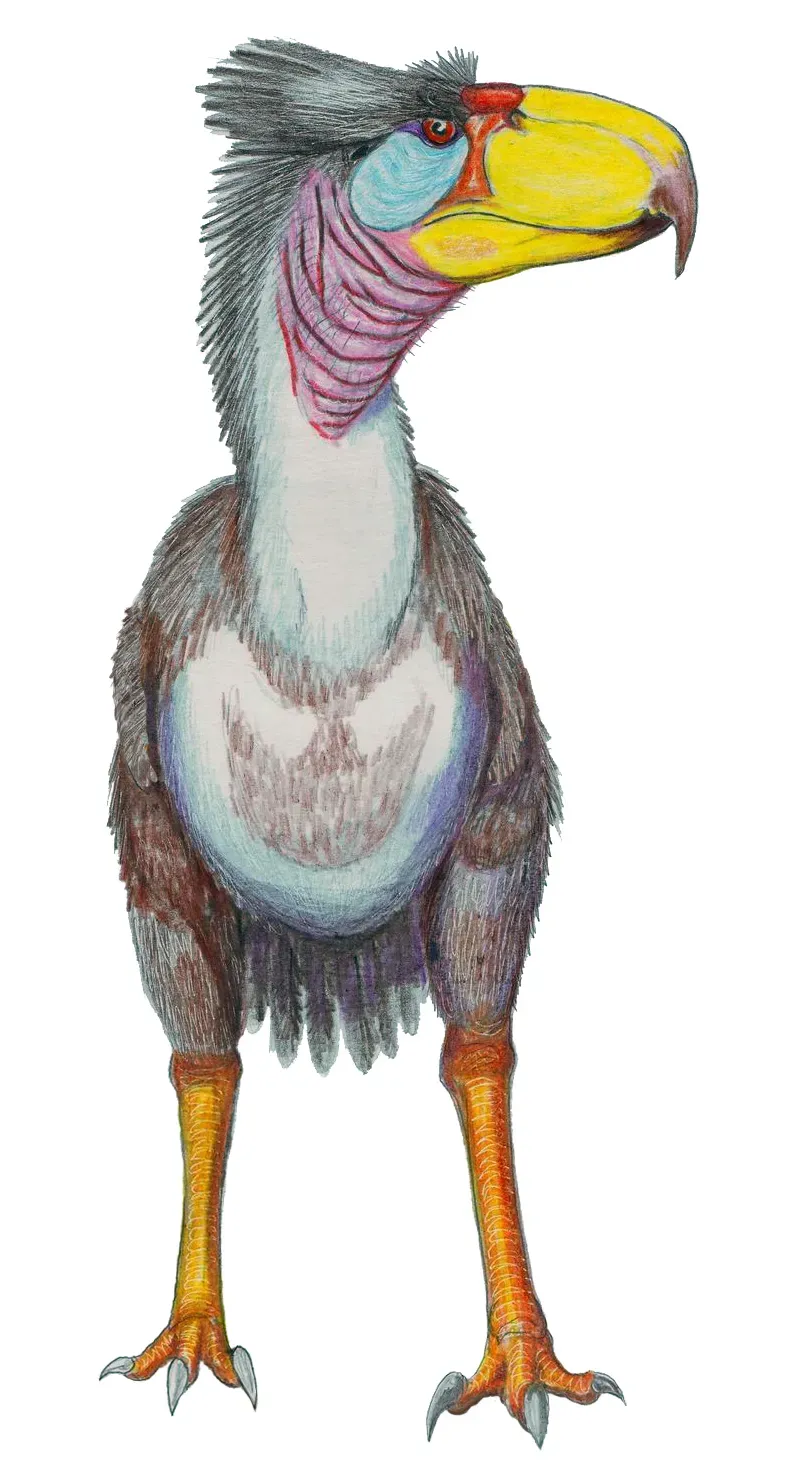
Most terror birds stayed in South America, but not this one. Titanis walleri, one of the larger species, is known from Texas and Florida in North America. This bird decided the grass might be greener up north and made the journey during the Great American Interchange.
It’s hard to say for sure how Titanis hunted, but we can look at its relatives for clues. The necks of these birds were made for repeated striking attacks, with the muscles being strong enough to drive the hooked point of the beak into a smaller victim’s body to kill it. Some researchers even think they might have used kickboxing techniques. It is thought to have been either a cheetah-like runner or a kickboxer, using its massive talons to render its prey helpless. Either way, you wouldn’t want to meet one in a dark Pleistocene forest.
Avisaurus Darwini: The Hawk Sized Raptor Hunter
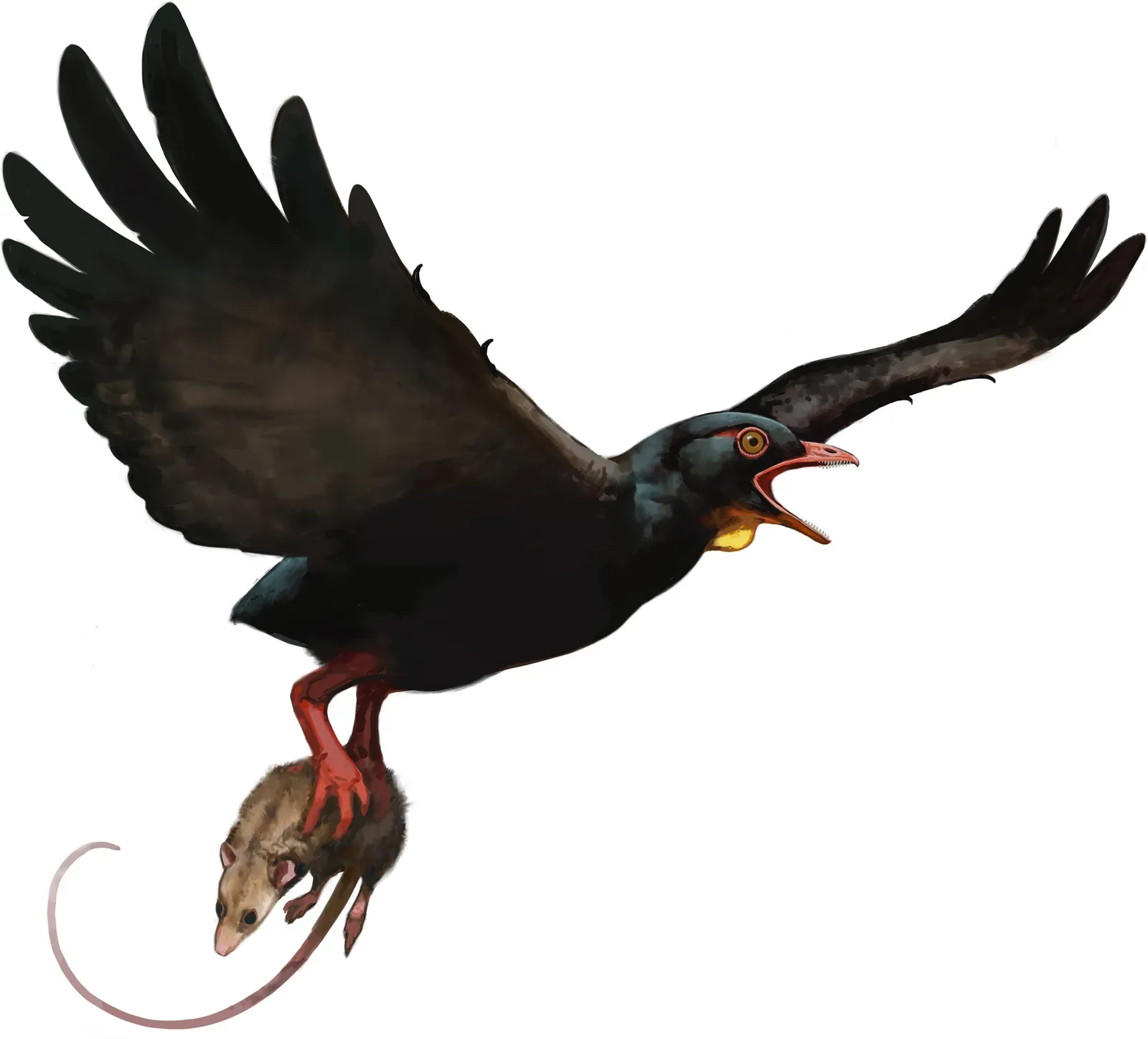
Not all prehistoric predatory birds were giants. Some were roughly the size of modern hawks but packed a serious punch. Researchers described two new species from the site: Avisaurus darwini and Magnusavis ekalakaenis, hawk-sized avians that lived around 68 million years ago. These birds lived alongside dinosaurs and apparently weren’t intimidated.
Analysis of the leg bones of Avisaurus and its relatives reveals proportions and adaptations similar to hawks and owls, indicating powerful leg muscles and feet that could grip and potentially carry proportionally large prey, similar to some modern raptorial birds. The crazy part? These ancient birds might have used their powerful feet to pick up small mammals or maybe even baby dinosaurs. Picture a hawk sized bird snatching up juvenile dinosaurs for dinner. That takes guts.
Brontornis: The Thunder Bird
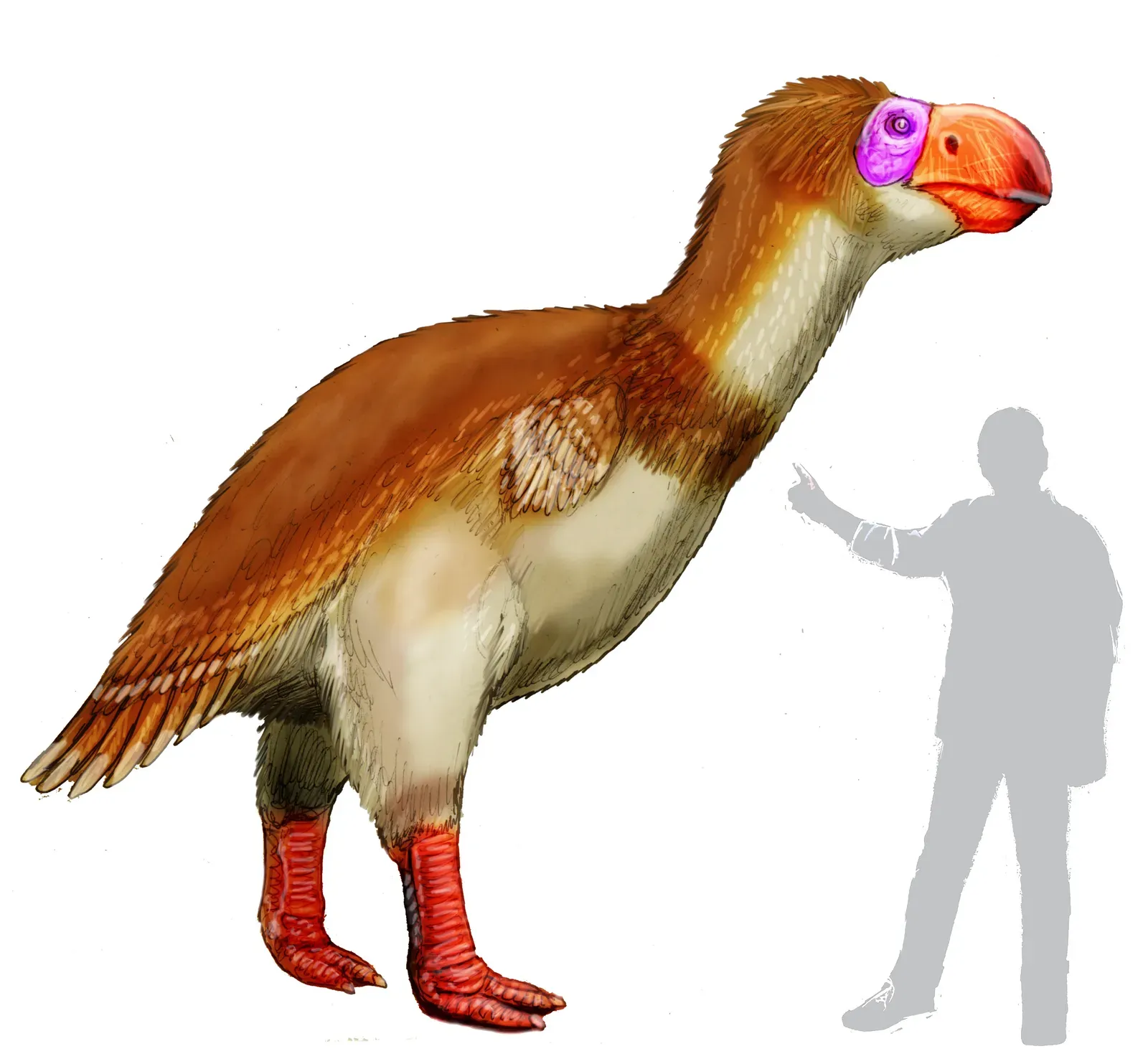
Brontornis lived in South America and could weigh up to 1,500 pounds. Its name means “thunder bird,” and it’s easy to see why – this hulking, flightless predator stomped around like a prehistoric linebacker. When something that heavy moves, you feel it through the ground before you see it.
The debate continues about whether Brontornis was primarily a hunter or a scavenger. Some say it was more of a scavenger than a hunter, but with a beak that could crush bones, it didn’t need to chase much. Honestly, when you’re that big and powerful, does it really matter? If you can crack bones like breadsticks, prey comes to you one way or another.
Archaeopteryx: The Original Bird Dinosaur
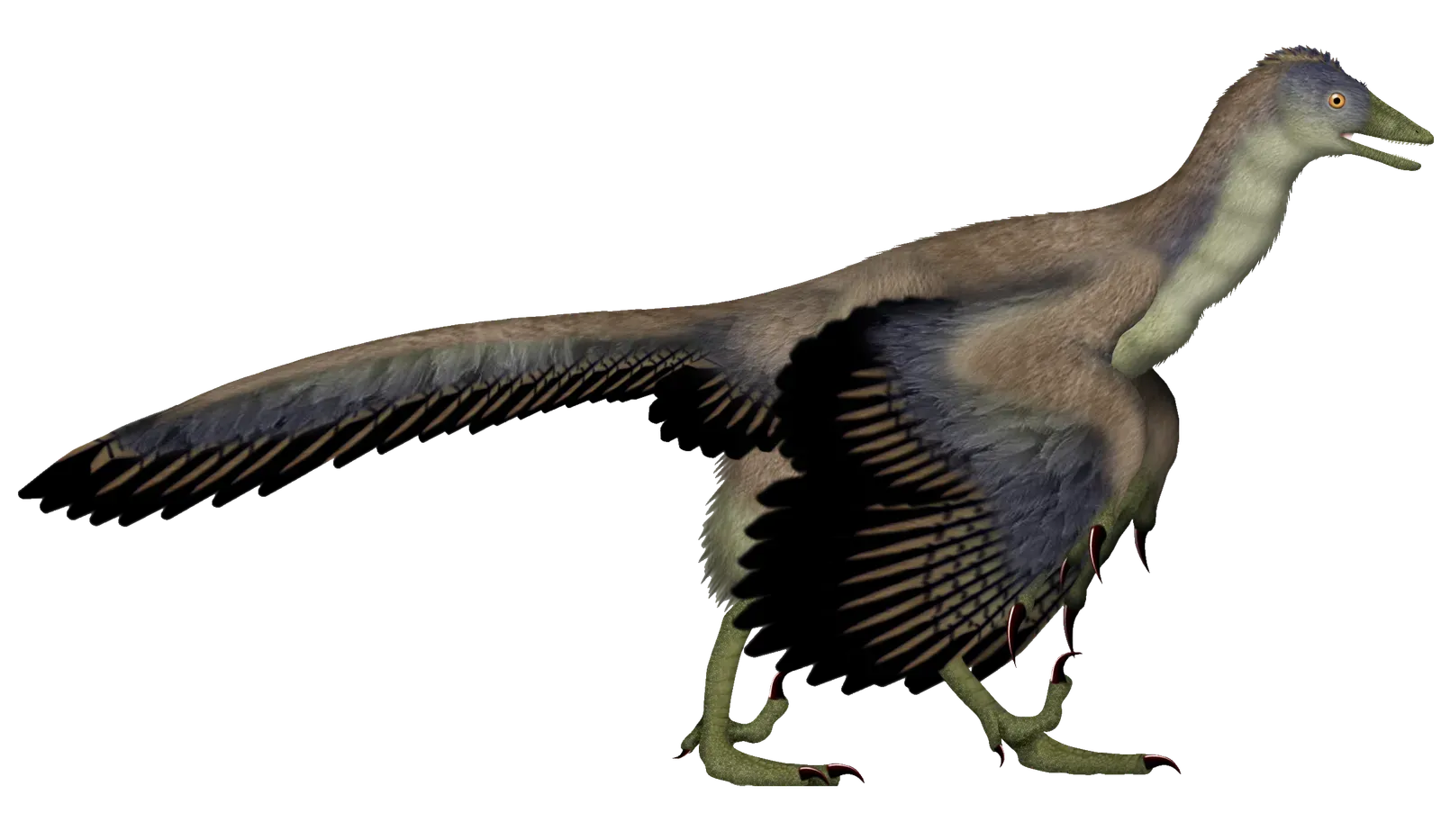
We can’t talk about prehistoric birds without mentioning the one that started it all. Archaeopteryx, discovered in 1861, was for a long time the only truly bird-like dinosaur – it’s from the Late Jurassic era (150 million years ago). This creature bridged the gap between dinosaurs and birds in ways that revolutionized our understanding of evolution.
With its sharp teeth, fierce claws, and long, bony tail, the oldest and most primitive bird in the fossil record looked like a miniature Velociraptor – until the corvid-size creature unfurled its broad wings. It could actually fly, though probably not as gracefully as modern birds. While Archaeopteryx spent much of its time on the ground, it could fly. It had broad wings on its arms made up of asymmetrical feathers, which were narrower and more rigid on their leading edge. This aerodynamic structure represents a hallmark of flapping flight. It wasn’t the most fearsome predator on this list, but it paved the evolutionary path for all the others.
Conclusion: When Birds Ruled as Predators
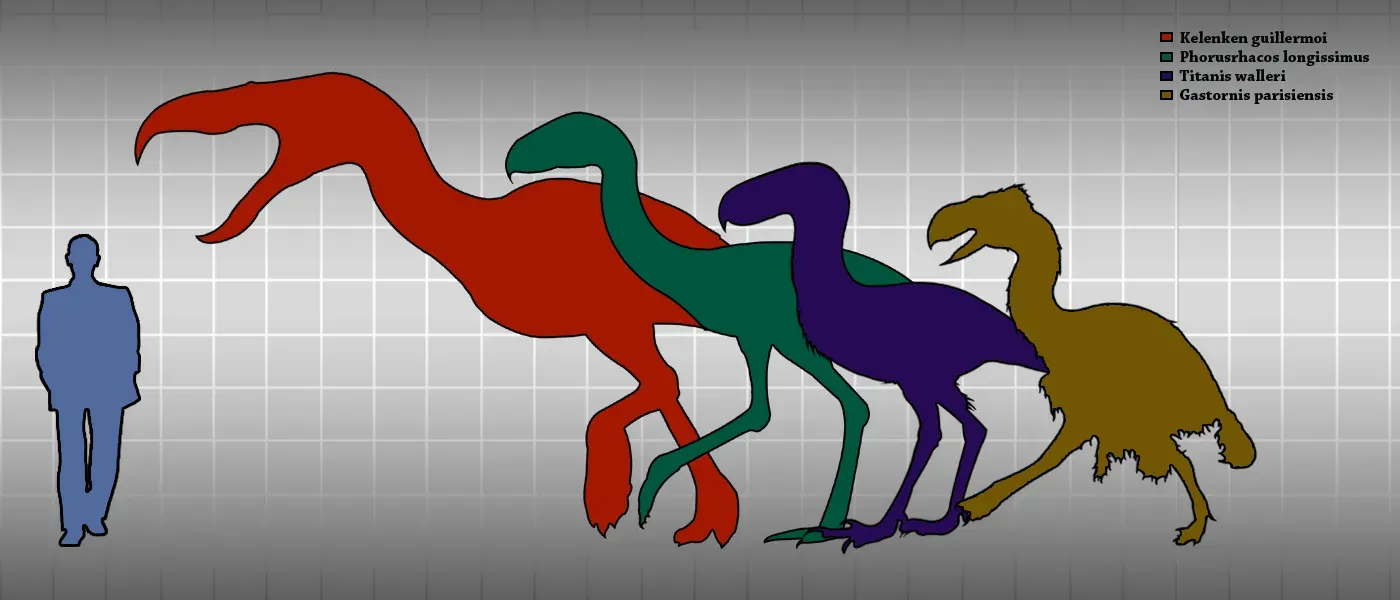
These prehistoric birds remind us that evolution can produce hunters just as terrifying as any mammalian predator. From the terror birds that dominated South America for millions of years to Haast’s eagle evolving to massive size in under two million years, these avian predators pushed the boundaries of what we thought possible.
What’s truly fascinating is how these birds filled ecological niches we now associate exclusively with mammals. They were the wolves, the big cats, the bears of their time. Some could fly, others ran with shocking speed, and a few did both depending on what the hunt required.
The skies and forests they once commanded are silent now, but their fossils tell stories of a world where birds weren’t just singers and seed eaters. They were apex predators that could genuinely rival modern raptors in ferocity, size, and hunting prowess. Which one would you least want to encounter in the wild?