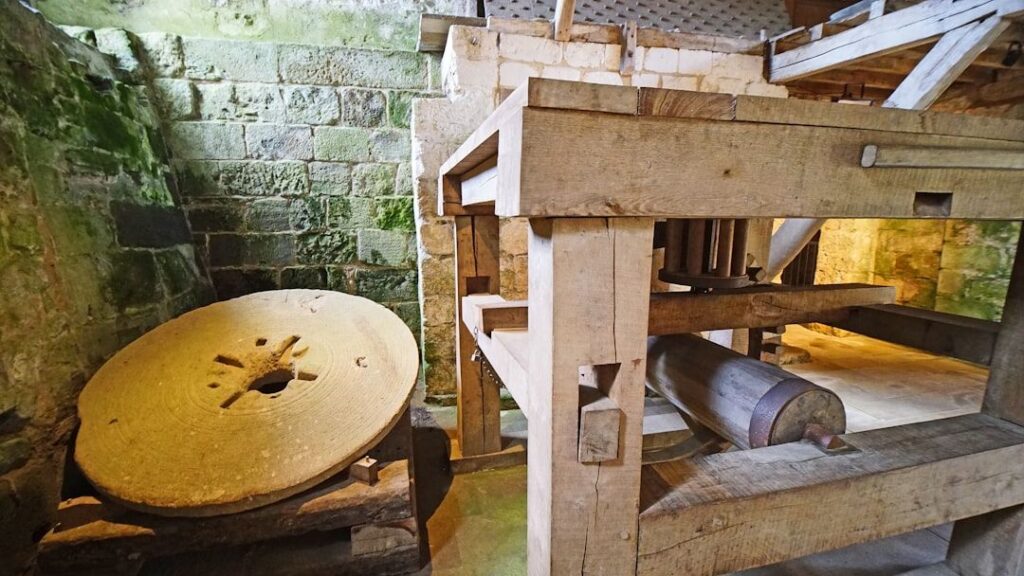
Imagine a world where knowledge isn’t guaranteed to survive. Where groundbreaking inventions can disappear forever, taking their secrets to the grave. That’s exactly what happened throughout history, more often than you might think. Ancient civilizations developed technologies so advanced that when modern scientists first encountered them, many refused to believe they were real.
These weren’t simple tools or basic machines. We’re talking about innovations that genuinely challenge our assumptions about what ancient people could accomplish. From weapons that terrified entire armies to computational devices that shouldn’t have existed for another thousand years, these lost technologies prove that progress isn’t always linear. Sometimes humanity takes giant leaps forward, only to stumble backward into darkness. Let’s dive in.
Greek Fire: The Byzantine Empire’s Secret Weapon

Greek fire was an incendiary weapon used by the Byzantine Empire from the seventh to the fourteenth centuries. The highly flammable liquid was made of secret ingredients and used both in catapulted incendiary bombs and sprayed under pressure to launch flames at enemy ships and fortifications. What made this weapon absolutely terrifying was its ability to burn on water, turning naval warfare into a nightmare for anyone facing Byzantine forces.
Most modern scholars agree that it was based on petroleum mixed with resins, comparable in composition to modern napalm. Water had no effect on it, and it burned especially well on water. The psychological impact alone was devastating. It reportedly produced a loud roaring noise and large amounts of smoke, much akin to the breath of a dragon. The art of compounding the mixture was a secret so closely guarded that its precise composition remains unknown to this day.
Damascus Steel: The Legendary Blade Material
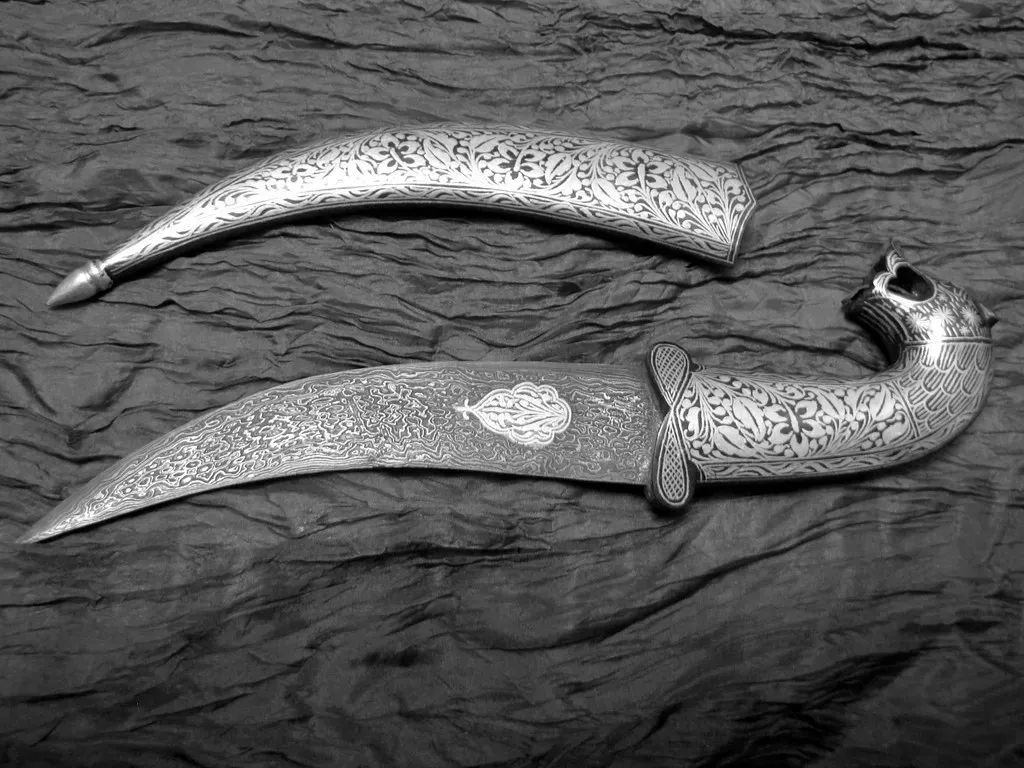
Damascus steel is the high-carbon crucible steel characterized by distinctive patterns of banding and mottling reminiscent of flowing water, and was reputed to be tough, resistant to shattering, and capable of being honed to a sharp, resilient edge. Swords made from this material became legendary during the Crusades. Warriors told stories of blades that could slice through a falling silk scarf and maintain their edge after cutting through stone or metal.
The formula for wootz Damascus has been lost to history, and by the early 19th century, it was no longer being produced, possibly because the metalsmiths who made it kept some of the process secret and possibly because the special combination of ores dried up. Here’s the really fascinating part: The technique was not lost, it just stopped working, because the secret that produced such high quality weapons was not in the technique of the swordsmiths, but rather on the composition of the material they were using. Even when enemies captured Greek fire or Damascus steel, they couldn’t recreate either one.
Roman Concrete: The Self-Healing Wonder Material
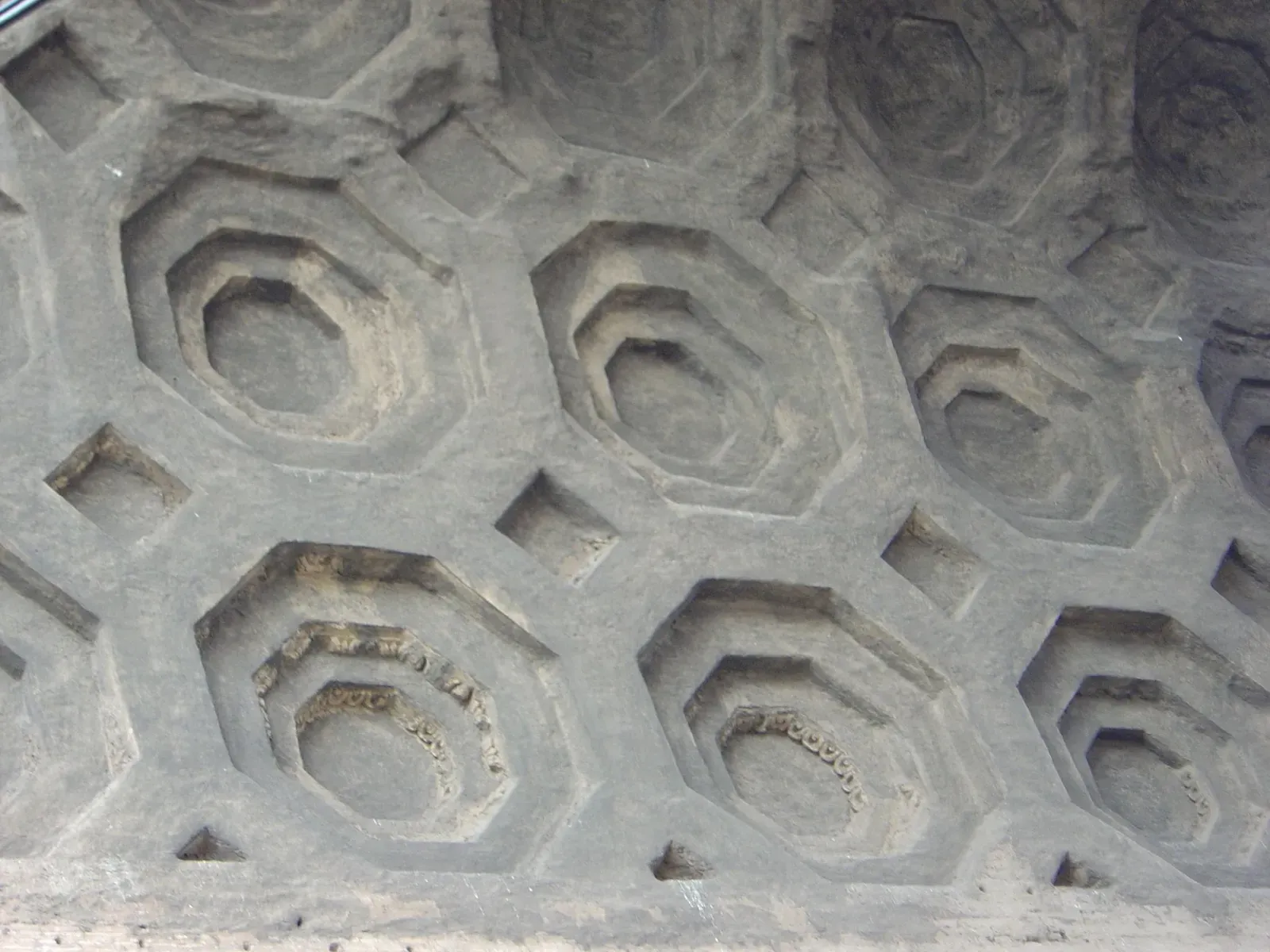
Let’s be real about this one. Some Roman concrete harbour structures have been battered by sea waves for 2,000 years and are still around while our modern concoctions erode over mere decades. The Pantheon still stands today as a testament to something we’ve lost. Modern concrete? It starts cracking and degrading within decades, especially in harsh environments.
The Ancient Roman’s concrete consisted of a mix of volcanic ash or also known as Pozzolana, lime, and water to make a mortar, which was then mixed with the aggregate, often chunks of rock. The real magic happened underwater. Aluminous tobermorite and a related mineral called phillipsite actually grows in the concrete thanks to the sea water, slowly dissolving the volcanic ash within and giving it space to develop a reinforced structure from interlocking crystals. That’s insane when you think about it. The material literally got stronger over time.
The Antikythera Mechanism: An Ancient Analog Computer
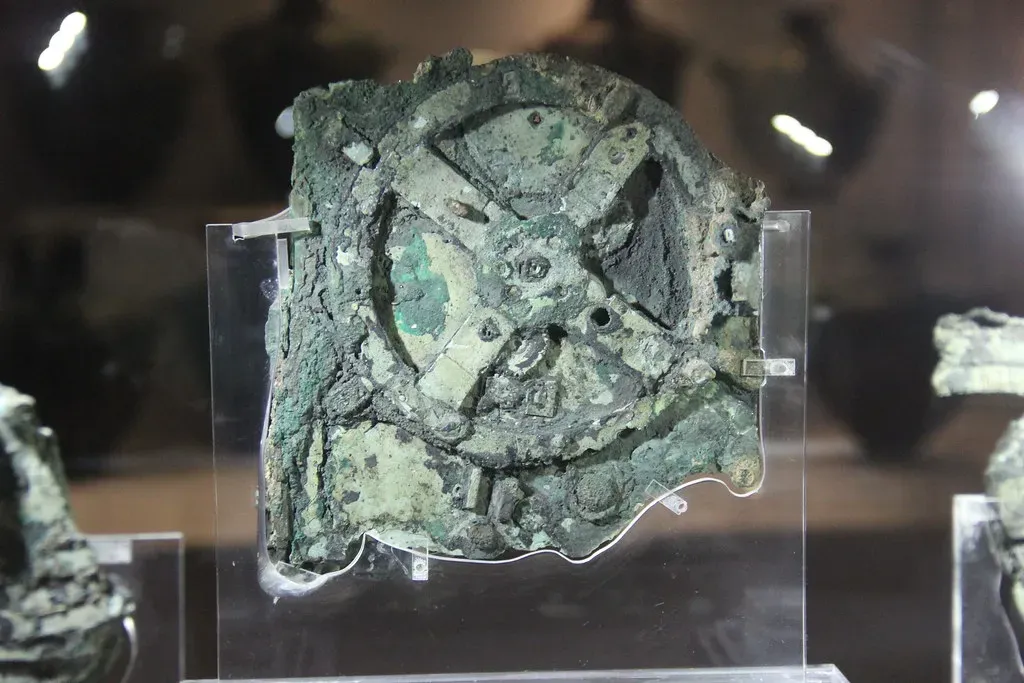
The Antikythera mechanism is an ancient Greek hand-powered orrery, the oldest known example of an analogue computer, which could be used to predict astronomical positions and eclipses decades in advance. Found in a shipwreck in 1901, this device was so sophisticated that many scholars initially dismissed it as impossible. No other geared mechanism of such complexity is known from the ancient world or indeed until medieval cathedral clocks were built a millennium later.
The artefact was among wreckage retrieved from a shipwreck off the coast of the Greek island Antikythera in 1901, and was noticed by Greek politician Spyridon Stais as containing a gear. The device was shoebox-sized with display dials and a knob on the side which you would turn to represent going forward or backward in time, with the back showing cycles of measuring time like a calendar and the Olympic games, while the front had a planetarium display that simulated the movements of celestial bodies. I know it sounds crazy, but this thing worked.
Chinese Deep Drilling Technology: Reaching Underground Treasures

Around 2,000 years ago, the Chinese developed an advanced drilling technology to extract salt directly from underground deposits, engineering a bamboo drill with a heavy, rhythmically pounding drum capable of reaching depths of up to 600 meters. That’s over six football fields straight down into the earth, achieved with bamboo and bronze tools. Think about that for a moment.
During drilling, they encountered methane pockets, and eventually these early engineers learned how to harness that gas too. They weren’t just extracting salt. They were effectively drilling for natural gas and figuring out how to capture and use it nearly two millennia before the industrial revolution. It’s an astonishing example of technological ingenuity far ahead of its time.
Hero’s Aeolipile: The First Steam Engine
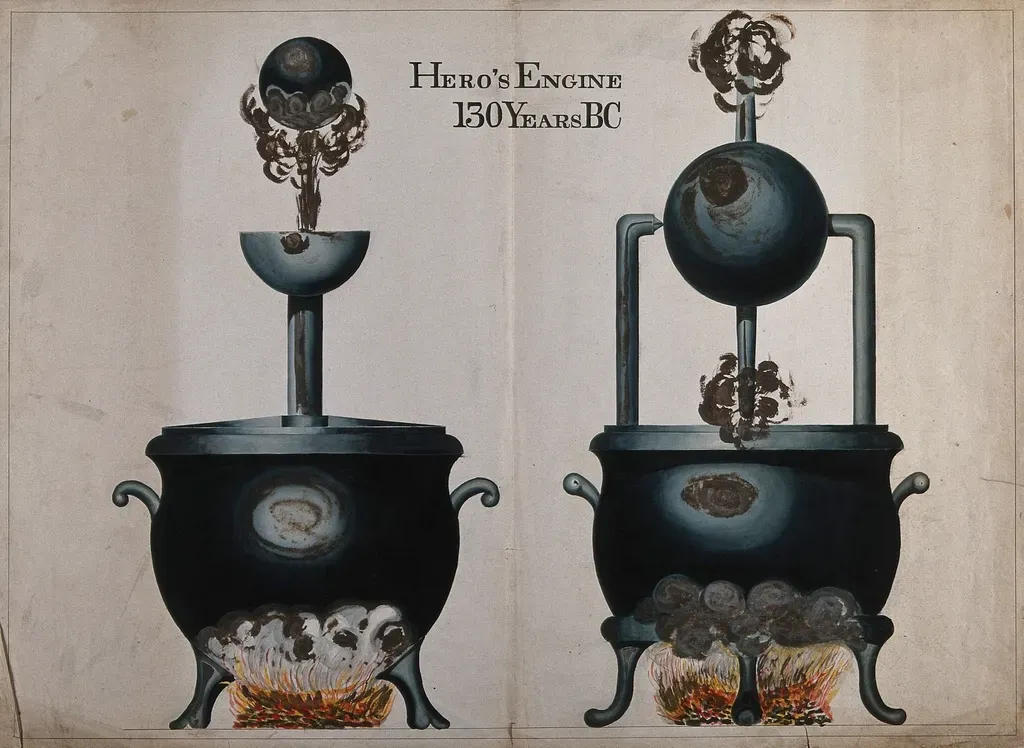
While the first practical steam engines appeared in the 17th century, a Greek inventor named Hero of Alexandria had already envisioned steam-powered motion centuries earlier, describing the aeolipile in his writings on mechanics. This early steam turbine consisted of a metal sphere with bent tubes that rotated as steam escaped under pressure.
Here’s the thing that gets me. Hero built a working prototype. The technology existed. Yet it took humanity another 1,500 years to actually harness steam power for practical applications. Sometimes I wonder how different history would be if the Romans had pursued this technology seriously. They had the metallurgical skills, the engineering knowledge, and the resources. They just didn’t see the potential.
Puma Punku Stonework: Precision Without Modern Tools
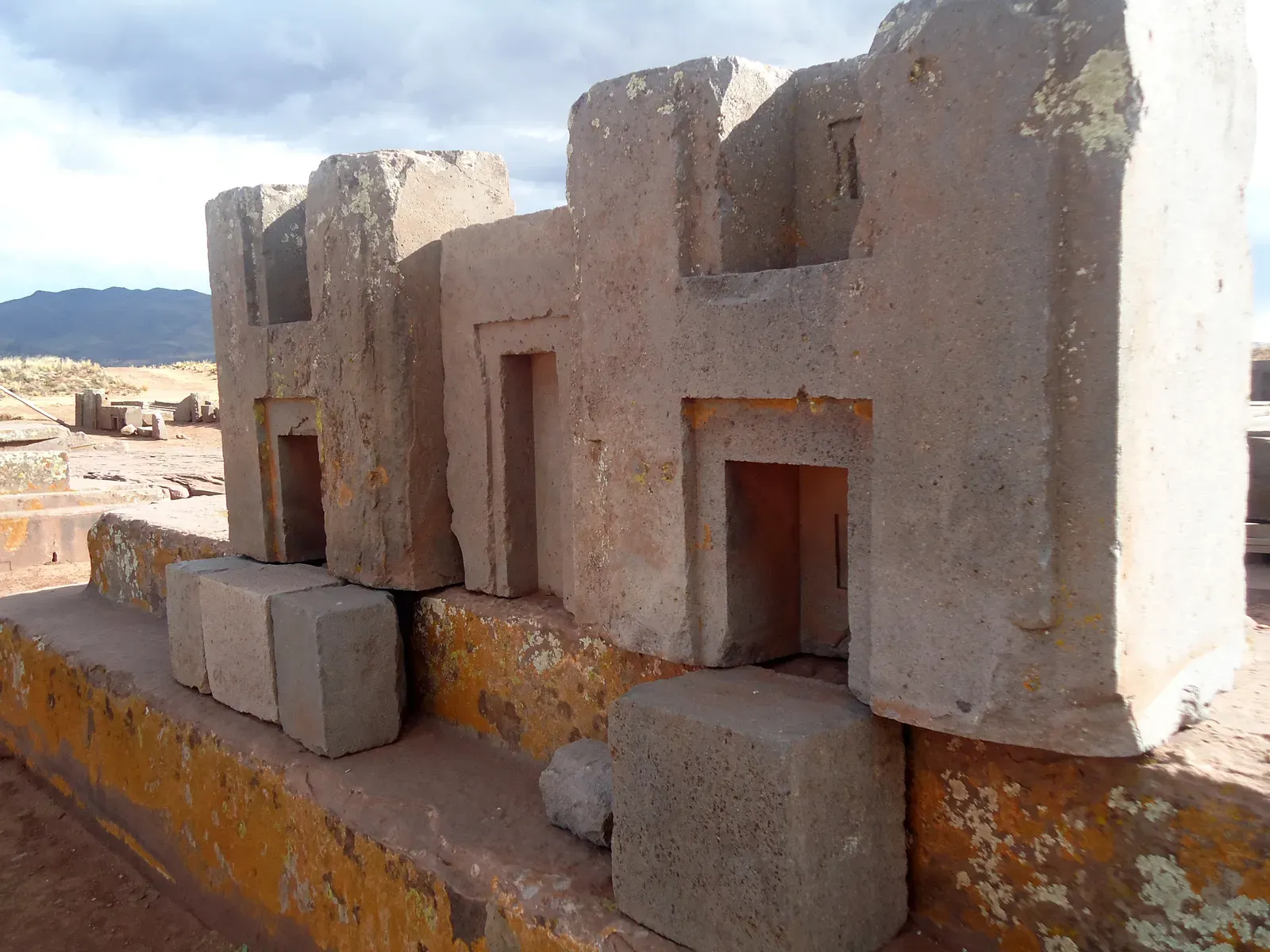
The Tiwanaku complex in modern-day Bolivia contains a section called Puma Punku, well known for its incredible high-precision stonework, with stone blocks that are massive, some weighing up to 100 tons. They were cut and connected together with almost alien precision, so advanced that even modern engineers would struggle to replicate the techniques used.
All the cut surfaces are super smooth, and the cuts astronomically straight, with the blocks all interlocked without any use of mortar whatsoever. Archaeologists were unable to uncover any evidence for tools or methods that were used to shape the stones. The precision we’re talking about here would be impressive with laser-guided cutting equipment. These builders achieved it with stone and bronze tools, or at least that’s what we assume they used.
The Lycurgus Cup: Ancient Nanotechnology
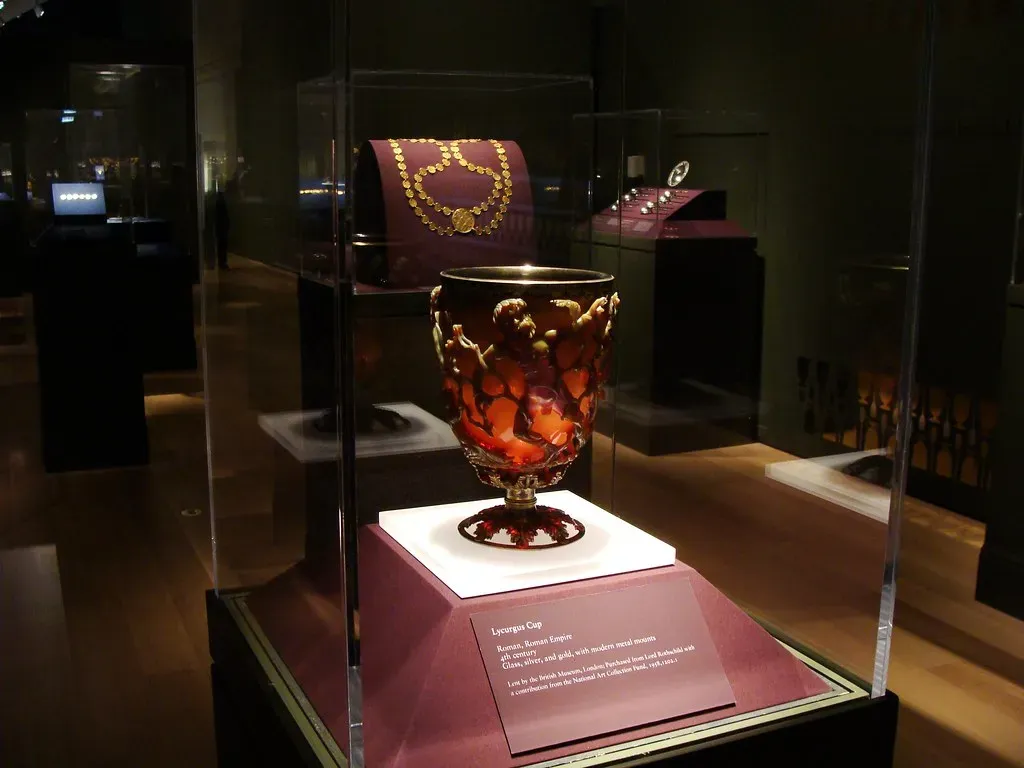
Estimated to have appeared during the 4th century CE of the Late Roman Empire, the Lycurgus Cup stood as an important Roman antique with colorful glassware and a translucent red exterior, shining due to the effects of gold and silver particles that made it change from green to red pigments. This isn’t just decorative glass. This is nanotechnology.
The nanoparticles were quite an enchanting scientific contributor, and the cup itself is not something one can reproduce without knowing how to recreate its pioneering nanotechnology, quite a challenge based on the properties of dichroic glass alone. Roman craftsmen were manipulating materials at the nanoscale level, creating color-changing glass through particle physics they couldn’t possibly have understood theoretically. They just knew it worked.
Egyptian Pyramid Construction Techniques: Moving Mountains of Stone

All this suggests that the Ancient Egyptians were far ahead of their time and had knowledge of technologies that are lost to time. We know they built the pyramids. We can see them standing there. What we still can’t fully explain is exactly how they did it with the tools available to them.
The Great Pyramid of Giza is an engineering marvel, with its precisely cut stones and impressive alignment to the cardinal directions, yet the techniques used by the ancient Egyptians to build such an immense and accurate structure have been lost, and modern attempts to replicate the precision of the pyramid’s construction have fallen short. Multiple theories exist, from ramps to levers to water-based systems. None fully explains the logistics of moving blocks weighing several tons each with such precision that you can’t fit a knife blade between them.
Looking Back and Moving Forward
These lost technologies remind us that human ingenuity isn’t confined to our modern era. Ancient craftsmen, engineers, and inventors achieved things that still baffle experts today. Some technologies vanished because the knowledge wasn’t written down. Others disappeared when trade routes collapsed or when empires fell. A few were deliberately kept secret, their formulas dying with their creators.
What strikes me most is how fragile knowledge really is. We tend to assume that once something is discovered, it’s permanent. History proves otherwise. Progress isn’t a straight line upward. It zigs and zags, sometimes loops back on itself. The ancients mastered concrete that outlasts ours, created steel we can’t quite replicate, and built computers from bronze gears.
Maybe that’s the real lesson here. The technologies we take for granted today could vanish tomorrow if we’re not careful to preserve and share that knowledge. Makes you appreciate documentation and open science a bit more, doesn’t it? What do you think about these ancient innovations? Tell us in the comments.