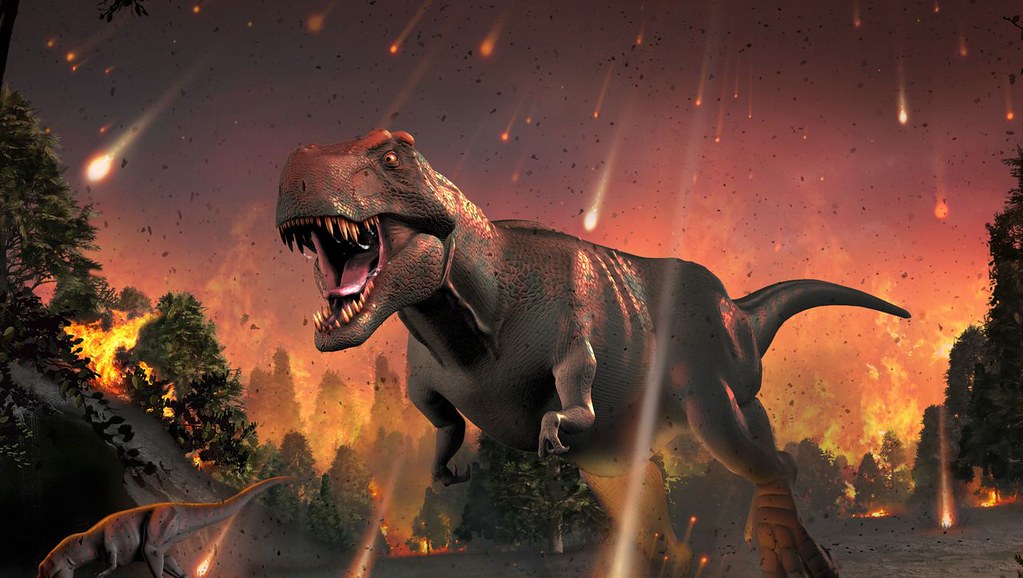
Sixty-six million years ago, the most spectacular and terrifying creatures to ever walk this planet simply vanished. Gone. The rulers of Earth for over 150 million years – wiped from existence in what feels, geologically speaking, like the blink of an eye. It’s the kind of story that keeps scientists up at night, fuels fierce academic debates, and captures the imagination of anyone who has ever stared at a fossil and wondered what actually happened.
Here’s the thing: most people think they know the answer. Asteroid. Done. Case closed. But the deeper you dig into the science, the more complicated and jaw-dropping the true picture becomes. You’ll find raging volcanoes, global acid rain, frozen skies, and theories that challenge everything you thought you knew. Let’s dive in.
1. The Chicxulub Asteroid: The “Dino Killer” from Beyond Jupiter
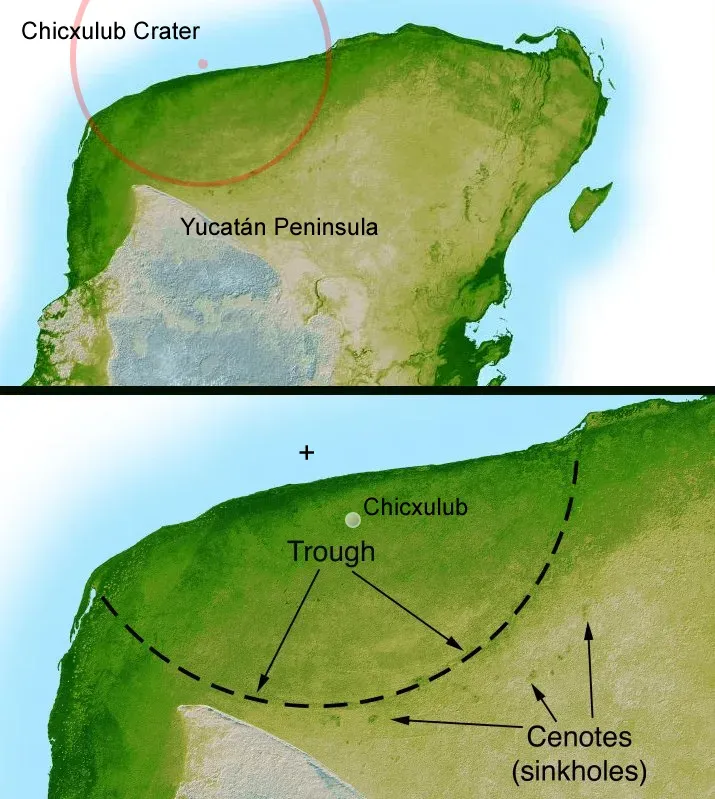
Original: http://photojournal.jpl.nasa.gov/catalog/PIA03379, Public domain)
You’ve almost certainly heard about the asteroid that ended the dinosaurs – but did you know scientists recently traced its origins to the outer reaches of our solar system, far beyond Jupiter? The asteroid that led to the extinction of the dinosaurs 66 million years ago probably came from the outer solar system, according to an international study led by geoscientists from the University of Cologne. The results, published in the journal Science, indicate that the asteroid formed outside Jupiter’s orbit during the early development of our solar system. That’s not just impressive – that’s terrifying. A rock born in the cold outer edges of the cosmos traveled billions of miles before slamming into a peninsula in what is now Mexico.
The Chicxulub impactor is thought to have been between 6 and 12 miles wide – but due to its high velocity, it formed a crater more than 90 miles across, traveling at a speed of 15.5 miles per second with power equal to 10,000 times the world’s nuclear arsenal, according to NASA. Think about that for a second. The entire nuclear arsenal of the modern world, multiplied by ten thousand. The dino killer was a rare clay-rich mudball containing materials from the dawn of the solar system, findings suggest. It’s almost poetic, in a brutal way – a relic from the birth of our solar system became the instrument of Earth’s most famous mass extinction.
2. The Impact Winter: When the Sun Disappeared for Years
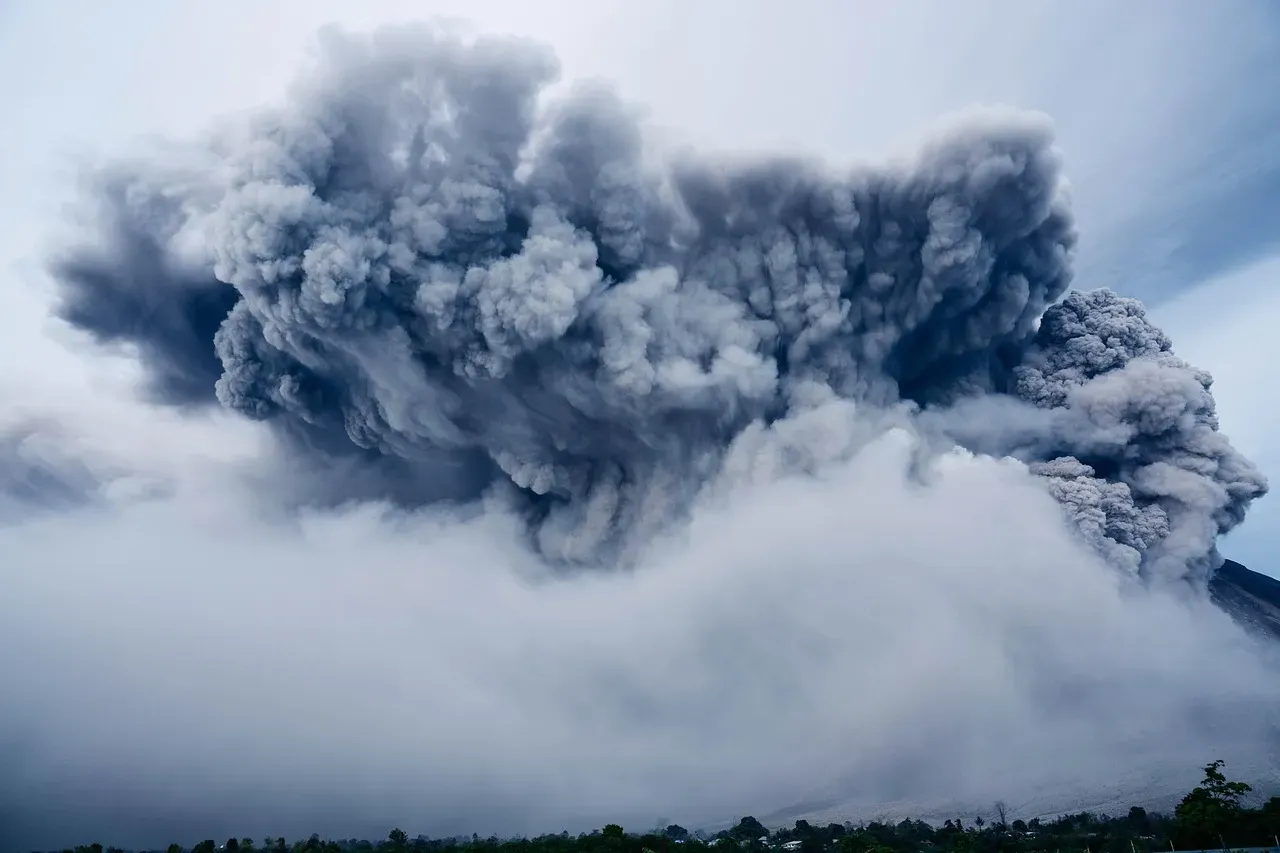
The actual moment of impact was catastrophic, sure. But what truly sealed the fate of the dinosaurs was arguably what happened after. Climate scientists reconstructed how tiny droplets of sulfuric acid formed high up in the air after the impact of the large asteroid, blocking sunlight for several years, and having a profound influence on life on Earth – starting the eventual ascent of mammals. Imagine the world going dark. Not for days. For years. Plants dying first, then the animals that depended on them.
Global annual mean surface air temperature dropped by at least 26 degrees Celsius. Dinosaurs were used to living in a lush climate, but after the asteroid’s impact, the annual average temperature was below freezing for about 3 years. Even the ice caps expanded, and even in the tropics, annual mean temperatures plummeted from 27 degrees to a mere 5 degrees. This is what scientists often call the “impact winter” – a prolonged, catastrophic freeze. Research supports the Alvarez hypothesis, which attributes the end-Cretaceous mass extinction to a prolonged impact winter, demonstrating through combined climate and ecological modeling tools a substantial detrimental effect on dinosaur habitats caused by this scenario. It wasn’t just a bad day. It was years of darkness, freezing cold, and collapsed food chains.
3. The Deccan Traps: Earth’s Own Volcanoes as Accomplices
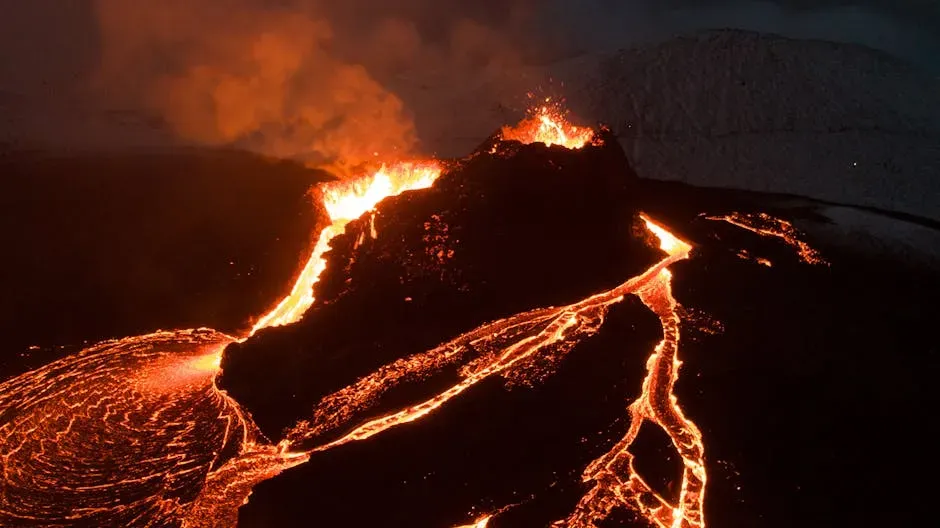
Here’s a theory that often gets overshadowed by the asteroid story, but honestly, it’s just as dramatic. About 66 million years ago, a massive volcano erupted lavas in India that are now called the Deccan Traps, burying much of the subcontinent under more than 11,000 feet of basalt and pouring poisonous gases into the atmosphere. Let that sink in. More than 11,000 feet of hardened lava. That’s not just a volcanic event – that’s Earth trying to destroy itself from the inside.
Volcanic activity of this magnitude would have spewed out massive amounts of carbon dioxide into the atmosphere, causing greenhouse warming. The eruptions would have also caused levels of toxic gases like sulfur and chlorine to rise, resulting in acid rain and further damaging the global environment. Ash and dust may have also blocked sunlight, causing temperatures to drop. So you had global warming and global cooling happening simultaneously, depending on the phase of eruption. Research found signs of four distinct pulses of eruptions at the Deccan Traps, with the biggest coming about a hundred thousand years before the asteroid impact – eruptions that could have injected massive amounts of greenhouse gases and particles into the atmosphere, changing Earth’s climate in ways that stressed out late Cretaceous life. The volcanoes may have been setting the stage well before the asteroid ever arrived.
4. The Double Punch: When Both Events Worked Together
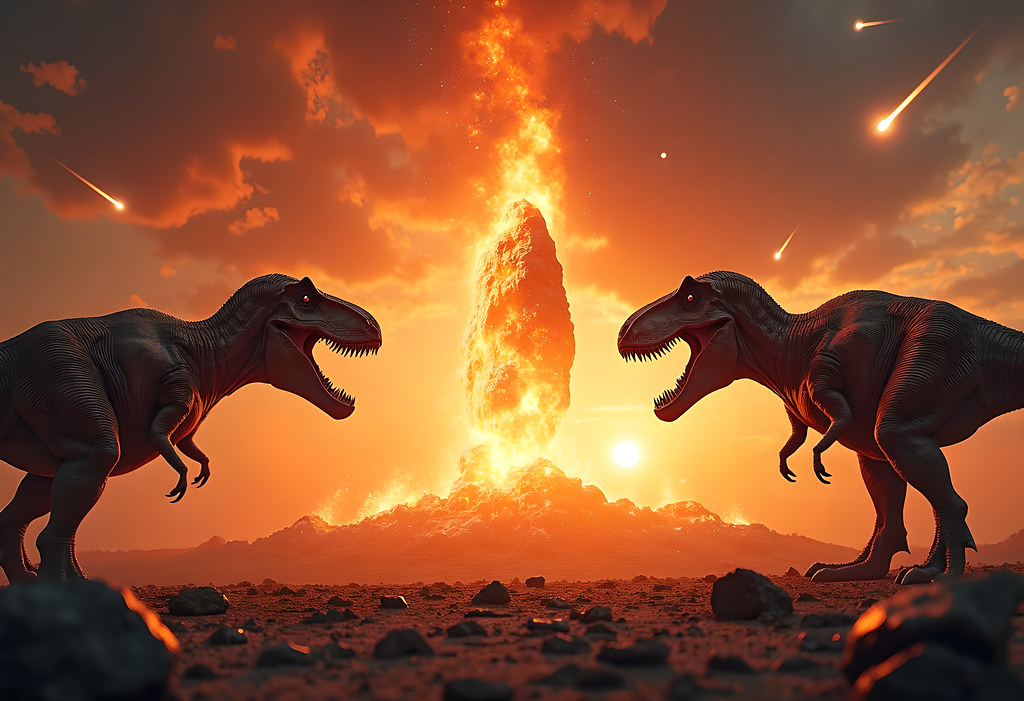
What if you didn’t have to choose between the asteroid and the volcanoes? Increasingly, scientists believe you don’t. Scientists trying to unravel this prehistoric mystery are seeing room for a combination of these ideas. It’s possible the dinosaurs were the unlucky recipients of a geologic one-two punch, with volcanism weakening ecosystems enough to make them vulnerable to an incoming meteor. It’s a bit like a boxing match – one fighter weakens the opponent, and the other delivers the knockout blow.
One scientific scenario combined three major postulated causes: volcanism, marine regression, and extraterrestrial impact. In this scenario, terrestrial and marine communities were stressed by changes in habitat, dinosaurs as the largest vertebrates were the first affected, and then an impact event occurred, causing collapses in photosynthesis-based food chains both on land and in the sea. I think this “multi-cause” model is the most intellectually honest one out there. Nature rarely acts through a single, clean mechanism. According to two research teams, the massive Deccan Traps volcanoes started erupting about 400,000 years before the Chicxulub impact and wrapped up about 600,000 years after. The overlap is striking and likely anything but coincidental.
5. The Acid Rain Apocalypse: Oceans and Forests Dissolving
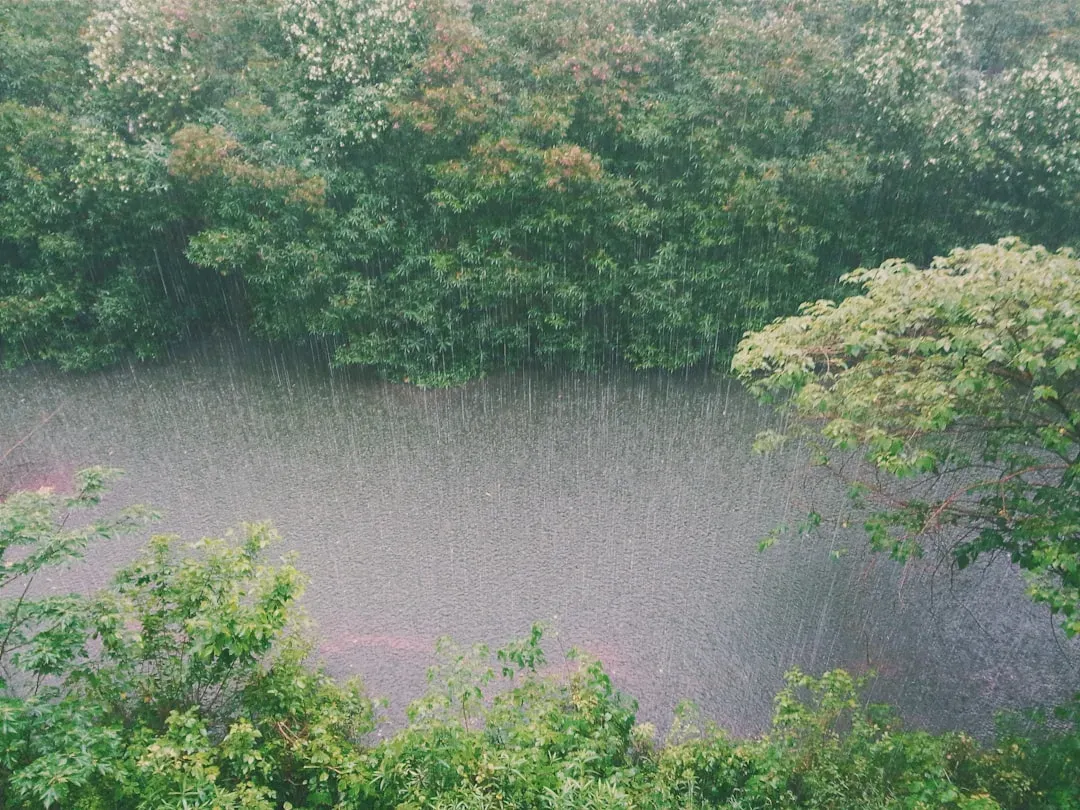
One of the most chilling – and underappreciated – aspects of the extinction scenario is what happened to the planet’s chemistry after the impact and during the volcanic eruptions. In October 2019, researchers proposed a mechanism of the mass extinction, arguing that the Chicxulub asteroid impact event rapidly acidified the oceans and produced long-lasting effects on the climate. Think of the ocean as the planet’s life-support system. Acidify it rapidly, and entire food chains collapse almost overnight.
Plant fossils record a significant increase in carbon dioxide concentrations across the K-Pg boundary likely attributable to Deccan Traps activity. The increased carbon dioxide emissions also caused acid rain, evidenced by increased mercury deposition due to increased solubility of mercury compounds in more acidic water. The land itself was being eaten away by toxic rain. Research found that the effects of acid rain on vegetation were rather selective – vegetation in some but not all parts of the world would have died off, whereas in other areas the effects would have been negligible. So the destruction wasn’t uniform. Some regions may have survived longer than others, creating a patchwork of devastation across the planet’s surface.
6. The Dinosaurs Were Thriving – Then Gone in an Instant
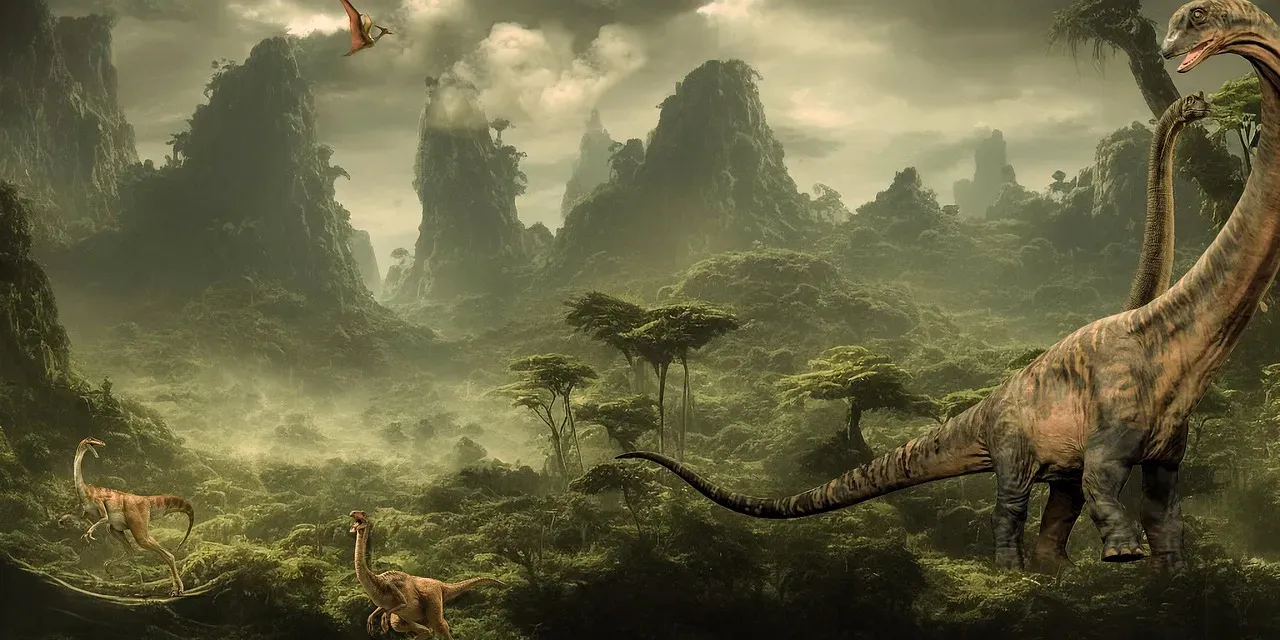
For decades, the popular assumption was that dinosaurs were already on their way out before the asteroid hit – a slow, inevitable decline. But science has a way of flipping our assumptions upside down. For much of the past century, scientists thought dinosaurs were already in decline long before the asteroid impact that ended their reign 66 million years ago. However, a new study published in Science by researchers from Baylor University, New Mexico State University, The Smithsonian Institution, and several international partners challenges that long-standing belief. The findings reveal that dinosaurs were not fading away at all – they were thriving.
Fossils from New Mexico that date to within about 340,000 years before the asteroid struck paint a vivid picture: the dinosaurs were thriving right until the moment of impact, a new study suggests. That’s a shocking realization. The extinction wasn’t a slow death – it was a brutal interruption of something very much alive. Researchers suggest that dinosaurs were probably not inevitably doomed to extinction at the end of the Mesozoic. If it weren’t for that asteroid, they might still share the planet with mammals, lizards, and their surviving descendants: birds – because the impact was not the final blow to an already dying group, but the abrupt end to a thriving and diverse reign. Honestly, that’s one of the most breathtaking reframes in modern paleontology.
7. The Fossil Record Illusion: Were We Reading the Evidence Wrong All Along?
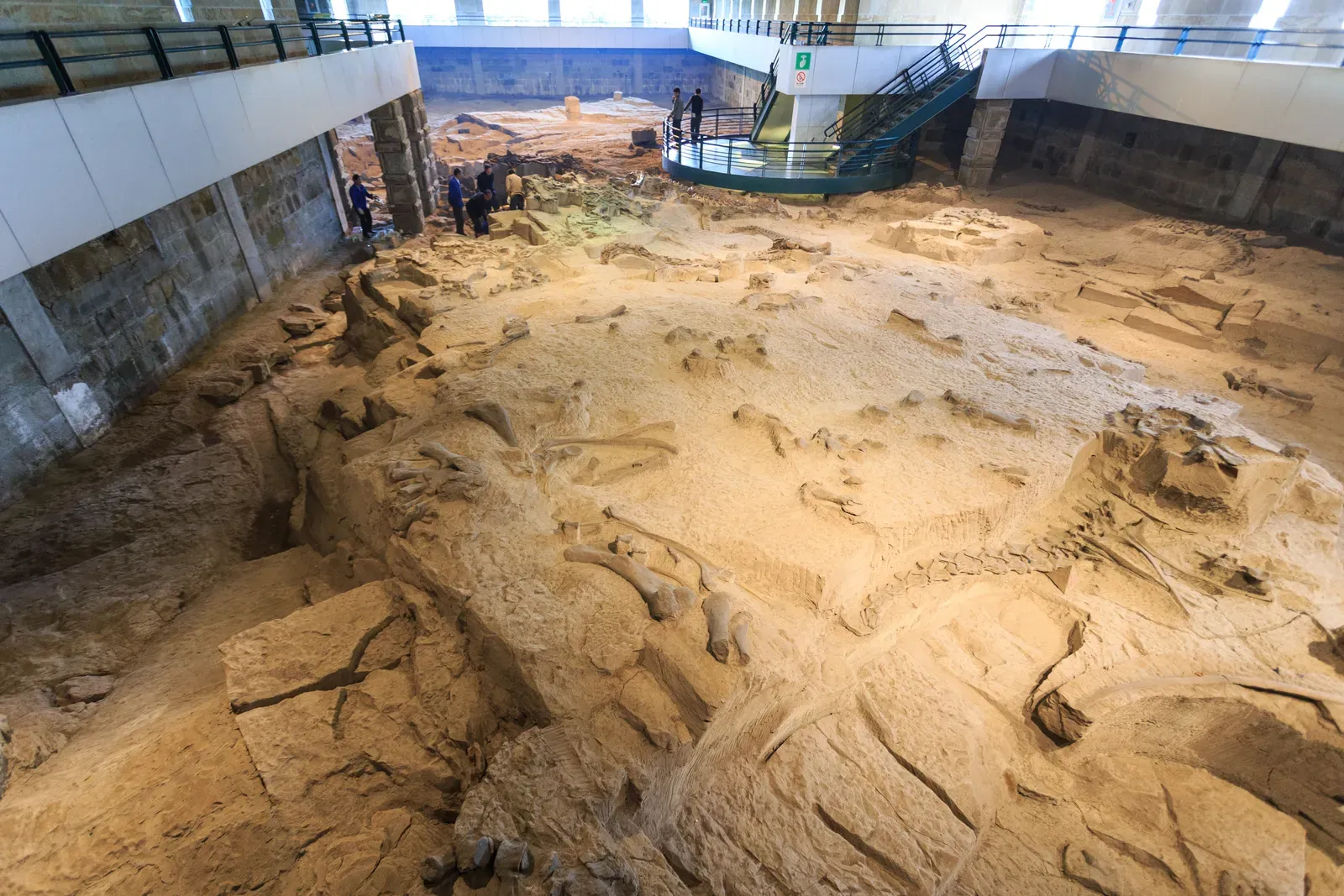
Here’s a theory that’s more about how we know what we know – and it’s surprisingly humbling. Dinosaurs might not have been on the verge of extinction before an asteroid wiped them out 66 million years ago. New research led by scientists at University College London challenges the idea that dinosaur species gradually declined. The apparent drop in species may not reflect what was really happening – it may simply be that fossils from that time are harder to locate, because natural geological changes might have reduced where and how fossils could be preserved.
Before the dinosaur extinction, North America experienced significant changes: sea levels fell, a large inland sea vanished, and mountain ranges rose. As a result of these geologic shifts, much of the sediment that could have preserved fossils from that time is no longer exposed. It is also buried under vegetation, cities, and other obstacles – making it harder for paleontologists to locate fossils from the period just before the asteroid. In other words, we might have been misreading the absence of fossils as evidence of extinction, when it was really just an artifact of geology. Limited exposed rock from that time period may have created an illusion of declining dinosaur diversity. That’s a bit like judging a library by how many books are visible on the shelves, without realizing most of them are locked in the basement.
8. The Comet Theory: Was It a Comet, Not an Asteroid?
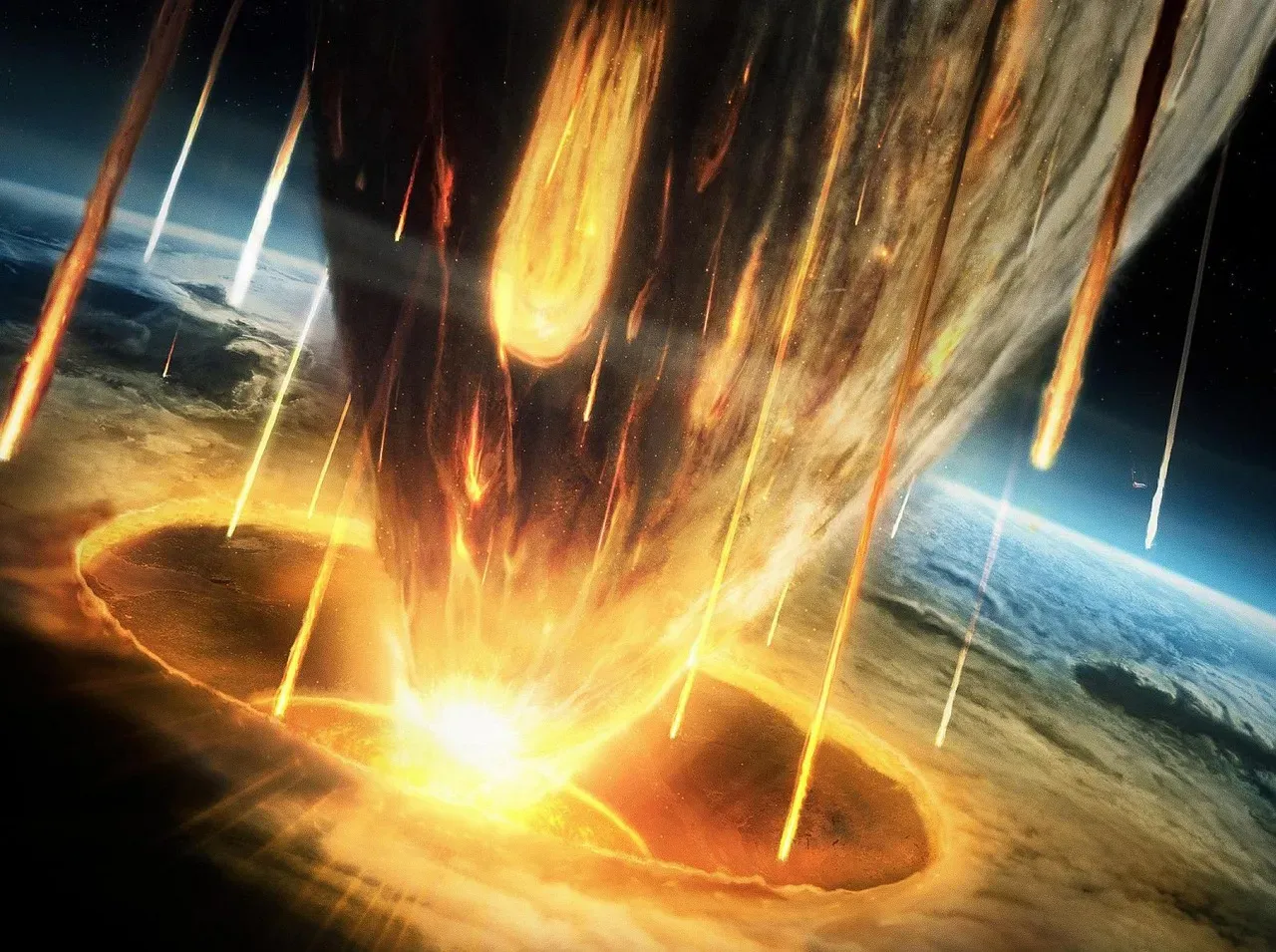
Most people say “asteroid” without a second thought. But a persistent minority of researchers have long argued the impactor might have been a comet – a fast-moving, icy projectile from the deepest, coldest corners of the solar system. Some scholars have argued that the impactor was a comet, not an asteroid. Two papers in 1984 proposed it to be a comet originating from the Oort cloud, and in 2021, Avi Loeb and a colleague suggested in Scientific Reports that the impactor was a fragment from a disrupted comet. The Oort cloud sits at the very outer boundary of our solar system, so if the theory is correct, the killer traveled almost incomprehensible distances to reach Earth.
There is now broad consensus that the Chicxulub impactor was a C-type asteroid with a carbonaceous chondrite-like composition, rather than a comet – and these types of asteroids originally formed in the outer solar system, beyond the orbit of Jupiter. So while the comet theory has largely been set aside, the origin story of the impactor is still wild. An analysis of metal isotopes scattered from the impact suggests the asteroid traveled from the outer solar system, beyond Jupiter. Whether comet or asteroid, the sheer distance this object traveled before ending the age of dinosaurs is almost impossible to wrap your head around.
9. The Multiple Comet Showers Theory: Not One Impact, but Many
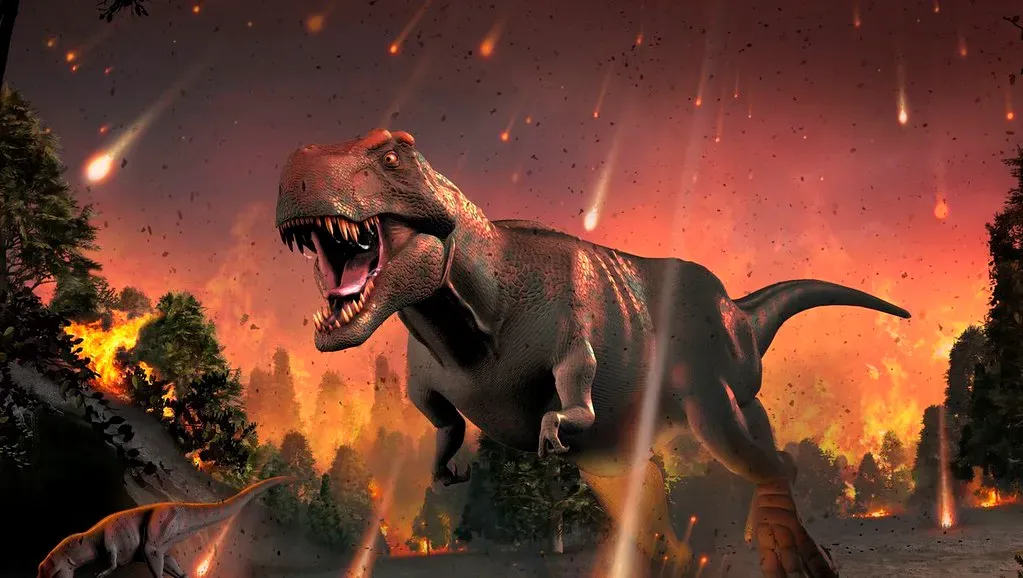
What if it wasn’t a single catastrophic event, but rather a prolonged cosmic bombardment? This is one of the more unsettling theories out there. Extinction of the dinosaurs may have occurred 65 million years ago as a result of a single asteroid or comet impact, but it is also possible they died out as a result of many comet impacts over one to three million years, a group of scientists has theorized. Imagine not just one apocalyptic strike, but wave after wave of cosmic bombardment spanning millions of years.
A major comet shower involving a billion comets with diameters of about 3 kilometers would result in about 20 comets striking the Earth over a period ranging from one to three million years, the scientists said. That’s a very different kind of extinction – not a sudden shock, but a slow, relentless crushing of life’s ability to recover. In each of three known mass extinctions, dating from 95 million years ago to the most recent, it is believed extinctions occurred in a stepwise manner over a finite period of time. The scientists said it is too early to predict if the hypothesis of comet showers offers a complete explanation for any or all mass extinctions, and suggested continued study. It’s hard to say for sure whether this theory will ever gain mainstream acceptance, but it raises a fascinating question: what if the end of the dinosaurs wasn’t one event, but a slow accumulation of cosmic bad luck?
Conclusion: The Greatest Mystery That Science Is Still Solving
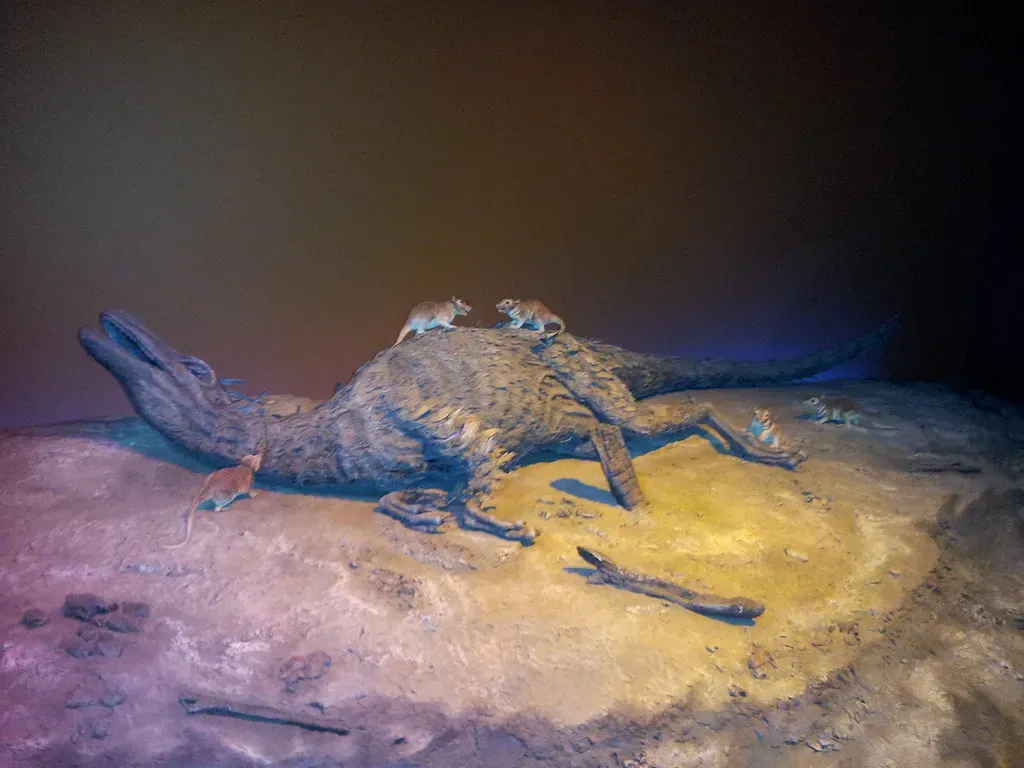
Sixty-six million years of silence. No matter how much we excavate, model, and analyze, remain one of the most electrifying puzzles in all of science. What we do know is this: in total, the mass extinction event claimed three quarters of life on Earth. That’s not just a statistic. That’s a near-total reset of the living world. And yet, life bounced back. Mammals diversified, birds soared, and eventually, here we are – asking the questions.
The most honest answer any scientist can give you right now is also the most exciting one: it was probably a combination of forces, stacking up against a world that was, in some ways, already under pressure. Their extinction was sudden, not gradual, and the recovery of life afterward mirrored climate-driven patterns – a powerful reminder of life’s adaptability and fragility. What strikes me most is not how the dinosaurs died, but how close they came to surviving it all.
Every new fossil, every new climate model, every new chemical analysis brings us one step closer to the truth. So here’s a thought to leave you with: if the asteroid had landed just a few minutes later in a different spot, would the dinosaurs still be here today? What do you think – and does it change the way you see the world around you? Drop your thoughts in the comments.