
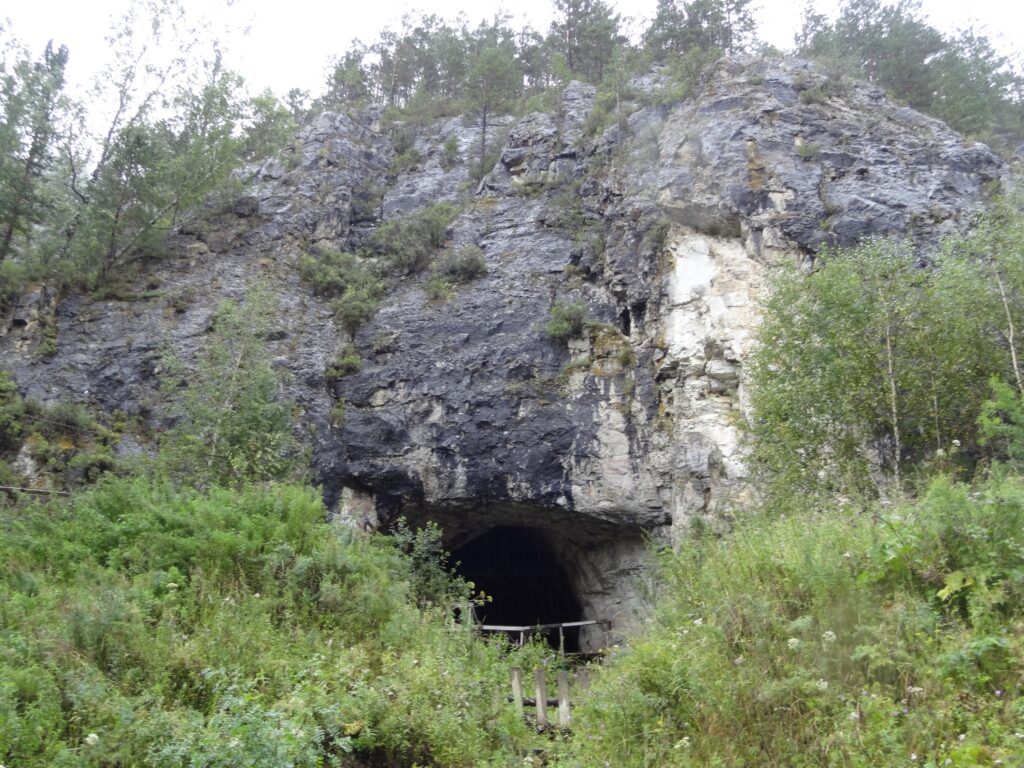
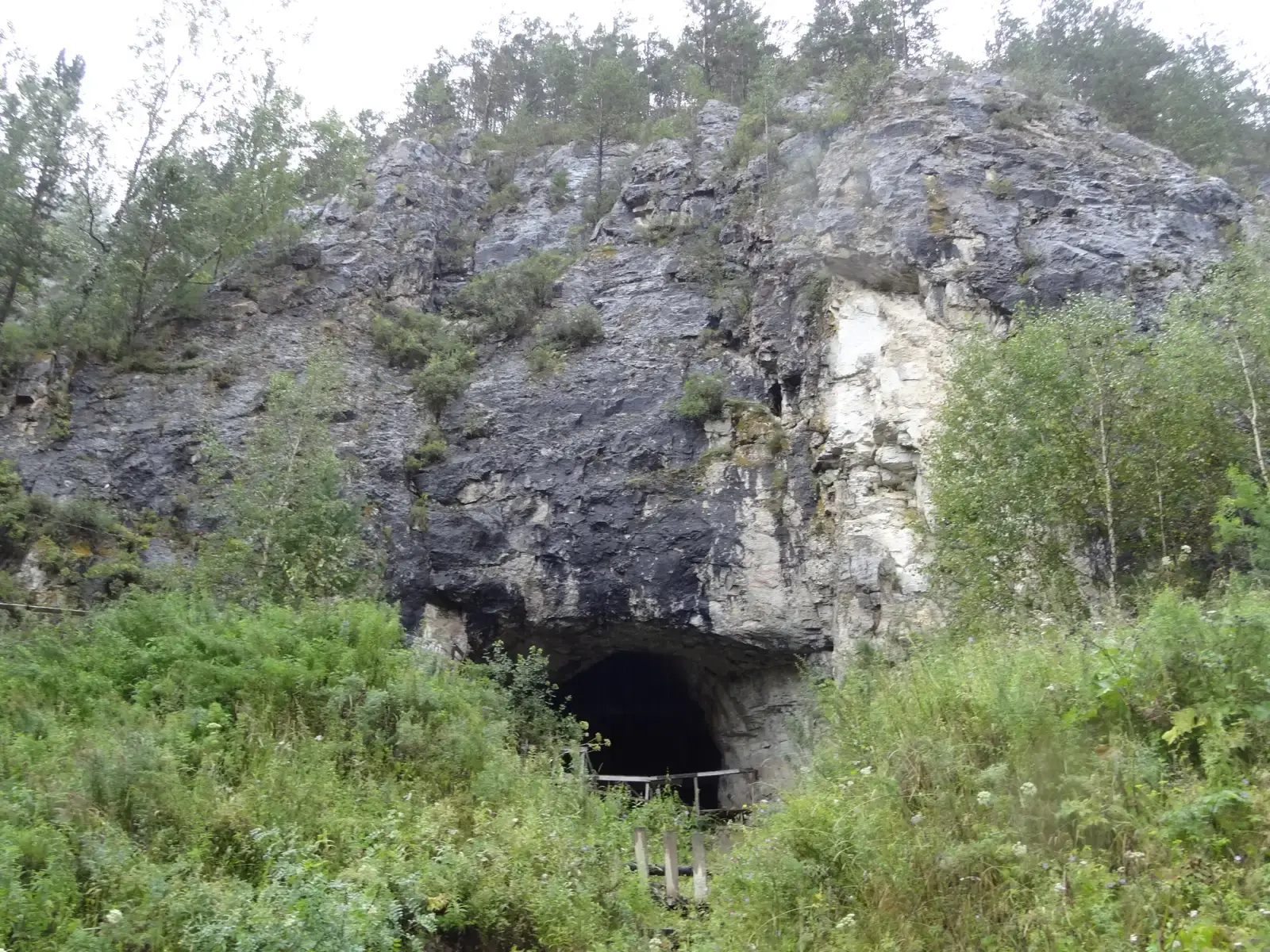
Deep in the Altai Mountains of Siberia sits a limestone cave that has quietly demolished more textbooks than any single site on Earth. Most people assume human evolution was a simple relay race – Neanderthals handed the baton to us, and that was that.
But Denisova Cave proved that at least three separate human lineages shared the same rock shelter, sometimes at the very same time – and one of them wasn’t even known to science until a single pinky bone blew the doors open. Here’s what the fossil, protein, and DNA evidence actually say, layer by shocking layer.
#1 – The Finger Bone That Invented a New Species
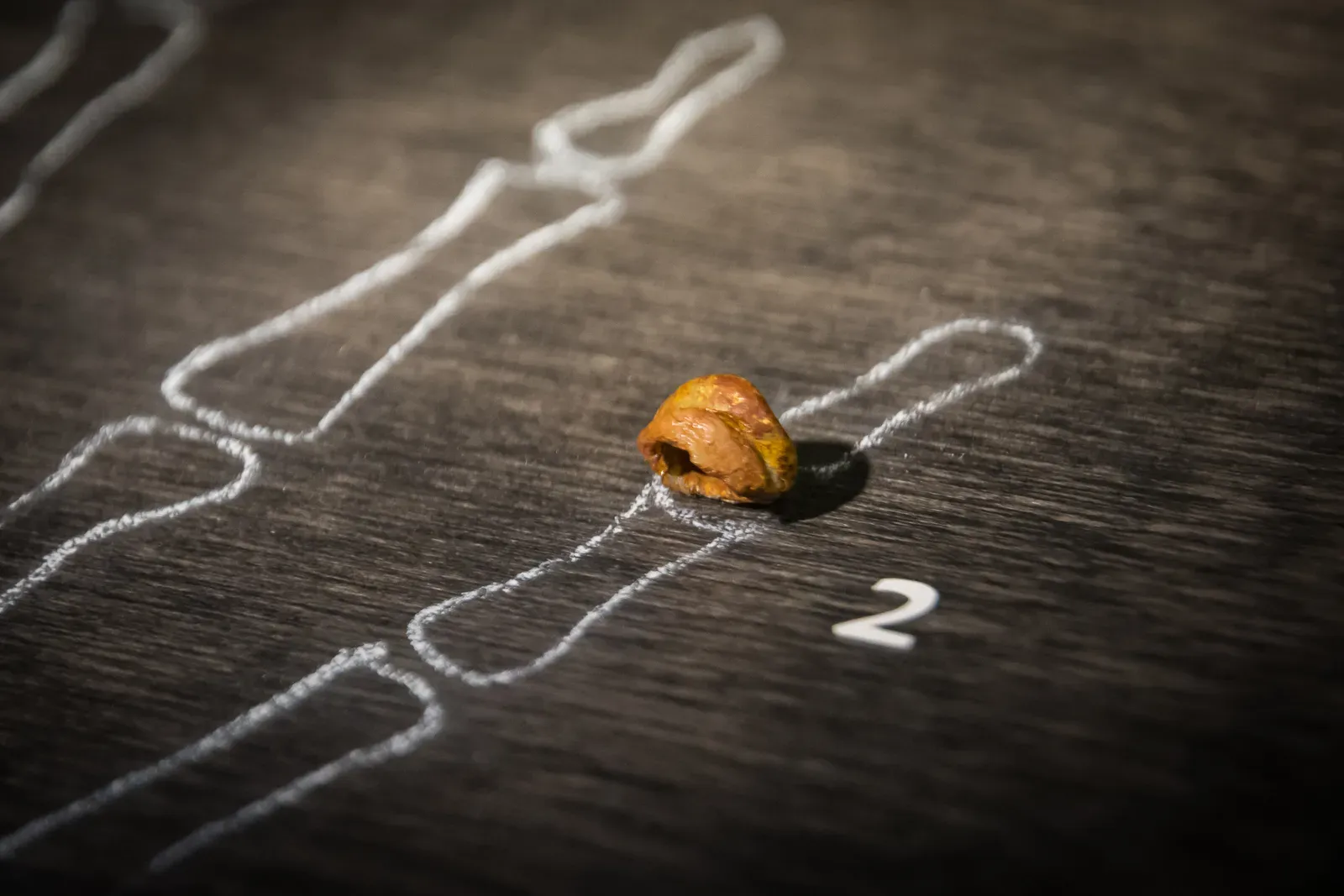
In 2008, a team of Russian archaeologists excavating layer 11 of the cave’s East Gallery pulled out a tiny finger bone fragment, at least 30,000 years old, and barely gave it a second look. They tossed it into a box labeled “modern human” and sent it off for routine analysis. That casual label turned out to be spectacularly wrong.
Once the fragment reached Svante Pääbo’s lab in Leipzig, researchers extracted DNA and got a shock. Denisova Cave became world famous in 2010 when Nature published genetic analysis of the fossil – a fragment of the distal phalanx of the little finger of a 6- or 7-year-old girl – showing it belonged to a previously unknown fossil human, named Denisovan after the cave. This wasn’t a new species defined by skull shape or brow ridge. It was defined entirely by molecules.
That distinction matters more than most people realize. The discovery flipped the traditional model of paleoanthropology on its head – until then, new hominin species were named based on bones, but here the bones came second to the molecules. Paleoanthropologist Chris Stringer summed it up bluntly: “Denisovans were created from DNA work.” That same body of work later helped earn Pääbo the 2022 Nobel Prize in Physiology or Medicine – a rare case of a single fingertip helping win science’s highest honor.
Fast Facts
- Found: 2008, layer 11, East Gallery of Denisova Cave
- Owner: a 6- or 7-year-old girl, at least 30,000 years old
- Confirmed: Nature journal, 2010, via DNA analysis alone
- Legacy: helped earn Svante Pääbo the 2022 Nobel Prize
A fingertip smaller than a fingernail rewrote the human family tree. But that’s nothing compared to what turned up next.
#2 – “Denny,” the Girl With Two Different Species for Parents
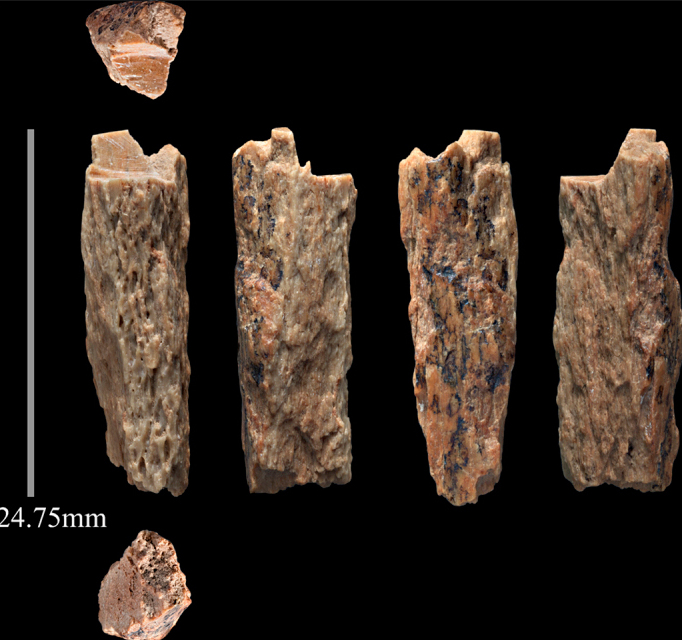
Buried in a box of over 2,000 unidentified bone splinters for years was a fragment that would turn out to be the single most jaw-dropping fossil ever pulled from the cave. Denisovan 11 was a long bone fragment found in the cave in 2012, but it sat unidentified until 2016, when protein analysis on thousands of fragments finally revealed it was human. Nobody expected what came next.
Genetic sequencing revealed that this girl, nicknamed Denny, wasn’t simply Denisovan or simply Neanderthal. The fossil belonged to a girl who was at least 13 years old and lived roughly 90,000 years ago, and her DNA analysis, published in 2018, showed she was a first-generation hybrid with a Denisovan father and a Neanderthal mother. That’s not distant ancestry – that’s a direct crossbreed, one generation removed.
Researchers didn’t hold back on how rare this find really was, calling it a “one-in-a-million find.” A single finger bone had already revealed the Denisovans existed at all, and now this splinter had revealed their first confirmed hybrid child with Neanderthals. Most people picture ancient human species as separate, isolated populations. Denny proves that when Neanderthals and Denisovans crossed paths, they didn’t just coexist – they had children together.
Coming up next: an accessory so advanced it shouldn’t have existed yet.
#3 – A Stone Bracelet That Shouldn’t Have Been Possible
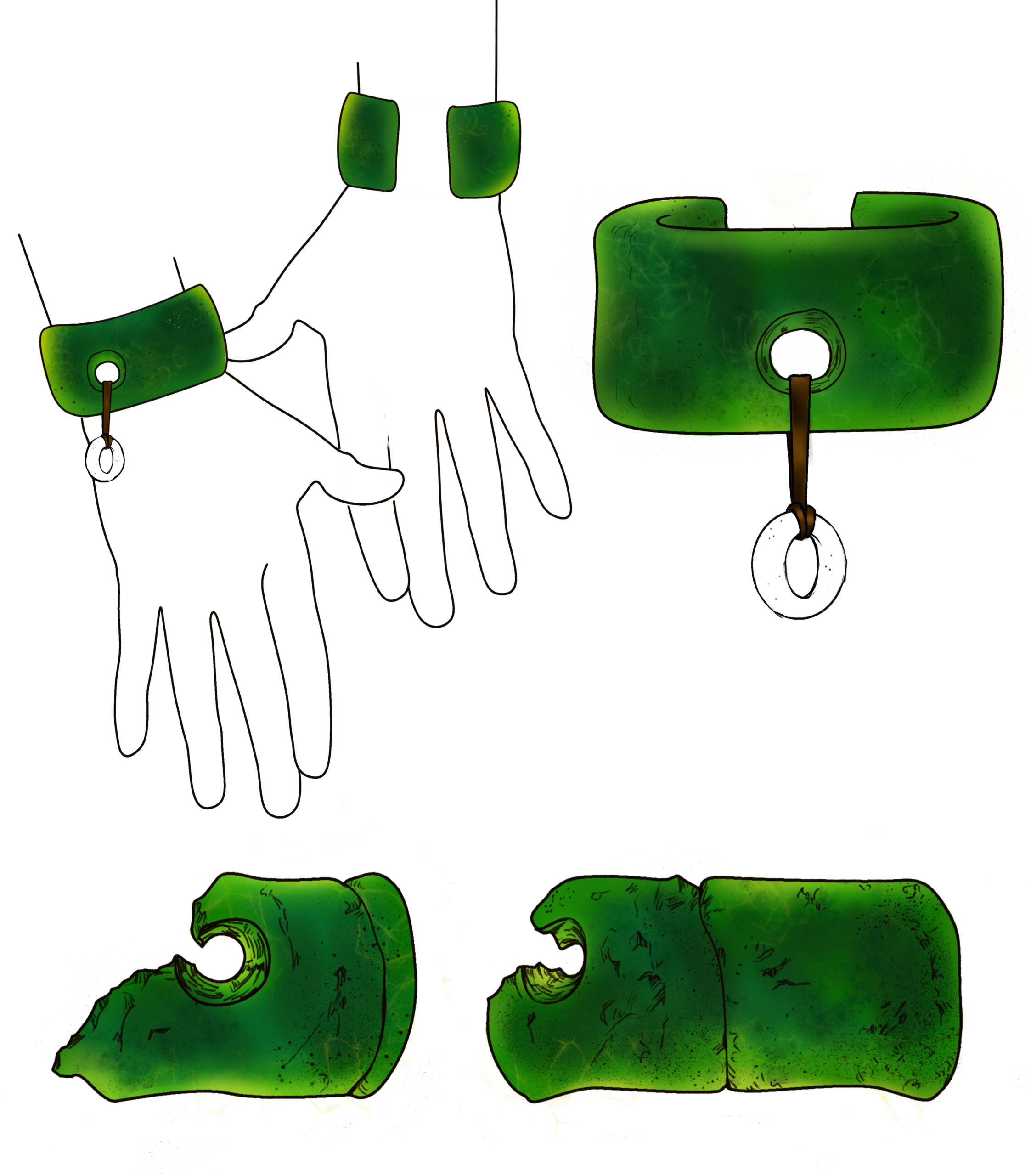
Buried near the entrance of the East Gallery, archaeologists found a small, broken piece of shimmering green stone that turned Paleolithic craftsmanship on its head. A fragment of a bracelet made of dark-green chloritolite was found near the entrance to the eastern gallery, in deposits estimated at roughly 30,000 years old. It wasn’t just old. It was sophisticated.
The manufacturing techniques floored specialists. Use-wear and technological analysis showed grinding on various abrasives, polishing with skin, and technologies unique for the Paleolithic – including high-speed drilling and rasping – evidence of developed manual skill and advanced technical knowledge that shouldn’t have existed for tens of thousands more years.
The bracelet is stunning – in bright sunlight it reflects the sun rays, at night by the fire it casts a deep shade of green.
Anatoly Derevyanko, Institute of Archaeology and Ethnography
Here’s the part experts still argue about: the material itself wasn’t even local. Chlorite isn’t found anywhere near the cave and is thought to have traveled at least 200 kilometers to get there, which shows how prized the material was at the time. Someone – Denisovan or otherwise – was trading for luxury goods tens of thousands of years before agriculture existed. That single detail alone should make you question everything you thought you knew about “primitive” ancient humans.
Next up, an even bigger revision: how long the cave was actually occupied.
#4 – Sediment DNA Rewrote the Entire Occupation Timeline
For decades, dating the cave’s layers was a nightmare because fossils were scarce and the stratigraphy was a mess. Then scientists tried something radical: extracting DNA directly from the dirt itself. An extensive analysis of DNA in the cave’s soils revealed it also hosted modern humans, who arrived early enough that they may have once lived there alongside Denisovans and Neanderthals.
The results reshuffled the entire timeline of who lived there and when. The work confirmed Denisovans were the cave’s first inhabitants, arriving roughly 300,000 years ago, disappearing around 130,000 years ago, and being followed by a different group of Denisovans some 30,000 years later. Neanderthals showed up about 170,000 years ago, and modern humans arrived last, around 45,000 years ago. That’s not one population passing through – that’s multiple waves spanning nearly 300 millennia.
Quick Compare: Who Arrived When
- Denisovans (first wave): roughly 300,000 years ago
- Denisovans (second wave): roughly 100,000 years ago
- Neanderthals: roughly 170,000 years ago
- Modern humans: roughly 45,000 years ago
A researcher not involved in the study called the technique a game-changer. Mikkel Winther Pedersen said the study “gives researchers unprecedented insight into the past,” adding that “it literally shows what before they have only been able to hypothesize.” Most people assume ancient cave sites had one “occupant” at a time – sediment DNA proved that’s almost never true.
Wait until you see what a single Tibetan jawbone did to the map.
#5 – A Jawbone in Tibet Proved Denisovans Weren’t Just a Siberian Story
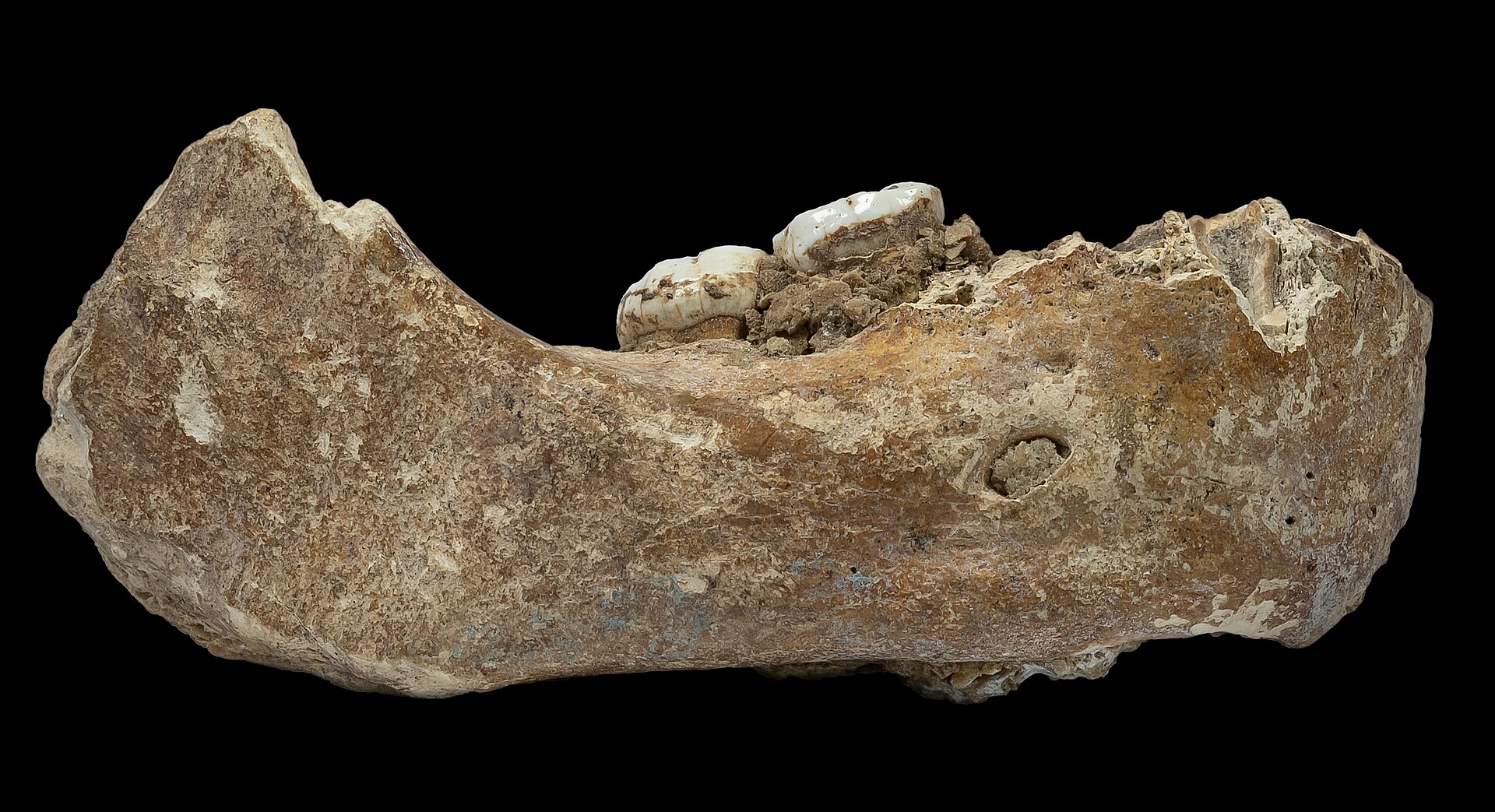
For nearly a decade, every single confirmed Denisovan fossil came from one remote Siberian cave. That changed with a jawbone a Buddhist monk had handed over decades earlier. In 2019, researchers from Lanzhou University announced that a jawbone found in a cave on the Tibetan Plateau was Denisovan – a partial mandible originally discovered in 1980 in Baishiya Karst Cave, handed over by a Tibetan Buddhist monk who’d found it inside.
The dating results were staggering. The mandible was determined to be at least 160,000 years old through uranium-series dating, providing the first direct evidence of Denisovans living outside the Altai Mountains. That’s a discovery roughly 1,700 kilometers from Denisova Cave itself.
Scientists didn’t even need DNA to confirm the identity – they used something rarer. No DNA had survived in the fossil, but researchers managed to extract ancient proteins from one of the molars, degraded but clearly distinguishable from modern contamination. This proved Denisovans survived extreme high-altitude, low-oxygen environments long before modern humans ever attempted it.
They weren’t cave-dwelling outliers – they were a widespread, adaptable population. Up next, the teeth that hinted at something far older than anyone expected.
#6 – The Teeth That Looked Impossibly Ancient
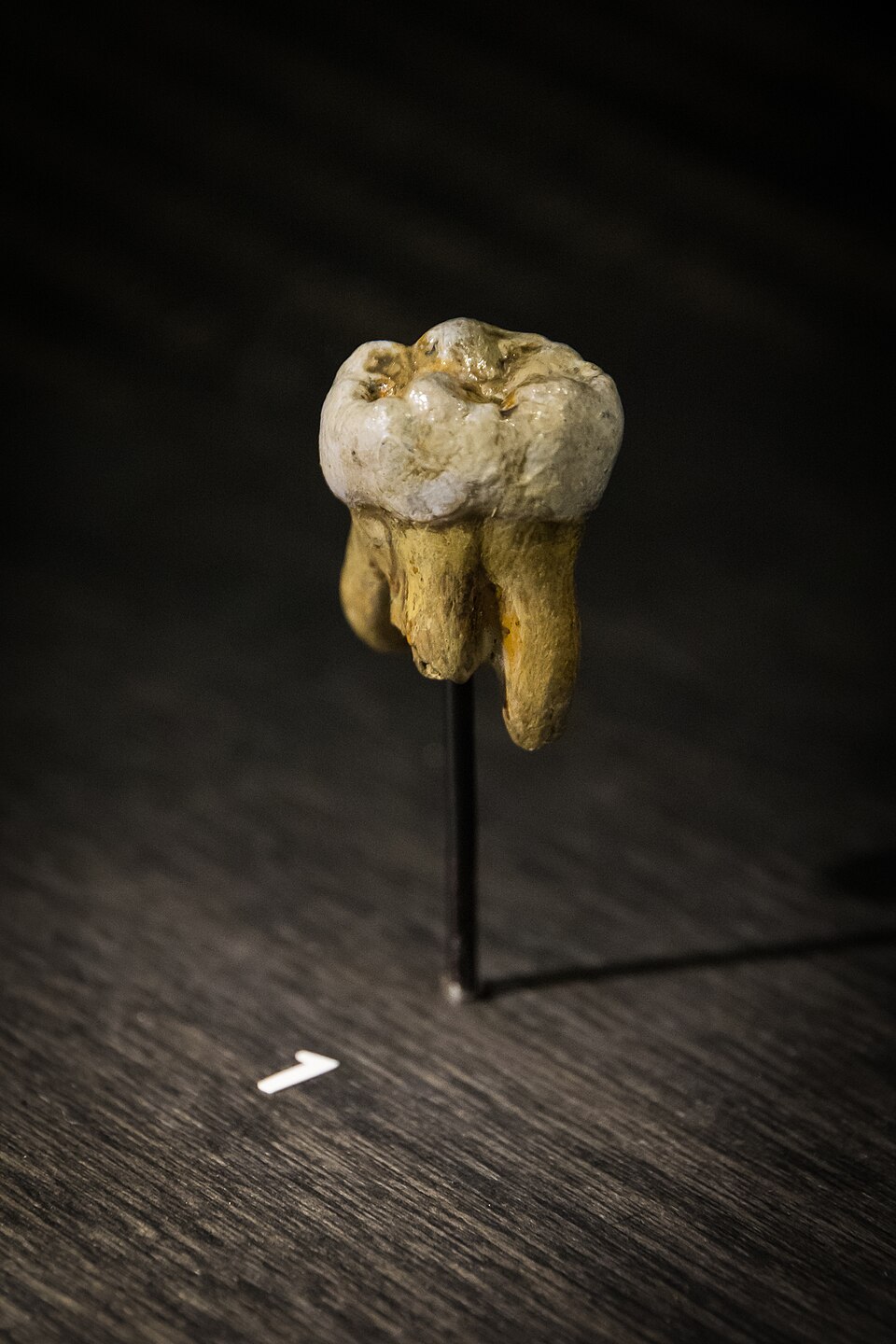
Long before Denny made headlines, three unassuming molars found in the cave were quietly confusing scientists. Their shape didn’t match anything in the Neanderthal or modern human dental catalog. The tooth found in the same cave as the finger bone showed a morphology distinct from both Neanderthals and modern humans, instead resembling much older human ancestors like Homo habilis and Homo erectus – species that lived well over a million years before Denisovans were thought to exist.
That resemblance to species over a million years older set off alarm bells, and later dating confirmed the suspicion was justified. The original finger bone and one tooth had been dated to between 50,000 and 70,000 years old, but a newer tooth turned out to be 50,000 years older than the others. Anthropologist Bence Viola put it plainly: “The new tooth is 50,000 years older than the others – this is really interesting, it shows us these guys were around for a long time.”
Here’s the part that trips people up: DNA confirmed these teeth belonged to entirely different individuals than the famous finger bone, not just different bones from the same skeleton. A whole population, not a single anomaly, had been living in that cave for tens of thousands of years before anyone noticed.
Next: proof that Denisovans had roommates.
#7 – A Neanderthal Toe Bone Proved the Cave Was Shared, Not Sequential
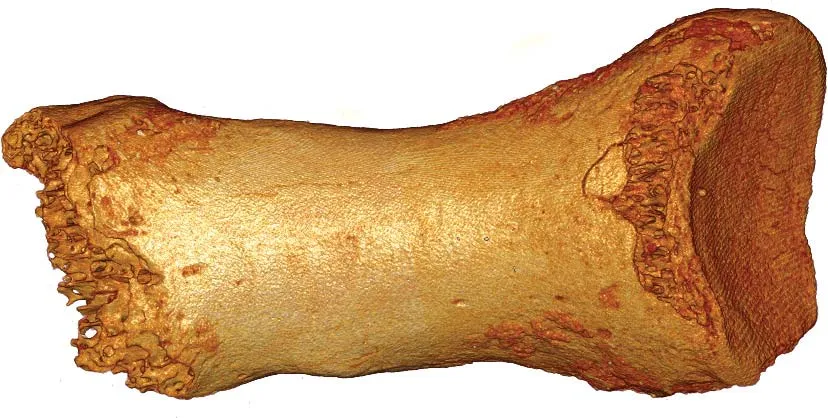
Skeptics initially assumed different human groups simply took turns occupying the cave across vast stretches of time, never overlapping. A single toe bone challenged that assumption directly. A Neanderthal toe bone, identified through DNA, was found in the cave in 2010 in layer 11.4 of the East Gallery – the very same layer that produced the Denisovan finger bone.
“Contemporary” is the key word most casual readers skip past. It means these two distinct human species left physical evidence in the same time layer, not separated by millennia of dust. Combined with the stone tool evidence, the picture gets even messier – and more interesting. Neanderthals left Mousterian-style points and scrapers in the cave dated to roughly 40,000 years ago, while the same layers also held far more sophisticated stone tools and bone artifacts that may have belonged to Homo sapiens.
Worth Knowing
- Layer 11.4 alone produced both the Denisovan finger bone and the Neanderthal toe bone
- Mousterian-style tools tied to Neanderthals date to roughly 40,000 years ago
- More advanced tools in the same layers may point to early Homo sapiens
- Precise layer dating is still disputed among researchers
This is exactly the kind of detail that should spark debate, because scientists themselves aren’t fully settled on it. Pinning down exact dates for the layers where artifacts and fossils were found is genuinely difficult, and it’s possible the occupation was sequential rather than truly simultaneous. So which is it – overlapping neighbors, or a revolving door of species who never actually met?
The honest answer is we still don’t fully know, and that ambiguity is part of what makes this cave so scientifically electric. Next, the artifacts that hint at something even more human: symbolism.
#8 – Bone Needles and Pendants That Push Back “Modern” Behavior
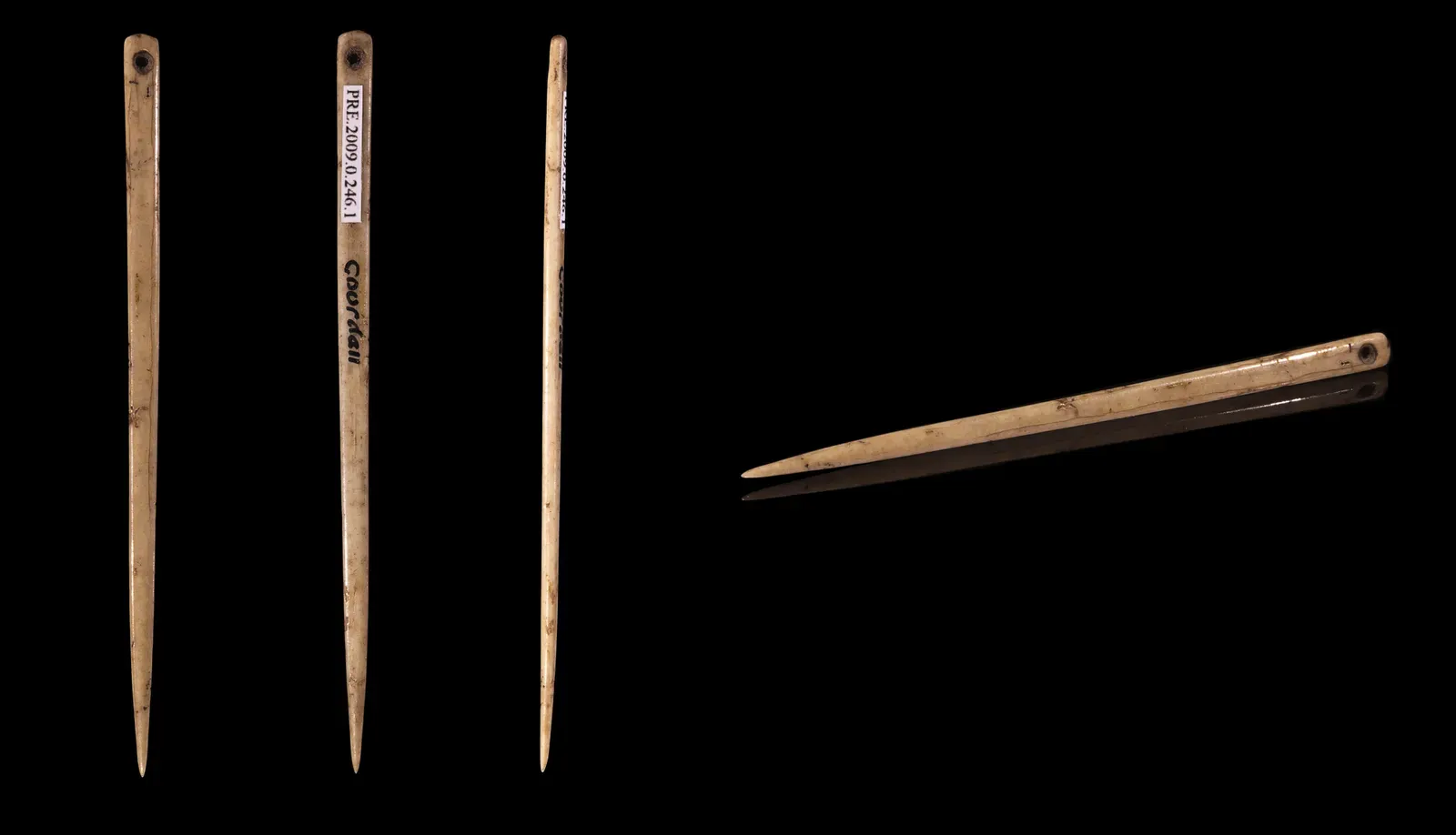
Deep in the same layers as the bracelet, researchers uncovered tools usually treated as a hallmark of fully modern human culture. Bone points and pendants made from animal teeth – usually associated with Homo sapiens – turned up dating to between 43,000 and 49,000 years ago, making them among the earliest evidence of this kind of ornamentation anywhere in northern Eurasia.
A carved marble ring, a string of ostrich-eggshell beads, and what’s been described as the world’s oldest needle rounded out the collection – all recovered from layers identified as Denisovan occupation, right alongside that shimmering green chlorite bracelet.
Here’s the twist nobody has fully resolved: because Denisovans, Neanderthals, and modern humans all left traces in overlapping layers, credit for these objects is genuinely contested. Professor Higham put it directly: “it is an open question as to whether Denisovans or modern humans made these personal ornaments found in the cave.”
If Denisovans made a needle and jewelry, that demolishes the old idea that only Homo sapiens were capable of symbolic craft. One more revelation remains – and it might be the biggest of all.
#9 – Denisovans May Finally Have a Face (and a New Name)
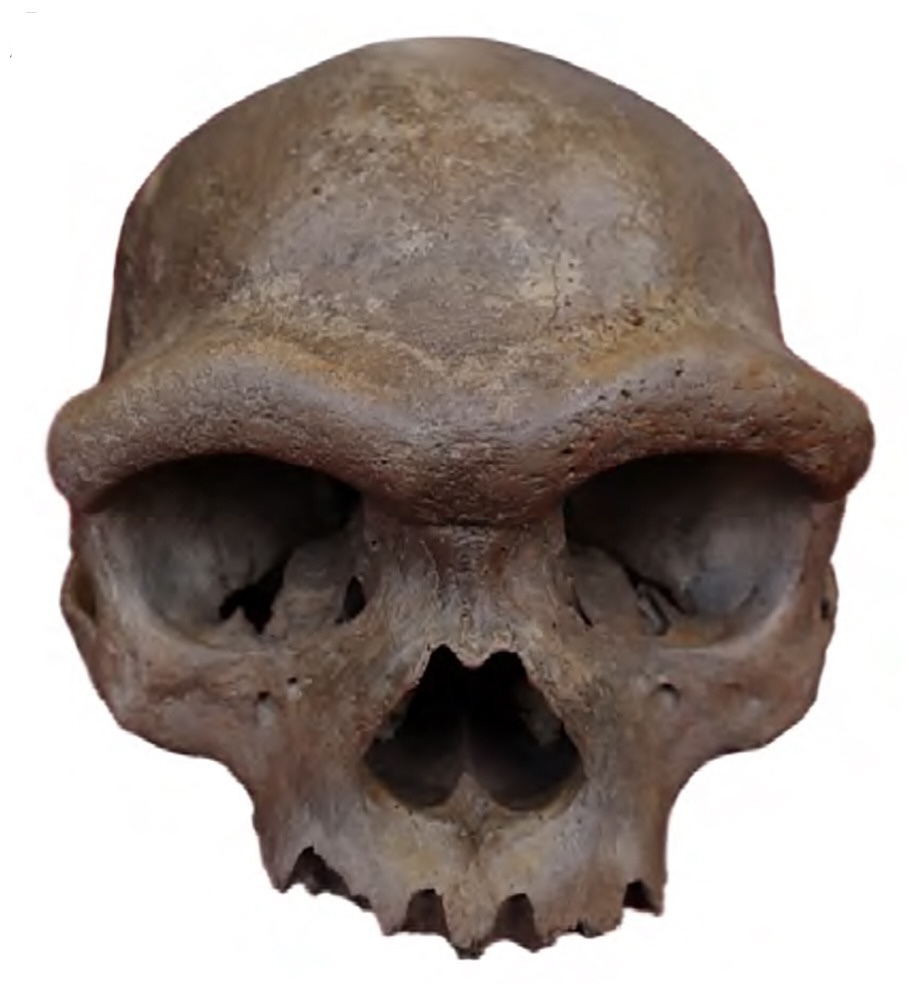
For over a decade, Denisovans were famous for being invisible – known only through DNA and a handful of teeth, with no skull, no face, no body plan to speak of. That changed when scientists connected the dots to a skull discovered decades earlier in China.
The Harbin skull, nicknamed “Dragon Man,” had been classified as its own species – until fresh analysis suggested otherwise. In 2021, a team of Chinese scientists working with Professor Chris Stringer identified it as belonging to a new species, Homo longi, named after the Long Jiang, or Dragon River, in Heilongjiang province. Then in 2025, ancient DNA extracted from hardened dental plaque changed the conversation all over again.
The genetic comparison was the missing puzzle piece. Researchers pulled fragments of DNA from plaque on the Harbin skull’s teeth, and comparing it with the known Denisovan genetic record pointed toward a stunning conclusion: Denisovans and “Dragon Man” may be one and the same. Some recent studies even suggest Denisovans are more closely related to our own lineage than Neanderthals are.
At a Glance: Denisovan DNA Today
- 4 to 6 percent of the genome in some Melanesian and Aboriginal Australian populations
- A gene variant in Tibetans that helps bodies handle thin, high-altitude air
- Possible link to the Harbin “Dragon Man” skull found in China
- Some studies suggest closer kinship to modern humans than Neanderthals
And Denisovans never really left us. A species discovered from a fingertip may finally have a face – and it might be staring back at us more closely than Neanderthals ever did.
The Bottom Line
Nine discoveries. One cave. An entirely rewritten human family tree. What started as a mislabeled box marked “modern human” became a species defined purely by DNA. A jumble of unidentified splinters revealed the only confirmed hybrid child between two extinct human species.
A stone bracelet proved “primitive” people were trading luxury goods across 200 kilometers, tens of thousands of years before farming existed. Sediment DNA rewrote the occupation timeline entirely, while a jawbone in Tibet proved Denisovans conquered altitudes modern humans hadn’t yet dared.
My honest take? Denisova Cave doesn’t just add a footnote to evolution – it proves our simplified, linear story of human origins was wrong from the start. We weren’t the lone survivors of a straight line; we were one thread in a tangled, overlapping, interbreeding mess of human species who shared fires, tools, and sometimes families.
What do you think actually happened when these species crossed paths – cooperation, conflict, or something we haven’t even considered yet? Drop your theory in the comments.