
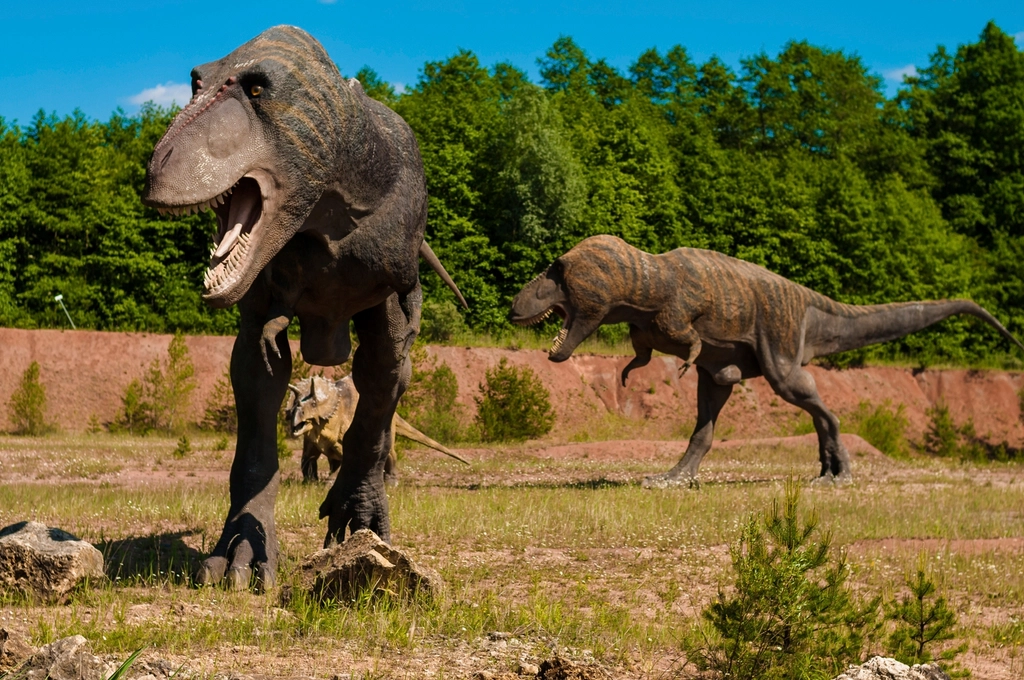
Most people think they know Tyrannosaurus rex because they’ve watched it chomp through a Jeep in a dark theater. But actual paleontologists – the ones who spend years hunched over fossilized bones and 66-million-year-old dung – will tell you almost everything Hollywood taught you is wrong. The real T-Rex was slower, smarter, scalier, and far weirder than the roaring monster from your childhood imagination.
Some of what science has uncovered about this animal in just the last decade would make even lifelong dinosaur fans do a double take. This isn’t speculation dressed up as fact – it’s CT scans, growth rings, and fossilized skin. Here’s what the bones actually say, once you stop listening to the movie.
#9 – Its Poop Solved a Decades-Old Mystery
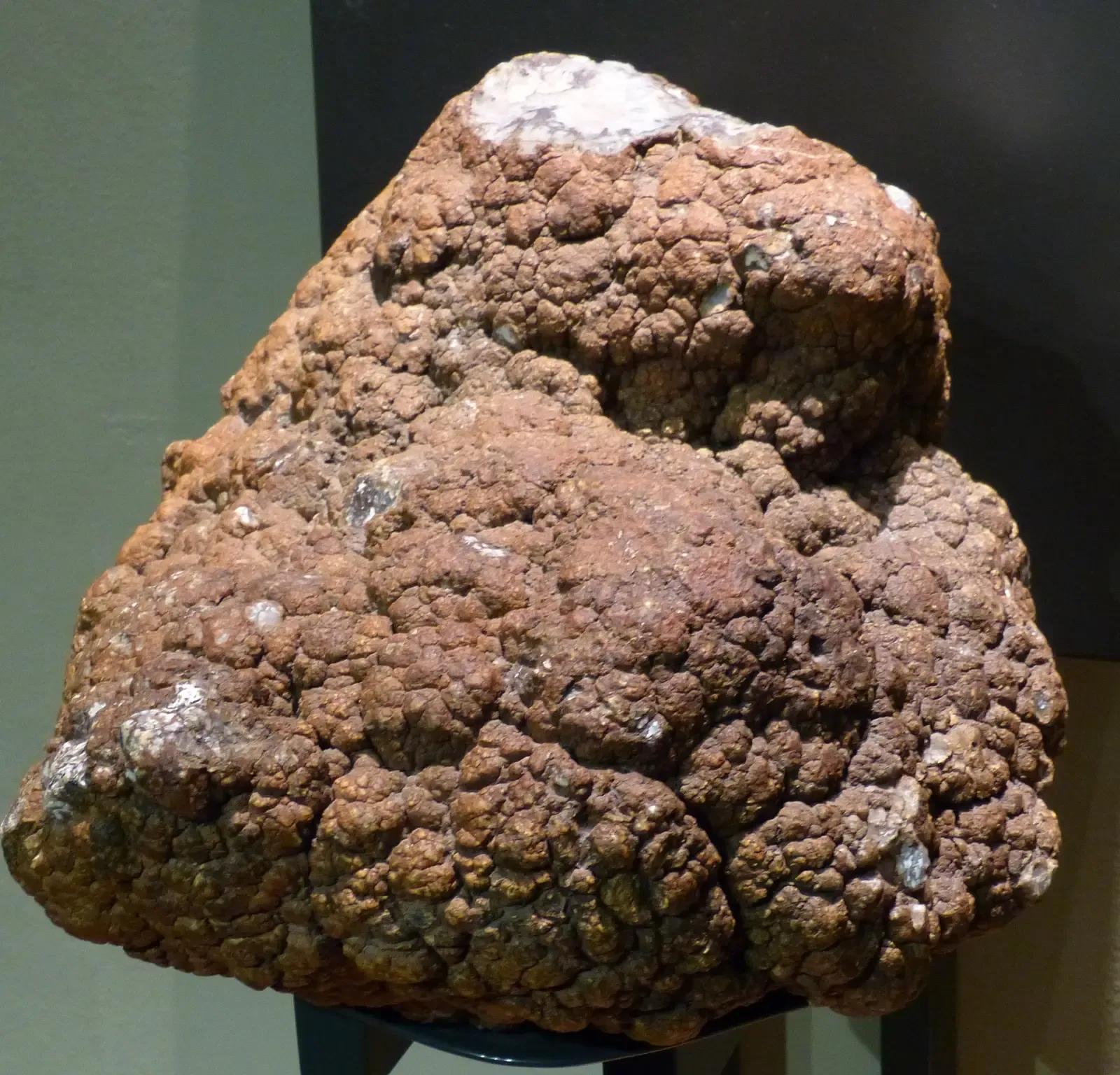
Paleontologists didn’t need a bite simulation to prove T-Rex crushed bone for breakfast. They found the proof in fossilized feces.
Tyrannosaur coprolites have turned up packed with pulverized bone fragments, confirming that T. rex digested bone as a regular part of its diet. This wasn’t a guess based on tooth shape or jaw-strength models – it was physical evidence sitting in the dirt, waiting for someone to CT scan it.
The results still surprise seasoned researchers. Crushed bone makes up 30 to 50 percent of one fossil dropping. That’s not a scavenger picking at scraps – that’s an animal built to eat the parts of its prey most predators leave behind entirely.
#8 – Its Bite Was Basically a Bone Press
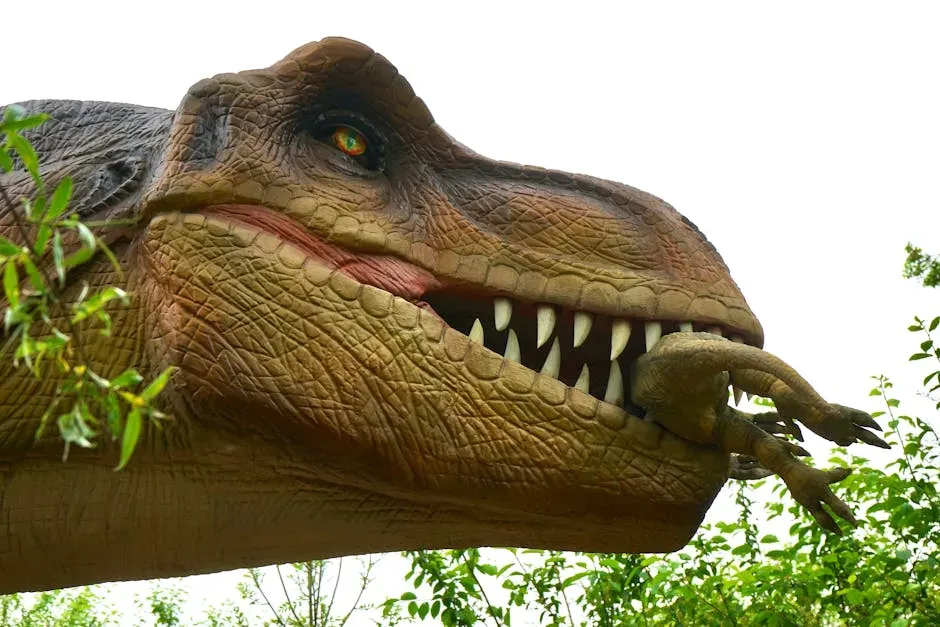
Forget the “delicate predator” imagery. T-Rex’s entire head was a demolition tool.
T. rex had a bite force estimated around 5,000 pounds per square inch – stronger than a crocodile’s, and roughly ten times the crushing power of a great white shark, all packed into a single chomp. The jaws didn’t work alone, either. Behind that skull sat an incredibly powerful neck, anchored by massive muscles and thick vertebrae.
That neck let T. rex wrench its head backward, tearing flesh straight off a carcass, in a motion some paleontologists compare to modern crocodilians – just scaled up to monstrous size. Basically, T-Rex didn’t nibble. It used its whole skull like a wrecking ball bolted to a car-crushing neck.
Quick Compare
- T. rex bite force: roughly 5,000 psi
- Crocodile bite: already among the strongest alive, but still weaker than T. rex
- Great white shark bite: only about a tenth of T. rex’s crushing power
#7 – Those “Useless” Arms Could Lift 200 Kilograms
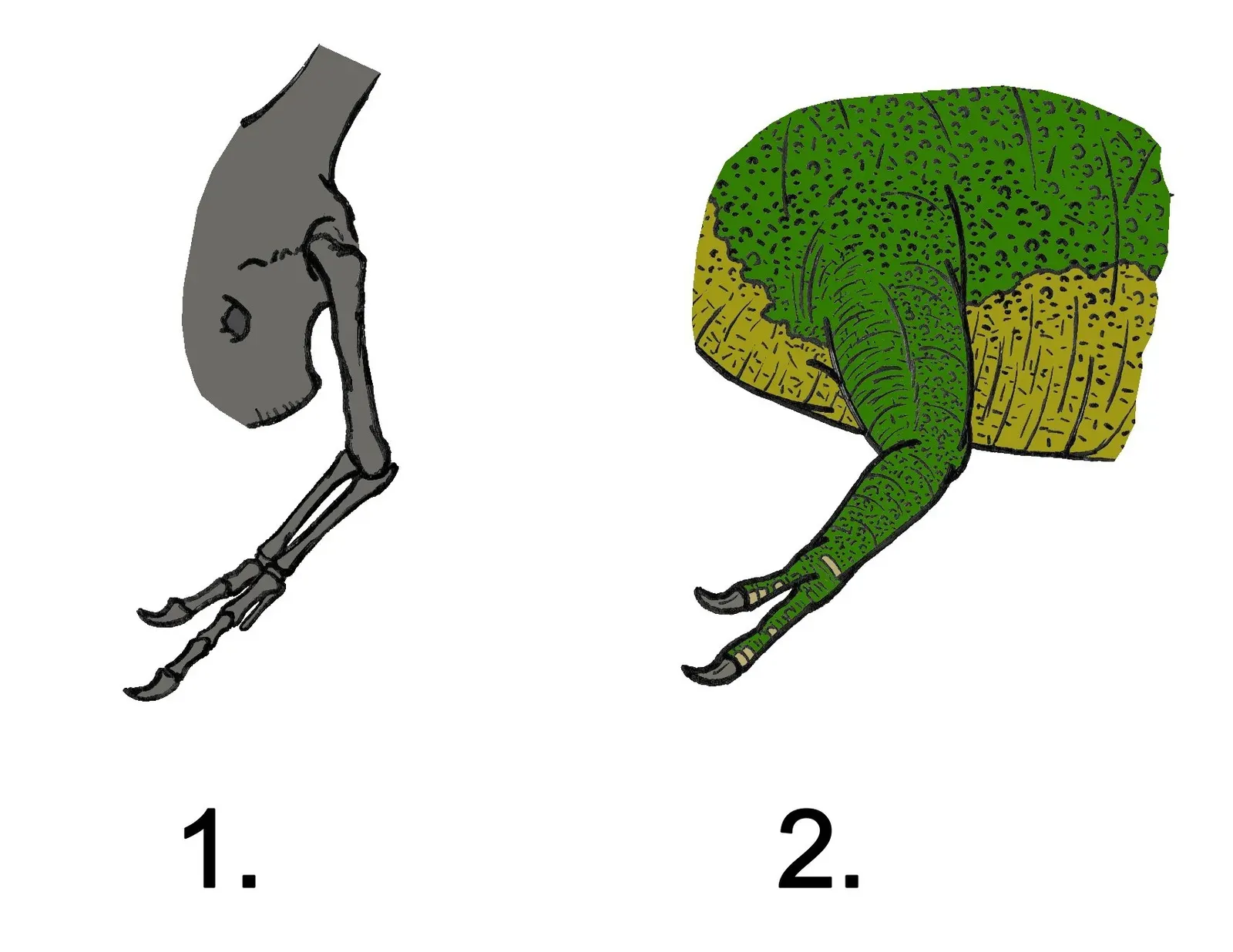
Everyone jokes about T-Rex’s tiny arms. Paleontologists who’ve actually studied them stopped laughing years ago.
Despite their small size, tyrannosaur arms were far from decorative. Studies of T. rex arm fossils show they were incredibly muscular, with each arm capable of lifting up to 200 kg (440 lbs). Researchers studying the famous specimen “Sue” pushed that estimate even higher, suggesting each arm may have handled around 750 pounds.
So what were they for? The leading theories point to holding onto struggling prey during a kill, or gripping a mate during close encounters – and the sharp claws certainly suggest something needed grabbing. Here’s the honest part experts still argue over: nobody agrees on the primary function, and “we don’t fully know” is a more scientific answer than any confident meme claim.
#6 – The Feather-or-Scale Debate Isn’t Actually Settled the Way You Think
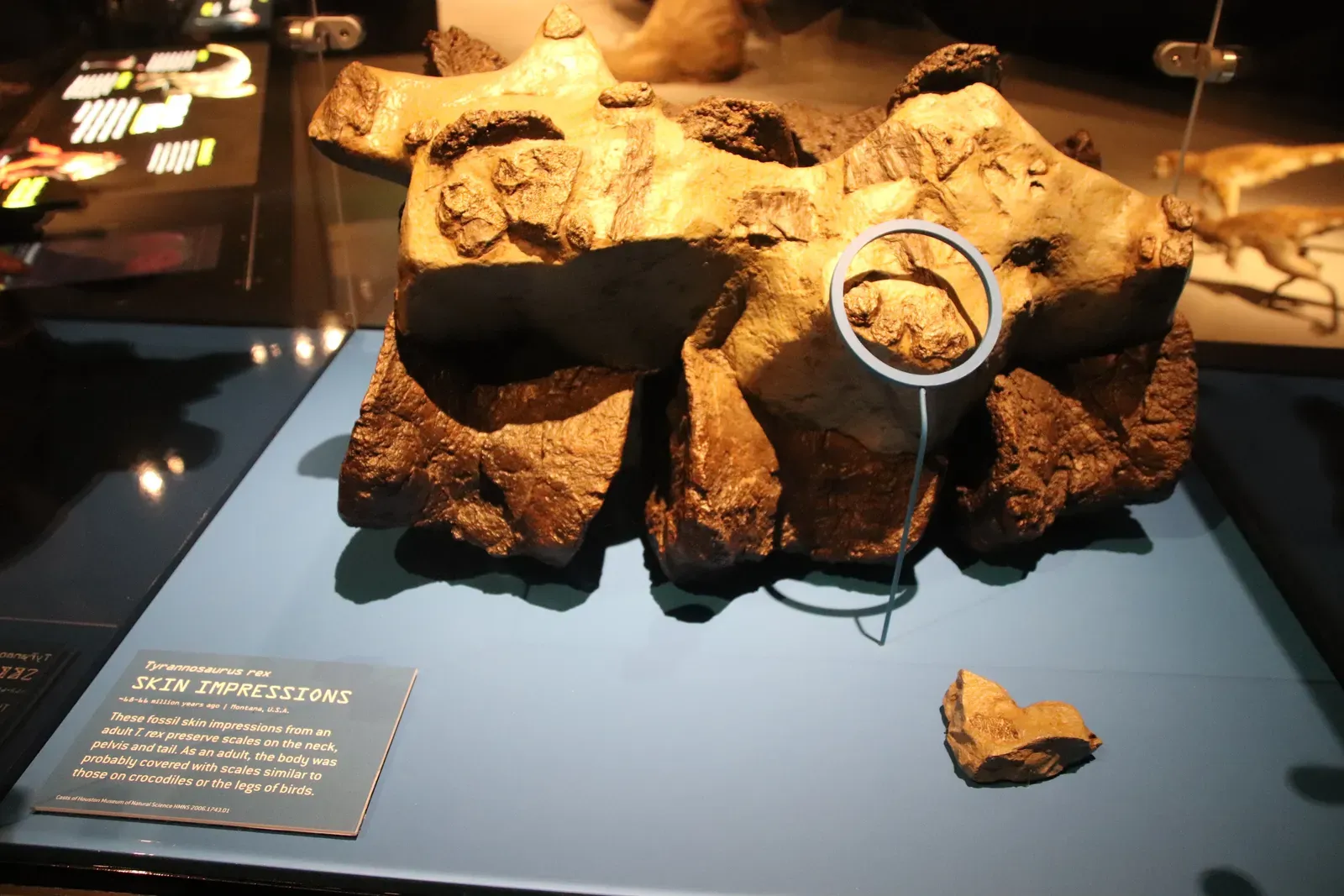
If you’ve seen T-Rex redrawn with fuzzy feathers in the last decade, you were shown outdated science – mostly.
Scientists examined the world’s only known fossils of T. rex skin, taken from the neck, pelvis, and tail of a specimen nicknamed Wyrex, and found no sign of feathers – just smooth, scaly skin. Skin impressions from other large tyrannosaurs of the same era, like Albertosaurus and Gorgosaurus, gave the exact same scaly answer.
Here’s the twist that keeps the argument alive: the largest known fully feathered dinosaur was Yutyrannus, a nine-meter tyrannosaur relative from China that lived somewhere cold enough for insulation to matter. So an ancestor was fluffy – but the massive, mature T-Rex we picture in our heads almost certainly wasn’t. Most documentaries still won’t admit that on screen.
At a Glance
- Wyrex skin samples (neck, pelvis, tail): scaly, no feather traces found
- Albertosaurus and Gorgosaurus skin impressions: same scaly result
- Yutyrannus: fully feathered, but a smaller, older relative from a colder region
- Bottom line: adult T. rex was almost certainly scaled, not fluffy
#5 – It Couldn’t Have Outrun a Jeep, or Even a Human Sprinter
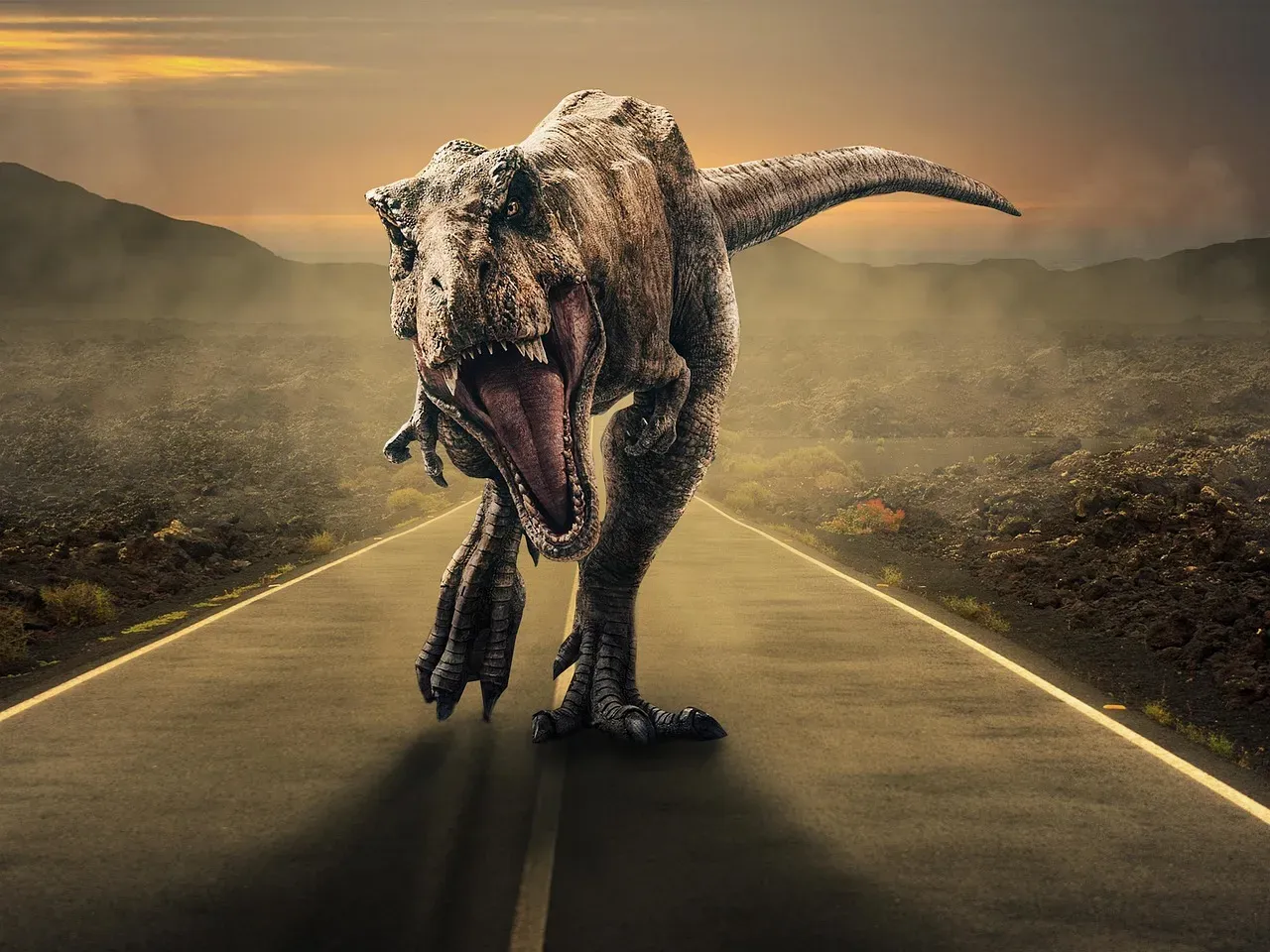
The Jurassic Park chase scene is, scientifically speaking, a fantasy.
At around 7 tons, T-Rex’s own skeleton worked against it – running at movie speeds would have put enough pressure on its bones to risk shattering them. Most estimates put its practical top speed closer to 10 kmph, with more generous studies allowing for something in the 10-25 mph range – still roughly what a human sprinter can manage, not a car-chasing monster.
Here’s the part that trips people up: slow doesn’t mean harmless. A predator that size didn’t need speed. It needed patience, ambush timing, and a bite that ended the debate the instant it landed.
#4 – It Had Better Eyesight Than Most Birds of Prey Alive Today
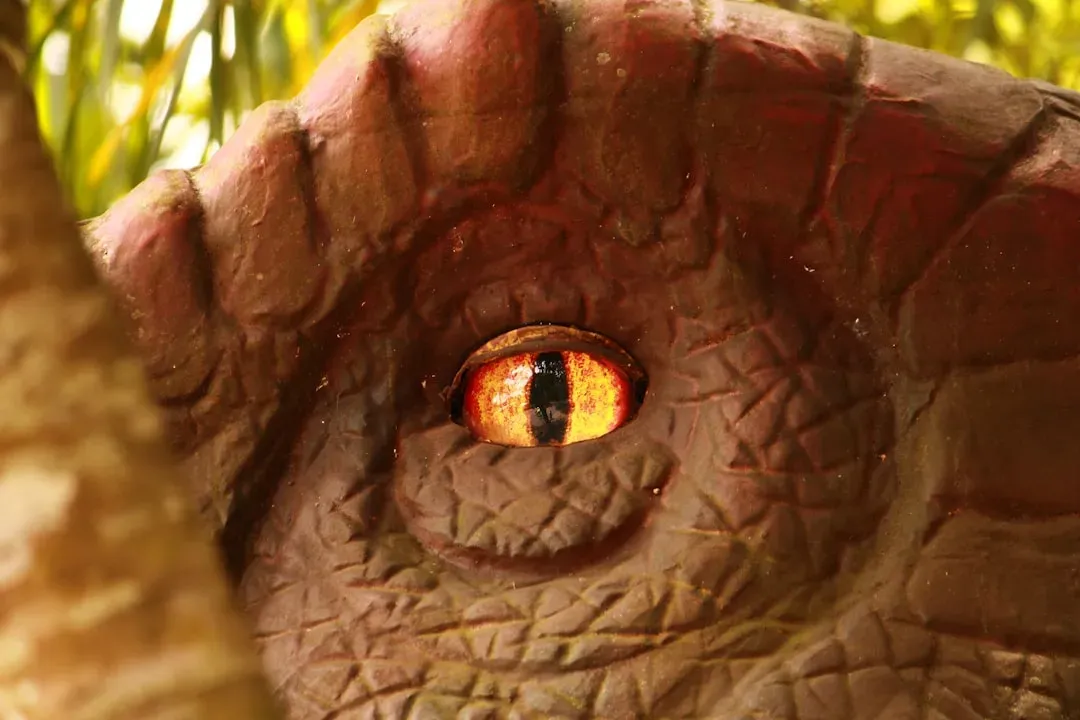
Here’s the fact that ruins every “don’t move, it can’t see you” joke forever.
By comparing brain casts of T. rex to its closest living relatives – birds and crocodilians – scientists can tell it had excellent vision, hearing, and smell. This isn’t guesswork; it comes from CT-scanning actual fossilized braincases and mapping which regions were enlarged. Research shows it had binocular vision, meaning depth perception sharper than most modern birds of prey.
So forget the old idea that standing still made you invisible. Combine that eyesight with a nose built for tracking scent trails across miles of floodplain, and you get an animal that was less “lumbering brute” and more apex sensory machine. Paleontologists studying skull anatomy consistently push back on the dumb-monster stereotype.
#3 – It Grew Faster Than Almost Any Land Animal in History
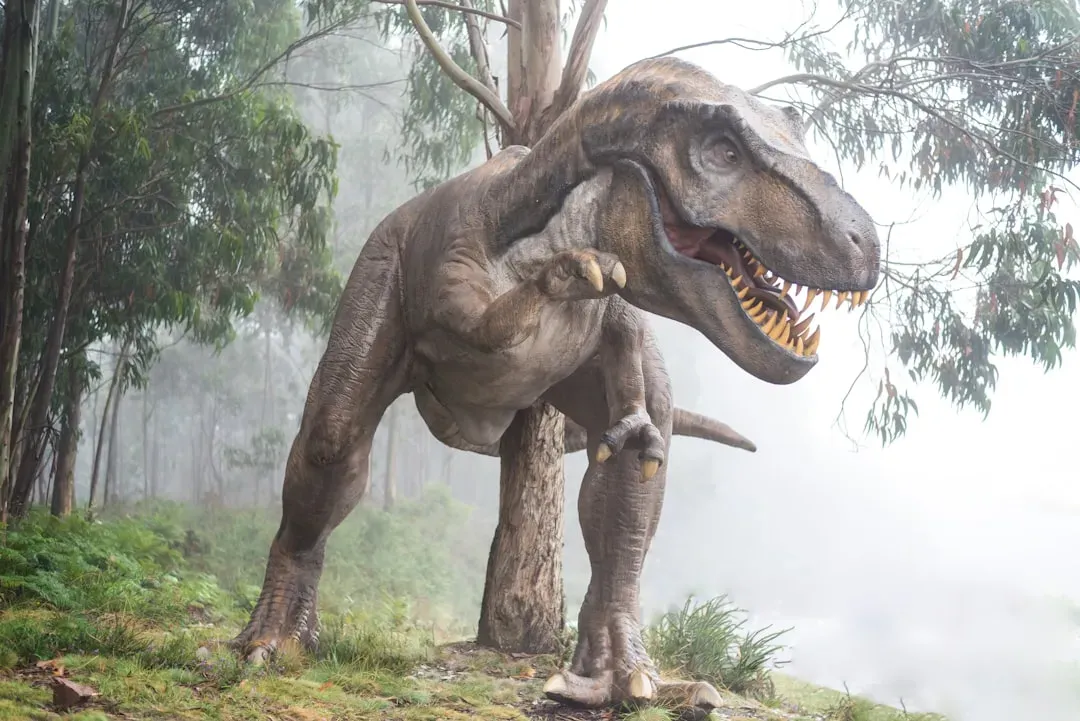
T-Rex didn’t creep up to its terrifying size slowly. It exploded into it during a teenage growth spurt.
Paleontologists studying growth rings in T. rex bones – similar to tree rings – estimate the animal could live up to 28-30 years, and that its fast growth meant it reached full size in about 20. Some studies suggest it packed on hundreds of pounds annually during peak growth years, a rate closer to a whale calf than any modern reptile.
That growth curve explains a debate paleontologists still argue about constantly: whether smaller “teenage” tyrannosaur skeletons are actual juveniles or a separate, smaller species. In one case, scientists counted growth rings in bones long assumed to belong to a teenage T. rex and found the animal was fully grown – meaning it wasn’t a juvenile at all, but likely a smaller, distinct dinosaur called Nanotyrannus. That single reclassification rewrote textbooks overnight.
Worth Knowing
- Estimated lifespan: 28 to 30 years
- Full adult size reached by around age 20
- Peak growth: hundreds of pounds added per year
- Nanotyrannus reclassification: some “teen” skeletons turned out to be a separate species entirely
#2 – It Sometimes Ate Its Own Kind
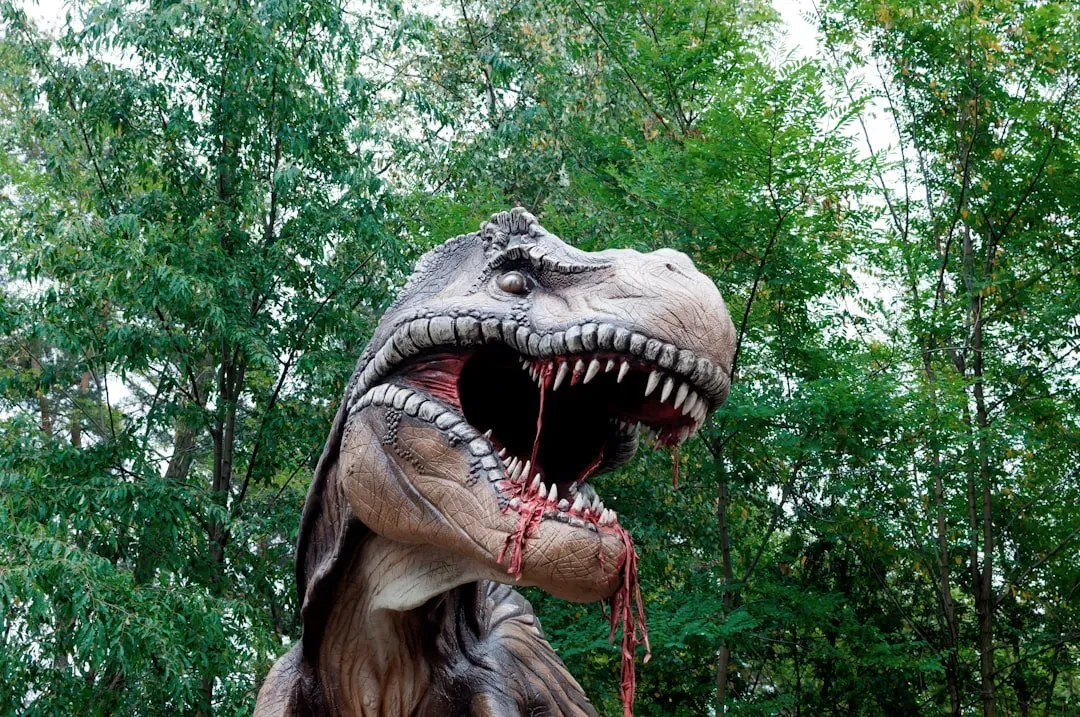
This is the fact that makes most casual dinosaur fans genuinely uncomfortable, and paleontologists have the tooth marks to prove it.
Bone evidence shows T. rex wasn’t only a hunter and scavenger – it was occasionally a cannibal. Researcher Nicholas Longrich found predator-sized tooth marks on T. rex bones that could only have come from another T. rex, since nothing else that large was sharing its territory. He documented four bones total: three from feet, one from an arm.
Here’s the darkly funny detail. The location of the bite marks suggests they came after death, and one toe bone showed multiple bite marks from a smaller individual – meaning the carcass had already been picked nearly clean before anyone bothered with the toes. In other words, T-Rex was scraping leftovers off its own dead relatives like Thanksgiving turkey on day five. That’s not the noble apex predator of documentaries. That’s an opportunist.
#1 – 2.5 Billion of Them Existed, and We’ve Found Almost None
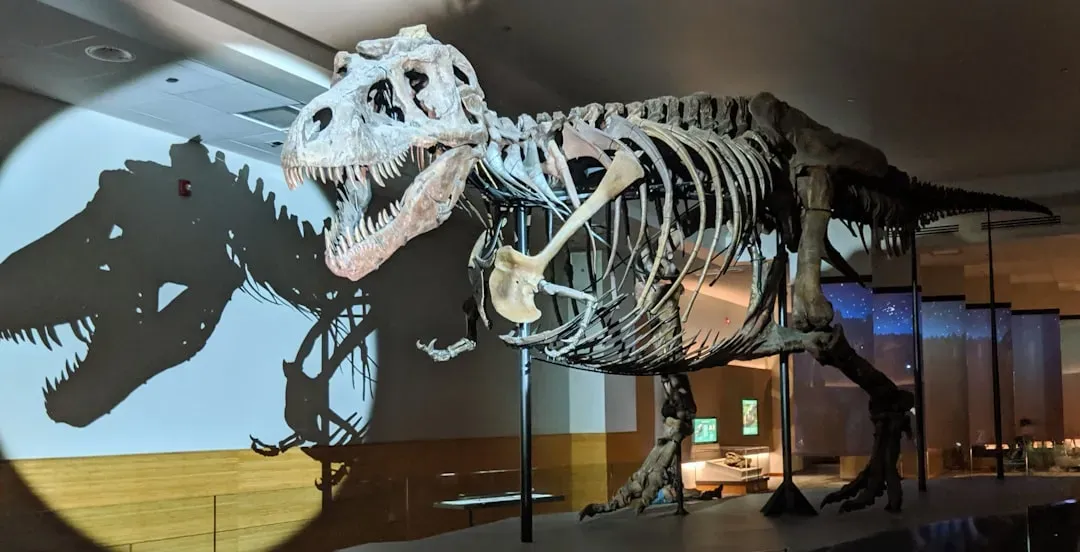
This is the number that stops paleontologists mid-sentence, even ones who’ve spent their whole career studying this animal.
A study led by Charles Marshall, director of the University of California Museum of Paleontology, estimated that roughly 2.5 billion Tyrannosaurus rexes lived and died across the species’ 2.5-million-year existence, with about 20,000 adults alive at any given moment. Marshall himself has said the scale of that number didn’t really sink in until the math was run.
Now here’s the number that puts every museum skeleton in perspective. Fewer than 100 T. rex individuals have ever been unearthed, and only about 32 relatively well-preserved, post-juvenile specimens exist in public museums today – roughly one out of every 80 million adults that ever lived. Every T-Rex skeleton behind glass isn’t just a fossil. It’s a one-in-80-million lottery ticket that happened to survive 66 million years of erosion, floods, and geological chaos just to end up under museum lighting.
Fast Facts
- Estimated total T. rex population: 2.5 billion over 2.5 million years
- Estimated adults alive at any one time: 20,000
- Fossil skeletons found to date: fewer than 100
- Well-preserved museum specimens: about 32
- Odds any one T. rex became a known fossil: roughly 1 in 80 million
The Bottom Line
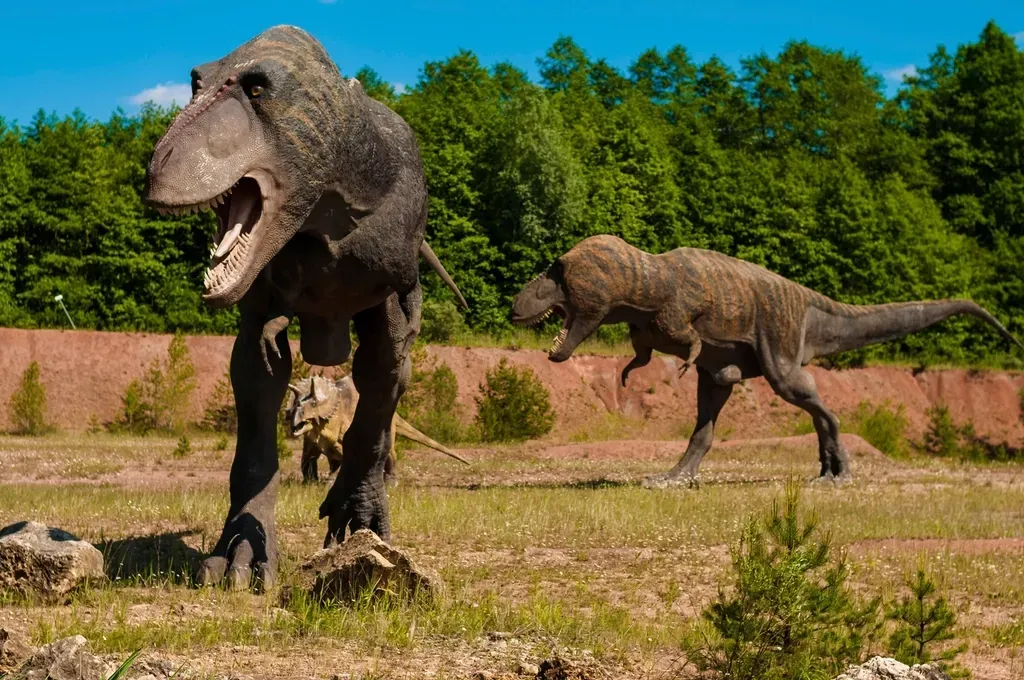
The real T-Rex was never the mindless movie monster. It was a scaly, slow-walking, cannibalistic bone-crusher with binocular vision and a growth spurt that would put any teenager to shame.
The most shocking part isn’t any single fact – it’s how recently paleontologists learned most of it. The scaly-skin evidence, the coprolite bone-crushing proof, and the 2.5-billion-population estimate are all discoveries from the last two decades, not dusty textbook knowledge.
Frankly, the constant “feathered T-Rex” reboots in pop culture haven’t caught up to what the fossils actually show, and that gap between science and spectacle is long overdue for a correction. Which fact surprised you the most? Drop it in the comments.