Humans love a good story, especially one that starts with “everything we thought we knew was wrong.” Archaeology, more than almost any other field, has a habit of pulling the rug out from under us just when we feel comfortable. A bone in a cave, a footprint in ancient mud, a skull in the desert – and suddenly, the entire textbook needs a rewrite.
What you’re about to discover isn’t a collection of dusty footnotes from a museum pamphlet. These are discoveries that genuinely rattled scientists, sparked fierce debates, and in some cases, completely rewrote the story of who we are and how we got here. Get ready to be surprised by what the dirt has been hiding.
Göbekli Tepe: A Temple Built Before Civilization Was Supposed to Exist
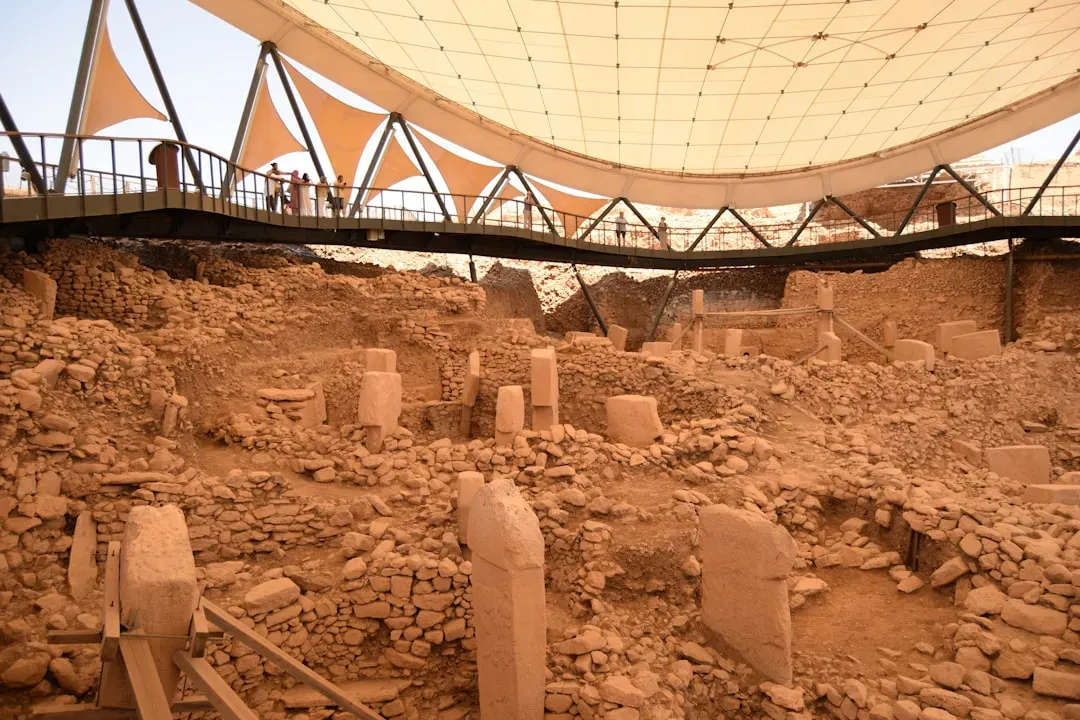
Here’s the thing – for decades, archaeologists believed the recipe for civilization went like this: farming first, then settled communities, and finally religion and grand monuments. Göbekli Tepe in southeastern Turkey blew that formula to pieces. Massive carved stones about 11,000 years old were crafted and arranged by prehistoric people who had not yet developed metal tools or even pottery. Just let that sink in for a moment.
Containing multiple rings of huge stone pillars carved with scenes of animals and dating to the 10th millennium BC, Göbekli Tepe is considered the world’s oldest place of worship. Yet evidence also suggests the people who built it were semi-nomadic hunters, likely unaware of agriculture, which followed in the area only five centuries later. That’s like discovering a skyscraper was built before anyone invented the wheel.
Göbekli Tepe was built before we currently believe humans practiced organized agriculture. This means that settlement, religious practices, and other organized human activities – in a word, civilization – may have occurred prior to the development of agriculture. The implication is staggering: perhaps religion and spiritual gathering were the engine that drove human civilization forward, not the other way around.
Geomagnetic surveys have charted where at least 16 other megalith rings remain buried across 22 acres, yet the one-acre excavation covers less than 5 percent of the site. Honestly, one can only imagine what the remaining 95 percent is hiding beneath that Turkish hillside.
The Denisovans: A Whole Human Species Discovered From a Single Pinkie Bone
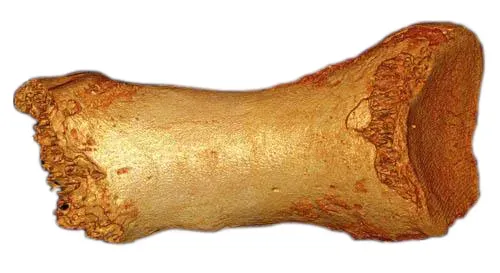
Imagine identifying an entirely unknown branch of humanity from a fragment of a child’s finger. That is exactly what happened. Human evolution’s biggest mystery, which emerged 15 years ago from a 60,000-year-old pinkie finger bone, finally started to unravel in 2025. Analysis of DNA extracted from the fossil electrified the scientific community in 2010, when it revealed a previously unknown human population that had encountered and interbred with our own species, Homo sapiens. This enigmatic group became known as the Denisovans after Denisova Cave in Siberia’s Altai Mountains, where the pinkie finger was found.
Denisova Cave is the only site in the world known to have been occupied by both archaic human groups at various times and has gained much recent press attention as the place where archaeologists excavated the extraordinary bone fragment known as ‘Denny’ – the first recorded human hybrid, born of a Denisovan mother and a Neanderthal father. A literal child of two different human species. The plot thickens further when you realize this is not ancient fiction – it’s your actual family history.
The Denisovan population may have been more numerous and more diverse than the Neanderthal population, and had an exceptionally wide expansion. Genetic studies have established the presence in the genome of modern inhabitants of islands in Southeast Asia, Australia and Oceania of between roughly three to six percent of the genetic material of Denisovans. Parts of that mysterious ancient population still live on, right now, in millions of modern people.
Scientists working to solve human evolution’s biggest mystery made a big breakthrough in 2025. Analysis revealed that not only had one individual’s ancestors apparently interbred with early Neanderthals, but that individual also had ancestry from an unknown “super archaic” group for which there is currently no ancient DNA match. So there may be yet another human species out there, still waiting to be found.
Ethiopia’s Fossil Bombshell: Two Human Species Living Side by Side
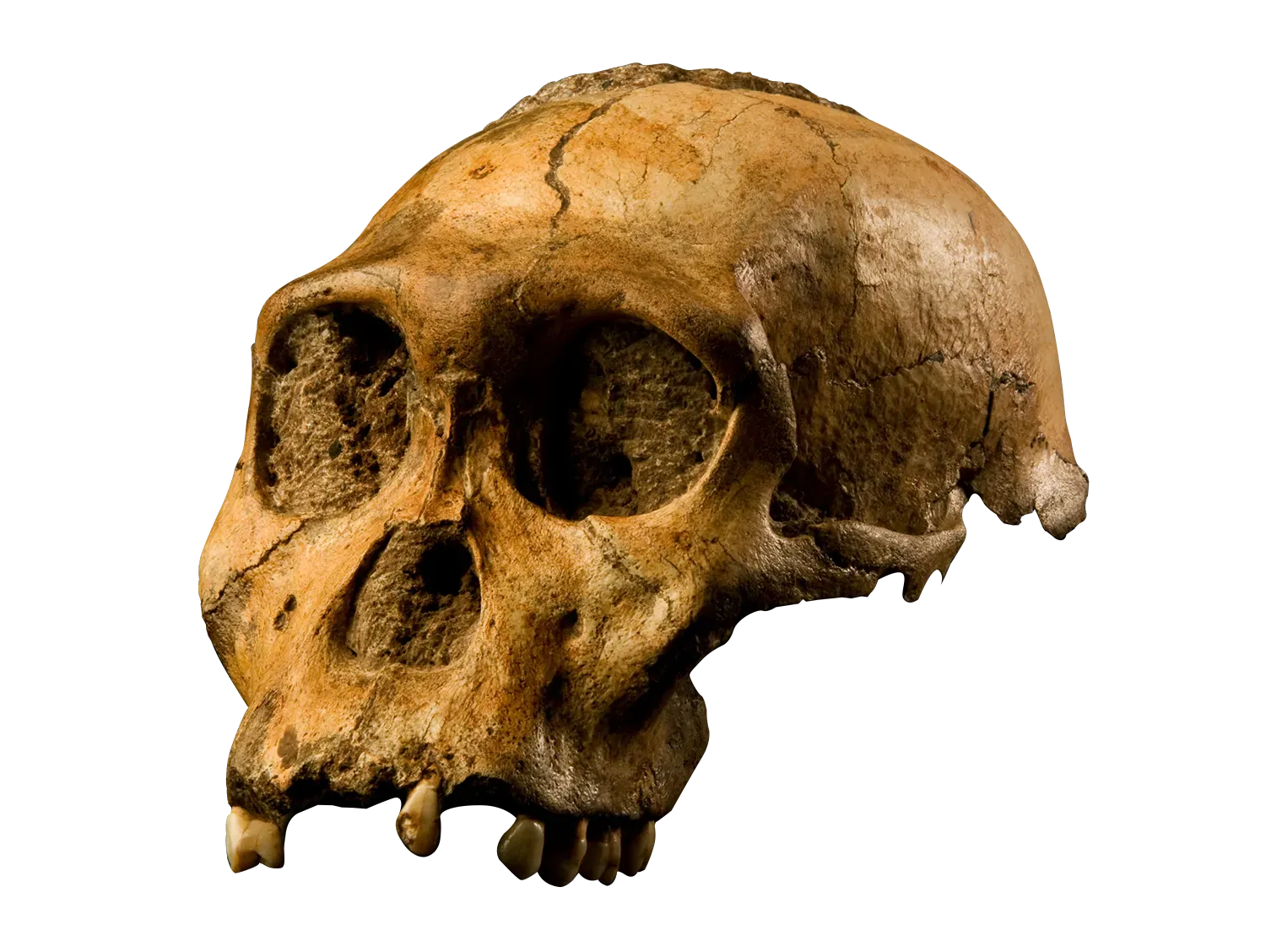
You probably learned in school that human evolution was a single, tidy progression – one species giving rise to the next in a neat line. Fossils unearthed in Ethiopia are reshaping our view of human evolution. Instead of a straight march from ape-like ancestors to modern humans, researchers now see a tangled, branching tree with multiple species coexisting. Think of it less like a ladder and more like a sprawling, overgrown bush.
A team of international scientists discovered new fossils at a field site in Africa indicating that Australopithecus and the oldest specimens of Homo coexisted at the same place in Africa at the same time – between 2.6 million and 2.8 million years ago. The paleoanthropologists also discovered a new species of Australopithecus that has never been found anywhere before. Two entirely different hominin lines, walking the same ancient African landscape at the same time. That’s not a footnote – that’s a revolution.
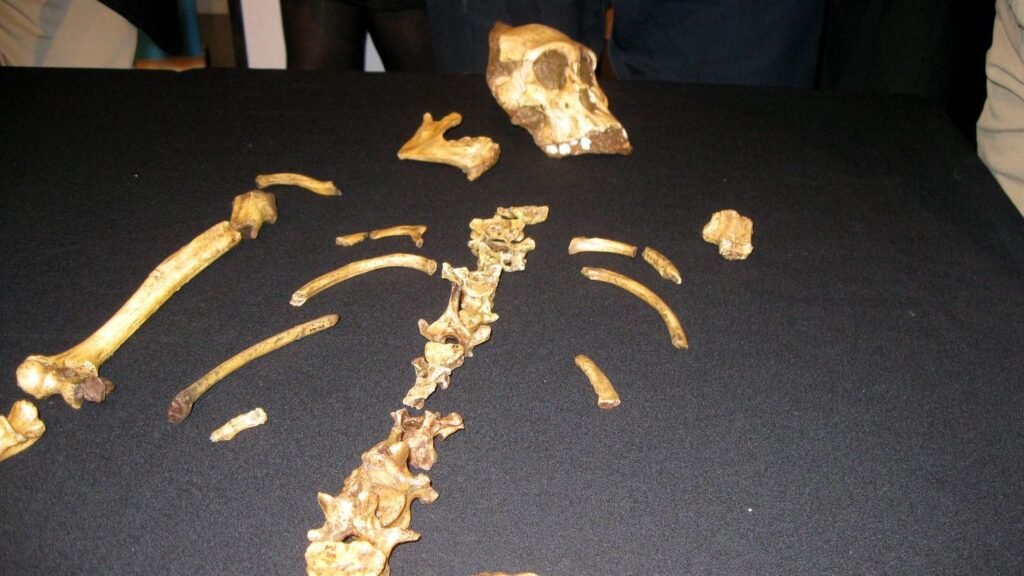
Revolutionary fossil evidence from Ethiopia is also challenging decades of scientific consensus about Lucy being a direct ancestor of modern humans. New discoveries link the mysterious “Burtele foot” – a 3.4-million-year-old partial foot with an opposable big toe designed for grasping tree branches – to a distinct hominin species that lived alongside Lucy’s kind. Chemical analysis of tooth enamel indicates that this species subsisted primarily on forest foods, contrasting sharply with Lucy’s species. So even Lucy’s story is being renegotiated.
Homo floresiensis: The “Hobbit” That Rewrote Island Evolution
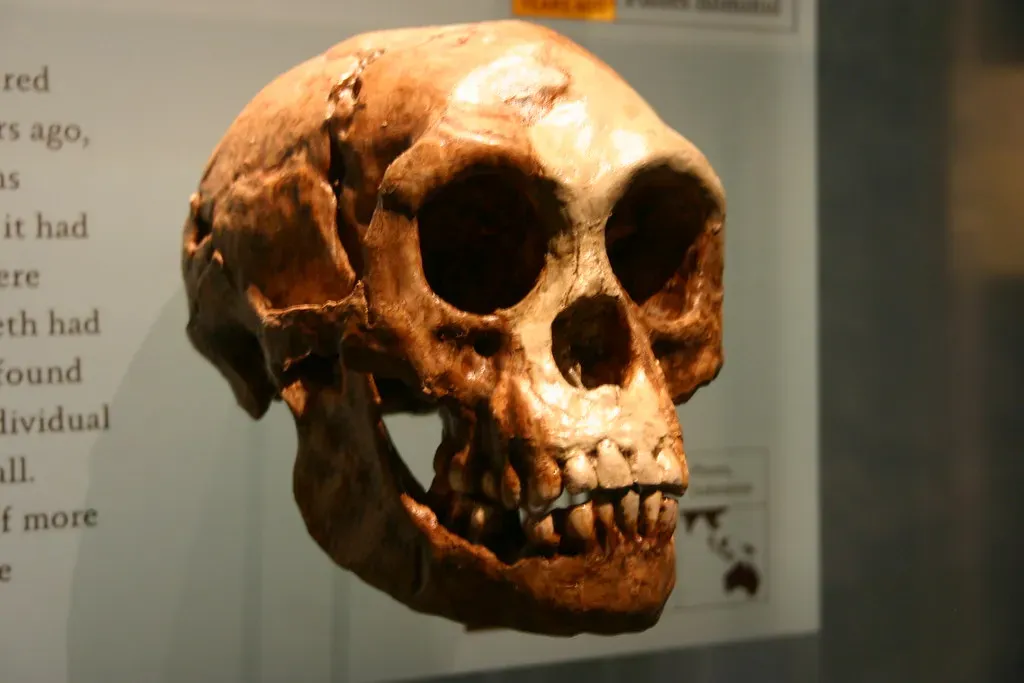
I know it sounds crazy, but there was once a species of human that stood barely over three feet tall, hunted pygmy elephants, and fended off giant Komodo dragons – all with a brain roughly the size of a grapefruit. Homo floresiensis individuals stood approximately three feet six inches tall, had tiny brains, large teeth for their small size, shrugged-forward shoulders, no chins, and receding foreheads. Despite their small body and brain size, they made and used stone tools, hunted small elephants and large rodents, coped with predators such as giant Komodo dragons, and may have used fire.
Stone tools found on the island of Flores show that early humans arrived there at least one million years ago, but it’s not known how early humans got there, as the nearest island is 9 km away across treacherous seas. That crossing is genuinely puzzling. No land bridges, no obvious rafts – just an ancient, tiny-brained hominid somehow making it across open ocean. The diminutive stature and small brain of Homo floresiensis may have resulted from island dwarfism – an evolutionary process that results from long-term isolation on a small island with limited food resources.
Interestingly, local legends exist in Flores of the Ebu Gogo – small, hairy cave dwellers similar in size to Homo floresiensis. It is suggested that perhaps the hobbits survived longer in other parts of Flores to become the source of these stories. Ancient folklore carrying the memory of a real extinct species? That possibility alone is enough to send a shiver down the spine.
The Sulawesi Cave Paintings: The World’s Oldest Art Story
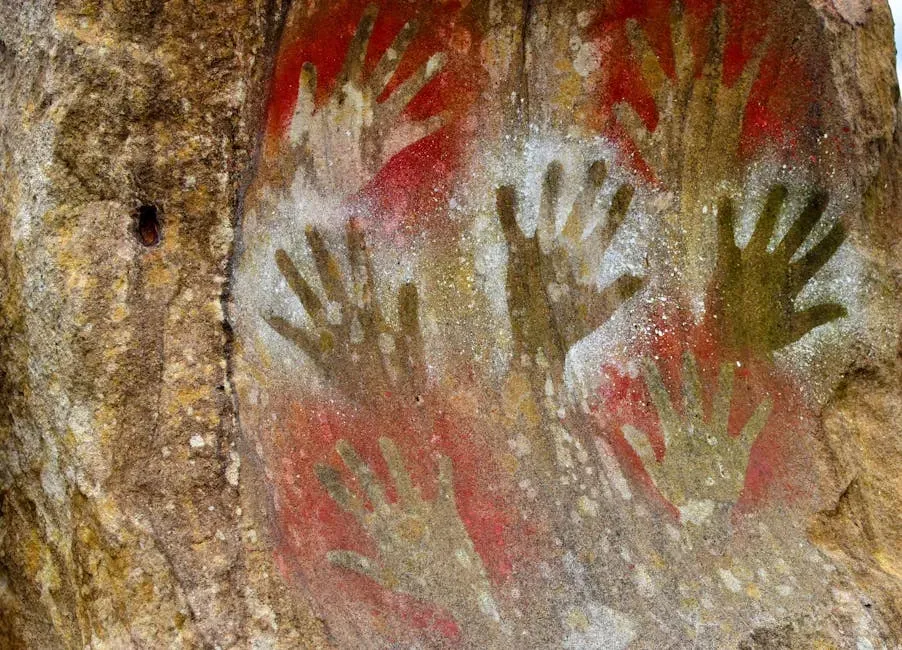
For a long time, Europe held the bragging rights for the world’s oldest cave art. France, Spain – that was where creativity supposedly began. Then Southeast Asia intervened in spectacular fashion. On July 3, 2024, the journal Nature published research findings indicating that cave paintings depicting anthropomorphic figures interacting with a pig in Leang Karampuang are approximately 51,200 years old. That single dating result erased Europe’s claim to the title of birthplace of artistic storytelling.
In January 2026, an even older hand stencil was discovered on Muna Island, dated to be at least 67,800 years old, making it the oldest known cave painting in the world. The pace at which these records are being broken is almost dizzying. This finding has been recognized as “the oldest known depiction of storytelling and the earliest instance of figurative art in human history.” When you think about it, some ancient human stood in a dark cave in Indonesia over 67,000 years ago, pressed their hand to the wall, and told the world: I was here.
Researchers believe the art style might serve to emphasize the close connection between humans and animals. These clues about the culture of the people who created this art are especially interesting because they might shed light on the lives of the first humans to migrate to Australia. The paintings aren’t just beautiful – they’re a compass pointing toward one of prehistory’s greatest migrations.
The Antikythera Mechanism: An Ancient Computer Two Thousand Years Ahead of Its Time
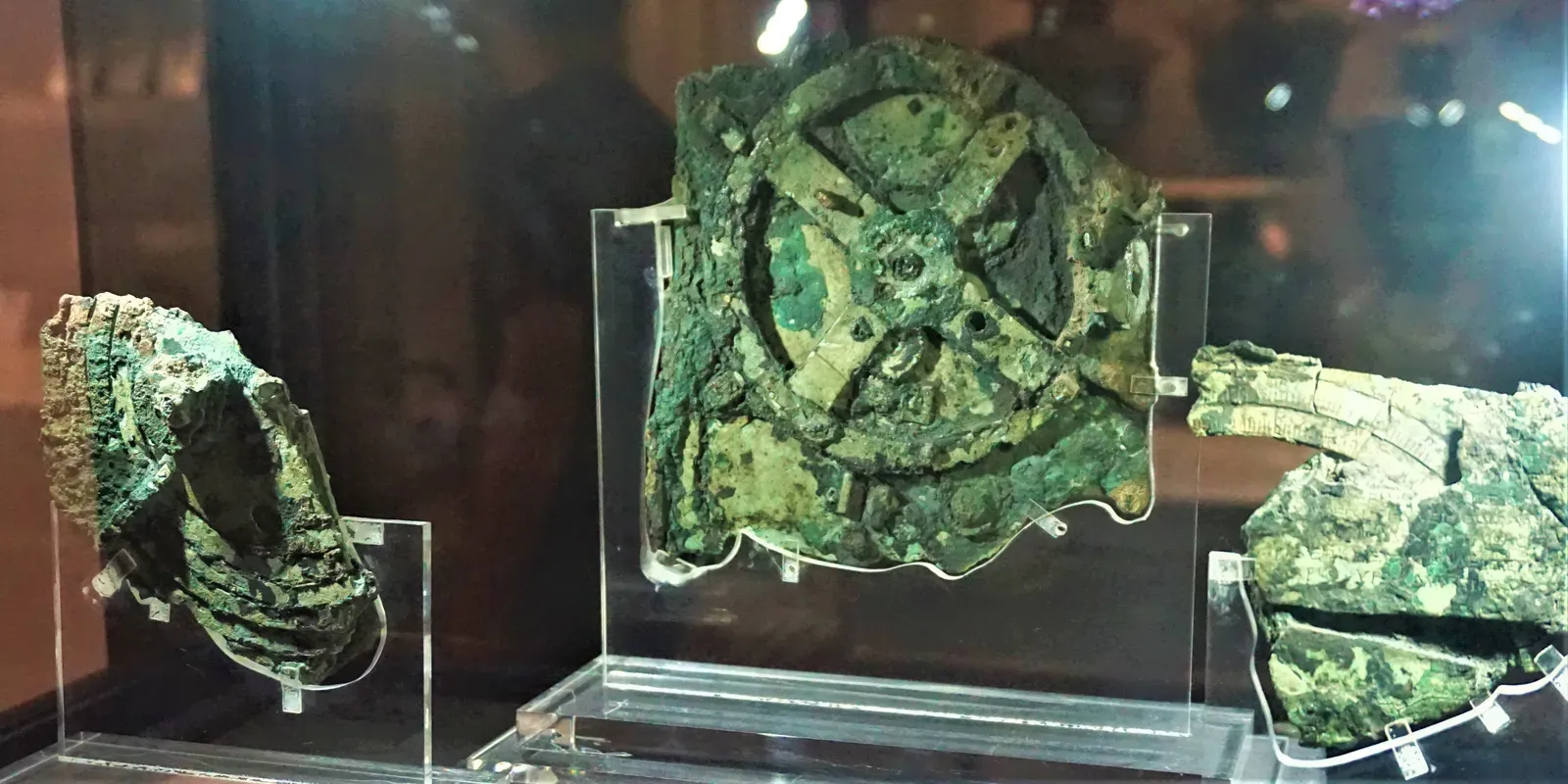
Picture someone discovering a fully functioning smartphone inside a Roman-era shipwreck. That is more or less the kind of bewilderment scientists experienced with the Antikythera Mechanism. A Greek ship sank off the coast of the island of Antikythera about 2,000 years ago and sat on the sea bottom until it was discovered in 1900. As archaeologists sorted out the artifacts retrieved from the wreck, they came across an object they didn’t know what to make of – it had multiple layers of brass gears that precisely fit together and were built into a wooden box.
A half-century later, a science historian figured out that this weird archaeological discovery could predict the positions of the planets and stars in the sky by date. A mechanical, gear-driven astronomical calculator, built more than 2,000 years ago, with a level of precision that wouldn’t be matched by European clockwork for roughly another 1,500 years. Let’s be real – that is not what anyone expects to find alongside ancient amphoras of olive oil.
The mechanism reshapes our understanding of ancient Greek technological sophistication in ways that still aren’t fully settled. Researchers continue to discover new functions encoded in its gears, including the ability to track the four-year cycle of the Olympic Games. The more you look at it, the more you wonder: what other technologies existed in the ancient world that simply didn’t survive the centuries?
The Oldest Known Homo Sapiens in Southeast Asia: Rewriting the Migration Map
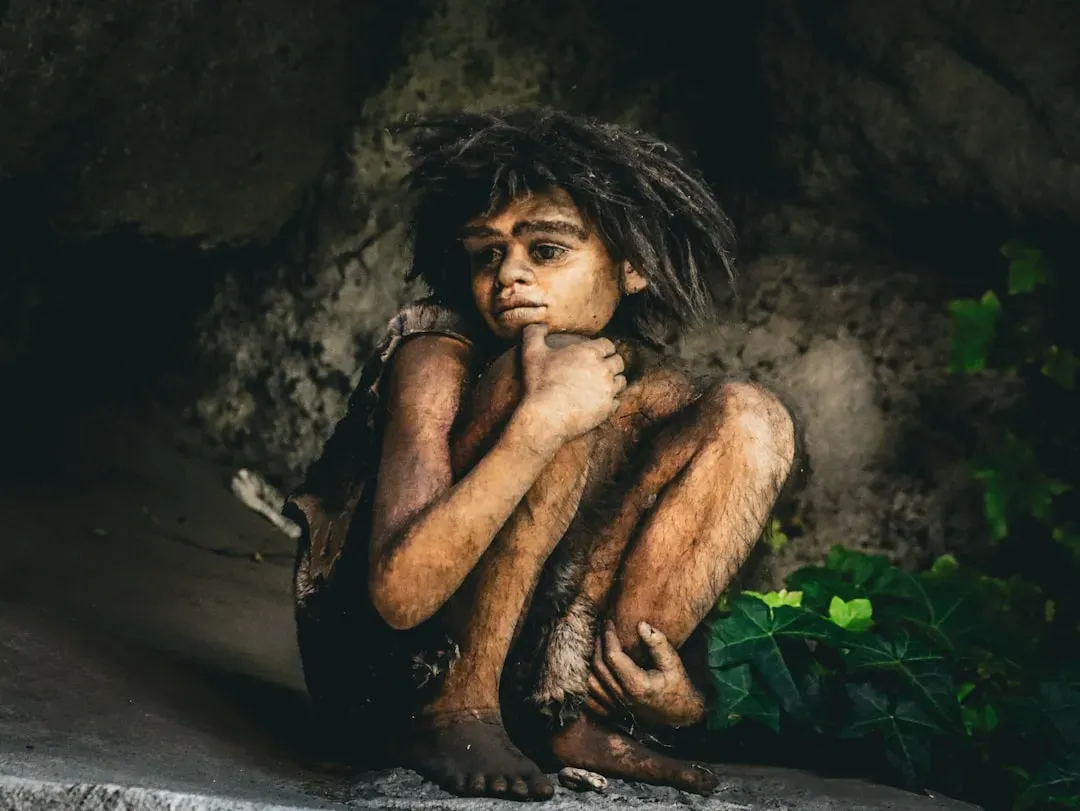
The conventional story of early human migration suggested our ancestors moved out of Africa, hugged the coastlines, and took relatively predictable routes as they spread across the globe. A cave in the mountainous highlands of Laos has complicated that story considerably. Fossils from a cave in Laos, which date to between 68,000 and 86,000 years ago, challenge several ideas about early human migration.
The bones are challenging ideas of early human migration in other ways, too. While some research had suggested that early humans on the move would have kept to the coasts, the cave is located in a highly elevated, forested area far from the shore. So these early people weren’t just following the beach – they were pushing deep inland into rugged terrain, which suggests a level of adaptability and determination far beyond what we assumed. As researchers have noted, fossils going back closer to 80,000 years tell us that there were multiple migrations out of Africa.
The implications ripple outward. If humans were this far inland in Southeast Asia nearly 80,000 years ago, then the timeline for human movement across the entire Asia-Pacific region needs to be reconsidered from scratch. It’s hard to say for sure just how dramatically the full map will change, but the Laos cave has already moved the needle in a major way.
The Dragon Man Skull: A New Contender for Our Closest Ancient Relative
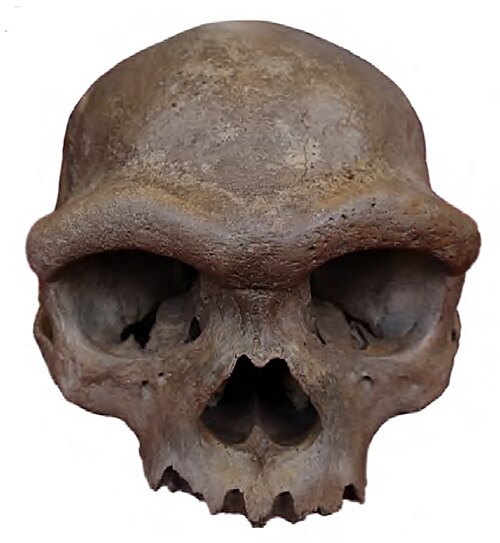
For years, Neanderthals held the title of our closest extinct relatives. Then a construction worker in China hid an ancient skull in a well for decades – and when scientists eventually got their hands on it, everything changed. A 146,000-year-old skull dubbed “Dragon Man” found at a construction site in the Harbin area of northeastern China might represent a new human species.
The new dating information also “coincides with the emergence of early modern humans.” Though the skull is not thought to be a direct ancestor of modern humans, it does “point to the presence of multiple human species living at roughly the same time.” That idea – of several distinct human species all alive simultaneously – is something that would have seemed like science fiction just a few decades ago. Getting ancient DNA from the skull, which was estimated to be 146,000 years old, was key to understanding whether there was a link between Dragon Man and the Denisovans.
In a stunning 2025 breakthrough, researchers managed to extract Denisovan genetic material from the Dragon Man’s dental calculus, the hardened residue left on his ancient teeth. The “mystery population” of Homo colloquially referred to as “Denisovans” was, in June 2025, confirmed to be Homo longi – making Dragon Man, at long last, a face for a species that had only ever been a ghost in our DNA.
Ethiopia’s 2025 Fossil Bombshell: When Lucy Lost Her Crown as the Sole Ancestor
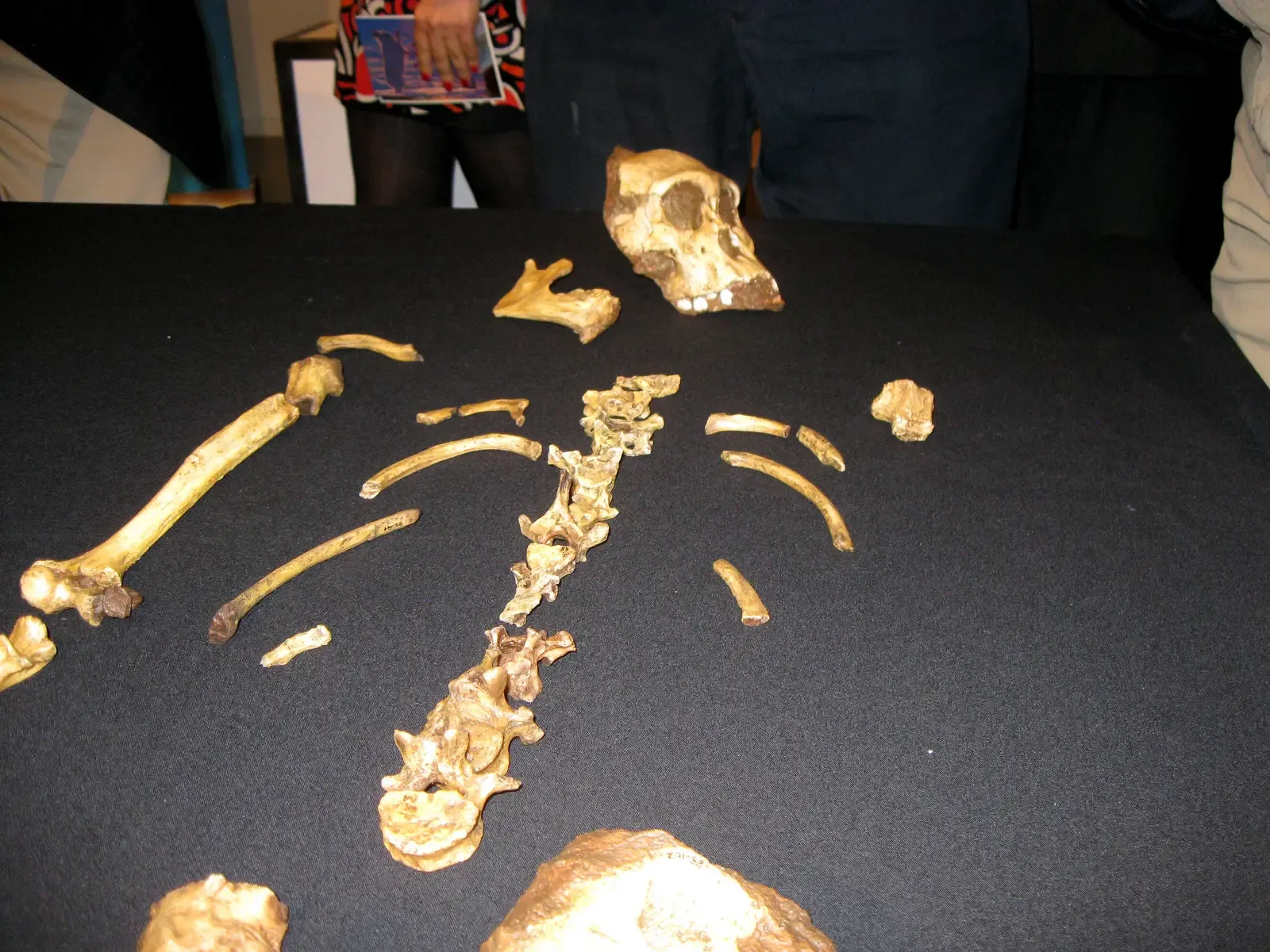
Lucy has been the rock star of human paleontology since her discovery in 1974. She was held up as the definitive missing link, the grandmother of us all. Honestly, she deserved the fame – but recent discoveries are beginning to suggest she was never quite the sole ancestor she was made out to be. New discoveries published in Nature link the “Burtele foot” – a 3.4-million-year-old partial foot with an opposable big toe – to Australopithecus deyiremeda, a distinct hominin species that lived alongside Lucy’s kind. Chemical analysis of tooth enamel indicates this species subsisted primarily on forest foods, contrasting sharply with Lucy’s species. The research suggests this species may be more closely related to the even older Australopithecus anamensis than to Lucy’s species, undermining the traditional view of Lucy as the single ancestral trunk.
Scientists discovered new fossils at the Ledi-Geraru site in Ethiopia indicating that Australopithecus and the oldest specimens of Homo coexisted between 2.6 and 2.8 million years ago. The scientists found 13 teeth and determined that, while some belong to the genus Homo, a set of upper and lower teeth belong to a new species of Australopithecus. This new species is distinct from the well-known Australopithecus afarensis – the famous “Lucy” – which last appears at roughly 2.95 million years ago. It’s less a family tree now, and more a tangled family reunion nobody fully planned for.
From revolutionary fossil discoveries spanning multiple continents to groundbreaking genetic studies revealing hidden chapters in our ancestry, these findings demonstrate that the story of humanity is far more complex than the simple linear progression scientists once envisioned. These discoveries paint a vivid picture of a “bushy tree” of evolution where multiple human species coexisted, interbred, and ultimately contributed to the rich genetic tapestry that defines us today. That’s not a small shift in thinking – that is a fundamental reinvention of the human story.
Conclusion: The Past Is Still Being Written
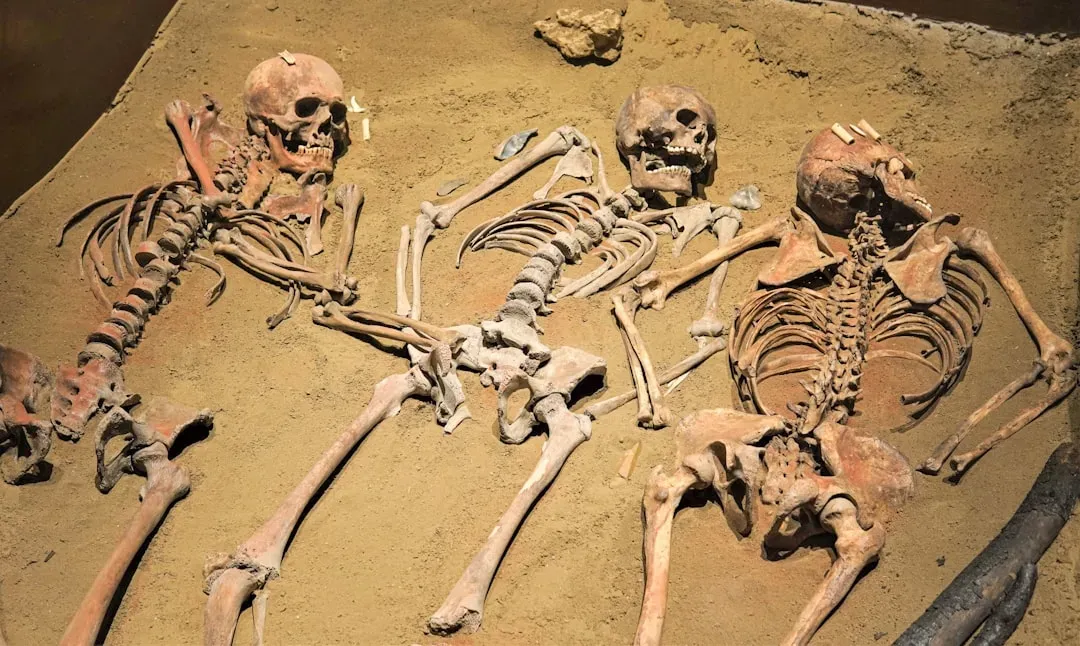
Every single one of these discoveries had the same effect on the scientific world: it made experts look at each other and say, “We need to rethink this.” That, really, is the most human thing of all – the endless, restless desire to dig deeper, look harder, and question what we thought we already understood.
We are living in what may be the most exciting era of archaeological and paleoanthropological discovery in history. Ancient DNA technology, ground-penetrating radar, uranium-thorium dating – the tools we now have at our disposal are pulling secrets from rocks and bones that would have been completely invisible to previous generations of researchers. The earth is generous with its clues if you know how to ask.
The deeper truth these nine discoveries share is this: the story of early humans was never the simple, linear march from primitive to sophisticated that we once imagined. It was messy, branching, surprising, and wonderfully creative. Species lived side by side. Cousins interbred. Artists painted caves tens of thousands of years before we thought art existed. Tiny humans navigated islands. Nomads built cathedrals before they built farms.
So next time someone tells you they have humanity figured out – remember the hobbit, the Dragon Man, and the hand stencil in a cave that’s older than almost everything we call “civilization.” What discovery do you think will shake the foundations next? Drop your thoughts in the comments.