Hunan Province, China – Paleontologists extracted over 50,000 fossils from a single limestone quarry in Huayuan County, exposing 91 species unknown to science from 512 million years ago. These specimens, collectively termed the Huayuan biota, captured a vibrant underwater world just after the Sinsk event wiped out nearly half of early marine life. The finds illuminated how deep-sea habitats fostered recovery amid the Cambrian period’s turbulence.
A Windfall from Compact Rock Faces
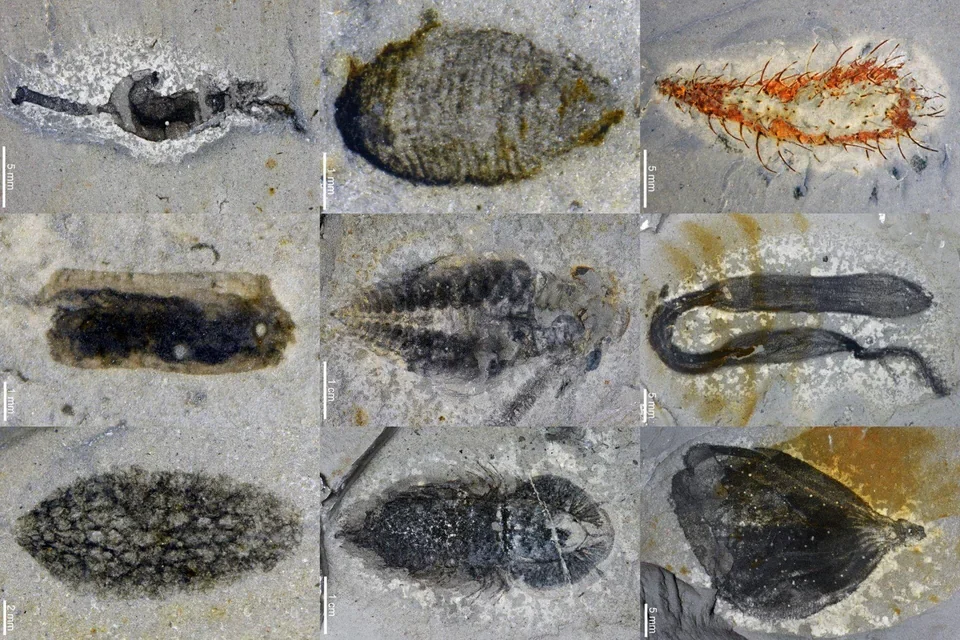
A Windfall from Compact Rock Faces (Image Credits: Reddit)
Researchers from the Nanjing Institute of Geology and Palaeontology began fieldwork in 2021 at a site measuring just 12 meters high, 30 meters long, and 8 meters wide. They collected mudstone slabs teeming with preserved organisms over the next three years. Analysis of 8,681 specimens yielded 153 species across 16 major animal groups.
Exceptional conditions turned the quarry into a Konservat-Lagerstätte, preserving delicate soft tissues like gills, digestive tracts, eyes, and even nerves. Han Zeng, the lead paleontologist, described the moment of realization: those animals were right there on the rock. This level of detail rivaled world-famous sites and filled critical gaps in Cambrian records.
Resilience in the Wake of the Sinsk Extinction
The Sinsk event struck around 513.5 million years ago, triggered by plummeting ocean oxygen levels from volcanic activity and climate shifts. It halted the Cambrian explosion’s surge of complex life, claiming 41 to 49 percent of species, mostly in shallow waters. Deep environments like the Huayuan site, at the continental shelf’s edge, buffered the worst impacts.
Zeng noted that the biota revealed a thriving setup with creatures spanning the water column to seafloor sediments. Various feeding strategies and mobility patterns suggested a balanced food web. Senior author Maoyan Zhu emphasized how these fossils provided the first clear view of deeper-water recovery. Such refuges likely spurred evolutionary rebounds.
Strange Inhabitants of a Lost Ocean
Arthropods dominated the assemblage, echoing modern crabs, shrimp, and insects. Apex predators called radiodonts wielded spiny appendages for snaring prey. Sponges, cnidarians akin to jellyfish, and worm relatives rounded out the lineup, alongside early vertebrate kin.
- Guanshancaris kunmingensis: An 80-centimeter arthropod, the largest recovered, patrolled as a top hunter.
- Helmetia and Surusicaris: Arthropods previously known only from distant sites.
- Allonnia: A spiny, cactus-like form resembling sponges.
- Fuxianhuiid: Marine arthropod with intact gut structures.
- Stalk-eyed radiodonts: Menacing hunters with preserved sensory organs.
These invertebrates displayed legs, antennae, tentacles, and pharynxes in stunning clarity. The diversity underscored rapid ecological restructuring post-crisis.
Global Ties in Cambrian Seas
The Huayuan collection mirrored Canada’s Burgess Shale biota from 508 million years ago, sharing taxa like Helmetia despite vast distances. Zeng attributed this to larval dispersal via ocean currents, hinting at early animal wanderlust. Unlike older Chinese sites such as Chengjiang, Huayuan postdated the extinction, offering fresh contrasts.
Experts like Joe Moysiuk hailed it as top-tier for preservation and variety. Ongoing sifting of remaining fossils promises more revelations, perhaps even early fish. The study appeared in Nature.
Key Takeaways
- Huayuan biota documents 91 new species from a post-extinction haven 512 million years old.
- Deep waters shielded life from the Sinsk event’s fury, enabling quick rebounds.
- Shared species with Burgess Shale reveal ancient ocean connectivity.
These fossils not only rewrite chapters of early animal history but also remind us how fragile recoveries can reshape biodiversity. What surprises might the remaining rocks hold? Share your thoughts in the comments.