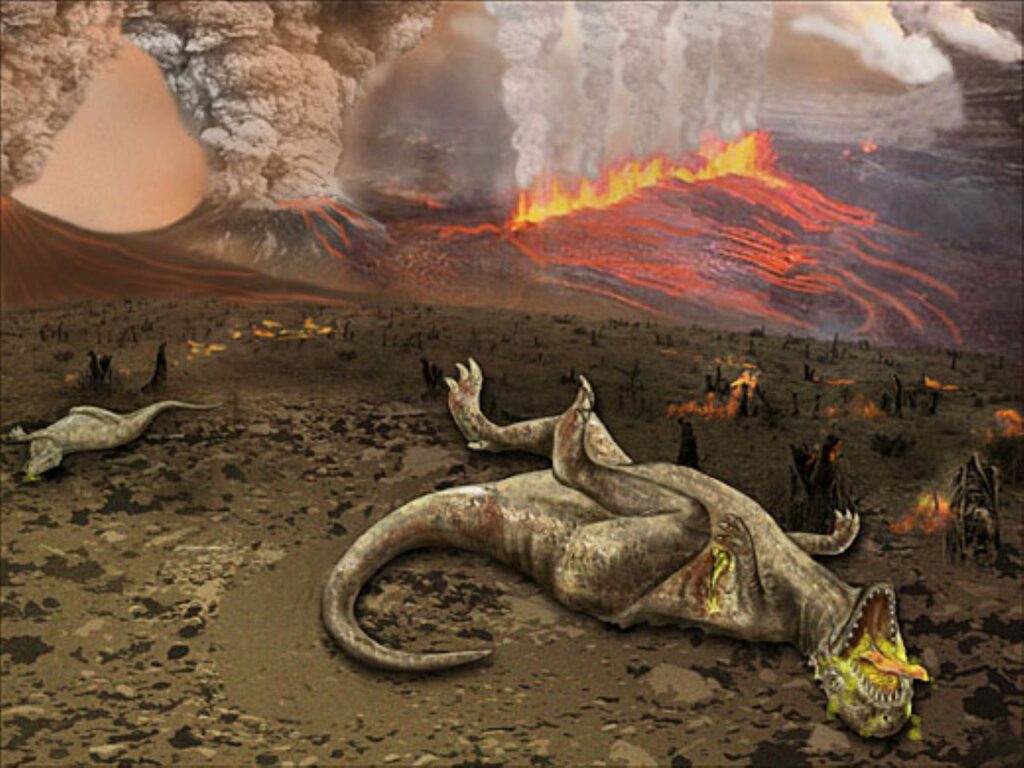
In the shadow of towering sauropods and massive predators like Allosaurus, a different story of dinosaur evolution was unfolding during the Jurassic period. While our collective imagination often fixates on the titans that dominated the Mesozoic landscape, a diverse array of small theropod dinosaurs scurried beneath the feet of these giants, occupying crucial ecological niches. These diminutive hunters and omnivores, some no larger than modern chickens, represent a fascinating chapter in dinosaur evolution. Their small size allowed them to exploit resources unavailable to their gigantic contemporaries, demonstrating the remarkable diversity of theropod body plans that evolved during this critical period of Earth’s history.
The Definition of “Tiny” in Jurassic Theropods
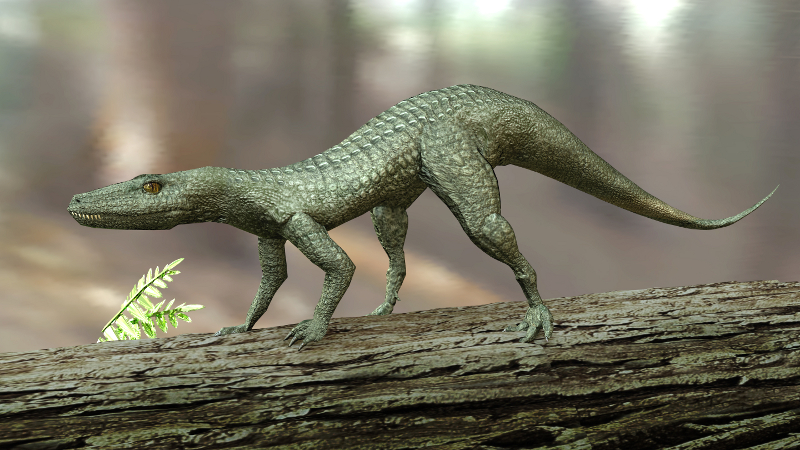
When paleontologists describe Jurassic theropods as “tiny,” they’re referring to dinosaurs that typically weighed less than 100 pounds and often stood no taller than a modern turkey. This size classification helps distinguish these smaller predators from their much larger contemporaries like Allosaurus, which could reach lengths of 28 feet and weights exceeding 2 tons. Many of these diminutive dinosaurs measured between 1-3 meters in length, with some particularly small species barely reaching 1 meter from snout to tail. Their reduced size represented a successful evolutionary strategy, allowing them to exploit ecological niches unavailable to larger predators while requiring less food to sustain themselves. These adaptations proved especially valuable during times of environmental stress, when resources might have been limited.
Coelurosaurs: The Lightweight Predators

Coelurosaurs represent one of the most significant groups of small theropods that flourished during the Jurassic period. These lightweight, often bird-like dinosaurs were characterized by their hollow bones, relatively long arms, and in many cases, features that would later evolve into true avian characteristics. The Jurassic coelurosaur Coelurus fragilis, discovered in the famous Morrison Formation of North America, likely weighed less than 20 pounds despite reaching about 2.4 meters in length. Another notable example, Ornitholestes hermanni, reached approximately 2 meters in length but maintained a slender build that kept its weight low. These nimble predators likely specialized in hunting small prey that larger theropods couldn’t efficiently pursue, including early mammals, lizards, and possibly even insects. Their lightweight frames and agile movements made them perfectly adapted for darting through underbrush and navigating complex forest environments.
Compsognathids: Among the Smallest Dinosaurs
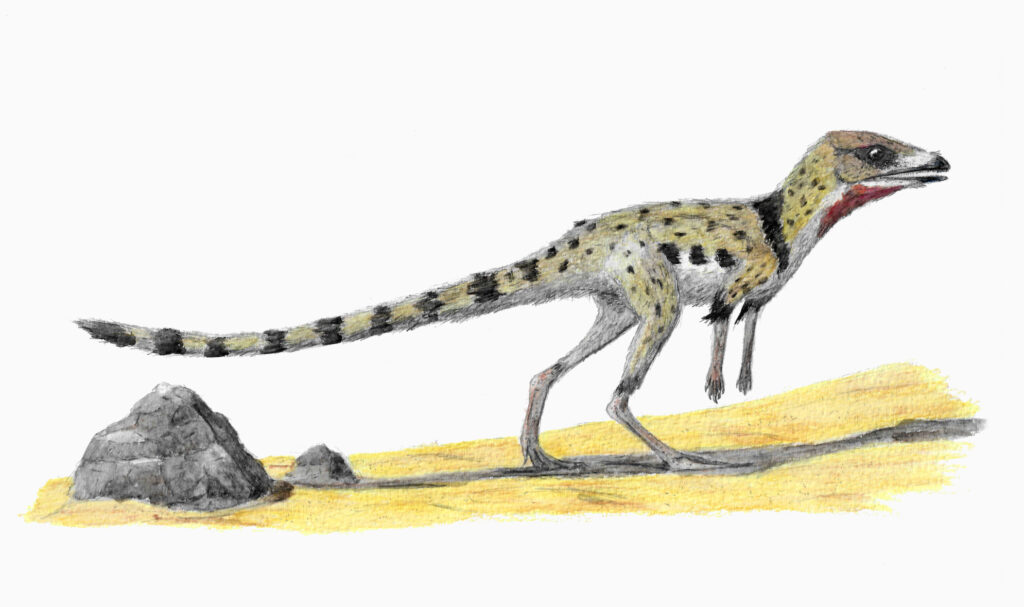
The Compsognathidae family contains some of the smallest known dinosaurs from the Late Jurassic period, with Compsognathus longipes being the most famous representative. This diminutive predator, whose name aptly means “elegant jaw,” measured only about 70-125 centimeters in length and likely weighed between 0.83 and 3.5 kilograms—roughly the size of a large chicken or turkey. Spectacularly preserved specimens from Germany and France have revealed remarkable details about these tiny hunters, including the contents of their last meals, which included small lizards and possibly other small vertebrates. Their streamlined bodies featured long, slender legs built for speed, with some paleontologists estimating they could reach speeds of up to 40 km/h. Despite their small size, compsognathids were formidable predators in their ecological niche, with sharp teeth, grasping hands, and keen vision that made them effective hunters of small prey.
Ecological Niches Exploited by Small Theropods
The diminutive size of these Jurassic theropods allowed them to exploit ecological niches that were inaccessible to larger predators, creating a complex ecosystem with multiple predatory tiers. Smaller theropods could pursue prey into tight spaces, climb trees, or potentially even dig into burrows—activities that would have been impossible for larger dinosaurs. Their reduced caloric requirements meant they could survive on much smaller prey items, including insects, small reptiles, and early mammals that would barely constitute a snack for larger predators like Allosaurus or Ceratosaurus. Some evidence suggests these small theropods may have been more active during dawn and dusk (crepuscular) or even nocturnal, further differentiating their hunting patterns from the larger, likely more diurnal predators. This niche partitioning allowed multiple predatory dinosaurs to coexist in the same environments without direct competition, maximizing the biodiversity of Jurassic ecosystems.
Proceratosaurus: The Tiny Early Tyrannosaur Relative

Proceratosaurus bradleyi represents an intriguing example of a small-bodied relative of what would later become the tyrannosaurid lineage. Discovered in England in Middle Jurassic deposits dating to approximately 165 million years ago, this dinosaur measured just 3 meters (10 feet) in length—a stark contrast to its later relative Tyrannosaurus rex, which could exceed 12 meters. Proceratosaurus featured a distinctive small crest on its snout, potentially used for display purposes, and possessed the characteristic enlarged teeth in the front of its jaws that would become more pronounced in later tyrannosaurs. Despite its modest size, this dinosaur provides crucial evidence about the early evolution of tyrannosaurs, demonstrating that this famous group began as relatively small predators before evolving into the apex predators of the Late Cretaceous. Its discovery helps paleontologists understand how the earliest tyrannosaurs occupied mid-sized predator niches in ecosystems dominated by other large carnivores.
Scansoriopterygids: The Enigmatic Gliders
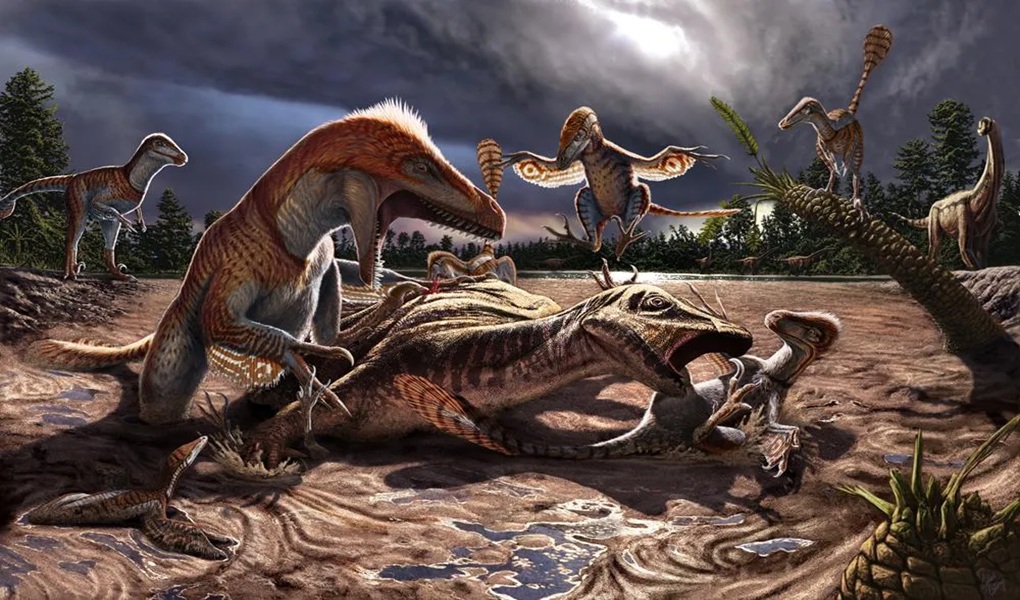
Among the most unusual small theropods from the Jurassic were the scansoriopterygids, a bizarre group known primarily from China’s Tiaojishan Formation dating to the Middle-Late Jurassic boundary. These truly tiny dinosaurs, including genera like Yi qi and Ambopteryx, typically measured less than a meter in length and possessed some of the most unusual anatomical features of any dinosaur. Most remarkably, they evolved membranous wings supported by an elongated finger bone—a completely different flight mechanism than the feather-based wings of birds and their closest relatives. Their strange anatomy suggests they were likely gliders that moved between trees in forest environments, perhaps similar to modern flying squirrels. Their small size—some weighed less than a pound—would have made them perfect for an arboreal lifestyle, allowing them to exploit food resources in the canopy while avoiding larger ground-dwelling predators. These enigmatic dinosaurs represent a fascinating evolutionary experiment in flight that developed independently from the path that led to modern birds.
Survival Strategies Among Small Jurassic Predators
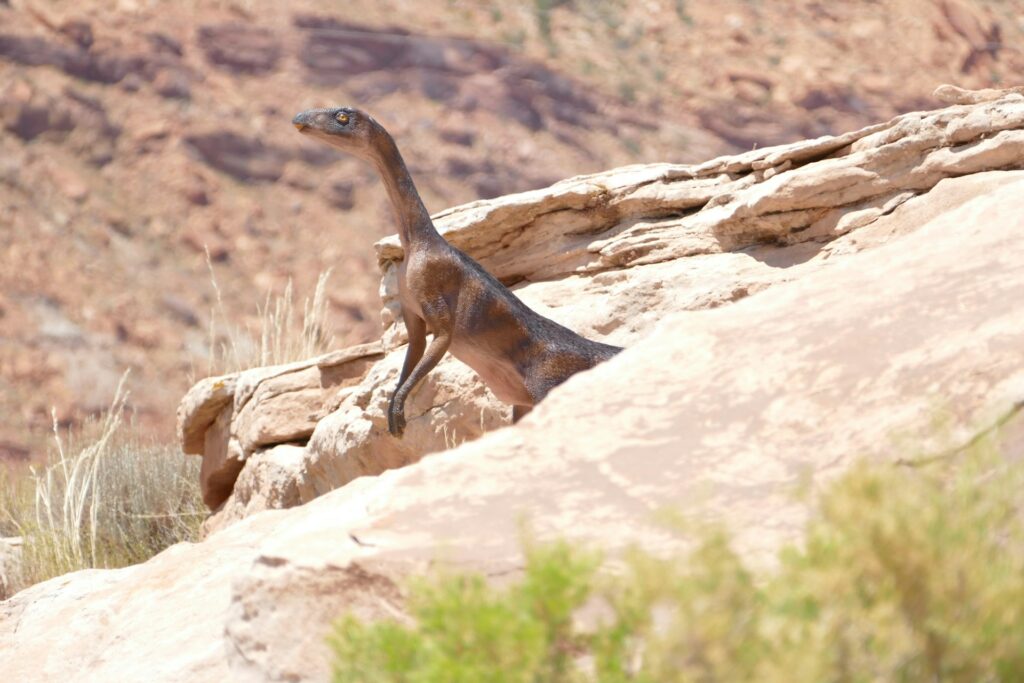
Being small in a world of giants required specialized survival strategies, and Jurassic miniature theropods evolved numerous adaptations to avoid becoming meals for larger predators. Many small theropods likely relied on exceptional agility and speed, with their lightweight frames and long legs allowing for quick directional changes and rapid acceleration that larger predators couldn’t match. Some species may have developed crepuscular or nocturnal habits, hunting during times when larger predators were less active. Certain lineages, particularly those close to the origin of birds, developed enhanced senses, with larger eye sockets suggesting improved vision that would have helped detect predators from a distance. Evidence from some specimens suggests that small theropods may have formed social groups, providing safety in numbers through shared vigilance against potential threats. Their ability to access sheltered environments inaccessible to larger dinosaurs—including dense vegetation, rock crevices, and possibly even burrows—would have offered crucial refuge from predators.
Anchiornis: A Tiny Feathered Theropod

Anchiornis huxleyi represents one of the most completely known small theropods from the Late Jurassic, with spectacularly preserved specimens revealing not just skeletal details but also its complete feather covering. This crow-sized dinosaur, measuring approximately 34-40 centimeters in length and weighing less than a kilogram, lived in what is now China about 160 million years ago. Remarkable preservation has allowed paleontologists to determine its exact coloration pattern—a primarily gray body with a rufous crest and white-striped wings and legs, representing the first time scientists could accurately determine a dinosaur’s true colors. Anchiornis possessed long feathers on all four limbs, creating a wing-like appearance on both its arms and legs that has been described as a “four-winged” configuration. While likely not capable of true powered flight, it may have been able to glide between trees or use its feathers for stability while running, representing a crucial transitional stage in the evolution of bird flight. Its small size would have made it vulnerable to numerous predators, but also allowed it to exploit resources in the forest canopy.
The Origins of Avian Flight Among Small Theropods

The small body size of many Jurassic theropods played a critical role in the eventual evolution of powered flight in the avian lineage. Flight is physically constrained by body mass, with aerodynamic principles favoring smaller animals when evolving flight capabilities. Many of the features necessary for flight—including hollow bones, feathered limbs, and high metabolic rates—first appeared in small-bodied theropods during the Middle to Late Jurassic period. Species like Anchiornis, Xiaotingia, and other small paravians possessed many of these pre-adaptations for flight while still being primarily terrestrial or arboreal creatures. Their diminutive size allowed them to benefit from even rudimentary gliding or flapping behaviors, creating evolutionary pressure to refine these capabilities over time. The “ground up” and “trees down” hypotheses of flight evolution both require an intermediate stage where small theropods used proto-wings for purposes other than true flight—either for balance while running, predator evasion, or controlled descent from elevated positions—all functions that would be most effective in smaller-bodied animals.
Dietary Adaptations of Miniature Theropods
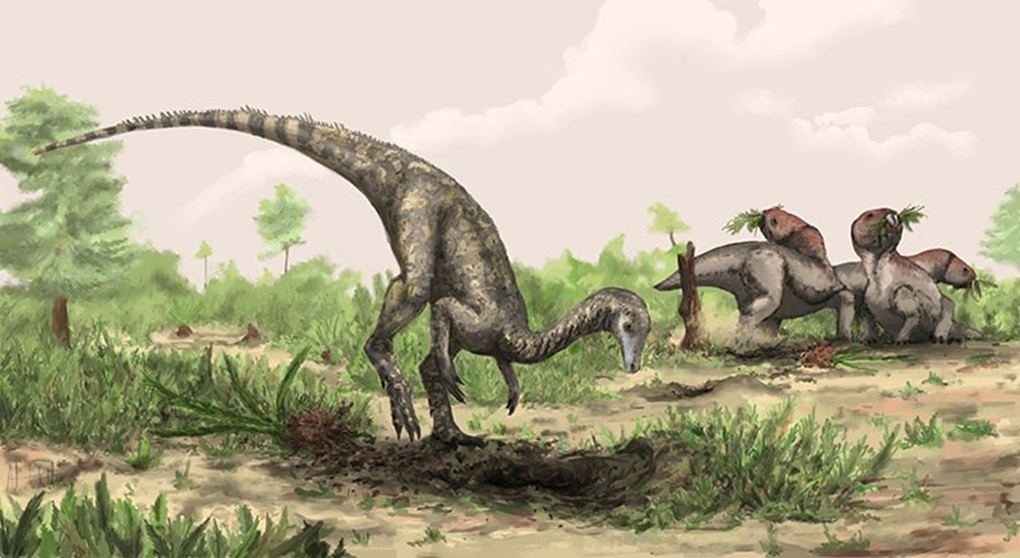
The feeding ecology of small Jurassic theropods differed significantly from their larger counterparts, with many species evolving specialized dietary adaptations. While most maintained the sharp, serrated teeth characteristic of carnivorous theropods, the size and shape of these teeth often varied according to their specific prey preferences. Some species, like Compsognathus, appear to have specialized in hunting small vertebrates such as lizards, as evidenced by stomach contents preserved in exceptional fossils. Others may have incorporated insects into their diet, as suggested by their small, numerous teeth and relatively large eye sockets indicative of visual acuity helpful for spotting small prey. As these lineages evolved closer to birds, some developed modifications to their snouts and teeth that suggest dietary diversification, potentially including omnivorous habits that incorporated plant material alongside animal prey. This dietary flexibility may have provided significant advantages during times of resource scarcity, allowing these small theropods to survive environmental challenges that affected more specialized predators.
The Tiny Forerunners of Dromaeosaurs
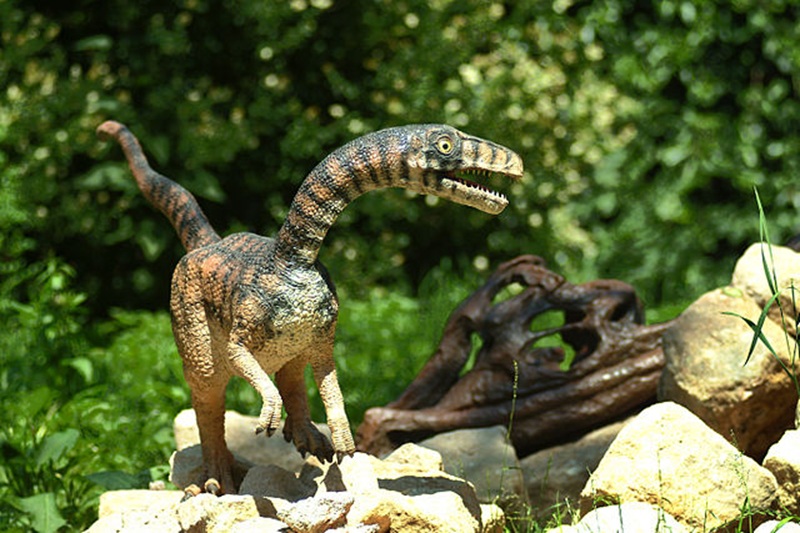
The Late Jurassic period witnessed the early evolution of what would later become the famous dromaeosaur family—the “raptor” dinosaurs popularized in films and media. These early proto-dromaeosaurs were substantially smaller than their Cretaceous descendants like Velociraptor and Deinonychus. Fossils from the Late Jurassic of Germany, Portugal, and China suggest these early dromaeosaurs typically measured less than 1.5 meters in length, with some potentially even smaller. While already possessing the enlarged, sickle-shaped claw on their second toe that would become the signature feature of later dromaeosaurs, these early forms likely used this adaptation differently than their larger descendants. Rather than bringing down large prey as a pack, these diminutive hunters may have used their specialized claws for climbing, pinning down small prey, or possibly for defense against larger predators. Their modest size allowed them to exploit different hunting strategies than the larger predators sharing their ecosystems, potentially focusing on small mammals, lizards, and juvenile dinosaurs that required less risk to subdue.
Reconstruction Challenges: What We Still Don’t Know
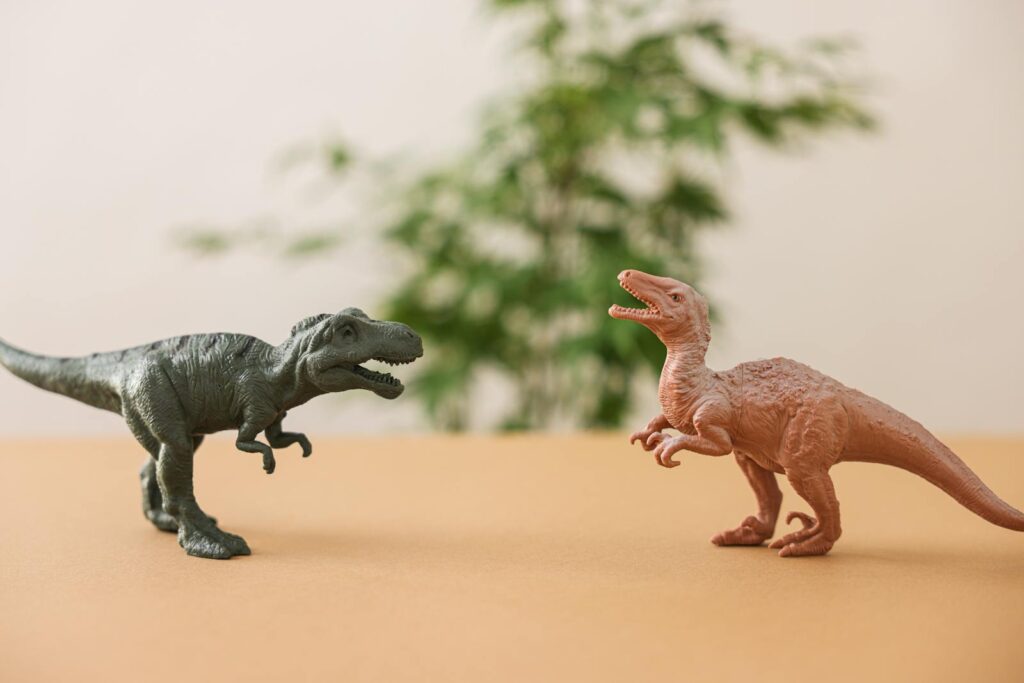
Despite significant advances in our understanding of small Jurassic theropods, substantial knowledge gaps remain due to the inherent challenges in preserving and discovering small dinosaur remains. The delicate skeletons of these diminutive dinosaurs were far more susceptible to destruction before fossilization could occur, often leaving paleontologists with fragmentary remains that make complete reconstructions difficult. Preservation biases in the fossil record favor larger animals with more robust bones, meaning our understanding of the true diversity of small theropods is almost certainly underestimated. Questions persist about their behavior, including whether certain species lived in social groups, their specific hunting strategies, and details about their reproductive biology. Soft tissue features—including the full extent of feathering in many species—remain speculative for many taxa known only from skeletal remains. The discovery of exceptionally preserved specimens in fossil lagerstätten like those in Germany and China continues to revolutionize our understanding of these animals, suggesting that future discoveries may substantially alter our current picture of these fascinating small dinosaurs.
Coexistence Strategies with Larger Predators

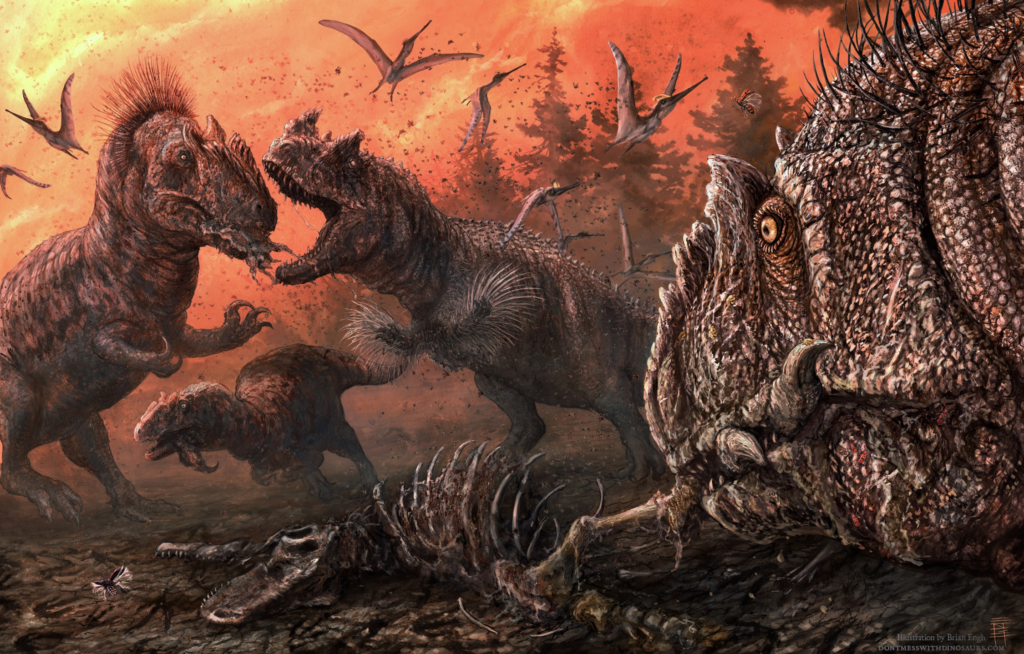
The Jurassic ecosystems where small theropods thrived were also home to apex predators like Allosaurus, Ceratosaurus, and Torvosaurus, creating significant challenges for smaller species to avoid becoming prey themselves. Evidence suggests these miniature dinosaurs employed various strategies to coexist with their larger relatives. Temporal partitioning—being active at different times of day than larger predators—likely played a crucial role, with smaller species potentially adopting crepuscular or nocturnal habits when larger diurnal predators were less active. Habitat partitioning also appears likely, with smaller theropods potentially specializing in densely vegetated environments where their agility provided advantages and larger predators had difficulty maneuvering. Some small theropods may have developed enhanced senses, particularly vision and hearing, to detect approaching predators from a distance. The potential for some species to climb trees or other elevated surfaces would have provided crucial escape routes unavailable to larger terrestrial predators. These various adaptations allowed for a complex ecosystem with multiple predatory niches, maximizing biodiversity within Jurassic environments.
The Legacy of Jurassic Miniaturization
The evolutionary experiments in miniaturization that occurred among Jurassic theropods had profound impacts on dinosaur evolution and ultimately led to one of the most successful vertebrate radiations in Earth’s history: birds. The small body size of many paravian theropods created the conditions necessary for the eventual evolution of powered flight, with reduced body mass being a crucial prerequisite for aerial locomotion. Many of the features we associate with birds today—including feathers, hollow bones, high metabolic rates, and enhanced sensory capabilities—first evolved in small-bodied Jurassic theropods as adaptations for their specific ecological niches. The survival of small avian dinosaurs through the end-Cretaceous extinction event, while their larger relatives perished, demonstrates the evolutionary advantages that miniaturization ultimately provided. Today’s birds, with over 10,000 living species, represent the enduring legacy of those tiny Jurassic theropods that once scurried beneath the feet of giants. Their success story demonstrates that in evolutionary terms, bigger isn’t always better, and that the ability to exploit specialized niches through size reduction can lead to remarkable evolutionary innovations and long-term success.
Conclusion
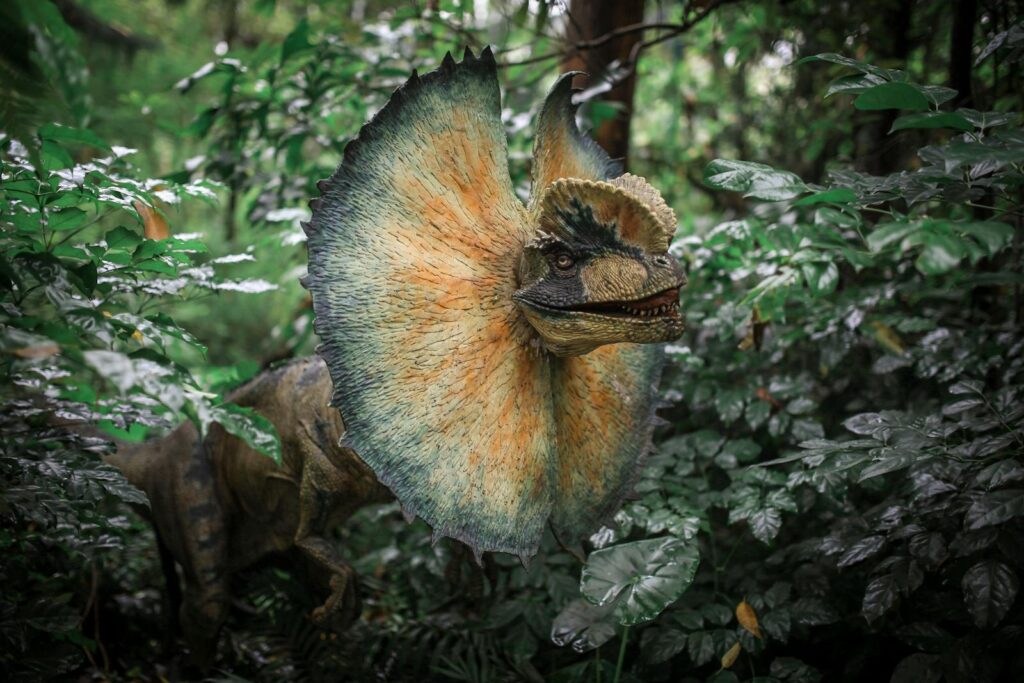
The diminutive theropods of the Jurassic period represent a fascinating counterpoint to the popular image of dinosaurs as universally gigantic creatures. These small predators, some weighing less than a modern house cat, successfully exploited ecological niches unavailable to their larger relatives, developing specialized adaptations for hunting, avoiding predation, and eventually giving rise to birds. Their story reminds us that evolutionary success comes in many forms, and that the ability to specialize through size reduction can be just as advantageous as gigantism in certain contexts. As research continues and new fossils emerge from Jurassic deposits worldwide, our understanding of these remarkable small dinosaurs continues to evolve, painting an increasingly detailed picture of the complex ecosystems where tiny hunters darted between the footsteps of giants.