
You’ve probably heard about climate change’s impact on our oceans today. Yet imagine waking up to find the seas around you had become acidic enough to dissolve shells and kill marine life on an unprecedented scale. This isn’t science fiction or a dystopian future warning. This actually happened multiple times throughout Earth’s history, triggering some of the most catastrophic mass extinctions our planet has ever experienced.
Scientists have now cracked the code on these ancient oceanic disasters, revealing how volcanic eruptions and asteroid impacts turned life-giving seas into toxic soup. Through ingenious detective work involving microscopic fossils and cutting-edge chemistry, researchers are piecing together stories of planetary catastrophe that lasted tens of thousands of years. Be surprised by what these prehistoric nightmares reveal about the delicate balance keeping our modern oceans alive.
The Great Dying – When Volcanic Hell Met Acidic Oceans

Picture this: Some 252 million years ago, life on Earth faced the “Great Dying”: the Permian-Triassic extinction. The cataclysm was the single worst event life on Earth has ever experienced. Over about 60,000 years, 90 percent of all marine species and about 70 percent of terrestrial vertebrate species died out.
What happened was nothing short of apocalyptic. Research now suggests that the second pulse of extinction, during which nearly all marine species vanished from the planet, happened in the wake of huge volcanic eruptions that spewed out carbon dioxide and made the oceans more acidic. Volcanoes in Siberia belched so much CO2 in such a short period of time that the oceans simply could not absorb it all, says team leader Matthew Clarkson, a geochemist at the University of Otago in Dunedin, New Zealand. Within just 10,000 years, pH levels in at least some of the world’s oceans plummeted.
The evidence for this oceanic horror story comes from ancient rocks in the United Arab Emirates. To investigate if the oceans were more acidic during the mass extinction, a team of European scientists collected ancient rocks in the United Arab Emirates that were once part of the seafloor. With these rocks, the scientists were able to reconstruct a record of seawater pH at the time of the mass extinction. What they discovered was a rapid acidification event that coincided perfectly with the mass die-off.
Scientists have long suspected that an ocean acidification event occurred during the greatest mass extinction of all time, but direct evidence has been lacking until now. This is a worrying finding, considering that we can already see an increase in ocean acidity today that is the result of human carbon emissions.
The Asteroid’s Acid Rain – Chicxulub’s Oceanic Legacy
Fast forward to 66 million years ago, when Earth faced another extinction catastrophe. The Cretaceous-Paleogene die-off, also known as the K-Pg mass extinction event, occurred when a meteor slammed into Earth at the end of the Cretaceous period. The impact and its aftereffects killed roughly 75% of the animal and plant species on the planet, including whole groups like the non-avian dinosaurs and ammonites.
Yet the dinosaurs didn’t just die from the initial blast. The real killer might have been what happened to the oceans afterward. The researchers found that the pH dropped by 0.25 pH units in the 100-1,000 years after the strike. “For years, people suggested there would have been a decrease in ocean pH because the meteor impact hit sulphur-rich rocks and caused the raining-out of sulphuric acid, but until now no one had any direct evidence to show this happened,” said lead author Dr Michael Henehan, of the GFZ German Research Centre for Geosciences.
This spike in ocean acidification demonstrated it was the meteorite impact that made the ocean more acidic, as it effectively dissolved the chalky shells of numerous species and vaporised rocks containing sulphates and carbonates. This lead to sulphuric acid and carbonic acid raining down. The mass die-off of plants on land after the strike also increased CO2 in the atmosphere.
The evidence comes from tiny marine organisms called foraminifera, whose shells tell a story of oceanic chaos. The sediments analysed were discovered by chance in caves in the Netherlands and contained foraminifera, small-shelled marine organisms. They found that, after the impact, the shell walls of these tiny creatures were much thinner and poorly calcified.
Fossil Detective Work – Reading Ancient Ocean Chemistry
How do you solve a 250-million-year-old murder mystery? Scientists have become master detectives, using microscopic fossils as their evidence. Ancient plankton shells can record the physical and chemical state of the ocean in which they grew. Foraminifera, a type of zooplankton, do this by trapping trace chemical impurities in their calcium carbonate shells. Decoding these impurity records can reveal changes in global climate, atmospheric CO2, and the acidity of the oceans in deep geologic time.
The key lies in understanding how these tiny creatures built their shells. One such impurity is boron, which varies in isotopic composition and concentration as the ocean’s acidity and carbon levels change. Measurements of boron in ancient foraminifera shells, recovered from ocean-floor sediments, indicate how carbon moved between the atmosphere and the ocean over geologic time.
The fossil shells of these organisms provide us with a near-continuous archive of ocean chemistry going back tens of millions of years. Think of each fossil shell as a tiny time capsule, preserving the exact chemical fingerprint of the ancient ocean where it once lived.
The Boron Isotope Revolution – Nature’s pH Meter

Among all the tools scientists use to decode ancient ocean chemistry, boron isotopes stand out as perhaps the most ingenious. Hemming and Hanson (1992) first suggested using the boron isotopic composition of marine carbonates as a proxy for ocean pH. They proposed a boron isotope pH meter, based on the pH-dependent speciation of the two dominant forms of boron in seawater, boric acid (B(OH)3) and the borate ion (B(OH)4–).
The science behind this is remarkably elegant. At low pH, boric acid dominates and vice versa (Figure 1a). As there is a constant isotopic offset between the two species, the isotopic signature of each shifts as pH changes to conserve mass balance and the overall boron isotope composition of seawater (Figure 1b). Empirical calibrations suggest that marine calcifiers – such as foraminifera, corals, and brachiopods – incorporate the tetrahedral borate ion into their carbonate skeletons (e.g., Rae et al., 2011). As a result, the isotopic composition of fossil CaCO3 may be used to reconstruct that of the borate ion, and in turn pH.
This method has revolutionized our understanding of ancient ocean acidification events. Analysis of the chemical composition of foraminifera fossils from before, during, and after the K-Pg event produced a wealth of data about changes in the marine environment over time. Specifically, measurements of boron isotopes in these shells allowed the Yale scientists to detect changes in the ocean’s acidity.
The Chemistry of Collapse – How Acidification Kills Marine Life
When oceans turn acidic, marine life doesn’t just disappear quietly. There’s a brutal chemistry at work that specifically targets the most vulnerable species first. Previous K-Pg research had shown that some marine calcifiers – animal species that develop shells and skeletons from calcium carbonate – were disproportionately wiped out in the mass extinction. The new study suggests that higher ocean acidity (lower pH) may have prevented these calcifiers from creating their shells. This was important, researchers note, because these calcifiers made up an important part of the first rung on the ocean food chain, supporting the rest of the ecosystem.
The process is devastatingly efficient. The uptick in CO2 acidified the Triassic oceans, making it more difficult for marine creatures to build their shells from calcium carbonate. On land, the dominant vertebrates had been the crocodilians, which were bigger and far more diverse than they are today. This same process happened repeatedly throughout Earth’s history whenever massive amounts of CO2 entered the atmosphere.
Modern experiments confirm what the fossil record shows. When scientists expose marine organisms to higher CO2 levels in laboratory settings, the results mirror what happened during ancient mass extinctions. Shell-forming creatures struggle to build their protective armor, becoming vulnerable to predators and environmental stress.
Reading the Rock Record – Calcium Isotopes Tell Their Story

While boron isotopes grab the headlines, calcium isotopes provide another window into ancient ocean disasters. The researchers collected samples from a 100-meter-thick limestone section in the Lombardy Basin spanning the Triassic and Jurassic boundary and measured the ratios of stable carbon (13C/12C) and calcium (44Ca/40Ca) isotopes in each layer. They found large negative carbon and calcium isotopic excursions – in other words, a shift toward greater relative abundance of the lighter isotope of each element – after the extinction event. This finding is consistent with an ocean acidification scenario, which could have caused the mass extinction.
The calcium isotope story becomes more complex when scientists dig deeper. Next, the authors simulated the ocean’s carbon and calcium cycles, injecting different carbon volumes into the model. The simulation scenarios were compared to the actual carbon data measured in the sediment layers. The coupled model revealed that ocean acidification was responsible for only 20% of the calcium isotopic changes. The remaining 80% were from local mechanisms, likely caused by an increase in aragonite, a form of calcium carbonate that was potentially favored in the wake of ocean acidification.
This discovery shows how complex ancient ocean chemistry really was. Multiple processes operated simultaneously, each leaving their own signature in the rock record. Scientists must carefully untangle these different signals to understand what actually happened during these prehistoric catastrophes.
The Long Road to Recovery – Healing Acidic Oceans

Perhaps the most sobering lesson from studying ancient ocean acidification is how incredibly long recovery takes. And, as this study suggests, recovery from ocean acidification is likely to take millennia – relying as it does on the steady, slow weathering of continental rock to flush more carbonate into the oceans. “If this and other studies’ conclusions are correct,” Howard notes, “the ocean’s recovery will take hundreds of thousands of years.”
The fossil record shows exactly what this slow recovery looked like. In a study published in the latest issue of Paleoceanography, the scientists estimate that surface ocean acidity increased by about 100 percent in a few thousand years or more, and stayed that way for the next 70,000 years. The study confirms that the acidified conditions lasted for 70,000 years or more, consistent with previous model-based estimates. “It didn’t bounce back right away,” said Timothy Bralower, a researcher at Penn State who was not involved in the study.
Rather, there may be intrinsic constraints on the time required to recover normal marine ecosystem function after such severe global perturbations, despite the short generation times that should make marine plankton ideally suited to rapid evolutionary radiation (38). In this way, the K-Pg event shows that even geologically rapid ocean acidification events can have prolonged and profound biotic ramifications. Marine ecosystems don’t just bounce back once the chemistry improves.
Modern Parallels – Are We Repeating History?
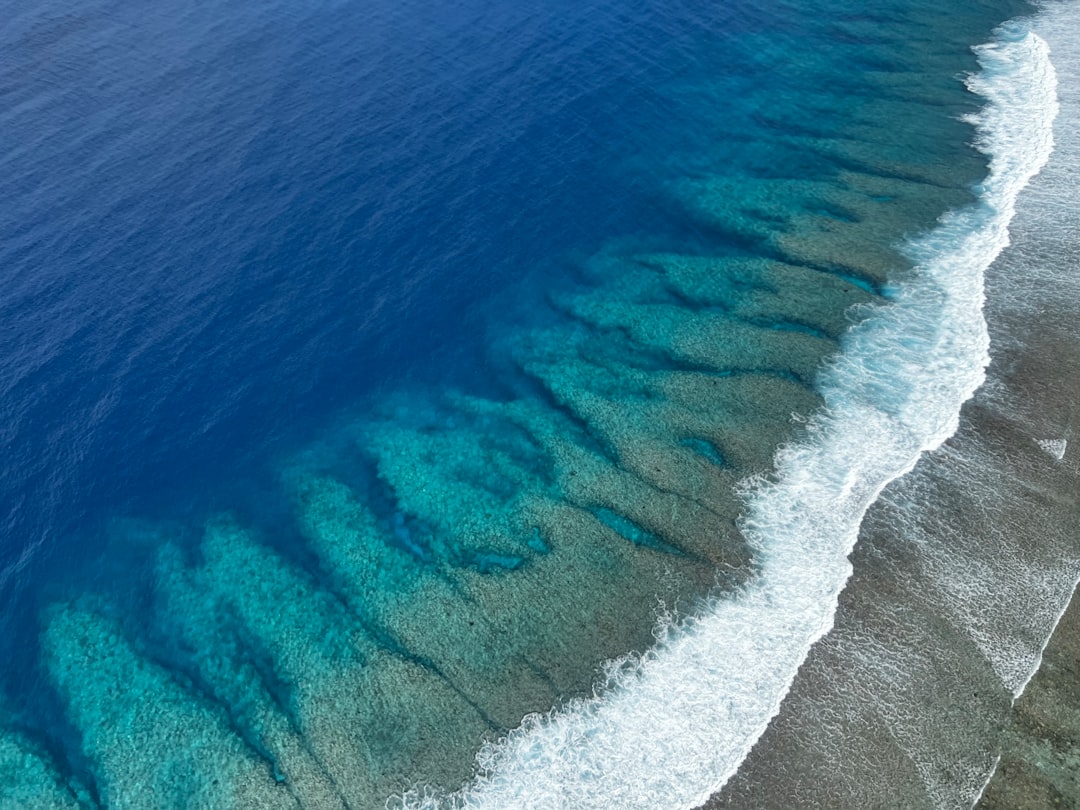
The most chilling aspect of studying ancient ocean acidification is recognizing how similar our current situation appears. Regardless, the shells of at least one modern foraminifera in the Southern Ocean are already smaller than those of their ancestors from a mere century ago. And the modern buildup of atmospheric CO2 is happening far faster than these ancient episodes. “The current rate of ocean acidification is about a hundred times faster than the most rapid events” in the geologic past, notes marine geologist William Howard of the Antarctic Climate and Ecosystems Cooperative Research Center in Hobart, Tasmania.
Today’s ocean acidification shows alarming parallels to the prehistoric disasters scientists study. Today, signs are already emerging that some marine life may be in trouble. In a recent study led by Nina Bednaršek at the U.S. National Oceanic and Atmospheric Administration, more than half of the tiny planktic snails, or pteropods, that she and her team studied off the coast of Washington, Oregon and California showed badly dissolved shells. Ocean acidification has been linked to the widespread death of baby oysters off Washington and Oregon since 2005, and may also pose a threat to coral reefs, which are under additional pressure from pollution and warming ocean temperatures.
“We may think of [ocean acidification] as something to worry about for our grandchildren. But if it truly does get to the same acidification as at the [meteorite strike] boundary, then you are talking about effects that will last for the lifetime of our species. The stark warning from these ancient catastrophes couldn’t be clearer.
Conclusion
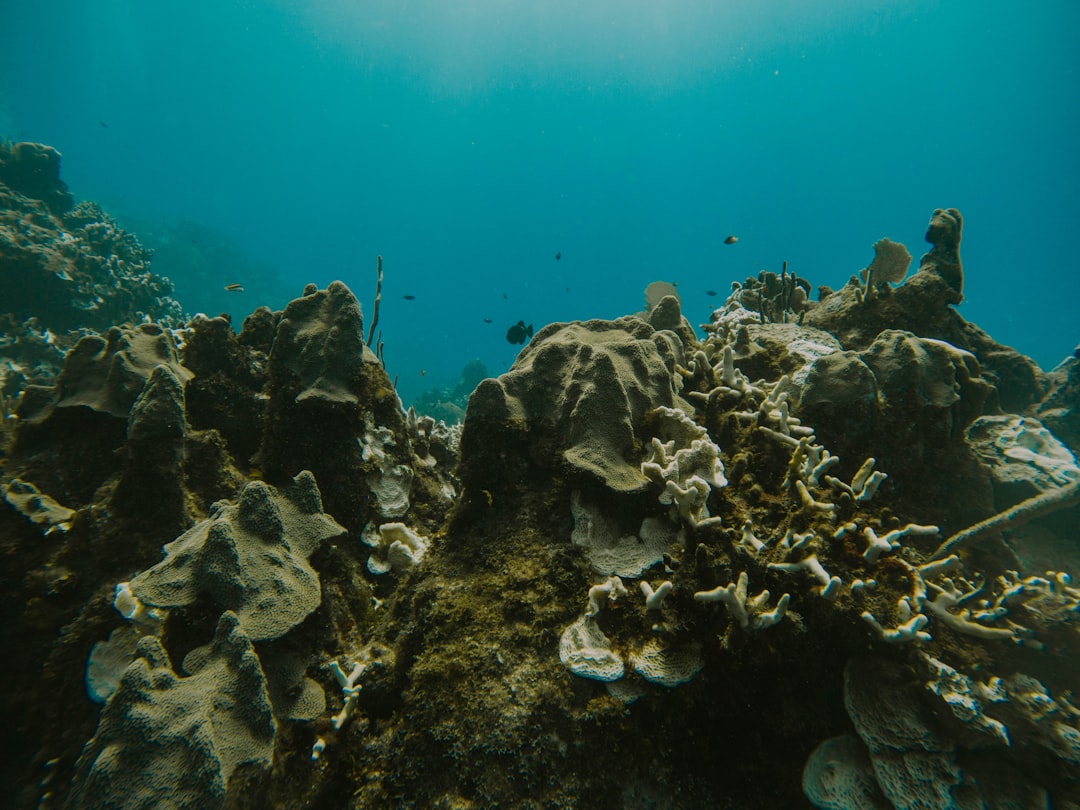
The story written in ancient rocks reveals ocean acidification as one of Earth’s most devastating killers, capable of dismantling entire marine ecosystems in geological instants while requiring hundreds of thousands of years for recovery. From the volcanic hell of the Great Dying to the asteroid-triggered chaos that ended the dinosaurs, these prehistoric disasters demonstrate how quickly thriving oceans can become acidic graveyards. Through the ingenious detective work of scientists reading boron and calcium isotopes in microscopic fossils, we now understand that ocean acidification doesn’t just kill marine life – it systematically destroys the foundation of oceanic food webs, starting with the shell-building creatures that support everything else.
What should truly concern you is that our current rate of ocean acidification far exceeds even the most catastrophic events in Earth’s history, yet we’re following the same deadly script that has played out before. The ancient oceans teach us that once this process begins, recovery stretches across timescales that dwarf human civilization itself. What do you think – are we prepared for consequences that could outlast our species?