
You’ve probably lain awake at night replaying a decision in your mind, wondering what might have been if you’d chosen differently. Maybe it was turning down a job offer, not speaking up when you had the chance, or taking a risk that backfired spectacularly. Here’s the thing: regret is one of the most universal human emotions, yet it doesn’t affect all of your choices equally. Some decisions fade from memory within days, while others linger for years, sometimes decades. Scientists have been piecing together why certain regrets stick with you like glue while others barely leave a mark. The answer involves a fascinating interplay of brain circuits, mental simulations, and deeply rooted psychological patterns that shape how you process your past.
Your Brain’s Counterfactual Simulator
Your brain is wired to evaluate past decisions, compare them to alternative possibilities, and engage in counterfactual thinking – mentally simulating “what could have been” scenarios if you had acted differently. Think of it as an internal movie editor that constantly reruns scenes from your life, but with different endings. This isn’t just idle daydreaming. Regret is one of the most cognitive emotions you experience, involving memory, imagination, causality, and self-awareness, requiring you to recognize what happened and imagine an alternate version of reality where you acted differently and got a better outcome – this mental simulation is the very engine of regret.
Your brain is more likely to simulate a better alternative when that alternative seems plausible, obvious, or nearby, and regret hits harder when you believe the choice was fully yours. The easier it is for you to imagine a different outcome, the more intense your regret becomes. If you missed a flight by two minutes, you’ll likely feel worse than if you missed it by two hours – those two minutes feel tantalizingly close to a different reality.
The Orbitofrontal Cortex: Command Center for “What If”
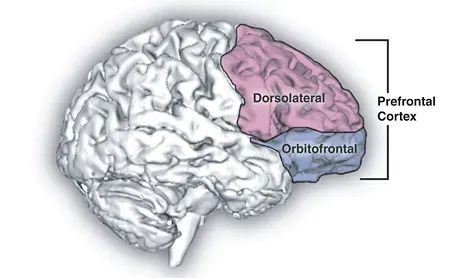
At the center of this process is the orbitofrontal cortex, a region just above your eyes that is deeply involved in decision-making and evaluation, helping your brain weigh choices, predict outcomes, and compare actual results with imagined ones. Functional MRI studies have shown that the orbitofrontal cortex becomes highly active when people are asked to reflect on poor choices or missed opportunities, and is uniquely responsive not just to bad outcomes, but to bad outcomes that resulted from your own decisions – when the loss is someone else’s fault, the orbitofrontal cortex doesn’t light up as much, but when the fault lies with you, the lights in the orbitofrontal cortex burn bright.
Increasing regret enhanced activity in the medial orbitofrontal region, the anterior cingulate cortex and the hippocampus, and across experiments, subjects became increasingly regret-aversive, a cumulative effect reflected in enhanced activity within medial orbitofrontal cortex and amygdala. Your brain literally learns from regret, creating patterns that influence future choices. Regret isn’t purely logical – it carries a heavy emotional load of guilt, disappointment, shame, and longing, and these emotional tones are orchestrated by the amygdala, which responds to threats, pain, and emotionally charged memories, working closely with the orbitofrontal cortex to tag certain memories with emotional intensity.
Action Versus Inaction: The Temporal Twist

One of the most surprising findings in regret research challenges common intuition. The temporal pattern of regret is the phenomenon that people perceive or experience stronger regret over action compared to inaction in the short term, yet stronger regret over inaction compared to action in the long term. Right after you make a mistake, you’re more likely to regret what you did – switching jobs impulsively, making that risky investment, saying something you shouldn’t have. These action-based regrets burn hot initially.
Regret related to the inaction path – the things undone, the opportunities lost – is harder to fix, and this kind of regret is more likely to lead to depression, anxiety, a sense of stuckness and a feeling of longing over not knowing what could have been. More than half of regrets had to do with inaction – should have attended or completed college, should have pursued a particular career, should have tried harder in social relationships or marriages – while in contrast, only about one in eight were regrets of action. Over time, the paths you didn’t take haunt you more persistently than the paths you tried and failed at.
The Role of Personal Responsibility
Regret has an element of responsibility, or self-blame, and this feature differentiates it from other negative emotions, such as disappointment. When you feel fully responsible for a decision, the sting of regret intensifies dramatically. Being forced by external circumstances to choose an option inconsistent with your own intentions is an important source of regret and a core component of its phenomenology, regardless of the positivity or negativity of the post-decision outcome.
Interestingly, regret elicited by forced choice was always high, regardless of the valence of outcome, whereas free choice elicited regret was high only with a negative outcome. Your sense of agency matters enormously. Your brain is more likely to simulate a better alternative when that alternative seems plausible, obvious, or nearby, and regret hits harder when you believe the choice was fully yours – being coerced or misled can soften the blow, but making a decision in full agency and getting it wrong leaves a deeper psychological wound.
Why Irreversibility Amplifies Regret

Irreversibility matters – if a mistake can still be corrected, regret might motivate action, but if the door is closed, if the job is gone, the person moved on, the years passed, regret turns into mourning, and your brain recognizes that no new choice can change the past, and that finality is what makes regret so painful. This explains why you might obsess over a college you didn’t attend twenty years ago more than a restaurant meal you regretted last week.
The brain struggles with permanent losses more than temporary setbacks. Type one regret is framed by realizing that you missed or passed up a favorable opportunity, while type two regret is characterized by facing the decision to cut your losses and move on – although both types may involve reflecting on the road not traveled, type one regret emphasizes the choice of having let something good go, while type two regret emphasizes having to change your mind. The weight these mistakes carry in altering future decisions are biologically distinct and uniquely linked to stress-response traits – stress-susceptible mice were hypersensitive to type one regret and insensitive to type two regret while, conversely, healthy mice were insensitive to type one regret and only sensitive to type two.
How Anticipated Regret Shapes Your Decisions

Regret is typically experienced after a decision as a negative emotion, but it can also be anticipated, influencing option evaluation beforehand, and research indicates that anticipated regret promotes cautious, risk-averse behavior and affects post-decision satisfaction. You’ve probably felt this before making a big purchase or life decision – that nagging voice asking “Will I regret this later?”
Regret Theory posits that human decision making is heavily biased toward avoiding potential outcomes that would cause regret if they came to pass – your decision making is more heavily weighted toward avoiding the most psychologically painful outcomes than toward achieving the best ones, and this hyper-awareness of “the worst that could happen” causes you to make what appear to be counterintuitive choices. Studies showed that anticipated regret significantly increased risk-averse behavior and improved choice satisfaction, and research indicates that anticipated regret promotes cautious, risk-averse behavior. Sometimes you’re not just making a decision – you’re making a decision about how you’ll feel about that decision later.
Social Norms and the Exceptionality Effect

The action effect is one of the most widely cited effects in the regret literature, showing that negative outcomes are regretted more when they are a result of action compared to inaction. Yet social context dramatically changes this pattern. Social norms matter – for decisions resulting in negative outcomes, action is regretted more than inaction when social norms are for inaction, but when social norms are for action the effect is significantly weakened or reversed.
Action results in stronger regret than inaction because in risky situations the norm is to not act, and therefore acting is perceived as more exceptional, and deviations from what is normal resulting in negative outcomes are regretted more than routines. If everyone else is investing in cryptocurrency and you don’t, you might regret it more than if you’d been the only one to invest and lost money. Your brain constantly calibrates regret against what seems normal or expected in your social environment.
Learning From Regret Without Drowning In It

Regret helps to optimize decision behavior and can be defined as a rational emotion, and several recent neurobiological studies have confirmed the interface between emotion and cognition at which regret is located and documented its role in decision behavior. The paradox is that while regret feels awful, it serves an important function. Excessive rumination over past choices can contribute to anxiety and depression, but effective regret processing involves self-compassion and reframing past choices as learning opportunities.
Rather than stay stuck, you can manage these emotions in four steps: accept the fact that you are feeling them, determine why you are feeling them, allow yourself to learn from them, and release them and move forward – you can help release these feelings of regret by practicing self-compassion, reminding yourself that you are human, you are doing the best you can, and you can learn from past decisions and grow. Healthy older adults were far more resilient to feelings of regret and less inclined to let it affect decision-making – it was as if they had trained their brains to successfully regulate the emotions of regret, and they were somehow able to disengage from this feeling afterwards through acceptance, downregulation, probably based on their previous experiences and learning.
Conclusion: Making Peace With The Roads Not Taken

Understanding why certain decisions haunt you more than others isn’t about eliminating regret – that’s neither possible nor desirable. Your capacity to feel regret reflects the sophisticated machinery of your brain working to help you navigate an uncertain world. The intensity of your regret depends on how easily you can imagine alternatives, how responsible you felt for the outcome, whether the door remains open or has closed forever, and whether your choice aligned with social expectations.
Research indicates that those high in neuroticism tend to have feelings of regret more often and for less important decisions than those low in neuroticism, suggesting that personality shapes your regret landscape. Yet everyone experiences this emotion, and recognizing its patterns can help you respond more constructively. The paths you didn’t take will always whisper to you, but understanding why some whispers become shouts can help you find peace with your choices. What decision from your past still visits you late at night, and knowing what you now know, can you see it through a different lens?