

Think about the story you tell yourself about who you are. Does it start with your mistakes? Does it revolve around moments you wish you could erase? You’re not alone in this. So many people carry around narratives weighted down by the past, convinced that previous missteps, failures, or circumstances have sealed their fate.
Here’s the thing, though. That story? It’s not set in stone. You have more power over your narrative than you might realize. The past happened, sure, yet it doesn’t have to dictate what comes next. This isn’t about denying reality or pretending painful moments never existed. It’s about understanding that you are not a prisoner of what was but rather the author of what could be.
Why We Cling to Old Stories

Your brain has this peculiar habit of holding onto negative experiences more tightly than positive ones. Brains are wired to remember negative experiences more vividly than positive ones, a phenomenon known as negativity bias. This evolutionary trait once helped keep humans safe from danger, yet in modern life, it can lead to rumination and self-criticism.
You might find yourself replaying old scenes on a loop, examining every wrong turn, every harsh word spoken, every opportunity missed. Sometimes, we hold onto regrets because we become defined by them. That relationship you ruined becomes your defining characteristic. That job you lost becomes proof of your inadequacy. Yet these interpretations are choices, not facts.
The stories we construct about ourselves often form during childhood, shaped by limited understanding and emotional reactivity. Since these stories begin to form in childhood, it is not a total shocker to realize that, when you actually say your story out loud or write it down in words, some of these stories are more consistent with the cognitive abilities of a child. You’re walking around with narratives written by someone who didn’t have your current wisdom, experience, or perspective.
The Science Behind Change: Your Brain’s Remarkable Flexibility
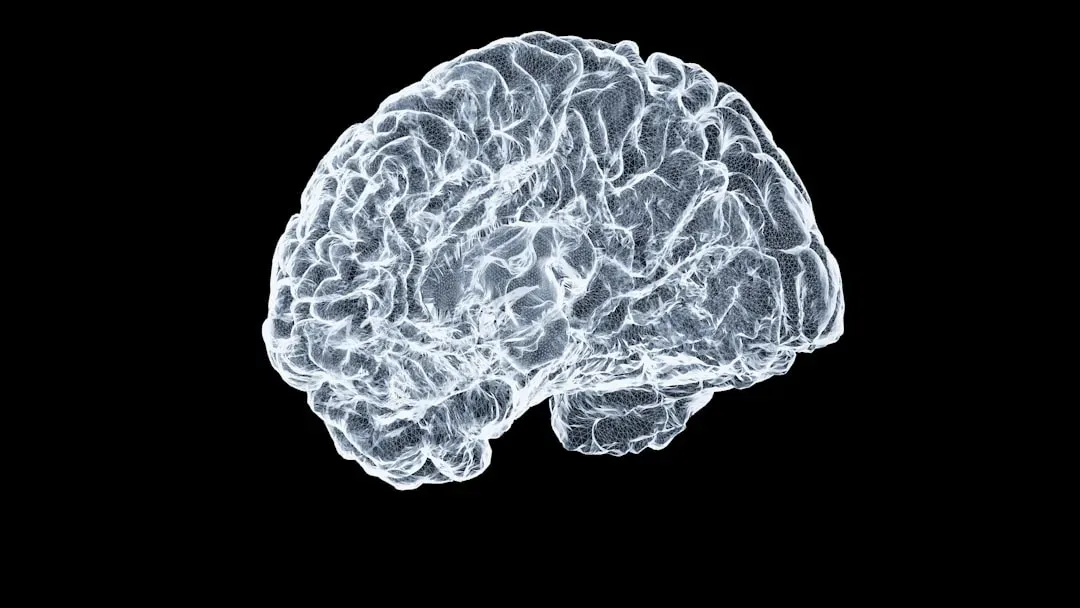
Neuroplasticity, the brain’s capacity to reorganize itself by forming new neural connections, is central to modern neuroscience. Once believed to occur only during early development, research now shows that plasticity continues throughout the lifespan, supporting learning, memory, and recovery from injury or disease. Let that sink in for a moment. Your brain isn’t fixed. It’s constantly adapting, rewiring, creating new pathways based on your experiences and choices.
The importance of neuroplasticity can’t be overstated: It means that it is possible to change dysfunctional patterns of thinking and behaving and to develop new mindsets, new memories, new skills, and new abilities. This isn’t wishful thinking or motivational fluff. It’s neuroscience.
Your brain changes physically whenever you learn anything, and your brain continues to be moulded by experience and learning throughout your life. Every time you challenge an old belief, practice a new behavior, or choose a different response, you’re literally reshaping your neural architecture. The past may have shaped you, yet it doesn’t have to continue shaping you.
Separating Yourself From Your Problems

One of the most powerful shifts you can make involves learning to externalize your struggles rather than internalizing them. It treats individuals as the authors of their own stories, focusing on identifying and rewriting the internal dialogues, themes, characters, and plots that shape their lives. This approach helps clients distinguish between thoughts and feelings, facts and opinions, and reframes negative self-talk.
Instead of saying “I am anxious,” try “Anxiety is pushing me around today.” This change transforms the challenge from something that defines the individual to something to analyze and work with. Subtle shift? Maybe. Yet it creates distance between your core identity and your struggles, opening up space for agency and choice.
Changing how you describe yourself can change your sense of who you are. Many people who have experienced abuse choose to refer to themselves as survivors or overcomers instead of victims. This gives them a sense of empowerment they can use to find new choices for how to live their lives. The language you use matters. It shapes perception, which shapes possibility.
The Growth Mindset: Viewing Mistakes as Stepping Stones

According to psychologist Carol Dweck, those with a growth mindset view intelligence and ability as qualities that can be developed. Mistakes are not personal shortcomings – they’re feedback. When you adopt this perspective, failure transforms from a verdict on your character into valuable information about what to try differently next time.
Mistakes are not signs of failure – they are stepping stones to success. Think about learning any new skill. You didn’t walk perfectly the first time you tried. You didn’t speak in complete sentences right out of the gate. Growth requires trial, error, adjustment, and persistence.
Psychology shows that mistakes help people become better decision-makers. Viewing failures as opportunities for learning and growth can change perspectives about perfection. The pursuit of perfection keeps you stuck. The acceptance of imperfection sets you free to actually improve.
Rewriting Your Narrative: Practical Steps Forward

You don’t need to erase the past to move beyond it. The plot of your life story focuses on themes like failure or perseverance based on which past events you choose to emphasize. You can edit your life like a film director by selecting which scenes to keep or cut. What if you stopped giving airtime to every embarrassing moment and started highlighting instances of courage, kindness, or resilience?
By re-examining and rewriting these narratives, individuals can discover new possibilities, overcome challenges, and find deeper meaning in their experiences. This process isn’t about denial or toxic positivity. It’s about balance and perspective. You get to decide which chapters deserve the most attention in your ongoing story.
Start small. Write down one thought that makes you feel stuck or hopeless. Now challenge it. Is it absolutely true? What evidence contradicts it? What would you tell a friend who expressed the same belief? It can be a valuable therapeutic exercise to craft an updated story with your adult brain and experiences, where your story lines are supported by evidence rather than based in uncertainty and fear.
Building Resilience Through Self-Determination

Self-determination theory (SDT) suggests that motivation can interact with resilience and perceived competence. When you satisfy your basic psychological needs for autonomy, competence, and relatedness, you build inner resources that help you bounce back from setbacks.
Resilience is considered a resource that allows a favorable performance under stress. Confrontation with an adverse situation will lead to successful outcomes only when the individual possesses the social skills, sufficient emotion regulation competence, and the cognitive flexibility that are necessary to revise initial perceptions of the environment. You’re not born with fixed levels of resilience. It’s something you cultivate through intentional practice and supportive relationships.
When the needs are satisfied, individuals are likely to feel autonomic, self-determined, and intrinsically motivated. Subsequently, individuals work and take efforts to come over the difficulties and fulfill it themselves, which would be shown as everyday resilience. Your sense of agency grows stronger each time you make a choice aligned with your values rather than dictated by past patterns.
The Role of Self-Compassion in Moving Forward

When you make a mistake, instead of letting your inner mean committee take charge, I encourage you to treat yourself the same way you would treat a close friend if they made a mistake. Self-compassion is a critical part of this process. Give yourself some grace. Have faith that you did the best you could with the level of consciousness, the skills, and the self-awareness you had at the time.
Honestly, this might be the hardest part. You’re probably your own harshest critic, holding yourself to standards you’d never apply to anyone else. Yet beating yourself up doesn’t lead to growth. It leads to shame, withdrawal, and more of the behaviors you’re trying to change.
The human experience is the light and the dark, not just the light. Acknowledging the bad, the sad, and our mistakes is how we fully integrate as human beings. Integration doesn’t mean dwelling. It means acknowledging, learning, and moving forward with wisdom rather than weight.
Taking Action Over Rumination

Taking responsibility for our actions, even when they lead to hardship, fosters a sense of agency and resilience. Regret, on the other hand, keeps us trapped in a cycle of self-blame and inaction. You can spend years replaying the same mental footage, or you can channel that energy into creating different outcomes going forward.
Research by Roese and Summerville suggests that individuals who actively pursue goals, even with the possibility of failure, experience less regret in the long run. Taking calculated risks aligned with your values matters more than protecting yourself from potential mistakes. Avoidance breeds regret. Action breeds learning.
View past actions as opportunities to learn and grow. Analyze what went wrong, not to punish yourself, but to gain valuable insights for future decisions. This distinction is crucial. Reflection without rumination. Analysis without self-flagellation. Learning without shame.
Creating New Patterns Through Deliberate Practice

Knowledge alone won’t change your life. You can understand intellectually that your past doesn’t define you while still acting as if it does. Learning is the key to neural adaptation. Plasticity is the mechanism for encoding, the changing of behaviours, and both implicit and explicit learning.
You need repetition. You need practice. You need to catch yourself mid-thought when the old narrative kicks in and consciously choose a different response. During a bout of learning, spaced repetition and active recall enhance memory by regularly challenging the brain to retrieve information, strengthening neural pathways in the process. The more you practice new ways of thinking and behaving, the more automatic they become.
Think about building physical strength. You don’t lift weights once and expect permanent muscles. Mental and emotional patterns work the same way. Each time you challenge an old belief, each time you respond differently to a familiar trigger, you’re doing a rep. Keep going.
Finding Your Brighter Future

The future isn’t predetermined by the past unless you allow it to be. While we may not be able to change the world around us, we can change how we make meaning out of our experiences. Your power lies not in rewriting history but in writing what comes next.
The main goal of narrative therapy is to empower individuals to become the editors of their own life stories. It aims to help clients identify the themes that drive their experiences and re-story the themes that are draining or unproductive. This approach enables individuals to confront challenges confidently, rewriting narratives that inspire and energize them.
You get to decide whether your story is one of permanent damage or ongoing growth. Whether it’s about what you lost or what you’re building. Whether it centers on your worst moments or your most courageous ones. The narrative arc of your life remains unfinished, and you hold the pen.
Narrative therapy can help clients develop a strong sense of personal agency, courage, and power. You are not a passive character in someone else’s story. You’re the protagonist of your own, capable of plot twists, character development, and redemption arcs more compelling than any fiction.
Your past is a chapter, not the whole book. What will you write next? The blank pages ahead hold more possibility than the filled ones behind. Your brighter future begins the moment you stop letting old stories dictate new choices.