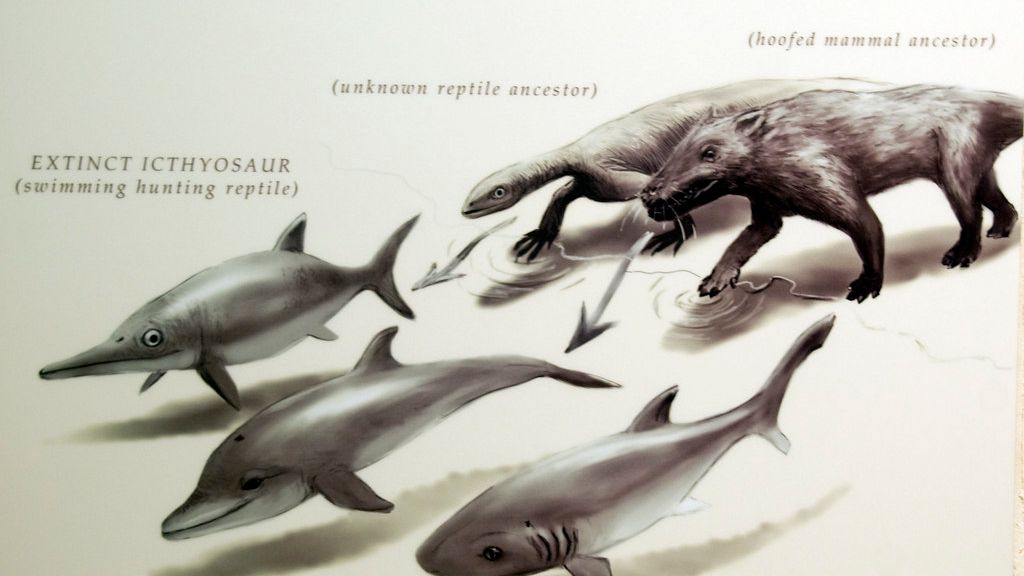
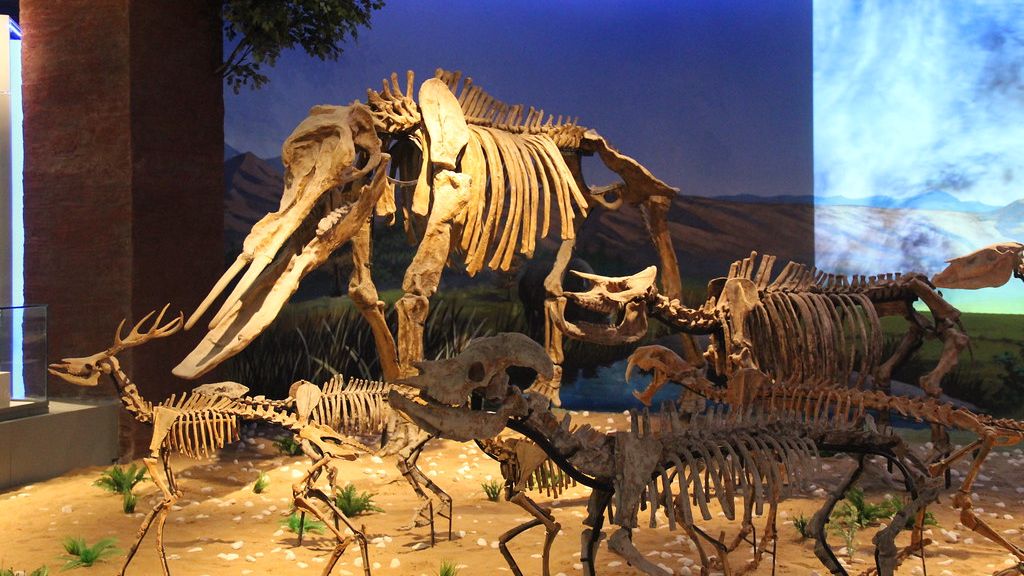
The 19th century marked the beginning of our fascination with dinosaurs as scientific discoveries of strange fossil bones led to the first attempts at reconstructing these prehistoric creatures. Before modern paleontological techniques, CT scans, and a comprehensive understanding of comparative anatomy, Victorian-era scientists and artists made educated guesses about dinosaur appearances that were often dramatically different from our current understanding. Their interpretations were influenced by limited fossil evidence, contemporary animals, and cultural perspectives of the time. The resulting illustrations and models reflected a unique blend of scientific inquiry and imagination that shaped public perception of dinosaurs for generations.
The Dawn of Dinosaur Paleontology

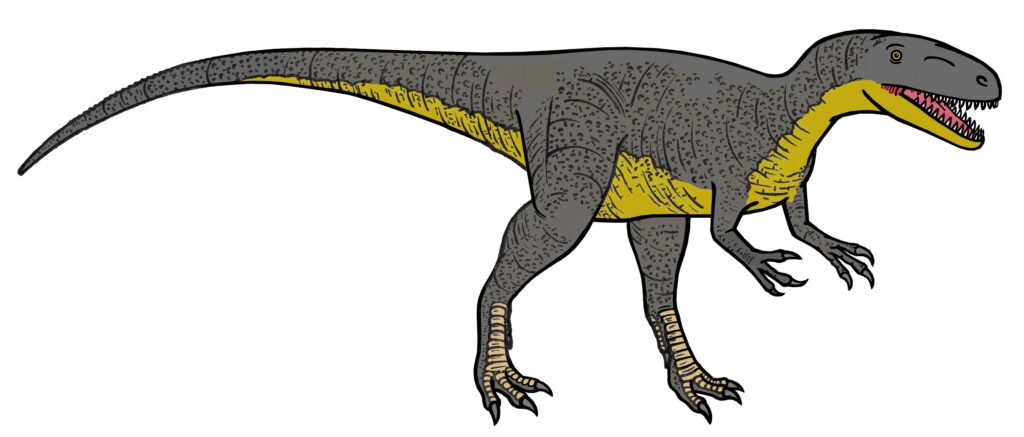
The formal scientific study of dinosaurs began in the early 1800s, with the first dinosaur to be scientifically named being Megalosaurus in 1824, described by William Buckland. Before this, large fossil bones had been discovered for centuries but were often attributed to biblical giants, mythological creatures, or victims of Noah’s flood. The term “dinosaur” itself wasn’t coined until 1842 by Sir Richard Owen, meaning “terrible lizard,” reflecting the early understanding of these creatures as essentially oversized reptiles. These pioneering paleontologists worked with fragmentary evidence—often just a few bones or teeth—requiring significant speculation to complete the picture of what these animals might have looked like in life. The limited nature of these early discoveries meant that early reconstructions were based more on imagination than evidence.
The Victorian Imagery of Iguanodon

One of the most famous early dinosaur reconstructions was that of Iguanodon, discovered by Gideon Mantell in the 1820s. Based on fragmentary remains, Mantell initially envisioned Iguanodon as a gigantic version of modern iguanas. The most distinctive feature of early Iguanodon reconstructions was the placement of what we now know as a thumb spike on the creature’s nose, like a rhinoceros horn. This misplacement occurred because scientists had no complete skeleton and didn’t understand how the pieces fit together. The Crystal Palace dinosaur models created by Benjamin Waterhouse Hawkins in the 1850s under Owen’s direction cemented this interpretation in the public imagination, showing Iguanodon as a heavy, quadrupedal beast with scaly skin and a horn on its nose. These life-sized models, still on display today, represent the first public dinosaur reconstructions and show how dramatically our understanding has changed over time.
Megalosaurus: The First Named Dinosaur
Megalosaurus, the first dinosaur to receive a scientific name, was initially reconstructed as a gigantic, lizard-like quadruped with the bulk of a hippopotamus and the scaly skin of a crocodile. In early illustrations and models, such as those at Crystal Palace, Megalosaurus was portrayed with sprawling limbs positioned out to the sides of its body rather than underneath it, as we now know is correct. This interpretation reflected the assumption that dinosaurs were essentially giant versions of modern reptiles like lizards or crocodiles. The creature was often depicted with a hunched back, dragging tail, and generally slow, lumbering appearance. It would take decades before scientists realized that many dinosaurs, including Megalosaurus, were bipedal predators with more upright postures, having more in common anatomically with birds than with crocodiles in their stance and locomotion.
The Influence of Contemporary Animals
In the absence of complete understanding, 19th-century paleontologists relied heavily on living animals as references for their dinosaur reconstructions. Reptiles like lizards, crocodiles, and iguanas served as primary models, leading to dinosaurs being depicted with sprawling limbs, dragging tails, and scaly skin. This approach, known as the principle of uniformitarianism or actualism, assumes that present processes can explain past phenomena. Mammals like elephants and rhinoceroses influenced the bulky, quadrupedal appearances given to many dinosaurs, even those we now know were bipedal. The massive marine iguanas of the Galapagos Islands, described by Darwin in the mid-1800s, particularly influenced how scientists imagined dinosaurs might have looked and moved. These comparisons with living animals were reasonable given the limited information available, but they led to fundamental misconceptions about dinosaur posture, movement, and appearance that would persist for more than a century.
The Cultural Impact of the Crystal Palace Dinosaurs
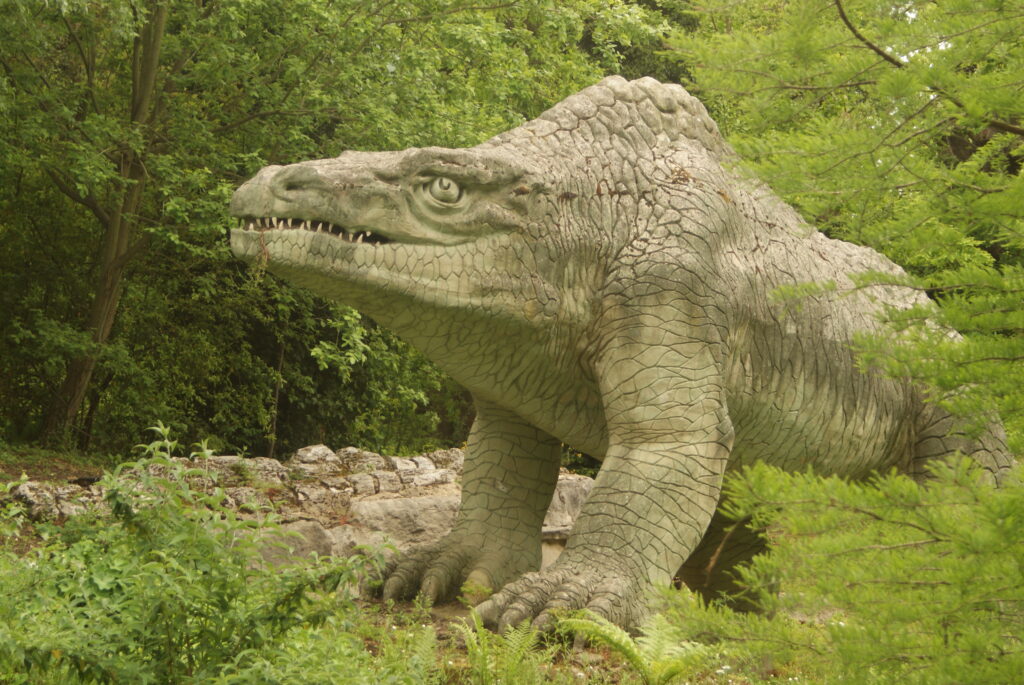
The Crystal Palace dinosaur sculptures, created for the relocation of the Great Exhibition structure to Sydenham in 1854, represent the first full-sized dinosaur reconstructions ever made for public display. These models, created by Benjamin Waterhouse Hawkins with scientific direction from Richard Owen, became the definitive popular image of dinosaurs for generations of Victorians. The unveiling of these sculptures was a sensation, with Queen Victoria and Prince Albert attending the exhibition, and the models even serving as the setting for a famous dinner party held inside the partially completed Iguanodon model on New Year’s Eve of 1853. Despite their scientific inaccuracies by modern standards, these sculptures were groundbreaking attempts to visualize prehistoric life based on the best scientific knowledge of the time. Their enduring presence in Crystal Palace Park serves as a fascinating monument to the history of scientific thought, showing how our understanding of dinosaurs has evolved dramatically since the Victorian era.
The “Rhinoceros” Interpretation of Dinosaurs

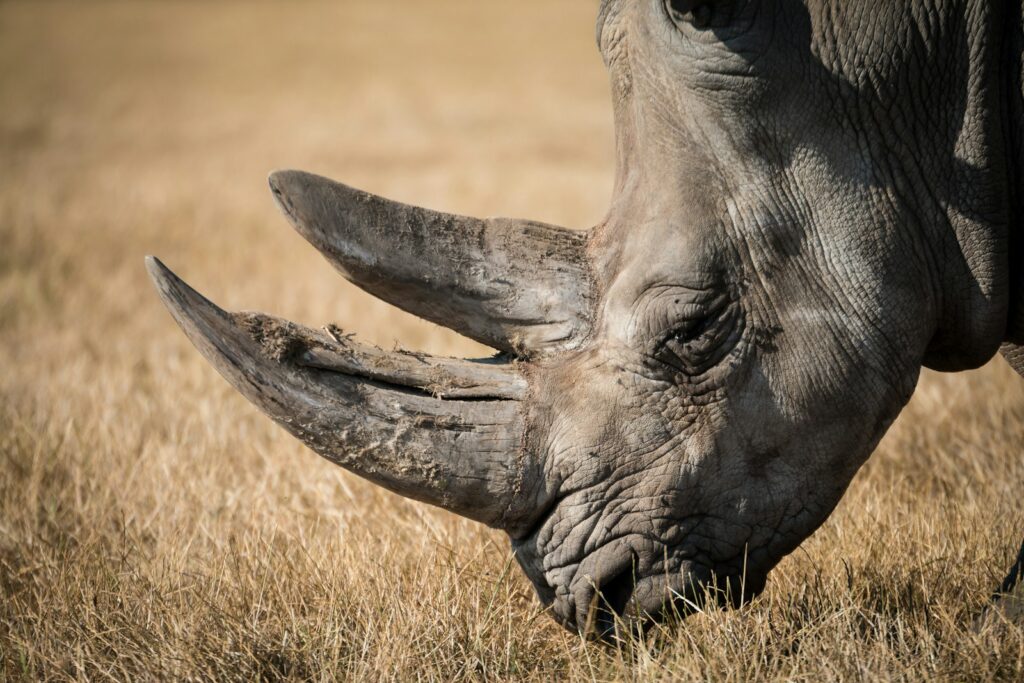
Many early dinosaur reconstructions gave the animals a distinctly rhinoceros-like appearance, with thick, folded skin, stocky limbs, and heavy bodies. This interpretation was particularly evident in depictions of ceratopsians like Triceratops after their discovery later in the century, but also influenced how earlier discoveries were visualized. The “pachyderm paradigm” was reinforced by Richard Owen, who emphasized the massive, elephant-like nature of dinosaurs, presenting them as robust, thick-skinned creatures. This perspective aligned with Victorian sensibilities about natural progression, suggesting dinosaurs were imperfect precursors to mammals rather than a diverse group with their evolutionary adaptations. Illustrations from late 19th-century publications often showed dinosaurs with wrinkled, rhinoceros-like hide rather than the scaly or even feathered coverings we now understand many dinosaurs possessed. This mammal-influenced perspective persisted into the early 20th century before gradually giving way to more reptilian interpretations.
The “Terrible Lizards” Concept

The very name “dinosaur,” coined by Richard Owen in 1842, translates from Greek as “terrible lizard,” reflecting the early conceptualization of these creatures as essentially monstrous versions of modern reptiles. This framing influenced how these animals were depicted, with early illustrations showing them with sprawling limbs, lizard-like body proportions, and forked tongues. The popular imagination seized upon this concept, merging scientific discoveries with folk memories of dragons and sea serpents. Newspapers and popular magazines of the Victorian era often embellished scientific findings with sensationalist depictions of savage, reptilian monsters. Even in more scholarly publications, the tendency to exaggerate the reptilian aspects of dinosaurs prevailed, with illustrations showing them with distinctly lizard-like features such as dewlaps, crests, and wattles that had no basis in the fossil evidence. This reptile-centric view fundamentally shaped public perception of dinosaurs as cold-blooded, slow, and primitive creatures—a misconception that would persist well into the 20th century.
The Bone Wars and Changing Perspectives
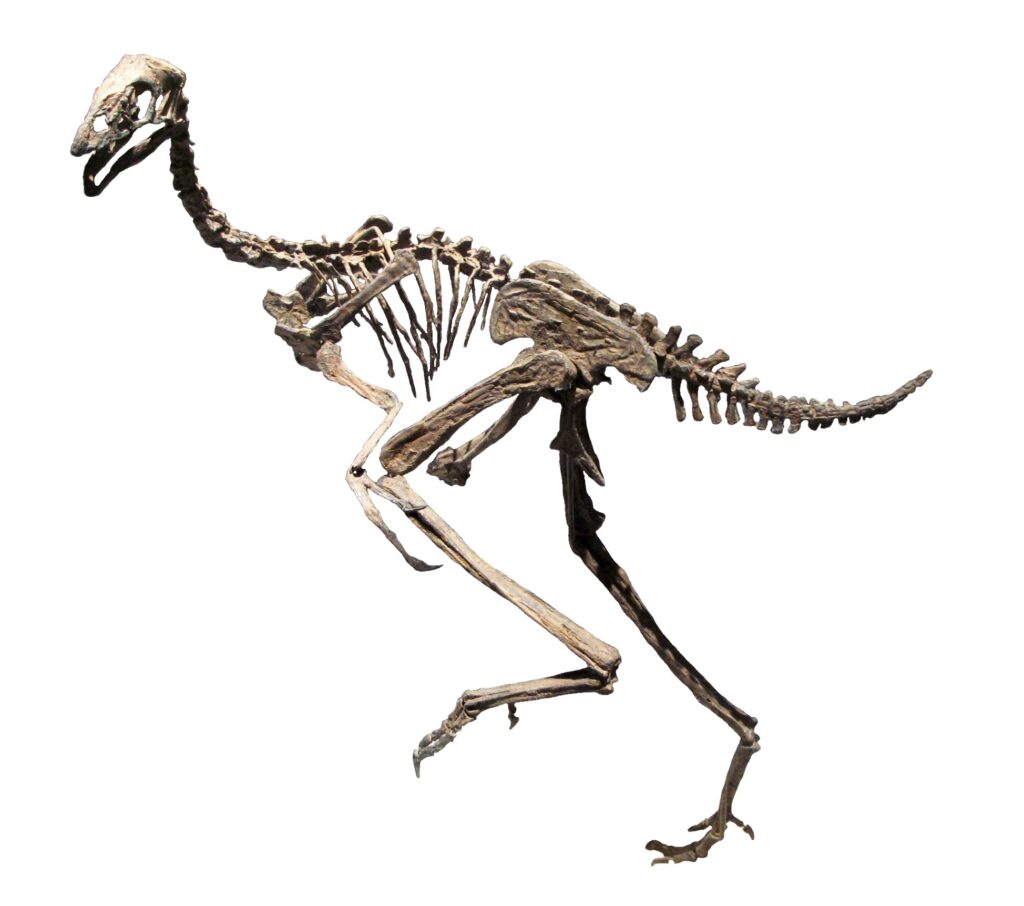
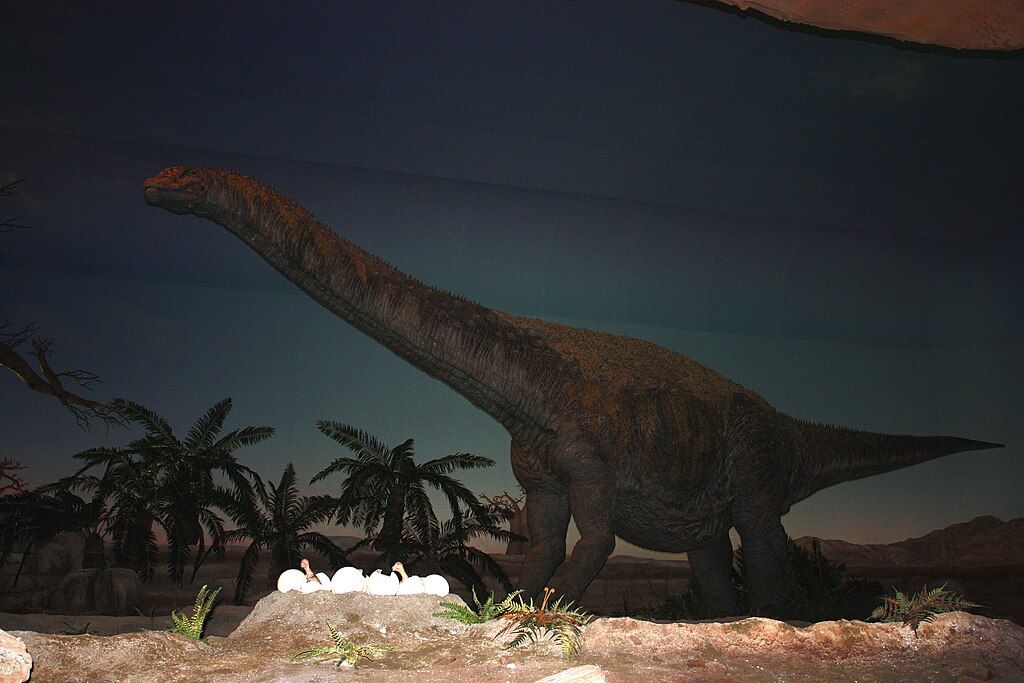
The famous “Bone Wars” of the late 19th century between paleontologists Othniel Charles Marsh and Edward Drinker Cope dramatically expanded the number of known dinosaur species and gradually began to challenge earlier conceptions of dinosaur appearance. Their fierce competition led to the hasty naming of new species and some questionable reconstructions, but also to more careful anatomical studies. Marsh’s work on Brontosaurus (now Apatosaurus) and other sauropods established a new vision of dinosaurs as truly colossal creatures, unlike anything living today, with more columnar limbs rather than the sprawling postures in earlier reconstructions. Cope’s discoveries of predatory dinosaurs began to suggest more active, dynamic animals than previously imagined. The flood of new specimens from American excavations during this period led to a gradual refinement of dinosaur reconstructions, with artists like Charles R. Knight beginning to depict dinosaurs in more natural, active poses by the century’s end. These changing perspectives set the stage for the complete rethinking of dinosaur appearance and behavior that would occur in the 20th century.
The Amphibious Dinosaur Theory

A persistent theory throughout much of the 19th century was that many dinosaurs were primarily aquatic or amphibious creatures. This concept stemmed partly from the discovery of many dinosaur fossils in ancient lake beds and river deposits, and partly from the difficulty early paleontologists had in imagining how such massive creatures could support their weight on land. Richard Owen proposed that Iguanodon lived a hippopotamus-like lifestyle, spending much time submerged in water that would help support its bulk. The long-necked sauropods like Diplodocus and Brontosaurus were similarly imagined as swamp-dwelling creatures that used deep water to buoy their massive bodies. Artists frequently depicted dinosaurs partially submerged in swamps or lakes, with only their heads and backs visible above the waterline. This theory conveniently explained away problems in understanding dinosaur locomotion and weight distribution that were difficult to resolve with the limited knowledge of the time. The amphibious dinosaur theory remained influential until well into the 20th century, when studies of dinosaur anatomy, particularly of their feet and limbs, demonstrated that most were well-adapted for terrestrial movement.
The Art of Charles R. Knight
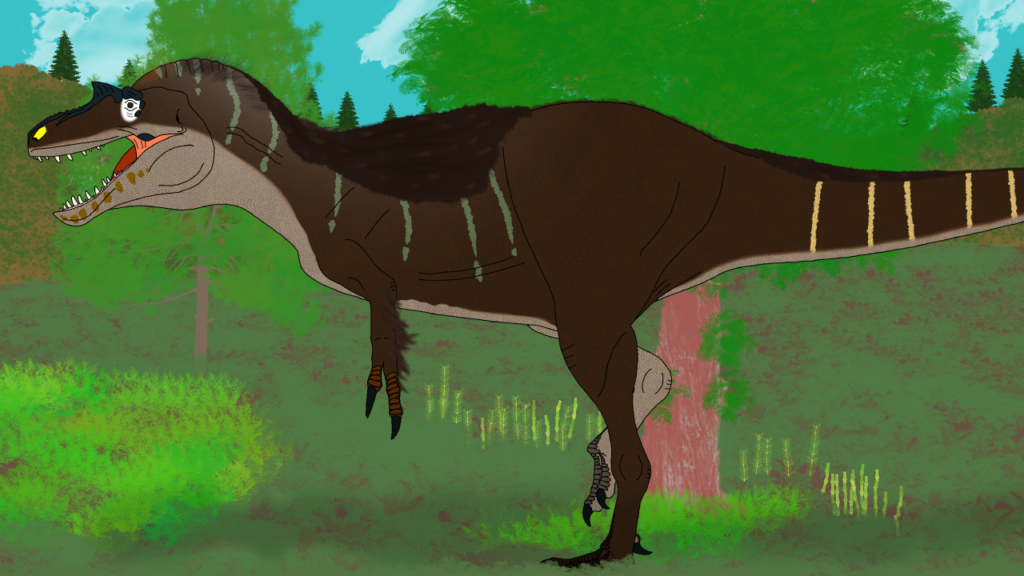
As the 19th century drew to a close, the work of American artist Charles R. Knight began to revolutionize dinosaur imagery with more dynamic and naturalistic depictions. Knight collaborated closely with paleontologist Edward Drinker Cope and later with the American Museum of Natural History to create paintings that showed dinosaurs as active, living animals in realistic environments rather than static museum specimens. Unlike earlier artists who emphasized the monstrous or reptilian qualities of dinosaurs, Knight studied modern animals extensively and applied principles of comparative anatomy to his prehistoric reconstructions. His famous painting of a Laelaps (now called Dryptosaurus) duel from 1897 was groundbreaking in showing dinosaurs in active, balanced poses with their tails held off the ground. Knight’s work represented a significant advance toward more scientifically informed dinosaur reconstructions, though still limited by the paleontological understanding of his time. His influential paintings captured the public imagination and established visual tropes of dinosaur appearance that would dominate popular culture well into the mid-20th century.
Dinosaurs in Popular Literature and Early Science Fiction
By the late 19th century, dinosaurs had captured the Victorian imagination and began appearing in popular literature, most famously in Sir Arthur Conan Doyle’s 1912 novel “The Lost World,” which was conceived in the late Victorian period. These fictional accounts typically portrayed dinosaurs as monstrous reptiles, drawing heavily on the scientific illustrations and museum displays of the time. Jules Verne’s “Journey to the Center of the Earth” (1864) included prehistoric creatures based on early paleontological reconstructions, emphasizing their alien and terrifying nature. Victorian-era children’s books often featured dinosaurs as examples of God’s creation or as curiosities of a primeval world, illustrated according to the scientific consensus of massive, scaly beasts. These popular depictions both reflected and reinforced scientific conceptions of the time, creating a feedback loop between scientific illustration and popular imagery. Magazine illustrations, particularly in publications like The Illustrated London News, frequently featured sensationalized renderings of newly discovered dinosaurs, further cementing their image as monstrous reptiles in the public consciousness.
The Missing Link: Birds and Dinosaurs
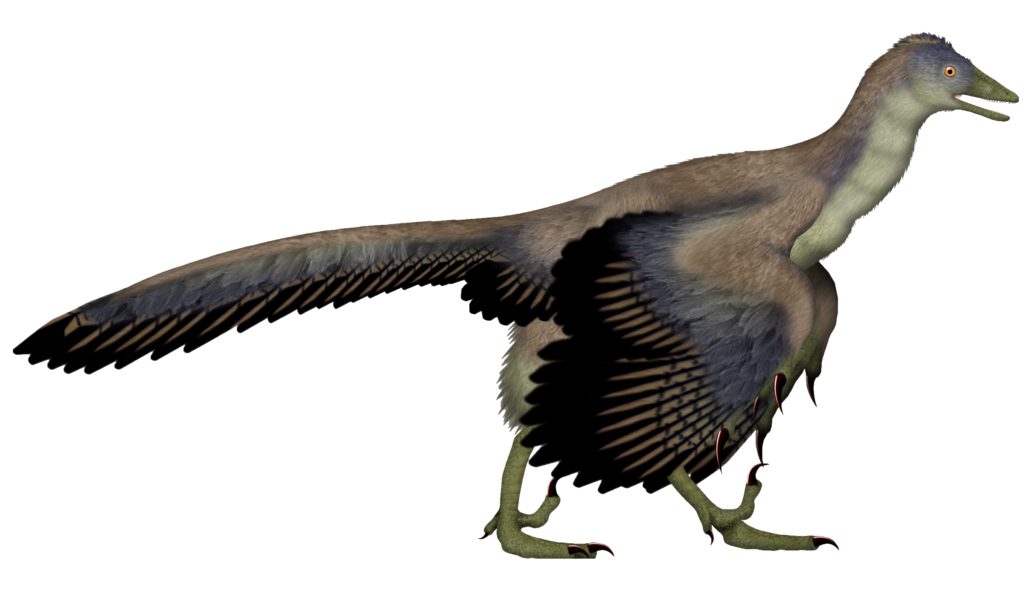
One of the most significant misunderstandings in 19th-century paleontology was the failure to recognize the close evolutionary relationship between dinosaurs and birds, despite some tantalizing evidence. The discovery of Archaeopteryx in 1861, with its blend of reptilian and avian features, provided a hint of this connection, but most scientists of the era didn’t leap to see birds as direct descendants of dinosaur lineages. Thomas Henry Huxley was a notable exception, proposing a dinosaur-bird connection in the 1860s based on similarities between the skeletons of small theropod dinosaurs and Archaeopteryx. However, his views didn’t gain widespread acceptance during the Victorian era. Most scientists continued to depict all dinosaurs with exclusively reptilian features, missing the feathers, warm-bloodedness, and bird-like postures that modern paleontology recognizes in many dinosaur groups. This failure to connect dinosaurs and birds contributed to the persistent imagery of dinosaurs as slow, cold-blooded reptiles rather than the more dynamic, potentially warm-blooded, and sometimes feathered creatures we envision today.
The Legacy of Victorian Dinosaur Imagery

The dinosaur reconstructions of the 19th century may seem wildly inaccurate by modern standards, but they represent a crucial chapter in the development of paleontology as a science. These early attempts at visualizing extinct creatures based on fragmentary evidence established methodologies for fossil reconstruction that would be refined over subsequent generations. The Victorian imagery of dinosaurs as lumbering, reptilian monsters persisted in popular culture well into the late 20th century, influencing films, books, and toys long after scientific understanding had moved on. The dramatic contrast between these early reconstructions and our current understanding highlights the progressive nature of scientific knowledge, showing how theories evolve as new evidence emerges. Museums around the world now maintain displays of historical dinosaur reconstructions alongside modern ones, offering fascinating glimpses into the evolution of scientific thought. The Crystal Palace dinosaurs, now protected as historical monuments, stand as an enduring testament to this early period of discovery and imagination when humans first began to seriously contemplate the strange inhabitants of Earth’s distant past.
How 19th-Century Scientists Imagined Dinosaurs
The story of how Victorians visualized dinosaurs reminds us that scientific understanding is always a work in progress. From the rhinoceros-horned Iguanodon to the swamp-dwelling Brontosaurus, these early reconstructions represent sincere attempts to make sense of the emerging fossil record with the knowledge available at the time. While modern paleontologists might smile at these historical interpretations, they recognize that today’s cutting-edge reconstructions may seem similarly outdated to future generations as discoveries continue to refine our understanding of these fascinating prehistoric creatures. The dramatic shift in how we visualize dinosaurs—from slow, reptilian monsters to active, sometimes feathered, potentially warm-blooded animals—stands as one of science’s most striking visual transformations, demonstrating how our picture of the past continues to evolve with each new fossil discovery and analytical technique.