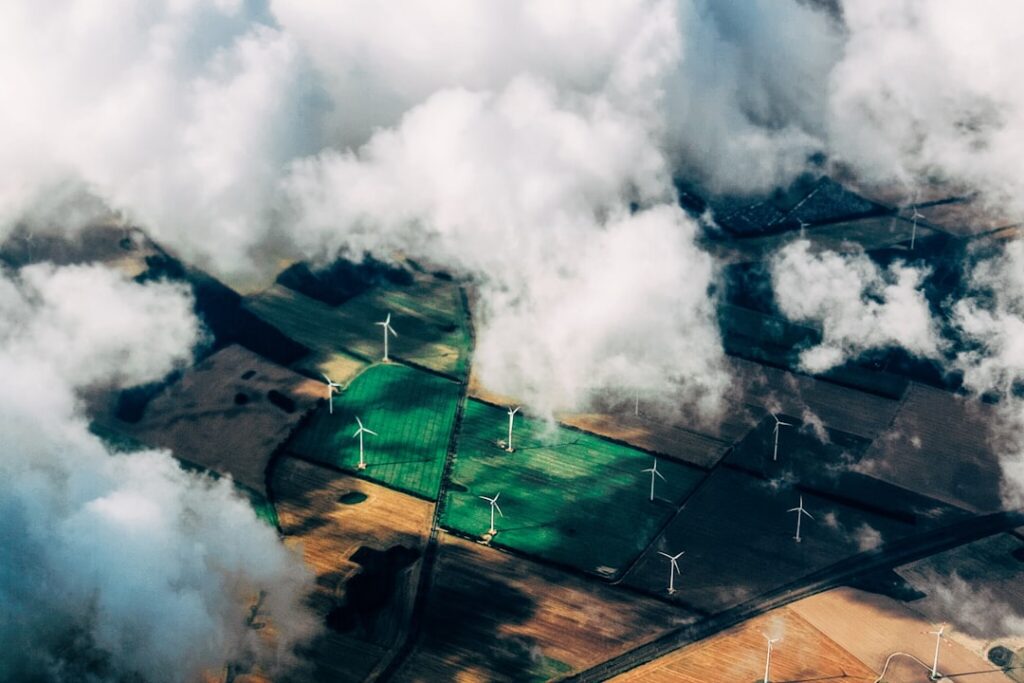

The Renewable Energy Milestone (Image Credits: Unsplash)
As 2025 drew to a close, a series of climate advancements emerged to counter the year’s environmental challenges, highlighting human ingenuity and collective resolve.
The Renewable Energy Milestone
Renewable sources generated more electricity worldwide than coal for the first time in the first half of 2025, marking a pivotal shift in global energy dynamics. This surge, driven primarily by solar and wind, outpaced the rise in electricity demand and led to a slight decline in fossil fuel reliance. Experts noted that solar panels had become so affordable that deploying them proved more cost-effective than expanding fossil fuel infrastructure in many regions.
The transition gained momentum as countries installed over 1,000 gigawatts of new renewable capacity throughout the year, equivalent to three times the existing global nuclear output. Wind and solar not only met growing needs but also reshaped power sectors, with renewables covering nearly all demand increases in 2024 and 2025. This progress underscored the feasibility of scaling clean energy without compromising economic growth.
Innovations Turning Deserts Green
Abundant cheap electricity from renewables powered large-scale desalination plants in 2025, transforming arid regions into fertile lands. These facilities extracted salt from seawater to produce vast quantities of fresh water, enabling irrigation in previously barren deserts. Advances in nano-structured membranes and forward osmosis reduced energy costs by 15 percent, making the process viable for coastal communities while minimizing carbon emissions.
Projects in the Middle East and North Africa demonstrated how this technology could support agriculture and urban development sustainably. By integrating solar power, operators achieved round-the-clock operation without relying on fossil fuels. Such innovations offered a blueprint for addressing water scarcity amid rising temperatures.
Africa’s Bold Path to Climate Leadership
Leaders from Africa’s expanding economies unveiled ambitious strategies in 2025 to position the continent as a hub for climate solutions. They focused on leveraging local resources for renewable deployment, aiming to meet rising energy demands through solar and wind rather than traditional sources. This approach promised job creation and energy security while contributing to global emissions reductions.
Collaborations with international partners accelerated the rollout of off-grid solar systems, benefiting millions in rural areas. The initiative aligned with broader goals to foster resilience against extreme weather. By prioritizing green infrastructure, African nations set an example for equitable climate action.
Local Heroes Filling the Federal Void
In the absence of unified national policies, U.S. states and cities ramped up their climate efforts in 2025, setting aggressive emissions targets and regulating utilities independently. Public transportation expansions and energy-efficient building codes became widespread, reducing urban carbon footprints significantly. These grassroots movements demonstrated that decentralized action could drive substantial progress.
California’s wildfire mitigation programs and New York’s renewable incentives stood out as models. Local governments also invested in resilient infrastructure to withstand floods and heatwaves. This bottom-up momentum inspired similar initiatives worldwide, proving that community-level changes could influence larger systems.
India’s Renewable Revolution Accelerates
India pushed toward its 2030 renewable energy targets with renewed vigor in 2025, installing hundreds of gigawatts of solar and wind capacity under national leadership. The country aimed for 500 gigawatts of non-fossil fuel power, alongside net-zero emissions for its railway network and green hydrogen production of 5 million metric tons. These efforts supported economic development while curbing pollution in densely populated areas.
Rapid deployment of rooftop solar and large-scale farms created jobs and lowered energy costs for households. Integration with smart grids enhanced reliability during peak demand. India’s progress highlighted how developing nations could leapfrog to clean energy, bypassing heavy fossil fuel dependence.
Key Takeaways
- Renewables surpassed coal generation globally, signaling a cleaner energy future.
- Desalination powered by solar offered solutions to water shortages in drylands.
- Africa and India emerged as leaders in equitable, scalable climate strategies.
These stories from 2025 illustrated that despite breached planetary boundaries and record warmth, innovative solutions and determined actions provided a foundation for hope. As renewables and local initiatives gained traction, the path to a stable climate appeared more achievable. What climate story inspired you this year? Share your thoughts in the comments.