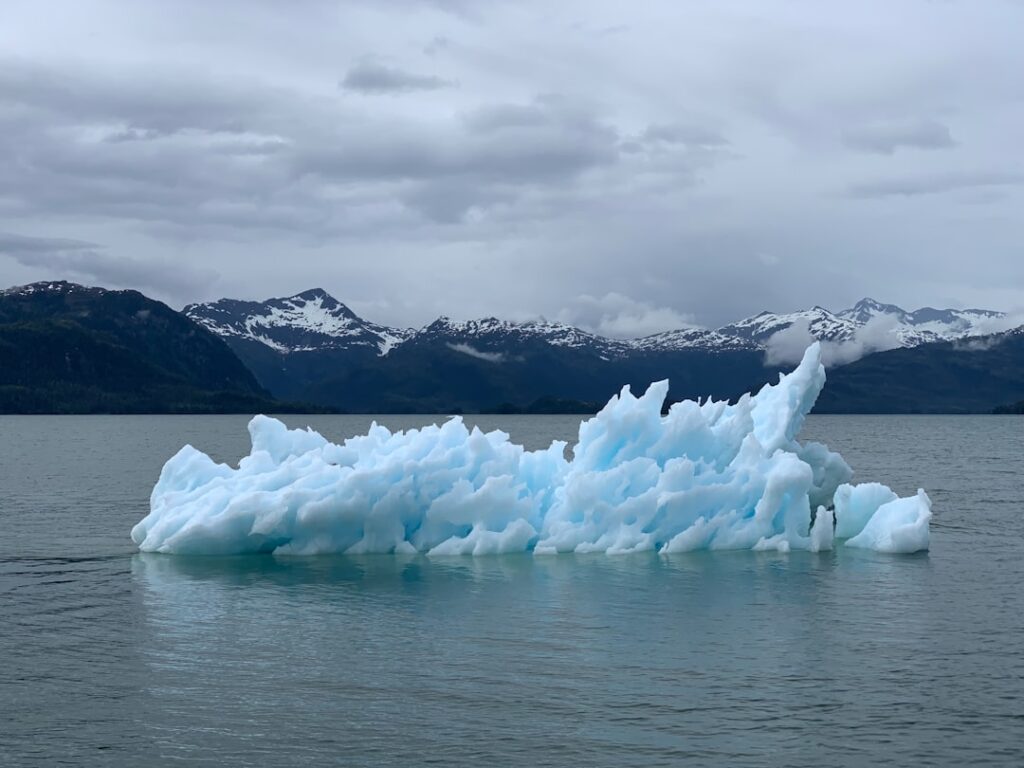

A Feedback Loop Too Powerful to Ignore (Image Credits: Unsplash)
Recent research has revealed how escalating global temperatures might inadvertently set the stage for a dramatic cooling period, challenging long-held views on climate trajectories.
A Feedback Loop Too Powerful to Ignore
Scientists announced findings last week that highlight a critical oversight in Earth’s carbon cycle, one that could transform current warming trends into extreme cooling. As oceans absorb more carbon dioxide from human activities, nutrient-rich waters from melting land trigger massive plankton blooms. These blooms, in turn, bury vast quantities of carbon on the seafloor, especially under low-oxygen conditions where decay slows dramatically.
This process, described in a study published by ScienceDaily, amplifies itself. Warmer conditions initially boost the nutrient runoff, leading to even greater carbon sequestration. Over time, the removal of so much carbon from the atmosphere could cool the planet sharply, potentially overshooting into an ice age. Researchers noted that this mechanism explains some of Earth’s most severe ancient glaciations, where temperatures plummeted far below pre-event levels.
While the immediate effects of climate change – rising seas and heatwaves – dominate headlines, this feedback underscores the complexity of planetary systems. Experts emphasized that human-induced warming accelerates the initial steps, making the loop more intense than in natural cycles.
Historical Echoes in Modern Warnings
Earth’s climate history offers stark parallels to today’s concerns. For millions of years, the planet has alternated between ice ages and warmer interglacials, driven by orbital variations and atmospheric changes. The new research connects these patterns to ocean biology, showing how plankton-driven carbon burial played a pivotal role in past transitions.
In one analysis from Popular Mechanics, scientists detailed how phosphorus from eroding soils, combined with deoxygenated ocean zones, supercharges algal growth. This “thermostat” mechanism once stabilized the climate but now risks overcorrection due to rapid warming. Historical records from ice cores in Greenland and Antarctica reveal abrupt shifts, including periods like the Little Ice Age in the 1600s, when synchronized solar minima and ocean current changes brought widespread cold snaps.
Though not immediate, projections suggest that without intervention, this feedback could manifest in centuries, altering global weather patterns irreversibly. The study warns that ignoring such loops perpetuates a theory flexible enough to predict any outcome, from endless heat to sudden freeze.
Unpacking the Science: Key Mechanisms at Play
To grasp the potential for an ice age amid warming, consider the ocean’s role as Earth’s largest carbon sink. As glaciers melt faster, they release phosphorus-laden freshwater into the Atlantic and other basins. This fertilizes surface waters, spurring phytoplankton explosions that photosynthesize and sink organic matter deep below.
In oxygen-poor depths, bacteria struggle to break down this material, locking away carbon for millennia. A report from YaleGlobal Online highlighted similar disruptions in the Gulf Stream, where fresh water influx has already weakened currents by 20 percent since 1950, cooling northern regions subtly.
- Nutrient runoff from land increases with higher temperatures and precipitation.
- Plankton blooms absorb CO2, reducing atmospheric greenhouse gases.
- Low-oxygen “dead zones” expand, preserving buried carbon longer.
- Resulting cooling disrupts weather, potentially expanding ice sheets.
- Historical precedent: Ancient events cooled Earth by up to 10 degrees Celsius.
These steps form a self-reinforcing cycle, distinct from slower orbital forcings like Milankovitch cycles, which predict the next natural ice age in about 11,000 years – but human actions could hasten it.
Implications for Policy and Preparedness
Governments and organizations now face the urgency of addressing not just warming but its unpredictable rebounds. The Woods Hole Oceanographic Institution has long studied abrupt changes, urging investments in monitoring ocean chemistry and currents. Reducing emissions remains crucial to slow the nutrient surge fueling this loop.
Adaptation strategies must evolve too. Coastal communities, already vulnerable to sea-level rise, could encounter shifting risks as polar ice responds to fluctuating temperatures. International efforts, like those under the UN Framework Convention on Climate Change, incorporate these findings to refine models.
Experts from Climate Change Dispatch critiqued overly simplistic theories, noting that one fitting “every outcome” demands rigorous testing. Still, the consensus points to proactive measures: curbing pollution to preserve ocean health and bolstering resilience against extremes.
Key Takeaways
- Global warming boosts carbon burial in oceans, risking overshoot into cooling.
- Ancient ice ages share this plankton-nutrient feedback with modern projections.
- Immediate action on emissions can mitigate the loop’s acceleration.
As climate science uncovers these intricate balances, the path forward demands vigilance against both heat and unforeseen chills. What steps do you believe societies should prioritize to navigate this paradox? Share your thoughts in the comments.