
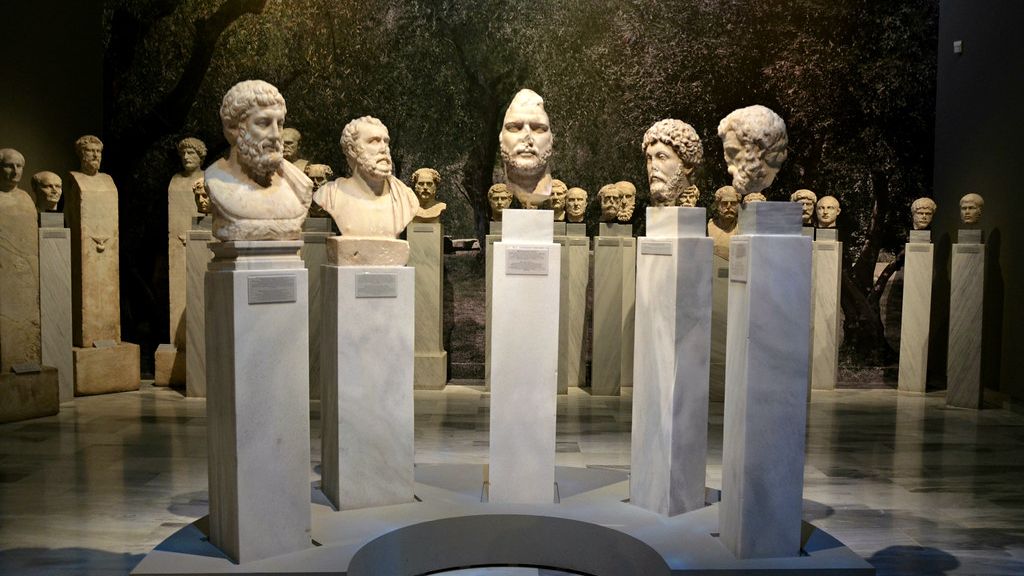
You’ve probably heard names like Socrates and Marcus Aurelius tossed around in conversations or seen their quotes floating across your social media feed. Maybe you think philosophy is just dusty textbooks and abstract theories. Here’s the thing, though: these ancient thinkers weren’t just sitting around pondering the meaning of life in ivory towers. They were grappling with real problems, messy emotions, and the chaos of everyday existence.
What’s surprising is how much their wisdom applies to your life today, right now in 2026. These philosophers understood something fundamental about human nature that hasn’t changed in thousands of years. So let’s dive in and see what unexpected truths they discovered.
Control What You Can, Let Go of Everything Else

You cannot choose your external circumstances, but you can always choose how you respond to them. This idea from Epictetus sounds simple, yet it’s revolutionary when you actually apply it. Think about all the mental energy you waste worrying about things completely outside your control: what others think of you, whether it rains on your wedding day, or if your boss is having a bad morning.
You can’t control everything that happens to you, but you can control the way you respond, and in your response is your greatest power. This isn’t about becoming passive or indifferent. It’s about directing your efforts where they actually matter. When you stop obsessing over the uncontrollable, you free up energy for what truly deserves your attention.
Change Is the Only Constant, So Stop Fighting It

Everything in life – people, situations, even you – is always changing, and that’s okay. Heraclitus understood this thousands of years ago, yet we still resist change like it’s our mortal enemy. You cling to relationships that have run their course, jobs that drain you, or versions of yourself that no longer fit.
Fighting change is like trying to swim against a strong current – it’s exhausting and gets you nowhere. The philosophers weren’t telling you to be happy about every change. They were suggesting something more practical: accept that change happens whether you like it or not. When you stop resisting and start adapting, you become more resilient. Life doesn’t feel like a series of personal attacks; it becomes a natural flow you can navigate.
Self-Knowledge Is Your Superpower

Socrates famously stated “Know thyself,” believing that self-knowledge was the key to living wisely and encouraging people to reflect on their values, beliefs, and character to gain wisdom. This wasn’t some narcissistic exercise in navel-gazing. Socrates understood that you can’t make good decisions if you don’t understand your own motivations, biases, and blind spots.
Self-examination helps us understand our strengths, weaknesses, and true motivations, providing clarity and direction in life. Most people spend more time researching which phone to buy than examining their own character. The ancient philosophers knew that understanding yourself is the foundation for everything else. When you know what drives you, what triggers your worst impulses, and what truly makes you fulfilled, you stop drifting through life on autopilot.
Your Ego Is Not Your Friend

Here’s something that might sting a bit. The ability to develop a healthy relationship with your ego and limit its influence is an important skill you need to become a better person, as ego interrupts reason and intuition. We live in a culture that constantly tells you to promote yourself, defend your reputation, and never admit weakness.
The philosophers saw through this nonsense. Once you tame your ego, you will be liberated to make the biggest impact in life and career. When your ego runs the show, you make decisions to protect your self-image rather than to pursue truth or growth. You avoid necessary criticism, double down on bad ideas just because they’re yours, and miss opportunities to learn because admitting ignorance feels threatening. The paradox is that reducing your ego actually makes you more effective, not less.
Think for Yourself, Even When Authorities Disagree

Socrates argued that we should not solely rely on those in “authority” to have sound knowledge and insight, demonstrating that people may have power and high position and yet be deeply confused and irrational. This lesson feels especially relevant in our age of conflicting expert opinions and information overload. Just because someone has credentials, followers, or power doesn’t mean they’re right.
The Socratic approach wasn’t about rejecting expertise entirely. It was about questioning everything, including the assumptions of people in charge. When you blindly defer to authority, you outsource your own thinking. The philosophers wanted you to develop your own capacity for reasoning, to examine claims critically, and to arrive at conclusions through your own investigation rather than simply accepting what you’re told.
Face Obstacles as Your Greatest Teachers

Marcus Aurelius reminds us that our actions may be impeded, but there can be no impeding our intentions or dispositions because we can accommodate and adapt, as the mind adapts and converts to its own purposes the obstacle to our acting. This flips conventional wisdom on its head. You’ve been taught to avoid problems, minimize difficulties, and seek the easiest path.
The Stoics saw it differently. Despite the setbacks in life, it’s in your best interest to turn obstacles into stepping stones, and what matters to your progress is how you see them, how you react to them, and whether you keep your composure. Every frustration, every failure, every seemingly insurmountable challenge contains within it the seed of growth. When your project fails, you learn what doesn’t work. When someone criticizes you harshly, you discover where your vulnerabilities lie. The obstacle isn’t blocking your path; it is the path.
Friendship Isn’t Transactional

Many Stoics – such as Seneca and Epictetus – emphasized that because “virtue is sufficient for happiness,” a sage would be emotionally resilient to misfortune. Yet they didn’t advocate for isolation. The Stoics understood that genuine friendship, the kind where you care about someone’s wellbeing for its own sake rather than what they can do for you, is essential to the good life.
Think about your own relationships for a moment. How many of them are based on mutual usefulness rather than genuine connection? The philosophers challenged this instrumental view of friendship. When you approach relationships as transactions – networking opportunities, social media clout, career connections – you miss out on one of life’s deepest sources of meaning. True friendship means being willing to help someone even when there’s no benefit to you.
Death Shouldn’t Be Feared, But Remembered

Epicurus taught that death was not to be feared since we no longer exist to experience anything when we die, as our non-existence after death is thus nothing to worry about, encouraging enjoying life’s simple pleasures in the present. This might seem morbid, but it’s actually liberating. You waste so much time and energy anxious about something that, by definition, won’t affect you when it happens.
Regularly contemplate mortality to maintain perspective on what truly matters. The philosophers weren’t being gloomy; they were being practical. When you remember that your time is limited, suddenly petty arguments seem ridiculous, grudges feel pointless, and that thing you’ve been putting off becomes urgent. Awareness of death doesn’t make life depressing; it makes it precious.
Happiness Is an Activity, Not a Feeling

For most ancient ethicists, the central problem of ethics was the achievement of happiness, and by “happiness” they did not mean a pleasant state of mind but rather a good human life or a life of human flourishing, acquired through virtue. You’ve been sold a lie that happiness is about feeling good all the time. The philosophers knew better.
For Aristotle, happiness is not merely a condition of the soul but a kind of right activity. True fulfillment comes from living according to your values, cultivating virtues, and engaging meaningfully with the world. Some of the happiest moments in your life probably involved struggle, effort, or even pain. The exhaustion after helping a friend move, the anxiety before giving an important presentation that went well, the discomfort of having a difficult but necessary conversation. These aren’t pleasant feelings, but they’re part of a flourishing life.
Simplicity Beats Complexity

Diogenes was an eccentric philosopher in ancient Greece who defied social conventions and lived a simple life, became notorious for rejecting material comforts, and taught the importance of self-sufficiency, freedom from social pressures, and listening to one’s inner voice. In a world obsessed with accumulation, upgrades, and constant consumption, this ancient wisdom cuts through the noise.
You don’t need most of the stuff cluttering your life, your schedule, or your mind. The philosophers who practiced simplicity weren’t denying themselves pleasure out of some twisted asceticism. They discovered that most of what we think we need is actually weighing us down. When you strip away the excess, you find what actually matters. Freedom isn’t about having everything; it’s about needing less.
Philosophy Isn’t Theory, It’s Practice

The Stoics thought the best indication of an individual’s philosophy was not what a person said but how the person behaved. This lesson hits differently when you realize how much time you spend consuming content about self-improvement without actually improving yourself. Reading inspirational quotes, watching motivational videos, and discussing philosophical concepts might feel productive, but they’re worthless without application.
In our choices and actions every day, we can apply the lessons of philosophy to become wiser, less agitated, more thoughtful, appreciate life more, and think more deeply about our choices. The ancient philosophers weren’t writing self-help books to sell millions of copies. They were developing practical tools for living better lives, tested through their own experience. Philosophy was meant to be lived, not just studied. The question isn’t whether you know these principles; it’s whether you’re actually using them.
These ancient philosophers weren’t offering easy answers or quick fixes. They understood that the good life requires effort, self-examination, and a willingness to challenge comfortable assumptions. Their wisdom has survived millennia not because it’s entertaining, but because it works. The principles they discovered about human nature, virtue, and flourishing remain as relevant today as they were in ancient Athens or Rome. What surprised you most about these lessons? Which one challenges your current way of thinking? Let us know in the comments.