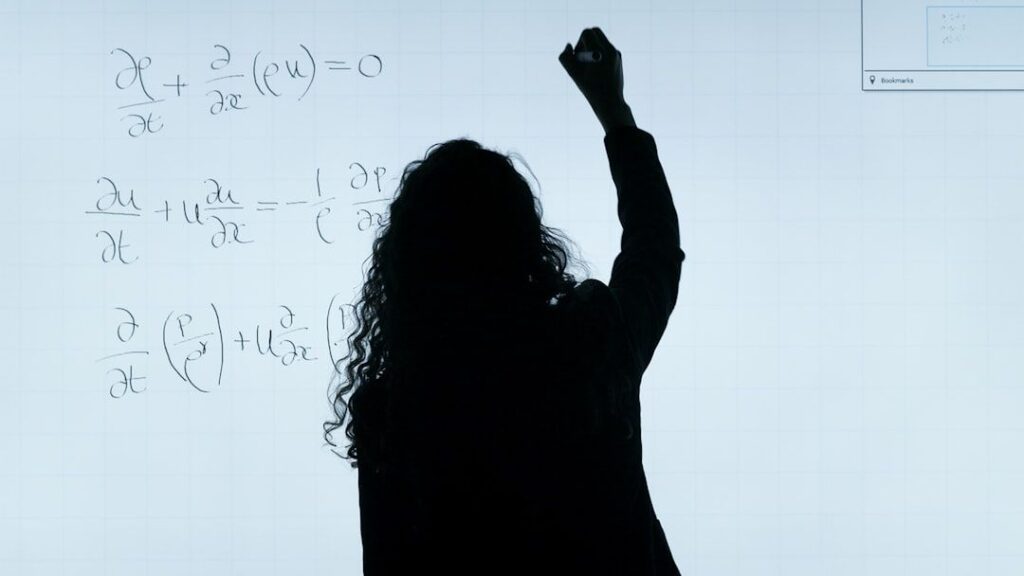
Have you ever felt like your brain was doing backflips while trying to understand something? Like the more you think about it, the less sense it makes? Well, you’re about to experience that sensation on a whole new level. Paradoxes have haunted brilliant minds for thousands of years, from ancient Greek philosophers debating in dusty courtyards to modern physicists scratching equations on whiteboards.
These bizarre contradictions exist everywhere, from mathematics to physics to everyday logic, challenging our understanding and expanding how we see the world. Some paradoxes are playful linguistic puzzles. Others expose fundamental cracks in our logical systems or force us to rethink the very nature of time, infinity, and existence itself. So let’s dive in and explore ten paradoxes that’ll make you question everything you thought you knew.
The Liar Paradox: When Truth Eats Its Own Tail
Picture someone telling you “I am lying.” If what they say is true, then they are lying, which means what they tell you is false. On the other hand, if what they tell you is false, then they are not lying, which means what they tell you is true. Your brain just entered a logical loop with no exit.
This paradox arises for any sentence that says or implies of itself that it is false, such as “This sentence is false.” It’s attributed to the ancient Greek seer Epimenides, an inhabitant of Crete, who famously declared that “All Cretans are liars”. Think about that one for a minute. If he’s telling the truth, then he’s lying. Honestly, it’s enough to make you want to give up on language altogether and just communicate through interpretive dance.
The Grandfather Paradox: Time Travel’s Ultimate Headache
If you travel back in time and kill your grandfather before he conceives one of your parents, this precludes your own conception, and therefore you could not go back in time and kill your grandfather. It’s the kind of problem that keeps physicists awake at night and makes science fiction writers giddy with excitement.
Some scientists suggest the multiverse theory might solve this one. Maybe killing your grandfather just creates a branching timeline where you were never born, while the original timeline trundles along unaffected. Still, the paradox reveals something profound about causality itself. If the future can alter the past, what even is time? Is it a line, a circle, or something far stranger we can barely imagine?
Zeno’s Paradox: The Race You’ll Never Finish

To reach a tortoise ahead of you, you must first cover half the distance between you. However, by then, the tortoise will have crept forward a bit, so you need to cover half of that new distance, but again, the tortoise moves. This seemingly endless series of “halves” creates the illusion that you can never actually catch up, no matter how fast you run.
Here’s the thing that’ll really twist your mind: before you can walk across a room, you have to walk halfway. Before you walk halfway, you have to walk a quarter of the way. Before that, an eighth, then a sixteenth, and so on into infinity. Zeno’s aim wasn’t to mock athletic tortoises but to challenge our understanding of motion and infinity, highlighting the tricky nature of dividing distances into infinitely smaller parts. Somehow, we manage to cross rooms every day without thinking about it. Makes you wonder what else we take for granted.
Russell’s Paradox: The Set That Broke Mathematics
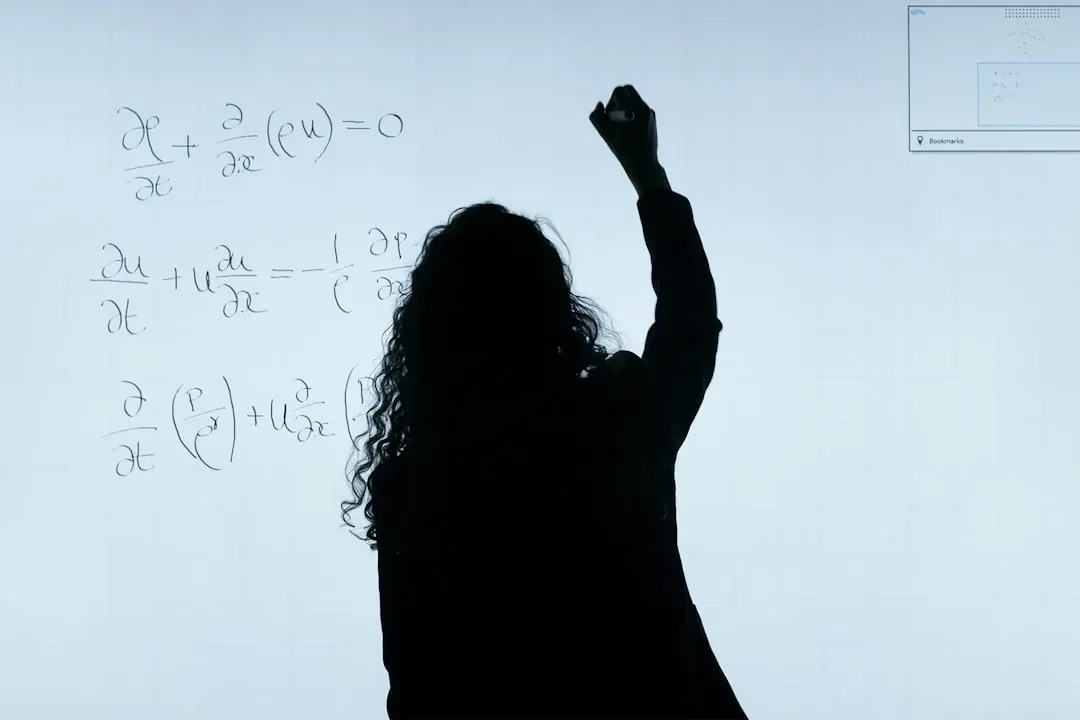
Russell’s Paradox asks: does the set of all those sets that do not contain themselves as a member, actually contain itself? If it does contain itself, then by definition it shouldn’t, because it’s supposed to only contain sets that don’t contain themselves. Yet if it doesn’t contain itself, then it should be included in the set of all sets that don’t contain themselves.
It was discovered by Bertrand Russell in or around 1901. In a letter to Gottlob Frege, Russell outlined the problem as it affects Frege’s major work. Frege responded with both dismay and admiration, and never recovered from the blow dealt to his life’s work. Imagine spending your entire career building a mathematical system only to have someone show you it collapses under its own logic. That’s the power of paradoxes to shake entire fields of study.
The Barber Paradox: Who Shaves the Barber?

A male barber shaves all and only those men who do not shave themselves. Does he shave himself? If he shaves himself, then he’s one of the men who shaves himself, which means he shouldn’t shave himself according to the rule. Yet if he doesn’t shave himself, then he’s one of the men who don’t shave themselves, which means he must shave himself.
This paradox from British philosopher Bertrand Russell takes place in a small town with strict personal hygiene laws where all men must be clean shaven. They can either be shaved by the one male barber in town, or they can shave themselves. When the barber shaves, he is shaving himself and he is being shaved by the barber. Russell actually used this as a simplified, more accessible version of his set theory paradox. It shows how self-reference can tie logic into impossible knots.
Hilbert’s Grand Hotel: The Infinite Accommodation Problem
In 1924, the eminent German mathematician David Hilbert devised a thought experiment that came to be known as Hilbert’s Grand Hotel. It envisions a hotel with infinitely many rooms, all of which are occupied. Hilbert then outlines various mind-bending scenarios around new guests arriving despite technically no vacancies, yet with some clever room-switching arrangements leveraging infinity’s unique counter-intuitive properties, additional guests can always be crammed in somehow.
The solution is beautifully simple yet completely counterintuitive. Just ask every guest to move one room down the line. Guest in room 1 moves to room 2, guest in room 2 moves to room 3, and so on forever. Suddenly, room 1 is vacant for the new arrival. With infinite rooms, you always have infinite vacancies, even when completely full. It’s the kind of thing that makes mathematicians smile and hotel managers weep.
The Ship of Theseus: When Does Something Stop Being Itself?
The Ship of Theseus paradox explores identity through change. If you replace every single component of a ship, one by one, is it still the original ship? Maybe you start with a plank, then a sail, then the rudder. Over years, every single piece gets replaced with new materials. Is it still the same ship?
Now take it further. What if you collected all those discarded original pieces and reassembled them into another ship? Which one is the real Ship of Theseus? Both speak to the nature of identity and asks the question, when does an object stop being that object? Interestingly enough, debates about these paradoxes are starting to emerge with the possibility of human and computer augmentation. If a person gets computer or machine upgrades on their mind and body, at what point do they stop being a human and become a machine? Your body replaces most of its cells over time. Are you still you?
The Unexpected Hanging Paradox: The Surprise That Can’t Exist
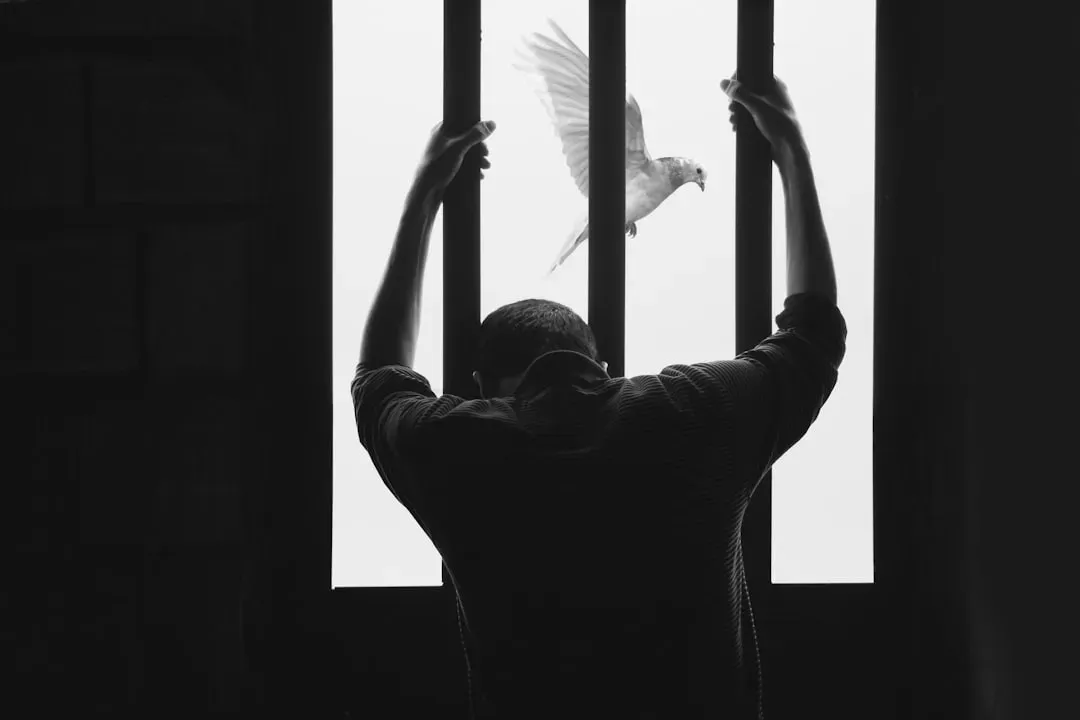
A prisoner is told that the execution will be a surprise: it will happen at some point over the next week, but he won’t know which day until it comes. The prisoner thinks cleverly: it can’t be Friday, because if I’m still alive Thursday night, I’ll know it’s Friday, so it won’t be a surprise. Yet if Friday is eliminated, it can’t be Thursday either, because that would no longer be a surprise. Following this logic backward, he eliminates every single day.
Yet when the executioner arrives Wednesday morning, the prisoner is genuinely surprised. Philosophers describe this as a self-referential epistemic trap, a puzzle about what we can know about what we don’t know. It highlights the absurdity of trying to fully predict events designed to be unpredictable. Sometimes the more you try to eliminate uncertainty, the less prepared you become for reality’s curveballs.
Moravec’s Paradox: Why Robots Can’t Walk But Can Beat You at Chess
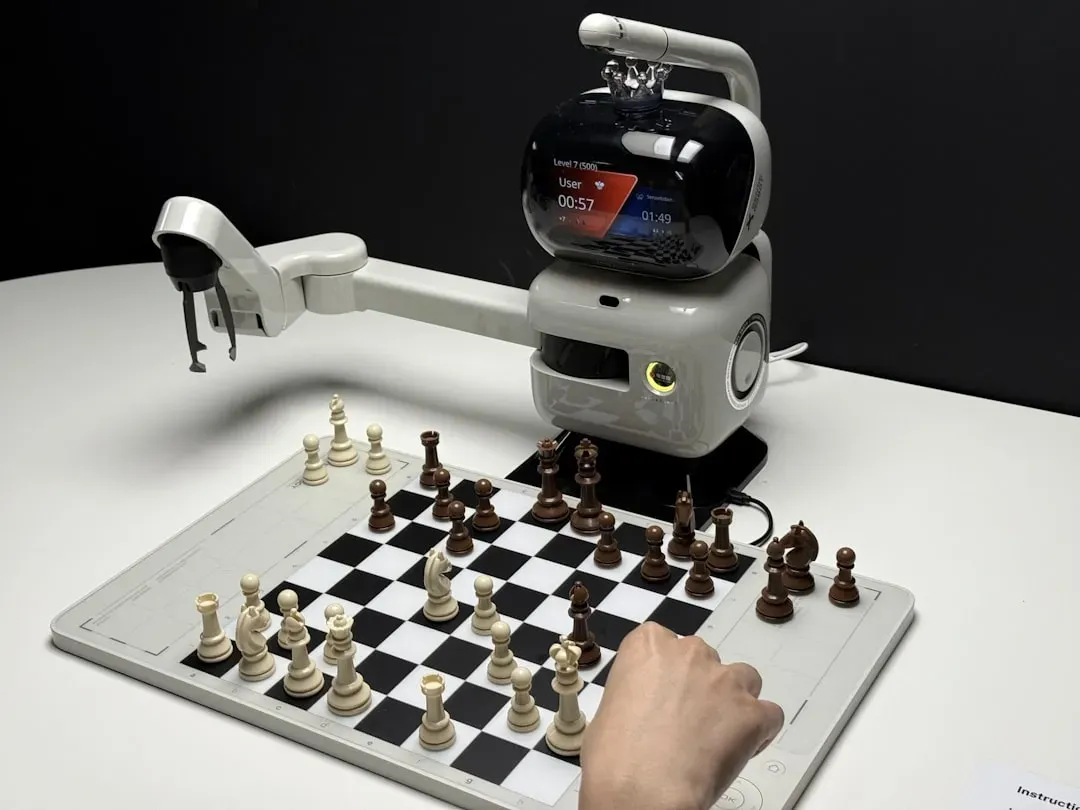
People have trouble solving problems that require high-level reasoning, yet basic motor and sensory functions such as walking are no trouble at all. In computers, however, the roles are reversed. It is very easy for computers to process logical problems, such as devising chess strategies, but it takes a lot more work to program a computer to walk or accurately interpret speech. This difference between natural and artificial intelligence is known as Moravec’s Paradox.
Think about it. A computer can calculate a billion chess moves in seconds, yet struggles to recognize a cat in a photo or navigate stairs without falling over. Meanwhile, a toddler can spot a cat instantly and climb stairs but can’t do basic algebra. Hans Moravec explains this observation through the idea of reverse engineering our own brains. Reverse engineering is most difficult for tasks that humans do unconsciously, such as motor functions. Because abstract thought has been a part of human behavior for less than 100,000 years, our ability to solve abstract problems is a conscious one. Evolution spent millions of years perfecting walking. Logical reasoning? That’s the new kid on the evolutionary block.
The Birthday Paradox: Probability’s Surprising Truth

If you had a group of 23 people, what are the odds that two of those people shared the same birthday? Logically, it seems like a pretty small number. After all, there are 365 days in a year and only 23 possible birthdays. Yet, there is a 50 percent chance that two people will share the same birthday. Wait, what?
Your intuition screams that this can’t be right. Twenty-three people out of 365 possible days should mean a tiny chance of overlap, right? Wrong. If there is a group of 30 people, then there is a 70 percent chance and if there is a group of 70 people, then there is a 99.9 percent chance that two of them will share the same birthday. The trick is that you’re not comparing each person to a specific date. You’re comparing every possible pairing of people. With 23 people, that’s 253 different pairs. Suddenly those odds don’t seem so crazy. This paradox shows how badly our intuition fails when it comes to probability.
Conclusion: Embracing the Beautiful Confusion
So what do all these paradoxes teach us? Maybe that reality is stranger and more wonderful than our everyday logic suggests. These aren’t just quirky puzzles to pass time. They’re windows into the limitations of human reasoning and the peculiar structure of the universe we inhabit.
As we navigate the intricate dance between paradoxes and the human brain, we find a mesmerizing interplay of bewilderment, curiosity, and enlightenment. Paradoxes challenge our cognitive capacities, offer gratification in their resolution, and motivate us to stretch the boundaries of our intellect. The next time your brain feels like it’s tied in knots trying to understand something impossible, remember you’re in good company. Philosophers, mathematicians, and scientists have been wrestling with these same contradictions for millennia. What paradox messed with your mind the most? Let us know in the comments.