
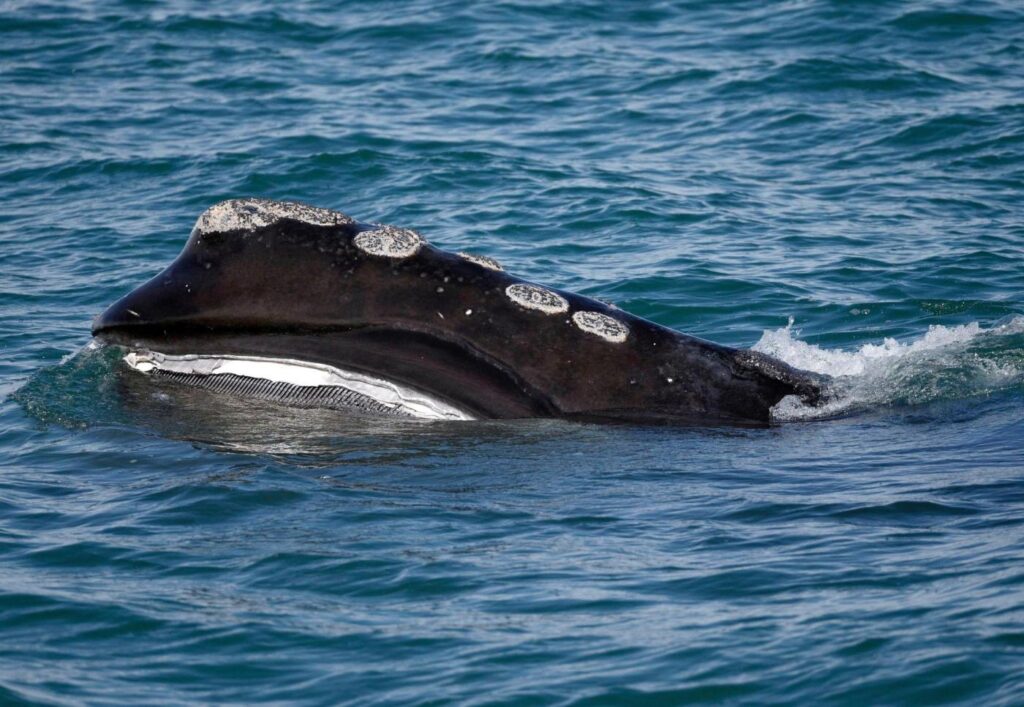

A Brighter Calving Season Emerges (Image Credits: Bostonherald.com)
Off the southeastern coast of the United States, researchers have documented an uptick in North Atlantic right whale births this winter, providing a rare boost to one of the world’s most endangered marine mammals.
A Brighter Calving Season Emerges
Scientists spotted several new calves in the waters near Florida and Georgia, marking what experts describe as an encouraging trend for the season. This increase follows years of low birth rates that have heightened concerns for the species’ survival. Aerial surveys conducted by conservation teams revealed the young whales alongside their mothers, navigating the warm coastal areas where calving traditionally occurs. The sightings, confirmed in early January, suggest that environmental conditions may have favored reproduction this year.
However, the population remains critically low, with fewer than 350 individuals estimated worldwide. Biologists emphasized that while the births represent progress, they alone cannot reverse the decades-long decline driven by human activities. Monitoring efforts continue as teams track the whales’ movements to ensure the calves thrive in their early months.
Persistent Dangers in Familiar Waters
Entanglements in fishing gear and collisions with large vessels continue to claim North Atlantic right whale lives at an alarming rate. These incidents have outpaced natural reproduction for years, pushing the species closer to the brink. In recent seasons, multiple adults and juveniles suffered fatal injuries from such encounters, underscoring the urgency of the situation. Conservationists noted that the calving grounds, while vital for births, also expose the whales to heightened risks from shipping lanes and fishery operations.
Climate change exacerbates these threats by altering prey distributions, forcing whales into riskier areas in search of food. Warmer ocean temperatures have shifted the availability of copepods, the tiny crustaceans that form the core of the right whale diet. As a result, the animals travel farther and more frequently through busy maritime corridors. Without intervention, experts predict that even a strong calving year could prove insufficient to stabilize the population.
Calls for Robust Protective Measures
Advocates and researchers urge federal agencies to implement stricter regulations on fishing and shipping to safeguard the whales. Current rules, including speed limits in certain zones and gear modifications, have shown some benefits but fall short of what’s needed. Organizations like the National Oceanic and Atmospheric Administration have ramped up surveillance, yet gaps persist in enforcement and coverage. A coordinated approach involving international partners could address transboundary threats more effectively.
Recent data highlights the need for expanded no-entanglement zones and real-time vessel tracking to prevent strikes. Scientists argue that adaptive management, informed by ongoing research, offers the best path forward. Community involvement, from fishermen to tour operators, plays a key role in voluntary compliance and early detection of distressed whales.
Conservation Momentum Builds
Efforts to protect North Atlantic right whales have intensified over the past decade, with aerial and acoustic monitoring providing critical insights into their behavior. Partnerships between nonprofits, government bodies, and academia have led to innovations like ropeless fishing traps, designed to reduce entanglements without compromising industry viability. These technologies, still in testing phases, promise to minimize risks while supporting sustainable fisheries. Public awareness campaigns have also mobilized support, encouraging reduced plastic use and responsible boating practices.
International agreements aim to harmonize protections across the whales’ range, from Canadian waters to the U.S. Gulf of Maine. Funding for rescue operations has enabled swift responses to strandings, saving several individuals in recent years. Despite these advances, experts stress that sustained investment remains essential to turn the tide.
- Key threats include vessel strikes and fishing gear entanglements.
- Climate-driven shifts in food sources increase exposure to hazards.
- Current population hovers around 350, with births barely offsetting deaths.
- Calving grounds off the Southeast U.S. serve as vital but vulnerable nurseries.
- Innovations like ropeless gear offer hope for coexistence with human activities.
Key Takeaways
- The recent calf sightings signal potential recovery if threats are addressed promptly.
- Stronger regulations on shipping and fishing are crucial for long-term survival.
- Collaborative conservation could prevent extinction within the next decade.
As North Atlantic right whales face their most precarious moment, this season’s births remind us of nature’s resilience – and the imperative for human action. What steps do you believe are most urgent to protect these majestic creatures? Share your thoughts in the comments.