
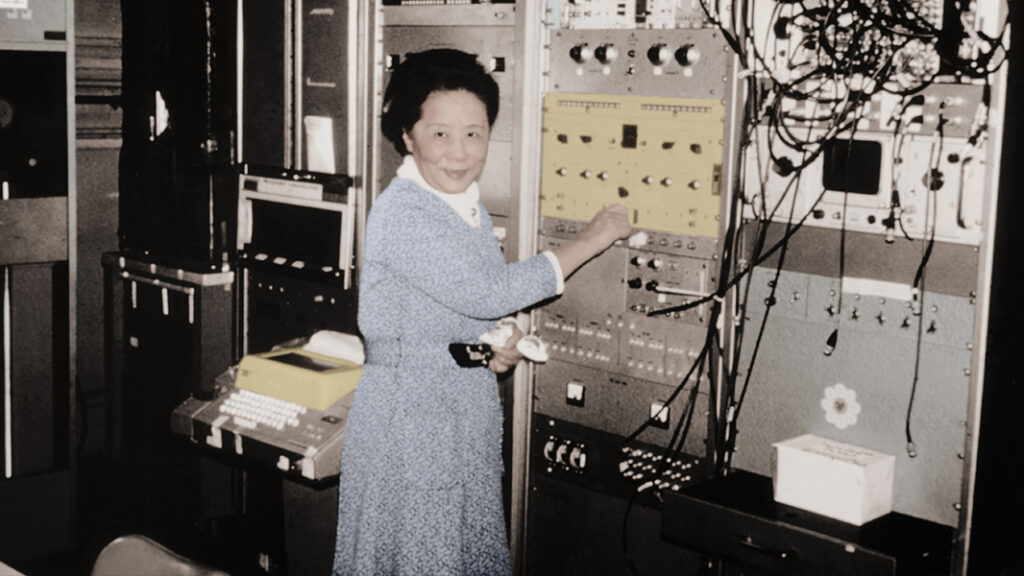
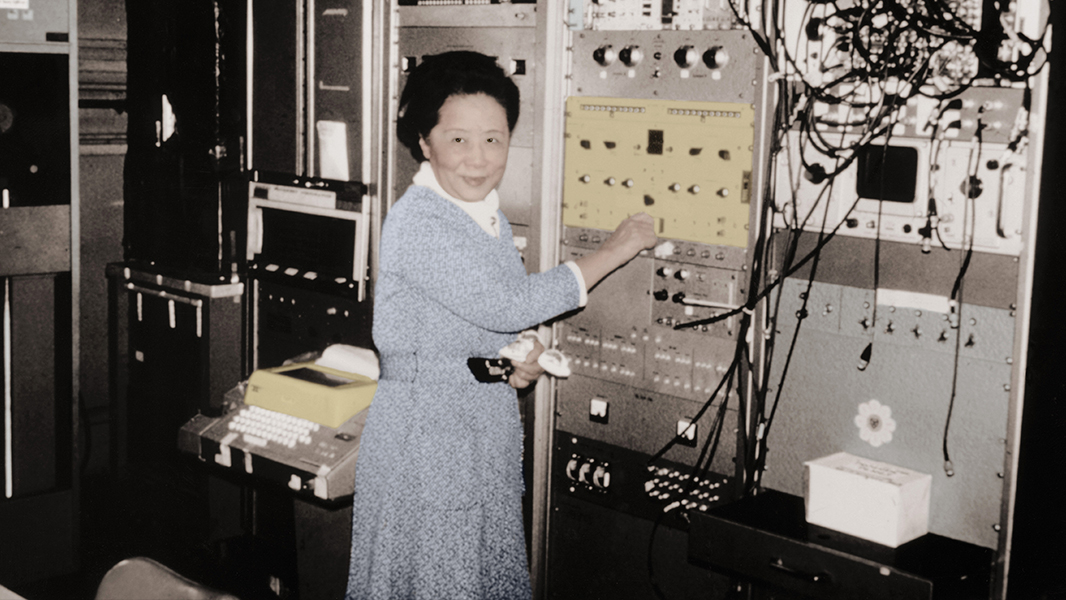
Breaking Through the Male-Dominated Frontier (Image Credits: Images.nature.com)
In the formative years of quantum physics during the early 20th century, a cadre of dedicated women advanced the field through innovative research, even as their efforts often faded from standard accounts.
Breaking Through the Male-Dominated Frontier
The development of quantum mechanics in the 1920s unfolded amid a scientific culture that dubbed the discipline “Knabenphysik,” or “boys’ physics,” underscoring the predominance of young male theorists. Yet, numerous women participated actively, contributing ideas and experiments that propelled the field forward. A recent book, Women in the History of Quantum Physics: Beyond Knabenphysik, edited by historians Daniela Monaldi and Michelle Frank, science writer Margriet van der Heijden, and physicist Patrick Charbonneau, spotlights 16 such figures whose stories challenge this narrow narrative. These profiles deliberately avoid well-known names like Lise Meitner or Maria Göppert Mayer to emphasize the broader, often invisible, roles women played. The collection emerged as part of the International Year of Quantum Science and Technology in 2025, aiming to recover overlooked histories and foster a more inclusive understanding of scientific progress.
By focusing on diverse backgrounds and contributions, the book reveals how these women navigated barriers in academia and research. Their work spanned theoretical insights and practical applications, influencing everything from atomic structure to quantum field theory. This effort highlights a pattern where women’s achievements were frequently attributed to male colleagues, a phenomenon known as the Matilda effect. Today, such reevaluations help correct historical imbalances and inspire current generations in quantum studies.
Notable Contributions That Redefined Boundaries
One striking example came from Dutch physicist H. Johanna van Leeuwen, who in 1919 demonstrated that classical mechanics alone could not explain magnetism in solids, necessitating quantum principles. Her thesis laid early groundwork for understanding quantum effects in materials, a finding that resonated through later developments in solid-state physics. Similarly, Hertha Sponer advanced molecular spectroscopy with the Birge–Sponer method, which became essential for analyzing molecular energy levels in quantum terms. These innovations emerged from meticulous experimental work that bridged theory and observation during quantum mechanics’ nascent phase.
Other women left indelible marks on specific quantum phenomena. Mary Tsingou contributed to the Fermi–Pasta–Ulam problem, illuminating chaos theory’s foundations through computational simulations in the 1950s. Tatiana Kontorova co-developed the Frenkel–Kontorova model, which models nonlinear dynamics in crystals and remains relevant in quantum materials research. Chien-Shiung Wu, often called the “First Lady of Physics,” not only disproved parity conservation in weak interactions but also provided the first experimental evidence of quantum entanglement in the 1940s. These accomplishments, drawn from rigorous scientific inquiry, underscore the depth of women’s involvement across quantum subfields.
- H. Johanna van Leeuwen: Proved quantum mechanics’ necessity for solid magnetism (1919).
- Hertha Sponer: Co-created the Birge–Sponer method for molecular physics.
- Mary Tsingou: Advanced chaos theory via the Fermi–Pasta–Ulam simulations.
- Tatiana Kontorova: Developed the Frenkel–Kontorova model for nonlinear quantum systems.
- Chien-Shiung Wu: Demonstrated quantum entanglement and parity violation experimentally.
- Marietta Blau: Pioneered nuclear emulsions for particle physics detection.
The Push for Recognition in Contemporary Science
Efforts to honor these pioneers have gained momentum, particularly through initiatives like the 2025 International Year of Quantum events, which featured panels and publications dedicated to women’s roles. Organizations such as the American Physical Society now award distinctions like the Annie Jump Cannon Award to early-career women in astronomy and physics, echoing the legacy of figures like Sponer. Historians continue to unearth archival materials, revealing collaborations that shaped quantum theory’s evolution. This resurgence not only credits past contributors but also addresses ongoing gender disparities in STEM fields.
In particle physics, Marietta Blau’s innovative use of photographic emulsions in the 1930s enabled the detection of subatomic particles, launching techniques still used today. Though a male colleague later received a Nobel Prize for related work, recent retrospectives affirm her foundational impact. Such stories illustrate how institutional biases obscured women’s influence, yet modern scholarship restores their place in the quantum canon.
Enduring Impact on Quantum Innovation
The contributions of these women extend into today’s quantum technologies, from computing to cryptography. Their early insights into entanglement and quantum states inform advancements in qubits and secure communications. By integrating quantum principles into diverse applications, they helped establish a field that now drives global innovation. Recognition of their work encourages diverse participation, potentially accelerating breakthroughs in quantum sensing and materials science.
Still, challenges persist, as women remain underrepresented in quantum research leadership. Projects like the Women in the History of Quantum Physics initiative serve as models for inclusive historiography, prompting institutions to revisit curricula and honors. This ongoing dialogue ensures that quantum mechanics’ full story reflects all who built it.
Key Takeaways
- Women like van Leeuwen and Wu provided critical experimental and theoretical foundations for quantum mechanics.
- The Matilda effect historically diminished their visibility, but new books and events are correcting the record.
- Acknowledging these pioneers fosters equity in modern quantum science and technology.
The true measure of quantum mechanics’ history lies in embracing its collective architects, reminding us that scientific progress thrives on diverse minds. What contributions from women in quantum history inspire you most? Share your thoughts in the comments.