
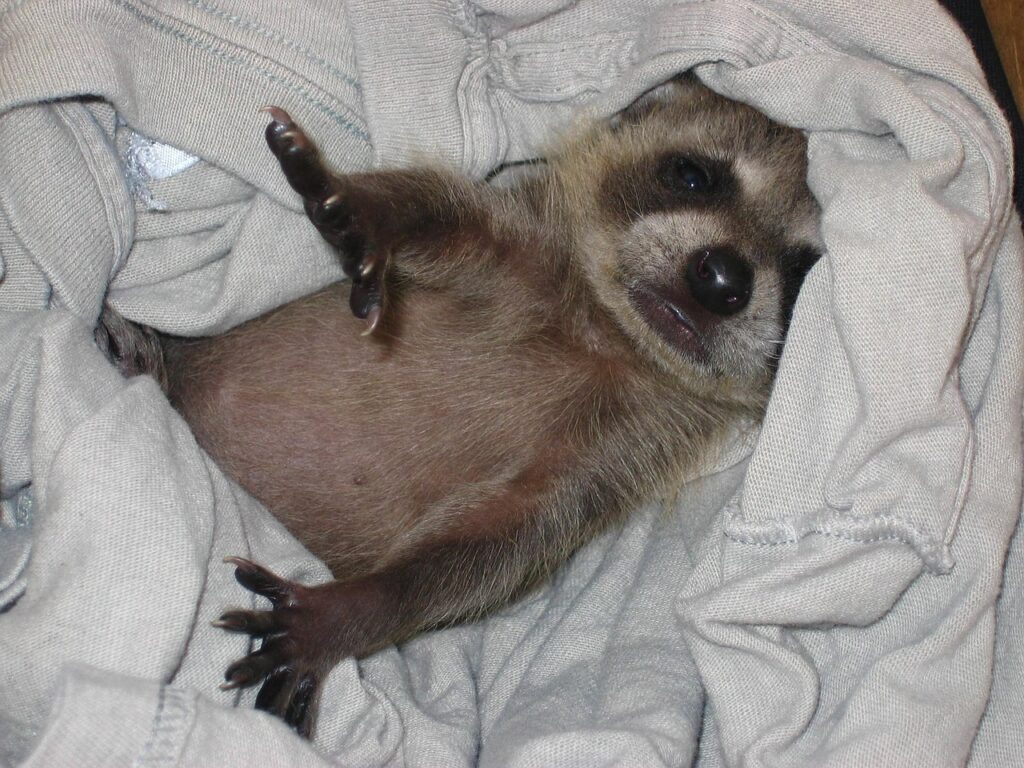
Belchertown – A fragile baby raccoon, soaked and trembling on a resident’s doorstep amid a June downpour, captured the essence of vulnerability that unites communities in wildlife protection.
A Desperate Call Amid the Rain

A Desperate Call Amid the Rain (Image Credits: Pixabay)
On the morning of June 9, 2025, a Belchertown resident spotted the small creature alone and exposed to the elements. The raccoon, estimated at just a few weeks old, showed no signs of its mother returning despite the wait. Local animal control officer Sarah Byrnes responded promptly, scooping up the shivering orphan to shield it from further harm.
Byrnes noted the raccoon’s calm demeanor even in distress, a trait that later endeared it to rescuers. That same day, her team handled another rescue – a groundhog tangled in netting – underscoring the unpredictable demands of wildlife aid in the area. These encounters highlighted the critical role of swift community action in saving young animals separated from their families.
Handover to Expert Care
Byrnes transported the baby raccoon to the Leyden Center for Wildlife Rehabilitation in Leyden, Massachusetts, where founder Amelie Dricot-Ziter assessed its needs. Already managing a full roster of orphaned wildlife, including possums and squirrels, Dricot-Ziter faced a familiar dilemma. “When you are a rehabber, you have that idea that, ‘No, I’m not taking anymore,’” she later reflected. “And then one day, you’re weak, and then somebody calls you, and you end up taking it.”
The center provided immediate warmth, hydration, and nutrition tailored for the raccoon’s age. Dubbed Bub by Dricot-Ziter, the newcomer joined a group of seven other young raccoons for socialization. This step proved vital, as raccoons thrive in peer groups during rehabilitation, learning essential survival behaviors before release.
Viral Fame and Community Impact
Photos of Bub’s rescue, shared by Byrnes and amplified by local media like The Boston Globe, exploded online. Within days, the story reached international audiences, drawing messages of support from across the globe. Bub’s stoic expression in the images resonated, symbolizing resilience amid hardship.
The attention boosted awareness for wildlife rehabilitation efforts. Donations to centers like Leyden surged, helping fund care for the 21 raccoons Dricot-Ziter released that year, with five more awaiting freedom. Community members in Belchertown rallied, sharing tips on coexisting with urban wildlife and reporting sightings responsibly.
Experts emphasize that such stories encourage preventive measures. For instance:
- Secure trash to deter raccoon foraging near homes.
- Avoid handling wild babies unless truly orphaned.
- Support local rehabbers through volunteering or contributions.
- Plant native vegetation to bolster natural habitats.
- Report injuries to authorities rather than intervening personally.
Back to the Wild: A Successful Release
After months of dedicated care, Bub and his companions grew strong enough for the wild. On August 30, 2025, Dricot-Ziter oversaw their release into a suitable habitat, ensuring vaccinations and health checks were complete. The event marked a quiet triumph, with Bub bounding off confidently into the underbrush.
This outcome reinforced the value of licensed rehabilitation programs. Raccoons like Bub, often misunderstood as pests, play key ecological roles in controlling insects and dispersing seeds. The center’s approach – balancing human intervention with natural development – ensures animals regain independence without dependency on people.
Key Takeaways from Bub’s Story
- Early intervention saves lives during peak orphan seasons in spring and summer.
- Community vigilance and professional rehab teams form a vital partnership.
- Viral moments can drive real support for conservation efforts.
Bub’s journey from a rainy doorstep to forested freedom illustrates how one small act of kindness ripples outward, strengthening bonds between humans and the wild. As wildlife faces growing urban pressures, stories like this inspire ongoing commitment to compassionate care. What steps can your community take to protect local animals? Share your thoughts in the comments.