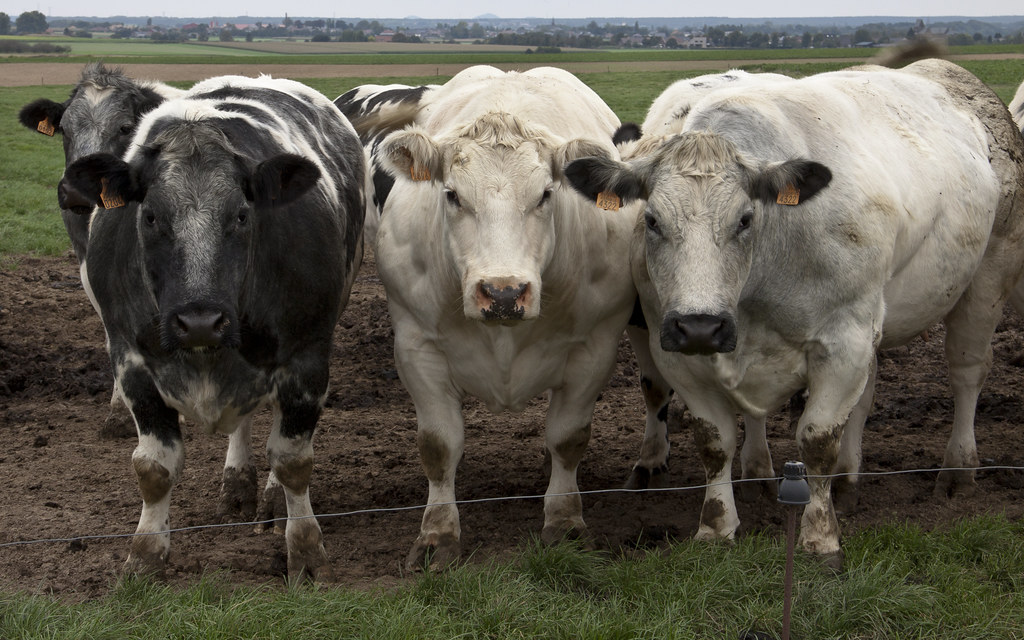
Rescued cows at farm sanctuaries often stand out for their robust builds and towering statures, a stark contrast to their counterparts in conventional agriculture.
The Industry’s Rush to Market Leaves Animals Undersized

The Industry’s Rush to Market Leaves Animals Undersized (Image Credits: Flickr)
Factory farming prioritizes quick turnover over natural development. Beef cattle typically head to slaughter around 18 months old, before they can fully mature. Dairy cows face similar fates, often culled after just a few years of production.
This accelerated timeline prevents animals from achieving their genetic potential. In contrast, sanctuaries offer a haven where cows live out their natural lifespans, sometimes exceeding 20 years. Such extended time allows for steady growth and substantial weight gain, turning what might have been a brief existence into one of full-bodied vitality.
Extended Lifespans Fuel Natural Expansion
One of the most direct contributors to a cow’s size lies in the years they accumulate. Without the pressure of early slaughter, sanctuary residents continue to grow well into adulthood. A steer rescued as a calf, for instance, might balloon to over 2,500 pounds as it ages gracefully.
Organizations like Farm Sanctuary document these transformations routinely. Calves too weak to stand in industrial settings receive care that enables them to thrive. Over time, this results in animals that embody the breed’s true scale, far beyond the confines of commercial operations.
Hormone-Free Diets Promote Steady, Healthy Gains
Commercial agriculture frequently relies on growth hormones to accelerate weight gain and boost profits. These additives push unnatural bulking but come at a cost to the animal’s health. Sanctuaries eliminate such interventions entirely.
Instead, cows graze on pastures and receive balanced, plant-based feed without synthetic enhancers. This approach supports organic muscle and bone development. Visitors to facilities in New York or California often note how this natural regimen leads to broader frames and deeper chests, reflecting unadulterated growth patterns observed in heritage breeds.
Low-Stress Environments Enhance Physical Development
Chronic stress in crowded feedlots suppresses appetite and immune function, stunting overall size. Sanctuary cows, however, enjoy spacious fields, social bonds, and minimal disruptions. These conditions foster better nutrient absorption and hormonal balance.
Research from animal welfare groups highlights how relaxed living correlates with improved weight metrics. Cows form herds, play, and rest as they please, which indirectly supports their expansion. The result appears in their confident gaits and imposing presences, a testament to environments designed for well-being rather than exploitation.
Genetics Unbound: Allowing Breeds to Mature Fully
Many commercial breeds undergo selective breeding for rapid growth or high milk yields, but this often caps their adult size due to early intervention. Sanctuaries preserve diverse genetics, letting animals express their inherent traits without interruption.
Holstein cows, common in dairy, can reach exceptional statures when given the chance. Steers from mixed backgrounds add variety, some growing to heights that surprise even longtime observers. This genetic freedom underscores why sanctuary cows often eclipse their industrially raised peers in sheer mass and height.
Key Takeaways
- Sanctuary cows live longer, allowing full maturation up to 20+ years.
- Absence of growth hormones ensures healthy, natural weight gain.
- Stress reduction and proper nutrition amplify physical development.
Farm sanctuaries reveal the true potential of cows when freed from industrial constraints, offering a glimpse into what ethical care can achieve. As awareness grows, more people visit these havens to witness the difference firsthand. What experiences have you had with rescued animals? Share your thoughts in the comments.