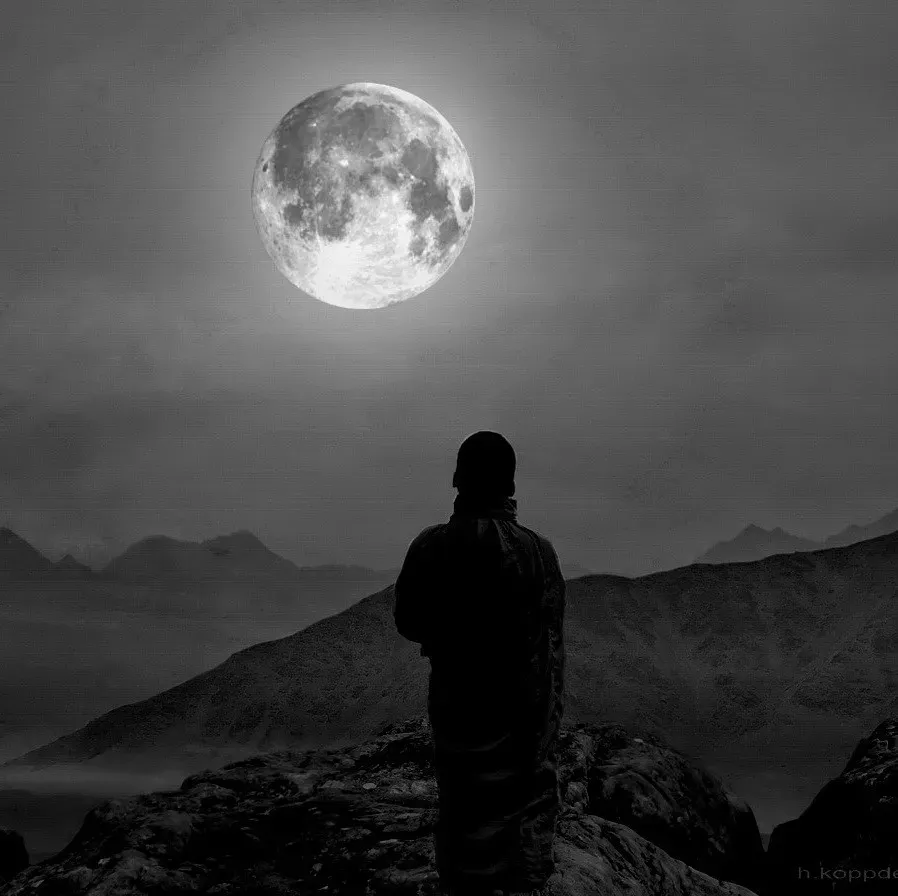
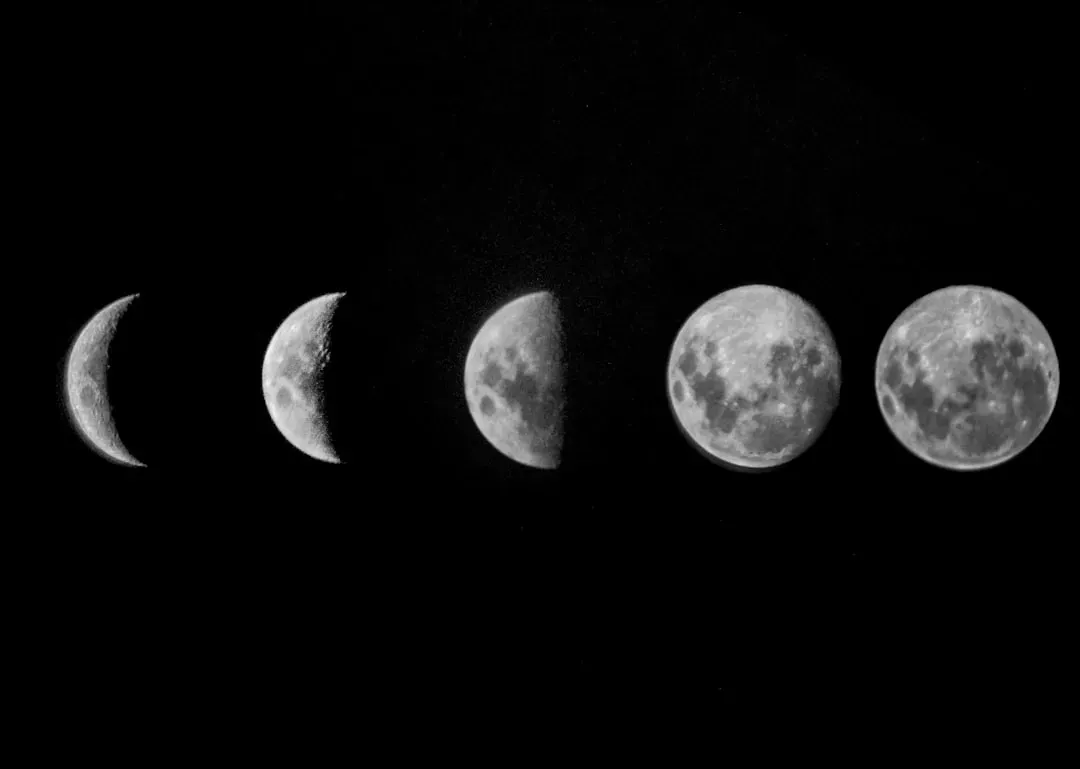
Have you ever noticed your mood shifting during certain nights? Maybe sleep felt impossible, or emotions seemed more raw than usual. You’re not imagining things. While we often dismiss such experiences as coincidence, an intriguing body of research suggests the moon might be playing a more substantial role in our emotional lives than modern science once acknowledged.
The connection between celestial rhythms and human behavior has captivated cultures for centuries. Today, we’re rediscovering what ancient wisdom always knew: the moon’s phases might indeed be shaping our inner world in ways that are both subtle and profound.
How Ancient Beliefs Meet Modern Science
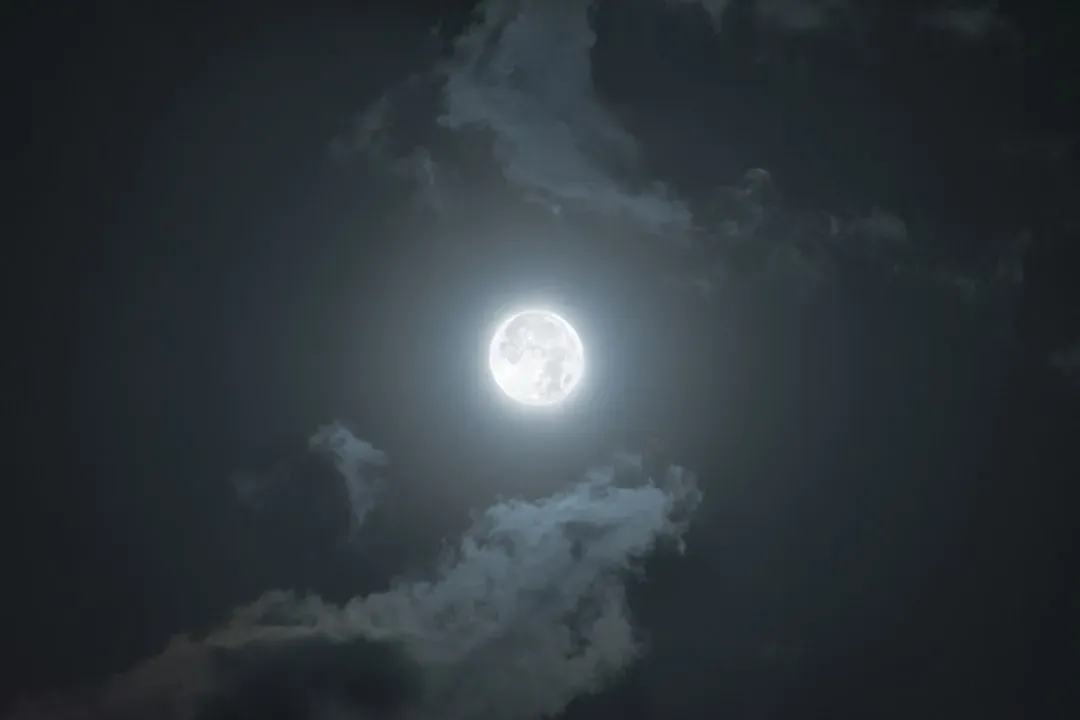
For thousands of years, humans have linked the moon to mental and emotional states. The very word lunatic traces back to this belief, stemming from the Latin word Luna. The word “lunatic,” after all, stemmed from the idea that changes in mental state were related to lunar cycles. Throughout history, from Elizabethan England to ancient India, physicians and philosophers attributed behavioral shifts to the moon’s pull.
Let’s be real, though. Much of this was folklore and superstition. Yet here’s the thing that makes it fascinating: modern research is beginning to uncover actual mechanisms by which lunar phases could affect us. The moon and its lunar cycles can impact your mental health, mood and sleep, though perhaps not in the mystical ways our ancestors imagined. The power of these ancient beliefs persists even among healthcare professionals today, with studies showing nearly eighty percent of mental health workers believe the full moon can affect people’s wellbeing.
Sleep Patterns Dance With Lunar Cycles
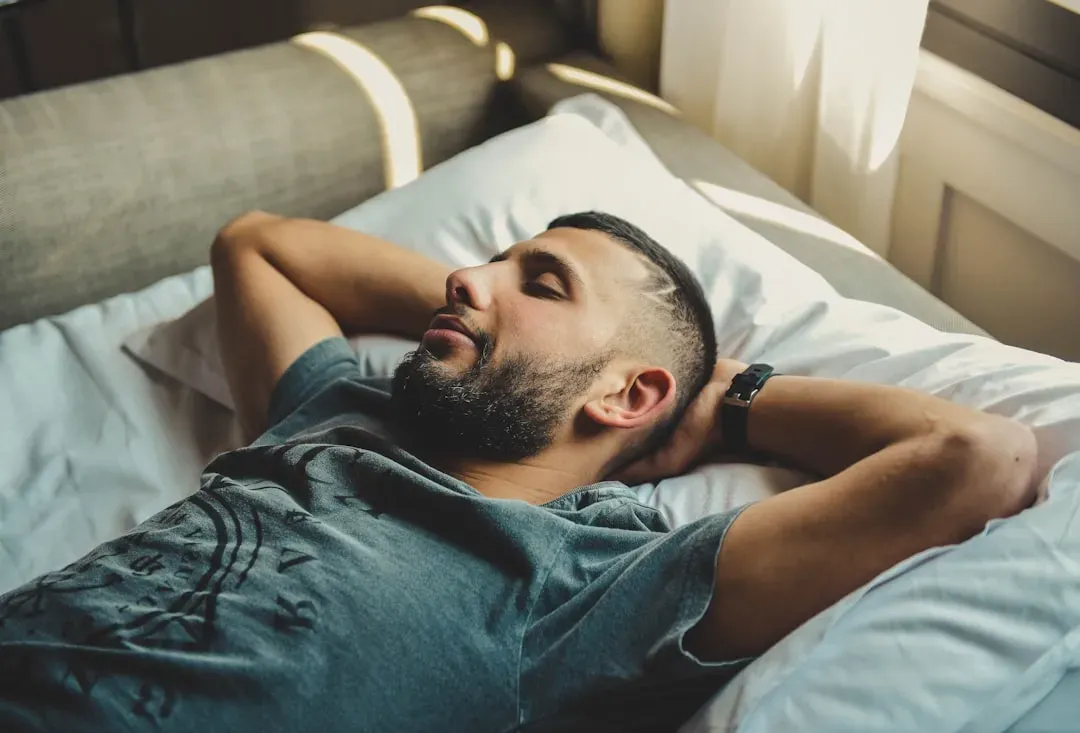
Sleep represents one of the clearest connections scientists have found between the moon and human biology. People fell asleep later and slept for less time over all in the three to five days leading up to a full moon. This isn’t just anecdotal – research tracking both indigenous communities with limited electricity and modern college students in Seattle found strikingly similar patterns.
The effect appears stronger in environments with less artificial light, which gives us a clue about the mechanism. Sleep starts later and is shorter on the nights before the full moon when moonlight is available during the hours following dusk. Think about it from an evolutionary perspective: our ancestors might have benefited from staying awake when natural light extended their productive hours. Some researchers even discovered that people spent roughly one third less time in deep sleep during full moon periods. These disruptions matter more than you might think, especially if you’re already dealing with stress or mental health challenges.
The Full Moon Brings Emotional Intensity
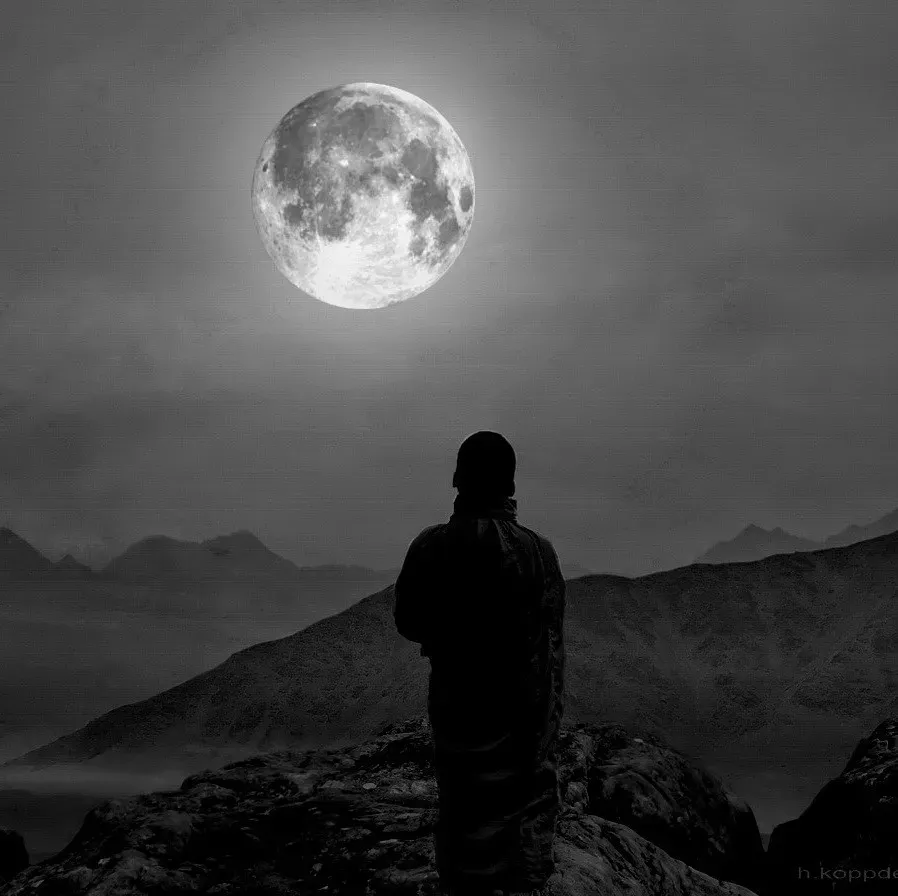
You’ve probably heard someone blame strange behavior on a full moon. While dramatic stories of werewolves remain firmly in mythology, there’s something to the idea that emotions run higher during this phase. The full moon period correlates with reports of heightened feelings, though the science gets complicated here.
Emotions are at their peak and strong emotional reactions such as anxiety, excitement or uneasiness may occur, and many studies have found that people’s sleep quality decreases during the full moon, leading to mood swings. Sleep loss itself is a powerful driver of emotional dysregulation. Even one rough night can heighten anxiety and drag down mood considerably. Still, large population studies looking for direct links between full moons and psychiatric emergencies have mostly come up empty. The connection appears more nuanced – probably working through sleep disruption rather than some direct mystical influence.
Bipolar Disorder Shows A Lunar Pattern
Among all the research into lunar effects, studies on bipolar disorder reveal some of the most compelling findings. Researchers learned that their patients cycled rapidly between states of depression and mania, and that these rapid cycles weren’t random but instead in sync with the lunar cycle. This small but significant study tracked patients over many years, revealing patterns that couldn’t easily be dismissed.
Those quick changes in mood were caused by a disruption to their circadian rhythm and their sleep-wake cycle, researchers believe. It’s hard to say for sure, but the mechanism appears to involve how the moon affects sleep, which in turn affects the delicate hormonal balance people with bipolar disorder depend on. Interestingly, some individuals responded to both full and new moon phases, suggesting that lunar influence varies significantly between people. This represents one area where the evidence genuinely points toward a real, measurable lunar effect on human mental health.
New Moon Energy Turns Us Inward
If the full moon is about external energy and heightened emotions, the new moon represents its opposite. During the new moon, individuals might feel more introspective and reflective. Many people report feeling drawn to quieter activities, self-reflection, and planning during this darker phase.
The new moon marks a fresh beginning in the lunar cycle. You might notice yourself sleeping more deeply or feeling less social than usual. Some describe it as nature’s invitation to reset and contemplate. The darkness during this phase expands other senses, creating space for possibility and intention-setting. However, this phase can also bring restlessness and emotional sensitivity for some people. Racing thoughts might interfere with the deeper sleep this phase typically brings, creating a paradox of mental exhaustion combined with difficulty truly resting.
Your Body’s Water Connection To Lunar Gravity
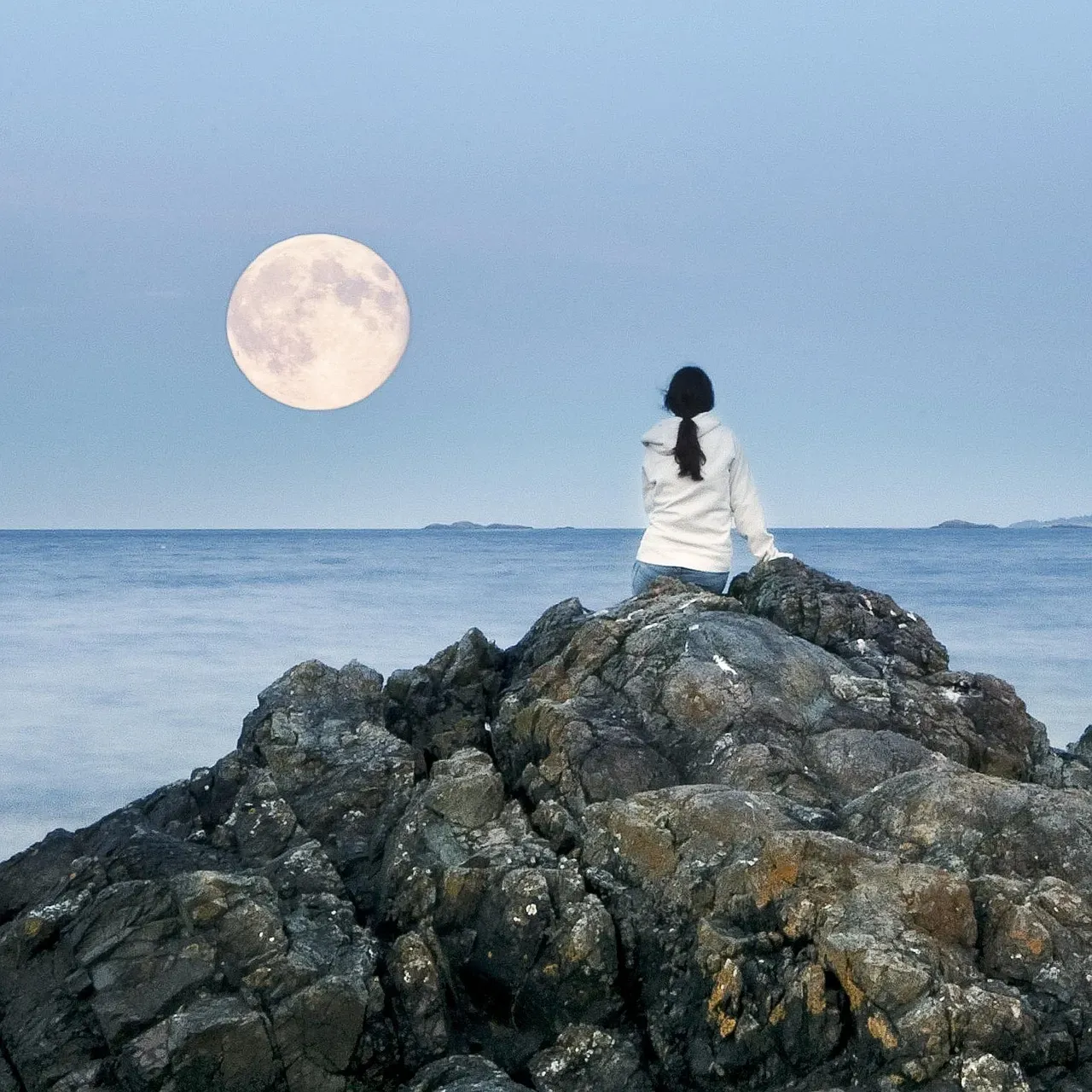
One of the oldest theories about lunar influence centers on water. We know the moon’s gravitational pull controls ocean tides. Since our human bodies are made up of 55% to about 78% of water, there’s some reason to believe we, too, might be impacted by the moon, its light and its 27-day lunar cycle. This “biological tides” theory has historical roots going back decades.
Honestly, though, most scientists remain skeptical of this explanation. The gravitational forces that move oceans are far too weak to affect human physiology, and studies of geomagnetic and atmospheric changes during lunar phases have yielded inconsistent or negligible results. The tidal forces that shift entire oceans simply don’t exert enough pull on the water in our comparatively tiny bodies. Yet something is happening during lunar cycles – we just haven’t pinpointed the exact mechanism. Perhaps it’s not about gravity at all, but rather about light exposure and its effects on our circadian rhythms.
Individual Sensitivity Varies Dramatically
Here’s what makes lunar research so tricky: not everyone responds the same way. Some people appear highly sensitive to lunar phases while others notice nothing at all. Recent research has identified what scientists call “lunar cyclers” – individuals whose sleep patterns consistently shift with the moon.
These individuals, falling within the top quartile of lunar cycling, displayed distinct sleep behaviours influenced by lunar phases, specifically around the time of the full moon. Meanwhile, other study participants showed no measurable lunar effects whatsoever. This variability might explain why studies often produce conflicting results. Those with existing mental health conditions, particularly depression, bipolar disorder, schizophrenia, or epilepsy, appear more vulnerable to lunar-related sleep disruption. Teenagers, too, seem especially sensitive to these shifts, possibly because their circadian systems are already in flux during adolescent development.
Separating Belief From Actual Lunar Effects
The power of expectation plays a massive role in how we experience the moon. If you believe something to be true, it is true, even if it’s to our own detriment, particularly when it comes to self-fulfilling prophecies about mood and behavior. If you expect to feel irritable during a full moon, you’re more likely to notice and remember moments that confirm this belief.
This doesn’t mean lunar effects are entirely imaginary, though. The sleep research, particularly the work tracking people unaware they were being studied for lunar influences, suggests real physiological changes occur. Yet in our modern world, artificial light has a much bigger impact on sleep and mood than the moon ever will. That bright phone screen you’re checking before bed? It’s disrupting your circadian rhythm far more powerfully than moonlight streaming through your window. So if you find yourself restless on a full moon night, you may not be imagining things – the moon can tug at your sleep. Still, that Instagram scroll at midnight probably deserves more blame than Luna herself.
Conclusion
The relationship between lunar phases and human emotions remains an area where ancient wisdom and modern science are still finding common ground. While dramatic claims about the moon driving waves of madness don’t hold up under scrutiny, subtler effects on sleep patterns and mood – particularly for vulnerable individuals – appear genuine. The evidence suggests that you might sleep roughly twenty minutes less during certain lunar phases and experience minor mood fluctuations as a result.
What matters most is recognizing these influences exist on a spectrum. Some of us are lunar cyclers, highly attuned to these celestial rhythms. Others remain largely unaffected. The moon’s influence, while real for many, operates alongside far more powerful factors like stress, diet, relationships, and yes, our addiction to screens. Understanding these patterns helps us work with our natural rhythms rather than against them, whether that means planning important tasks around your personal energy cycles or simply being gentler with yourself when sleep feels elusive under a bright moon.
What’s your experience been with lunar phases? Have you ever tracked your mood or sleep alongside the moon’s cycle?