

You think you know birds. The sparrow chirping on your windowsill, the robin pulling a worm from your garden. They’re delicate, light, designed for the sky. What you probably don’t imagine is a creature with a mouth full of teeth, clawed fingers jutting from its wings, and a long reptilian tail.
Yet that was the reality for millions of years. Birds with teeth thrived for over 86 million years across ancient forests and seas long before the modern toothless beak became standard. The journey from dinosaur to songbird is stranger than most realize, filled with bizarre intermediate creatures that blur the line between reptile and bird so completely that scientists still argue about where one category ends and another begins.
The Fossil That Changed Everything
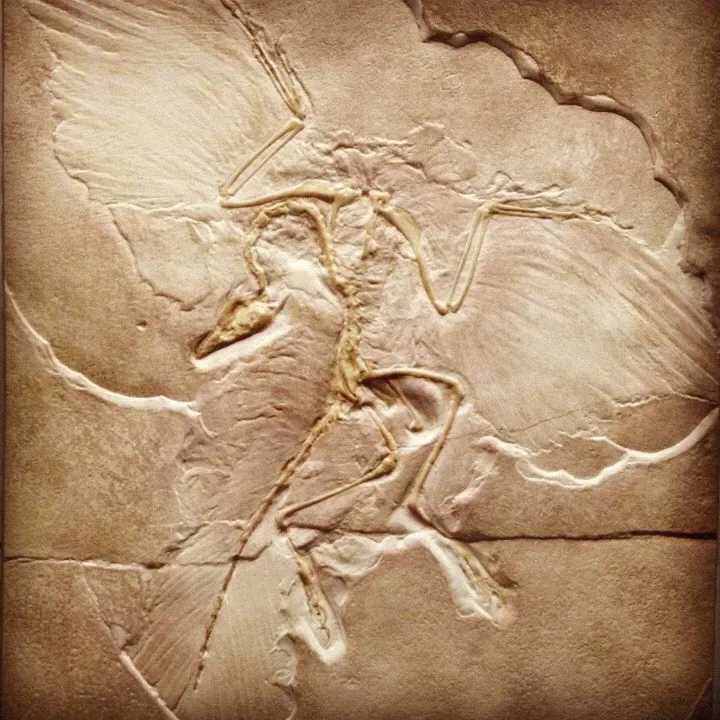
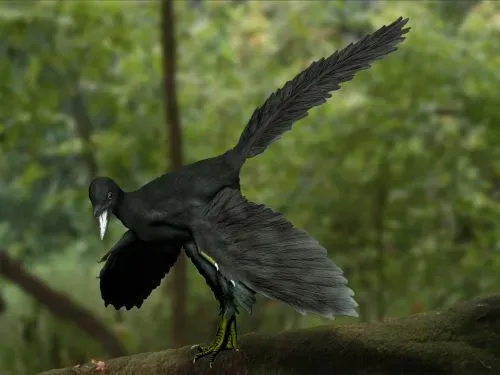
The type specimen of Archaeopteryx was discovered just two years after Charles Darwin published On the Origin of Species, arriving at a moment when the scientific community needed proof that species could transform over time. Here was exactly that proof, frozen in German limestone. Like birds, it had feathers along its arms and tail, but unlike living birds, it also had teeth and a long bony tail.
Think about that for a moment. This was a creature with fully formed flight feathers identical in structure to those of modern birds, yet it still retained a mouth full of sharp teeth like its dinosaur cousins. Unlike modern birds, Archaeopteryx had small teeth, as well as a long bony tail, features which Archaeopteryx shared with other dinosaurs of the time. It wasn’t quite fish, not quite fowl. Instead, it existed somewhere in between, a snapshot of evolution caught mid-transformation.
Not Your Average Ancestor
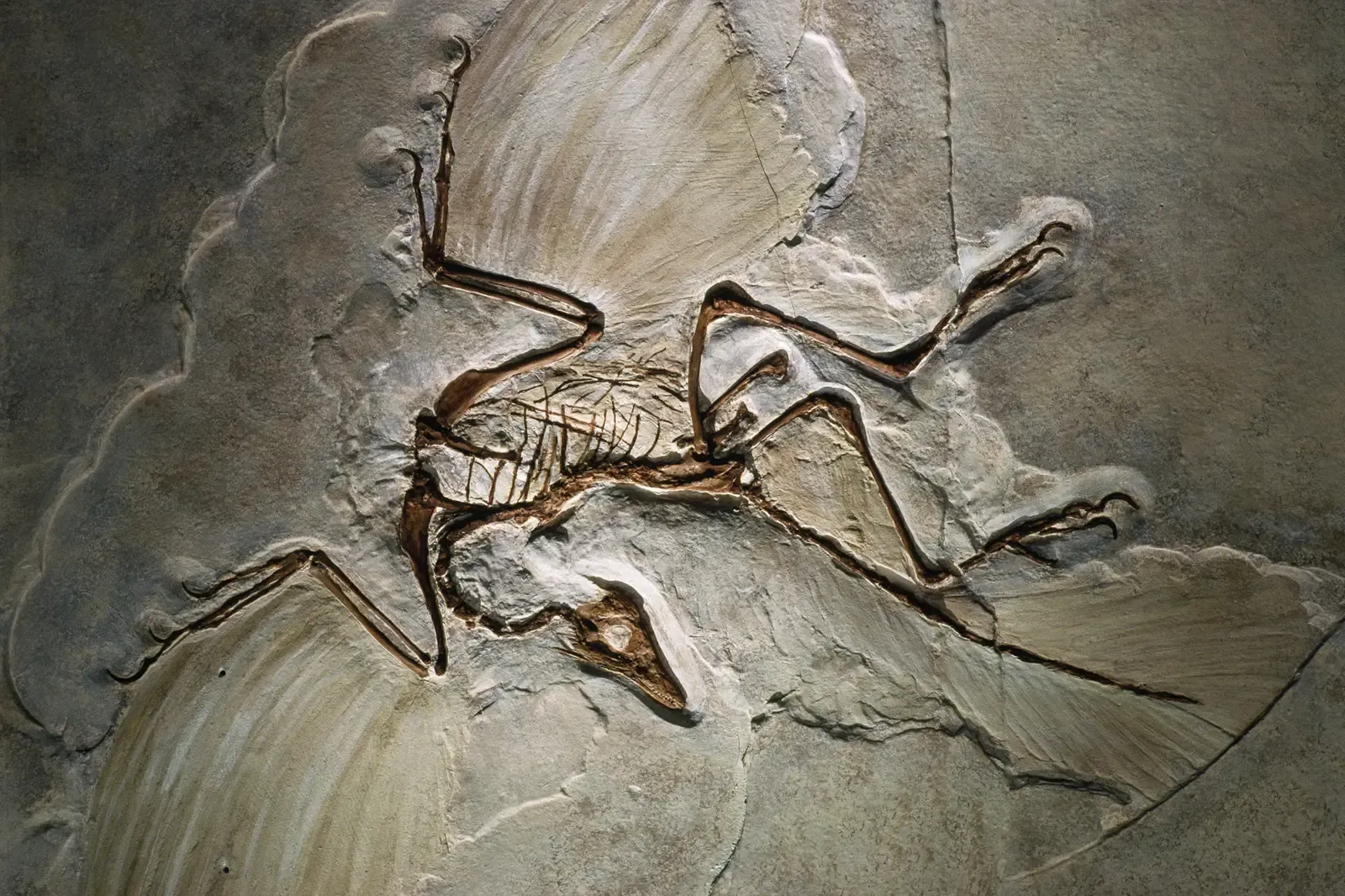
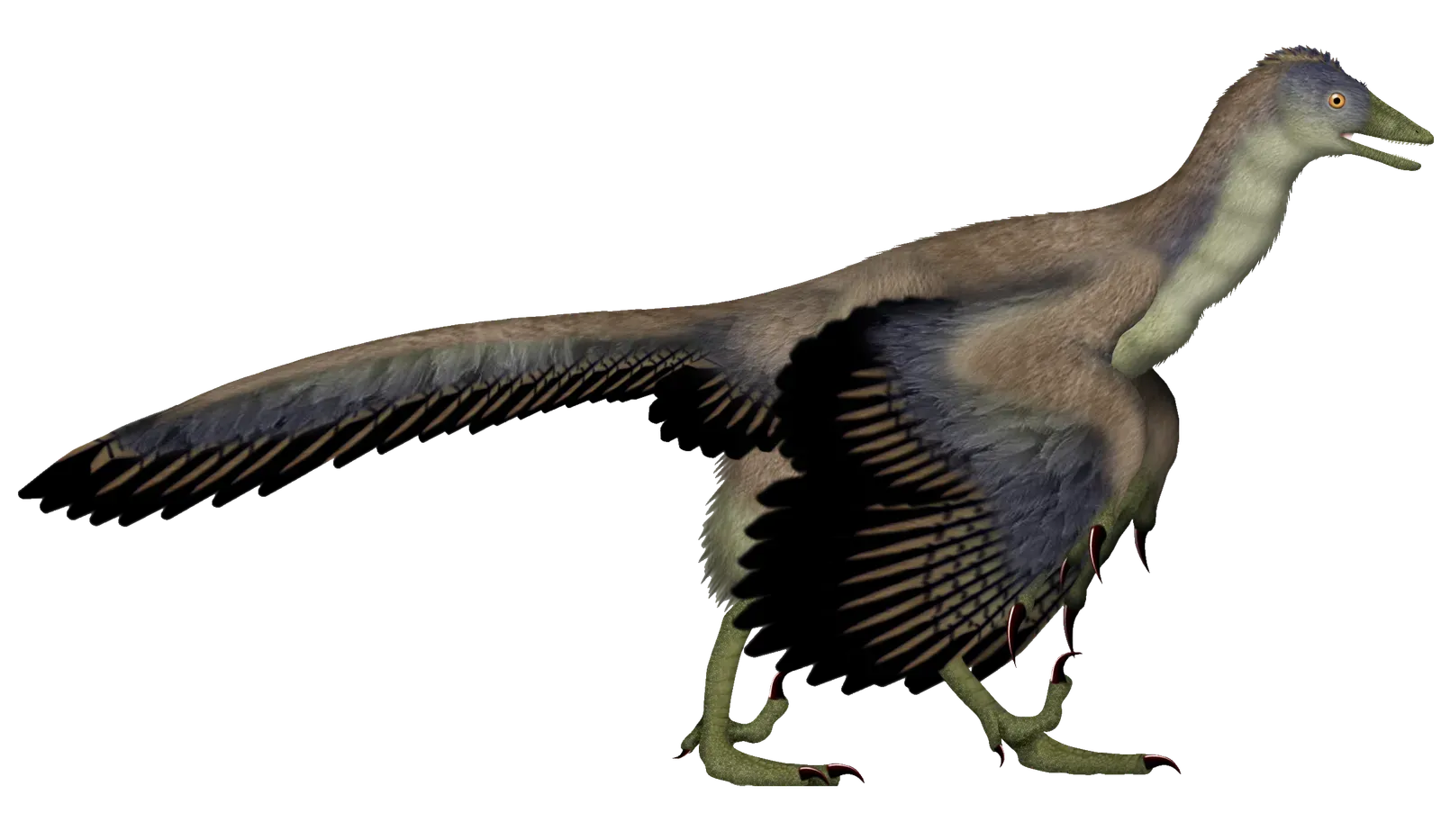
Archaeopteryx lived around 150 million years ago during the early Tithonian stage in the late Jurassic Period in what is now Bavaria, southern Germany. Picture a world unrecognizable to us: Europe as a scattered archipelago of islands in warm, shallow tropical seas. Weighing in at roughly two pounds, Archaeopteryx was about the size of the common raven, with broad wings and that distinctive long tail.
However, recent discoveries have knocked Archaeopteryx slightly off its pedestal. In recent years, the discovery of several small, feathered dinosaurs has created a mystery for palaeontologists, raising questions about which animals are the ancestors of modern birds and which are their relatives. Creatures like Xiaotingia and Aurornis may have been just as birdlike, or even preceded Archaeopteryx by millions of years.
Still, Archaeopteryx remains the poster child for evolutionary transition, the creature that bridged two worlds.
When Teeth Were Standard Equipment
For over 86 million years prior to that moment, birds with teeth thrived among the forests, floodplains and oceans of the Mesozoic world. Honestly, that’s a staggering length of time. Consider that modern humans have only existed for roughly 300,000 years. Toothed birds dominated their ecological niches for nearly three hundred times that long.
Take Ichthyornis, a gull-like seabird that lived between 100 and 66 million years ago. It also had a full mouth of teeth. These let it chew like a dino. Scientists recently reconstructed its skull and discovered something fascinating: Ichthyornis could move its beak in a very modern way, lifting its upper beak without moving the rest of its skull, the way all birds today do. So here was a bird that could peck and grasp like modern birds while also biting down with dinosaur-style jaw muscles and teeth.
It’s hard to say for sure, but this hybrid approach might have given these ancient birds incredible versatility in what they could eat.
Theropods: The Dinosaurs That Never Stopped Evolving
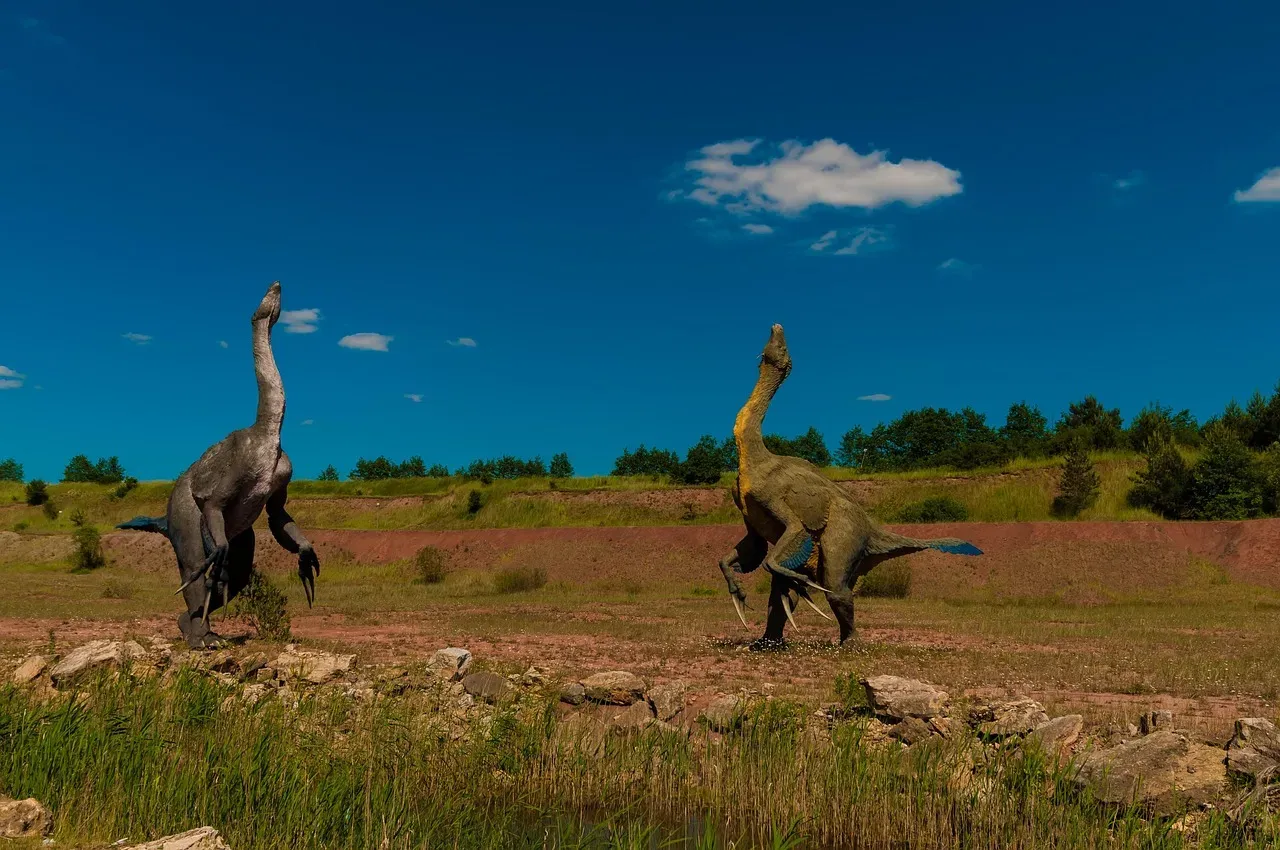
Let’s be real: when most people hear “dinosaur ancestor of birds,” they picture something massive and terrifying. In the 1970s, paleontologists noticed that Archaeopteryx shared unique features with small carnivorous dinosaurs called theropods. These weren’t the giants, though. We’re talking about creatures more like Velociraptor, small and agile hunters with hollow bones.
The gradual evolutionary change from fast-running, ground-dwelling, bipedal theropods to small, winged, flying birds probably started about 160 million years ago. It was possibly due to a move by some small theropods into trees in search of either food or protection. Features we think of as distinctly birdlike actually started appearing way back in dinosaur lineages. Hollow bones? Check. Wishbone? Already there. Even feathers showed up on dinosaurs that never flew.
The transition wasn’t sudden. It was incremental, piecemeal, each generation inheriting slightly modified structures from the one before.
The Mystery of the Missing Teeth
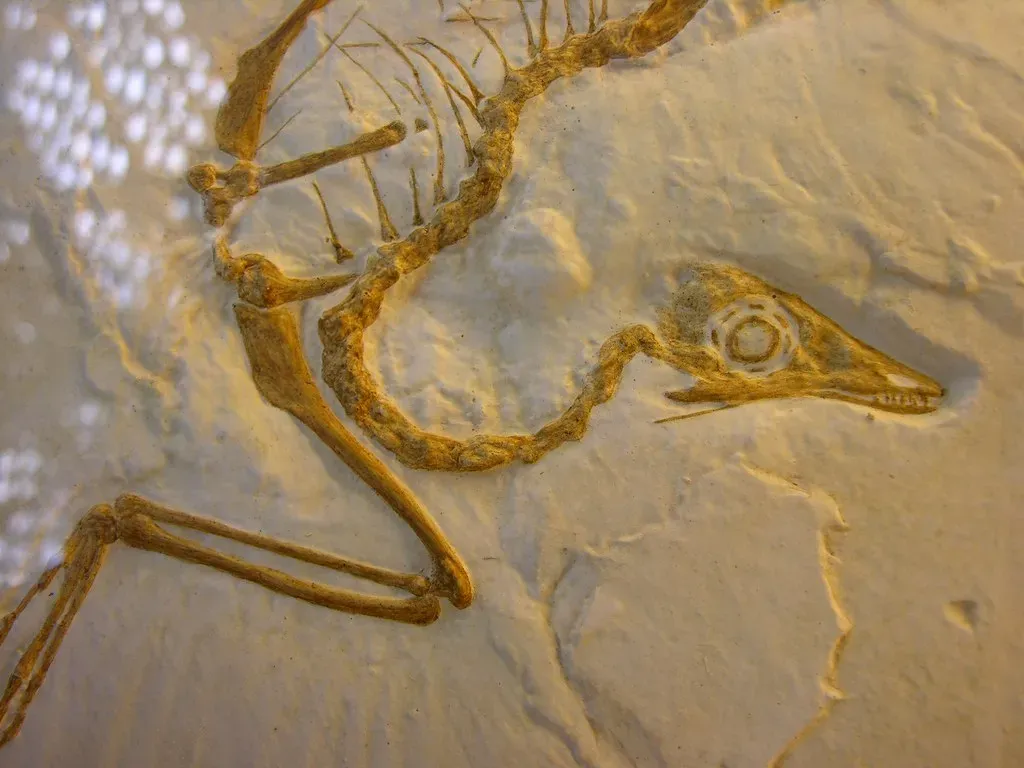
So why did birds lose their teeth? The common explanation used to be simple: teeth are heavy, and flight demands lightness. People used to think that birds lost their teeth in order to lighten their skeleton so they could fly better. Yet Archaeopteryx flew, and sported plumes and chompers. Clearly, you could have both.
A newer hypothesis is far more interesting. Selection for tooth loss in birds was a side effect of selection for fast embryo growth and thus shorter incubation. Here’s the thing: teeth take forever to develop. This process could take up to 60 percent of a bird’s incubation time. So, dispensing with teeth altogether may have allowed birds to develop and hatch more quickly.
Faster hatching means less time sitting vulnerable in an egg. That’s a massive survival advantage, especially if predators are prowling around your nest. The presence of several inactivating mutations that are shared by all 48 bird species suggests that the outer enamel covering of teeth was lost around 116 million years ago.
Beaks: The Lightweight Multitool
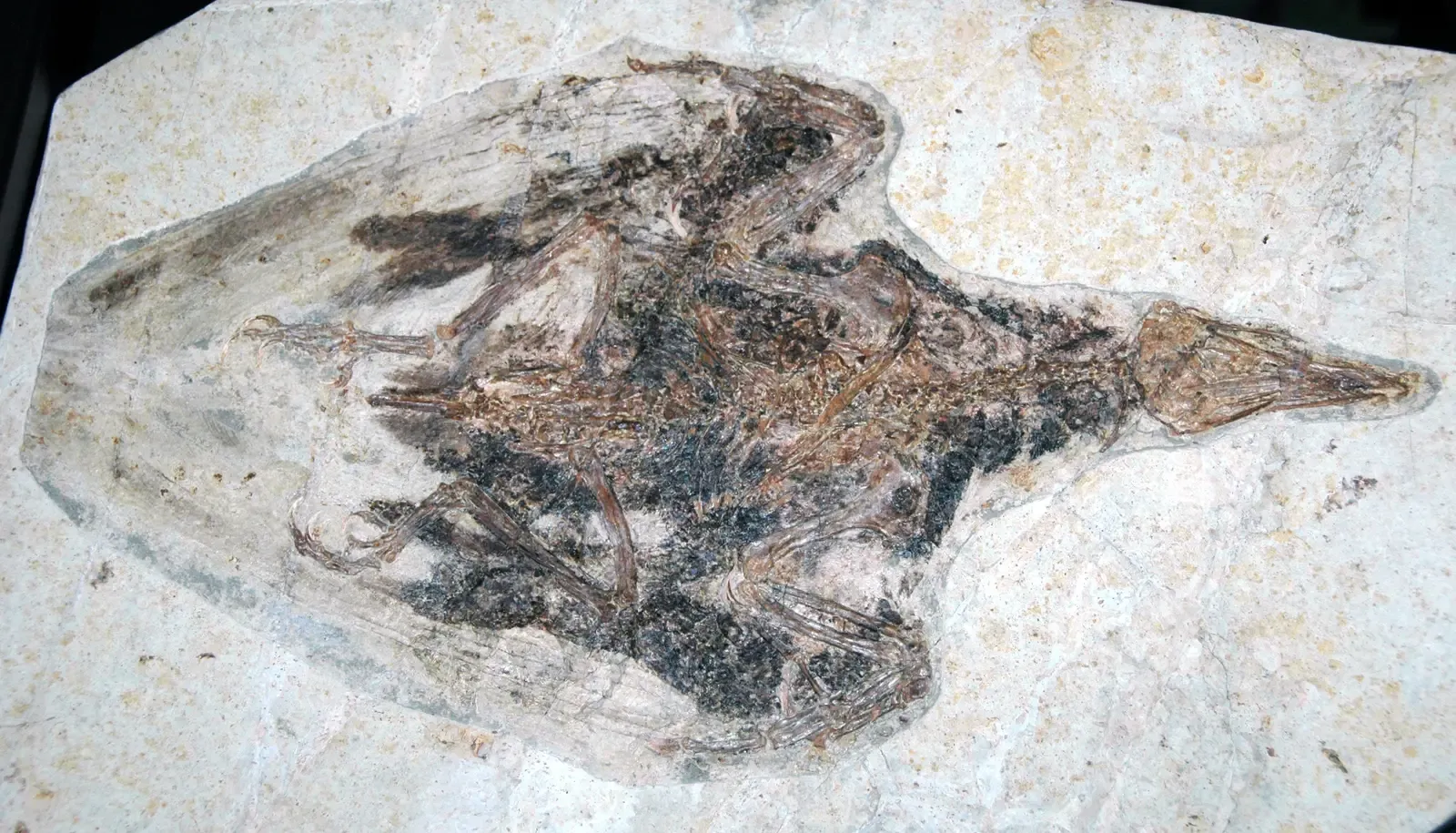
Teeth disappeared, but something had to replace them. Enter the beak: lightweight, versatile, made of keratin instead of heavy enamel and bone. On the basis of fossil and molecular evidence, researchers propose a two-step scenario whereby tooth loss and partial beak development began on the anterior portion of both the upper and lower jaws. The second stage involved concurrent progression of tooth loss and beak development from the anterior portion of both jaws to the back of the rostrum.
Ichthyornis shows this transition beautifully. It had a partial beak in front of its mouth and teeth in the back. The Ichthyornis dispar represents an in-between stage, proving that the development of the beak happened around the same time as the loss of teeth. Imagine a creature with tweezers for a front end and a vice grip in back. Weird as it sounds, it worked.
Feathers Before Flight
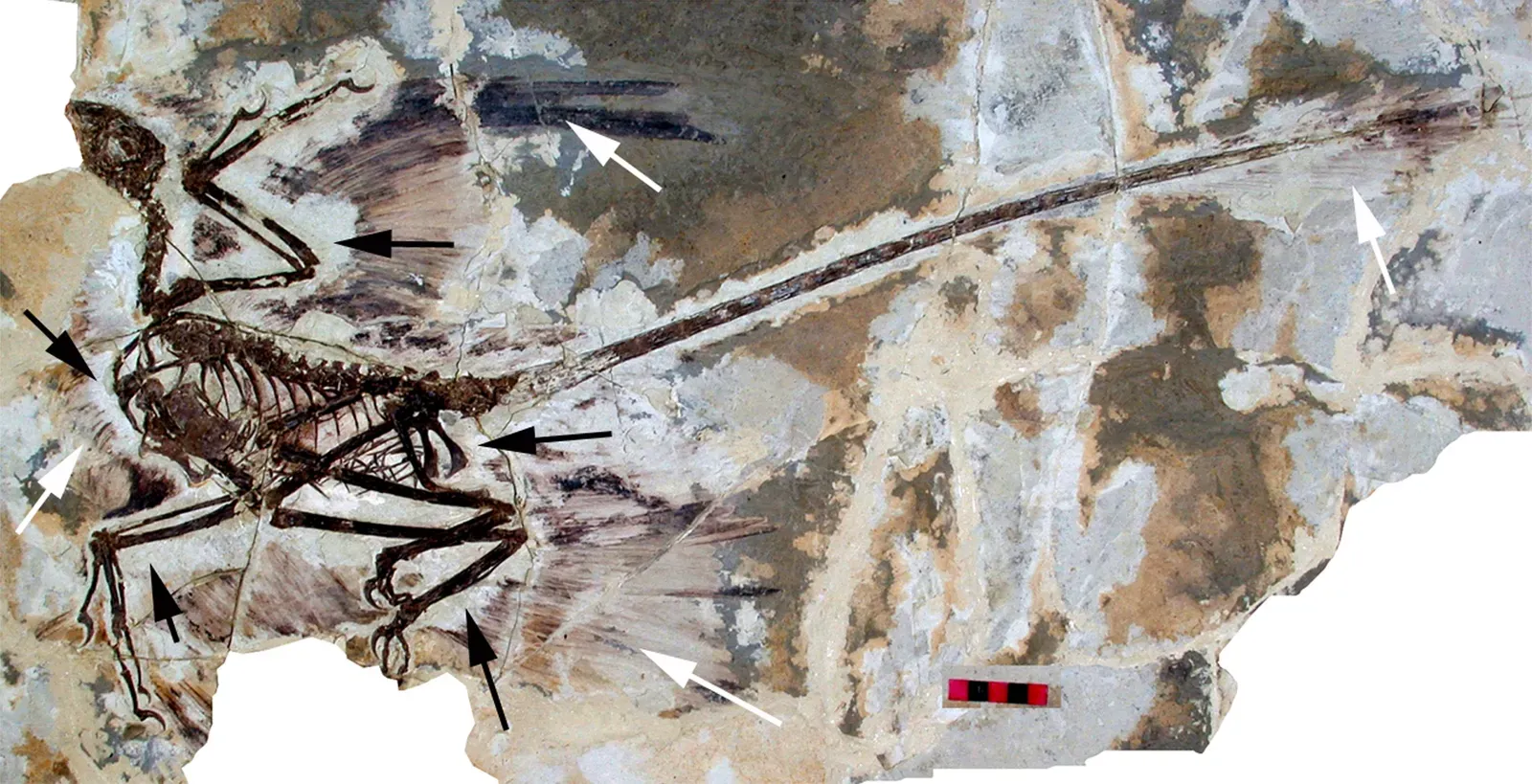
One of the most surprising discoveries in recent decades? Bird-specific features like feathers began to emerge long before the evolution of birds, indicating that birds simply adapted a number of pre-existing features to a new use. Feathers didn’t evolve for flight at all, at least not initially. They evolved before birds and even before avian flight. Thus, early feathers functioned in thermal insulation, communication, or water repellency, but not in aerodynamics and flight.
Only later were they co-opted into structures capable of generating lift. Teeth were lost repeatedly in various lineages of early birds, but feathers stuck around and diversified, developing into the complex flight feathers we see today. Archaeopteryx feathers, although less documented than its other features, were very similar in structure to modern-day bird feathers.
The evolution of feathers might be one of nature’s greatest examples of repurposing. What began as insulation became, over millions of years, the key to conquering the skies.
Shrinking Giants and Growing Brains
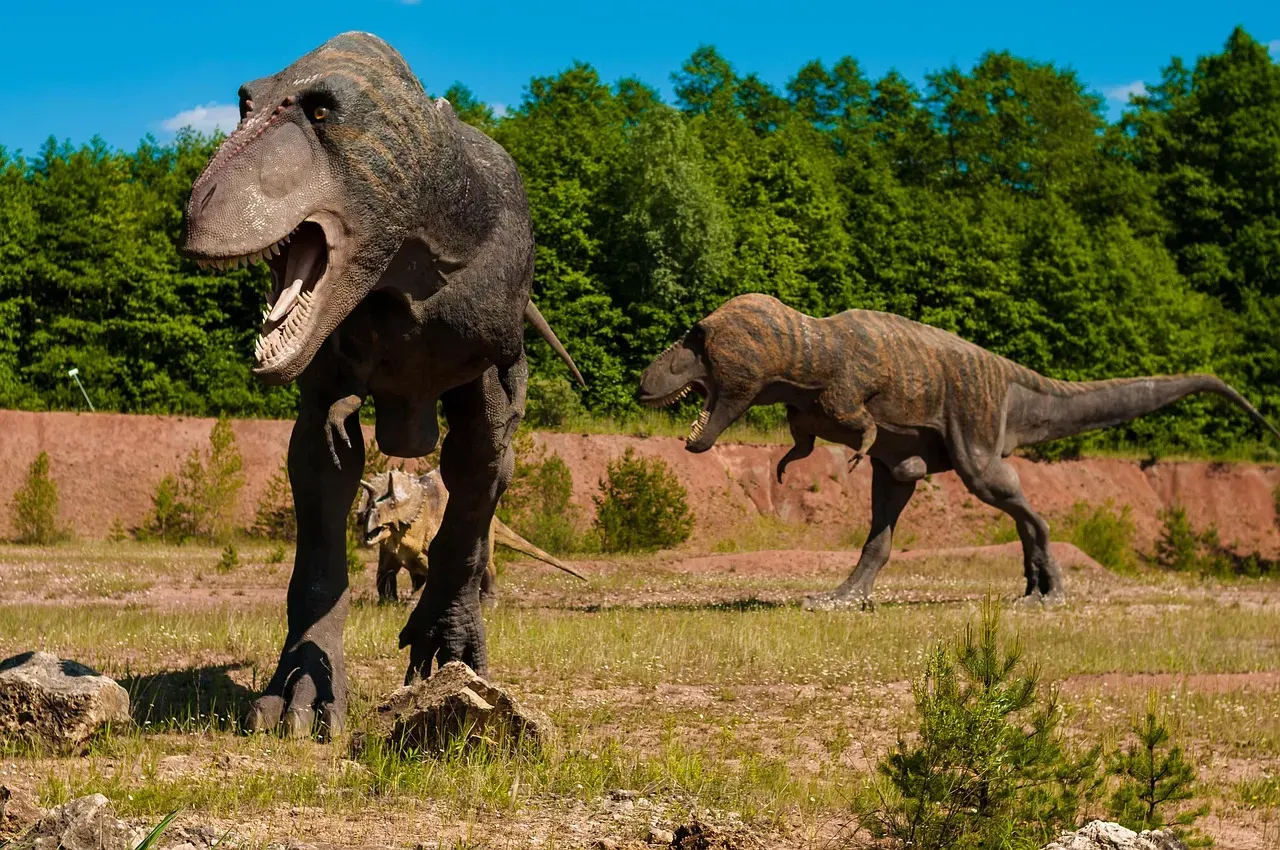
The theropods most closely related to avians generally weighed between 100 and 500 pounds, giants compared to most modern birds. How did something resembling a mid-sized predator become a hummingbird? During the course of their evolutionary history, the body size of some theropod groups gradually decreased. This trend, together with many other changes to the skeleton, ultimately led to the appearance of birds.
It wasn’t just about getting smaller. Birds became better fliers by losing weight in clever ways. Flying birds during their evolution further reduced relative weight through several characteristics such as the loss of teeth, shrinkage of the gonads out of mating season, and fusion of bones. Teeth were replaced by a lightweight bill made of keratin.
Every ounce mattered. Meanwhile, their brains were getting proportionally larger, improving coordination and spatial awareness necessary for complex flight maneuvers.
The Great Extinction and What Survived
The ancestor of all living birds lived sometime in the Late Cretaceous, and in the 65 million years since the extinction of the rest of the dinosaurs, this ancestral lineage diversified into the major groups of birds alive today. When that asteroid slammed into Earth 66 million years ago, nearly every large land animal perished. Yet birds made it through.
Only the tiny survived. The smallest dinosaurs weighed about 500 g, but to survive as a land mammal you needed to weigh less than 50 g, and even then the chances were very slim. Toothed birds? Gone. The massive, specialized seabirds? Extinct. What remained were the smallest, most adaptable fliers, the ones that could survive on limited resources in a devastated world.
From that tiny population, every single one of the roughly 10,000 bird species alive today descended. Sparrows, eagles, penguins, ostriches: all share that one common survivor ancestor.
From Teeth to Tweets
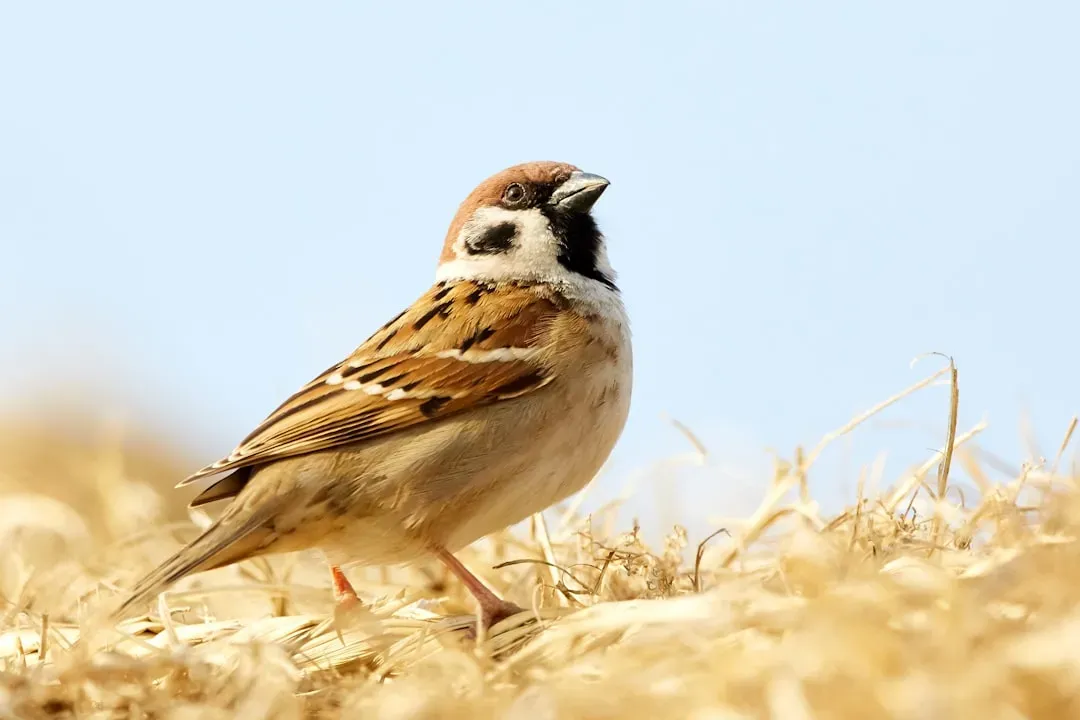
So here we are, in a world where birds rule the skies but not a single one retains the teeth of its ancestors. No modern birds have teeth. What was once standard equipment for over 86 million years vanished, traded for speed, efficiency, and versatility. The journey from Archaeopteryx to the chickadee outside your window involved millions of years of gradual modification, chance mutations, environmental pressures, and survival of the fittest.
Think of it: the same evolutionary lineage gave us both Tyrannosaurus rex and the hummingbird. One a 40-foot-long apex predator, the other a two-inch ball of feathers that can hover in place. Birds evolved from theropod dinosaurs during the Jurassic around 165–150 million years ago and their classic small, lightweight, feathered, and winged body plan was pieced together gradually over tens of millions of years of evolution rather than in one burst of innovation.
The transformation happened slowly, piece by piece, tooth by tooth, until one day something that no longer looked or acted like a dinosaur took to the air. And it never looked back. What do you think: when you see a robin, do you see the dinosaur within?