Think you know everything about prehistoric America? Think again. Long before humans built cities and highways, this continent was home to creatures so massive, so bizarre, and so deadly that they make today’s wildlife look downright ordinary. We’re talking about animals that would tower over modern elephants, predators with fangs longer than kitchen knives, and sloths that could crush you with a single swipe.
You’ve probably heard of woolly mammoths and saber-toothed cats. Those are the celebrities of the Ice Age. What you probably haven’t heard are the truly shocking details about these animals and their forgotten neighbors. Did you know some of these beasts had anatomical quirks that still baffle scientists? Or that certain extinctions happened so mysteriously that researchers are still arguing about them in 2026?
Let’s be real, the Ice Age wasn’t just cold. It was brutal, competitive, and full of evolutionary experiments that either succeeded spectacularly or failed catastrophically. So buckle up, because these ten facts are going to change how you see prehistoric North America forever.
Horses Originally Evolved in North America, Then Vanished Completely
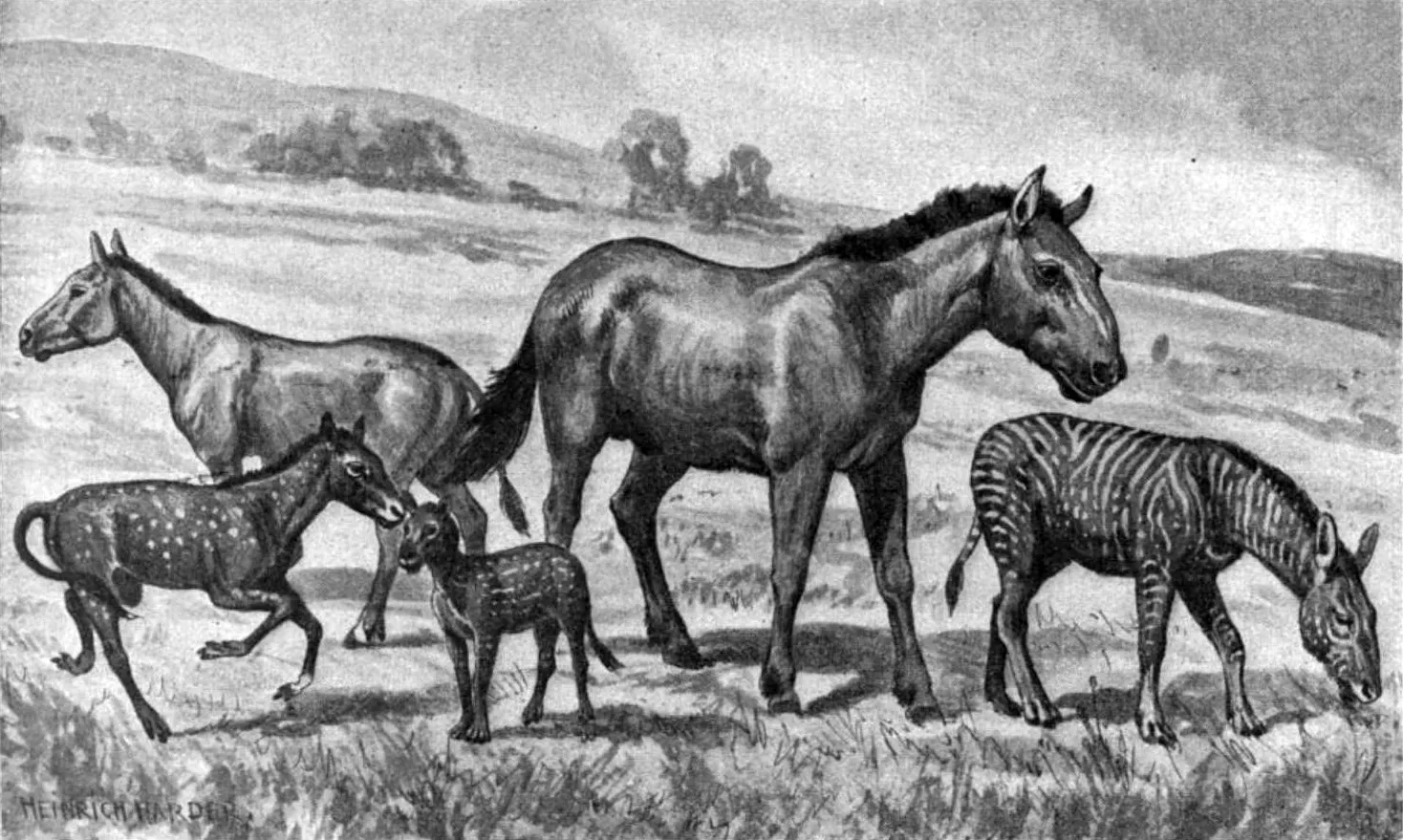
Here’s something that’ll mess with your head. Ancient horses once roamed North America approximately 50 million years ago until they went extinct at the end of the last ice age about 11,000 years ago. That’s right, horses are actually native to this continent. The horses you see today? They’re descendants of those that made it to Eurasia and Africa before the big extinction event.
It was long believed that horses were first introduced to North America by Spanish settlers in the 16th century, but archeological evidence has rewritten that history. It’s now clear that indigenous horses roamed North America for 55 million years before going extinct. The extinction was so complete that when Europeans brought horses back, it was technically a reintroduction after thousands of years. Imagine evolving for millions of years in one place, spreading across the world, then dying out completely where you started.
Giant Ground Sloths Were Bigger Than Cars and Couldn’t Run
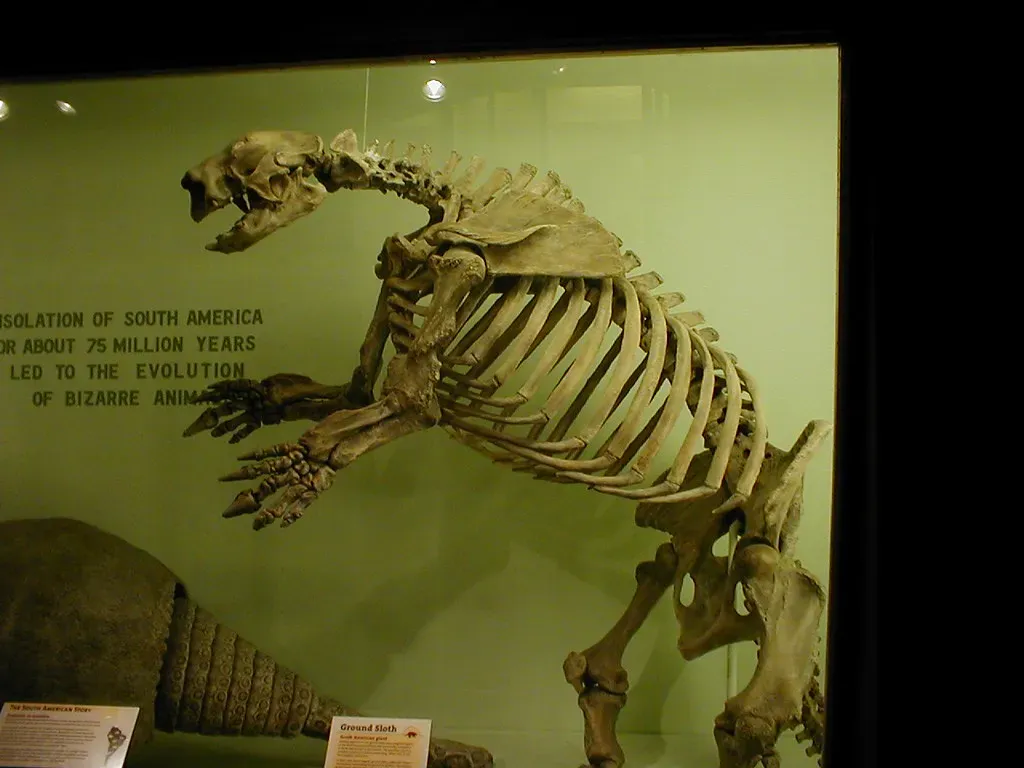
The giant ground sloths of the late Pleistocene were bear-sized herbivores that stood 12 feet on their hind legs and weighed more than 3,000 pounds. Picture a creature as tall as a basketball hoop that moved at the pace of molasses. These weren’t your cute, tree-dwelling sloths of today. They were massive, terrestrial herbivores with claws nearly a foot long.
It’s clear from ground sloths’ skeletal anatomy that they were incapable of running, so when it came to a fight-or-flight encounter with one of the Americas’ many predators, they probably always chose the former. Their defense strategy? Stand their ground and swing those enormous claws like medieval maces. DNA analysis indicates that all extinct North American ground sloths originated in South America and migrated north. They crossed over when the Isthmus of Panama formed, bringing South American weirdness to the northern continent.
The Short-Faced Bear Was the Largest Carnivorous Mammal Ever in North America
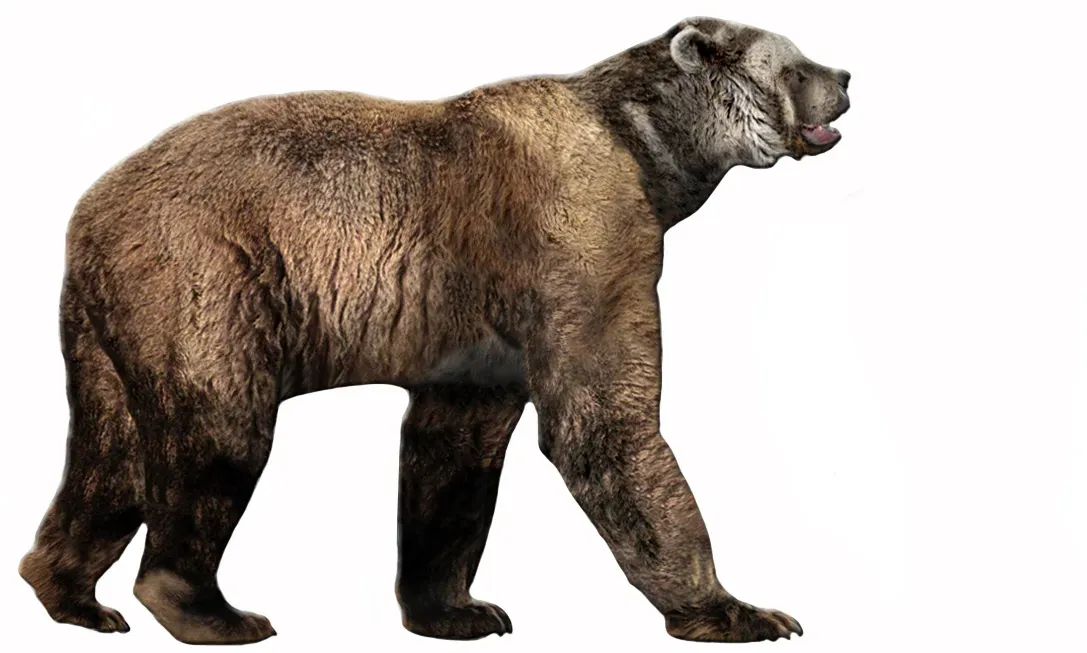
If you think grizzlies are intimidating, let me introduce you to their nightmare ancestor. The giant short-faced bear was the largest carnivorous mammal to ever roam North America. Standing on its hind legs, an adult giant short-faced bear boasted a vertical reach of more than 14 feet. That’s taller than most ceilings in your house. This animal could peer into second-story windows.
Paleontologists calculate that the short-faced bear could reach speeds topping 40 miles per hour, making it the fastest bear to ever live. Combine that speed with incredible size and you’ve got the apex predator of its time. Some researchers debate whether it was primarily a predator or a scavenger, but honestly? With those dimensions, it could have been both. It could intimidate any other predator off a kill and still chase down prey when it felt like it.
Dire Wolves Were Real and Abundant
No, Game of Thrones didn’t invent them. Dire wolves are the largest of the Genus Canis group. In North America, they actually existed. Although dire wolves went extinct about 13,000 years ago, their bones are abundant in California’s La Brea Tar Pits. Thousands of dire wolf fossils have been pulled from those tar pits, more than any other mammal species found there.
About 5.7 million years ago, dire wolves split from wolves, making them distant relatives of today’s wolves on the canid family tree. They weren’t just bigger wolves. They were a separate branch that evolved independently and looked quite different. Dire wolves roamed every inch of North America from the frozen Canadian north down through Mexico and hunted in packs of 30 or more and fed on large prey like mammoths, giant sloths and Ice Age horses.
Mammoths and Mastodons Were Not the Same Thing
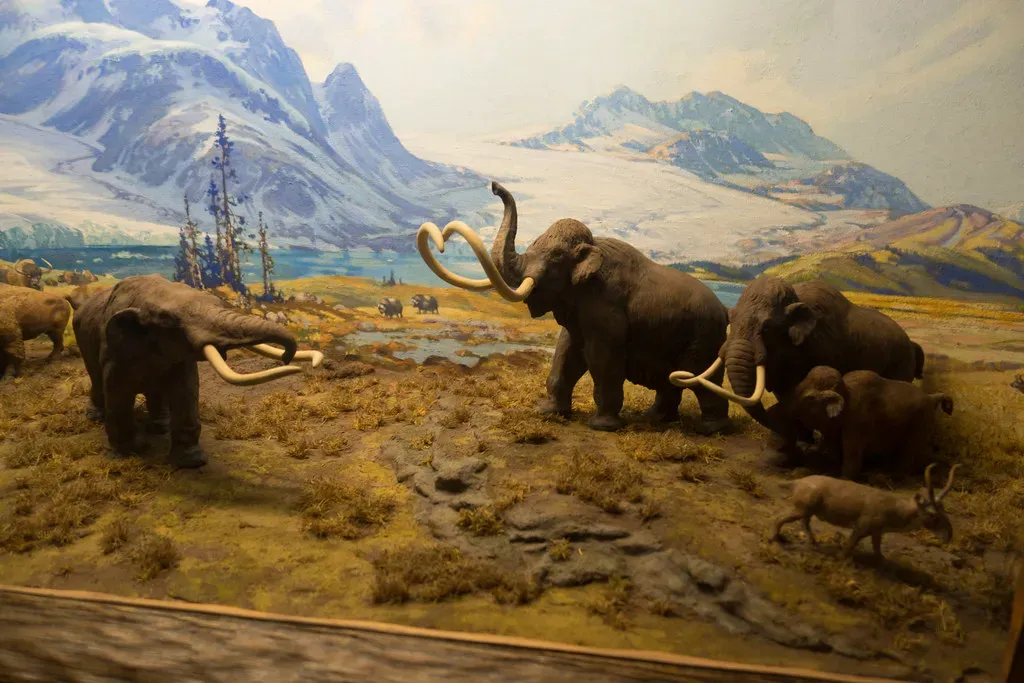
Most people lump these together, but they were actually quite different animals. The American mastodon is the most ancient of the North American elephants. Its ancestors crossed the Bering Strait from Asia roughly 15 million years ago and evolved into the American mastodon 3.5 million years ago. The mastodon was shorter and stockier than the later mammoths, and the shape of its teeth indicate that mastodons didn’t graze on grass like mammoths, but ripped off leaves and entire tree branches.
Meanwhile, mammoths came later and included multiple species. Around 1.5 million years ago a mammoth crossed the Bering land bridge and branched into two distinct mammoth species: the relatively hairless Columbian mammoth and the Jeffersonian mammoth. Then, as recently as 500,000 years ago, the woolly mammoth arrived. They occupied different niches and ate different foods, which is probably why they could coexist for so long.
America Once Had Its Own Species of Cheetah
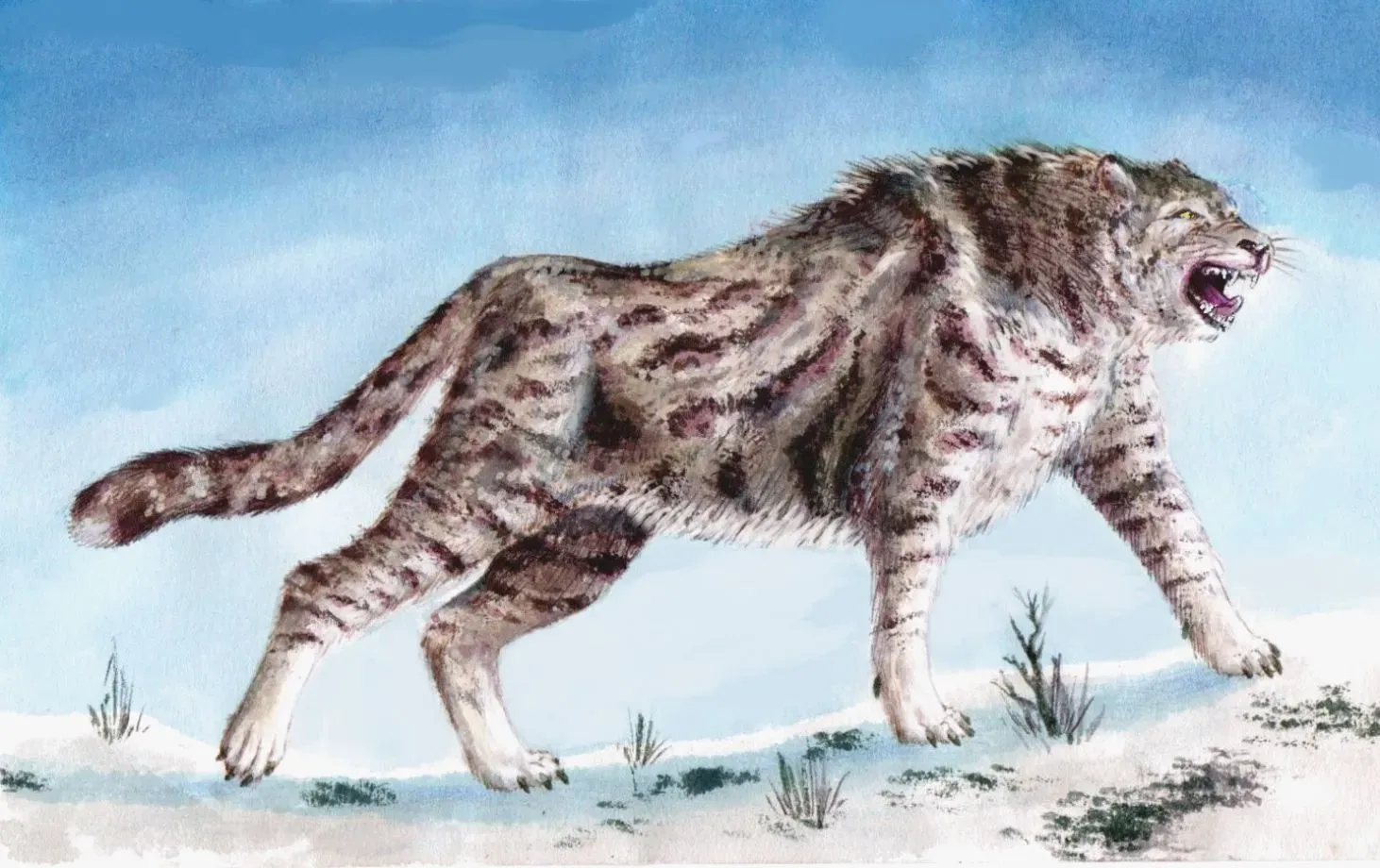
The American Cheetah lived in North America before the last Ice Age. Its bones have been discovered from West Virginia to Arizona and even Wyoming. This predator looked strikingly similar to African cheetahs, but it evolved completely independently through a process called convergent evolution. Same solution, different evolutionary path.
Miracinonyx trumani is an extinct species of cheetah-like cat that roamed the North American prairies and steppe terrains more than 13,000 years ago. Miracinonyx trumani probably deployed a unique predatory behavior without modern analogues. Here’s the kicker: Isotopic analysis does indicate pronghorn were their preferred prey, making up an estimated 40% of their diet. That might explain why pronghorn antelopes today can run absurdly fast even though no modern predator can catch them. They’re still running from ghosts.
Thirty-Eight Genera of Mammals Vanished at the End of the Pleistocene
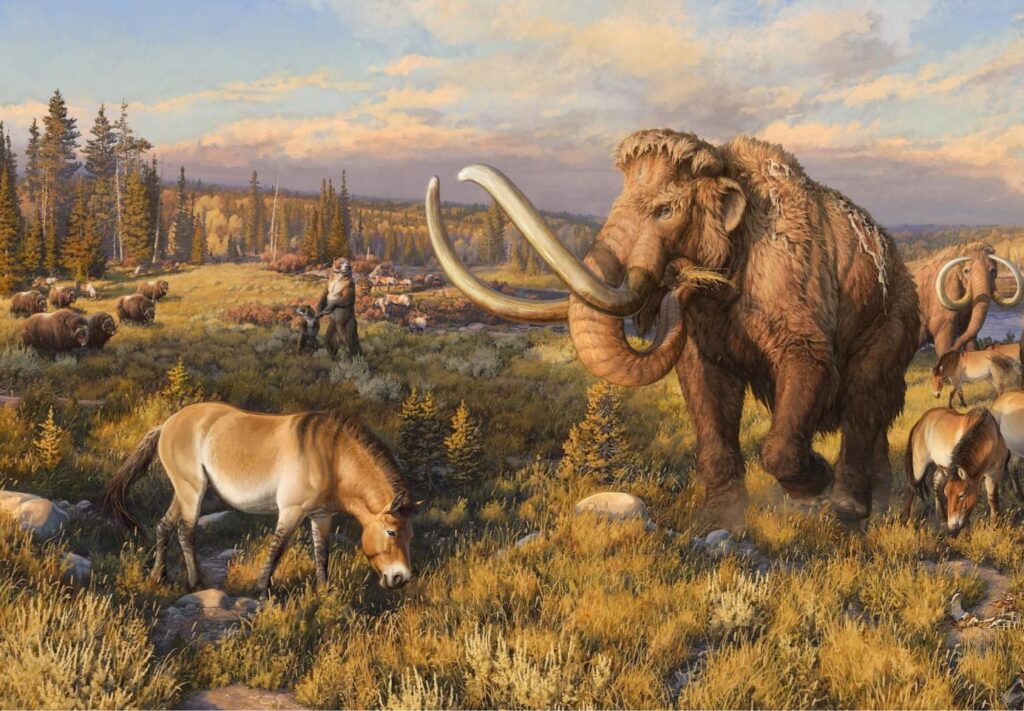
The extinction event that closed out the Ice Age was catastrophic. As the Pleistocene came to an end in North America, 38 genera of mammals vanished. The majority are designated as megafauna, with a body mass over roughly 45 kilograms, including several proboscideans weighing more than 4,500 kilograms. We’re not just talking about a few species. Entire evolutionary lineages disappeared.
Around 12,700 years ago, North America lost 70 percent of its large mammals. The debate about why continues to rage. Was it climate change? Human hunting? A combination? The strongest relationship scientists found by far was between human population growth and a large increase in fire activity. Turns out humans might have literally burned the continent into a new ecological state. It’s sobering, really.
Saber-Toothed Cats and Dire Wolves Had Bone Disease Near Extinction

This fact is genuinely chilling. Results showed that 6 percent of the saber-toothed cat thigh bones, 2.6 percent of the dire wolf thigh bones and 4.5 percent of the dire wolf shoulder bones had signs of osteochondrosis dissecans. That’s a bone and joint disease rarely seen in wild animals today. Modern wild populations usually have rates well under one percent.
Researchers speculate that the species might have been suffering from inbreeding as their population sizes grew smaller and closer to a final extinction. As these ice age giants became geographically isolated from one another, inbreeding rates may have increased, and as inbreeding leads to an increase in inherited disease, OCD may have become more prevalent as their demise edged closer. They weren’t just going extinct. They were literally falling apart at the skeletal level as their populations crashed. Nature doesn’t always go out with a bang.
The Glyptodon Was Basically a Volkswagen Beetle With Armor
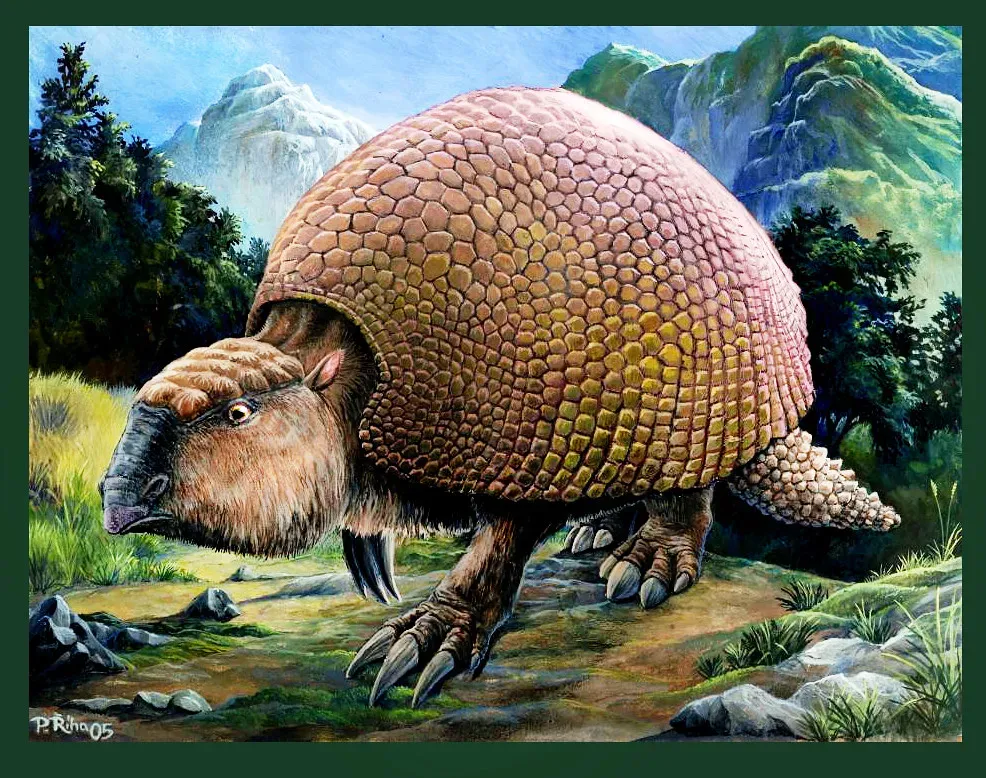
The creature that we have come to know as the Glyptodon looked like a giant version of its distant relative, the armadillo. The shell of Glyptodon was made of bony plates. From South America, the armored, 1-ton creature probably traveled across the Isthmus of Panama to North America. Imagine an armadillo scaled up to the size of a small car. That’s basically what this was.
Glyptodon flourished in what is now coastal Texas and Florida about 2 million years ago. However, the herbivore has been an extinct North American mammal for 10,000 years now. Despite its impressive armor, it couldn’t survive the end of the Ice Age. The shell was so sturdy that early humans occasionally used them as shelters. Talk about repurposing.
Some Mammoths Survived Until the Egyptian Pyramids Were Being Built
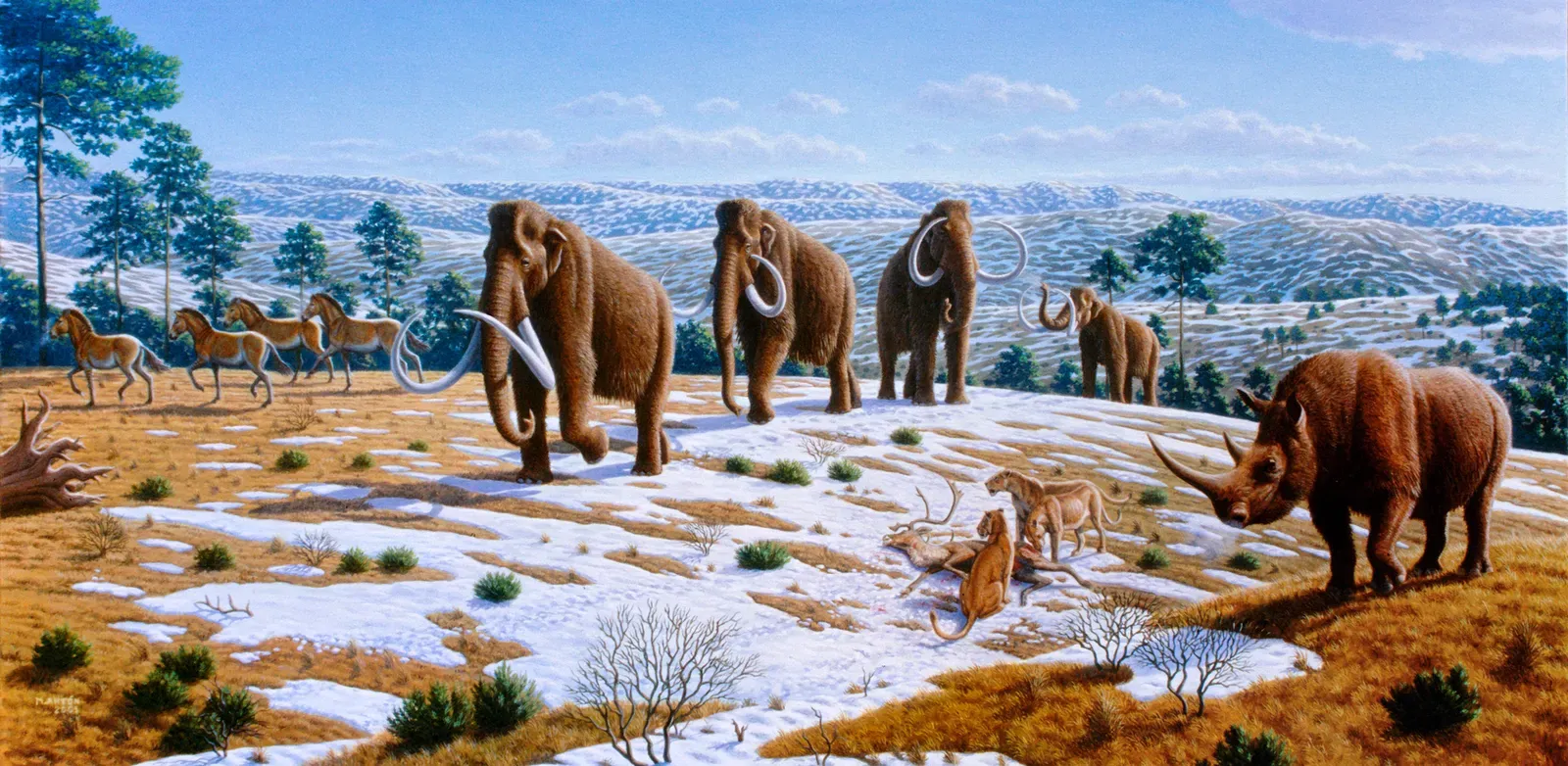
This one always blows people’s minds. Nearly all mammoths and mastodons were wiped out in the great megafauna extinction 10,000 years ago, but archeologists have dug up remains showing that lone bands of mammoths still roamed arctic islands as recently as 4,500 years ago. There were mammoths living down to the time when the Egyptians were building the pyramids. Let that sink in. While humans were constructing one of the Seven Wonders of the Ancient World, woolly mammoths were still walking around on remote islands.
These weren’t even the big continental mammoths. They were isolated populations that survived on islands long after their mainland relatives went extinct. Evolution had made them smaller over time, an adaptation to limited resources. It’s a reminder that extinction isn’t always a sudden event. Sometimes species cling on in isolated pockets, fighting a slow losing battle against time.
Conclusion: Echoes of Giants

Walking through modern America, it’s hard to imagine the landscape that existed just over ten thousand years ago. Where highways now cut through suburbs, giant sloths once browsed on tree branches. Where city parks host joggers, short-faced bears once chased down prey at terrifying speeds. The continent was fundamentally different, shaped by megafauna that influenced everything from vegetation patterns to fire frequencies.
These creatures didn’t just disappear quietly into the fossil record. Their extinction marked a massive ecological upheaval that transformed North America into something unrecognizable. What we consider “natural” today is actually a diminished remnant of what once was. The fossil record offers us glimpses of this lost world, but also raises uncomfortable questions. How much did humans contribute to these extinctions? Are we repeating similar patterns today with modern megafauna?
The prehistoric mammals of North America were marvels of evolution, finely tuned to environments that no longer exist. They remind us that the natural world is never static, always changing, sometimes catastrophically. Did any of these facts surprise you? What would you have done if you’d encountered a short-faced bear or an American cheetah? Share your thoughts in the comments.