Ever wonder what prehistoric creatures looked like when they were trying to impress each other? You know, that whole Mesozoic version of showing off at the club. Turns out, some dinosaurs wore their evolutionary bling right on top of their heads. These bony adornments weren’t just ancient fashion statements. They served real purposes, from making booming calls across ancient floodplains to identifying potential mates from a distance.
Let’s be real, when you picture a dinosaur, you probably think of massive teeth and claws first. Yet some of the most fascinating adaptations these animals developed were the elaborate adorning their skulls. Think of them as nature’s way of saying personality matters, even if you’re a multi-ton herbivore. So let’s dive in and meet eight remarkable dinosaurs that literally wore their uniqueness on their heads.
Parasaurolophus: The Trumpet of the Cretaceous
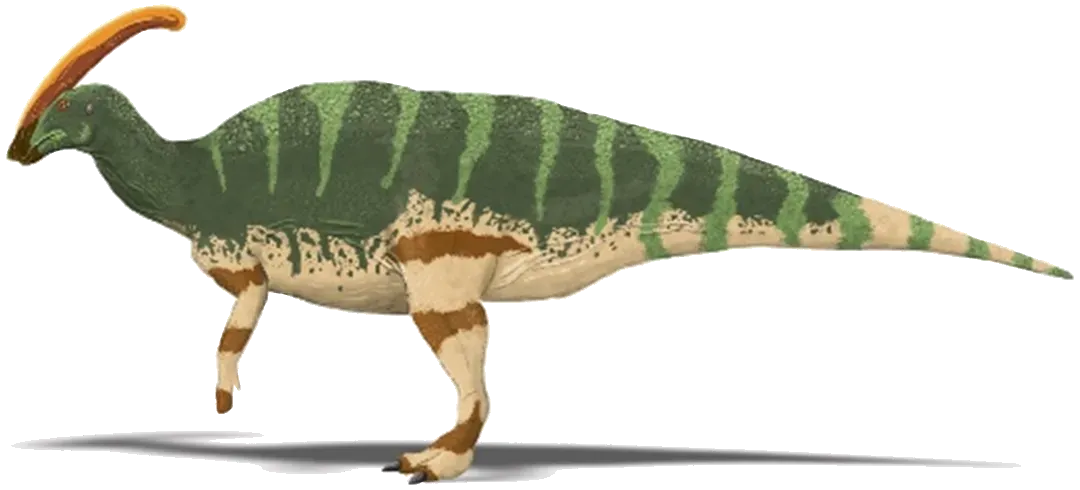
Parasaurolophus lived in what is now western North America during the Late Cretaceous period, about 76.5–73 million years ago. This hadrosaurid stands out for having the largest crest of any discovered dinosaur. Imagine a hollow tube extending backward from the skull, sometimes reaching lengths close to six feet. It was a large herbivore that could reach over 9 metres long and weigh over 5 metric tons.
The truly remarkable thing about this creature isn’t just the size of its headgear. Parasaurolophus is often hypothesized to have used its crest as a resonating chamber to produce low frequency sounds to alert other members of a group or its species. Scientists have actually recreated what these sounds might have been like using models and computer simulations. The result? A deep, haunting call that could travel across vast distances, letting other members of the herd know where everyone was. Experts think Parasaurolophus may have used it to spot other members of its species, to communicate with others by blowing air through the crest to create loud sounds, or to control its body temperature.
Corythosaurus: The Helmet Lizard
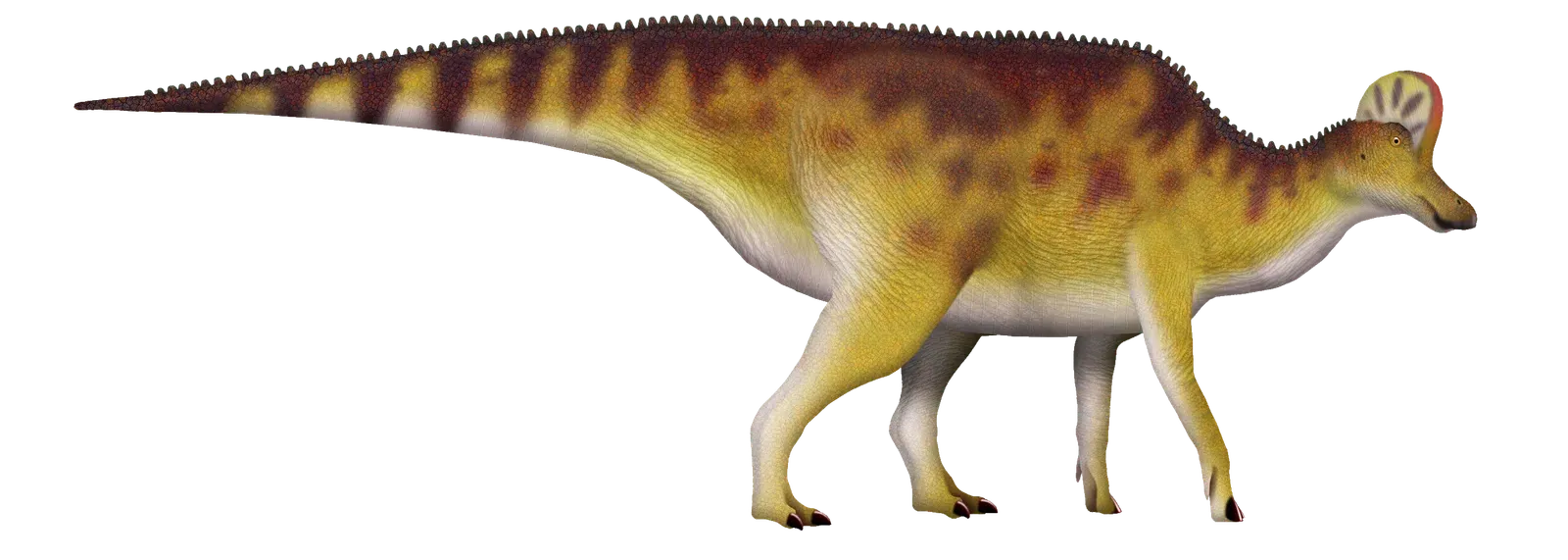
Here’s the thing about Corythosaurus. The name of the Corythosaurus is in reference to the crest on its head, which is said to have similarities to an ancient Greek helmet. Specifically, it looked like the helmets worn by ancient Corinthian soldiers. Corythosaurus has an estimated length of 7.7–9 metres and has a skull, including the crest, that is 70.8 centimetres tall.
This dinosaur’s crest wasn’t just decorative either. The most likely function of the crest is thought to be vocalization. As in a trombone, sound waves would travel through many chambers in the crest and then get amplified when Corythosaurus exhaled. Can you picture herds of these animals calling to each other through Cretaceous forests? They were herbivores and fed on the vegetation in the plains and marshland habitats they lived in. They likely traveled in groups for protection against the fearsome predators of their time. Corythosaurus also most likely lived in groups to increase their chance of survival.
Dilophosaurus: Double Trouble
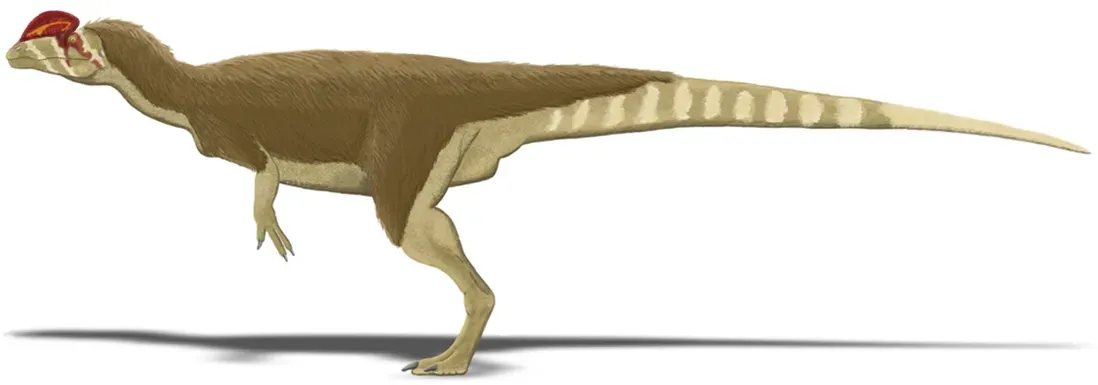
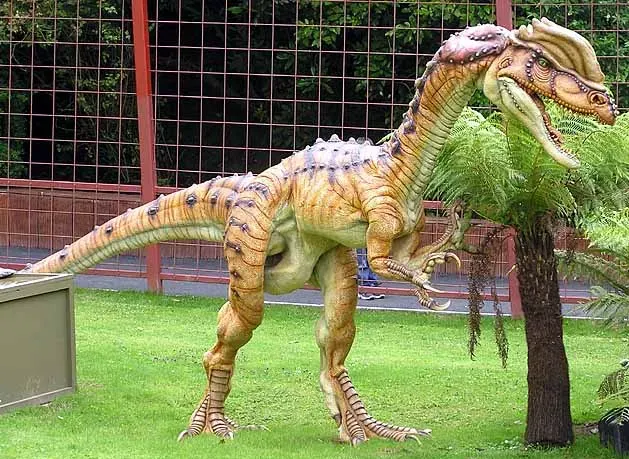
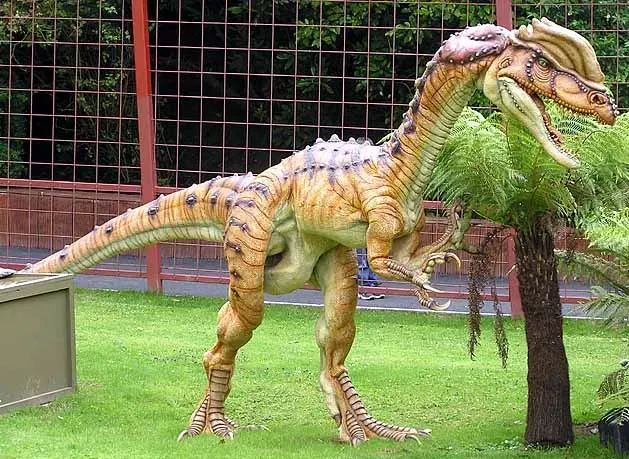
Dilophosaurus is a genus of theropod dinosaurs that lived in what is now North America during the Early Jurassic, about 186 million years ago. Unlike the previous two plant eaters, this one was a carnivore. Dilophosaurus was a quick groups of dinosaurs and one of few carnivores with a crest on the head. The name of this genus means “two crested lizard”.
It had a pair of longitudinal, arched on its skull; their complete shape is unknown, but they were probably enlarged by keratin. These twin ran parallel along the top of its skull, creating that distinctive double mohawk look. On top of this species, heads were two thin rounded , and they also had an elongated skull. The crest on their head was not for fighting as they were too fragile, but they could have been used for display. Despite what certain movies might have you believe, this predator probably used its to attract mates or establish dominance displays rather than for combat. At about 7 m in length, with a weight of about 400 kg, Dilophosaurus was one of the earliest large predatory dinosaurs.
Lambeosaurus: The Hatchet Head
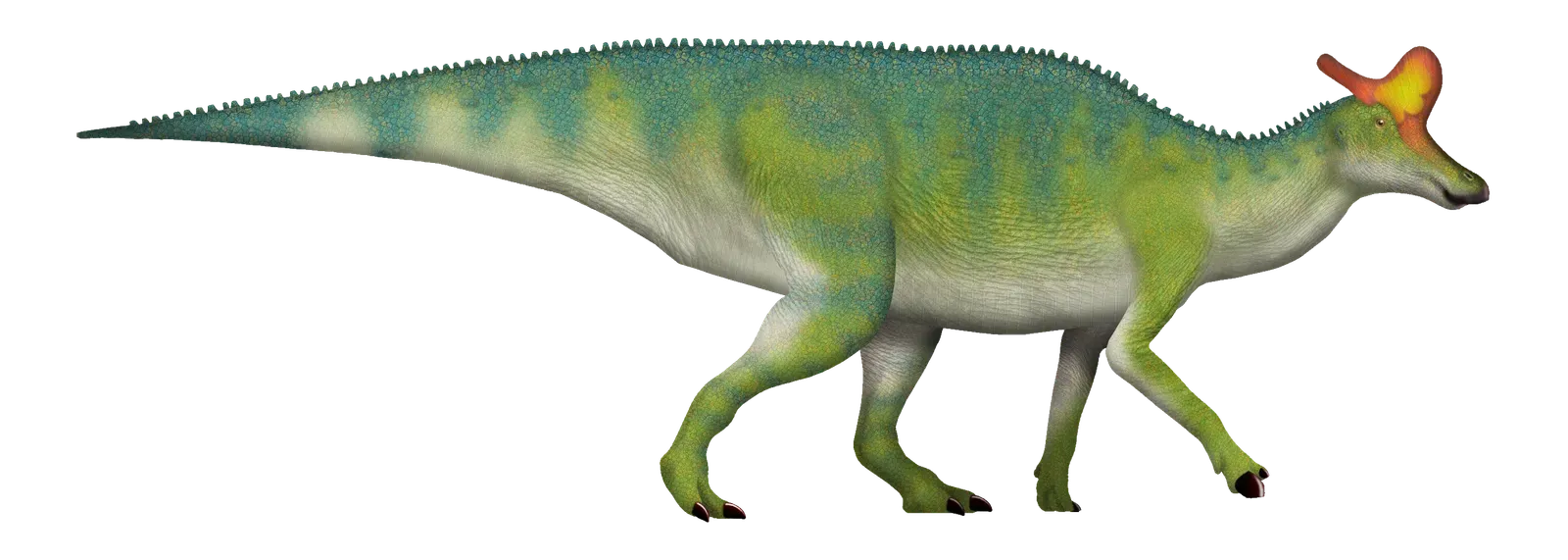
Lambeosaurus had one of the more peculiar crest shapes among hadrosaurs. The most distinctive feature of Lambeosaurus was the oddly shaped crest on this dinosaur’s head, which looked like an upside-down hatchet – the “blade” sticking out from its forehead, and the “handle” jutting out over the back of its neck. This wasn’t a one size fits all situation either. This hatchet differed in shape between the two named Lambeosaurus species, and it was more prominent in males than it was in females.
The hollow nature of these points toward a dual purpose setup. Like other lambeosaurines, these dinosaurs probably used their ornate headgear for both visual displays and vocal communication. Think of it as prehistoric social media, broadcasting who you were to anyone within earshot or eyeshot. The variations between individuals would have helped them recognize their own species and potentially even identify specific individuals within their herds.
Olorotitan: The Giant Swan
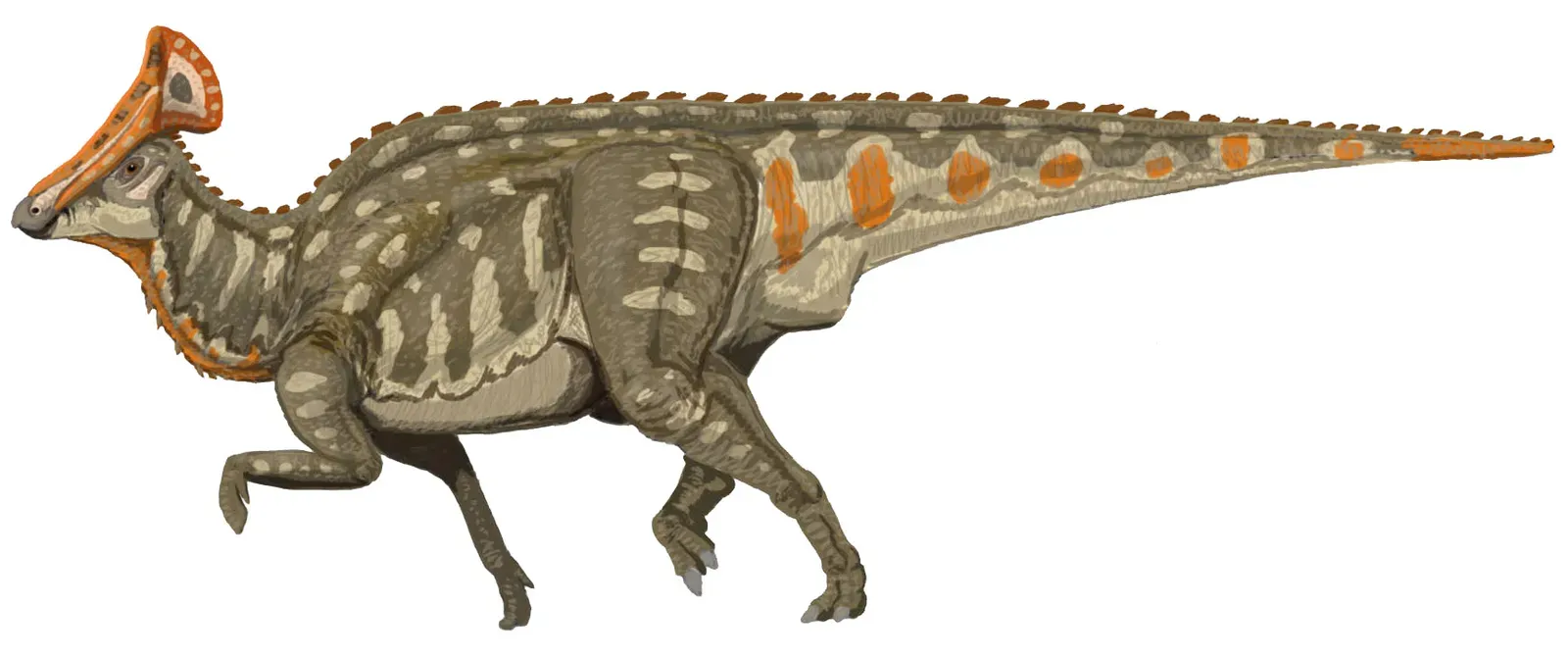
The most distinctive feature of Olorotitan is the fan-shaped crest on its head that points backward. It was a large hadrosaurid, reaching a length of 8 meters and a weight of 3.4 tons. This Russian discovery earned a name that translates to giant swan, which makes sense when you learn about its neck. The skull itself was supported by a rather elongated neck, having eighteen vertebrae, exceeding the previous hadrosourid maximum of fifteen.
The inside of the crest was a large hollow space connected to the nasal cavity. It seems to have served to resonate vocalizations. What strikes me about Olorotitan is how elegant it must have appeared, with that sweeping fan crest and unusually long neck. The 26-foot-long hadrosaur, found in the Late Cretaceous rocks of eastern Russia, had the typical deep tail, beefy legs and slender arms of its kin, but a fan-shaped crest jutting out of the back of the dinosaur’s skull gave it a striking profile. This was among the last dinosaurs to walk the Earth before the great extinction event.
Tsintaosaurus: The Unicorn Dinosaur
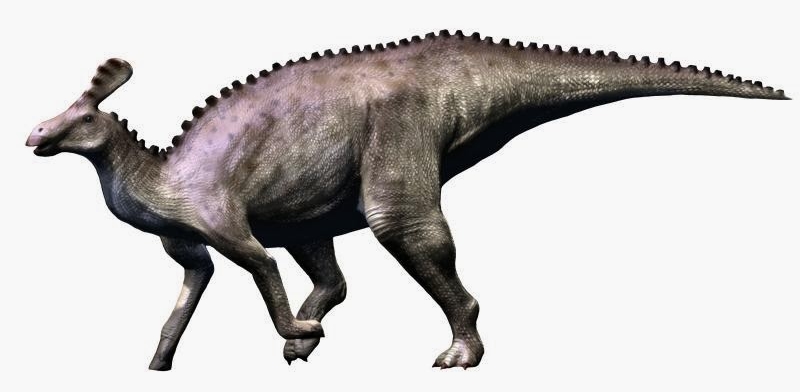
Tsintaosaurus is yet another addition to the Lambeosaur family’s list of controversies: discovered in 1958 in China, the fossil had an unwieldy bone sticking out from an odd angle. This was dismissed as being a sliver of the skull that had been moved out of place at some stage during its fossilization. For years, scientists debated whether that forward pointing crest was real or just a preservation artifact.
Eventually, additional specimens confirmed that yes, this dinosaur really did sport what looked like a unicorn horn projecting forward from its forehead. The hollow crest, like in other lambeosaurines, would have connected to the nasal passages. This unusual forward orientation might have created a different acoustic signature compared to its relatives with backward pointing , giving each species its own unique call sign across the ancient Asian landscapes where it roamed.
Cryolophosaurus: Elvis of Antarctica
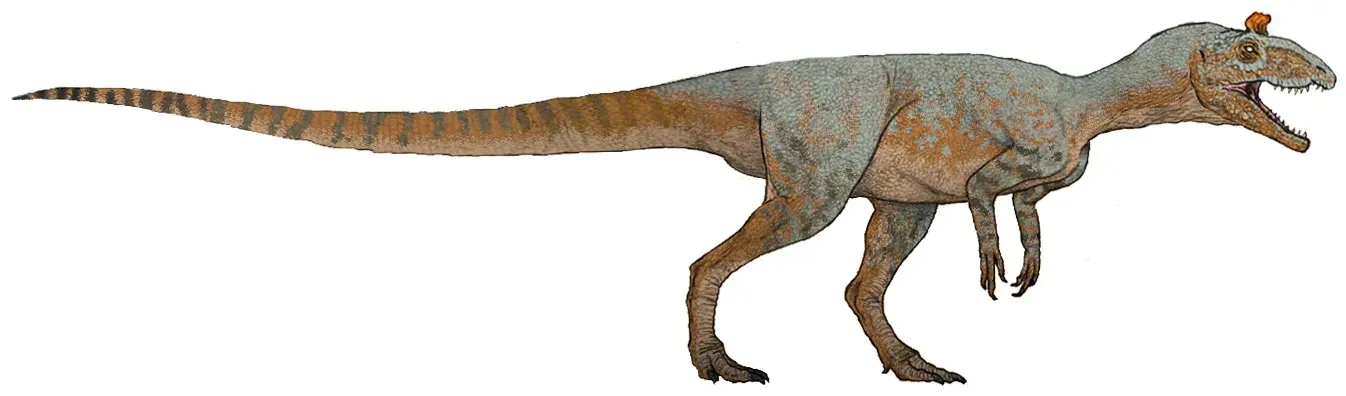
The Cryolophosaurus was one such species as their began from their noses, ran over their eyes, and fanned out just behind. That’s what gave it its nickname, “Elvisaurus”. This early Jurassic theropod had a crest that genuinely resembled a pompadour hairstyle, sweeping back across the top of its head in an almost comical fashion.
The Cryolophosaurus was found in one of the world’s most freezing locations – Antarctica. A geologist named David Elliot found it remains in Antarctica’s Mount Kirkpatrick during the summer of 1990 to 1991. Of course, Antarctica wasn’t frozen solid back then. During the Early Jurassic, it was actually a forested environment with a much milder climate. Paleontologists suggest that they were used for intra-species recognition. It means these dinosaurs used them to identify or distinguish members of the same species. The distinctive shape would have made individuals instantly recognizable to their own kind.
Saurolophus: The Spike
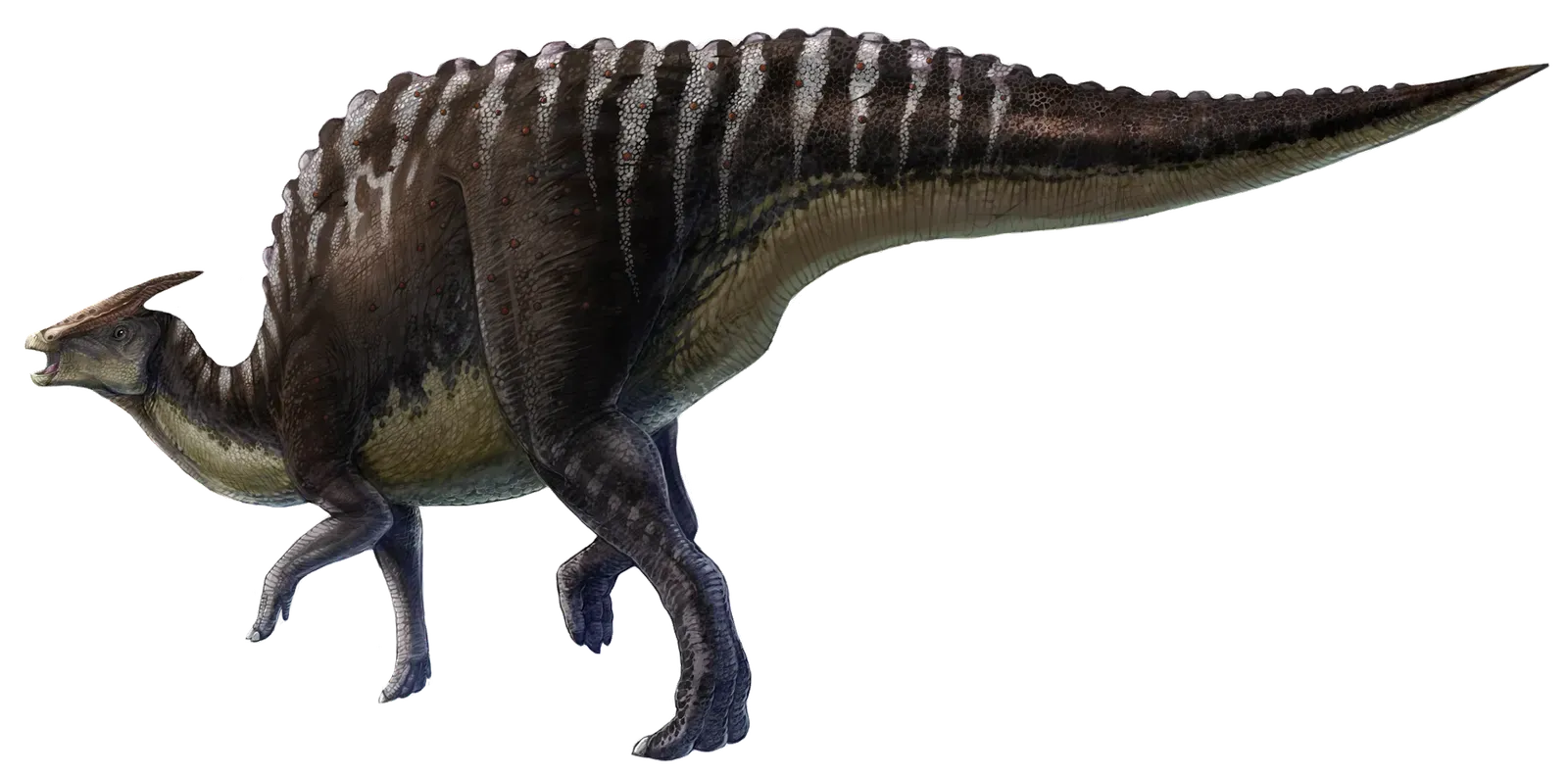
Saurolophus represents a different branch of the hadrosaur family tree. Unlike its hollow crested lambeosaurine cousins, this dinosaur had a solid bony spike projecting backward from the top of its skull. The difference between Saurolophus and Parasaurolophus lies mainly in their crest structure. Saurolophus sports a solid headgear, while Parasaurolophus boasts a hollow, tube-like crest.
This solid construction meant the crest couldn’t function as a resonating chamber for calls like the hollow crested varieties. Instead, it likely served primarily as a visual display structure, possibly supporting soft tissue extensions that could have been inflated or displayed during mating seasons or territorial disputes. The pointed shape pointing backward from the skull gave this dinosaur a distinctive profile that would have been easily recognizable from a distance. Like many hadrosaurs, it was a successful herbivore that lived in herds for protection.
Conclusion
These eight crested dinosaurs represent millions of years of evolutionary experimentation with cranial ornamentation. From the massive curved tube of Parasaurolophus to the double ridges of Dilophosaurus, each crest tells a story about how these animals lived, communicated, and competed for survival in their ancient ecosystems.
What’s truly fascinating is how these structures served multiple functions. They weren’t just pretty decorations. They helped dinosaurs identify their own species in crowded prehistoric landscapes, amplified their calls across vast distances, and possibly even helped regulate body temperature. Some were fragile display pieces, others were robust signals of health and vitality.
The diversity of crest shapes and sizes reminds us that dinosaurs were far more complex and socially sophisticated than we often give them credit for. These weren’t just mindless monsters. They were animals with intricate social lives, communication systems, and individual identities marked by the remarkable structures they carried on their heads. What do you think those ancient calls sounded like echoing through Cretaceous forests? Tell us in the comments.