When you imagine ancient predators, your mind probably conjures images of towering tyrannosaurs and razor-toothed beasts charging across primordial landscapes. The reality, though, gets way more interesting when you realize that some of the most successful hunters didn’t rely on brute force at all. They played a different game entirely, one based on deception, patience, and the art of vanishing into thin air.
Nature has been perfecting camouflage for hundreds of millions of years, and long before modern leopards learned to blend into dappled shadows or octopuses started morphing their skin in milliseconds, prehistoric creatures were already mastering the craft. These ancient animals developed color patterns, body shapes, and survival tactics that would make modern stealth technology look primitive. Let’s dive into the world of six remarkable prehistoric predators that turned invisibility into their deadliest weapon.
Sinosauropteryx: The Bandit-Masked Stalker
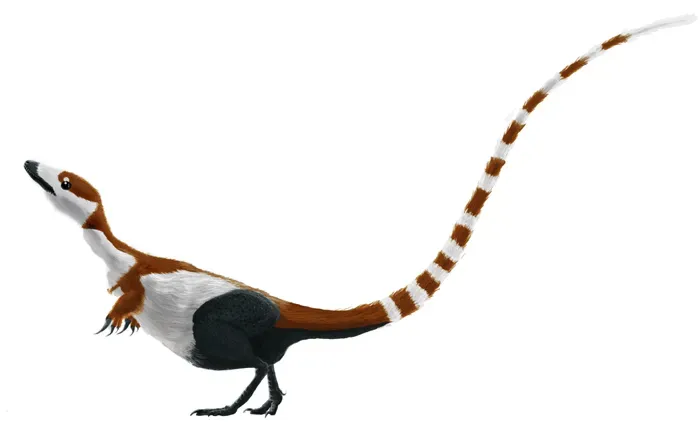
This small feathered dinosaur used a bandit mask-like stripe across its eyes to avoid being detected by its predators and prey, employing multiple types of camouflage to survive in a world full of larger meat-eating dinosaurs. Imagine a creature roughly the size of a chicken, covered in primitive feathers, prowling through early Cretaceous landscapes with the stealth of a modern raccoon. The presence of dark feathers along only the top of the body reflected a countershaded pattern with dark coloration on its back and lighter coloration on its underside, with bands or stripes on the tail for camouflage.
The countershading on Sinosauropteryx went from dark to light high on the body, suggesting it would likely live in open habitats with minimal vegetation. This tells us something fascinating about how this little predator lived. The dark stripe around its eye resembled patterns found in modern birds which help them hide from predators, while its striped tail helped confuse both predators and prey. Let’s be real, this dinosaur was playing both sides of the survival game, hunting smaller creatures while simultaneously avoiding becoming lunch for something bigger.
Psittacosaurus: The Forest Ghost
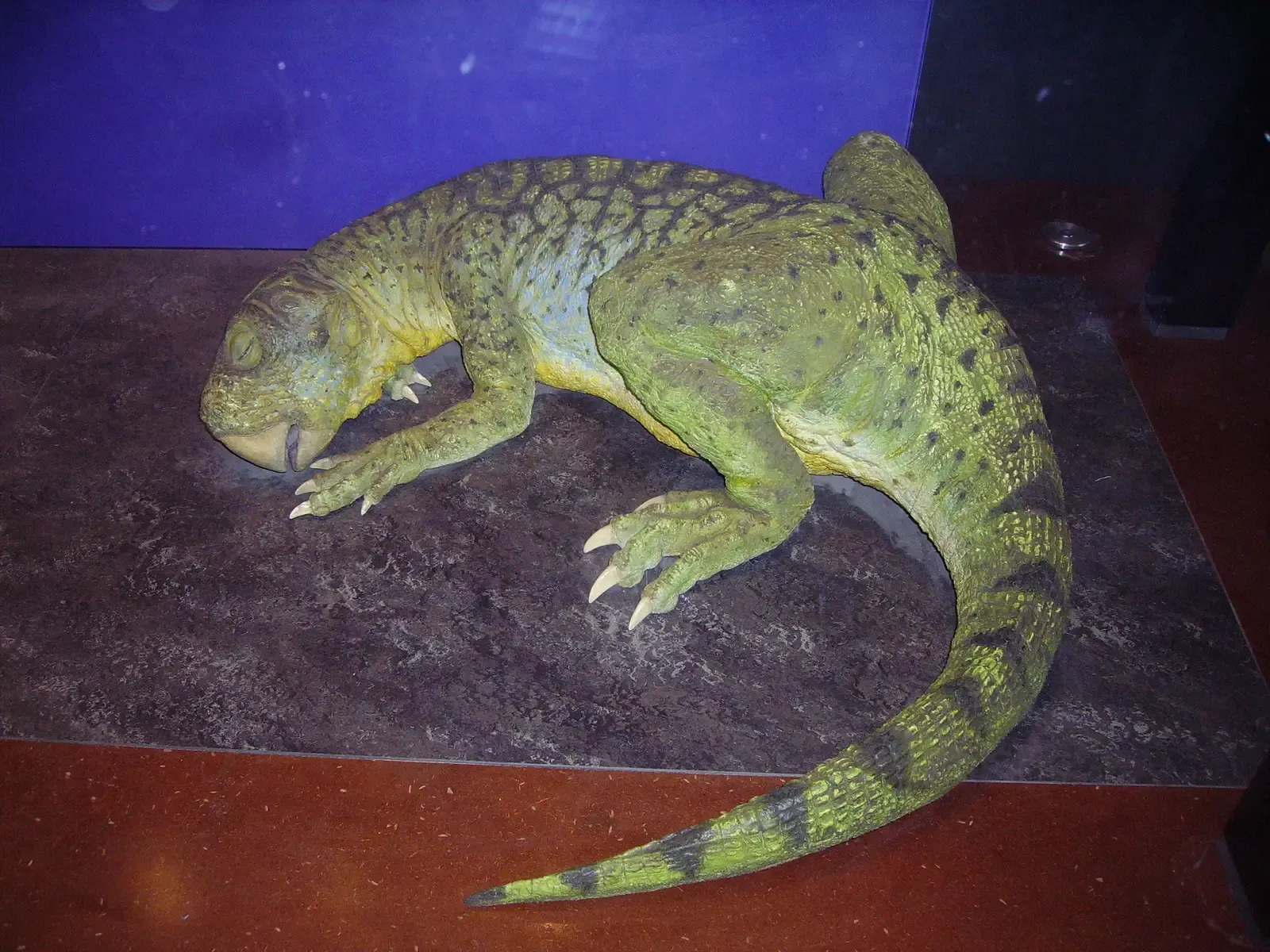
Psittacosaurus, a speckled dinosaur about the size of a golden retriever, had a camouflaging pattern that may have helped it hide in forests. Walking upright on two legs, this herbivore faced a constant threat from the hungry carnivores that stalked through Cretaceous woodlands. The reconstructed patterns closely matched the optimal countershading for diffuse light under a forest canopy.
What makes this discovery so stunning is that scientists didn’t just guess at these patterns. Analysis of exquisitely preserved fossil remains revealed one of the most elaborate dinosaur paint jobs ever seen, including a brown back and a lighter belly. When prey is darker on top than on the bottom, shadows are minimized and the animals look flatter. Think about that for a moment. This creature lived around 120 million years ago, yet it used the exact same camouflage strategy that modern deer employ when trying to disappear into shaded undergrowth.
Borealopelta: The Walking Tank That Still Needed to Hide
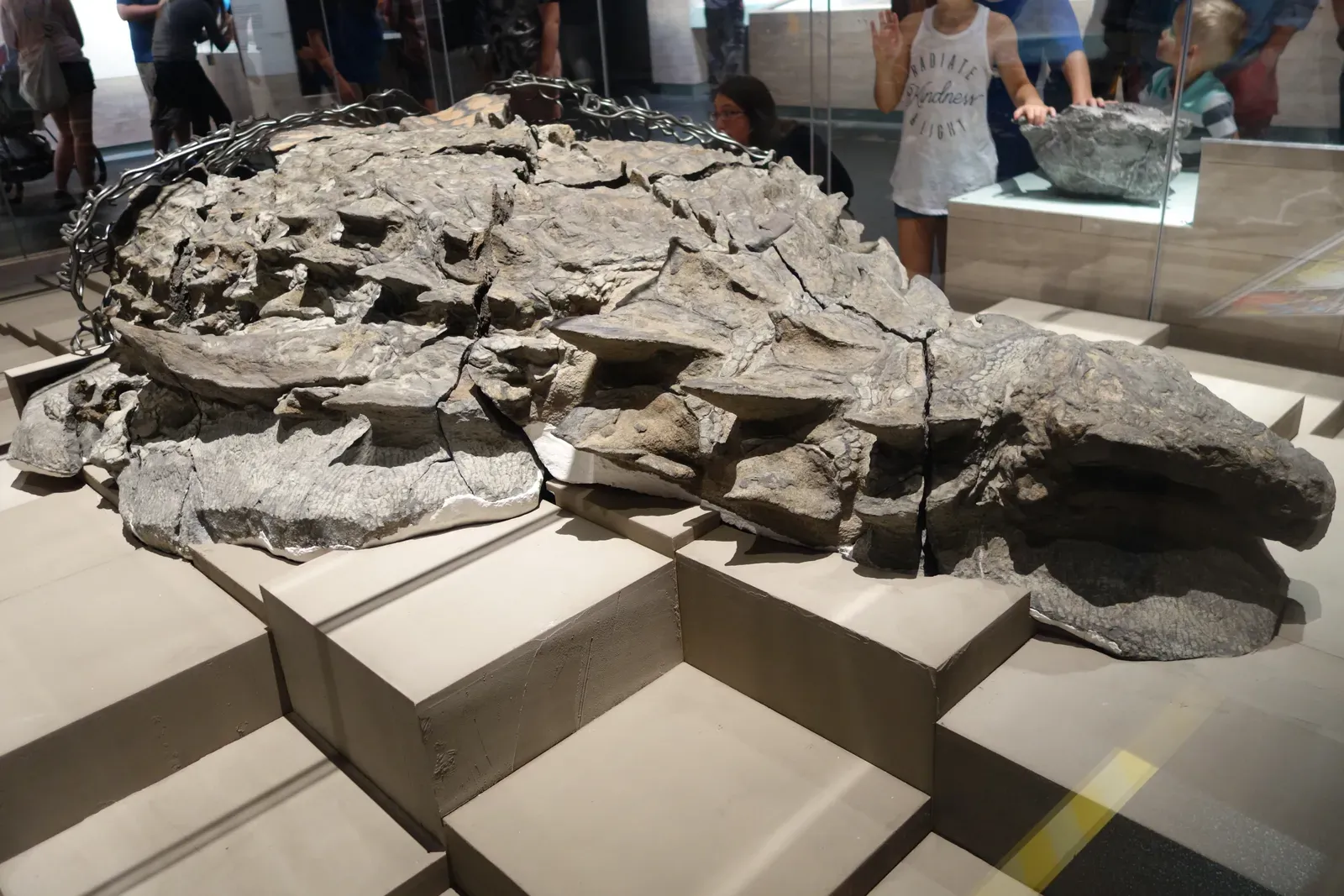
Here’s where things get really wild. Borealopelta had a reddish-brown coloration in life with a countershaded pattern used for camouflage. Despite being the size of a tank, it was still hunted by carnivorous dinosaurs. You would think something weighing over a tonne and covered in bony armor plates wouldn’t need to worry about blending into the background, right?
Borealopelta might have weighed in excess of 1.3 tonnes and measured more than 5.5 metres long, but it relied on countershading to help hide from predatory dinosaurs, implying there were super-sized, hypercarnivores it was trying to avoid. The discovery that Borealopelta possessed camouflage coloration indicates it was under threat of predation, despite its large size, and that the armor on its back was primarily used for defensive rather than display purposes. Honestly, the fact that such a heavily defended creature still evolved camouflage tells you everything you need to know about how terrifying the Early Cretaceous really was.
Mosasaurs: The Shadow Swimmers
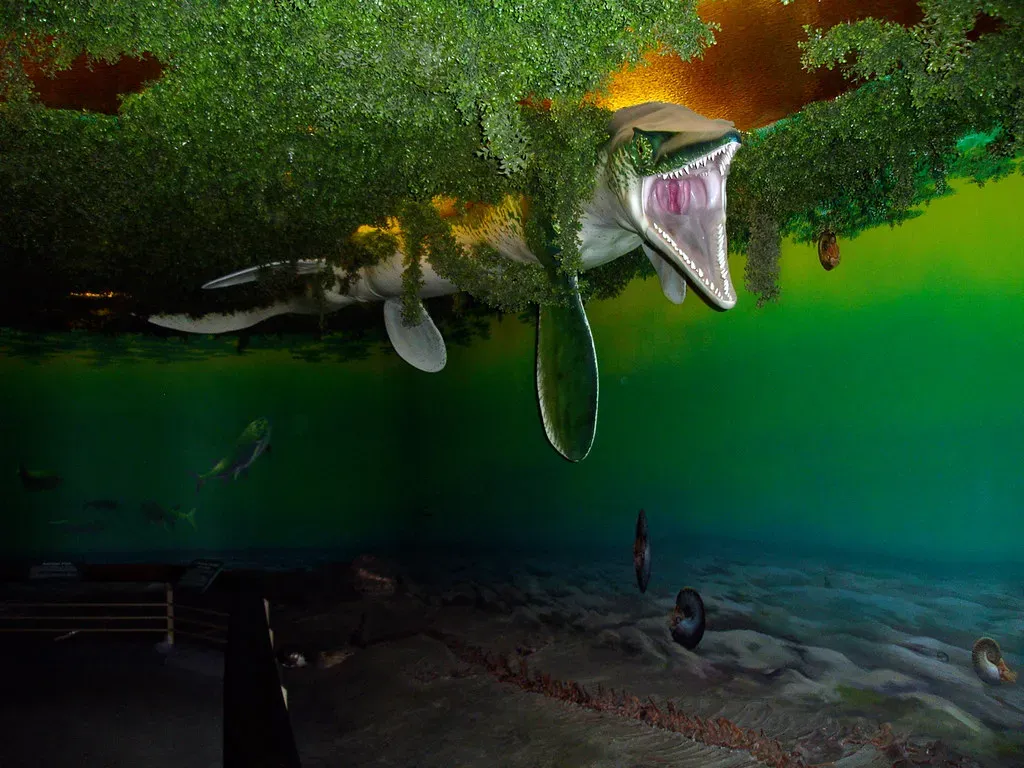
Rare fossilized skin samples from the Cretaceous period show that some marine reptiles were countershaded. The pigmentation patterns on Cretaceous marine reptiles followed countershading, where in water, the pale belly blends in with sunlight falling from above, making the animal invisible to predators below, whereas the dark back helps it blend in with the darker depths. These massive oceanic predators could grow to lengths that rival modern whales, yet they still needed stealth to hunt effectively.
Swimming through ancient seas presented unique challenges for predators. Vision worked differently underwater, and prey had evolved sharp instincts for detecting movement and shadows. Mosasaurs solved this problem by essentially erasing themselves from the visual equation. Their countershaded bodies made them nearly invisible whether you were looking up from the depths or down from the surface. It’s hard to say for sure, but this suggests these reptiles were far more sophisticated hunters than we might have imagined from their fossils alone.
Confuciusornis: The Speckled Aviator
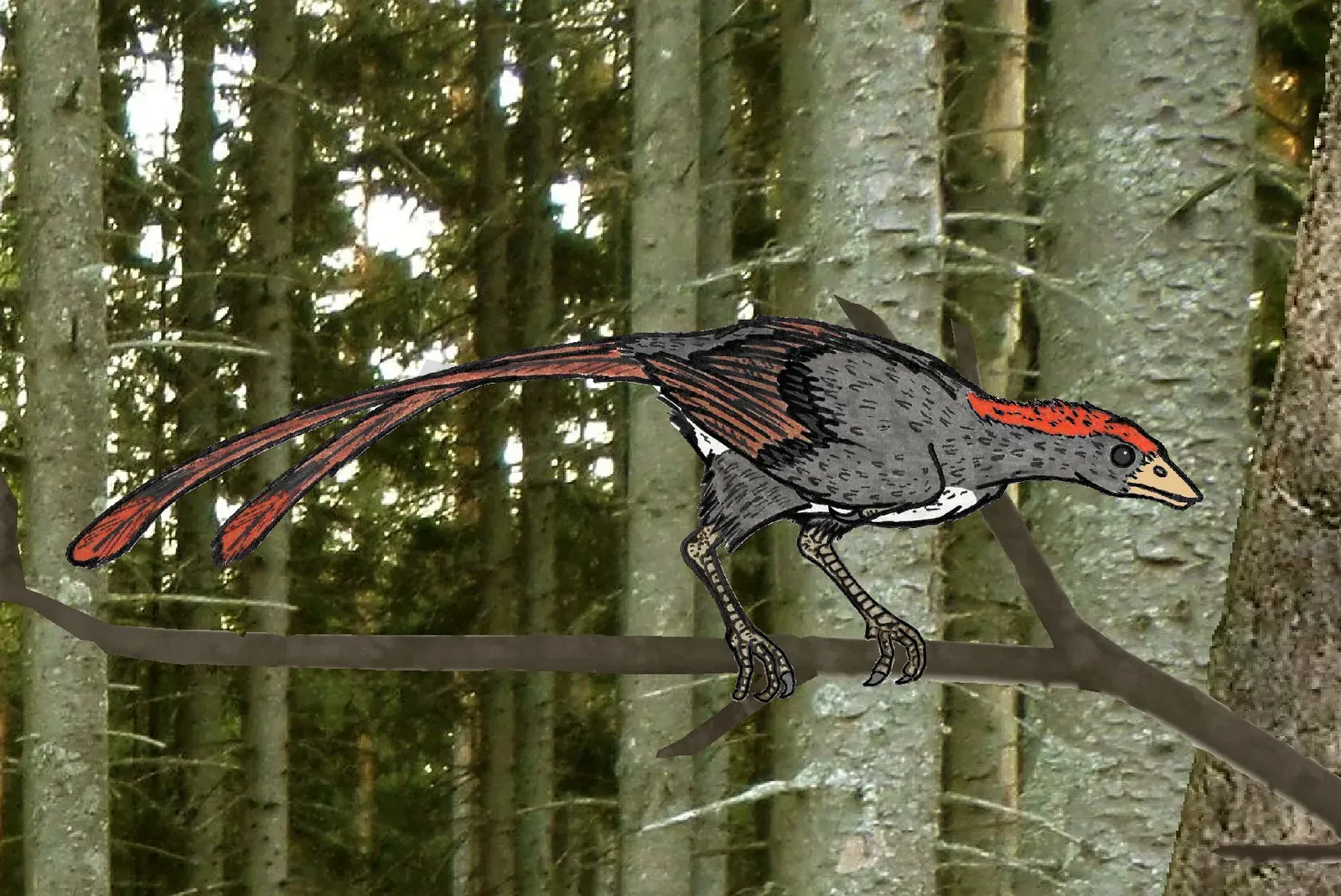
Confuciusornis had primarily dark colors with feathers on the wings, covert feathers, crest, and throat having complex patterns of small dark spots, and this pattern was likely used as camouflage. This early bird lived during a time when the skies were far more dangerous than they are today. Flying didn’t automatically guarantee safety when pterosaurs and other aerial predators ruled the air.
The spotted pattern covering this prehistoric bird wasn’t just for show. Small dark spots scattered across its plumage would have broken up its outline against varied backgrounds, whether perched in trees or gliding between branches. Think of it like nature’s own pixelated pattern, making it harder for hungry eyes to lock onto a clear target. These complex markings reveal that even in the earliest stages of bird evolution, camouflage was already a crucial survival tool.
Microraptor: The Iridescent Hunter
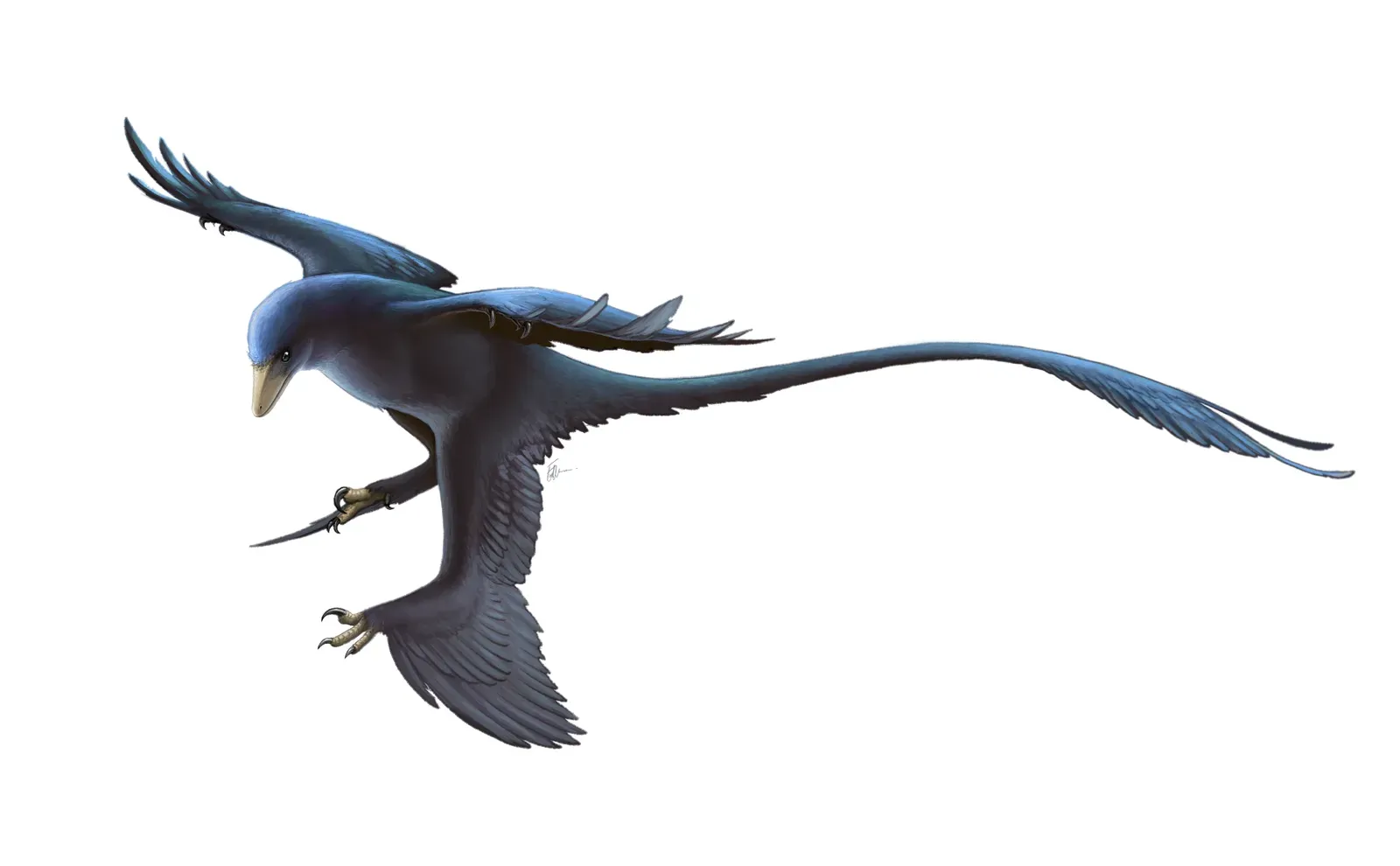
Microraptor feathers were iridescent black, with melanosomes narrow and arranged in stacked layers, reminiscent of the blackbird. Picture a crow-sized dinosaur with four wings, gliding through dense Cretaceous forests with feathers that shimmered and shifted in the dappled sunlight. This wasn’t the kind of camouflage that made you invisible. Instead, it was something far more clever.
Iridescent coloring works differently than standard camouflage patterns. As light hit Microraptor from different angles, its appearance would have constantly changed, making it difficult for both prey and predators to track its movements or judge its distance accurately. In the shifting shadows of a forest canopy, this would have been devastatingly effective. The shimmer would have fragmented its outline, turning a small predator into something that seemed to flicker in and out of existence as it moved through the trees.
Conclusion
The prehistoric world was a theater of constant evolutionary warfare, where survival hinged on who could see and who could hide. These six predators prove that camouflage wasn’t some modern innovation, but an ancient art refined over millions of years. From the striped tail of Sinosauropteryx to the reddish-brown tones of massive Borealopelta, these creatures developed visual tricks that rivaled anything we see in nature today.
What strikes me most is the sheer variety of approaches. Some used countershading to flatten their appearance, others employed disruptive patterns to fragment their outlines, and still others relied on iridescence to confuse the eye entirely. The fact that even heavily armored giants needed to hide tells us something profound about the predatory pressure that existed in those ancient ecosystems. It’s a reminder that in evolution, there’s no such thing as too safe.
Next time you watch a documentary showing dinosaurs painted in dull grays and greens, remember these discoveries. The prehistoric world was bursting with color, pattern, and deception. What other secrets do you think are still hiding in ancient rocks, waiting to change how we see the past?