When we think of prehistoric predators, Tyrannosaurus rex typically springs to mind. Towering reptilian monsters with razor teeth dominating Cretaceous landscapes. Yet there’s another chapter of predatory evolution that gets less attention, one that unfolded after the Age of Dinosaurs ended. In the millions of years following the cataclysmic asteroid impact that wiped out the non-avian dinosaurs, something remarkable happened.
Birds didn’t just survive. They absolutely thrived, evolving into a spectacular array of forms that would make even the fiercest dinosaurs pause. Some became apex predators standing three meters tall with skulls like battle axes. Others developed wingspans approaching twenty feet, soaring over ancient oceans. From flightless hunters to diving specialists to bizarre giants, these avian descendants of dinosaurs carved out ecological niches their reptilian ancestors never imagined.
The Survivors That Became Masters
Here’s the thing about birds. They’re the only dinosaurs that made it through the end-Cretaceous extinction event roughly sixty-six million years ago. While their larger cousins perished, birds are the only dinosaurs to have survived the mass extinction event. This survival gave them an unprecedented opportunity.
Following the extinction, the rapid proliferation of lineages seems to coincide with the Cretaceous–Paleogene extinction event, suggesting ecological opportunity stimulated their diversification. The vacuum left by vanished predators became a playground for evolutionary experimentation. Birds diversified into an astonishing variety of forms, from tiny insectivores to enormous flightless predators, filling every available niche. Honestly, it’s hard to overstate how dramatically they transformed.
Within just a few million years, birds became the most diverse group of flyers ever to evolve, showing a marvelous diversity not only of species but of flight adaptations. Their range went from hummingbirds capable of hovering in place to albatrosses soaring effortlessly across oceans. This wasn’t just survival. This was conquest.
Terror Birds Ruled Where T. Rex Never Could
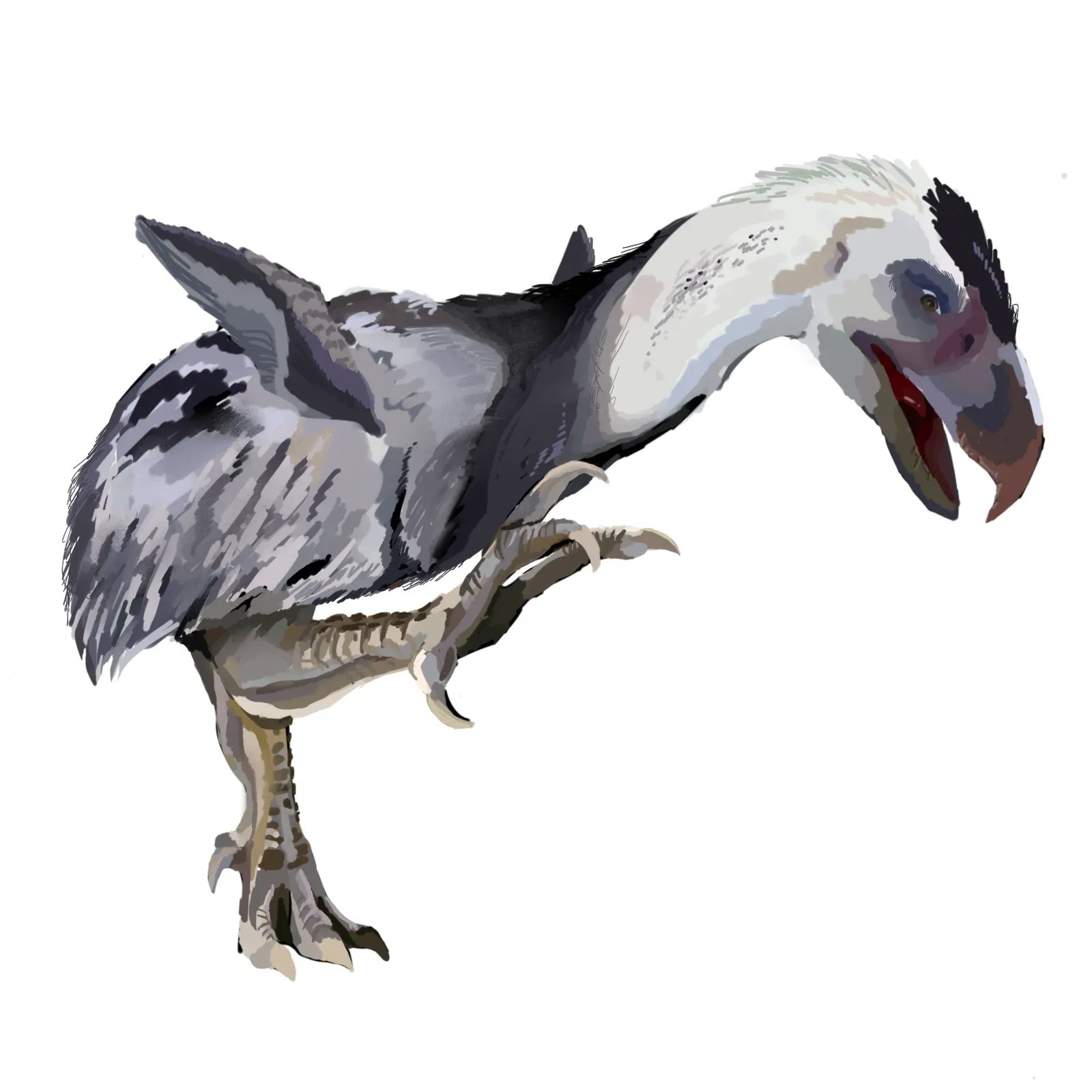
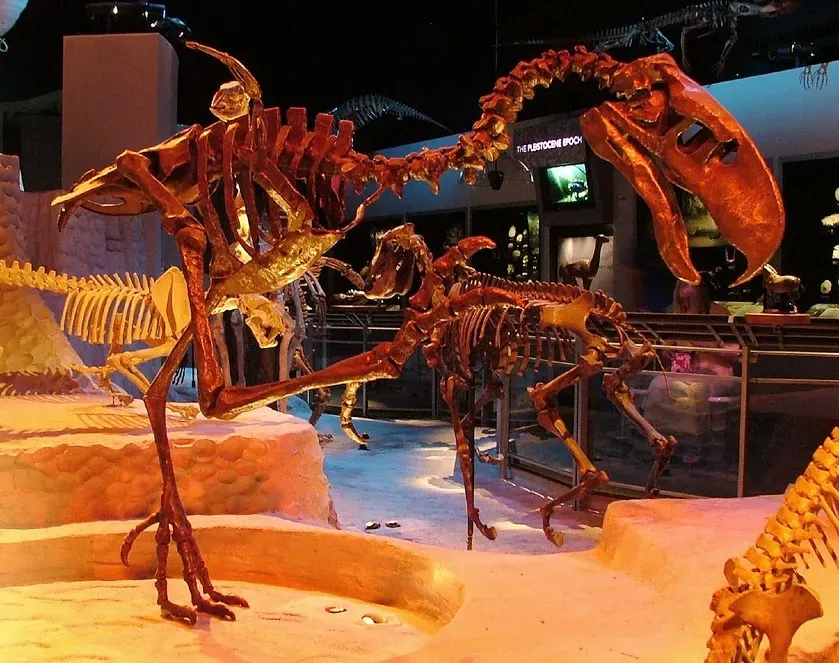
Phorusrhacids, colloquially known as terror birds, were among the largest apex predators in South America during the Cenozoic era. Think about that for a moment. These weren’t some minor predators eking out an existence. These were the dominant carnivores of an entire continent for millions of years.
They ranged in height from one to three meters, with one of the largest specimens weighing up to 350 kilograms. The largest species towered over most humans, possessing massive skulls built for delivering devastating strikes. Kelenken guillermoi had a nearly intact skull measuring 71 centimeters, with a beak roughly 46 centimeters long that curved in a hook shape. That’s a skull longer than most house cats, attached to a bird that stood as tall as a professional basketball hoop.
Speed made them even more terrifying. Scientists theorize that the large terror birds were extremely nimble and quick runners, able to reach speeds of 48 km/h. Some estimates suggest certain species could sprint even faster, making them formidable pursuit predators on open grasslands.
Specialized Killing Machines With No Modern Equivalent
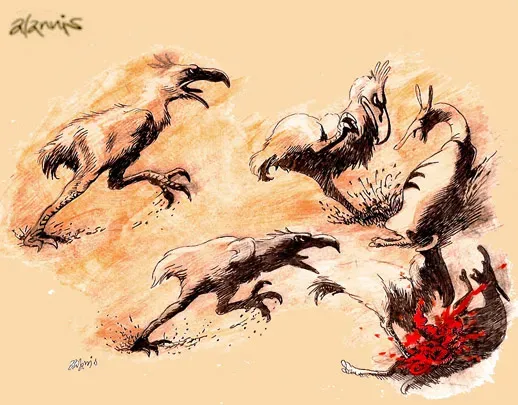
The hunting adaptations of terror birds were genuinely nightmarish. They had highly flexible and developed necks allowing them to carry their heavy heads and strike with terrifying speed and power, producing enough momentum to cause fatal damage to prey. Picture a massive bird extending its neck far beyond what seemed possible, then slamming down with bone-crushing force.
These were a group of extinct Cenozoic birds with specialized predatory adaptations, several of which have no modern analogues. Nothing alive today hunts quite like they did. Modern predatory birds use talons primarily, but terror birds relied on weaponized beaks and powerful kicks. Generally, terror birds would use their feet to injure prey by kicking it, hold the prey down, and dispatch by pecking with their large beaks or using the beak as a blade to strike vital organs.
Recent biomechanical analyses revealed fascinating details. Rather than shaking prey side to side like modern predators, the terror bird engaged in an attack-and-retreat strategy with well-targeted, hatchet-like jabs, then the prey would have been ripped into bite-sized morsels by the powerful neck. Let’s be real, this sounds more like a professional fighter than a bird.
Extraordinary Diversity Across Millions of Years
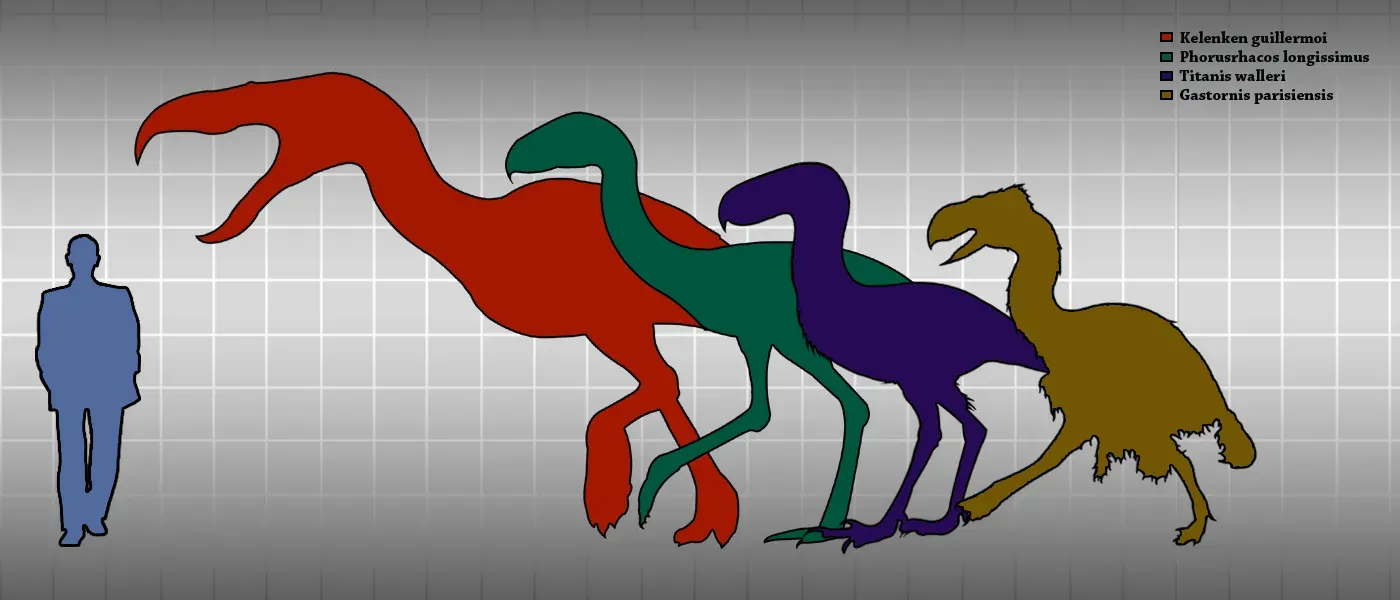
Cenozoic South American flightless birds were abundant and diverse in fossil records, with the Santa Cruz Formation yielding a diverse assemblage of Phorusrhacidae of different sizes and habits. The terror bird family alone included roughly fourteen genera spanning an enormous range of forms.
Smaller species like Psilopterus stood just about two feet tall and likely hunted smaller prey. Mid-sized forms served as mesopredators. Then came the giants. Gigantism evolved in a single clade containing Phorusrhacinae and Physornithinae, with members of this lineage consistently larger than all other phorusrhacids. These apex predators dominated South American ecosystems for tens of millions of years.
Competitive exclusion based on body size shaped terror bird diversity, with size-based niche partitioning preventing competition between clades and responsible for continual high diversity. Different-sized species coexisted by targeting different prey, creating a layered predator guild of stunning complexity. Dinosaurs had nothing quite like this organized hierarchy.
Global Reach Beyond South America
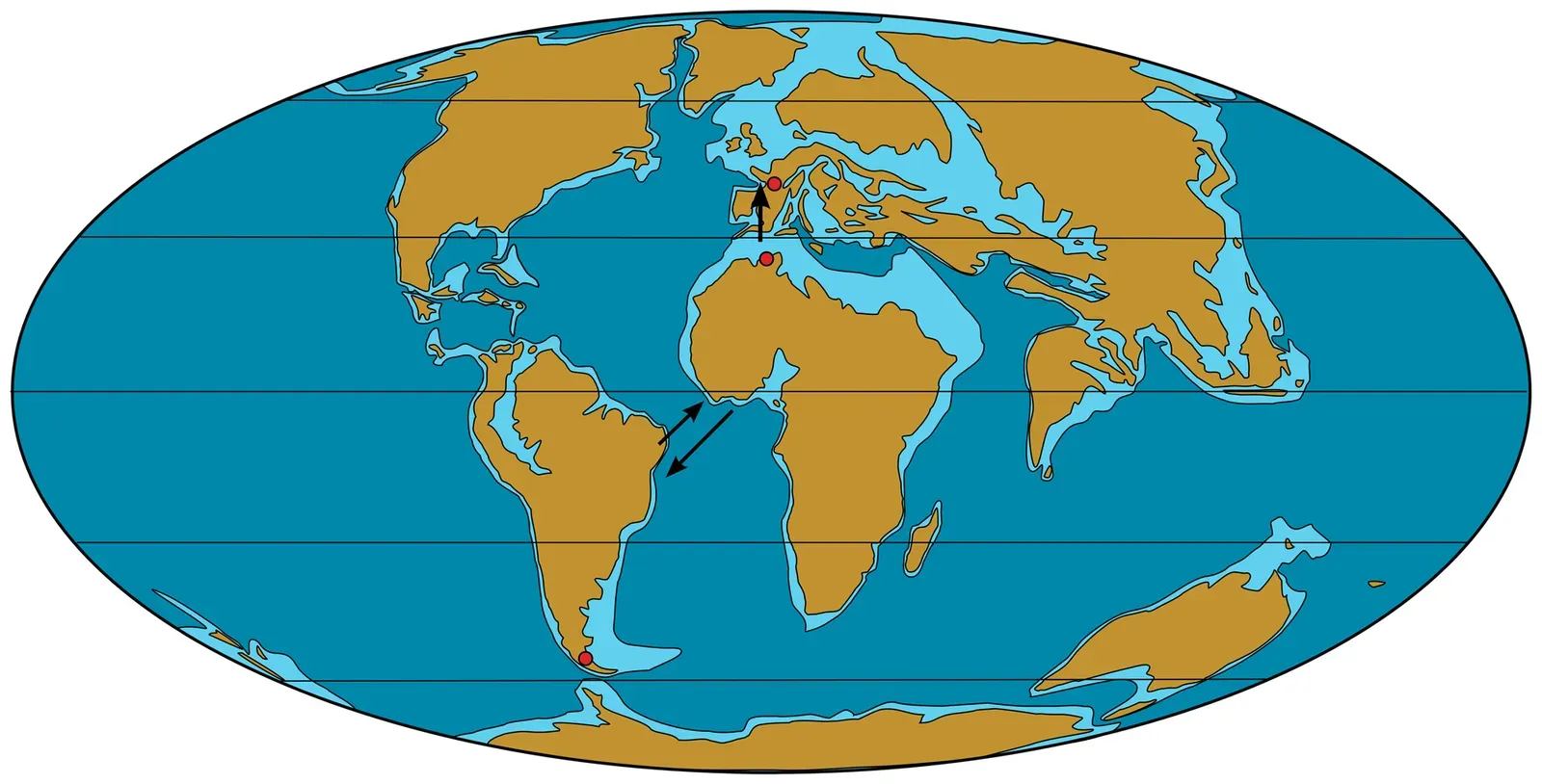
Terror birds weren’t confined to one continent. The occurrence of a phorusrhacid in the late Lutetian of Europe indicates these flightless birds had a wider geographical distribution than previously recognized, likely dispersing from Africa. Finding them in Europe dramatically expands our understanding of their range and adaptability.
Titanis walleri, one of the larger species, is known from Texas and Florida, making phorusrhacids the only known large South American predator to migrate north during the Great American Interchange. This northward expansion brought them into contact with entirely different prey and competitors, yet they established themselves successfully for several million years.
For a time, phorusrhacids presumably were among the top predators in Europe, though their tenure there appears relatively brief. Still, the fact they crossed oceans and continents to establish populations on multiple landmasses demonstrates remarkable ecological flexibility. How many dinosaur lineages managed that?
Giants in the Skies and Seas
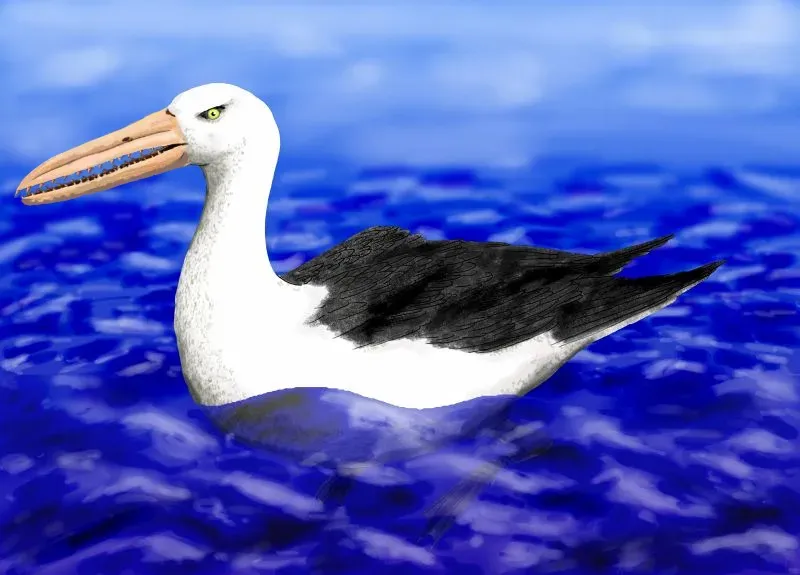
While terror birds dominated land, other prehistoric birds conquered different realms. The gigantic pseudotoothed Pelagornithidae survived until the Pliocene Epoch, vanishing about 3 million years ago, just missing our earliest direct ancestors. These oceanic giants possessed wingspans approaching twenty feet, dwarfing modern albatrosses and condors.
Imagine soaring seabirds larger than many small aircraft, equipped with bony tooth-like projections lining their beaks for snagging fish. They represented an entirely different evolutionary strategy from terror birds, proving that avian diversity extended from terrestrial apex predators to masters of oceanic flight.
Even more bizarre forms emerged. Gargantuavis, the largest known bird of the Mesozoic, ranged in size between the cassowary and ostrich, with a mass of 141 kilograms, proving that giant terrestrial birds didn’t require the extinction of non-avian dinosaurs to emerge. They coexisted with predatory dinosaurs, occupying ecological roles completely distinct from their reptilian contemporaries.
A Legacy Written in Innovation
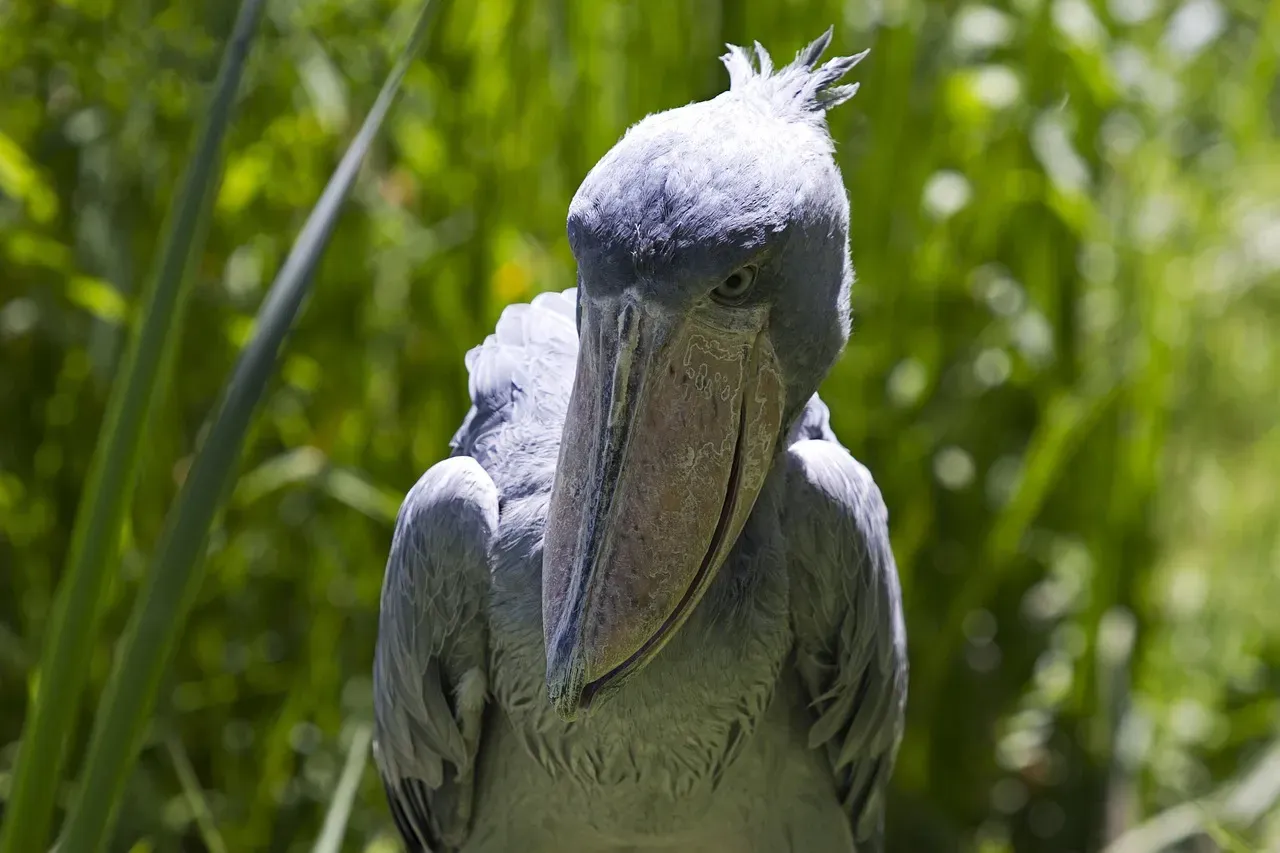
Living birds are the most diverse land vertebrates, with nearly 10,000 living species as the product of a long and fascinating chapter in evolution. This diversity didn’t happen overnight. It resulted from countless evolutionary innovations refined over more than a hundred million years.
The modern bird body plan incorporated adaptations that initially evolved for completely different purposes. Hollow bones reduced weight. Feathers provided insulation before enabling flight. Air sac systems improved respiration. The avian body plan was pieced together over 250 million years of evolution, with many key attributes evolving at an early stage for reasons that had nothing to do with flight.
When conditions were right, these pre-adaptations allowed birds to radiate into forms their dinosaur ancestors never achieved. From diving penguins to nocturnal hunters to massive terrestrial predators, birds explored ecological niches with creativity and success that rivaled or exceeded their dinosaurian heritage. It’s fascinating how evolution repurposes existing traits for entirely new functions.
Why They Vanished From Our World
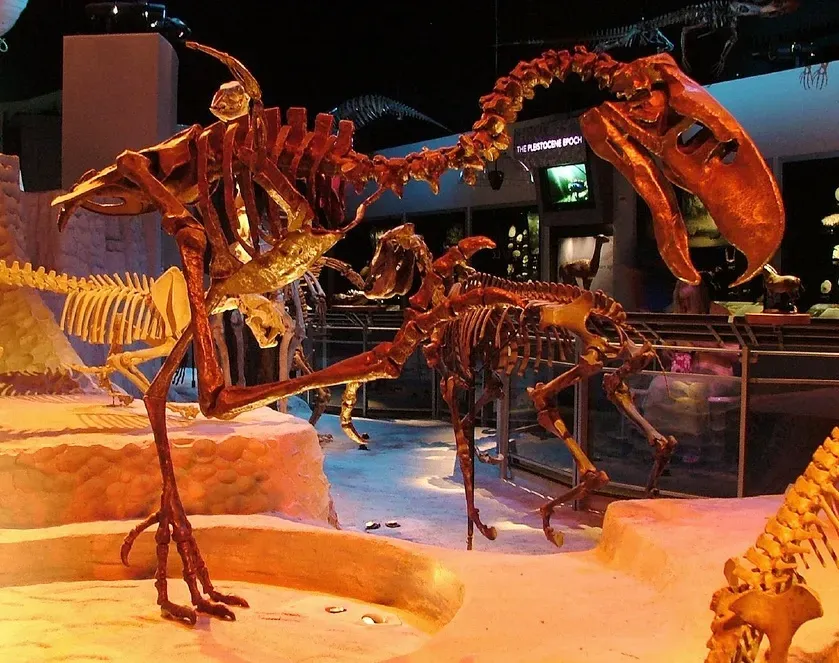
The reign of terror birds eventually ended. With the emergence of the Isthmus of Panama 2.7 million years ago, carnivorous dogs, bears, and cats from North America crossed into South America, and the population of phorusrhacids declined thereafter. Competition from mammalian predators likely played a role in their downfall.
Climate change compounded their problems. Shifting environments altered the grasslands these predators preferred, forcing them to adapt or perish. The extinction of phorusrhacids was likely due to environmental conditions rather than simple competitive replacement. The smaller species persisted longest, with some surviving until roughly ninety-six thousand years ago.
Other giant birds followed similar trajectories. Pelagornithids vanished as oceanic conditions changed. Island species like moas succumbed when humans arrived with new predators. The pattern repeats: highly specialized giants thriving in stable ecosystems, then crashing when conditions shift too rapidly for adaptation. It serves as a sobering reminder that even the most successful lineages face precarious futures when environments transform.
Still, their descendants surround us. Every sparrow, every hawk, every penguin carries the legacy of these extraordinary prehistoric creatures. Birds didn’t just survive the dinosaurs. They became something arguably more impressive, more diverse, and more adaptable than their famous ancestors ever were. What do you think? Does knowing terror birds once ruled continents change how you see that robin in your backyard? Tell us in the comments.