Researchers have uncovered evidence that Amazon’s emerging fleet of internet satellites interferes with critical astronomical observations despite ongoing mitigation attempts.
Bright Streaks Challenge Ground and Space Telescopes
Bright Streaks Challenge Ground and Space Telescopes (Image Credits: Cdn.mos.cms.futurecdn.net)
A recent analysis delivered a stark warning for observatories worldwide. Nearly 2,000 observations revealed that Amazon Leo satellites currently orbiting at 391 miles (630 kilometers) above Earth averaged an apparent magnitude of 6.28.
This measure places them just bright enough to appear telescope-free in about 25 percent of cases, surpassing the International Astronomical Union’s recommended threshold for minimal interference. Lead author Anthony Mallama, from the IAU Center for Protection of the Dark and Quiet Sky, emphasized the issue in a statement to Space.com: “Bright satellites are particularly troublesome for large-scale astronomical surveys being conducted at ground-based observatories such as the Vera C. Rubin Observatory. However, they can also interfere with orbiting observatories like the Hubble Space Telescope.”
These intrusions manifest as unwanted streaks across images, complicating data collection on distant galaxies and faint cosmic phenomena.
Key Findings from the Arxiv Preprint
The study, posted to Arxiv on January 12 and led by Mallama alongside collaborators including Richard E. Cole and Olga Zamora Sánchez, scrutinized the satellites’ optical properties. It determined that 92 percent of operational spacecraft exceeded IAU brightness guidelines designed to protect research.
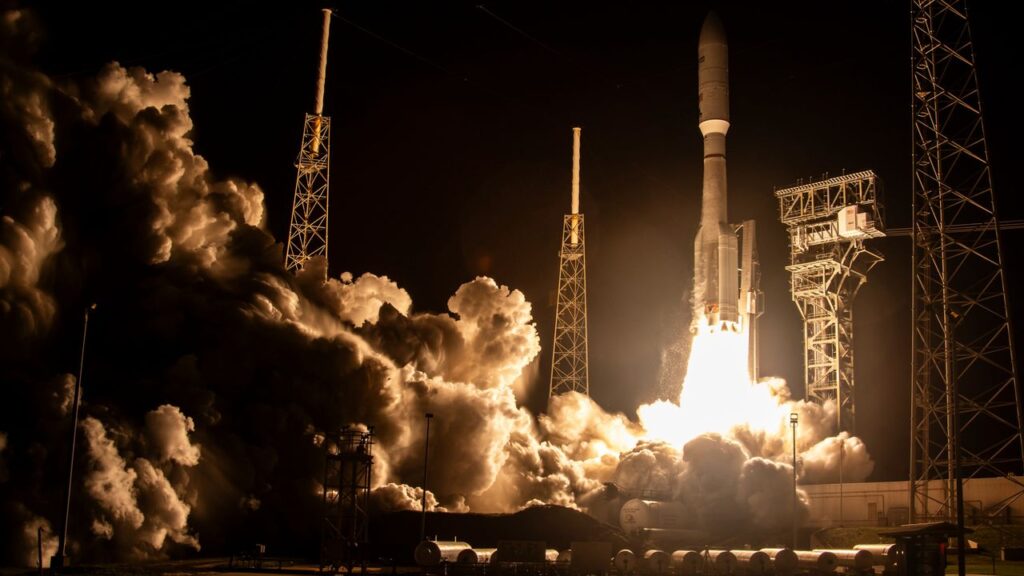
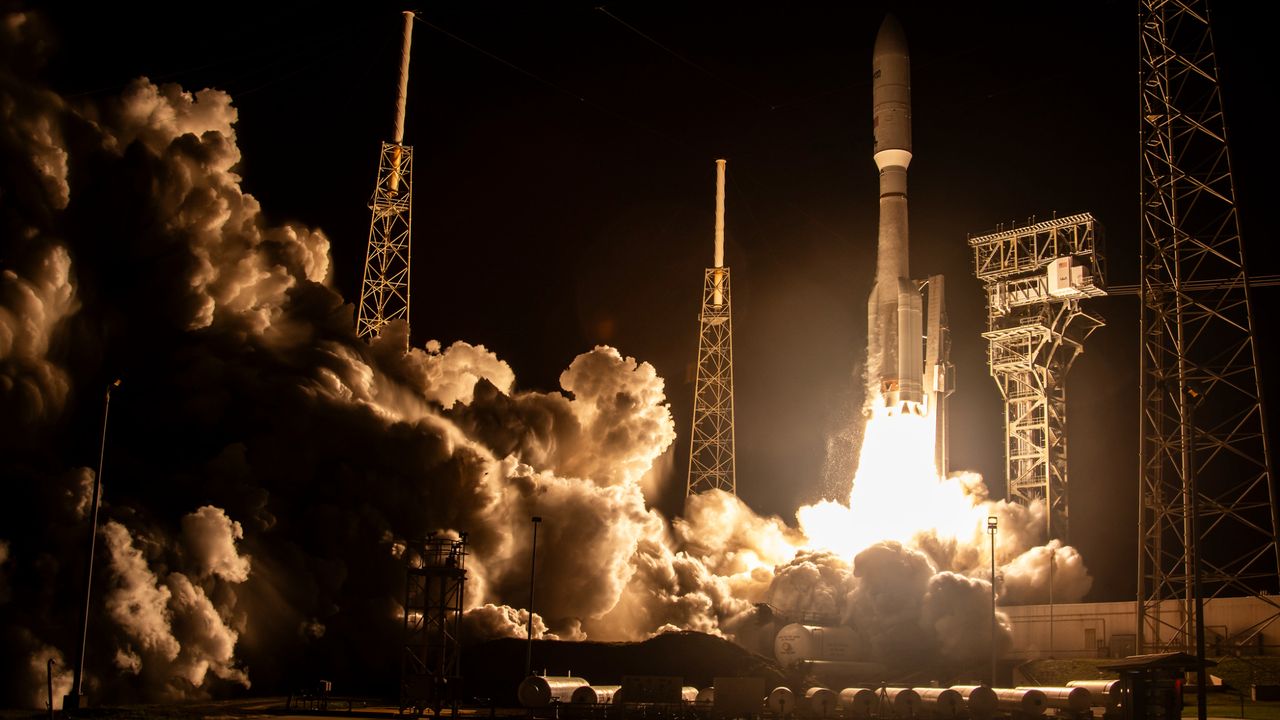
Current prototypes, part of the 180 satellites Amazon launched starting in 2025 – including a batch of 27 aboard a United Launch Alliance Atlas V rocket on December 16 – already pose problems. Future models slated for 366 miles (590 kilometers) will likely gleam even more intensely due to their proximity to observers below.
How Amazon Leo Stacks Up Against Competitors
Amazon’s spacecraft appear dimmer than AST SpaceMobile’s BlueBird arrays, whose expansive 690-square-foot antennas rank among the night sky’s brightest human-made objects. They also trail slightly behind SpaceX’s Starlink satellites, which number around 9,500 and orbit lower at about 300 miles (480 kilometers).
Starlink benefits from frequent passage through Earth’s shadow, reducing its visibility. A prior report by the same team, published in November 2025 in Monthly Notices of the Royal Astronomical Society, flagged similar over-brightness in most active constellations – including China’s Qianfan and Guowang – save for OneWeb’s higher-flying fleet at 745 miles (1,200 kilometers).
- Amazon Leo: Average magnitude 6.28; 92% over IAU limit
- Starlink: Slightly brighter but often shadowed
- BlueBird: Far brighter due to large antennas
- OneWeb: Complies with limits at higher altitude
Progress and Paths Forward in Satellite Design
Amazon engaged astronomers early, since test launches in 2023, yielding visible improvements in reflectivity. John Barentine, an astronomer at Silverado Hills Observatory in Tucson, Arizona, noted their pronounced glow during twilight but praised the collaboration: “Amazon Leo is an instance in which the operator established a dialogue with astronomers early in the design phase of their constellation. It is encouraging to see that this effort has yielded some success.”
Mallama highlighted techniques under development, such as mirror-like undersides that redirect sunlight away from Earth and strategic orientations to shield sunlit surfaces from ground view. SpaceX pursued similar fixes after initial Starlink launches in 2019 disrupted telescope images.
With plans for over 3,200 Amazon Leo satellites, such innovations will prove essential as low-Earth orbit constellations proliferate.
Key Takeaways
- Amazon Leo satellites average magnitude 6.28, exceeding IAU limits in 92% of cases.
- Future lower orbits will amplify brightness concerns for surveys like Vera C. Rubin.
- Early industry-astronomer talks show promise, but rapid expansion demands urgent action.
As satellite networks expand to bridge global digital divides, their glow risks obscuring humanity’s window to the cosmos. Balancing connectivity with celestial clarity remains a pressing challenge – what steps should regulators take next? Share your thoughts in the comments.