
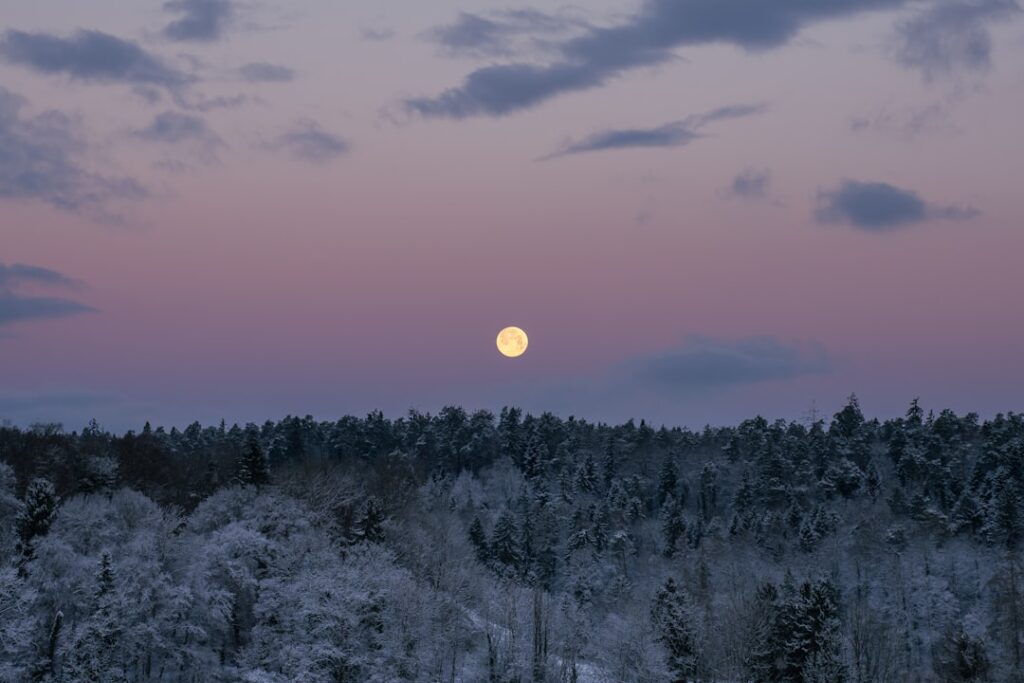
The Snow Moon reaches peak fullness on February 1, 2026, casting its silvery light across winter landscapes while hovering near the constellation Leo’s brightest star.
February Defies Lunar Expectations

February Defies Lunar Expectations (Image Credits: Unsplash)
February stands out among months for occasionally lacking a full moon, a rarity driven by the lunar cycle’s 29.5-day rhythm clashing with the shortest month.
The last such occurrence happened in 2018, with the next expected in 2037. This year delivers reliably, however. Peak illumination arrives at 22:09 UTC on February 1, or 5:09 p.m. EST, placing the event during late afternoon in many regions.
Sky conditions favor viewers in the Northern Hemisphere, where clear winter air enhances clarity. Observers note the moon’s position shifts subtly each year due to orbital dynamics.
The Snow Moon’s Stellar Neighbor
Regulus, known as the heart of the lion, provides a dazzling companion to this full moon. The star rises about 90 minutes after the moon in the eastern sky for Western Hemisphere watchers.
By midnight, Regulus positions itself to the moon’s left, drawing closer as dawn approaches and the moon descends westward. Technically, the moon resides in Cancer the Crab this time, adjacent to Leo, though it often graces Leo directly.
To pick out Regulus amid the moon’s glare, observers block the lunar light with a hand, tree branch, or pole. This alignment underscores the zodiac’s backdrop, with Leo symbolizing strength in ancient skies.
Optimal Times to Observe
The moon climbs the eastern horizon around sunset on February 1, appearing fullest low against the twilight. It dominates the southern sky at midnight before dipping low in the west by sunrise on February 2.
It remains visible throughout the night, opposite the sun with Earth centered in the alignment. Evening views before and after the peak also reveal near-full phases.
Clear horizons aid the spectacle. Urban dwellers seek parks or open fields to escape light pollution.
- Rise: Near sunset in the east.
- Peak height: Midnight in the south.
- Set: Pre-dawn in the west.
- Bonus: Regulus trails initially, then closes in.
- Tip: Use binoculars for lunar craters if conditions allow.
Roots in Winter Tradition
Indigenous North American peoples named this the Snow Moon for heavy mid-latitude snowfalls signaling hardship before spring’s renewal. Alternative titles include Hunger Moon and Boney Moon, reflecting scarce resources.
These monikers persist in modern almanacs and astronomy guides. Cold, crisp air often sharpens the moon’s appearance, free from summer haze. For deeper lore, resources like The Old Farmer’s Almanac catalog traditions.
EarthSky details further at their full moon guide.
Key Takeaways
- Snow Moon peaks February 1 at 22:09 UTC, near Regulus.
- View from sunset through dawn for best sights.
- Names evoke winter’s challenges in North America.
This celestial display reminds us of nature’s reliable rhythms amid winter’s chill. Step outside on February 1 and connect with the sky – what catches your eye under the Snow Moon? Share in the comments.