
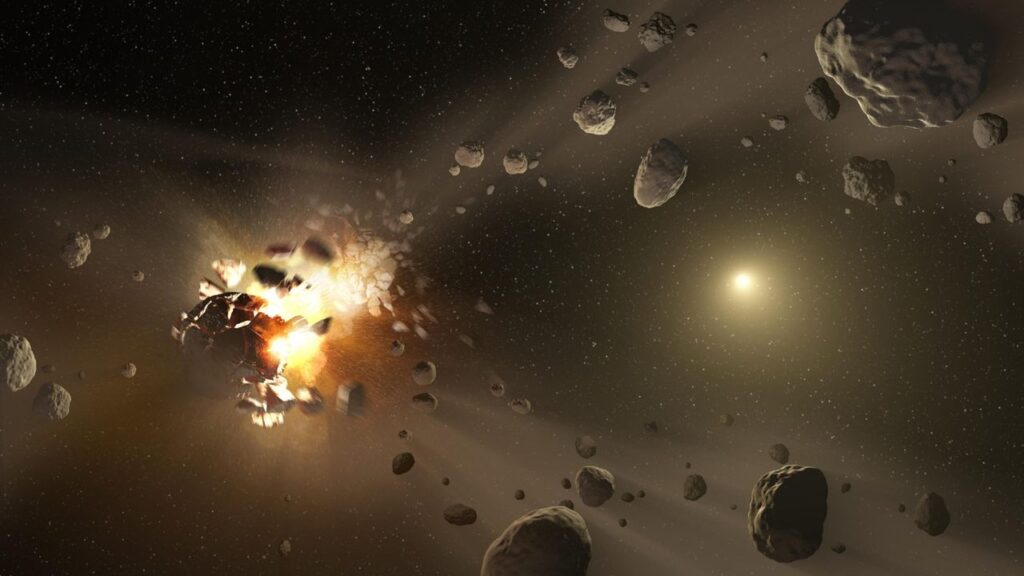
Venus hurtles toward a potential cosmic fireworks display this July, courtesy of dusty remnants from an asteroid that disintegrated deep in the inner solar system thousands of years ago.
Lightning-Fast Asteroids Fuel Venus’s Fiery Encounter
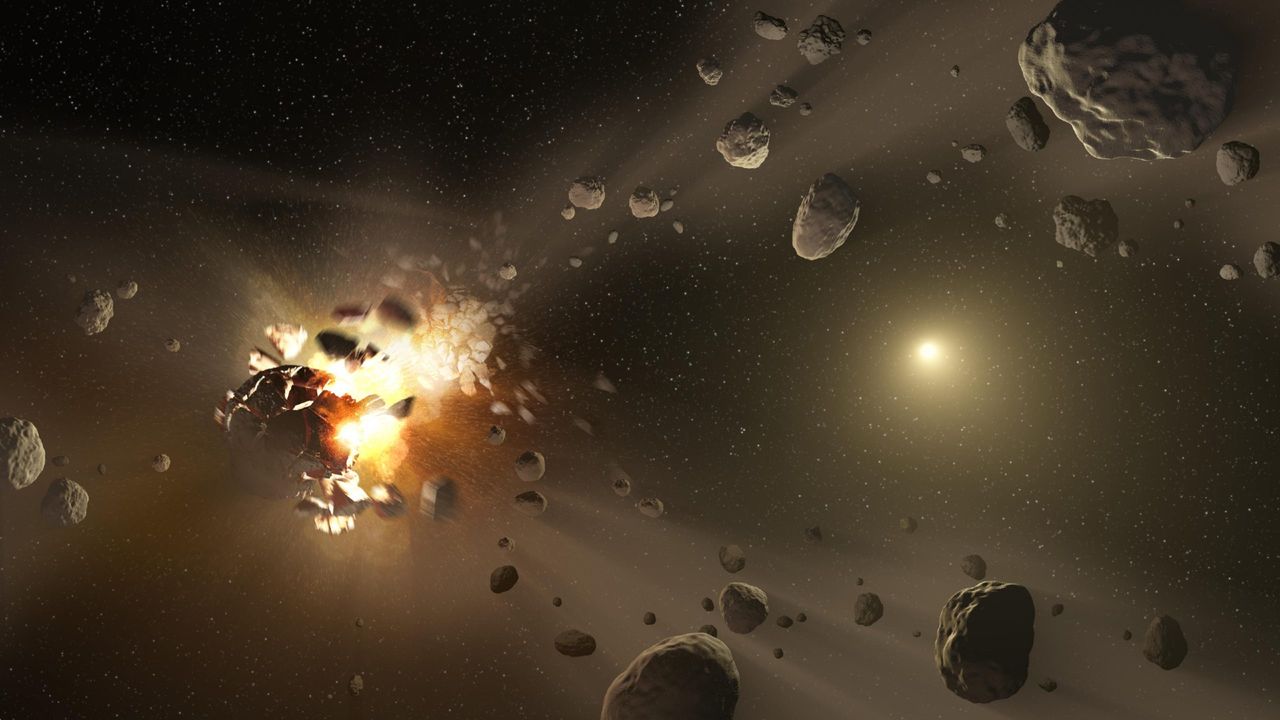
Lightning-Fast Asteroids Fuel Venus’s Fiery Encounter (Image Credits: Cdn.mos.cms.futurecdn.net)
Two of the swiftest asteroids ever tracked, 2021 PH27 and 2025 GN1, share orbits that scream past the Sun in a mere 115 days. These rare Atira-class objects never venture beyond Earth’s path, hugging the inner solar system in tight loops. Researchers noted their striking similarities in trajectory and makeup, pointing to a shared origin.
Discovered recently – 2025 GN1 in April last year – the pair evaded detection longer due to their sun-hugging paths. Ground telescopes finally captured them, revealing a dynamic duo born from catastrophe. Simulations traced their backward orbits, uncovering the dramatic event that birthed them.
Solar Fury Shatters Progenitor Rock
The original asteroid endured extreme solar proximity for millennia, dipping under 15 million kilometers from the Sun. Intense heat cracked its surface while the YORP effect – solar radiation torque – spun it faster over time. Eventually, rotation overwhelmed cohesion, splintering it into fragments including the two main survivors.
Investigators ruled out Venus’s tidal pull or collisions, as close approaches never sufficed. The split happened 17,000 to 21,000 years ago, recent enough that tiny debris lingers in similar orbits. “Our simulations confirm that this is indeed possible,” stated Albino Carbognani, lead author from Italy’s National Institute for Astrophysics.
July 5 Marks Peak Collision Risk
Venus’s path intersects the debris stream closely, just two million kilometers apart at minimum orbital intersection distance. Models pinpoint July 5, 2026, as the next prime encounter, when the planet slices through the densest particle cloud. Millimeter-sized grains could ignite as fireballs rivaling a full moon’s glare, magnitude -12 to -15.
Earthbound observers face slim odds of spotting them amid Venus’s thick clouds and glare. Spacecraft orbiting the planet offer the best vantage. The study, published in Icarus, highlights this as Venus’s first proposed asteroid-linked shower.
Parallels to Earth’s Geminid Spectacle
This scenario mirrors Earth’s Geminids, spawned by asteroid Phaethon rather than a comet. Previously, Venusian streaks tied only to comets like Halley’s. The new findings expand understanding of inner solar system hazards.
- Both involve asteroid debris, not icy comets.
- Fast inner orbits evade easy study.
- Future passages may intensify showers.
- 2025 GN1 nears Venus’s gravity in 2,000 years.
- Calls for Venus missions to monitor.
Key Takeaways
- Asteroid pair’s breakup 17,000–21,000 years ago seeds Venus’s shower.
- July 5, 2026, targets brightest fireballs.
- Demands orbital observers for confirmation.
Planetary scientists anticipate this event could redefine meteor origins across the solar system, urging probes to Venus for direct views. What missions might catch these cosmic sparks? Share your thoughts in the comments.