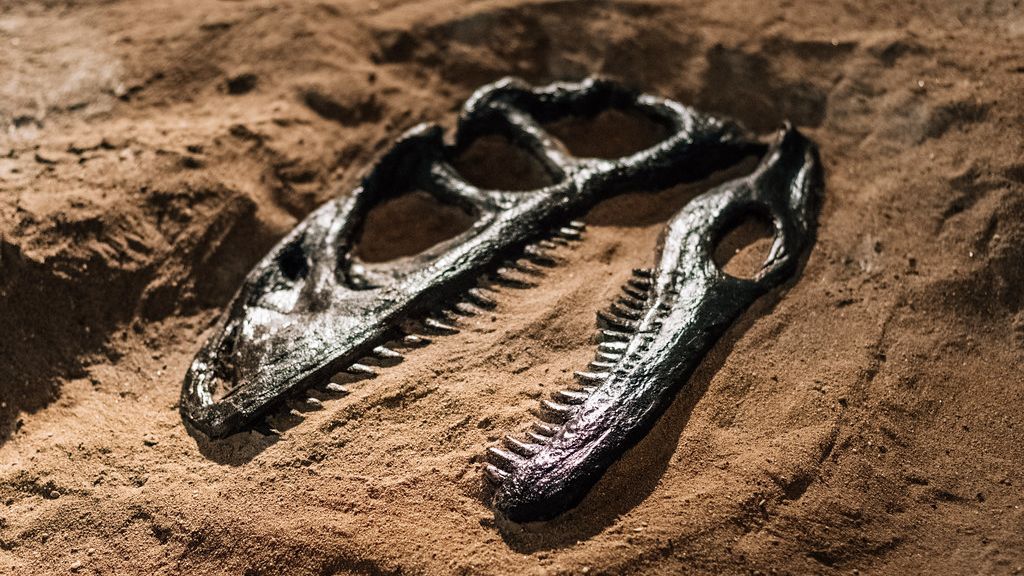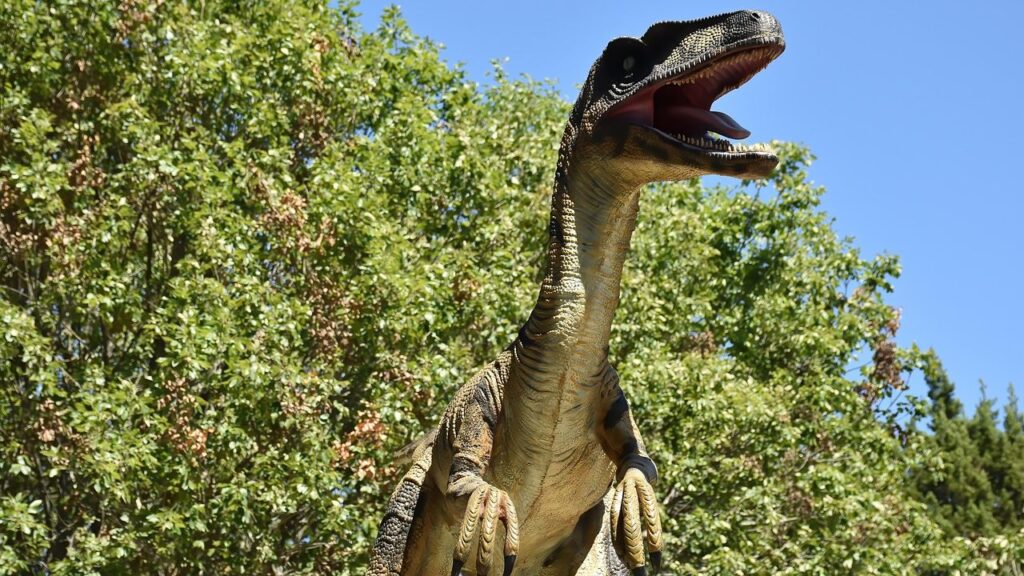
Let’s be real. Dinosaurs have captured human imagination for nearly two centuries now, ever since the first fossils were seriously studied in the early 1800s. We’ve built entire museums around their bones, created blockbuster franchises featuring them, and devoted countless research hours to understanding these magnificent beasts. Yet here’s the thing that might surprise you: despite all our advances in technology and scientific methods, there’s still a staggering amount we simply don’t know about dinosaurs.
Think about it for a second. These creatures dominated Earth for over 160 million years, but we’re piecing together their story from fragments of bone, occasional footprints, and rare glimpses of fossilized skin. It’s like trying to understand an entire civilization from a few scattered photographs and broken pottery. Sure, we’ve made incredible progress, but the deeper we dig, the more mysteries we uncover. So let’s dive into some of the biggest questions that still keep paleontologists awake at night.
The Color Conundrum: Were Dinosaurs Drab or Dazzling?
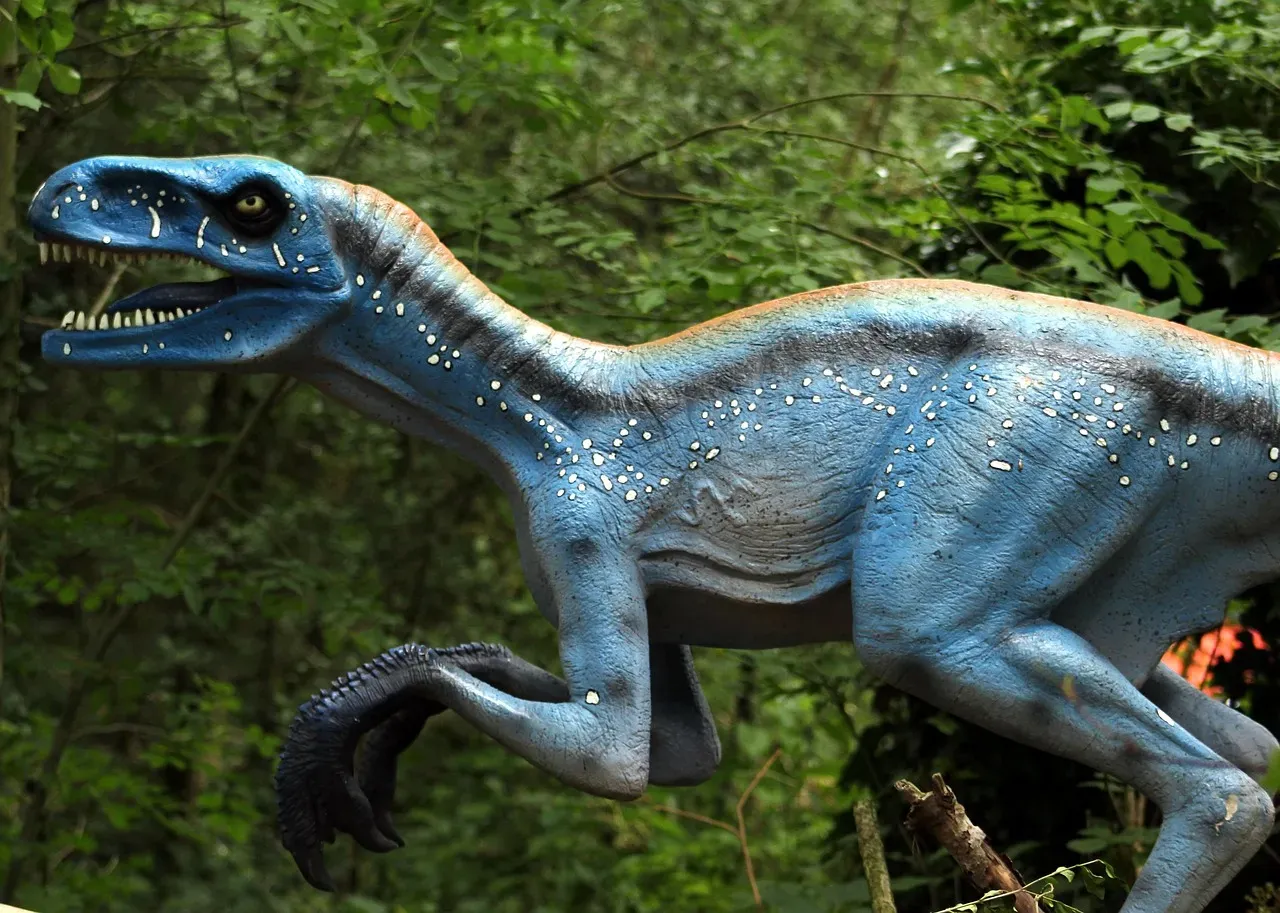
You’ve probably seen countless illustrations of dinosaurs painted in earthy browns and greens, looking like oversized lizards trudging through prehistoric swamps. Here’s the uncomfortable truth: we’re mostly guessing. Dinosaur coloration is generally one of the unknowns in the field of paleontology, as skin pigmentation is nearly always lost during the fossilization process.
Around fifteen years back, everything changed when scientists discovered microscopic structures called melanosomes in fossilized feathers. These tiny pigment-containing pods have revolutionized how we think about dinosaur appearance. Microscopic clues found in fossil Diplodocus skin indicate these dinosaurs were colorful. Yet there’s a catch, and it’s a big one. Mary Schweitzer, a paleontologist at North Carolina University, doubts the validity of melanosome shape-based dinosaur color reconstructions. Some researchers argue these structures might actually be fossilized bacteria, not pigment cells at all.
Even if we’re correctly identifying melanosomes, we’re only seeing part of the picture. Modern birds use multiple pigment types to create their spectacular plumage, but many of these chemicals don’t survive fossilization. It’s hard to say for sure, but we might be missing entire color ranges that made dinosaurs even more vibrant than we imagine.
The Great Extinction Debate: Asteroid, Volcanoes, or Both?
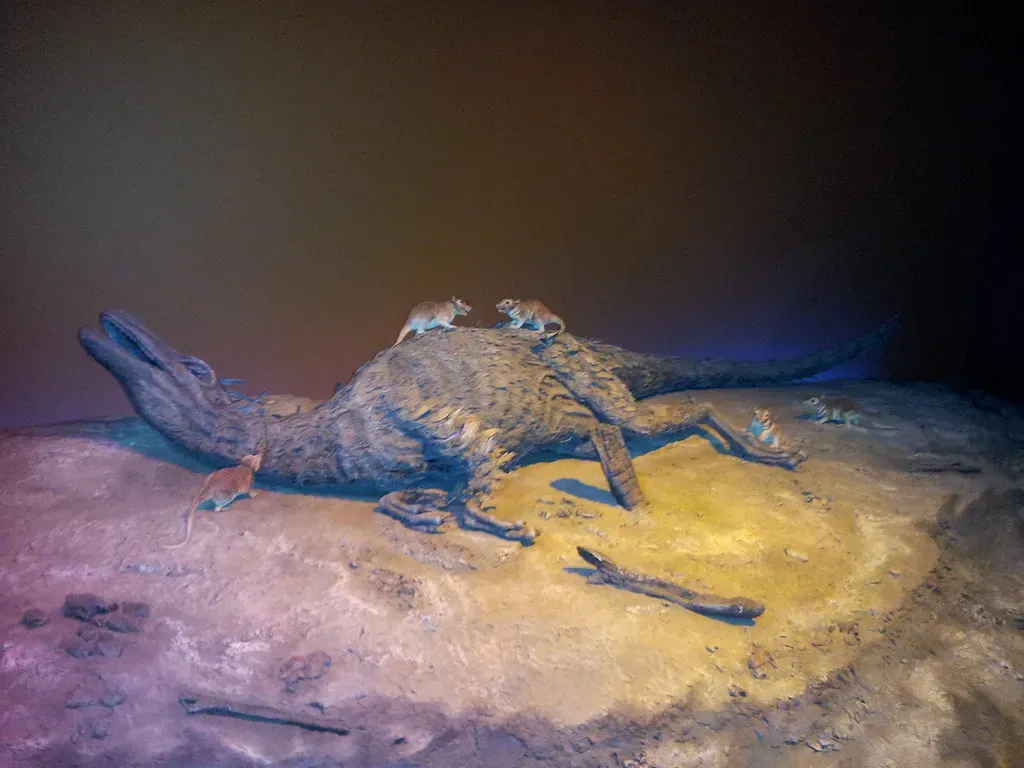
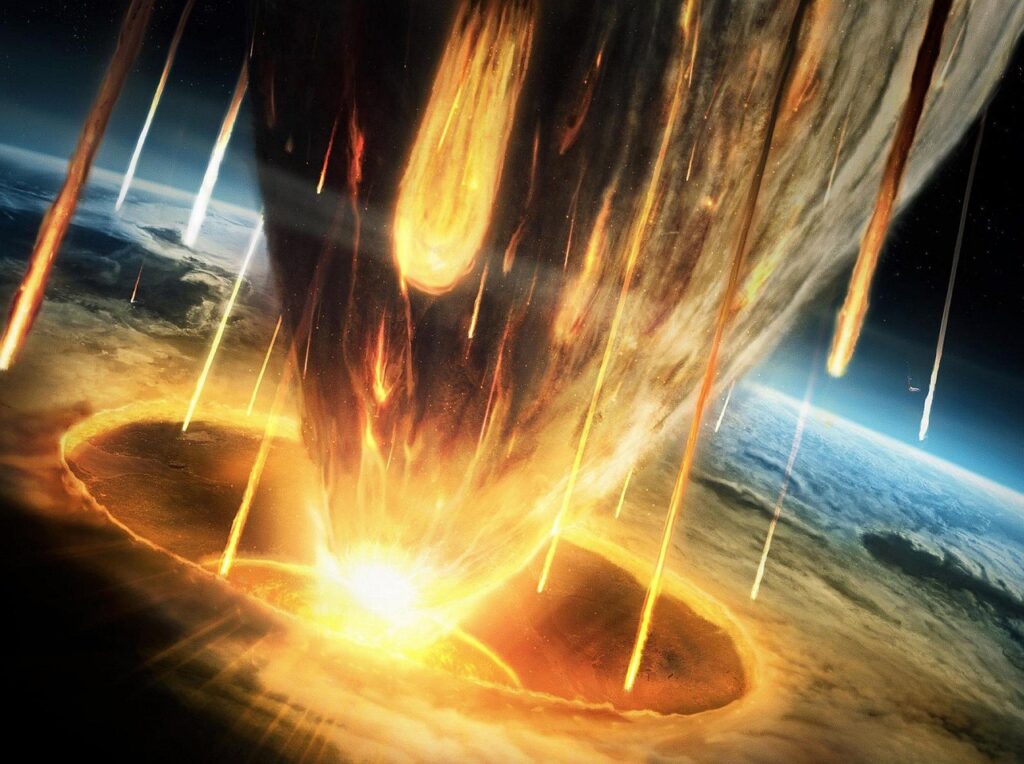
Most people think they know this story. A massive asteroid slammed into what’s now Mexico roughly sixty-six million years ago, and boom – dinosaurs gone. It sounds neat and tidy, but the reality is messier than your high school textbook suggested. In March 2010, an international panel of scientists endorsed the asteroid hypothesis, specifically the Chicxulub impact, as being the cause of the extinction.
Still, there’s a problem. About 66 million years ago, a massive volcano erupted lavas in India that are now called the Deccan Traps, burying much of the subcontinent under more than 11,000 feet of basalt and pouring poisonous gases into the atmosphere. Some scientists argue these volcanic eruptions were pumping out climate-altering gases right around the same time. Was it the asteroid alone? The volcanoes? A devastating one-two punch?
New research challenges the idea that dinosaurs were declining before an asteroid strike wiped them out 66 million years ago. Recent fossil evidence suggests dinosaurs were actually thriving right up until the end, which makes the extinction even more puzzling. If they were doing so well, what combination of disasters could have wiped them out so thoroughly while leaving birds, crocodiles, and turtles to carry on?
Intelligence Tests for the Long Dead
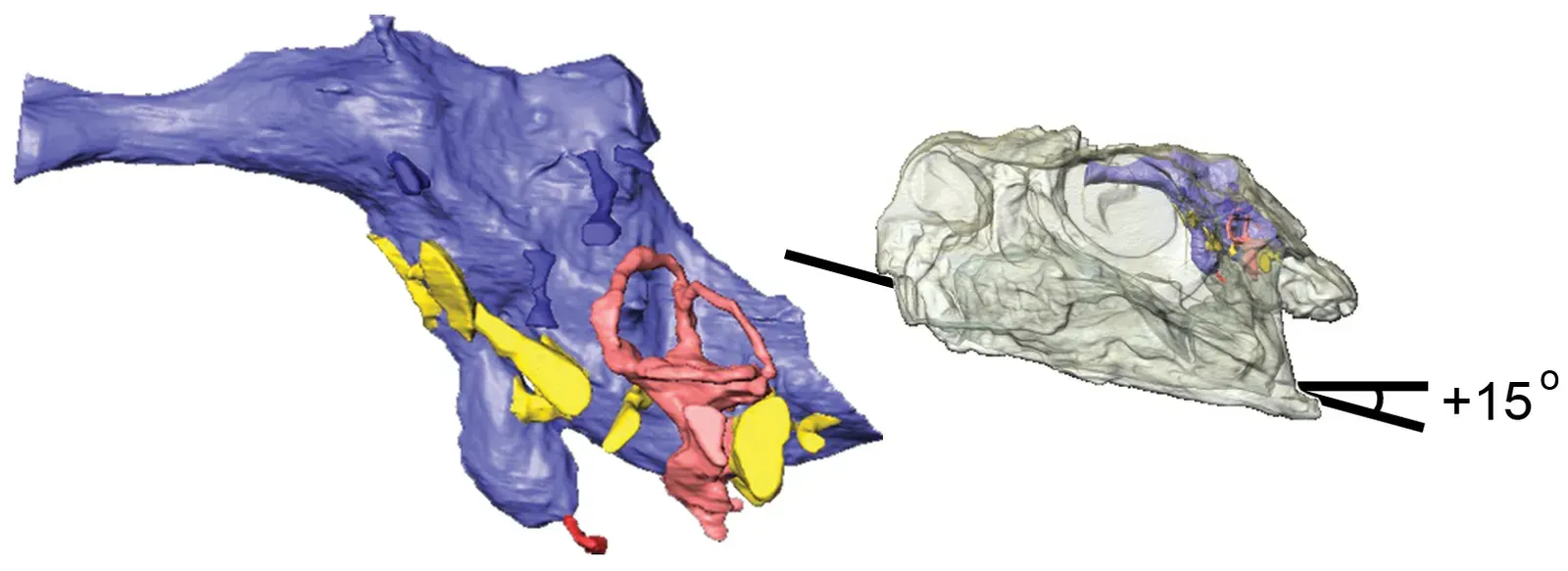
Were dinosaurs smart or stupid? It seems like a straightforward question until you try answering it. Suzana Herculano-Houzel of the Vanderbilt Brain Institute at Vanderbilt University calculated the likely number of neurons in dinosaurs’ pallium, a brain structure that is responsible for advanced cognitive functions and corresponds to the cortex in mammals. She concluded that large predators like Tyrannosaurus rex might have had billions of neurons – comparable to a baboon.
That’s where things get controversial. According to this analysis, large theropods such as Tyrannosaurus rex were long-lived, exceptionally intelligent animals equipped with “macaque- or baboon-like cognition”, whereas sauropods and most ornithischian dinosaurs would have displayed significantly smaller brains and an ectothermic physiology. Other scientists aren’t buying it, pointing out that brain tissue doesn’t fossilize and we’re making enormous leaps based on skull cavities.
At 1.2 meters in height and weighing about 50 kilograms, the Troodon was relatively small, but its intelligence made it a fascinating subject of study. Some researchers think certain dinosaurs possessed problem-solving abilities, used tools, or even had complex social structures. But honestly? We’re trying to measure intelligence in creatures that have been dead for millions of years using methods designed for living animals. The margin for error is astronomical.
Social Lives: Did Dinosaurs Have Friends?
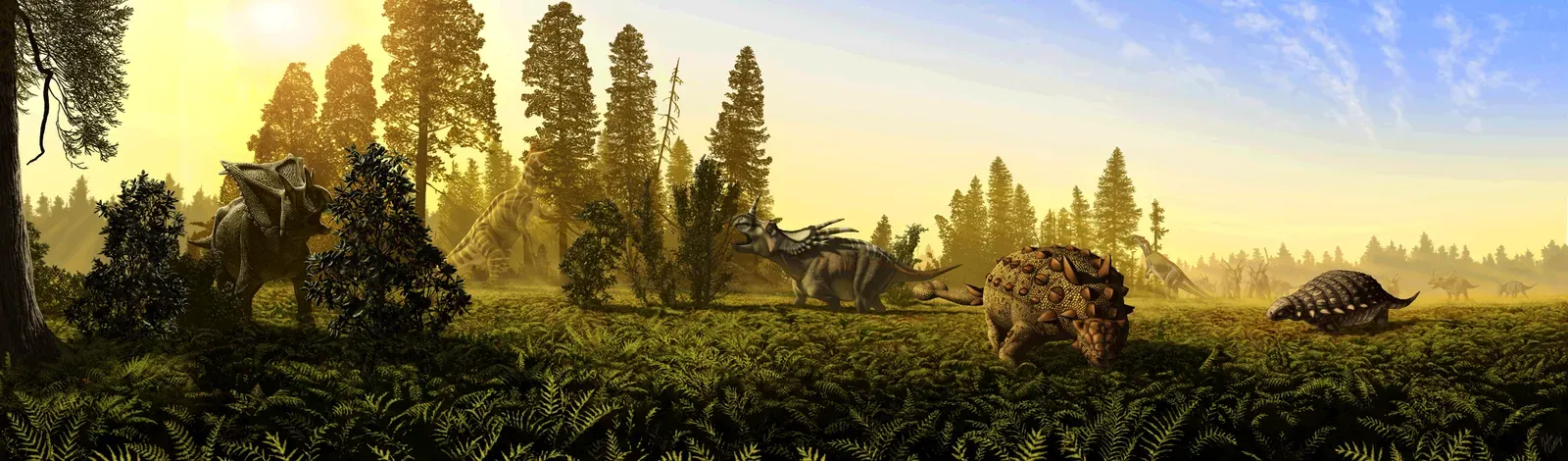
Picture this: a herd of massive sauropods moving across a floodplain, adults surrounding the juveniles for protection, communicating through low-frequency calls we’ll never hear. Did this actually happen? These predatory dinosaurs were cognitively and behaviorally very much like birds, not like crocodiles or other reptiles. These dinosaurs must have had bird-like cognitive abilities for complex social behaviors, parenting, and even cooperative hunting strategies.
Fossil trackways tell tantalizing stories. We’ve found evidence suggesting some species traveled in groups, with younger animals protected in the middle. We’ve discovered nesting sites that hint at communal breeding grounds. The discovery and study of dinosaur nesting sites has indicated that theropod, sauropod and ornithopod dinosaur species also nested in groups and engaged in maternal care of hatchling dinosaurs, with some evidence suggesting bi-parental care.
Yet here’s what we don’t know: Did they have hierarchies? Could they recognize individuals? Did they form lasting bonds or were these just temporary aggregations? Tracks in mud can tell us animals walked together, but they can’t reveal the emotional complexity – if any – behind those journeys. We’re reading ancient footprints like some kind of prehistoric detective novel with half the pages missing.
The Mystery of Dinosaur Voices
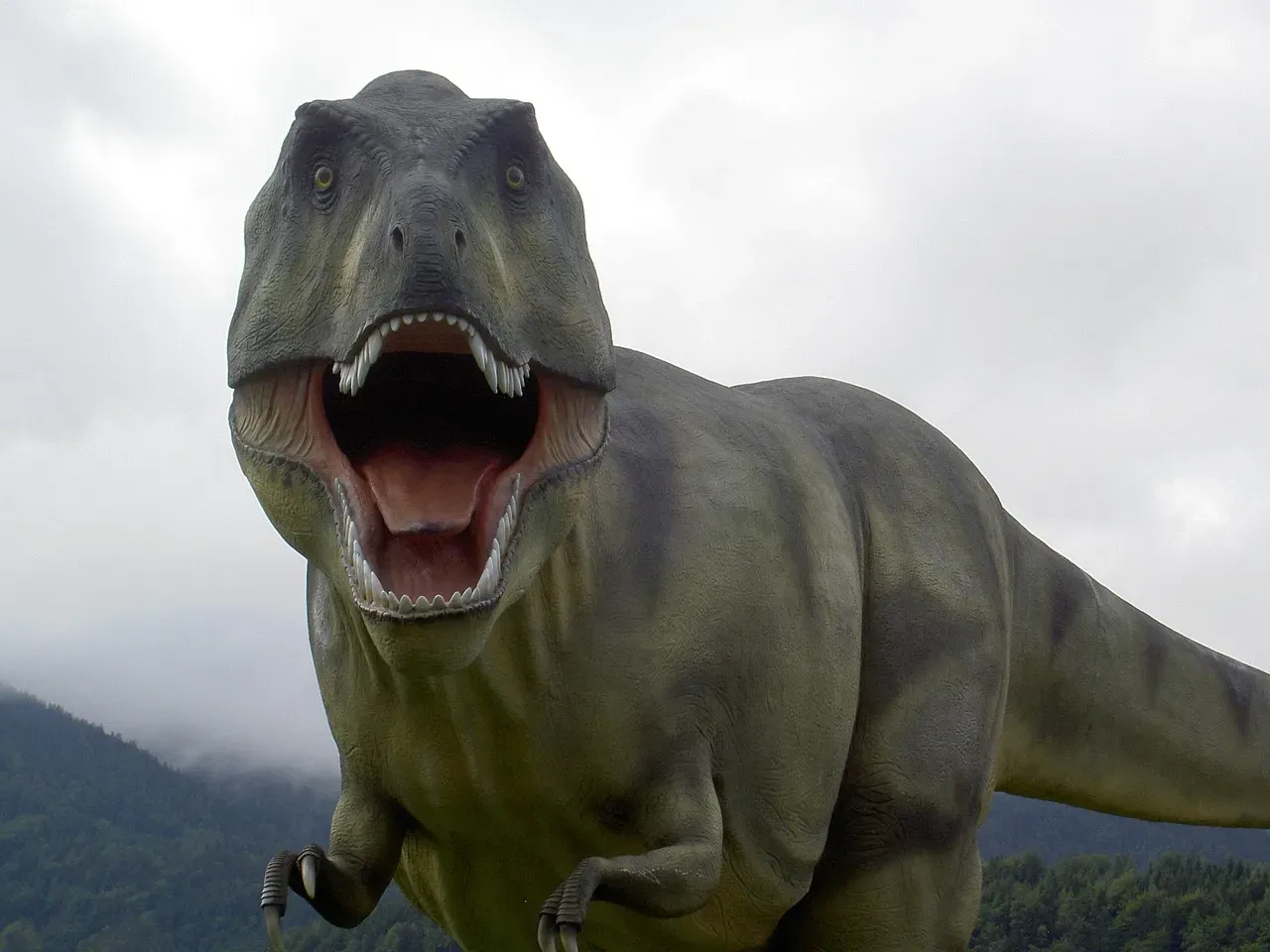
What did a Tyrannosaurus rex sound like? If you’re picturing that iconic roar from Jurassic Park, I’ve got news for you: we have absolutely no idea if that’s even close to accurate. Soft tissues like vocal cords don’t fossilize, leaving us with essentially zero direct evidence of how dinosaurs sounded.
Scientists can make educated guesses based on modern descendants. Birds are living dinosaurs, after all, and they produce sounds in diverse ways. Some researchers suggest large theropods might have produced closed-mouth vocalizations – deep, rumbling sounds created with their mouths shut, similar to what some modern birds and crocodiles do. Others think elaborate crests on certain species like hadrosaurs functioned as resonating chambers.
But let’s be honest, we’re speculating wildly here. Did predators roar to intimidate prey or rivals? Did herbivores call to warn their herds of danger? Could young dinosaurs recognize their parents’ voices? The prehistoric world was filled with sounds we’ll never hear, conversations we’ll never understand. It’s one of paleontology’s most frustrating gaps.
Growth Rates and Lifespans: How Long Did Dinosaurs Live?
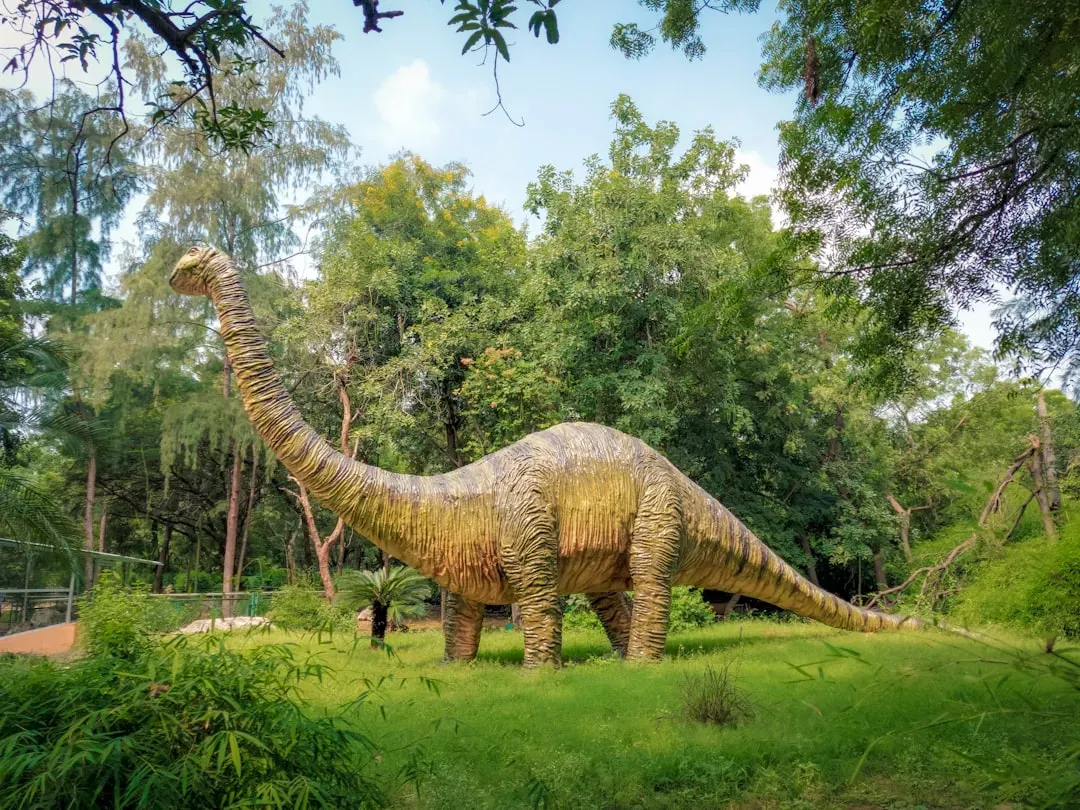
Here’s something that might surprise you: we’re still figuring out basic life history information for most dinosaur species. How fast did they grow? How long did they live? When did they reach sexual maturity? These fundamental questions remain maddeningly difficult to answer with certainty.
Scientists can examine growth lines in fossilized bones, similar to counting tree rings, which gives us some clues. A new examination on a new and stunning specimen was about 20 years old when it died – and therefore couldn’t be a teenage T. rex. This kind of evidence helps us distinguish between young and old individuals, which matters enormously when we’re trying to figure out if small fossils represent juveniles or entirely separate species.
The problem is that growth patterns varied wildly across different dinosaur groups. Some species might have grown continuously throughout their lives, while others reached a maximum size and plateaued. Environmental factors, food availability, and even individual health could affect growth rates. We’re trying to understand complex biological processes from incomplete data scattered across millions of years. It’s like trying to understand human aging by examining only a few random skeletons from different continents and time periods.
Feathers, Scales, or Something Else?
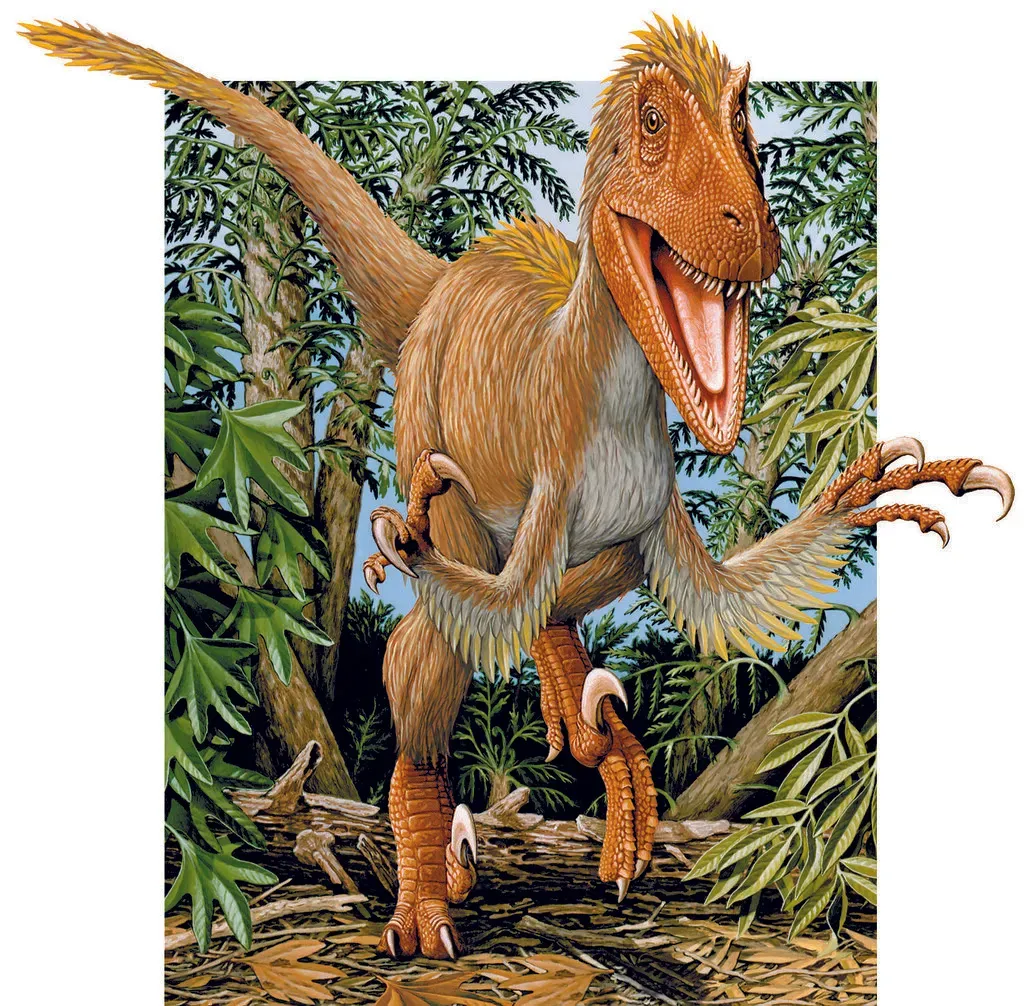
The dinosaur renaissance of the past few decades revealed something incredible: many dinosaurs, especially theropods, were covered in feathers. This fundamentally changed how we visualize these animals. Yet massive questions remain about exactly which species had feathers, when they evolved, and what they were used for.
A 28-inch-long fossil of a baby Sciurumimus discovered in Germany suggests that all predatory dinosaurs might have had feathers. If true, this would revolutionize our understanding of dinosaur appearance. But we don’t have feather impressions for most species, leaving paleontologists to make educated guesses based on evolutionary relationships.
What about the giants? Did Brachiosaurus have any feathery covering, or were they entirely scaly like modern elephants? Did feathers serve primarily for warmth, display, flight, or some combination? Some species clearly had elaborate plumage for visual display, but others might have had simple, fuzzy filaments we’d barely recognize as feathers. The fossil record preserves exceptional feather details only under rare, specific conditions, meaning we’re missing evidence from huge swaths of dinosaur diversity. It’s frustrating, honestly, knowing that the actual appearance of most dinosaurs remains partly guesswork.
Reproduction: The Intimate Details We’re Missing
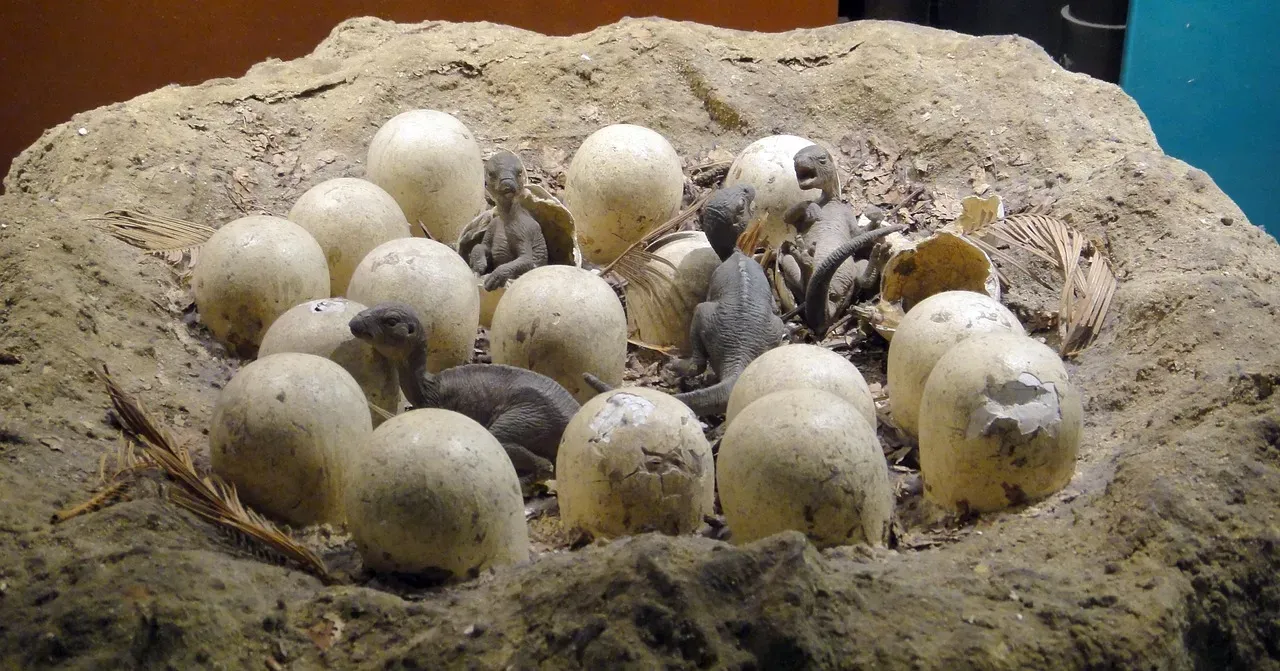
How did dinosaurs mate? It’s not a trivial question. Understanding reproductive behavior tells us about social structures, sexual selection, and evolutionary pressures. Yet fossilized mating behavior is essentially nonexistent, leaving scientists to puzzle over anatomy and make comparisons to modern animals.
We’ve found fossilized eggs and nesting sites, which provide valuable clues. Paleontologists now hypothesize that we can use dinosaur eggs. Other radioactive isotopes in the eggshell itself seem to be datable in the exact same way; so even a tiny, broken fragment of fossil eggshell could finally allow us to calculate how old these deposits were. This breakthrough helps us date fossils more accurately, but it doesn’t answer the behavioral questions.
Did dinosaurs have elaborate courtship displays like modern birds? Did males compete violently for mates? How did creatures the size of buildings physically accomplish reproduction? Did they care for their young, and if so, for how long? We’ve found evidence of parental care in some species, but the details remain sketchy. The most intimate aspects of dinosaur life are preserved, if at all, only as ambiguous traces that require considerable interpretation and imagination.
Conclusion: Embracing the Unknown
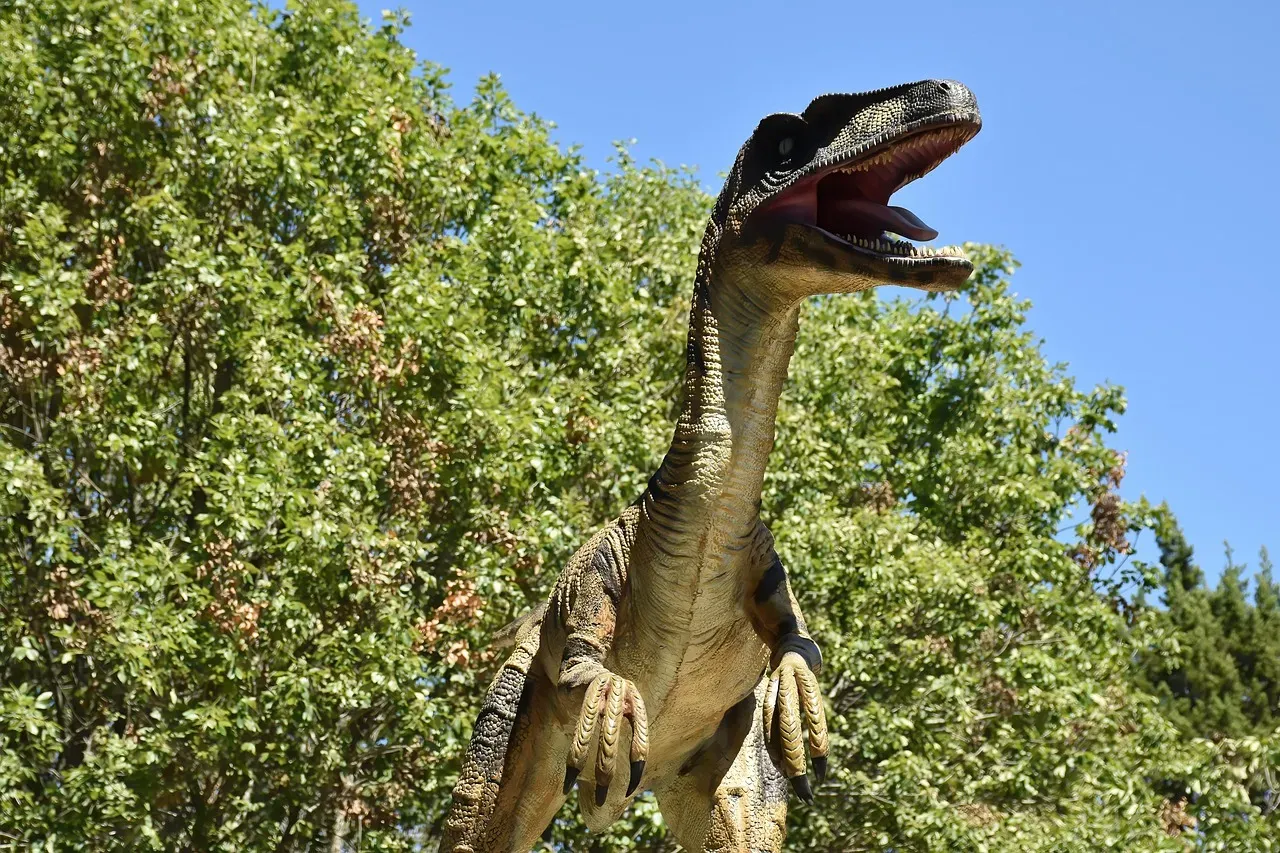
I know it sounds crazy, but after nearly two centuries of dedicated paleontological research, we’re still scratching the surface of understanding dinosaurs. Around 1,400 dinosaur species are now known from more than 90 countries, with the rate of discovery accelerating in the last decades. The year 2025 has so far seen the discovery of 44 new dinosaur species – nearly one a week.
Every new fossil discovery answers some questions while raising countless others. We’ve learned that dinosaurs were far more diverse, colorful, intelligent, and behaviorally complex than anyone imagined a few generations ago. Yet vast territories of ignorance remain. We don’t know their true colors, can’t hear their voices, and can only guess at their social lives. The extinction that ended their reign still sparks heated debates, and even basic facts about growth and reproduction remain frustratingly unclear.
Perhaps that’s part of what makes paleontology so compelling. These mysteries aren’t failures – they’re invitations. Every unknown aspect of dinosaur biology represents an opportunity for future discovery, a puzzle waiting for some clever researcher to solve. The prehistoric world holds its secrets tightly, revealing them only to those patient and creative enough to keep asking questions.
What would you give to spend just one day in the Mesozoic, watching these magnificent creatures in their natural habitats? Until time travel becomes possible, we’ll keep piecing together their story, one fossil at a time.