
Brazil’s Atlantic Forest – This shrinking biodiversity haven shelters the giant armadillo, a colossal yet ghostly resident whose underground existence has long defied observation.
A Master Digger in the Shadows
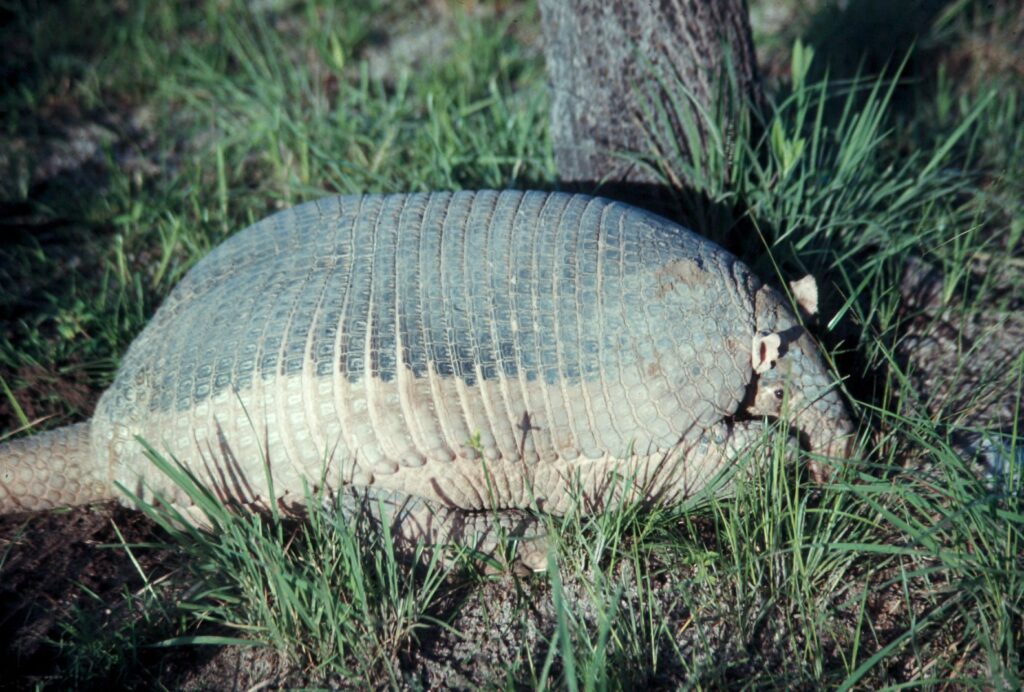
Uncovering the Secret Life of the Giant Armadillo in Brazil’s Atlantic Forest (Image Credits: Wikimedia)
The giant armadillo, known scientifically as Priodontes maximus, claims the title of the largest and rarest among its 20 armadillo relatives. Adults can stretch up to 1.5 meters long, armored in thick plates that shield them during their nocturnal forays.
These creatures shun the spotlight, spending most of their lives in vast subterranean networks. Each night, they excavate fresh burrows, leaving behind enormous claw marks and piles of earth as their only traces above ground. This relentless digging reshapes entire landscapes, positioning the giant armadillo as a true ecosystem engineer.
Their burrows function like underground hotels, offering shelter to hundreds of other species – from mammals and birds to reptiles, amphibians, and invertebrates. Such activity underscores their critical role in maintaining forest health, even as their low population densities keep them hidden.
Rio Doce State Park: The Last Bastion
Nestled in Minas Gerais, Rio Doce State Park covers about 36,000 hectares of one of the Atlantic Forest’s few remaining large, continuous tracts. Here, the giant armadillo clings to survival amid encroaching threats.
Forest fragmentation has isolated populations, confining these wide-ranging animals to shrinking patches. Their naturally sparse numbers – compounded by slow reproduction, with just one pup born every two to three years – heighten vulnerability. Yet the park stands as a potential lifeline for the species in this biome.
Camera Traps Illuminate the Unknown
Since 2020, biologist Lucas Barreto, an EDGE Fellow with the Zoological Society of London, has spearheaded monitoring efforts in the park. A network of over 54 camera traps captured unprecedented footage, identifying 40 individual giant armadillos – the highest density ever recorded in the Atlantic Forest.
Barreto extended the study to nearby forest fragments, detecting four more animals. These findings reveal tentative movements between areas, signaling the urgent need for connected habitats. The work, detailed in an EDGE of Existence blog post, highlights the park’s possible role as the last viable population stronghold.
Such technology has peeled back layers of secrecy, documenting behaviors once mere speculation. Barreto noted, “Right now, we’re about to show the world the last remaining population of giant armadillos in the Atlantic Forest.”
Threats Mount, But Conservation Presses On
The giant armadillo holds a global Vulnerable status, but in the Atlantic Forest, it faces Critical Endangered classification due to rampant habitat loss. Isolated patches stifle gene flow, while slow life cycles leave little room for recovery.
Efforts now focus on forging habitat corridors and restoring connectivity. Community programs engage rural residents and women artisans in education initiatives, fostering coexistence and reducing conflicts. Partnerships amplify these actions, blending local knowledge with scientific rigor.
- Habitat restoration to link fragments
- Camera trap networks for ongoing monitoring
- Environmental education for local communities
- Collaboration with EDGE for global support
- Artisan projects to build stewardship
Key Takeaways
- Giant armadillos engineer ecosystems through nightly burrowing, aiding hundreds of species.[1]
- Rio Doce State Park hosts the Atlantic Forest’s highest recorded density of 40 individuals.
- Conservation demands habitat corridors to prevent local extinction.
As camera lenses capture fleeting glimpses of this armored wanderer, the path forward hinges on swift action to bridge fractured forests. The giant armadillo’s survival offers a litmus test for the Atlantic Forest’s resilience – what steps will ensure its legacy endures? Share your thoughts in the comments.