
Cross, South Carolina – Nestled amid loblolly pines, a razor-wire-enclosed sanctuary provides critical refuge for hundreds of the world’s rarest freshwater turtles and tortoises.
Over Half of Turtle Species Teeter on the Brink
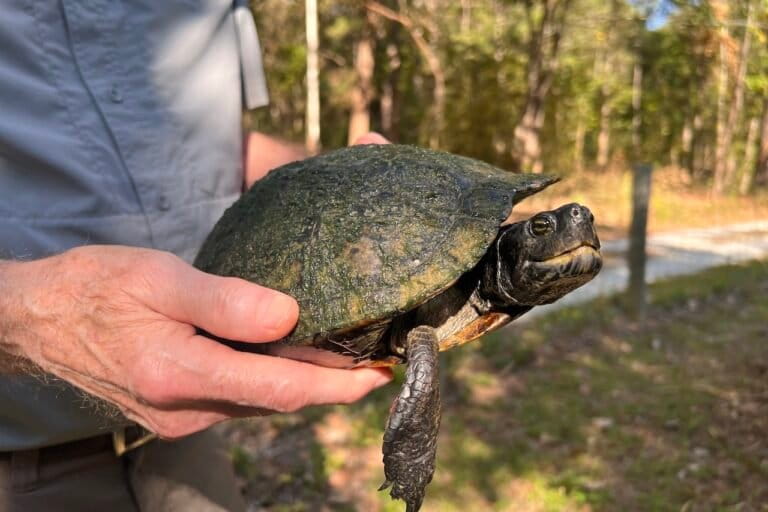
Over Half of Turtle Species Teeter on the Brink (Image Credits: Imgs.mongabay.com)
More than 50% of the globe’s 359 turtle and tortoise species confront extinction risks, with Southeast Asia bearing the brunt of the crisis. Wildlife trafficking, habitat destruction, and slow reproductive rates have decimated populations, leaving some species functionally extinct in the wild. The Turtle Survival Alliance established its flagship Turtle Survival Center in 2013 to counter this trend through captive assurance colonies.
Staff at the center meticulously manage genetic diversity, preserving founder animals—the last known wild-caught individuals of certain kinds. These efforts aim to prevent total loss while habitats recover. Clinton Doak, director of operations, emphasized the structured long-term approach: “It’s a very structured plan.” The facility’s subtropical climate suits tropical species displaced from Asia, enabling thriving in simulated native conditions.
A High-Security Haven for 800-Plus Residents
High fences, guard dogs, and surveillance cameras secure the 50-acre site in Cross, protecting against poachers and disease. The center houses over 800 animals across 27 species, selected for their dire conservation status, inadequate wild protections, and breeding challenges. Indoor hatchling rooms feature UV lights for shell growth, precise water chemistry, and quarantine protocols to safeguard vulnerable young.
Veterinary clinics, incubation rooms, and grow-out enclosures support comprehensive care. Five skilled staff members oversee reproduction, health monitoring, and diet tailored to each species. Cris Hagen, director of animal management, described it aptly: “We’re a turtle bank,” maintaining genetic stocks in perpetuity. This setup has earned accreditation as a related facility of the Association of Zoos and Aquariums.
Spotlight on Southeast Asia’s Vanishing Gems
The collection prioritizes Asian species hammered by food trade, pet markets, and deforestation. Indochinese box turtles and Chinese three-striped box turtles represent key holdings, alongside rarer finds like Zhou’s box turtle, with fewer than 200 individuals in captivity worldwide.
- Rote Island snake-necked turtle (Chelodina mccordi): Fewer than 2,000 left in the wild; center breeds for potential future release.
- Sulawesi forest turtle (Leucocephalon yuwonoi): Rescued from markets, now breeding successfully.
- Arakan forest turtle (Heosemys depressa): Rediscovered after presumed extinction.
- Asian giant tortoise (Manouria emys phayrei): Thrives in outdoor habitats mimicking home ranges.
- Burmese star tortoise and radiated tortoise: Part of broader global efforts.
One U.S. native, the yellow-bellied slider, rounds out the diverse roster. Donations, like 85 Asian box turtles from a Hong Kong rescuer, bolstered foundational stocks.
Training the Next Generation of Conservators
The center hosts the annual Chelonian Biology, Conservation, and Management Course, known as Turtle School, drawing experts from zoos and rescues worldwide. The 2025 session trained 16 participants from three countries in hands-on skills like habitat design and disease prevention. Alumni have improved breeding at facilities like the San Diego Zoo.
Partnerships with the South Carolina Aquarium and international NGOs extend reach, aiding confiscation responses from Mexico to Madagascar. Recent seizures, such as 2,339 turtles in Mexico, underscore the ongoing trade crisis valued at billions annually.
Key Takeaways
- The Turtle Survival Center houses 800+ turtles from 27 species, focusing on those extinct or near-extinct in the wild.
- High-security breeding programs preserve genetics for potential reintroduction in decades or centuries.
- Turtle School builds a global network to combat trafficking and habitat threats.
As climate change and black-market demands intensify, the Cross facility offers a vital buffer, proving that targeted conservation can defy extinction. Yet true recovery demands habitat safeguards and enforcement worldwide. What steps can communities take to support turtle survival? Share your thoughts in the comments.