
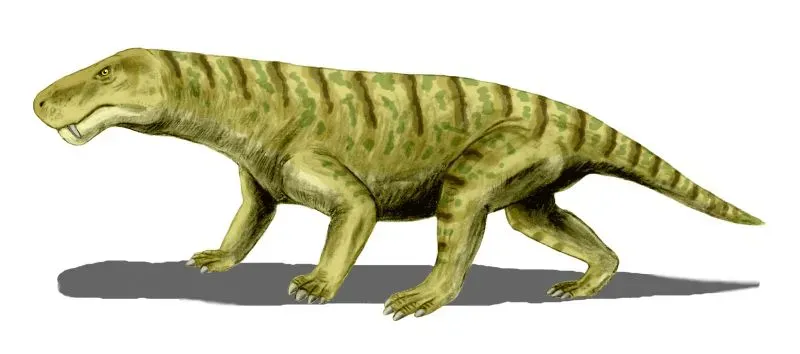
You’ve probably heard a thousand times that dinosaurs were the biggest, baddest creatures to ever walk, swim, or fly across this planet. But here’s the thing that often gets overlooked: some truly monstrous predators existed before, alongside, and even after dinosaurs that could have given T. rex a run for its money. These ancient hunters were every bit as formidable, yet most remain hidden in the shadow of their more famous Mesozoic contemporaries.
Long before and even alongside the likes of T. rex and Velociraptor, Earth was home to other creatures that were every bit as fierce. From the ocean depths to steamy river deltas, these apex killers dominated their ecosystems with weapons ranging from bone-crushing jaws to venomous bites. So let’s dive in and discover some prehistoric monsters that deserve just as much respect as any dinosaur.
Fasolasuchus: The Triassic Terror Before Dinosaur Dominance
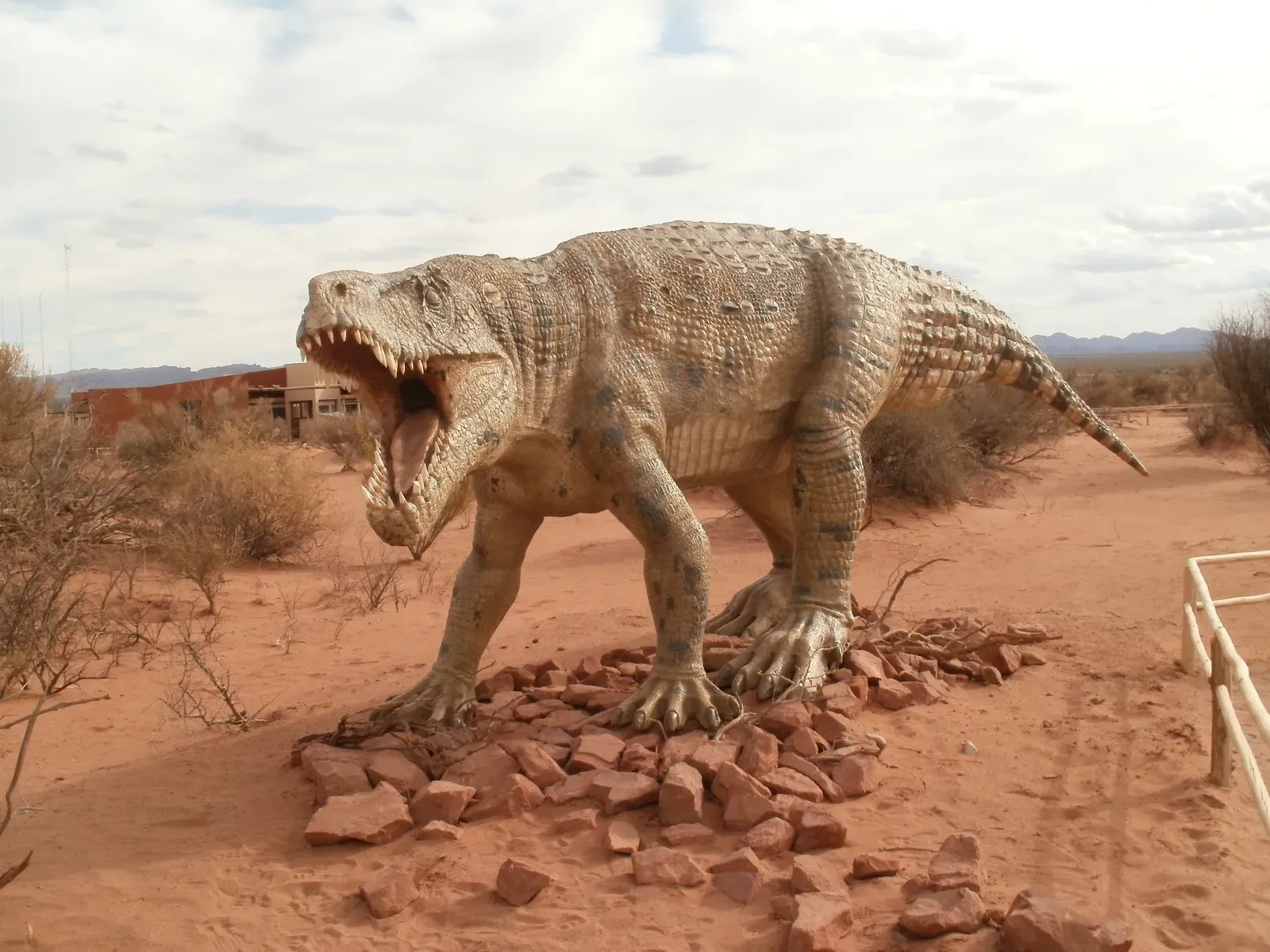
Before dinosaurs truly took control of the planet, another group of massive reptiles ruled the landscape. Fasolasuchus tenax measured an estimated eight to ten meters in length and is both the largest rauisuchian known to science and the largest non-dinosaurian terrestrial predator ever discovered. This colossal predator stalked the Triassic landscape with jaws that could crush bone and a build comparable to modern crocodiles on steroids.
Honestly, you’d have to wonder how early dinosaurs even survived alongside such a monster. Fasolasuchus likely hunted primitive dinosaurs and other large reptiles with terrifying efficiency. These creatures represented the dominant predatory lineage of their time, and had they not gone extinct at the end of the Triassic, the entire story of dinosaur evolution might have turned out very differently.
Deinosuchus: The Dinosaur-Eating Crocodilian
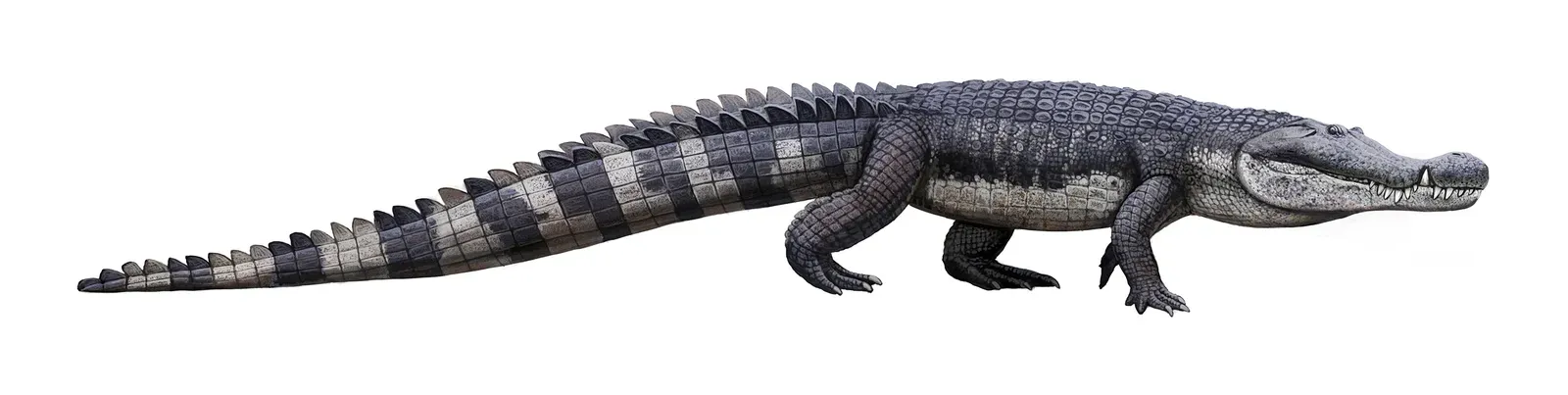
Deinosuchus was a colossal crocodilian living during the late Cretaceous period, larger than today’s largest crocodiles and capable of reaching lengths of 40 feet, with its massive jaws hunting dinosaurs and other large prey. This wasn’t some scaly pushover hiding in swamps. It was actively taking down dinosaurs that came to drink at the water’s edge, using the same ambush tactics modern crocodiles employ but on an absolutely terrifying scale.
The sheer bite force alone would have been devastating. While T. rex gets all the glory for its crushing bite, Deinosuchus had jaws specially adapted for clamping onto prey and performing the infamous death roll. Many dinosaurs that ruled the land would have thought twice before approaching any body of water where these ancient crocodilians lurked.
Mosasaurus: Ocean’s Supreme Reptilian Hunter
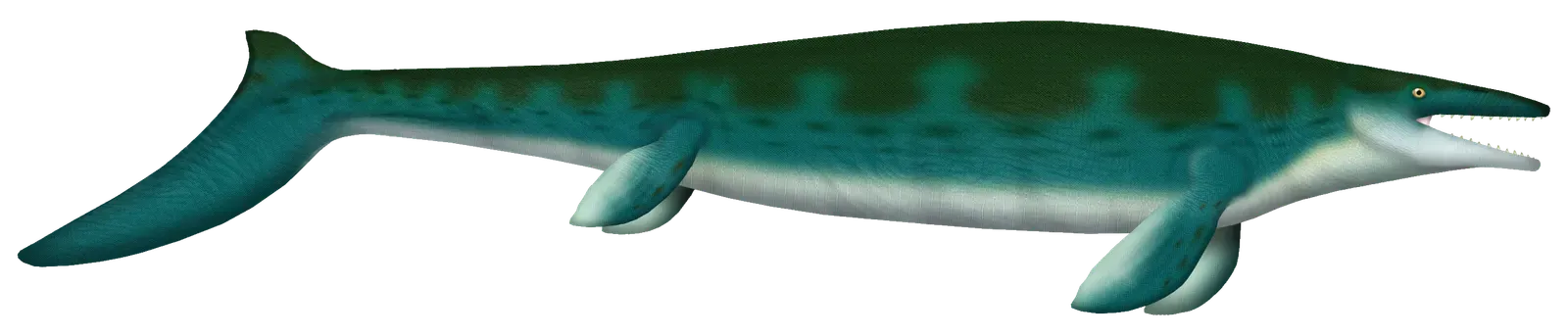
Mosasaurus was a formidable marine reptile reaching lengths of up to 56 feet, dominating the oceans during the late Cretaceous period and preying on fish, squid, and even other marine reptiles with its powerful jaws and streamlined body. These massive ocean predators weren’t dinosaurs at all but represented a separate evolutionary lineage of marine reptiles that became perfectly adapted to life in the water.
Let’s be real, even the largest predatory dinosaurs would have been helpless if they’d fallen into waters patrolled by Mosasaurus. With their powerful flippers and razor-sharp teeth arranged in multiple rows, these hunters could take down virtually any prey they encountered. The truly scary part? They likely hunted in relatively shallow coastal waters, making them a constant threat to any land animal venturing too close to shore.
Pliosaurs: The Bite Force Champions
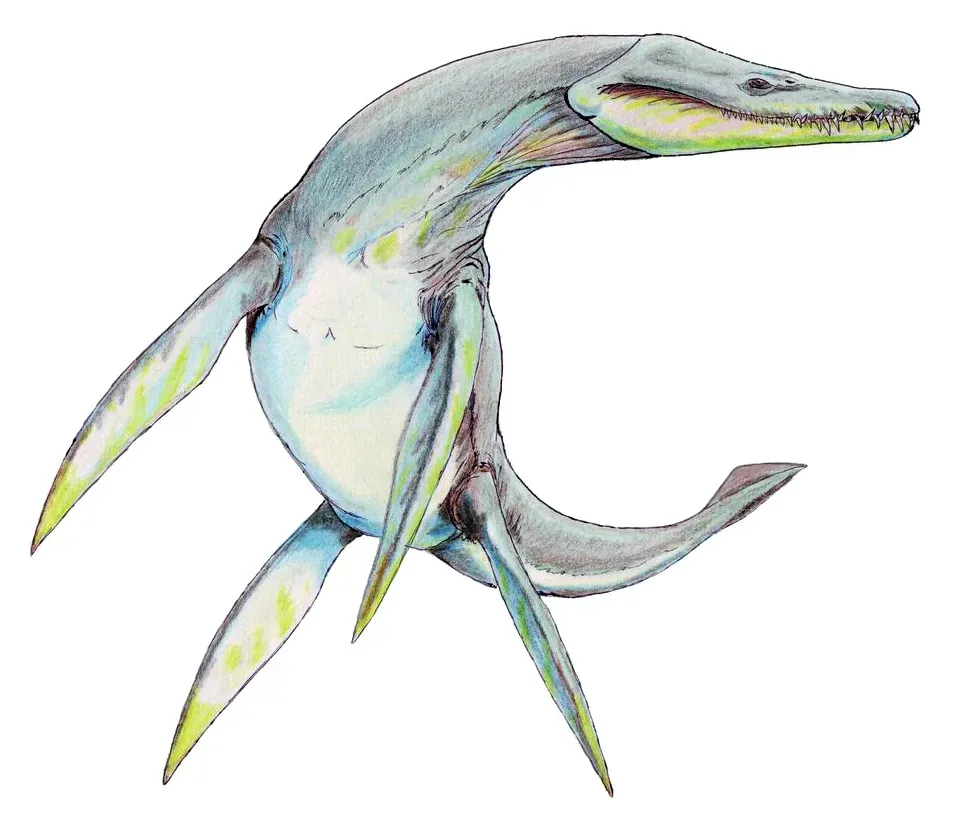
Pliosaurs reached lengths of more than 11 meters in the case of Kronosaurus and Pliosaurus macromerus, and were also the largest marine reptiles for the majority of their existence, ruling the world’s oceans as apex predators for more than 80 million years. These weren’t the long-necked plesiosaurs you might picture. Pliosaurs had massive heads, short necks, and jaws that could rival T. rex in bite force.
The largest thalassophonean pliosaurs are thought to have hunted by ambushing their prey from below, using their powerful jaws and incredibly sharp teeth to dismember prey, oftentimes in a single bite. Their teeth were shaped like three-sided pyramids with special grooves that prevented vacuums from forming when biting, allowing for rapid successive attacks. You wouldn’t want to meet one of these in the open ocean, dinosaur or not.
Megalodon: The Ultimate Shark Predator
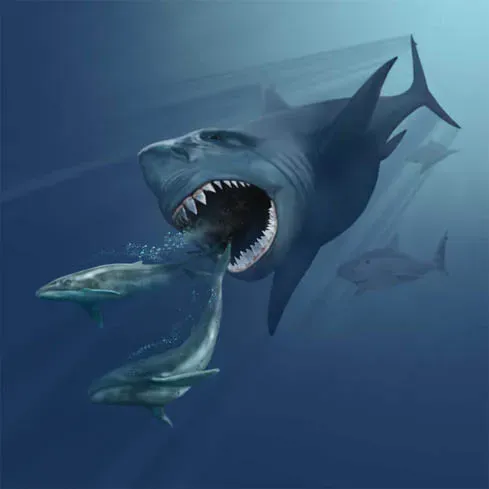
While dinosaurs went extinct roughly 66 million years ago, the oceans continued producing monsters long after. Megalodons reached up to 60 feet long, a length three to four times that of modern-day great whites. These massive sharks made modern great whites look like minnows by comparison, with teeth alone measuring over half a foot in length.
Reaching about 55 feet by most estimates, Megalodon was a massive shark similar in appearance to modern mackerel sharks, which ate small whales in the warmer oceans of the prehistoric past, with teeth alone that could measure five to seven inches. Had they coexisted with marine dinosaurs or pterosaurs, the outcome of any encounter would have been questionable at best. Megalodon represented the pinnacle of shark evolution and remained the ocean’s top predator for millions of years.
Pterygotus: The Giant Sea Scorpion
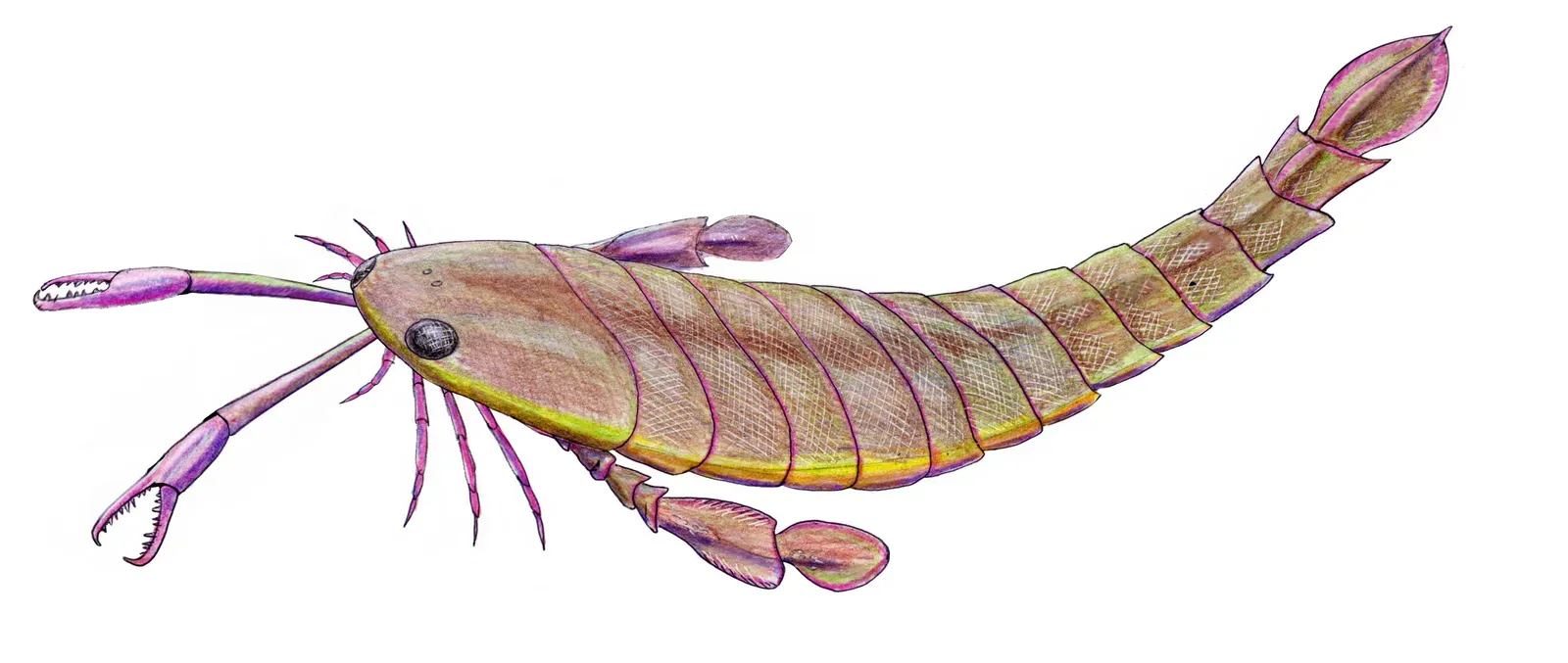
Pterygotus was a giant sea scorpion that reached over six feet in length, an enormous predatory aquatic arthropod that lived in Earth’s oceans hunting other creatures like fish. Imagine an arthropod the size of a tall human lurking in ancient seas. These weren’t the tiny scorpions you’d find under a rock today but massive aquatic hunters with claws capable of grasping substantial prey.
Instead of a venomous stinger, Pterygotus relied on massive pincer-like appendages to capture and crush its victims. It used ambush tactics combined with excellent vision to hunt fish and other marine creatures. While perhaps not directly competing with dinosaurs, these sea scorpions represented a completely different evolutionary path to becoming an apex predator, one that proved remarkably successful for millions of years.
Megalania: The Giant Monitor Lizard
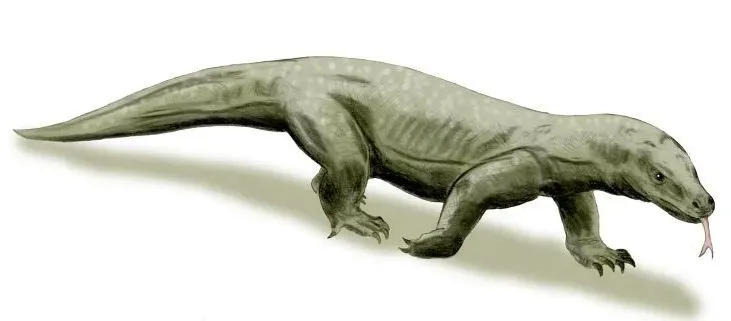
At six meters in length and weighing in at nearly 600 kilograms, these giant lizards looked very similar to their close cousins Komodo dragons, with stocky, splayed limbs, large heads, and jaws full of serrated, blade-like teeth. Living in Australia during the Pleistocene, Megalania represented perhaps the closest thing to a land-based dinosaur predator that coexisted with early humans.
The largest known land lizard is probably Megalania, with the most recent studies estimating it to have been about 5.5 meters in length, and as extant relatives, Megalania could have been venomous and in that case this lizard was also the largest venomous vertebrate ever evolved. It probably hunted like modern Komodo dragons, delivering venomous bites and waiting for toxins to weaken prey before moving in for the kill. Had it existed during the age of dinosaurs, it certainly could have competed with smaller theropods.
Livyatan: The Killer Sperm Whale
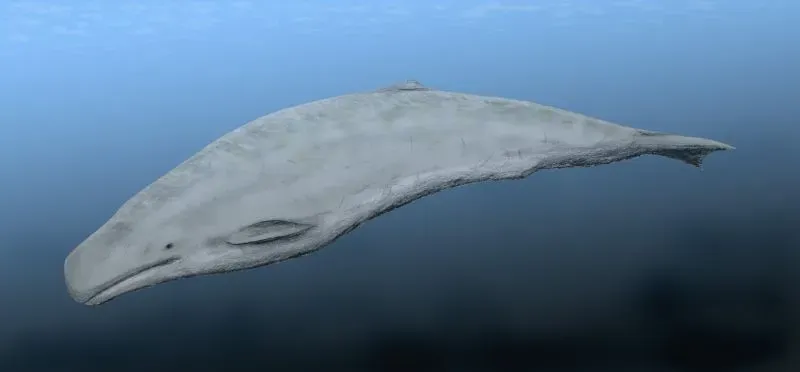
Livyatan was a gigantic prehistoric whale known for its menacing teeth which could grow over a foot long, roaming the Miocene seas and hunting large prey including other whales, with its size and teeth reminiscent of the mythical Leviathan, making it a formidable ocean predator. This wasn’t a gentle filter-feeder but an active hunter with teeth that would make any shark jealous.
Unlike modern sperm whales that hunt primarily squid in the deep, Livyatan was equipped for taking down the largest prey in the ocean. Its powerful jaws and aggressive hunting strategies were unmatched in its time, and the whale likely competed directly with Megalodon for ocean supremacy. Had such a creature existed during the Mesozoic, marine reptiles would have faced serious competition indeed.
Arctodus: The Giant Short-Faced Bear
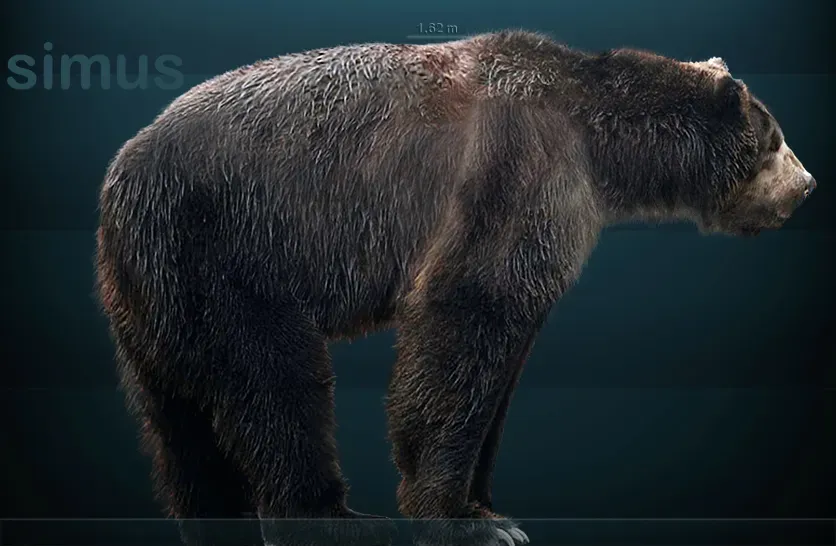
The giant short-faced bear, Arctodus simus, is widely considered the largest terrestrial carnivoran ever, larger than a polar bear and almost twice the size of a grizzly bear. Living during the Pleistocene, this massive predator stood as tall as twelve feet when on its hind legs and possessed a build unlike any bear alive today.
While the giant short-faced bear may have weighed close to a ton, it had a relatively slender build compared to many modern bears, which has sparked debate about its lifestyle, with some claiming it was a pursuit predator capable of running down prey at speeds of up to 51 kilometers per hour, and others suggesting it was a kleptoparasite. The idea of a bear that size running at highway speeds is genuinely terrifying. While it never met dinosaurs, its sheer size and power would have made it a formidable competitor to many medium-sized theropods.
Anomalocaris: The Cambrian Apex Predator
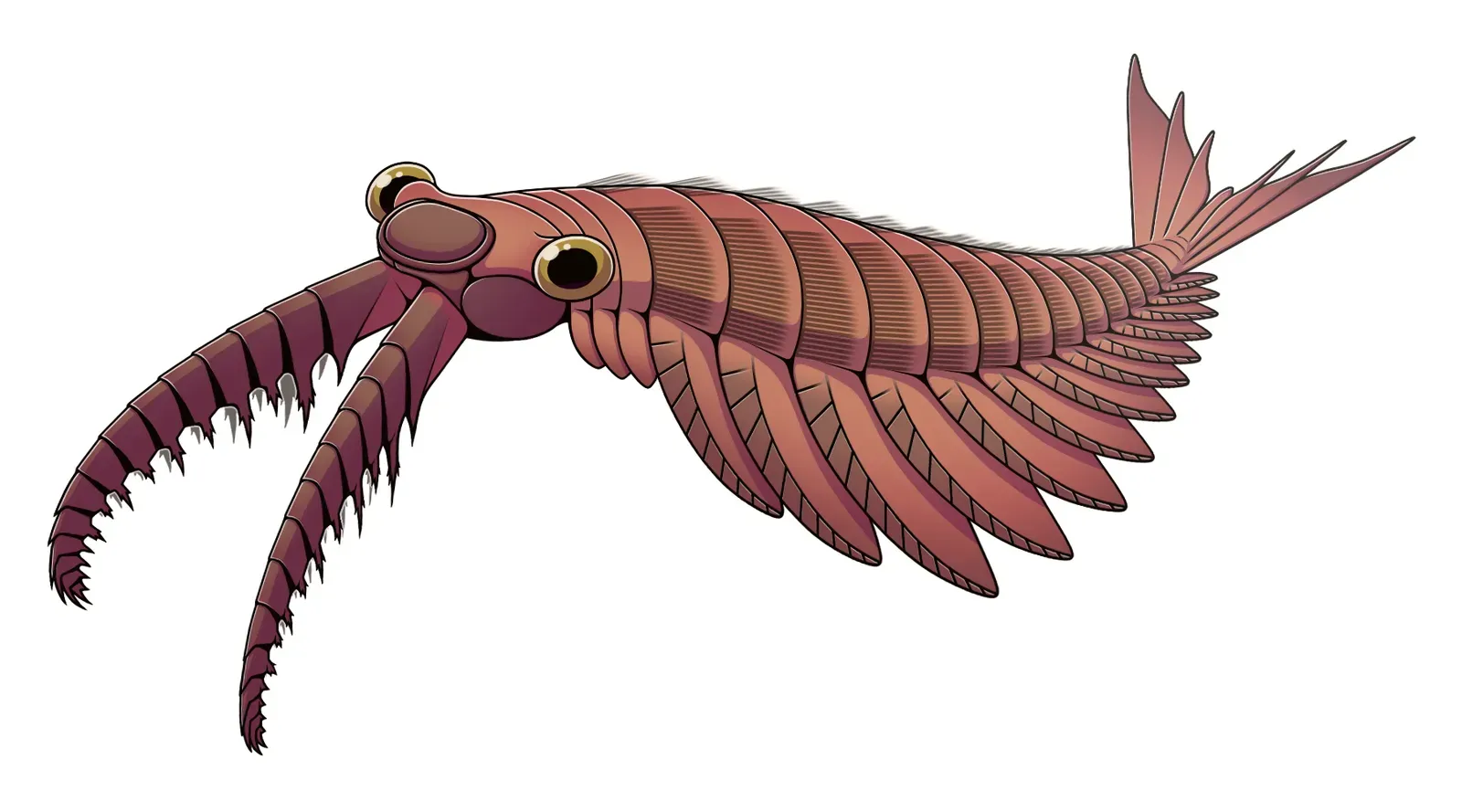
More than half a billion years ago, the world’s oceans were stalked by a soft-bodied predator that looked unlike anything alive today, Anomalocaris, widely regarded as the world’s first apex predator, the killer whale of its day and the largest hunter of the Cambrian period, measuring up to a meter in length. This bizarre creature represents one of Earth’s earliest experiments in creating a top predator.
Anomalocaris was a hunter that relied on speed, agility and superior sight rather than strength. While it would seem tiny compared to dinosaurs, Anomalocaris was the undisputed king of its time, and its evolutionary significance cannot be overstated. It proved that complex predatory behavior and apex predator niches existed hundreds of millions of years before dinosaurs ever appeared, establishing ecological patterns that would persist throughout Earth’s history.
Conclusion: Nature’s Arsenal Extended Beyond Dinosaurs
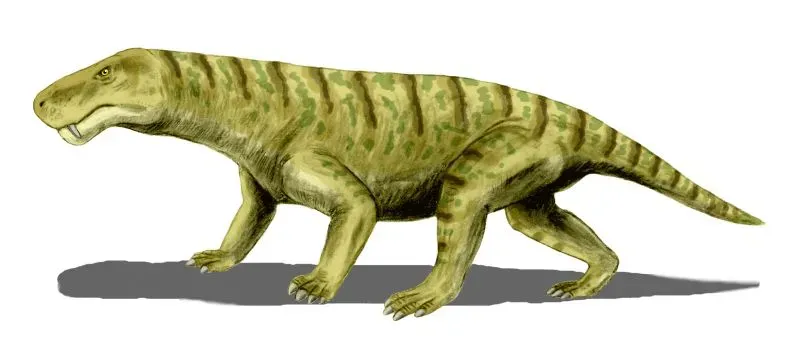
These ten predators remind you that dinosaurs, impressive as they were, represented just one chapter in the long story of predatory evolution on Earth. From armored sea scorpions to whale-sized sharks, from venomous giant lizards to bone-crushing crocodilians, nature has experimented with countless designs for the perfect killing machine. Some of these creatures possessed weapons that even the mightiest dinosaurs would have struggled against.
The fossil record continues revealing surprises, and who knows what other incredible predators remain hidden in ancient rocks, waiting to challenge our dinosaur-centric view of prehistoric life? What strikes me most is how diverse and creative evolution has been in producing apex predators across different eras and ecosystems. Which of these ancient hunters do you think would win in a face-off against your favorite dinosaur? The answer might surprise you.