Have you ever wondered how ancient civilizations built structures that still baffle modern engineers? Standing before massive stones that weigh hundreds of tons, you might question whether you’re witnessing evidence of lost technologies or simply human ingenuity taken to extraordinary levels. The truth is, despite centuries of study and all our advanced technology, we still can’t fully explain how these ancient builders accomplished their remarkable feats.
The mystery deepens when you realize that many of these structures were built before the invention of the wheel in some regions, before metal tools became widespread, and certainly before cranes or modern machinery. Let’s dig into seven ancient engineering wonders that continue to puzzle experts and spark imagination about what our ancestors were truly capable of.
Göbekli Tepe: The Temple That Shouldn’t Exist
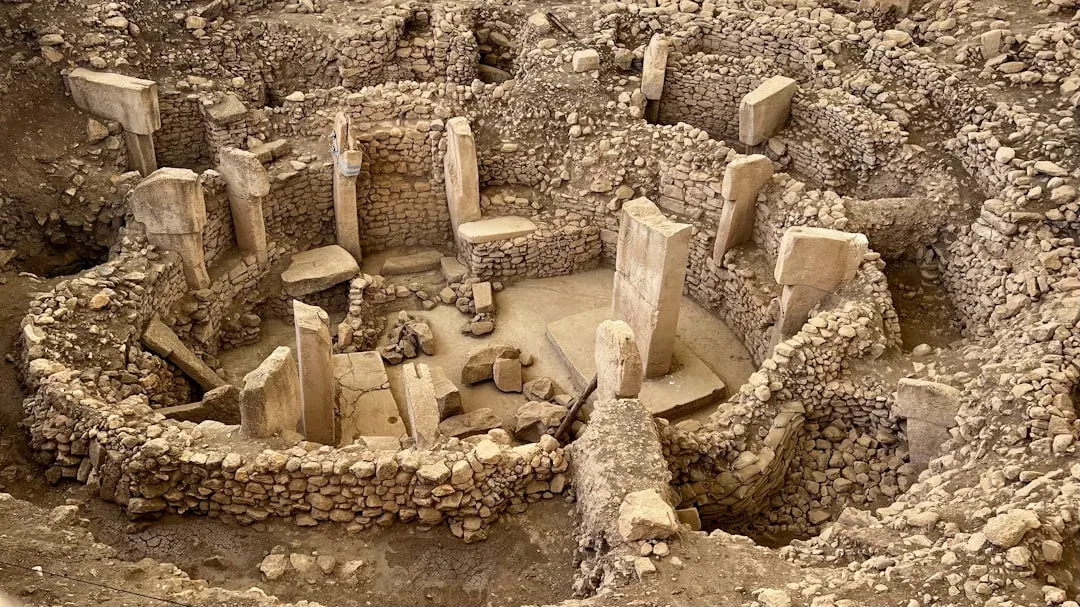
You’re looking at a site built more than 11,000 years ago by hunter-gatherers – a monumental stone complex with megalithic circular enclosures that’s twice as old as Stonehenge. What makes Göbekli Tepe so mind-boggling is that it challenges everything we thought we knew about ancient human development. Historians long believed that monumental architecture only appeared after agriculture and settled communities developed, yet here’s proof that nomadic peoples created something extraordinary.
The stone columns stand up to 18 feet tall and weigh as much as 50 tons each, featuring intricate carvings of animals and abstract symbols. Here’s the thing though: some researchers estimate that just seven to fourteen people could have moved the pillars using ropes and water or another lubricant, while others calculated that moving one similar-sized pillar would have taken roughly twenty people a year to carve and fifty to seventy-five people a week to transport fifteen kilometers. Recent research revealed that workers relied heavily on geometry to construct the structures, possibly stretching a piece of rope to create equilateral triangles before building the columns. Still, you have to wonder: how did hunter-gatherers organize such a massive undertaking without written language or permanent settlements?
The Great Pyramid of Giza: Precision in the Desert
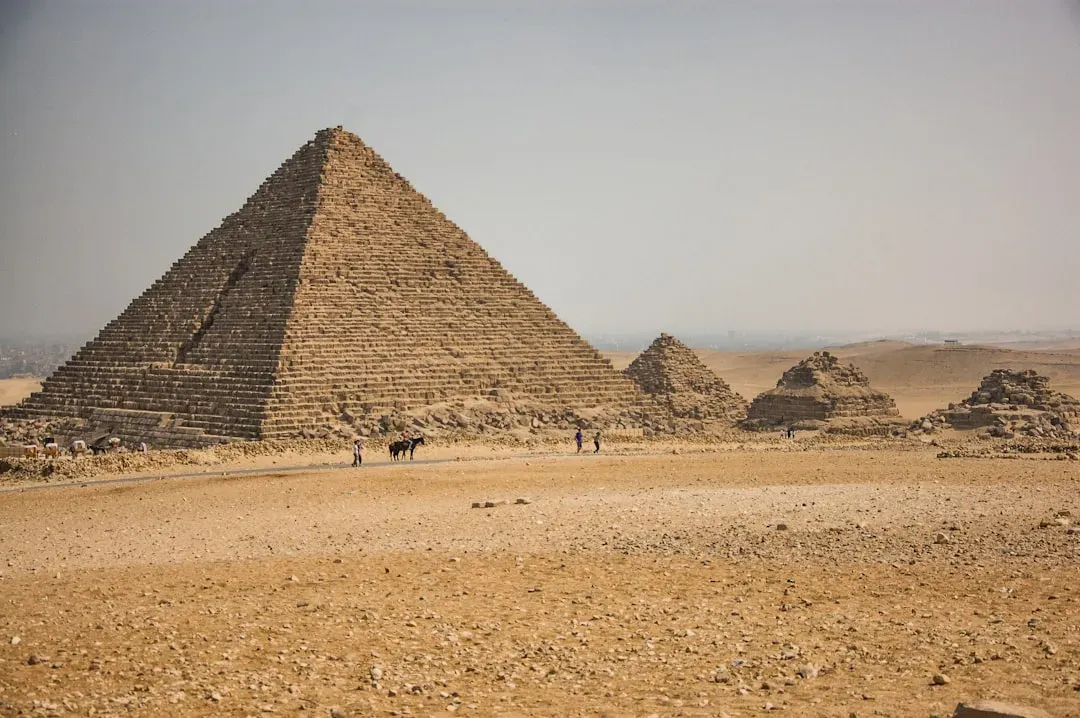
You’re facing an estimated 2.3 million blocks made from approximately 5.5 million tonnes of limestone, 8,000 tonnes of granite, and 500,000 tonnes of mortar. What’s truly shocking is the precision involved – the base is level to within a few centimeters across its massive footprint, and the sides align almost perfectly with the cardinal directions. Let’s be real, achieving this level of accuracy without modern surveying equipment is no small feat.
Most experts believe the Egyptians moved massive stone blocks using large ramps greased by water or wet clay, employing sledges, ropes, rollers, and levers, though some suggest exterior ramps that zigzagged or spiraled while others propose more controversial internal ramps. Archaeologists now believe that tens of thousands of skilled workers who camped near the pyramids worked for a salary or as a form of tax payment until construction was completed. Yet despite all this research, the construction method remains debated, with several theories implicating construction ramps and a layer-by-layer bottom-to-top growth progress. The Great Pyramid is thought to have been completed in just twenty years – a timeline that boggles the mind given the sheer scale of the project.
Puma Punku: The Puzzle of Perfect Angles
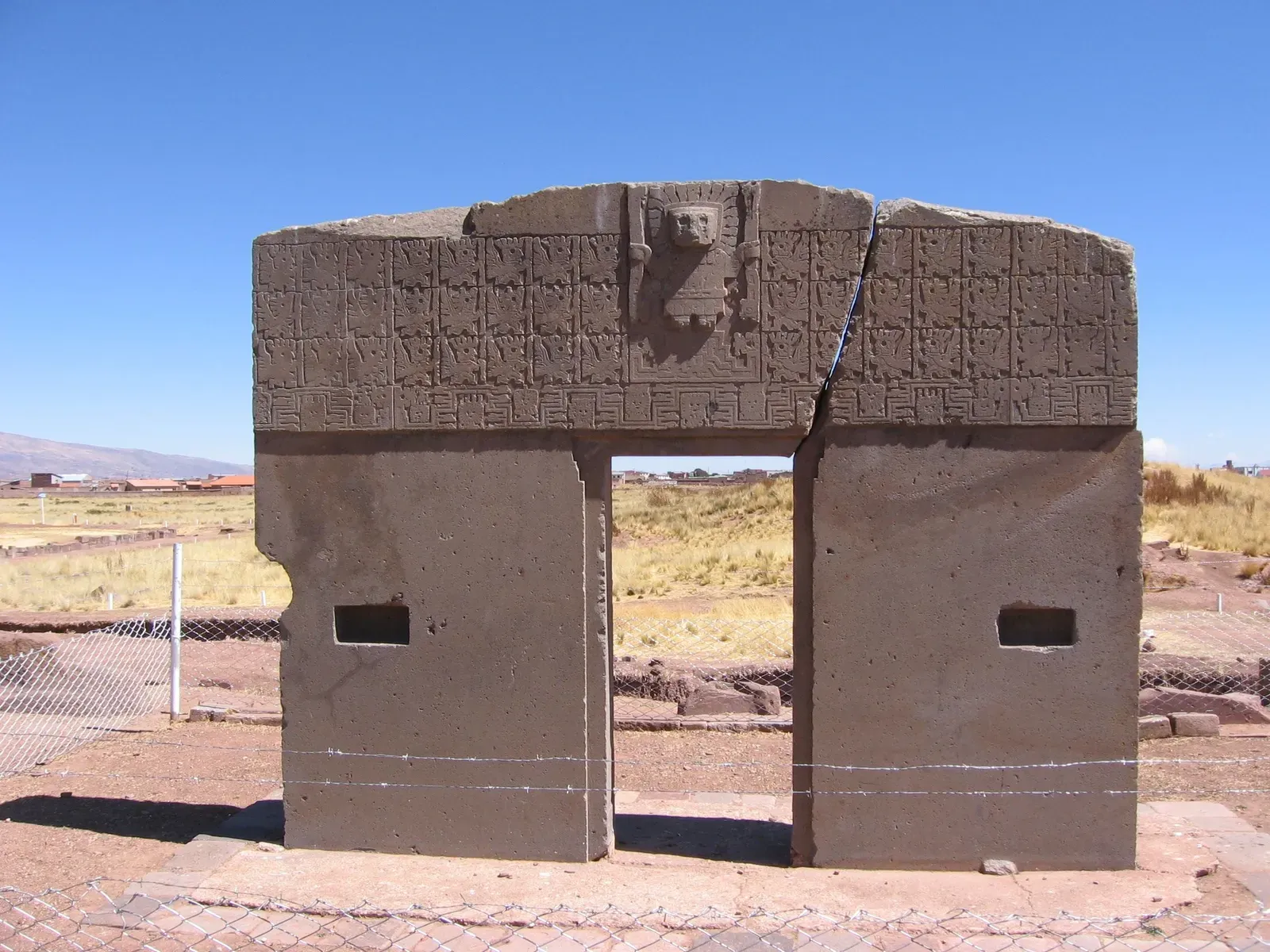
Imagine walking through Bolivia’s highlands and encountering stones cut with such incredible accuracy that you can’t slide a razor blade between them. The red sandstone and andesite stones at Puma Punku were cut so precisely that they fit perfectly into and lock with each other without using mortar, displaying astounding technical finesse. What’s really fascinating is the numerous H-shaped blocks all match each other with extreme precision and fit into each other like Lego blocks.
The largest stone block measures 25.6 feet long, 17 feet wide and 3.5 feet thick, weighing an estimated 131 metric tons, with the red sandstone blocks transported up a steep incline from a quarry near Lake Titicaca roughly ten kilometers away. Researchers conducting the first professional field study concluded that to obtain the smooth finishes and perfectly planar faces with exact ninety-degree interior and exterior right angles, builders resorted to techniques unknown to the Incas and to us at this time, noting that the sharp and precise interior angles most likely were not made with hammerstones. One researcher succeeded in carving a similar design about eight inches across using stone tools including flakes and thin chisels made from various stones, achieving the same high precision, yet scaling this up to the entire complex remains deeply puzzling.
Baalbek: Lebanon’s Impossible Stones
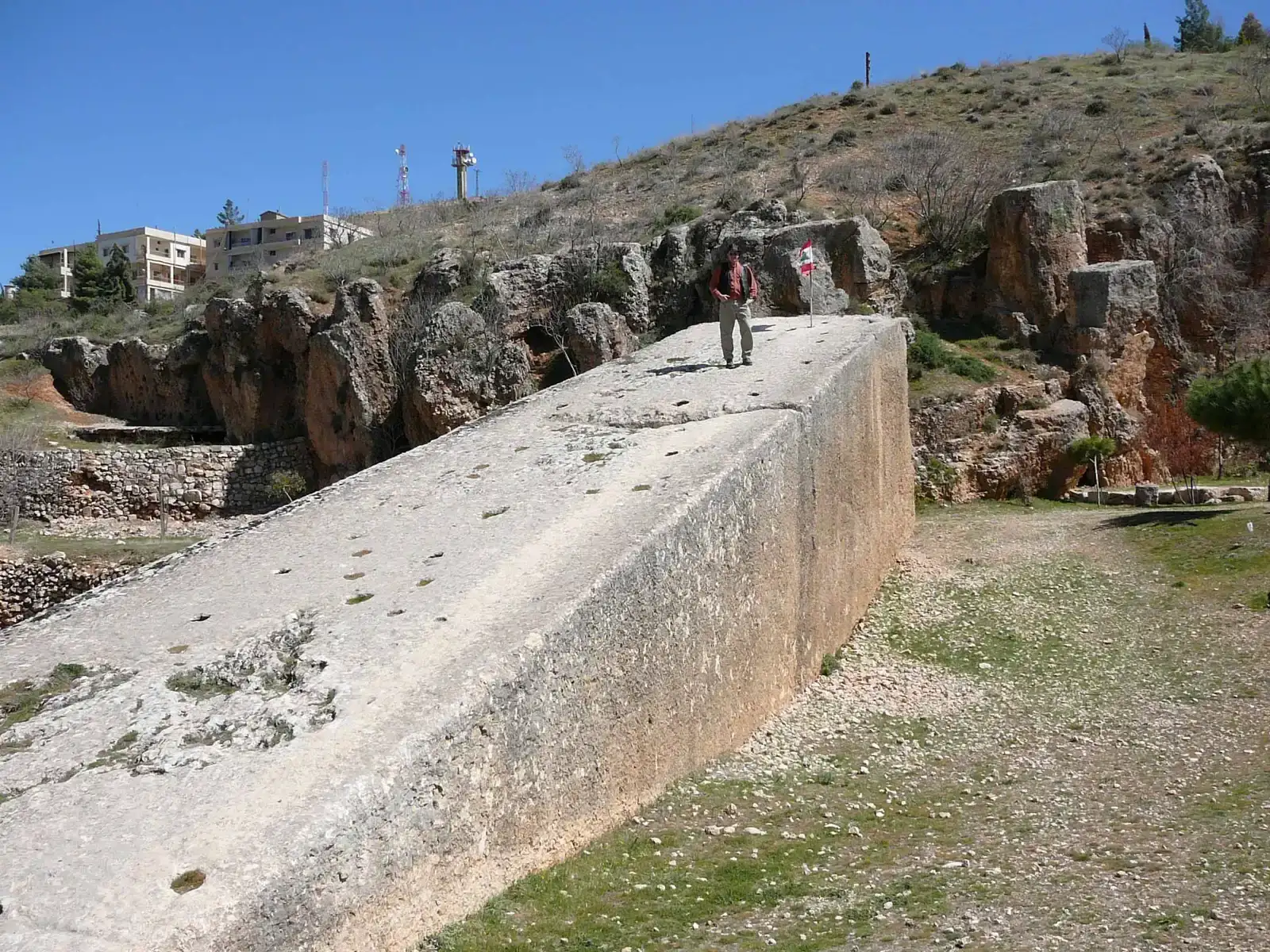
You’re confronted by three massive stones in the Baalbek trilithon, each one nineteen meters long, 4.2 meters high, and 3.6 meters thick, weighing around 750 to 800 tonnes. To put that in perspective, the largest stone in the Egyptian pyramids weighs ninety tons – nine times less than these. I know it sounds crazy, but it gets even more bizarre.
In the same quarry, the Stone of the South was rediscovered in the 1990s with its weight estimated at 1,242 tonnes, while the Forgotten Stone discovered in 2014 weighs around 1,500 tonnes. These blocks sit at least twenty feet above ground level in the western wall of the Temple of Jupiter, raising obvious questions about how anyone transported them from the quarry and then lifted them into position. A 1977 study suggested the large blocks could have been moved on rollers with machines using capstans and pulley blocks, a process which could use 512 workers to move a 557-ton block. However, an object 1.5 times the weight of the trilithon was successfully moved in the eighteenth century with manpower and no modern cranes, proving human engineering could theoretically accomplish such feats – though the methods remain hotly debated.
Sacsayhuamán: The Fortress of Impossible Joints
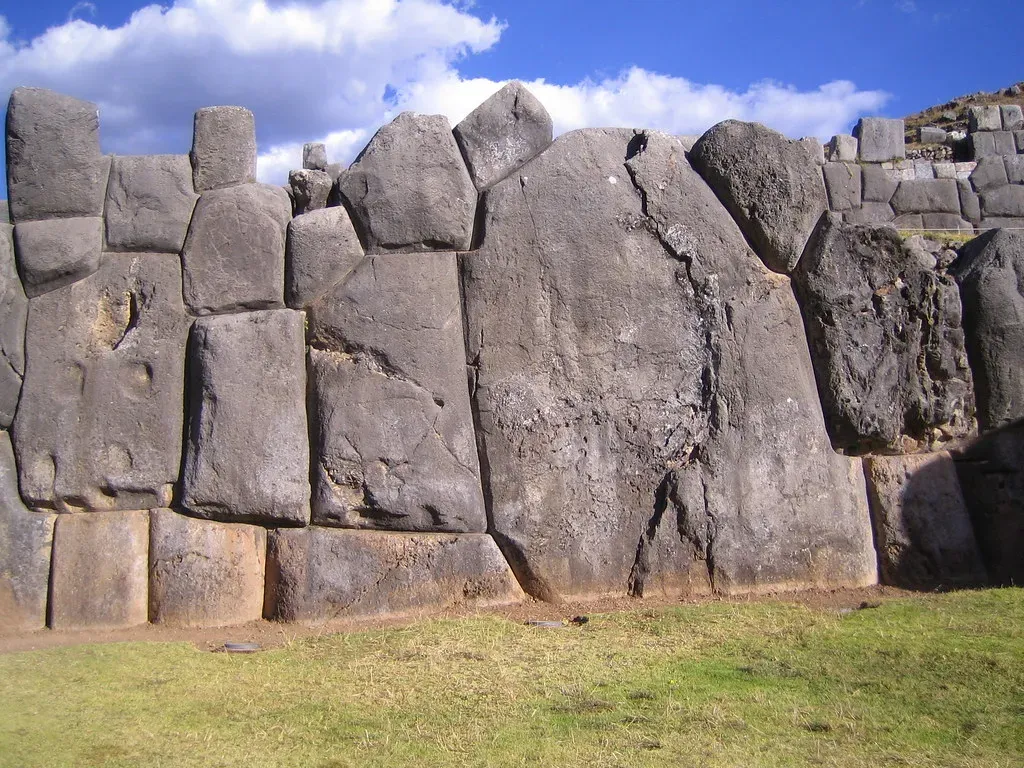
Located outside Cusco, Peru, the Sacsayhuamán stone structure completed in the sixteenth century consists of three stone boulder walls that interweave in a puzzle-like pattern, with boulders so precisely interconnected that it’s virtually impossible to push even something as thin as a piece of paper between them. This level of craftsmanship rivals anything produced today, honestly.
The stone boulders were excavated from a quarry located three kilometers away and moved to their current location using an unknown transportation system, with the largest boulder weighing about 120 tons. Modern engineers who’ve studied the site remain stumped by the construction methods. These structures exhibit signs of engineering skills which should not have been possible in such ancient times with the tools and knowledge which orthodox academics insist were available to them. The interlocking puzzle-like design wasn’t just for show either – it provided remarkable earthquake resistance in a seismically active region, demonstrating sophisticated understanding of structural engineering.
Teotihuacan: The Cosmic City Layout
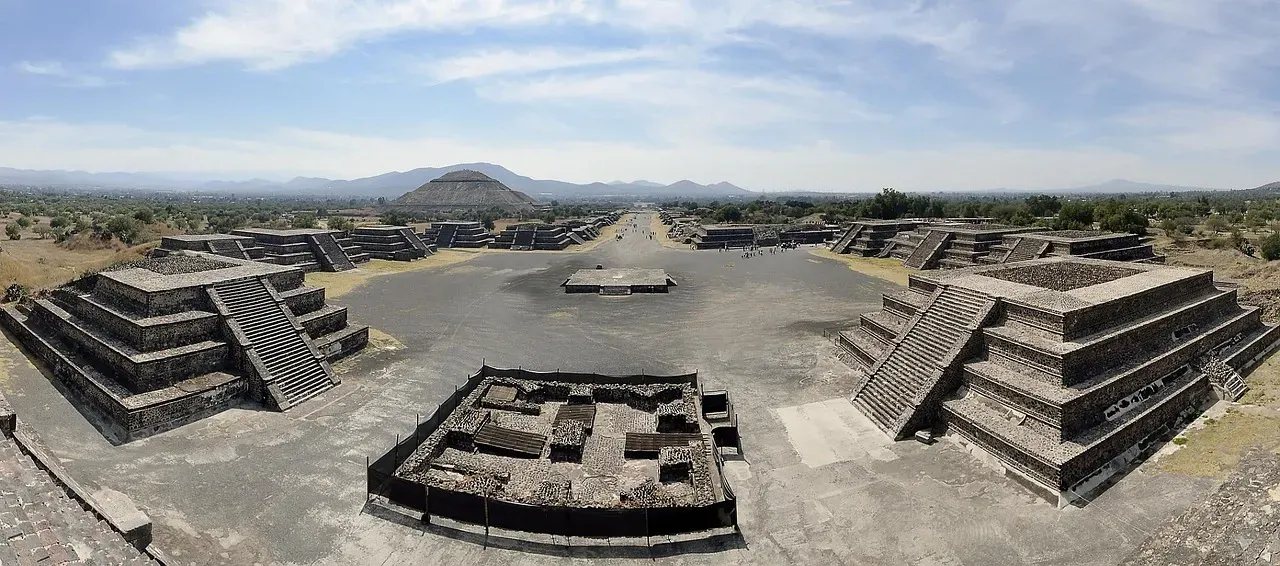
These structures on a site first inhabited around 100 BCE by an ancient civilization that reached its peak in 450 CE once formed an urban metropolis spanning twenty-two miles and housing approximately 200,000 inhabitants. What sets Teotihuacan apart isn’t just the scale – it’s the extraordinary precision of the city’s alignment with celestial and geographic points.
The city was built such that its grid aligned properly with key geographic, geodetic, and celestial points, with its east-west axis aligned with a sunset point in the horizon that coincided with the beginning of the Mesoamerican calendar, while the north-south axis was aligned with the Temple of Quetzalcoatl and the Sun and Moon pyramids. Think about the level of astronomical knowledge and surveying skill required to achieve this across such a vast area. The builders clearly possessed sophisticated understanding of mathematics, astronomy, and urban planning that goes far beyond what we typically attribute to pre-Columbian civilizations. This wasn’t random construction – it was a carefully orchestrated cosmic blueprint laid out in stone.
Derinkuyu: The Underground Marvel
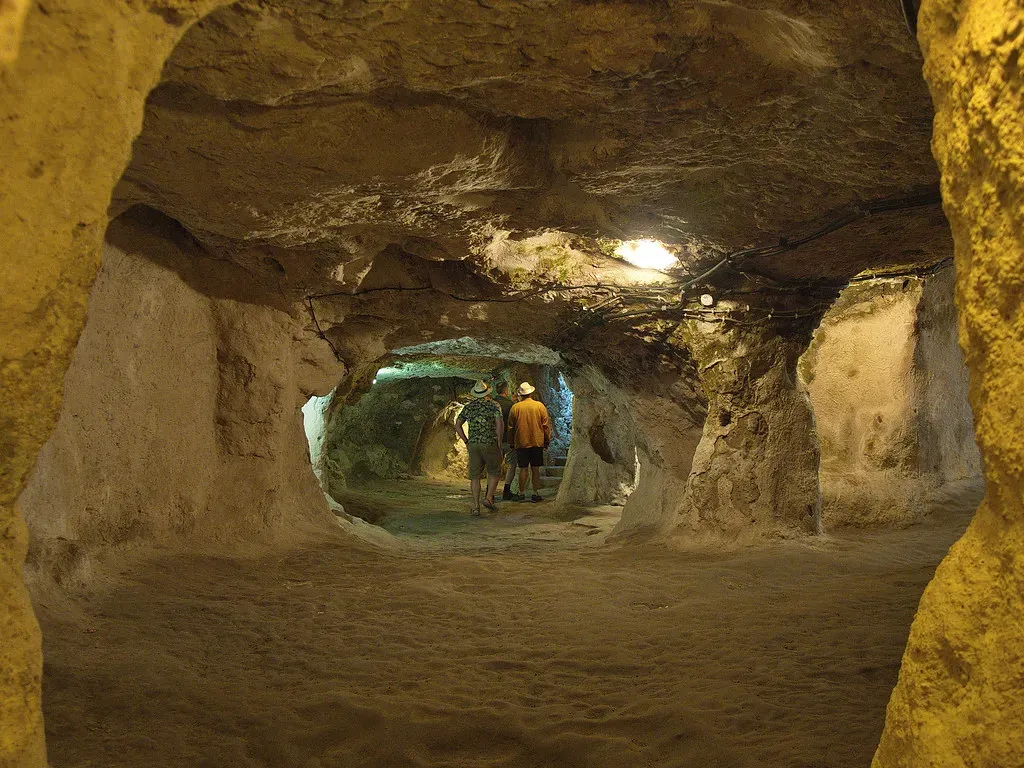
The underground city of Derinkuyu in Cappadocia showcases human ingenuity through a network of tunnels and chambers, with the city capable of housing up to 20,000 people and featuring ventilation shafts and hidden passages that highlight advanced knowledge of construction and planning. You’re looking at a multi-level subterranean complex carved directly into soft volcanic rock, extending several stories deep into the earth.
What makes this particularly impressive is the engineering required to ensure adequate ventilation for thousands of people living underground. Ancient builders used innovative drilling and excavation techniques, with tools like hammers, chisels, and later metal tools helping to carve out spaces, often following natural fault lines or softer rock layers to ease the process. The city included living quarters, storage rooms, stables for livestock, wine and oil presses, and even a church – all carved underground. The ventilation system alone represents remarkable engineering, providing fresh air throughout the complex without modern fans or pumps. It’s hard to say for sure, but the planning and execution required to create such a livable underground environment speaks to capabilities we’re only beginning to fully appreciate.
Conclusion
These seven ancient engineering marvels share a common thread: they all push the boundaries of what we believe their builders should have been capable of achieving. From stones weighing over a thousand tons moved with precision to underground cities housing thousands and cosmic alignments spanning miles, these structures remind us that ancient peoples possessed knowledge and capabilities that remain partially mysterious even today.
Perhaps the real marvel isn’t just the structures themselves, but what they reveal about human determination, ingenuity, and the drive to create something that would outlast the builders by millennia. These monuments stand as testament to what humans can accomplish when vision meets determination – even without the tools we consider essential today.
What do you think enabled these ancient builders to achieve such incredible feats? Were there techniques and knowledge that have been lost to time, or do these structures simply represent the pinnacle of what human muscle, ingenuity, and organization could accomplish? The mystery continues to captivate us, and perhaps that’s exactly as it should be.