
New Mexico — Mexican long-nosed bats pushed their summer migration farther north last year, reaching the edges of Gila National Forest in search of healthier agave blooms amid regional drought.
Northernmost Detection Signals Shift
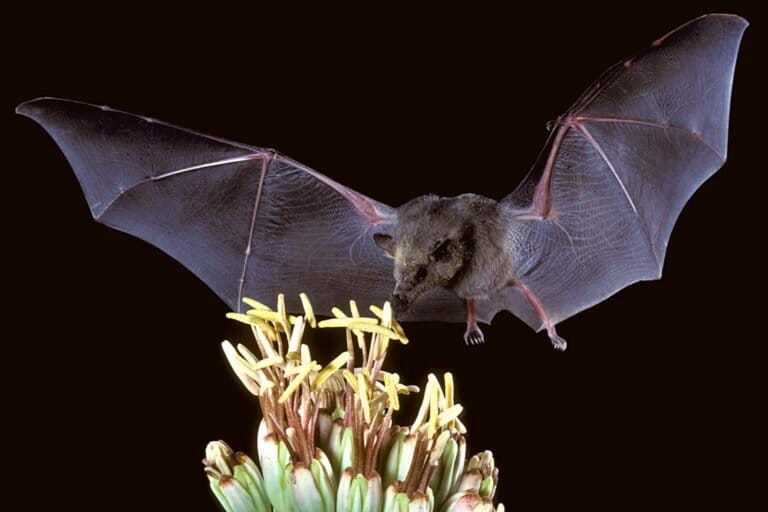
Northernmost Detection Signals Shift (Image Credits: Imgs.mongabay.com)
Researchers uncovered the bats’ presence through environmental DNA swabbing of agave plants and hummingbird feeders. This marked the northernmost record of the species in the United States, extending about 100 miles beyond known roosts in New Mexico’s Bootheel region.
Bat Conservation International announced the findings earlier this week. The group documented similar northward movement into Arizona previously. Traditional stops include Big Bend National Park in Texas and Hidalgo County in New Mexico.
Each summer, these bats travel from Mexico into the southwestern United States. The journey relies heavily on nectar from agave flowers for energy.
Drought Disrupts Agave Flowering
Prolonged drought has hammered the Bootheel area, reducing agave flowering there. Kristen Lear, director of the Agave Restoration Initiative at Bat Conservation International, attributed the bats’ extended travels to this scarcity.
“We think these bats are trying to look for healthy agave food sources elsewhere,” Lear said. “So that’s kind of driving them farther north, where the agaves are a little bit less hit by drought.”
Extra distance adds nights to the bats’ flights. Restoration experts emphasize maintaining nectar along routes to support the species.
Specialized Tongues Fuel Epic Flights
Mexican long-nosed bats possess elongated tongues perfectly suited for lapping nectar during nocturnal foraging. This adaptation sustains their demanding migrations, not merely indulges a preference.
The species shares a critical symbiosis with agave plants, serving as primary pollinators. Agaves depend on the bats for seed production, while bats gain essential fuel.
- Endangered since 1988, with fewer than 10,000 individuals estimated worldwide.
- Females produce one pup per year.
- Agaves require 10 years or more to flower and set seed.
- Both reproduce slowly, hindering rapid population recovery.
Restoration Builds a Nectar Corridor
Since 2018, teams in Mexico and the U.S. planted roughly 185,000 agave plants to bolster food supplies. Seeds from these efforts propagate further in nurseries before transplanting to priority zones.
Rachel Burke, Bat Conservation International’s U.S. agave restoration coordinator, highlighted how detections guide future plantings. More than 100 partners, from ranchers and communities to agencies, collaborate on DNA sampling and surveys.
These initiatives aim to preserve genetic diversity in agaves and stabilize bat numbers. Ongoing work targets desert grasslands near past sightings.
Key Takeaways
- eDNA swabbing confirmed bats 100 miles north of prior records.
- Drought in New Mexico’s Bootheel spurs the range expansion.
- 185,000 agaves planted since 2018 support the nectar corridor.
These northward pushes underscore climate pressures on fragile ecosystems. Conservationists stress sustained restoration to secure the bats’ future and agave pollination. What steps should communities take next to aid these vital pollinators? Share your thoughts in the comments.