
Galápagos Islands, Ecuador — Derelict fish aggregating devices from industrial tuna operations have invaded the marine reserve, entangling animals and shedding plastic into fragile ecosystems.
A Fisher’s Stark Warning
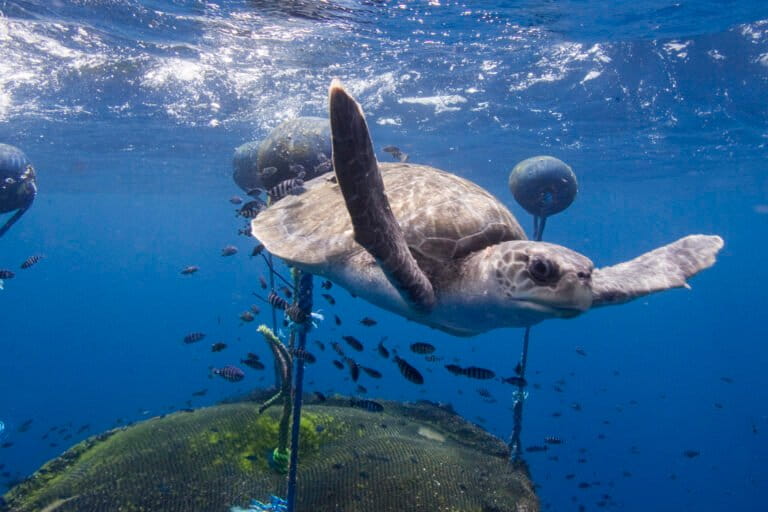
A Fisher’s Stark Warning (Image Credits: Imgs.mongabay.com)
In a 2022 Instagram video, local fisher Walter Borbor greeted followers before revealing a large black floating device tangled around a decomposing whale’s tail. He identified it as a “plantado,” the regional term for a fish aggregating device, or FAD, commonly used by tuna fleets.
These structures attract tuna but drift uncontrolled when lost or abandoned, entering protected waters. Borbor, known for his social media presence, highlighted the immediate dangers to navigation and marine life. Galápagos National Park recorded 277 such devices in the reserve since 2017, mostly during coastal patrols, though the true tally likely exceeds this figure.
Industrial vessels deploy dozens or hundreds at a time, limited to 340 active buoys each by the Inter-American Tropical Tuna Commission. Dead batteries, theft, or deliberate discard leave them adrift, carried by currents into the reserve.
Devastating Toll on Protected Species
Researchers frequently encountered entangled sharks, turtles, sea lions, seabirds, and even dead marine mammals in FAD netting. “Scientists routinely find sharks, turtles, sea lions, seabirds and other wildlife entangled in the netting – or worse, dead,” noted Inti Keith of the Charles Darwin Foundation.
FADs damage coral reefs upon washing ashore and collide with small artisanal boats, especially at night. They also promote bycatch of juvenile tuna, sharks, manta rays, dolphins, and turtles, altering fish behavior and contributing to overfishing pressures.
- Plastic shedding as FADs degrade pollutes beaches and waters.
- Ghost nets trap protected species indefinitely.
- Habitat disruption affects endemic fish and corals.
- Navigation hazards endanger local fishers like Borbor, who recovered 50 FADs and 35 buoys by late 2021.
Local and Industry Cleanup Drives
Ecuador’s tuna fleet expanded by half over 25 years, amplifying the problem as abandoned gear proliferates. TUNACONS, representing tuna companies, initiated a retrieval program in 2022 that gathered about 60 FADs over three years, paying artisanal fishers $400-$600 per unit.
Galápagos National Park coordinates removals costing $1,000 each, targeting satellite buoys to trace owners. Artisanal fishers lead many efforts, dismantling platforms for recycling while reusing nets for hammocks or coops. Frente Insular, under Alberto Andrade, documented hundreds of recoveries and raised awareness about bycatch impacts.
| Year | Garbage Collected (kg) | FAD-Related Items Noted |
|---|---|---|
| 2017 | 5,757 | Multiple during cleanups |
| 2018 | 24,288 | Increased plastics |
| 2020 | 13,276 | 3 FADs officially |
| 2021 | 15,000 | 15 items from northern islands |
Coastal cleanups amassed over 70 tons of debris since 2017, underscoring the scale.
Calls for Regional Action
Experts advocate mandatory buoy tracking and biodegradable materials, though EcoFADs still include nondegradable parts. “Our goal is to close the loop: to design better, recover more and recycle or reuse as much as possible,” stated Guillermo Morán Velásquez of TUNACONS.
The Eastern Tropical Pacific Marine Corridor unites Ecuador, Colombia, Costa Rica, and Panama for solutions. Global forums like the IATTC discuss registers and workshops, as seen in Galápagos-hosted events. Yet Leonardo García of the park emphasized, “This modality of fishing … is not going to stop,” urging shared responsibility.
Key Takeaways
- 277 FADs documented since 2017, likely undercounted.
- Entanglements kill sharks, turtles, and sea lions routinely.
- Retrieval programs collected 60+ by industry, hundreds by locals.
Abandoned FADs reveal the clash between industrial efficiency and conservation in one of Earth’s biodiversity hotspots. Stronger tracking and cooperation offer hope, but vigilance remains essential. What steps should tuna fleets take next? Share your thoughts in the comments.