
Santarém, Brazil – Weeks of determined protests by Indigenous communities along the Tapajós River compelled the Brazilian government to suspend dredging operations at a critical Amazon tributary.
Hundreds Dig In at Cargill Terminal
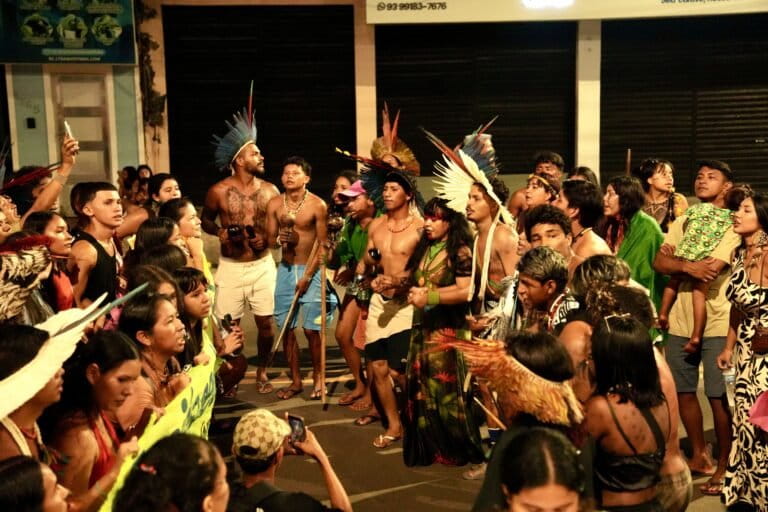
Hundreds Dig In at Cargill Terminal (Image Credits: Imgs.mongabay.com)
Protesters first blockaded the Cargill grain facility on January 22, shutting down truck access and halting operations at one of the company’s major export hubs.
The action, now in its third week, drew 800 to 900 demonstrators by early February, many camping at the site despite mounting pressures.
Escalation followed on February 4 when groups blocked the main road to Santarém International Airport, underscoring their resolve.
Representatives from 14 Indigenous nations led the effort, transforming a local grievance into a regional standoff.
Decree Sparks Fears for River Life
Decree 12,600/2025 placed segments of the Tapajós, Madeira, and Tocantins rivers under Brazil’s National Privatization Program, enabling private dredging and navigation maintenance.
This measure supported the Tapajós waterway project, a 250-kilometer initiative to ensure year-round barge passage for soy, corn, and grains from interior states to Atlantic ports.
Communities warned of severe risks. Larger vessels already generated waves that endangered small boats used for fishing, school runs, and daily travel. Dredging threatened 14 territories, sacred sites near Munduruku lands, and the river’s role as a lifeline.
Critics highlighted the absence of free, prior, and informed consent, a constitutional requirement violated by the decree’s rollout.
- Arapiuns
- Apiaká
- Arara
- Borari
- Jaraqui
- Cara Preta
- Cumaru
- Maytapu
- Munduruku
- Tapajós
- Tapuia
- Tupayú
- Tupi
- Sateré-Mawé
Government Backs Down Amid Legal Pushback
Federal authorities announced the suspension on February 6, halting company procurement for annual dredging amid low-water navigation needs.
Prosecutors in Pará state intervened, opposing police deployment ordered by a port security commission. They cited a federal court ruling that rejected Cargill’s clearance request and mandated dialogue.
The U.S. firm, which exported over 5.5 million tons of soybeans and corn through Santarém last year, confirmed the blockade but offered no further comment.
Prelude actions included a joint civil society letter in October 2025 and boat protests in November, building momentum against the project.
Leaders Demand Full Repeal
Alessandra Munduruku declared the pause inadequate. “The suspension was announced but for us it is insufficient,” she stated. “It doesn’t guarantee our rights, our lives or our river.”
Alessandra Korap, a Munduruku leader, echoed this: the move failed to annul dredging or repeal the decree, leaving future bids possible without proper consultation.
Haroldo Pinto of the Indigenist Missionary Council questioned survival prospects: “If there is already damage now, imagine the impact once the river is dredged.”
Federal lawmaker Célia Xakriabá framed the stakes broadly during a visit: “This struggle isn’t only for Indigenous peoples – it’s to ensure your child has the right to bathe in the river and eat from the river.”
Key Takeaways
- Government suspended dredging procurement but not the underlying privatization decree.
- Protests persist, with no end in sight until full revocation.
- Issue spotlights tensions between agribusiness expansion and Indigenous river rights.
The Tapajós standoff reveals deepening rifts over Amazon development. Will dialogue deliver lasting protections, or will blockades intensify? Share your thoughts in the comments.