
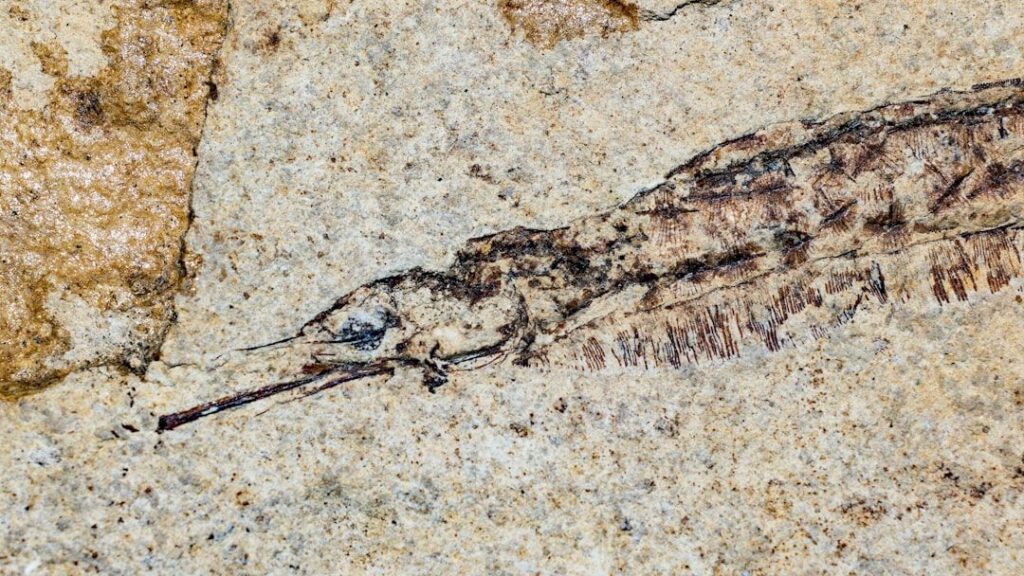
Ever wonder how we really know what happened millions of years ago? It’s hard to imagine life on Earth before humans even existed, but buried in rock all over the planet are incredible clues that reveal exactly how life transformed from simple organisms into the stunning diversity we see today. These fossils tell stories that sometimes shake up everything scientists thought they knew about evolution.
The thing is, finding a fossil that truly rewrites the textbooks is rarer than you might think. Most discoveries add small pieces to a massive puzzle. Yet every so often, researchers unearth something so remarkable that it forces scientists to reconsider long-held beliefs about how different species evolved, when they appeared, and what survival strategies they used. These finds don’t just fill gaps in knowledge. They illuminate evolutionary transitions we never fully understood before.
Let’s dive into six fossil discoveries that genuinely revolutionized our understanding of evolution and proved that the story of life on Earth is far stranger and more fascinating than anyone imagined.
Tiktaalik: The Fish That Walked
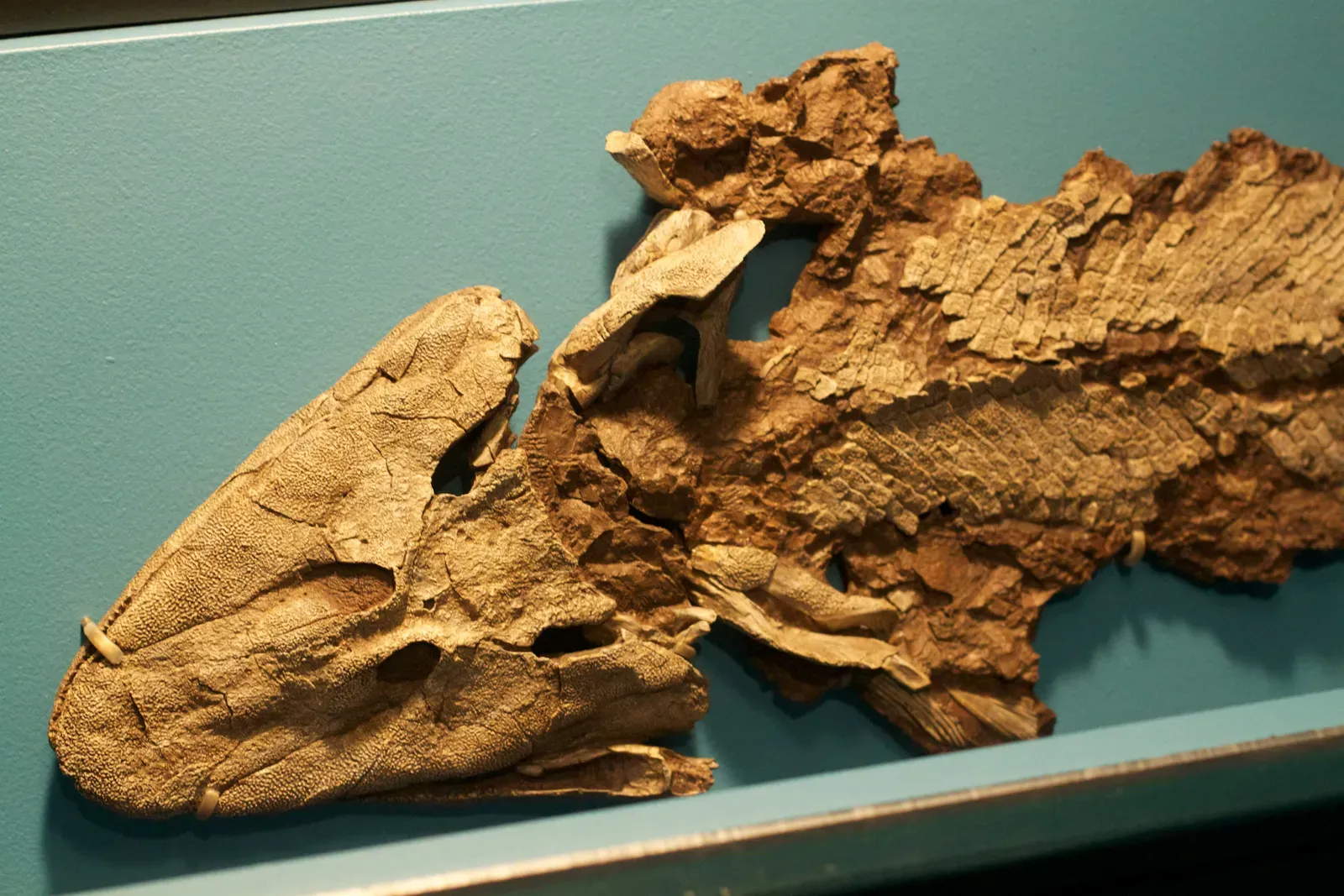
Picture this: in 2004, scientists discovered a remarkable fossil on Ellesmere Island in Nunavut, Canada, and it was quickly recognized as a crucial transitional form between fish and land-dwelling animals. They named it Tiktaalik, which means shallow-dwelling fish in the Inuktitut language. This creature was technically a fish, complete with scales and gills, yet it had a flattened head and unusual fins with sturdy interior bones that would have allowed it to prop itself up in shallow water.
What makes Tiktaalik so incredible is its perfect blend of fish and tetrapod characteristics. One of its discoverers characterized it as a “fishapod,” because unlike earlier fish-like fossils, Tiktaalik’s fins had basic wrist bones and simple rays reminiscent of fingers. Researchers actually predicted that such a transitional species should exist in the late Devonian period, about 375 million years ago, and when they found Tiktaalik, it beautifully matched their prediction. This was evolution making a testable prediction, and reality delivered. The discovery validated decades of evolutionary theory and gave scientists a window into one of life’s boldest adventures: leaving water for land.
Lucy: Walking Upright Before Big Brains
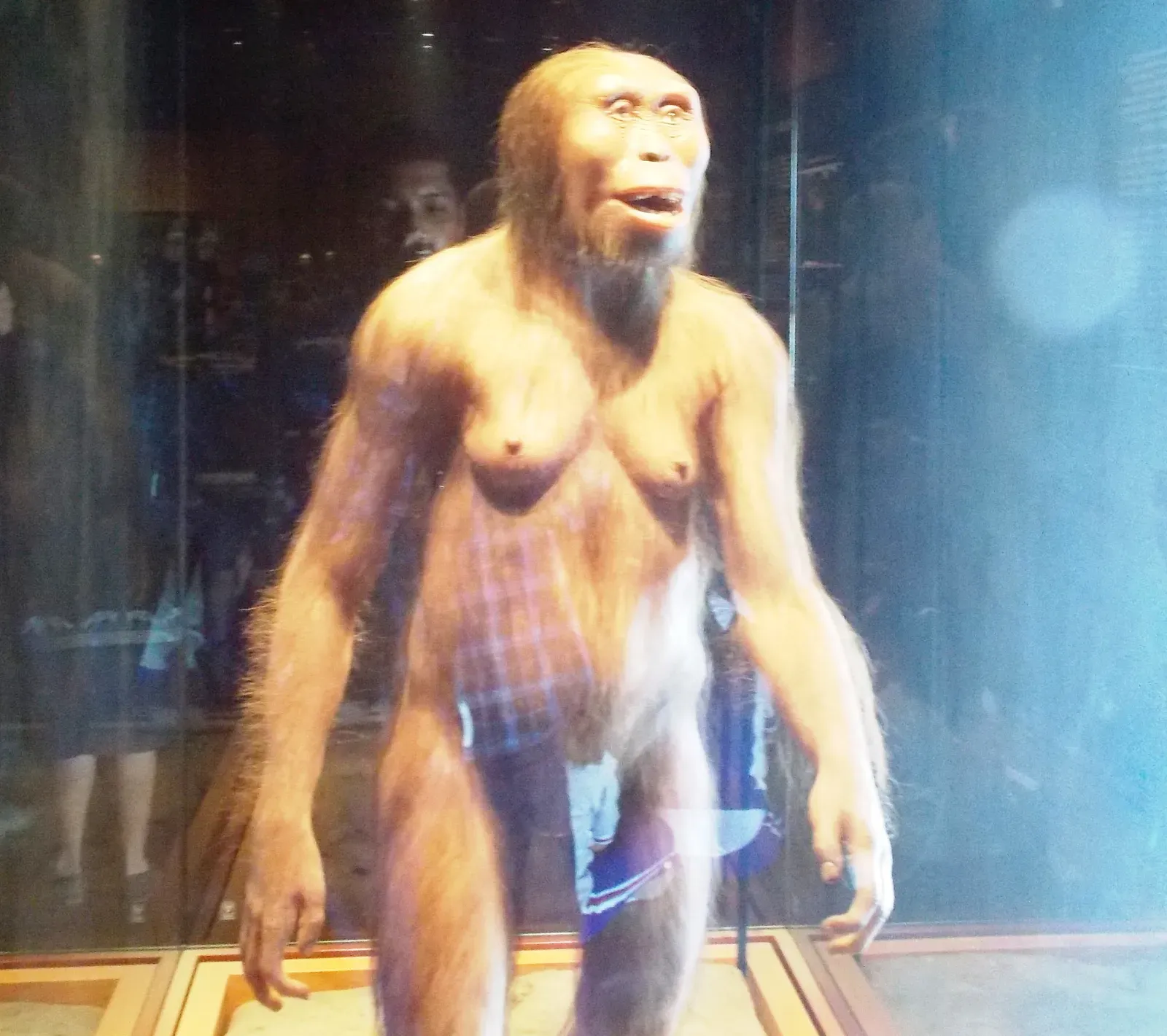
On November 24, 1974, American paleoanthropologist Donald Johanson found a remarkably complete skeleton at the fossil site Hadar in Ethiopia, dated to 3.2 million years ago. Her skeleton is around 40% complete, and at the time of her discovery, she was by far the most complete early hominin known. She became famous as Lucy, nicknamed after the Beatles song playing that evening at the celebration of her discovery.
Lucy’s skeleton presents a small skull akin to that of non-hominin apes, plus evidence of a walking gait that was bipedal and upright, akin to that of humans, and this combination supports the view that bipedalism preceded increase in brain size. Before Lucy, many scientists believed that our ancestors developed large brains first, then learned to walk upright. Lucy proved that increasing brain size and intelligence didn’t lead the way in our evolutionary transformation, showing that humans had begun to move bipedally on the ground by at least three million years ago, during a time when they still had long arms and curved fingers suited to moving through the trees. Lucy essentially rewrote the evolutionary playbook for understanding human origins.
Archaeopteryx: The Original Bird-Dinosaur
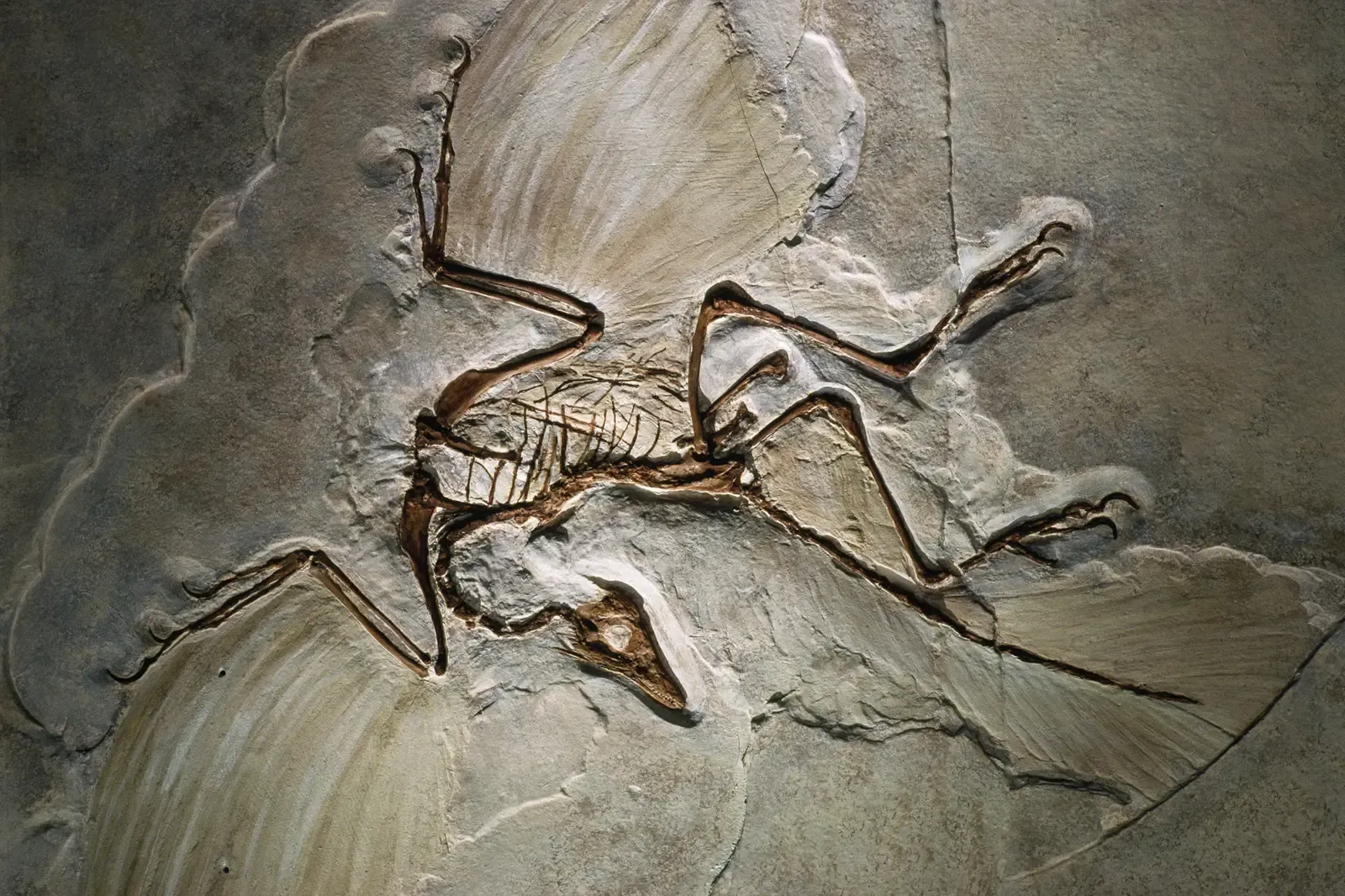
Discovered in 1861, just two years after Darwin published his theory of evolution, Archaeopteryx represents a classic transitional form between earlier, non-avian dinosaurs and birds. This timing couldn’t have been more perfect for Darwin’s struggling theory. The skeleton clearly shows several features characteristic of birds like a wishbone, a reversed perching toe on the hind foot, and of course feathers, yet it also shows features characteristic of dinosaurs including sharp teeth, a dinosaur-like skull, and a tail.
Let’s be real here: when scientists first reconstructed Archaeopteryx, it seemed almost too convenient, like nature was handing evolution a gift. The first complete specimen was announced in 1861, and most of the eleven known fossils include impressions of feathers, among the oldest direct evidence of such structures, and because these feathers take the advanced form of flight feathers, Archaeopteryx fossils are evidence that feathers began to evolve before the Late Jurassic. This discovery showed the world that evolution doesn’t happen in giant leaps but through gradual modifications, where features like feathers evolved for one purpose long before being co-opted for flight.
The Burgess Shale: Cambrian Explosion Revealed
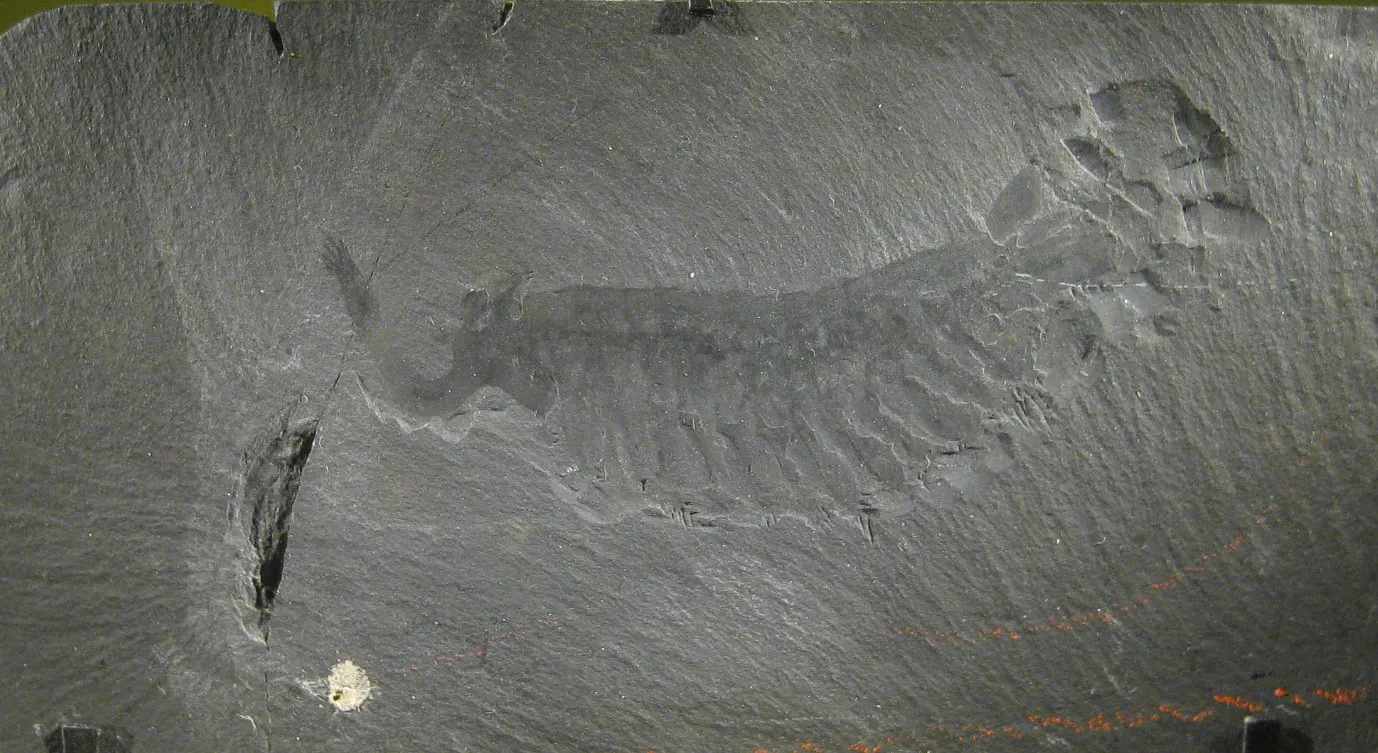
The Burgess Shale is a fossil-bearing deposit exposed in the Canadian Rockies of British Columbia, famous for the exceptional preservation of the soft parts of its fossils, and at 508 million years old, it is one of the earliest fossil beds containing soft-part imprints. The site was discovered by paleontologist Charles Walcott in August 1909, and the significance of soft-bodied preservation and the range of organisms he recognized as new to science led him to return to the quarry almost every year until 1924.
Since its discovery, the Burgess Shale has become the authoritative picture of life in the Cambrian Period, and no longer solely relying on remnants of hard shells or exoskeletons, scientists now have a much better and richer picture of early animal communities, with the unique preservation revealing countless variety of soft-bodied organisms that are now known to have existed in greater number and variety than Cambrian organisms exhibiting hard parts. Decades later, when the Cambridge geologist Harry Whittington and his colleagues took another look, they realized that the Burgess Shale contained not just unique species, but entire phyla new to science. This collection fundamentally changed how scientists viewed the explosive diversification of life more than 500 million years ago.
Homo Naledi: Small Brain, Surprising Behaviors
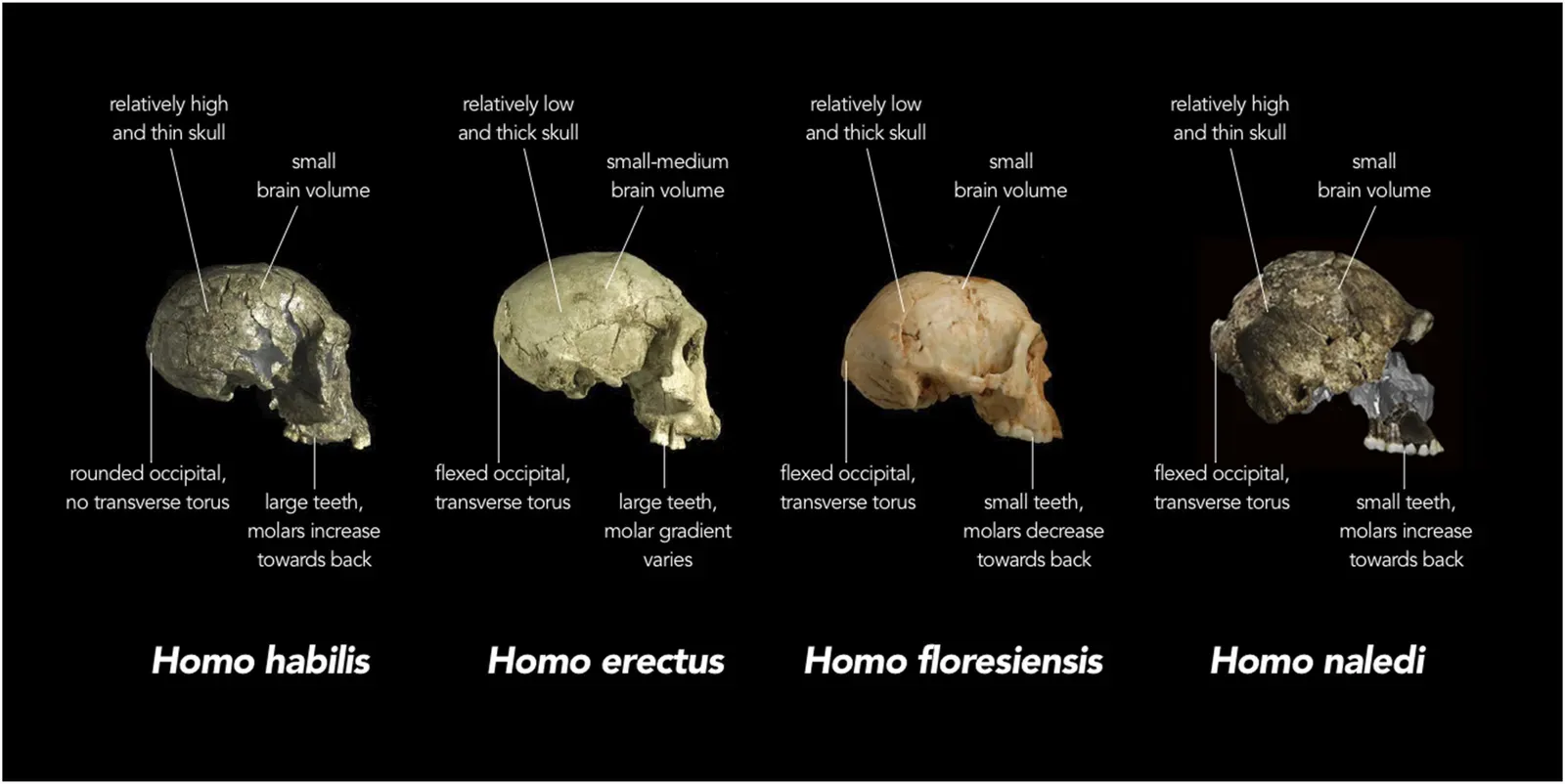
Homo naledi is an extinct species of archaic human discovered in 2013 in the Rising Star Cave system in South Africa, dating back to the Middle Pleistocene between 335,000 and 236,000 years ago, with the initial discovery comprising 1,550 specimens of bone, representing 737 different skeletal elements, and at least 15 different individuals. What shocked researchers wasn’t just the sheer number of fossils. It was when they appeared.
Previously, the fossils were thought to have dated to one to two million years ago, because no similarly small-brained hominins had been known from such a recent date in Africa, and the ability of such a small-brained hominin to have survived for so long in the midst of bigger-brained Homo has greatly revised previous conceptions of human evolution and the notion that a larger brain would necessarily lead to an evolutionary advantage. The discovery of more bones in another difficult to access part of the cave system supports the hypothesis that Homo naledi deliberately placed its dead in these locales, and such mortuary behavior was thought to be exclusive to large-brained Homo sapiens. Homo naledi challenged the assumption that bigger brains automatically meant evolutionary success, proving that multiple human species with vastly different characteristics thrived alongside each other.
The Laetoli Footprints: Humanity’s Ancient Steps
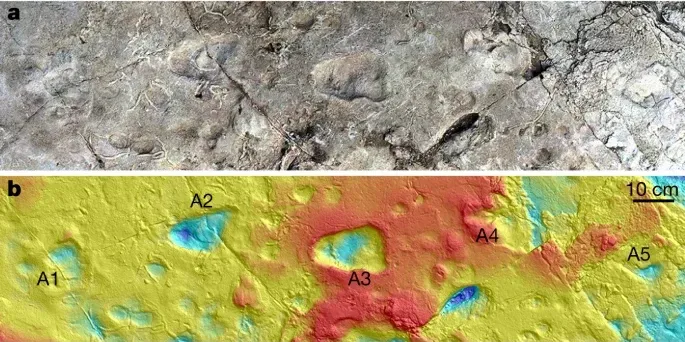
Australopithecus afarensis discoveries in the 1970s, including Lucy and the Laetoli footprints, confirmed our ancient relatives were bipedal, walking upright on two legs, before big brains evolved. The footprints are of major significance as they are the first direct evidence that our ancestors were walking upright by 3.6 million years ago. Rather than bones or teeth, these fossils were literal tracks preserved in volcanic ash.
The fossil footprints are very similar to our own footprints, showing that the heel was the first part of the foot to strike the ground, the big toe was aligned with the other toes and left a deep impression showing that each step ended with the toe pushing downwards, and the feet also had central arches to help launch the body into each step. Honestly, it’s hard to describe how surreal it feels to know that over three million years ago, a group of our ancestors walked through wet ash, leaving behind their journey for us to discover. These footprints proved, without any doubt, that upright walking was a defining characteristic of early humans long before anything else we consider distinctly human evolved.
Conclusion
These six fossil discoveries prove that evolution isn’t just a theory from dusty textbooks. It’s a living, breathing story written in stone across every continent. Each find challenged assumptions and expanded our understanding of life’s remarkable journey. From fish crawling onto land to small-brained humans possibly burying their dead, these fossils remind us that evolution is messy, surprising, and far more complex than any simple narrative.
Perhaps the most humbling realization is this: we’re still just scratching the surface. Every year brings new discoveries that shake up established ideas and reveal previously unknown branches of the evolutionary tree. What do you think the next groundbreaking fossil discovery might reveal about our past? The story of evolution is far from finished, and the next chapter could be unearthed tomorrow.