Think you know everything about prehistoric North America? Sure, you’ve probably heard of mammoths and saber-toothed cats. Those animals get all the attention in museums and documentaries. Yet for every famous ice age celebrity, there were dozens of lesser-known creatures roaming the landscape that would absolutely blow your mind if you saw them today.
North America once hosted an incredible lineup of bizarre beasts that sound more like science fiction than science fact. We’re talking about animals so strange, so unexpected, that even paleontologists do a double-take when fossils surface. These aren’t your textbook creatures. These are the oddballs, the evolutionary experiments, the animals that make you wonder what on earth nature was thinking.
The Giant Ground Sloth That Could Stand Twelve Feet Tall
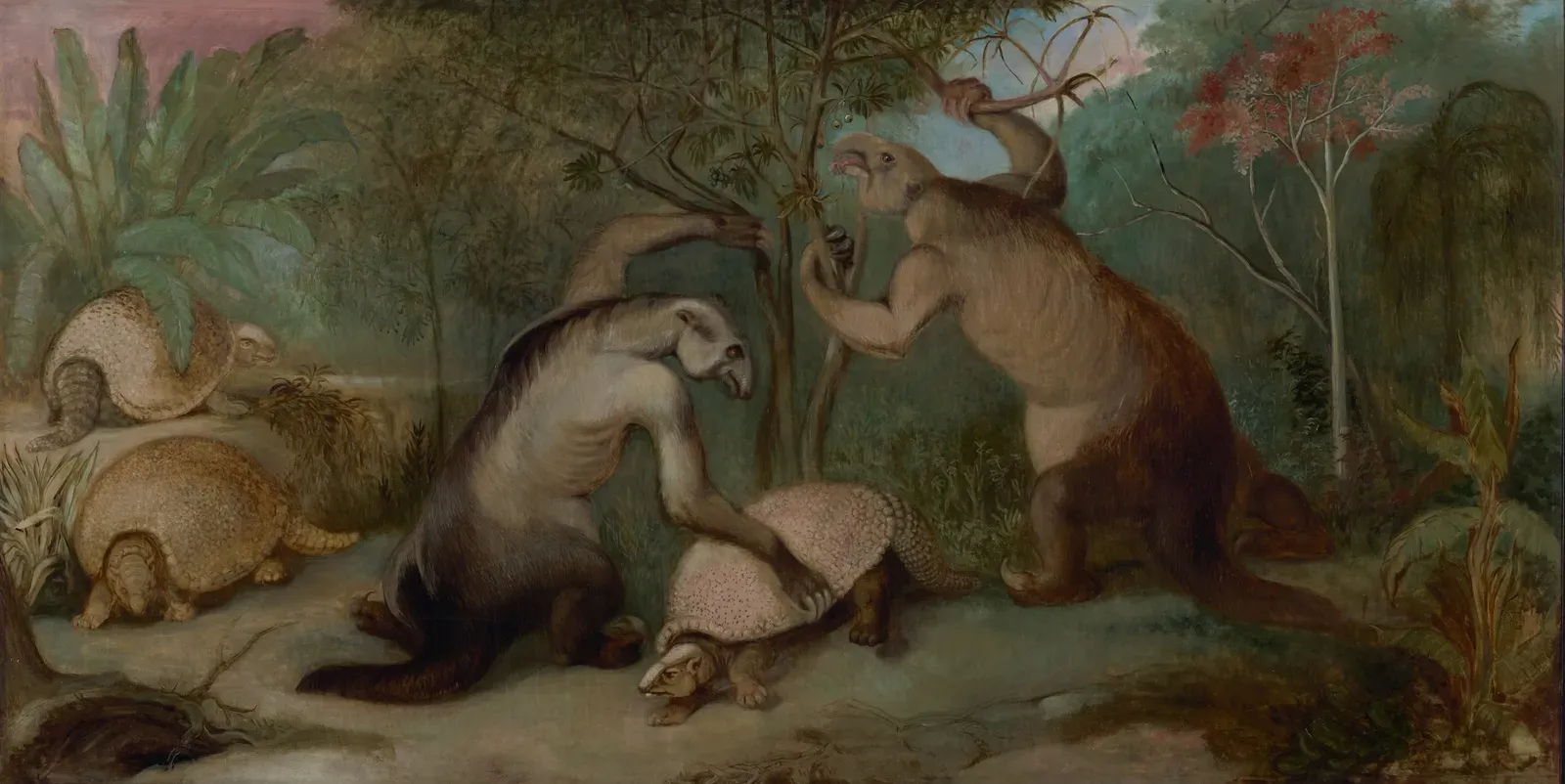
Giant ground sloths of the late Pleistocene were bear-sized herbivores that stood 12 feet on their hind legs and weighed up to 3,000 pounds. Picture a sloth, but instead of hanging lazily from tree branches, imagine it lumbering across ancient forests with massive claws that could have easily been mistaken for weapons. The Jefferson ground sloth (Megalonyx jeffersonii) was named for Thomas Jefferson, who initially believed that sloth fossils were a type of colossal cat that he dubbed the Megalonyx (“giant claw”).
These bizarre creatures were nothing like their modern descendants. These huge ground sloths were probably slow, awkward walkers with some species shuffling on the curled-in ankles of their hind legs, and they had elongated claws like modern sloths, which they would have used to strip leaves and dig for roots. During warmer periods, called interglacials, Megalonyx made it as far north as the Yukon and Alaska, though when it got cold, the sloth really wasn’t built for that type of thing, so it headed south. Imagine stumbling upon one of these massive vegetarians in prehistoric Wyoming.
The American Cheetah That Wasn’t Actually a Cheetah
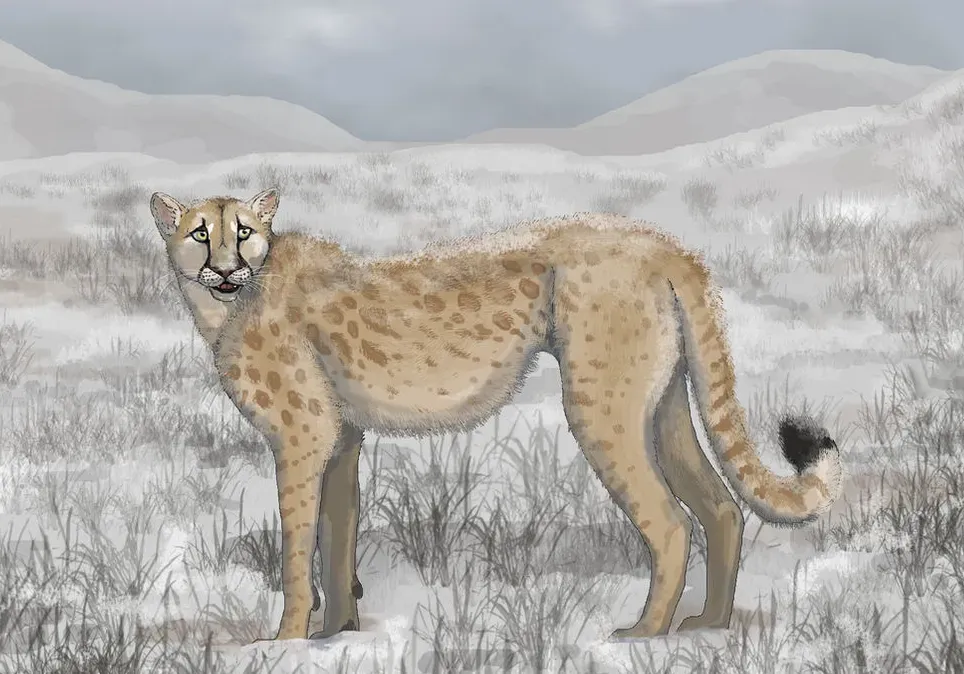
Here’s where things get really interesting. Snow leopard-like cheetahs hunted mountain goats across tricky terrain in America, according to fossilized remains, and this big cat was known as the American cheetah (Miracinonyx trumani). Now, before you picture African cheetahs racing across the Great Plains, let me stop you right there. American cheetahs are closely related to modern cougars.
The American cheetah stood about 2.75 feet (0.85 meters) high and weighed about 156 pounds (70 kilograms). This cat evolved to run fast not because it was related to African cheetahs, but through convergent evolution. Mother Nature apparently decided that North America needed its own speed demon to chase down the fleet-footed pronghorn antelope. It’s hard to say for sure, but this predator likely hunted in mountainous regions where agility mattered just as much as speed.
Glyptodon: The Volkswagen Beetle With Legs
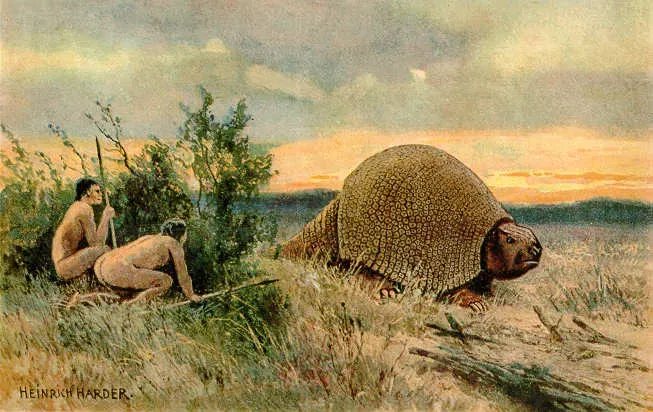
Let’s be real, when you first see a Glyptodon fossil, your brain struggles to make sense of it. The creature that we have come to know as the Glyptodon looked like a giant version of its distant relative, the armadillo, and the shell of Glyptodon was made of bony plates, just like an armadillo. Except this wasn’t something you’d find digging in your backyard. From South America, the armored, 1-ton creature probably traveled across the Isthmus of Panama to North America.
Imagine an armadillo the size of a small car, covered in thick protective armor, wandering through ancient grasslands. The shell alone was thick enough to deflect most predator attacks. Overhunting by humans caused the last glyptodons to die out shortly after the last Ice Age. This creature essentially represented nature’s attempt at creating the perfect defensive organism, and for millions of years, it worked spectacularly well.
The Giant Short-Faced Bear: North America’s Ultimate Predator
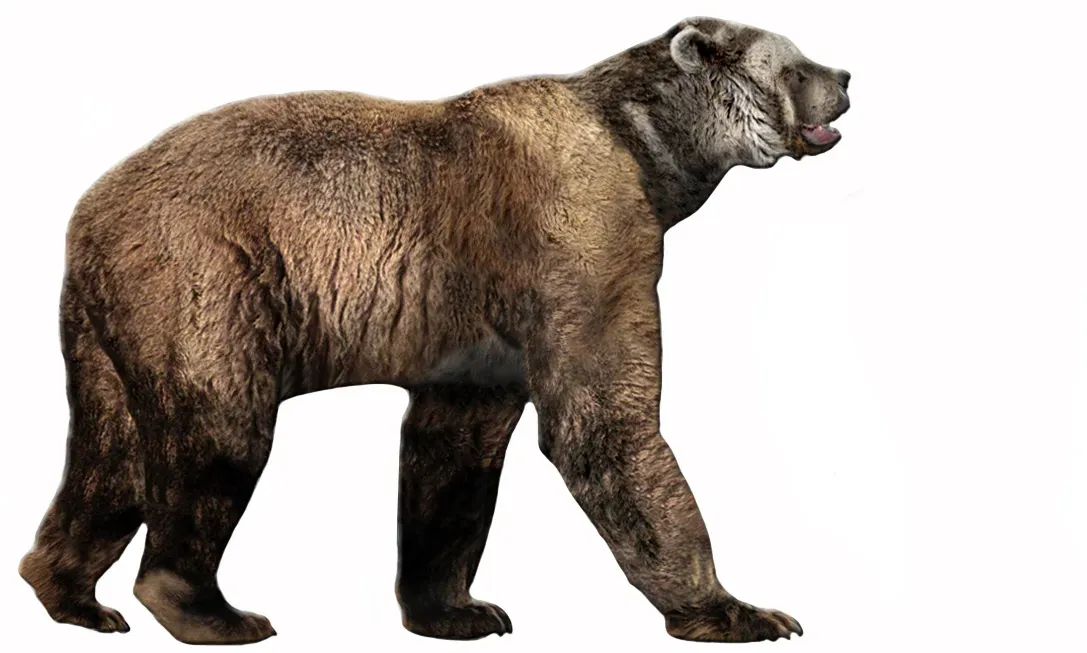
The giant short-faced bear (Arctodus simus) was the largest carnivorous mammal to ever roam North America. Let that sink in for a moment. Not just a big bear. The biggest carnivorous mammal to ever walk this continent. Standing on its hind legs, an adult giant short-faced bear boasted a vertical reach of more than 14 feet.
Despite the name suggesting something compact, there was nothing short about this bear. The most striking difference between modern North American bears and the giant short-faced bear were its long, lean and muscular legs, which has given rise to the idea that it was a ‘cursorial’ predator, meaning that it ran after prey. To survive, these bears would have had to consume approximately 35 pounds of meat each day. Picture a bear built like a greyhound with the appetite of a lion, and you’re getting close to what roamed Ice Age landscapes.
Castoroides: The Giant Beaver Nobody Expected
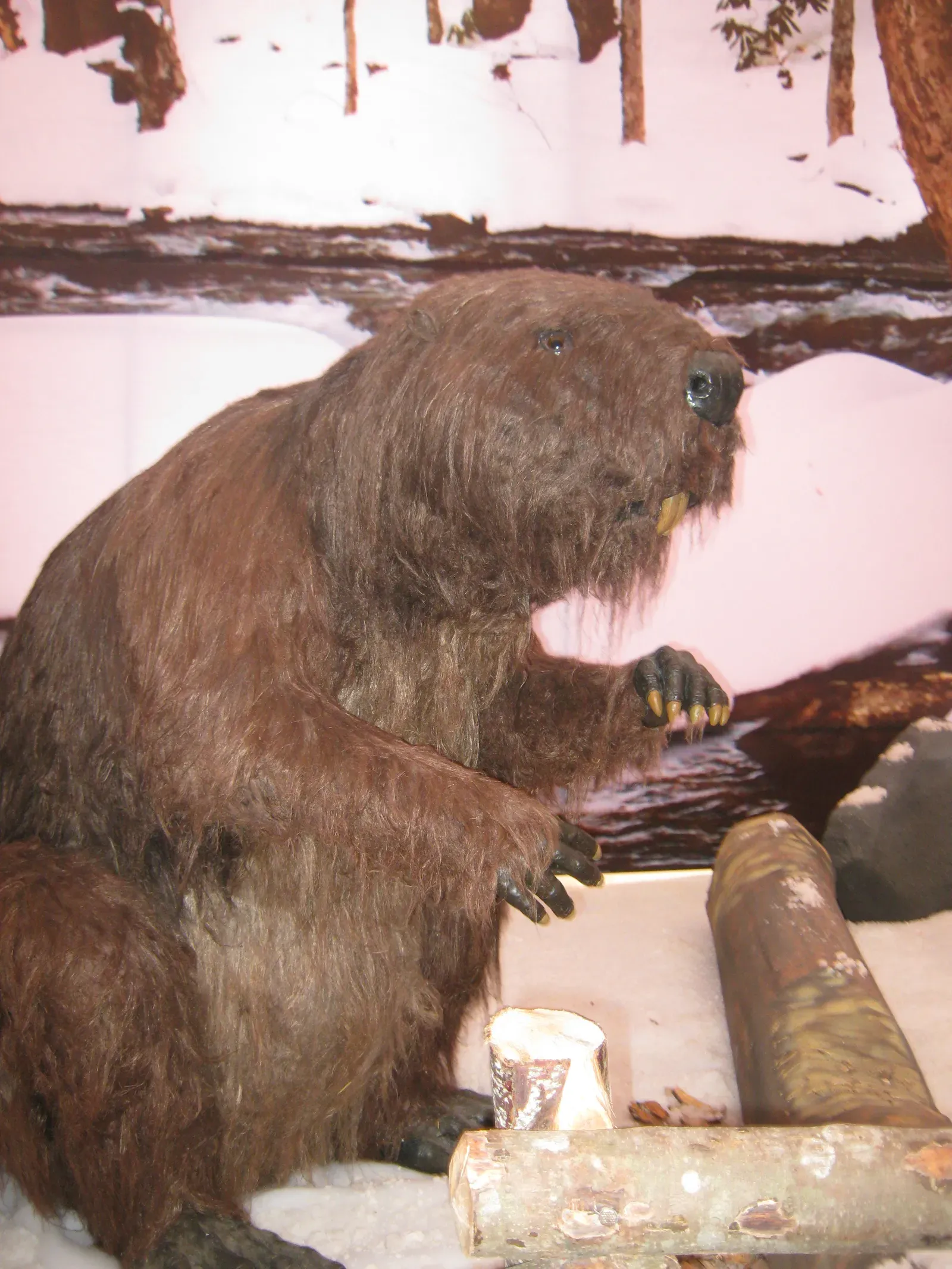
Castoroides was a 2.5 m (8 ft.) long giant beaver that lived in North America during the Pleistocene epoch. Yes, you read that correctly. An eight-foot-long beaver. It is the largest beaver ever to have lived, but it had a small brain in proportion to its body size and may not have been as smart as its modern day counterpart.
The giant beaver was the largest rodent to have ever lived in North America, and giant beavers (Castoroides ohioensis) were once found in North America as part of the megafauna, or giant animals living in North America during and after the last ice age. An aquatic plant-eating animal, the giant beaver lived in lakes and ponds. Unlike modern beavers, these giants probably didn’t build the elaborate dams we see today. Still, encountering one would have been absolutely mind-blowing.
Scimitar-Toothed Cats With Serrated Saber Teeth
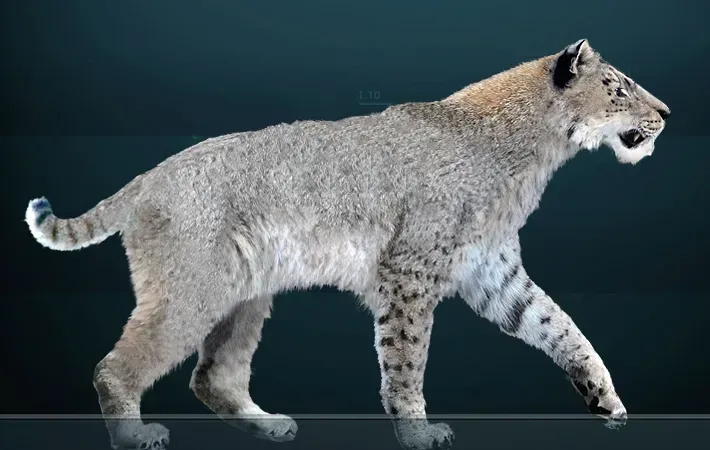
Everyone knows about saber-toothed tigers, or at least thinks they do. Yet fewer people have heard of their cousins. The scimitar-toothed cat (Homotherium) had large canine teeth, powerful forelimbs, a sloping back and a large optic bulb, all of which made it a deadly predator during the Pleistocene. Fossils of the ancient cat have also been found in Eurasia, but during the last ice age, the animal crossed the Bering Land Bridge and started living in North America.
The scimitar cat was about the size of a lion but with a hyena-like build and weighed up to 600 pounds, and as their name implies, scimitar cats not only had impressive five-inch-long canines, but those teeth had razor-sharp edges. Unlike the more famous Smilodon, these cats were built for endurance hunting, pursuing prey over longer distances with their relatively longer legs. Honestly, it’s both terrifying and fascinating to imagine these predators working together to bring down massive herbivores.
The American Zebra: Prehistoric Horses You Never Learned About
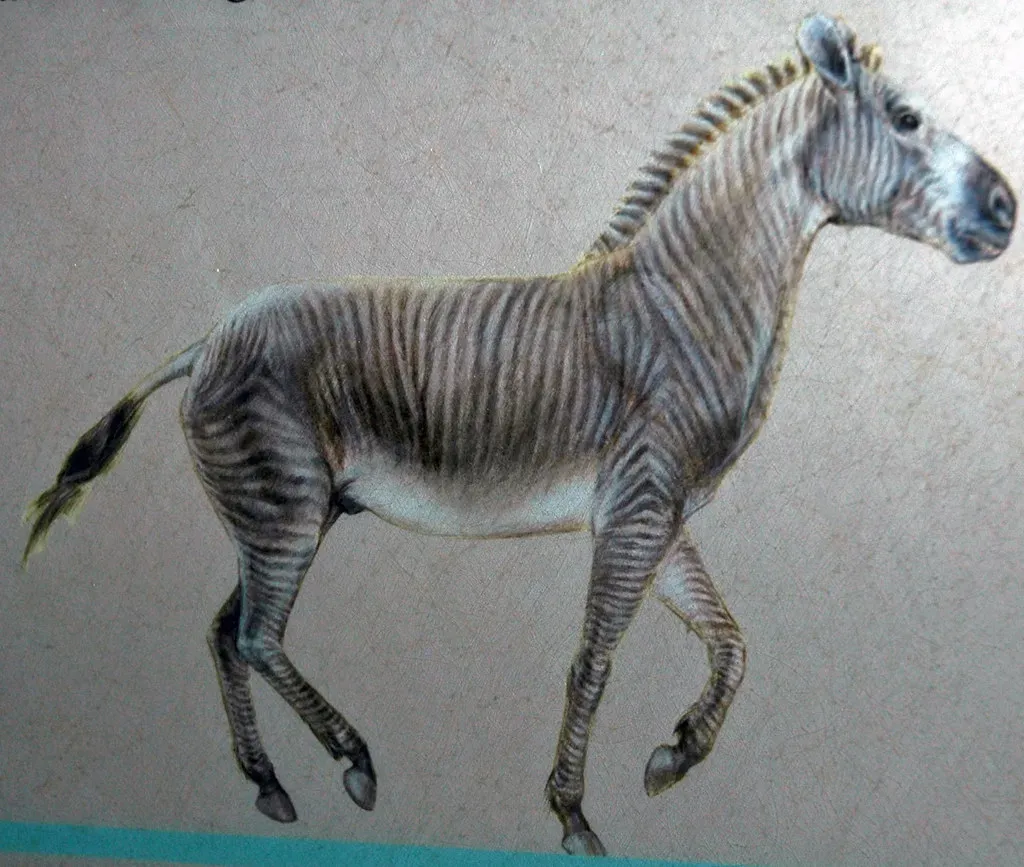
It was long believed that horses were first introduced to North America by Spanish settlers in the 16th century, but archeological evidence has rewritten that history, and it’s now clear that indigenous horses roamed North America for 55 million years before going extinct along with other Ice Age megafauna roughly 10,000 years ago. One of the oldest and most widespread ancient horse species in North America was the American zebra (Equus simplicidens), also known as the Hagerman horse.
The American zebra is the oldest known member of the genus Equus, which includes all modern horses, both wild and domesticated, and in both appearance and genetics, the American zebra is most closely related to the modern zebra. The American zebra stood around five feet tall at the shoulders, had a stocky build, and faint stripes along its neck and flank, and around 2 to 3 million years ago, herds of American horses traveled west over the land bridge into Asia, eventually spreading to Africa. So the next time someone tells you horses aren’t native to America, you can correct them with this fascinating fact.
Conclusion
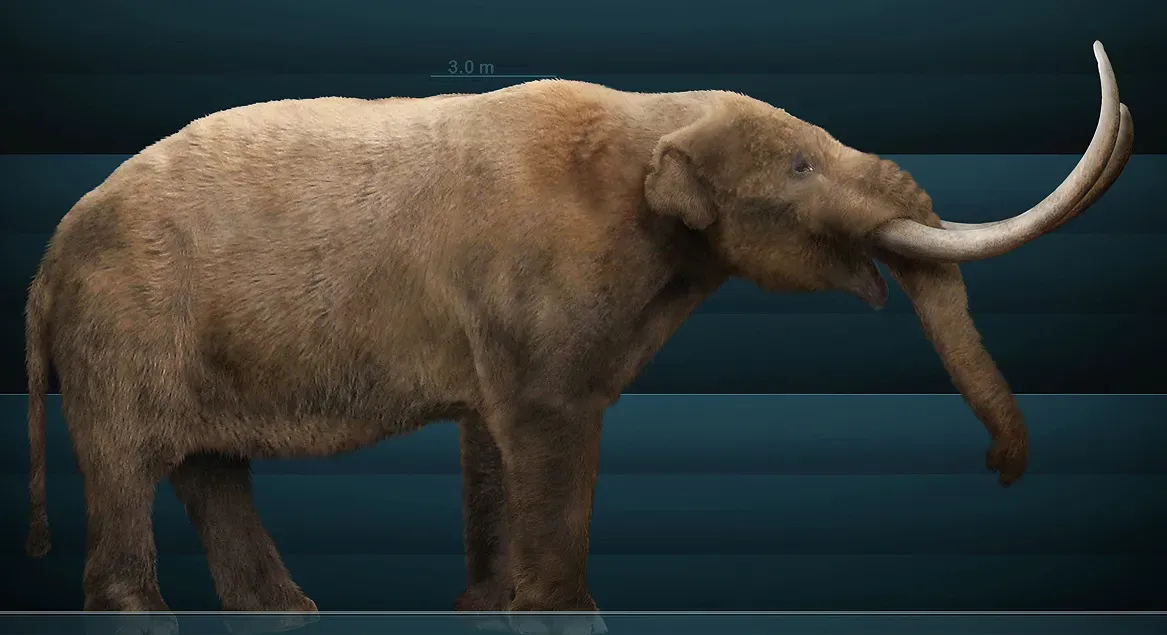
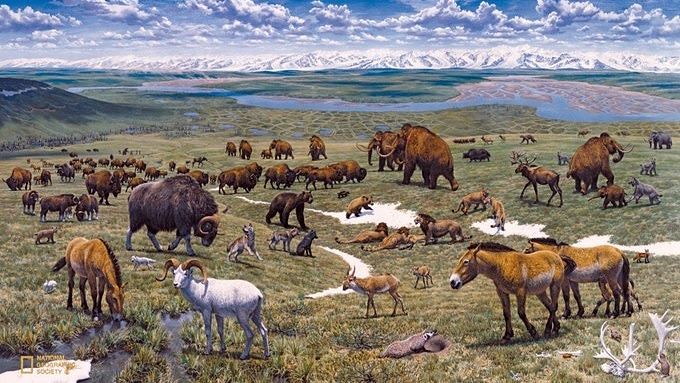
The prehistoric creatures that once roamed North America paint a picture of a world that seems almost impossibly diverse and strange. From massive sloths standing taller than basketball hoops to armored mammals resembling living tanks, this continent hosted an extraordinary cast of characters that vanished roughly ten thousand years ago. Around 10,000 years ago, nearly all of those giant creatures were wiped out.
What makes these extinctions even more mysterious is that scientists still debate exactly why they happened. Climate change, human hunting, disease, or some combination of factors likely played a role. These creatures survived millions of years of evolution, adapting to ice ages and environmental shifts, only to disappear in what amounts to a geological blink of an eye. It reminds us how fragile even the most successful species can be when conditions change too rapidly.
Next time you’re hiking through a national park or walking across an open prairie, take a moment to imagine the landscape populated with these incredible beasts. What would you have thought seeing a giant ground sloth lumbering past, or watching an American cheetah sprint across the plains? Which of these creatures surprised you the most?